   Sex is defined by a            Gender is described
    person’s biological             by our behavioral
    features such as a              characteristics and
    penis, vagina, testicles,       how they are
     or uterus.                     perceived in a certain
                                    culture at a certain
                                    time.
                                   Gender can also be
                                    how we interpret
                                    ourselves as
                                    man, woman, transge
                                    nder, or transsexual.
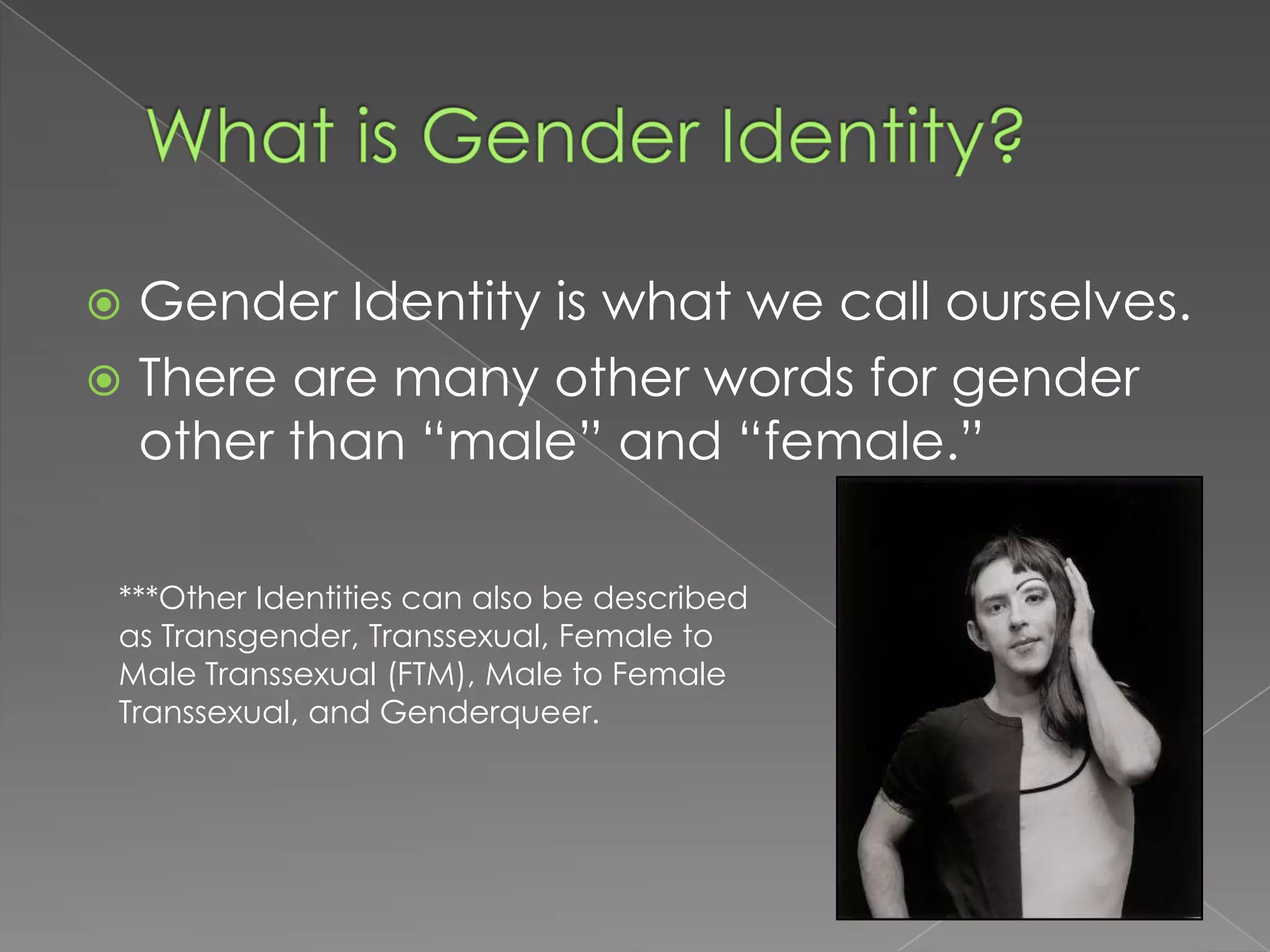
 Gender Identity is what we call ourselves.
 There are many other words for gender
  other than “male” and “female.”

 ***Other Identities can also be described
 as Transgender, Transsexual, Female to
 Male Transsexual (FTM), Male to Female
 Transsexual, and Genderqueer.
 A broad term refering to people whose
  gender identity or appearance do not fit
  the traditional norm.
 Transgenders challenge the characteristics
  that are labeled for men or for women
 Transgenders are often ridiculed for acting
  and dressing like the opposite sex.
 Example: A man may take estrogen, wear
  make-up, get breast implants, and dress like
  a women.
 A transsexual refers to any person who lives
  as the opposite sex.
 This can consist of changing
  names, clothing, taking hormones, or
  undergoing a sex reassignment surgery.
 Some transsexual people feel as if they
  were born into the wrong “gendered” body
 Some also call this a “gender identity
  disorder,” most transsexual people find this
  offensive because it suggests something is
  wrong with them.
 Having a strong belief that you were
  meant to be a male or meant to be a
  female does not conclude something is
  wrong with you.
 This should not be considered a disorder.
 Desiring to be the opposite gender is not
  wrong, it is an aspiration.
 You have the right to your own body!
   “… we were born in a body that doesn’t
         match who we are inside.”


EVEN if it is different from the sexual organs that they possess.
Female to Male Transsexual vs. Male to Female Transsexual


FTM: A person who was           MTF: A person who was
biologically born a             biologically born a male
female, and identifies          and identifies
themselves as a man.            themselves as a female.

Also known as a                 Sometimes referred to as
transmen.                       transwomen.
What We Call Ourselves

Gender Identity is not the same as Sexual Orientation!

        - A lot of people confuse the two.

Sexual Orientation is whom we find attractive.


                                             •Straight/Heterosexual
                                             •Gay/Homosexual
                                             •Lesbian
                                             •Bisexual
                                             •Queer
                                             •Asexual
                                             •Pansexual
•Coming out to yourself is when a
                                  person accepts themselves and
                                  affirms their sexual orientation.
To Ourselves:                     • Usually a person comes out to
To Our Families, Friends:         themselves, before introducing their
                                  sexual orientation to others.
The outside world:                •Coming out can happen at any
                                  age, and a person can come out
                                  more that once.
 •Coming out to the outside                - a person may come out as
 world, including friends and              a lesbian, and then later in
 family can be very challenging            life come out as transexual.
 and life changing.
 •Some friends and families are
 accepting, and some are not so
 tolerant.
 •Coming out may mean we lose
 friends or even family
 members, but also can be a
 healing experience at the same
 time!
 Some jobs are not accepting to an
  “unusual” sexual orientation.
     -This may cause someone to not
  come out to co-workers.
 In most places in the US it is LEGAL to fire
  employees because of their sexual
  orientation.
“Gay Bashing”

   This is the fear or hatred of
    bisexual, gay or lesbian individuals.
   This makes people afraid of
    harassment, discrimination, violenc
    e or rejection from our peers, family
    or anyone we interact with during
    out everyday life.
   The stereotypes of people in our
    society regarding sexual
    orientation inflict self-hatred of
    those who do have a different
    sexual orientation.
 This is the assumption      This is the fear and
  that being heterosexual      hatred o transgender
  is the only acceptable       and transsexual people.
  orientation.                These gender-based
 Heterosexists prevent        discriminations are
  others from doing things     throughout all societies
  that we do in every day      in the US
  life. Such as, getting      Some transgender
  married, filing              women are not allowed
  taxes, getting certain       in “women only” areas
  jobs, and partner health     because they are not
  insurance.                   “real women.”
 These prejudices
  endanger
  gay, lesbian, and
  bisexual people.
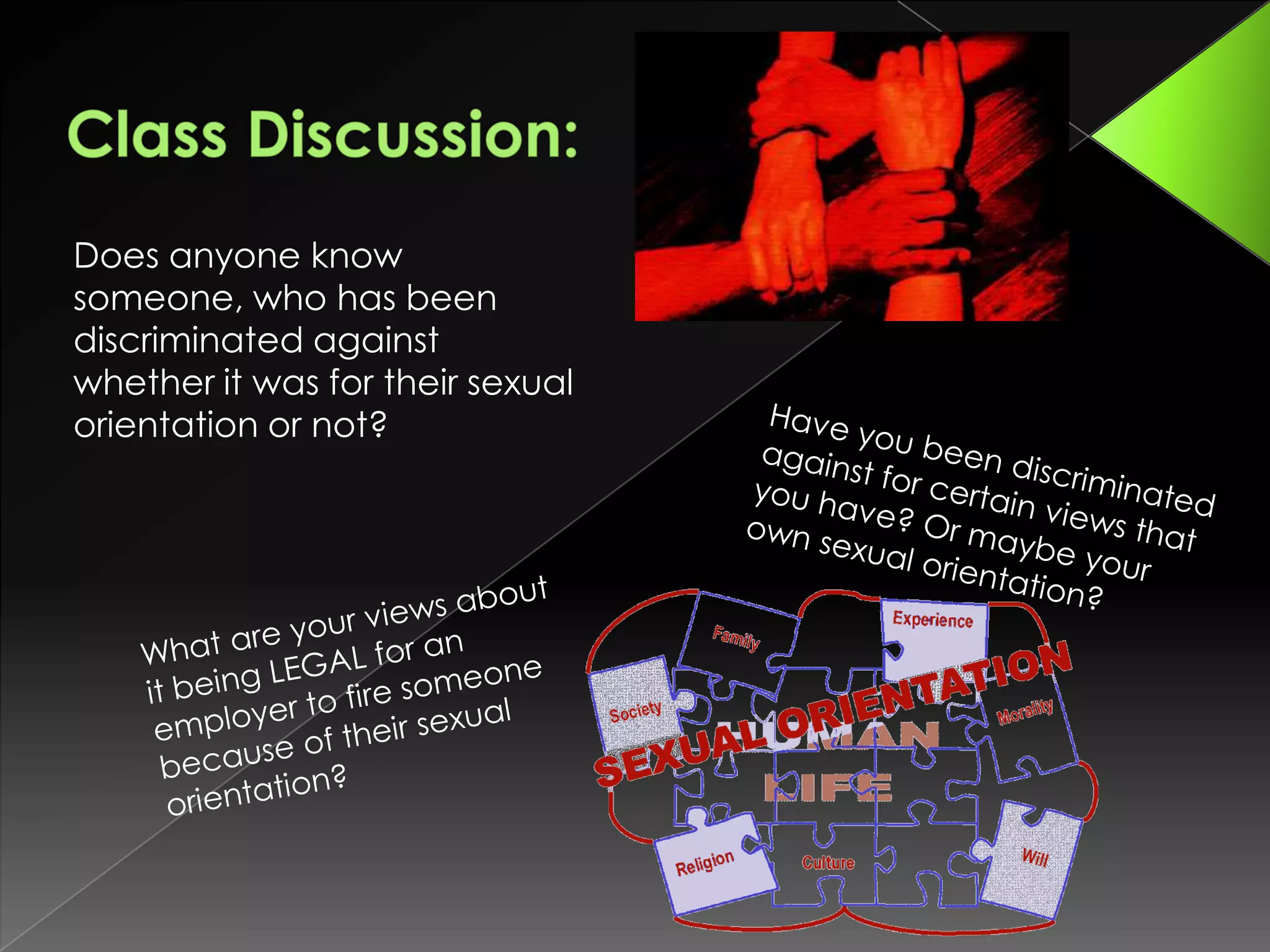
Does anyone know
someone, who has been
discriminated against
whether it was for their sexual
orientation or not?

Gender identity and sexual orientation

  • 2.
    Sex is defined by a  Gender is described person’s biological by our behavioral features such as a characteristics and penis, vagina, testicles, how they are or uterus. perceived in a certain culture at a certain time.  Gender can also be how we interpret ourselves as man, woman, transge nder, or transsexual.
  • 3.
     Gender Identityis what we call ourselves.  There are many other words for gender other than “male” and “female.” ***Other Identities can also be described as Transgender, Transsexual, Female to Male Transsexual (FTM), Male to Female Transsexual, and Genderqueer.
  • 4.
     A broadterm refering to people whose gender identity or appearance do not fit the traditional norm.  Transgenders challenge the characteristics that are labeled for men or for women  Transgenders are often ridiculed for acting and dressing like the opposite sex.  Example: A man may take estrogen, wear make-up, get breast implants, and dress like a women.
  • 5.
     A transsexualrefers to any person who lives as the opposite sex.  This can consist of changing names, clothing, taking hormones, or undergoing a sex reassignment surgery.  Some transsexual people feel as if they were born into the wrong “gendered” body  Some also call this a “gender identity disorder,” most transsexual people find this offensive because it suggests something is wrong with them.
  • 6.
     Having astrong belief that you were meant to be a male or meant to be a female does not conclude something is wrong with you.  This should not be considered a disorder.  Desiring to be the opposite gender is not wrong, it is an aspiration.  You have the right to your own body!
  • 7.
    “… we were born in a body that doesn’t match who we are inside.” EVEN if it is different from the sexual organs that they possess.
  • 8.
    Female to MaleTranssexual vs. Male to Female Transsexual FTM: A person who was MTF: A person who was biologically born a biologically born a male female, and identifies and identifies themselves as a man. themselves as a female. Also known as a Sometimes referred to as transmen. transwomen.
  • 9.
    What We CallOurselves Gender Identity is not the same as Sexual Orientation! - A lot of people confuse the two. Sexual Orientation is whom we find attractive. •Straight/Heterosexual •Gay/Homosexual •Lesbian •Bisexual •Queer •Asexual •Pansexual
  • 10.
    •Coming out toyourself is when a person accepts themselves and affirms their sexual orientation. To Ourselves: • Usually a person comes out to To Our Families, Friends: themselves, before introducing their sexual orientation to others. The outside world: •Coming out can happen at any age, and a person can come out more that once. •Coming out to the outside - a person may come out as world, including friends and a lesbian, and then later in family can be very challenging life come out as transexual. and life changing. •Some friends and families are accepting, and some are not so tolerant. •Coming out may mean we lose friends or even family members, but also can be a healing experience at the same time!
  • 11.
     Some jobsare not accepting to an “unusual” sexual orientation. -This may cause someone to not come out to co-workers.  In most places in the US it is LEGAL to fire employees because of their sexual orientation.
  • 12.
    “Gay Bashing”  This is the fear or hatred of bisexual, gay or lesbian individuals.  This makes people afraid of harassment, discrimination, violenc e or rejection from our peers, family or anyone we interact with during out everyday life.  The stereotypes of people in our society regarding sexual orientation inflict self-hatred of those who do have a different sexual orientation.
  • 13.
     This isthe assumption  This is the fear and that being heterosexual hatred o transgender is the only acceptable and transsexual people. orientation.  These gender-based  Heterosexists prevent discriminations are others from doing things throughout all societies that we do in every day in the US life. Such as, getting  Some transgender married, filing women are not allowed taxes, getting certain in “women only” areas jobs, and partner health because they are not insurance. “real women.”  These prejudices endanger gay, lesbian, and bisexual people.
  • 14.
    Does anyone know someone,who has been discriminated against whether it was for their sexual orientation or not?