Chapter Three:  Managing Stress
What Is Stress? Stress Physiological and psychological state of disruption Stressor Factors or events, real or imagined, that elicit a state of stress Eustress Stress that enhances quality of life Distress Stress that diminishes quality of life
Stress Response Physiological and psychological responses to positive or negative events that are disruptive, unexpected, or stimulating Learned and conditioned habits adopted early in life Basic human survival mechanism
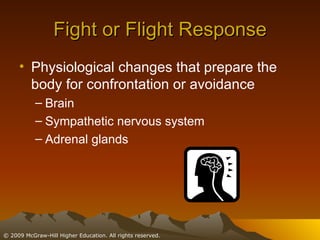
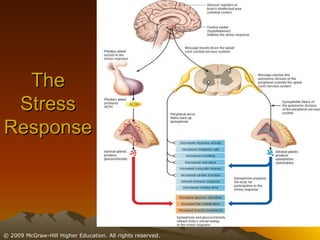
Fight or Flight Response Physiological changes that prepare the body for confrontation or avoidance Brain Sympathetic nervous system Adrenal glands
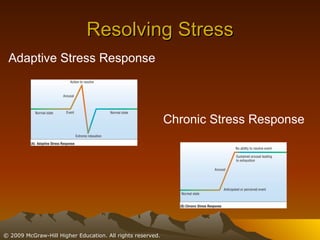
Resolving Stress Adaptive Stress Response Chronic Stress Response
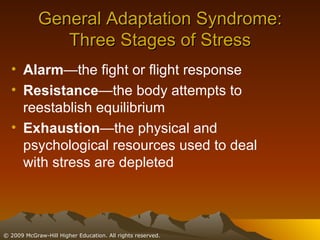
General Adaptation Syndrome: Three Stages of Stress Alarm —the fight or flight response Resistance —the body attempts to reestablish equilibrium Exhaustion —the physical and psychological resources used to deal with stress are depleted
The Stress Response
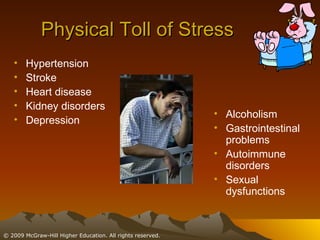
Physical Toll of Stress Hypertension Stroke Heart disease Kidney disorders Depression Alcoholism Gastrointestinal problems Autoimmune disorders Sexual dysfunctions
Effects of Stress Stress and immunity Chronic stress may cause the immune system to be under- or overactive Stress and cardiovascular disease Type A personality: Competitive, ambitious impatient Associated with heart attacks Type B personality: Relaxed, patient
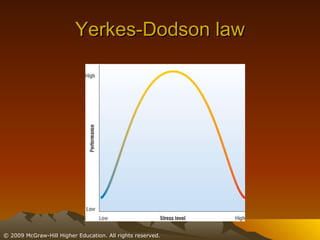
Benefits of Stress Moderate levels Motivating Energizing Productive
Yerkes-Dodson law
Student Stressors: Interpersonal Homesickness One of the most common problems facing college students Often doesn’t hit until a few weeks or a month after the big move Relationship problems Very common stressor Difficulty maintaining long-distance relationships Loosing touch with old friends
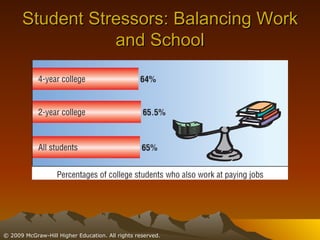
Student Stressors: Balancing Work and School
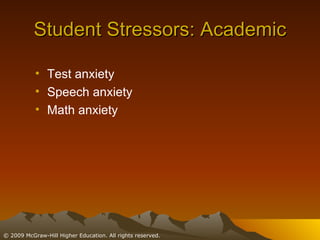
Student Stressors: Academic Test anxiety Speech anxiety Math anxiety
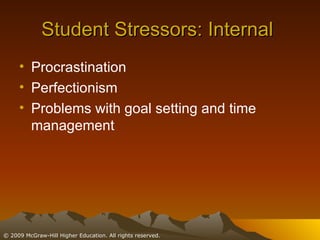
Student Stressors: Internal  Procrastination Perfectionism Problems with goal setting and time management
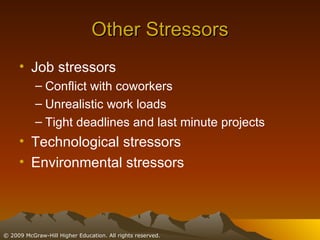
Other Stressors Job stressors Conflict with coworkers Unrealistic work loads Tight deadlines and last minute projects Technological stressors Environmental stressors
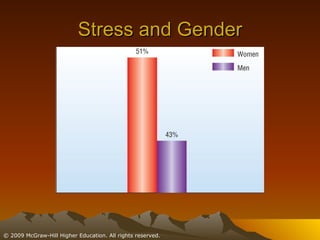
Stress and Gender
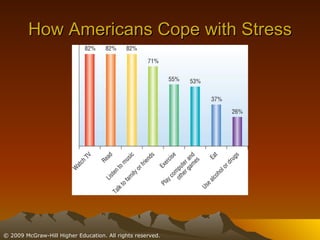
How Americans Cope with Stress
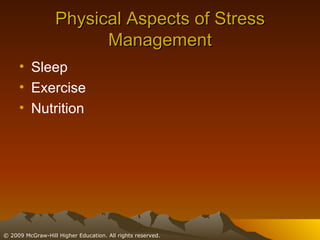
Physical Aspects of Stress Management Sleep Exercise Nutrition
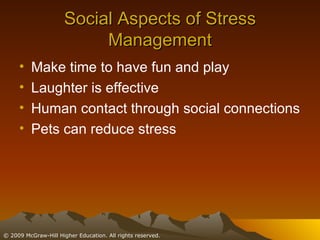
Social Aspects of Stress Management Make time to have fun and play Laughter is effective Human contact through social connections Pets can reduce stress
Environmental Aspects of Stress Management Reduce noise levels Amount/type of light Meaningful and challenging experiences Aesthetic quality of inhabited space Color Plants Photos Smell
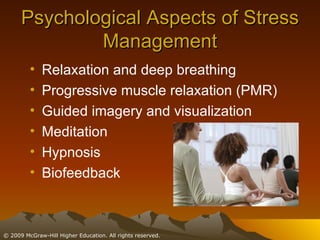
Psychological Aspects of Stress Management Relaxation and deep breathing Progressive muscle relaxation (PMR) Guided imagery and visualization Meditation  Hypnosis Biofeedback
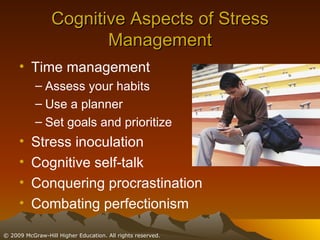
Cognitive Aspects of Stress Management Time management Assess your habits  Use a planner  Set goals and prioritize Stress inoculation Cognitive self-talk Conquering procrastination Combating perfectionism
Chapter Three:  Managing Stress

Managing Stress

  • 1.
    Chapter Three: Managing Stress
  • 2.
    What Is Stress?Stress Physiological and psychological state of disruption Stressor Factors or events, real or imagined, that elicit a state of stress Eustress Stress that enhances quality of life Distress Stress that diminishes quality of life
  • 3.
    Stress Response Physiologicaland psychological responses to positive or negative events that are disruptive, unexpected, or stimulating Learned and conditioned habits adopted early in life Basic human survival mechanism
  • 4.
    Fight or FlightResponse Physiological changes that prepare the body for confrontation or avoidance Brain Sympathetic nervous system Adrenal glands
  • 5.
    Resolving Stress AdaptiveStress Response Chronic Stress Response
  • 6.
    General Adaptation Syndrome:Three Stages of Stress Alarm —the fight or flight response Resistance —the body attempts to reestablish equilibrium Exhaustion —the physical and psychological resources used to deal with stress are depleted
  • 7.
  • 8.
    Physical Toll ofStress Hypertension Stroke Heart disease Kidney disorders Depression Alcoholism Gastrointestinal problems Autoimmune disorders Sexual dysfunctions
  • 9.
    Effects of StressStress and immunity Chronic stress may cause the immune system to be under- or overactive Stress and cardiovascular disease Type A personality: Competitive, ambitious impatient Associated with heart attacks Type B personality: Relaxed, patient
  • 10.
    Benefits of StressModerate levels Motivating Energizing Productive
  • 11.
  • 12.
    Student Stressors: InterpersonalHomesickness One of the most common problems facing college students Often doesn’t hit until a few weeks or a month after the big move Relationship problems Very common stressor Difficulty maintaining long-distance relationships Loosing touch with old friends
  • 13.
  • 14.
    Student Stressors: AcademicTest anxiety Speech anxiety Math anxiety
  • 15.
    Student Stressors: Internal Procrastination Perfectionism Problems with goal setting and time management
  • 16.
    Other Stressors Jobstressors Conflict with coworkers Unrealistic work loads Tight deadlines and last minute projects Technological stressors Environmental stressors
  • 17.
  • 18.
    How Americans Copewith Stress
  • 19.
    Physical Aspects ofStress Management Sleep Exercise Nutrition
  • 20.
    Social Aspects ofStress Management Make time to have fun and play Laughter is effective Human contact through social connections Pets can reduce stress
  • 21.
    Environmental Aspects ofStress Management Reduce noise levels Amount/type of light Meaningful and challenging experiences Aesthetic quality of inhabited space Color Plants Photos Smell
  • 22.
    Psychological Aspects ofStress Management Relaxation and deep breathing Progressive muscle relaxation (PMR) Guided imagery and visualization Meditation Hypnosis Biofeedback
  • 23.
    Cognitive Aspects ofStress Management Time management Assess your habits Use a planner Set goals and prioritize Stress inoculation Cognitive self-talk Conquering procrastination Combating perfectionism
  • 24.
    Chapter Three: Managing Stress

Editor's Notes

  • #2 Image source: Brand X Pictures/PunchStock