AETIOPATHOGENESIS & MANAGEMENT OF  ACUTE RENAL FAILURE PRESENTER Dr Unnikrishnan P COORDINATOR Dr Sugandha MODERATORS Dr Sheela Rani Dr Suneesh  DEPT OF ANESTHESIOLOGY, MCH-TVM
. Human beings are essentially big bags of water, the volume of which must be kept under tight control, to prevent us from either drying out or drowning…..
Highlights… FOLLOWING THE TRENDS…. CAPTURE THE KEYS TO OPEN THE DOOR HOW TO PREVENT ARF  [Anesthetist Rested during Failure] NEVER ENDING CONTRAVERSIES REPLACING KIDNEY  […very difficult]
‘ ACUTE KIDNEY INJURY’ Abrupt reduction [<48 hrs] in kidney function, defined as an absolute increase in S creatinine of ≥0.3 mg/dL A percentage increase in S creatinine of ≥ 50% [1.5 fold from baseline] or a reduction in urine output-- documented oliguria of < 0.5 ml/kg/hr, for more than six hours.
STAGING SYSTEM FOR A.K.I. STAGE S.CREATININE CRITERIA URINE OUTPUT CRITERIA 1 INCREASE IN S.CREATININE ≥0.3mg/dL OR INCREASE TO ≥ 150-200% FROM BASELINE <0.5 ml/kg/hr FOR >6HRS 2 INCREASE IN S.CREATININE TO >200-300%[2-3 FOLD] FROM BASELINE <0.5 ml/kg/hr FOR >12 HRS 3 INCREASE IN S. CREATININE TO >300%[>3 FOLD] FROM BASELINE OR S.CREATININE OF ≥4mg/dL WITH AN ACUTE INCREASE OF ATLEAST 0.5 mg/dL <0.3ml/kg/hr FOR 24 HRS OR ANURIA FOR 12 HRS
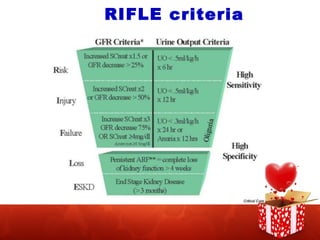
RIFLE criteria
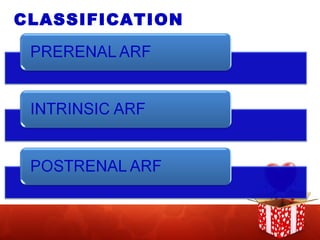
CLASSIFICATION
AETIOPATHOGENESIS .
PRERENAL ARF Most common Renal hypo perfusion Important  form in perioperative period
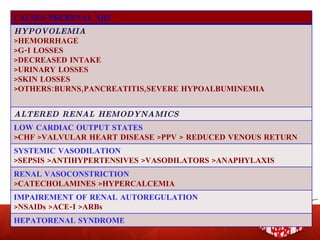
.  CAUSES-PRERENAL ARF HYPOVOLEMIA >HEMORRHAGE >G-I LOSSES >DECREASED INTAKE >URINARY LOSSES >SKIN LOSSES >OTHERS:BURNS,PANCREATITIS,SEVERE HYPOALBUMINEMIA ALTERED RENAL HEMODYNAMICS LOW CARDIAC OUTPUT STATES >CHF >VALVULAR HEART DISEASE >PPV > REDUCED VENOUS RETURN SYSTEMIC VASODILATION >SEPSIS >ANTIHYPERTENSIVES >VASODILATORS >ANAPHYLAXIS RENAL VASOCONSTRICTION >CATECHOLAMINES >HYPERCALCEMIA IMPAIREMENT OF RENAL AUTOREGULATION >NSAIDs >ACE-I >ARBs HEPATORENAL SYNDROME
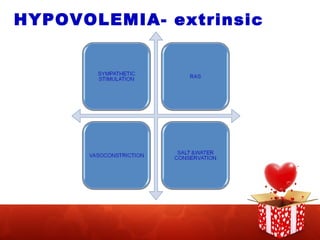
HYPOVOLEMIA- extrinsic
HYPOVOLEMIA- intrinsic Tubuloglomerular feedback Afferent arteriolar vasodilatation Preferential efferent arteriolar vasoconstriction Aim is to utilize the existing filtration reserve maximally
In short…. EXTRINSIC   INCREASE MAP, IMPROVE INTRAVASCULAR VOLUME INTRINSIC   IMPROVE RENAL PLASMA FLOW, GFR & GLOMERULAR PRESSURE
When the insult cross the limits…. Compensatory mechanisms overwhelmed   renal perfusion decrease   GFR fall Decreased O2 delivery   needs to decrease its work   decrease filtration   oliguria Increased Na reabsorption = more work by medulla   blood flow towards medulla ,i.e. away from cortex   GFR decrease   oliguria “ acute renal success” Increase perfusion pressure If we wait …..ATN
Hepatorenal syndrome Unique form of prerenal ARF Structurally normal Profound renal vasoconstriction Correction of liver disease   resolution
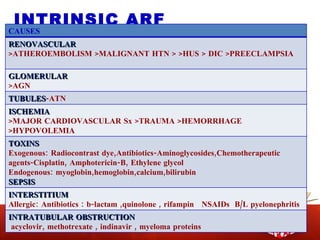
INTRINSIC ARF CAUSES RENOVASCULAR >ATHEROEMBOLISM >MALIGNANT HTN > >HUS > DIC >PREECLAMPSIA GLOMERULAR >AGN TUBULES -ATN ISCHEMIA >MAJOR CARDIOVASCULAR Sx >TRAUMA >HEMORRHAGE >HYPOVOLEMIA TOXINS Exogenous: Radiocontrast dye,Antibiotics-Aminoglycosides,Chemotherapeutic agents-Cisplatin, Amphotericin-B, Ethylene glycol Endogenous: myoglobin,hemoglobin,calcium,bilirubin SEPSIS INTERSTITIUM Allergic: Antibiotics : b-lactam ,quinolone , rifampin  NSAIDs  B/L pyelonephritis INTRATUBULAR OBSTRUCTION acyclovir, methotrexate , indinavir , myeloma proteins
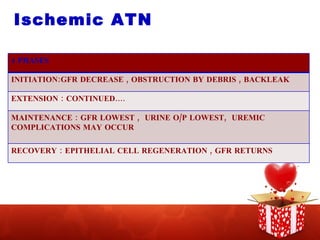
Ischemic ATN 4 PHASES INITIATION:GFR DECREASE , OBSTRUCTION BY DEBRIS , BACKLEAK EXTENSION : CONTINUED…. MAINTENANCE : GFR LOWEST ,  URINE O/P LOWEST,  UREMIC COMPLICATIONS MAY OCCUR RECOVERY : EPITHELIAL CELL REGENERATION , GFR RETURNS
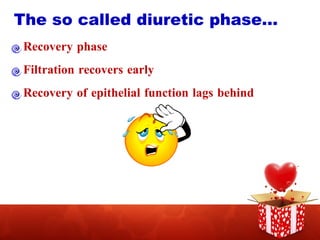
The so called diuretic phase… Recovery phase Filtration recovers early Recovery of epithelial function lags behind
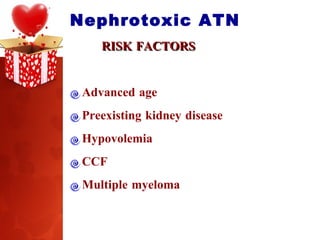
Nephrotoxic ATN RISK FACTORS Advanced age Preexisting kidney disease Hypovolemia CCF Multiple myeloma
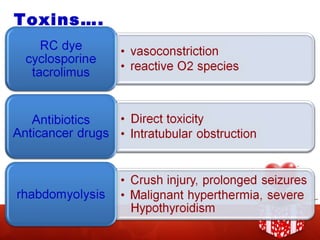
Toxins….
Contrast nephropathy  FEATURES REVERSIBLE ACUTE ONSET [24-48 HRS] PEAK 3-5 DAYS RESOLUTION IN ONE WEEK B UREA & S CREATININE INCREASE
Atheroembolic ATN After manipulation of aorta or renal arteries during surgery / angiography / trauma In patients with atherosclerosis Frequently irreversible
POSTRENAL ARF Obstruction is always the most likely cause when there is anuria B/L ureteric U/L ureteric if single functioning kidney Bladder neck obstruction Urethral
Perioperative oliguria - pathophysiology Anesthetic agents: no renal vasodilation per se ; effects by reducing CO & BP EDB & high spinal anesthesia reduce sympathetic tone PPV decrease renal blood flow ACE-I cause significant reduction in perfusion pressure during anesthesia Narcotics can increase ADH response
Raised intra abdominal pressure Normal 0-17mm of Hg >20 mm of Hg   compression of pelvis    anuria Improvement occurs only after decompression May also cause false high CVP readings due to decreased venous return SITUATIONS EMERGENCY LAPAROTAMIES LEAKING ABD AORTIC ANEURISMS INTESTINAL DISTENSION PARALYTIC ILEUS ASCITES
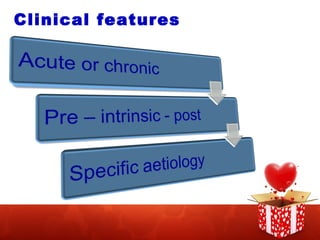
Clinical features
Pre renal vomiting , diarrhoea  Intestinal obstruction…. Carry over cases..NPOOOOOOO Look for Thirst Reduced JVP Decreased skin turgor Dry mucus membrane
Intrinsic renal oliguria,edema,hypertension   AGN Intake of nephrotoxic drugs h/o atrial fibrillation : renal artery thrombus h/o vascular surgeries : atheroembolic ARF Muscle trauma : rhabdomyolysis
Post renal Anuria Flank pain h/o prostatic disease
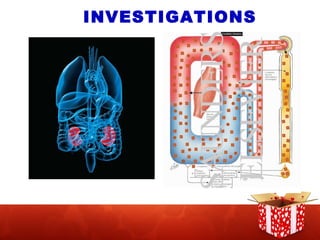
INVESTIGATIONS
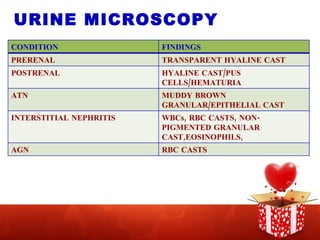
URINE MICROSCOPY CONDITION FINDINGS PRERENAL TRANSPARENT HYALINE CAST POSTRENAL HYALINE CAST/PUS CELLS/HEMATURIA ATN MUDDY BROWN GRANULAR/EPITHELIAL CAST INTERSTITIAL NEPHRITIS WBCs, RBC CASTS, NON-PIGMENTED GRANULAR CAST,EOSINOPHILS, LYMPHOCYTES AGN RBC CASTS
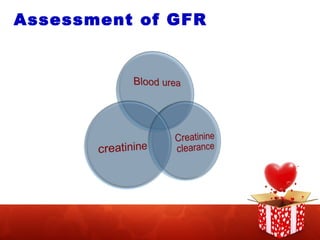
Assessment of GFR
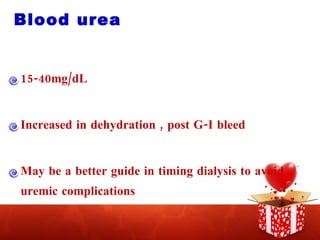
Blood urea 15-40mg/dL Increased in dehydration , post G-I bleed May be a better guide in timing dialysis to avoid uremic complications
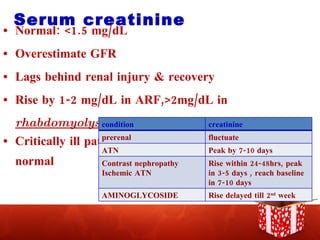
Serum creatinine Normal: <1.5 mg/dL Overestimate GFR Lags behind renal injury & recovery Rise by 1-2 mg/dL in ARF,>2mg/dL in  rhabdomyolysis Critically ill patient: a “normal” value may not be normal  condition creatinine prerenal fluctuate ATN Peak by 7-10 days Contrast nephropathy Ischemic ATN Rise within 24-48hrs, peak in 3-5 days , reach baseline in 7-10 days AMINOGLYCOSIDE Rise delayed till 2 nd  week
Creatinine clearance Volume of plasma cleared off creatinine per unit time Earlier warnings, 2hr samples [140-age] x body wt  /  S.Creatinine x 72 91-130 ml / min CrCl =  U. Creatinine [mg/dL] x volume [mL/min] P Creatinine[mg/dL] S cystatin C
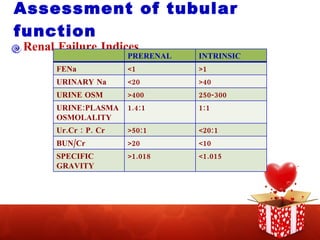
Assessment of tubular function Renal Failure Indices PRERENAL INTRINSIC FENa <1 >1 URINARY Na <20 >40 URINE OSM >400 250-300 URINE:PLASMA OSMOLALITY 1.4:1 1:1 Ur.Cr : P. Cr >50:1 <20:1 BUN/Cr >20 <10 SPECIFIC GRAVITY >1.018 <1.015
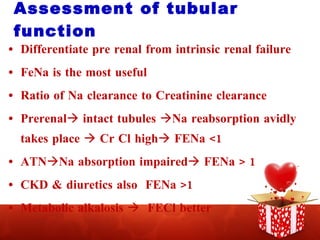
Assessment of tubular function Differentiate pre renal from intrinsic renal failure FeNa is the most useful Ratio of Na clearance to Creatinine clearance Prerenal   intact tubules   Na reabsorption avidly takes place    Cr Cl high   FENa <1 ATN  Na absorption impaired   FENa > 1 CKD & diuretics also  FENa >1 Metabolic alkalosis     FECl better
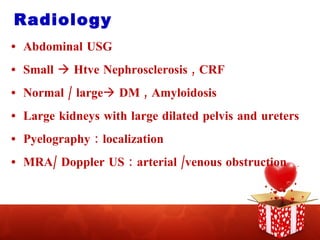
Radiology  Abdominal USG Small    Htve Nephrosclerosis , CRF Normal / large   DM , Amyloidosis Large kidneys with large dilated pelvis and ureters Pyelography : localization MRA/ Doppler US : arterial /venous obstruction
Others  renal biopsy  Increased potassium ,phosphorus ,  CK-MM, Uric Acid, decreased  Calcium   rhabdomyolysis
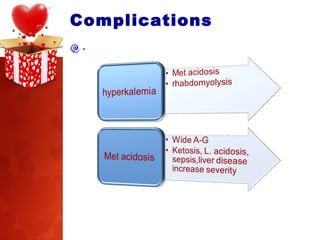
Complications  .
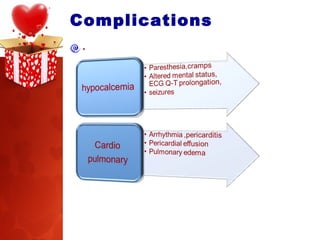
Complications  .
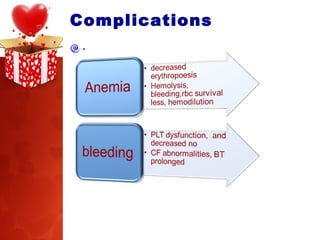
Complications  .
Also… hyperphosphatemia Infection Uremic syndrome Hypovolemia due to vigorous diuresis in recovery
Prevention of ARF- in perioperative  period
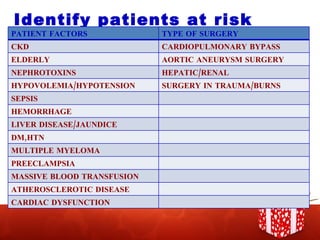
Identify patients at risk PATIENT FACTORS TYPE OF SURGERY CKD CARDIOPULMONARY BYPASS ELDERLY AORTIC ANEURYSM SURGERY NEPHROTOXINS HEPATIC/RENAL TRANSPLANTATION HYPOVOLEMIA/HYPOTENSION SURGERY IN TRAUMA/BURNS SEPSIS HEMORRHAGE LIVER DISEASE/JAUNDICE DM,HTN MULTIPLE MYELOMA PREECLAMPSIA MASSIVE BLOOD TRANSFUSION ATHEROSCLEROTIC DISEASE CARDIAC DYSFUNCTION
Adequate pre-intra & post op hydration Large bore cannula Calculate for deficit correction ,maintenance,3 rd  space losses Fluid challenge:250-500mL of NS over 10-15 mins If CVP monitoring established:  small elevation[1-2mm]= need more  large increase[5mm]  = be slow Colloid Controversies   over use  in sepsis
Maintain renal perfusion pressure Maintain MAP at 70-100 mm of Hg Catecholamines may help if there is a cause for hypotension other than hypovolemia
Hemodynamic &urinary output monitoring Blood pressure CVP PAWP Urine output   ensure catheter is not compressed  ensure good urine flow from start  monitor output hourly  ensure output >1ml/kg/hr
Avoid nephrotoxins ACE-I & ARB NSAIDs AMINOGLYCOSIDES AMPHOTERICIN-B CISPLATIN ASPIRIN CYCLOSPORIN LMW-DEXTRAN ACYCLOVIR,INDINAVIR METHOTREXATE
Aggressive fluid loading Trauma Compartment syndrome Limb revascularization … .high chance for rhabdomyolysis
Adequate oxygenation
Pharmacologic strategies
Mannitol  Improve urinary flow Plasma expansion Osmotic hemodilution Free radical scavenging Volume increase    volume depletion Increase O2 consumption Pulmonary edema, intra renal vasoconstriction
Mannitol 6.25-12.5g is given 15 mins prior to the defined insult / repeated 4-6 hrs 24 hr cumulative dose not >1.5 mg/kg Aortic surgeries Renal transplantation CABG rhabdomyolysis
Frusemide  Inhibit Na-K ATPase in mTAL Renal vasodilation Clear debris  oliguric to non oliguric conversion segmental blockade with thiazide e.g. metolazone 2.5-5.0mg po Ototoxicity, interstitial nephritis Shouldn’t be given if pt is not adequately fluid loaded
Frusemide Pigment nephropathy[  2-3 times the normal dose with aggressive hydration] Contrast nephropathy [with saline] May reverse medullary hypoxia induced by toxins 2-10 mg/kg for converting oliguric to non oliguric renal failure Continuous infusion 1-10mg/hr after a LD of 10-20mg
Dopamine  Non specific DA1+DA2 agonist “ subpressor dopamine has proved ineffective in clinical trials , may trigger arrhythmias and should not be used as a renoprotective agent in this setting” S/E: increased myocardial O2 consumption, decrease hypoxic drive, intestinal ischemia
Others  Fenoldapam Nor adrenaline Dopexamine CCBs PGE1 ANP ADENOSINE AMINOSTEROIDS
ALSO NOTE… FORCED ALKALINE DIURESIS IN RHABDOMYOLYSIS N-ACETYL CYSTINE IN ACETAMINOPHEN INDUCED INJURY CONTRAST NEPHROPATHY  hydration , n-acetyl cystiene , theophylline/aminophyllin, bicarbonate containing IVFs[rather than saline]
Treatment of complications of ARF
Hyperkalemia regular insulin 10 u + glucose [50 mL 50% dextrose Ca gluconate 105 10 mliv Inhaled salbutamol 5 mg nebulised Kayexelate,Na polystyrene sulfonate NaHCO3 50-100 mEq iv dialysis
others Metabolic acidosis:  NaHCO3 to keep its level >15mmol/L or pH >7.2 Hyperphosphatemia :Ca carbonate, Al(OH)3 Hypocalcemia :Ca gluconate , CaCl2 Nutrition Anemia Rx of CHF
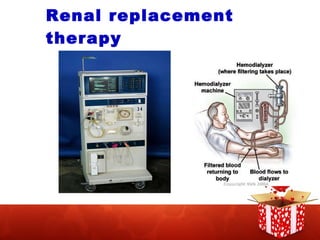
Renal replacement therapy
Criteria for initiation of RRT Anuria  Oliguria  Pulmonary edema Hyperkalemia >6.5mmol/L Severe acidemia <7.2 Uremic encephalopathy Uremic pericarditis Drug overdose with dialyzable toxins
Dialysis  dialyser,dialysate,blood delivery system Vascular access Diffusion technique  heparinized blood and dialysate flows in opp direction through a synthetic membrane down a conc. gradient Convection technique  similar to what happens in glomeruli. Blood passes across a filter which has pores of different sizes so as to filter various molecules
hemodialysis ADVANTAGES Efficient solute removal in short period of time Lower cost more suitable in severe hyperkalemia more effective than PD in ARF
hemodialysis DISADVANTAGES Need for large bore venous access Need for anticoagulation No removal of cytokines Unsuitable if hemodynamically unstable
Complications  Hypotension: poor tolerance to fluid removal or due to acetate component. Treatment   decrease blood flow rate , IVFs Hypoxemia : loss of CO2 via dialyzer , bronchospasm ,Treatment:Adr / b-agonist / aminophylline Hemorrhage : 1mg of protamine  100iu of heparin  Arrhythmias  Dialysis disequilibrium syndrome: headache, nausea, delirium, seizures
hemodialysis Intermittent HD: 3-4hrs per day,3-4 times per week Slow Low Efficiency Dialysis ^-12 hrs per day
Continuous RRT When intermittent HD fails When patient is not tolerating intermittent HD due to hemodynamic instability
Types  Arteriovenous Venovenous
Venovenous  Continuous venovenous hemodialysis Continuous venovenous hemofiltration Continuous venovenous hemodiafiltration
Advantages  .better hemodynamic stability Less arryhthmias Improved nutritional support Better pulmonary gas exchange Better fluid control
Disadvantages  High risk of bleeding Immobilization prolonged Costly Difficult vascular access Filter problems
peritoneal dialysis  Less effective than HD Useful if  HD not available Bleeding diathesis Impossible to attain vascular access Hemodynamically unstable No anticoagulation is needed
disadvantages Impaired drainage Peritonitis Protein loss Compromised lung function Abnormal blood sugar & electrolyte values Very slow and ineffective when rapid correction is needed
Peritoneal dialysis Access via a peritoneal catheter 1.5-3L of a dextrose containing solution infused Allowed to dwell for a short period of time[2-4hrs] Convective + diffusive clearance
. “ Recent evidence suggest that more intensive hemodialysis [e.g. daily rather than alternative day intermittent dialysis] may be clinically superior and confers improved survival in ARF , once dialysis is required.”
References  Harrisons principles of internal medicine,17 th  e Acute kidney injury network , akinet.org Principles of critical care,2 nd  e Farokh Erach Udwadia Acute renal failure, Dr Rebecca Jacob, IJA 2003;47(5) Anesthesia and coexisting disease,4 th  e ccmtutorials.com Perioperative acute renal failure and its management, Dr D Mallikarjuna [isacon-2007
THANK YOU

ACUTE RENAL FAILURE

  • 1.
    AETIOPATHOGENESIS & MANAGEMENTOF ACUTE RENAL FAILURE PRESENTER Dr Unnikrishnan P COORDINATOR Dr Sugandha MODERATORS Dr Sheela Rani Dr Suneesh DEPT OF ANESTHESIOLOGY, MCH-TVM
  • 2.
    . Human beingsare essentially big bags of water, the volume of which must be kept under tight control, to prevent us from either drying out or drowning…..
  • 3.
    Highlights… FOLLOWING THETRENDS…. CAPTURE THE KEYS TO OPEN THE DOOR HOW TO PREVENT ARF [Anesthetist Rested during Failure] NEVER ENDING CONTRAVERSIES REPLACING KIDNEY […very difficult]
  • 4.
    ‘ ACUTE KIDNEYINJURY’ Abrupt reduction [<48 hrs] in kidney function, defined as an absolute increase in S creatinine of ≥0.3 mg/dL A percentage increase in S creatinine of ≥ 50% [1.5 fold from baseline] or a reduction in urine output-- documented oliguria of < 0.5 ml/kg/hr, for more than six hours.
  • 5.
    STAGING SYSTEM FORA.K.I. STAGE S.CREATININE CRITERIA URINE OUTPUT CRITERIA 1 INCREASE IN S.CREATININE ≥0.3mg/dL OR INCREASE TO ≥ 150-200% FROM BASELINE <0.5 ml/kg/hr FOR >6HRS 2 INCREASE IN S.CREATININE TO >200-300%[2-3 FOLD] FROM BASELINE <0.5 ml/kg/hr FOR >12 HRS 3 INCREASE IN S. CREATININE TO >300%[>3 FOLD] FROM BASELINE OR S.CREATININE OF ≥4mg/dL WITH AN ACUTE INCREASE OF ATLEAST 0.5 mg/dL <0.3ml/kg/hr FOR 24 HRS OR ANURIA FOR 12 HRS
  • 6.
  • 7.
  • 8.
  • 9.
    PRERENAL ARF Mostcommon Renal hypo perfusion Important form in perioperative period
  • 10.
    . CAUSES-PRERENALARF HYPOVOLEMIA >HEMORRHAGE >G-I LOSSES >DECREASED INTAKE >URINARY LOSSES >SKIN LOSSES >OTHERS:BURNS,PANCREATITIS,SEVERE HYPOALBUMINEMIA ALTERED RENAL HEMODYNAMICS LOW CARDIAC OUTPUT STATES >CHF >VALVULAR HEART DISEASE >PPV > REDUCED VENOUS RETURN SYSTEMIC VASODILATION >SEPSIS >ANTIHYPERTENSIVES >VASODILATORS >ANAPHYLAXIS RENAL VASOCONSTRICTION >CATECHOLAMINES >HYPERCALCEMIA IMPAIREMENT OF RENAL AUTOREGULATION >NSAIDs >ACE-I >ARBs HEPATORENAL SYNDROME
  • 11.
  • 12.
    HYPOVOLEMIA- intrinsic Tubuloglomerularfeedback Afferent arteriolar vasodilatation Preferential efferent arteriolar vasoconstriction Aim is to utilize the existing filtration reserve maximally
  • 13.
    In short…. EXTRINSIC INCREASE MAP, IMPROVE INTRAVASCULAR VOLUME INTRINSIC  IMPROVE RENAL PLASMA FLOW, GFR & GLOMERULAR PRESSURE
  • 14.
    When the insultcross the limits…. Compensatory mechanisms overwhelmed  renal perfusion decrease  GFR fall Decreased O2 delivery  needs to decrease its work  decrease filtration  oliguria Increased Na reabsorption = more work by medulla  blood flow towards medulla ,i.e. away from cortex  GFR decrease  oliguria “ acute renal success” Increase perfusion pressure If we wait …..ATN
  • 15.
    Hepatorenal syndrome Uniqueform of prerenal ARF Structurally normal Profound renal vasoconstriction Correction of liver disease  resolution
  • 16.
    INTRINSIC ARF CAUSESRENOVASCULAR >ATHEROEMBOLISM >MALIGNANT HTN > >HUS > DIC >PREECLAMPSIA GLOMERULAR >AGN TUBULES -ATN ISCHEMIA >MAJOR CARDIOVASCULAR Sx >TRAUMA >HEMORRHAGE >HYPOVOLEMIA TOXINS Exogenous: Radiocontrast dye,Antibiotics-Aminoglycosides,Chemotherapeutic agents-Cisplatin, Amphotericin-B, Ethylene glycol Endogenous: myoglobin,hemoglobin,calcium,bilirubin SEPSIS INTERSTITIUM Allergic: Antibiotics : b-lactam ,quinolone , rifampin NSAIDs B/L pyelonephritis INTRATUBULAR OBSTRUCTION acyclovir, methotrexate , indinavir , myeloma proteins
  • 17.
    Ischemic ATN 4PHASES INITIATION:GFR DECREASE , OBSTRUCTION BY DEBRIS , BACKLEAK EXTENSION : CONTINUED…. MAINTENANCE : GFR LOWEST , URINE O/P LOWEST, UREMIC COMPLICATIONS MAY OCCUR RECOVERY : EPITHELIAL CELL REGENERATION , GFR RETURNS
  • 18.
    The so calleddiuretic phase… Recovery phase Filtration recovers early Recovery of epithelial function lags behind
  • 19.
    Nephrotoxic ATN RISKFACTORS Advanced age Preexisting kidney disease Hypovolemia CCF Multiple myeloma
  • 20.
  • 21.
    Contrast nephropathy FEATURES REVERSIBLE ACUTE ONSET [24-48 HRS] PEAK 3-5 DAYS RESOLUTION IN ONE WEEK B UREA & S CREATININE INCREASE
  • 22.
    Atheroembolic ATN Aftermanipulation of aorta or renal arteries during surgery / angiography / trauma In patients with atherosclerosis Frequently irreversible
  • 23.
    POSTRENAL ARF Obstructionis always the most likely cause when there is anuria B/L ureteric U/L ureteric if single functioning kidney Bladder neck obstruction Urethral
  • 24.
    Perioperative oliguria -pathophysiology Anesthetic agents: no renal vasodilation per se ; effects by reducing CO & BP EDB & high spinal anesthesia reduce sympathetic tone PPV decrease renal blood flow ACE-I cause significant reduction in perfusion pressure during anesthesia Narcotics can increase ADH response
  • 25.
    Raised intra abdominalpressure Normal 0-17mm of Hg >20 mm of Hg  compression of pelvis  anuria Improvement occurs only after decompression May also cause false high CVP readings due to decreased venous return SITUATIONS EMERGENCY LAPAROTAMIES LEAKING ABD AORTIC ANEURISMS INTESTINAL DISTENSION PARALYTIC ILEUS ASCITES
  • 26.
  • 27.
    Pre renal vomiting, diarrhoea Intestinal obstruction…. Carry over cases..NPOOOOOOO Look for Thirst Reduced JVP Decreased skin turgor Dry mucus membrane
  • 28.
    Intrinsic renal oliguria,edema,hypertension AGN Intake of nephrotoxic drugs h/o atrial fibrillation : renal artery thrombus h/o vascular surgeries : atheroembolic ARF Muscle trauma : rhabdomyolysis
  • 29.
    Post renal AnuriaFlank pain h/o prostatic disease
  • 30.
  • 31.
    URINE MICROSCOPY CONDITIONFINDINGS PRERENAL TRANSPARENT HYALINE CAST POSTRENAL HYALINE CAST/PUS CELLS/HEMATURIA ATN MUDDY BROWN GRANULAR/EPITHELIAL CAST INTERSTITIAL NEPHRITIS WBCs, RBC CASTS, NON-PIGMENTED GRANULAR CAST,EOSINOPHILS, LYMPHOCYTES AGN RBC CASTS
  • 32.
  • 33.
    Blood urea 15-40mg/dLIncreased in dehydration , post G-I bleed May be a better guide in timing dialysis to avoid uremic complications
  • 34.
    Serum creatinine Normal:<1.5 mg/dL Overestimate GFR Lags behind renal injury & recovery Rise by 1-2 mg/dL in ARF,>2mg/dL in rhabdomyolysis Critically ill patient: a “normal” value may not be normal condition creatinine prerenal fluctuate ATN Peak by 7-10 days Contrast nephropathy Ischemic ATN Rise within 24-48hrs, peak in 3-5 days , reach baseline in 7-10 days AMINOGLYCOSIDE Rise delayed till 2 nd week
  • 35.
    Creatinine clearance Volumeof plasma cleared off creatinine per unit time Earlier warnings, 2hr samples [140-age] x body wt / S.Creatinine x 72 91-130 ml / min CrCl = U. Creatinine [mg/dL] x volume [mL/min] P Creatinine[mg/dL] S cystatin C
  • 36.
    Assessment of tubularfunction Renal Failure Indices PRERENAL INTRINSIC FENa <1 >1 URINARY Na <20 >40 URINE OSM >400 250-300 URINE:PLASMA OSMOLALITY 1.4:1 1:1 Ur.Cr : P. Cr >50:1 <20:1 BUN/Cr >20 <10 SPECIFIC GRAVITY >1.018 <1.015
  • 37.
    Assessment of tubularfunction Differentiate pre renal from intrinsic renal failure FeNa is the most useful Ratio of Na clearance to Creatinine clearance Prerenal  intact tubules  Na reabsorption avidly takes place  Cr Cl high  FENa <1 ATN  Na absorption impaired  FENa > 1 CKD & diuretics also FENa >1 Metabolic alkalosis  FECl better
  • 38.
    Radiology AbdominalUSG Small  Htve Nephrosclerosis , CRF Normal / large  DM , Amyloidosis Large kidneys with large dilated pelvis and ureters Pyelography : localization MRA/ Doppler US : arterial /venous obstruction
  • 39.
    Others renalbiopsy Increased potassium ,phosphorus , CK-MM, Uric Acid, decreased Calcium  rhabdomyolysis
  • 40.
  • 41.
  • 42.
  • 43.
    Also… hyperphosphatemia InfectionUremic syndrome Hypovolemia due to vigorous diuresis in recovery
  • 44.
    Prevention of ARF-in perioperative period
  • 45.
    Identify patients atrisk PATIENT FACTORS TYPE OF SURGERY CKD CARDIOPULMONARY BYPASS ELDERLY AORTIC ANEURYSM SURGERY NEPHROTOXINS HEPATIC/RENAL TRANSPLANTATION HYPOVOLEMIA/HYPOTENSION SURGERY IN TRAUMA/BURNS SEPSIS HEMORRHAGE LIVER DISEASE/JAUNDICE DM,HTN MULTIPLE MYELOMA PREECLAMPSIA MASSIVE BLOOD TRANSFUSION ATHEROSCLEROTIC DISEASE CARDIAC DYSFUNCTION
  • 46.
    Adequate pre-intra &post op hydration Large bore cannula Calculate for deficit correction ,maintenance,3 rd space losses Fluid challenge:250-500mL of NS over 10-15 mins If CVP monitoring established:  small elevation[1-2mm]= need more  large increase[5mm] = be slow Colloid Controversies  over use  in sepsis
  • 47.
    Maintain renal perfusionpressure Maintain MAP at 70-100 mm of Hg Catecholamines may help if there is a cause for hypotension other than hypovolemia
  • 48.
    Hemodynamic &urinary outputmonitoring Blood pressure CVP PAWP Urine output  ensure catheter is not compressed  ensure good urine flow from start  monitor output hourly  ensure output >1ml/kg/hr
  • 49.
    Avoid nephrotoxins ACE-I& ARB NSAIDs AMINOGLYCOSIDES AMPHOTERICIN-B CISPLATIN ASPIRIN CYCLOSPORIN LMW-DEXTRAN ACYCLOVIR,INDINAVIR METHOTREXATE
  • 50.
    Aggressive fluid loadingTrauma Compartment syndrome Limb revascularization … .high chance for rhabdomyolysis
  • 51.
  • 52.
  • 53.
    Mannitol Improveurinary flow Plasma expansion Osmotic hemodilution Free radical scavenging Volume increase  volume depletion Increase O2 consumption Pulmonary edema, intra renal vasoconstriction
  • 54.
    Mannitol 6.25-12.5g isgiven 15 mins prior to the defined insult / repeated 4-6 hrs 24 hr cumulative dose not >1.5 mg/kg Aortic surgeries Renal transplantation CABG rhabdomyolysis
  • 55.
    Frusemide InhibitNa-K ATPase in mTAL Renal vasodilation Clear debris oliguric to non oliguric conversion segmental blockade with thiazide e.g. metolazone 2.5-5.0mg po Ototoxicity, interstitial nephritis Shouldn’t be given if pt is not adequately fluid loaded
  • 56.
    Frusemide Pigment nephropathy[ 2-3 times the normal dose with aggressive hydration] Contrast nephropathy [with saline] May reverse medullary hypoxia induced by toxins 2-10 mg/kg for converting oliguric to non oliguric renal failure Continuous infusion 1-10mg/hr after a LD of 10-20mg
  • 57.
    Dopamine Nonspecific DA1+DA2 agonist “ subpressor dopamine has proved ineffective in clinical trials , may trigger arrhythmias and should not be used as a renoprotective agent in this setting” S/E: increased myocardial O2 consumption, decrease hypoxic drive, intestinal ischemia
  • 58.
    Others FenoldapamNor adrenaline Dopexamine CCBs PGE1 ANP ADENOSINE AMINOSTEROIDS
  • 59.
    ALSO NOTE… FORCEDALKALINE DIURESIS IN RHABDOMYOLYSIS N-ACETYL CYSTINE IN ACETAMINOPHEN INDUCED INJURY CONTRAST NEPHROPATHY  hydration , n-acetyl cystiene , theophylline/aminophyllin, bicarbonate containing IVFs[rather than saline]
  • 60.
  • 61.
    Hyperkalemia regular insulin10 u + glucose [50 mL 50% dextrose Ca gluconate 105 10 mliv Inhaled salbutamol 5 mg nebulised Kayexelate,Na polystyrene sulfonate NaHCO3 50-100 mEq iv dialysis
  • 62.
    others Metabolic acidosis: NaHCO3 to keep its level >15mmol/L or pH >7.2 Hyperphosphatemia :Ca carbonate, Al(OH)3 Hypocalcemia :Ca gluconate , CaCl2 Nutrition Anemia Rx of CHF
  • 63.
  • 64.
    Criteria for initiationof RRT Anuria Oliguria Pulmonary edema Hyperkalemia >6.5mmol/L Severe acidemia <7.2 Uremic encephalopathy Uremic pericarditis Drug overdose with dialyzable toxins
  • 65.
    Dialysis dialyser,dialysate,blooddelivery system Vascular access Diffusion technique  heparinized blood and dialysate flows in opp direction through a synthetic membrane down a conc. gradient Convection technique  similar to what happens in glomeruli. Blood passes across a filter which has pores of different sizes so as to filter various molecules
  • 66.
    hemodialysis ADVANTAGES Efficientsolute removal in short period of time Lower cost more suitable in severe hyperkalemia more effective than PD in ARF
  • 67.
    hemodialysis DISADVANTAGES Needfor large bore venous access Need for anticoagulation No removal of cytokines Unsuitable if hemodynamically unstable
  • 68.
    Complications Hypotension:poor tolerance to fluid removal or due to acetate component. Treatment  decrease blood flow rate , IVFs Hypoxemia : loss of CO2 via dialyzer , bronchospasm ,Treatment:Adr / b-agonist / aminophylline Hemorrhage : 1mg of protamine  100iu of heparin Arrhythmias Dialysis disequilibrium syndrome: headache, nausea, delirium, seizures
  • 69.
    hemodialysis Intermittent HD:3-4hrs per day,3-4 times per week Slow Low Efficiency Dialysis ^-12 hrs per day
  • 70.
    Continuous RRT Whenintermittent HD fails When patient is not tolerating intermittent HD due to hemodynamic instability
  • 71.
  • 72.
    Venovenous Continuousvenovenous hemodialysis Continuous venovenous hemofiltration Continuous venovenous hemodiafiltration
  • 73.
    Advantages .betterhemodynamic stability Less arryhthmias Improved nutritional support Better pulmonary gas exchange Better fluid control
  • 74.
    Disadvantages Highrisk of bleeding Immobilization prolonged Costly Difficult vascular access Filter problems
  • 75.
    peritoneal dialysis Less effective than HD Useful if HD not available Bleeding diathesis Impossible to attain vascular access Hemodynamically unstable No anticoagulation is needed
  • 76.
    disadvantages Impaired drainagePeritonitis Protein loss Compromised lung function Abnormal blood sugar & electrolyte values Very slow and ineffective when rapid correction is needed
  • 77.
    Peritoneal dialysis Accessvia a peritoneal catheter 1.5-3L of a dextrose containing solution infused Allowed to dwell for a short period of time[2-4hrs] Convective + diffusive clearance
  • 78.
    . “ Recentevidence suggest that more intensive hemodialysis [e.g. daily rather than alternative day intermittent dialysis] may be clinically superior and confers improved survival in ARF , once dialysis is required.”
  • 79.
    References Harrisonsprinciples of internal medicine,17 th e Acute kidney injury network , akinet.org Principles of critical care,2 nd e Farokh Erach Udwadia Acute renal failure, Dr Rebecca Jacob, IJA 2003;47(5) Anesthesia and coexisting disease,4 th e ccmtutorials.com Perioperative acute renal failure and its management, Dr D Mallikarjuna [isacon-2007
  • 80.