Aditia Retno Fitri Department of Pharmacology Faculty of Medicine  Diponegoro University Indonesia
Overview Hematinic Agents Iron Folic Acid and Vitamine B12 Haemopoetic Growth Factors
 
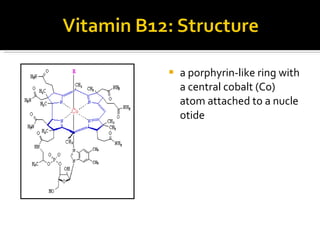
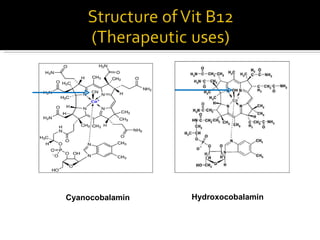
a porphyrin-like ring with a central cobalt ( Co ) atom attached to a nucleotide
Cyanocobalamin Hydrox ocobalamin
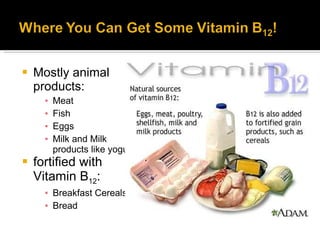
Mostly animal products: Meat  Fish Eggs Milk and Milk products like yogurt fortified with Vitamin B 12 : Breakfast Cereals Bread
U ltimate source :  microbial synthesis  not synthesized by animals  / plants. M ust be converted to  methyl-B 12 o r  ado-B 12 D aily diet  =  5-25 μg  D aily requirement  =  2-3  μg. = extrinsic factor Role: DNA synthesis
C onversion of methyl-FH 4  to FH 4      synthesis DNA Iso merisation of methylmalonyl-CoA to succinyl-CoA .
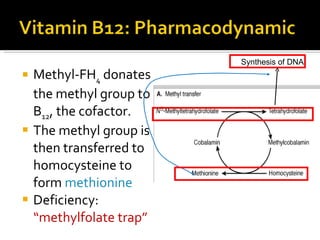
Methyl-FH 4  donates the methyl group to B 12 , the cofactor.  The methyl group is then transferred to homocysteine to form  methionine Deficiency:  “methylfolate trap” Synthesis of DNA
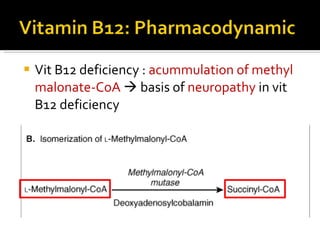
Vit B12 deficiency :  acummulation of methyl malonate-CoA     basis of  neuropathy  in vit B12 deficiency
Cobalamin is a cofactor for the enzyme Methylmalonyl-CoA mutase which converts  methylmalonyl-CoA to succinyl-CoA .  Succinyl-CoA  enters the Krebs cycles and goes into nerves to  make myelin .  If no Vitamin B 12 , methylmalonyl-CoA goes on to form abnormal fatty acids  and causes subacute degeneration of the nerves.  Only B 12  can correct this problem.
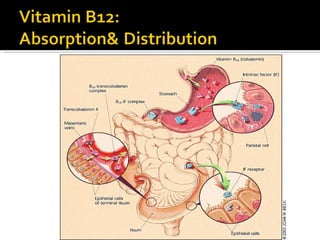
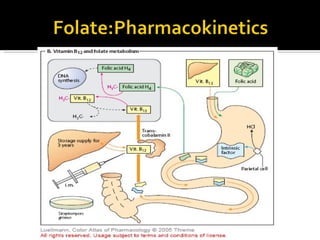
Normal B-12 absorption: Dietary B-12 binds to R factor in saliva and gastric juices. In duodenum, pancreatic enzymes promote dissociation from R factor and  binding to Intrinsic Factor (IF) IF-B12 complex taken up by ileal receptor cubilin. Released  into plasma bound to transcobalamines  TC I, II, or III. Enters cells through receptor mediated endocytosis and metabolized into two coenzymes: adenosyl-Cbl and methyl-Cbl.
Another mechanism for B 12  absorption involves diffusion and not IF : jejunum In circulation, cobalamin binds to transcobalamin II; transporting the vitamin from the enterocyte to the liver and other organs Biliary excretion of B 12  is much higher than excretion in urine or feces
 
I t can take up to 20 years to show symptoms  of deficiency in people who have recently changed to low-B 12  diets !!! Vitamin B 12  is excreted in bile, but the body is able to reabsorb a large percentage. People who consume diets very low in B 12  may actually be reabsorbing more than they absorb from diet. This is why  I t can take up to 20 years to show symptoms of deficiency in people who have recently changed to low-B 12  diets. If there is a complete absorption failure, however, deficiency symptoms can occur in 3 years.
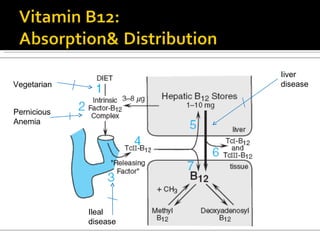
V egetarian P ernicious Anemia I leal  disease I iver disease
P ernicious anaemia  :deficiency IF Dietary deficiency:  vegetarian  Malabsorption syndromes  (>>>)  :  stagnant loop syndrome  , Crohn’s disease, Fish tape worm infestation, gastrectomy ↑ requirements:  pregnancy, hemolytic anemia, hepatic disease Vit b12 absorption test Neurologic syndrome: Vit B12 deficiency
Caused by  ↓ absorption   ↓  intrinsic factor  Interference of  absorption in the terminal ileum e.g. Colon resection in  Crohn's disease  Clinical form: Pernicious anemia Neurological disease peripheral neuropathy , D ementia ,  subacute combined   degeneration  of the spinal cord Abnormalities of epithelial tissue ,  e.g. sore tongue and malabsorption
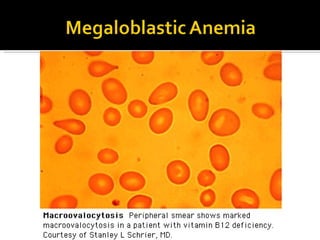
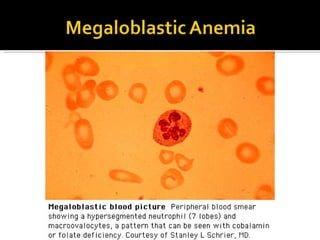
Lab: ↓ serum vit B12  (N: 170-925 nanogram/1) Blood film: pancytopenia, anisopoikilocytosis with oval macrocytes and hypersegmented   neutrophils; the marrow is megaloblastic Schilling   test  :  distinguish between gastric and  intestinal causes
Schilling Test Stage I Give 1mcg of radiolabeled B-12 orally      1000 mcg of B-12 IM one hour later     A 24-hr urine  c ollect ion    count  radiolabeled B-12 excret ion ( N :  8-35% ) . Stage II only if Stage I is abnormal.  Repeat Stage I, except with the addition of added oral IF which should normalize B-12 absorption in P.A., but not intestinal malabsorption.
 
 
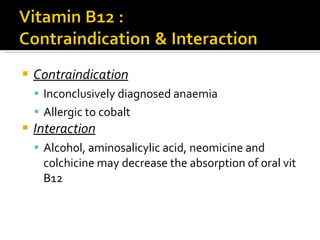
Contraindication Inconclusively diagnosed anaemia Allergic to cobalt Interaction Alcohol, aminosalicylic acid, neomicine and colchicine may decrease the absorption of oral vit B12
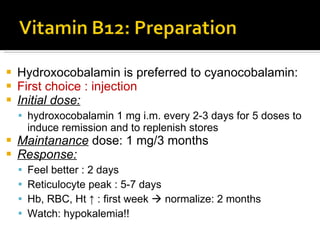
Hydroxocobalamin   is preferred to cyanocobalamin : First choice : injection Initial dose: hydroxocobalamin 1 mg i.m. every 2-3 days for   5 doses to induce remission and to replenish stores Maintanance  dose: 1 mg/3 months Response: Feel better : 2 days Reticulocyte peak : 5-7 days Hb, RBC, Ht ↑ : first week    normalize: 2 months Watch: hypokalemia!!
If  injections are refused  rare allergy, bleeding disorder Alternative:  snuff  ,  aerosol  , oral Large daily oral doses (1000 micrograms)   depleted stores   must be replaced by parenteral cobalamin before   switching to the oral preparation;  the patient must   be compliant;  monitoring of the blood must be   more frequent  adequate serum vitamin B12  levels must be demonstrated.
Synthetic vitamin B 12 Cyanocobalamin, hydroxocobalamin Oral cyanocobalamin : well absorbed, highly protein bound to the transcobalamins Metabolize in the liver, followed by biliary and urinary excretion T 1/2  is about 6 days Cyanocobalamin injection containing benzyl alcohol : should not be used for neonates  or immature infants
Reduction of absorption of B 12  from GI tract excessive consumption of ethanol for longer than 2 weeks prolonged use of cholestyramine, colchicine large doses of ascorbic acid may destroy B 12
Folate (Folic Acid)  can mask signs of B 12  deficiency  because it can correct  macrocytic anemia , which is often the first symptom experienced in B 12  deficiency. The folate won’t correct the deficiency, however, and because it goes undetected severe  nerve damage  can occur.
Usually do not occur when a megaloblastic  anaemia due to pernicious anaemia is incorrectly  diagnosed as due to folate deficiency; here folic   acid, if used alone (see below) may accelerate progressionof subacute combined degeneration of the  nervous system.
Exposure to  Nitrous Oxide  can cause B 12  deficiency in cases of abuse, anesthesia usage during surgery, or occupational exposure for hospital workers. NO actually  inactivates B 12 , so while those affected have enough in their system, they are effectively B 12  deficient .
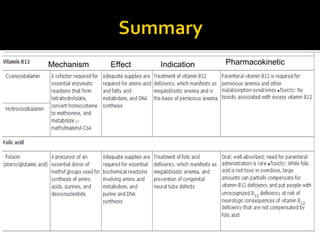
needs an 'intrinsic factor ' for absorption in terminal ileum.  It is stored in the liver.  It is required for:  synthesis of purines and pyrimidines  (see above)  isomerisation of methylmalonyl-CoA to succinyl-CoA.  Deficiency  :  pernicious anaemia ,  Vitamin B 12  is  given by injection  to treat pernicious anaemia.
 
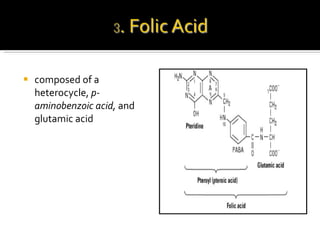
composed of a heterocycle,  p-aminobenzoic acid,  and glutamic acid
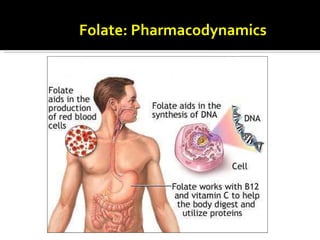
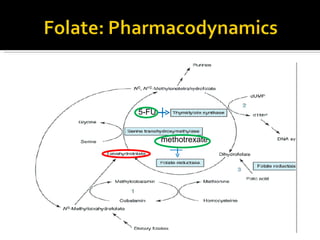
Folate:  Pharmacodynamics
5-FU methotrexate
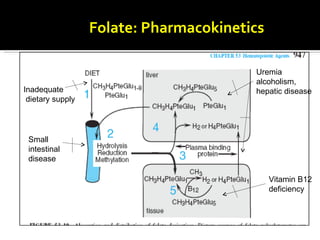
Human requirement :  varies from 25-35 mcg/d in infancy to up to 100 mcg/d in adults Total body folic acid stores :  5-10 mg, half of which is stored in the liver as N-5-methyltetrahydrofolate > 2% is degraded daily so a continuous dietary is essential
Active absorption  : mainly in the proximal part of the small intestine Conjugate in the epithelial cells converts the polyglutamates into absorbable monoglutamates Pharmaceutical product  : completely absorbed in the upper duodenum, even in the presence of malabsorption Excret ion :  entirely as metabolites by the kidney
 
Folate:  Pharmacokinetics Inadequate dietary supply Small  intestinal  disease Uremia alcoholism, hepatic disease  Vitamin B12  deficiency
Etiology : Most causes  : inadequate diet, alcoholism, pregnancy, malabsorption syndrome Other causes  : increased requirement, enhanced metabolism, interference in the metabolism Several reasons for folate def. in alcoholics  reduced dietary intakes, inactivation of folate conjugate, impaired enterohepatic cycling, depletion of liver folate stores
More often malnourished than those with cobalamin deficiency Gastrointestinal manifestations  More widespread and more severe than those of pernicious anemia Diarrhea is often present Cheilosis  Glossitis  Neurologic abnormalities do not occur
Negative folate balance (decreased serum folate) Decreased RBC folate levels and hypersegmented neutrophils Macroovalocytes, increased MCV, and  decreased hemoglobin
Diagnosis : Megaloblastosis   possibly due to folic acid deficiency must be interpreted in the light of B 12  status Peripheral blood and bone marrow biopsy look exactly like B12 deficiency Reduced folate tissue levels  :  erythrocyte folate concentration <140 ng/ml more reliable of tissue stores Plasma  folate level  :   <3 ng/ml—fluctuates  Only increased serum homocysteine levels but NOT serum methylmalonic acid levels
Management : Folic acid should not be given until B 12  def. and pernicious anemia have been excluded Oral dose: 1 mg/day Absorption is normal : 50-100 mcg/d Malabsorption : 250-500 mcg/d To replenish depleted folate stores, a daily dose of 1-2 mg/d for 2-3 weeks Duration of therapy depend on underlying causes : 3-4 months to clear folate-deficient erythrocytes from  the blood
Prophylactic folate therapy :  pregnancy, particularly in women with poor diets, multiple pregnancies, or thalassemia minor : 300 mcg/d in the last trimester Monitoring  : Reticulocyte count : peaks 5-8 days after treatment Increase Hct Decrease to normal MCV
Vitamin B 12  deficiency anemia can be temporarily corrected by folate supplementation However, this does not correct the neurologic deficits Folate “draws” vitamin B 12  away from neurologic system for RBC production and can exacerbate combined systems degeneration
Megaloblastic Anemia  due to inadequate dietary intake of folic acid  due to chronic alcoholism, pregnancy, infancy, impaired utilization: uremia, cancer or hepatic disease.  A nemia associated with dihydrofolate reductase inhibitors.  i.e. Methotrexate (Cancer chemotherapy), Pyrimethamine (Antimalarial) Administration of citrovorum factor (methylated folic acid) alleviates the anemia.
Ingestion of  drugs that interfere with intestinal absorption  and storage of folic acid. Mechanism- inhibition of the conjugases that break off folic acid from its food chelators.  Ex. – phenytoin, progestin/estrogens (oral contraceptives)  Malabsorption  – Sprue, Celiac disease, partial gastrectomy.  Rheumatoid arthritis  – increased folic acid demand or utilization.
Oral replacement therapy Folate prophylaxis Women planning pregnancy are advised to take 400 g folic acid daily before conception and until 12 weeks of pregnancy to prevent neural-tube defects (5 mg/day for women with a previous affected pregnancy) Folate fortification of cereal grains at 1·4 mg/kg has been made mandatory in the USA as an additional method of improving the folate status of the population.  Prophylactic folate is also recommended in other states of increased demand such as long-term hemodialysis and chronic haemolytic disorders
Dark green leafy vegetables, like spinach Broccoli, asparagus, green peas and okra Orange juice Papaya Beans, lentils and black-eyed peas Soybeans and tofu Peanut butter Fortified foods: Cereal, rice, pasta, tortillas, grits Be sure to eat 5 servings of fruits & vegetables such as these every day!
 
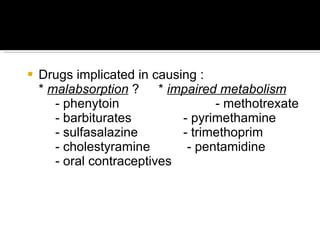
Drugs implicated in causing : *  malabsorption  ?   *  impaired metabolism - phenytoin   - methotrexate - barbiturates - pyrimethamine - sulfasalazine - trimethoprim - cholestyramine   - pentamidine - oral contraceptives
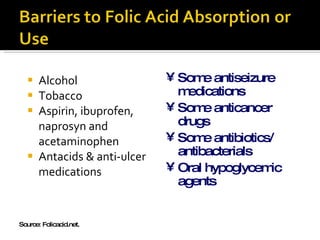
Alcohol  Tobacco Aspirin, ibuprofen, naprosyn and acetaminophen  Antacids & anti-ulcer medications Some antiseizure medications Some anticancer drugs  Some antibiotics/ antibacterials  Oral hypoglycemic agents Source: Folicacid.net .
No known level at which it is toxic , even in high amounts Even if you eat fruits and vegetables containing folic acid, eat a bowl of cereal and take a multivitamin with folic acid in one day, you would not have a problem with too much folic acid
do not occur even with large doses of folic acid except possibly in vitamin B 12  deficiency ,  the blood picture may improve and give the appearance of cure while the neurological lesions get worse. I mportant to determine whether a megaloblastic anaemia is caused by a folate or a vitamin B 12  deficiency.
Mechanism Effect Indication Pharmacokinetic
Color atlas of pharmacology Goodman & Gilman’s  The Pharmacological  Basis of Therapeutics, 11th ed. Clinical Pharmacology, 9th Ed USMLE Pharmacology Recall Pharmacology for the health care profession Pharmacology Rang et al 5th Edition Basic and Clinical Pharmacology 11th Ed, Katzung Desk reference of clinical pharmacology

Hematinic II

  • 1.
    Aditia Retno FitriDepartment of Pharmacology Faculty of Medicine Diponegoro University Indonesia
  • 2.
    Overview Hematinic AgentsIron Folic Acid and Vitamine B12 Haemopoetic Growth Factors
  • 3.
  • 4.
    a porphyrin-like ringwith a central cobalt ( Co ) atom attached to a nucleotide
  • 5.
  • 6.
    Mostly animal products:Meat Fish Eggs Milk and Milk products like yogurt fortified with Vitamin B 12 : Breakfast Cereals Bread
  • 7.
    U ltimate source: microbial synthesis  not synthesized by animals / plants. M ust be converted to methyl-B 12 o r ado-B 12 D aily diet = 5-25 μg D aily requirement = 2-3 μg. = extrinsic factor Role: DNA synthesis
  • 8.
    C onversion ofmethyl-FH 4 to FH 4  synthesis DNA Iso merisation of methylmalonyl-CoA to succinyl-CoA .
  • 9.
    Methyl-FH 4 donates the methyl group to B 12 , the cofactor. The methyl group is then transferred to homocysteine to form methionine Deficiency: “methylfolate trap” Synthesis of DNA
  • 10.
    Vit B12 deficiency: acummulation of methyl malonate-CoA  basis of neuropathy in vit B12 deficiency
  • 11.
    Cobalamin is acofactor for the enzyme Methylmalonyl-CoA mutase which converts methylmalonyl-CoA to succinyl-CoA . Succinyl-CoA enters the Krebs cycles and goes into nerves to make myelin . If no Vitamin B 12 , methylmalonyl-CoA goes on to form abnormal fatty acids and causes subacute degeneration of the nerves. Only B 12 can correct this problem.
  • 12.
    Normal B-12 absorption:Dietary B-12 binds to R factor in saliva and gastric juices. In duodenum, pancreatic enzymes promote dissociation from R factor and binding to Intrinsic Factor (IF) IF-B12 complex taken up by ileal receptor cubilin. Released into plasma bound to transcobalamines TC I, II, or III. Enters cells through receptor mediated endocytosis and metabolized into two coenzymes: adenosyl-Cbl and methyl-Cbl.
  • 13.
    Another mechanism forB 12 absorption involves diffusion and not IF : jejunum In circulation, cobalamin binds to transcobalamin II; transporting the vitamin from the enterocyte to the liver and other organs Biliary excretion of B 12 is much higher than excretion in urine or feces
  • 14.
  • 15.
    I t cantake up to 20 years to show symptoms of deficiency in people who have recently changed to low-B 12 diets !!! Vitamin B 12 is excreted in bile, but the body is able to reabsorb a large percentage. People who consume diets very low in B 12 may actually be reabsorbing more than they absorb from diet. This is why I t can take up to 20 years to show symptoms of deficiency in people who have recently changed to low-B 12 diets. If there is a complete absorption failure, however, deficiency symptoms can occur in 3 years.
  • 16.
    V egetarian Pernicious Anemia I leal disease I iver disease
  • 17.
    P ernicious anaemia :deficiency IF Dietary deficiency: vegetarian Malabsorption syndromes (>>>) : stagnant loop syndrome , Crohn’s disease, Fish tape worm infestation, gastrectomy ↑ requirements: pregnancy, hemolytic anemia, hepatic disease Vit b12 absorption test Neurologic syndrome: Vit B12 deficiency
  • 18.
    Caused by ↓ absorption ↓ intrinsic factor Interference of absorption in the terminal ileum e.g. Colon resection in Crohn's disease Clinical form: Pernicious anemia Neurological disease peripheral neuropathy , D ementia , subacute combined degeneration of the spinal cord Abnormalities of epithelial tissue , e.g. sore tongue and malabsorption
  • 19.
    Lab: ↓ serumvit B12 (N: 170-925 nanogram/1) Blood film: pancytopenia, anisopoikilocytosis with oval macrocytes and hypersegmented neutrophils; the marrow is megaloblastic Schilling test : distinguish between gastric and intestinal causes
  • 20.
    Schilling Test StageI Give 1mcg of radiolabeled B-12 orally  1000 mcg of B-12 IM one hour later  A 24-hr urine c ollect ion  count radiolabeled B-12 excret ion ( N : 8-35% ) . Stage II only if Stage I is abnormal. Repeat Stage I, except with the addition of added oral IF which should normalize B-12 absorption in P.A., but not intestinal malabsorption.
  • 21.
  • 22.
  • 23.
    Contraindication Inconclusively diagnosedanaemia Allergic to cobalt Interaction Alcohol, aminosalicylic acid, neomicine and colchicine may decrease the absorption of oral vit B12
  • 24.
    Hydroxocobalamin is preferred to cyanocobalamin : First choice : injection Initial dose: hydroxocobalamin 1 mg i.m. every 2-3 days for 5 doses to induce remission and to replenish stores Maintanance dose: 1 mg/3 months Response: Feel better : 2 days Reticulocyte peak : 5-7 days Hb, RBC, Ht ↑ : first week  normalize: 2 months Watch: hypokalemia!!
  • 25.
    If injectionsare refused rare allergy, bleeding disorder Alternative: snuff , aerosol , oral Large daily oral doses (1000 micrograms) depleted stores must be replaced by parenteral cobalamin before switching to the oral preparation; the patient must be compliant; monitoring of the blood must be more frequent adequate serum vitamin B12 levels must be demonstrated.
  • 26.
    Synthetic vitamin B12 Cyanocobalamin, hydroxocobalamin Oral cyanocobalamin : well absorbed, highly protein bound to the transcobalamins Metabolize in the liver, followed by biliary and urinary excretion T 1/2 is about 6 days Cyanocobalamin injection containing benzyl alcohol : should not be used for neonates or immature infants
  • 27.
    Reduction of absorptionof B 12 from GI tract excessive consumption of ethanol for longer than 2 weeks prolonged use of cholestyramine, colchicine large doses of ascorbic acid may destroy B 12
  • 28.
    Folate (Folic Acid) can mask signs of B 12 deficiency because it can correct macrocytic anemia , which is often the first symptom experienced in B 12 deficiency. The folate won’t correct the deficiency, however, and because it goes undetected severe nerve damage can occur.
  • 29.
    Usually do notoccur when a megaloblastic anaemia due to pernicious anaemia is incorrectly diagnosed as due to folate deficiency; here folic acid, if used alone (see below) may accelerate progressionof subacute combined degeneration of the nervous system.
  • 30.
    Exposure to Nitrous Oxide can cause B 12 deficiency in cases of abuse, anesthesia usage during surgery, or occupational exposure for hospital workers. NO actually inactivates B 12 , so while those affected have enough in their system, they are effectively B 12 deficient .
  • 31.
    needs an 'intrinsicfactor ' for absorption in terminal ileum. It is stored in the liver. It is required for: synthesis of purines and pyrimidines (see above) isomerisation of methylmalonyl-CoA to succinyl-CoA. Deficiency : pernicious anaemia , Vitamin B 12 is given by injection to treat pernicious anaemia.
  • 32.
  • 33.
    composed of aheterocycle, p-aminobenzoic acid, and glutamic acid
  • 34.
  • 35.
  • 36.
    Human requirement : varies from 25-35 mcg/d in infancy to up to 100 mcg/d in adults Total body folic acid stores : 5-10 mg, half of which is stored in the liver as N-5-methyltetrahydrofolate > 2% is degraded daily so a continuous dietary is essential
  • 37.
    Active absorption : mainly in the proximal part of the small intestine Conjugate in the epithelial cells converts the polyglutamates into absorbable monoglutamates Pharmaceutical product : completely absorbed in the upper duodenum, even in the presence of malabsorption Excret ion : entirely as metabolites by the kidney
  • 38.
  • 39.
    Folate: PharmacokineticsInadequate dietary supply Small intestinal disease Uremia alcoholism, hepatic disease Vitamin B12 deficiency
  • 40.
    Etiology : Mostcauses : inadequate diet, alcoholism, pregnancy, malabsorption syndrome Other causes : increased requirement, enhanced metabolism, interference in the metabolism Several reasons for folate def. in alcoholics reduced dietary intakes, inactivation of folate conjugate, impaired enterohepatic cycling, depletion of liver folate stores
  • 41.
    More often malnourishedthan those with cobalamin deficiency Gastrointestinal manifestations More widespread and more severe than those of pernicious anemia Diarrhea is often present Cheilosis Glossitis Neurologic abnormalities do not occur
  • 42.
    Negative folate balance(decreased serum folate) Decreased RBC folate levels and hypersegmented neutrophils Macroovalocytes, increased MCV, and decreased hemoglobin
  • 43.
    Diagnosis : Megaloblastosis possibly due to folic acid deficiency must be interpreted in the light of B 12 status Peripheral blood and bone marrow biopsy look exactly like B12 deficiency Reduced folate tissue levels : erythrocyte folate concentration <140 ng/ml more reliable of tissue stores Plasma folate level : <3 ng/ml—fluctuates Only increased serum homocysteine levels but NOT serum methylmalonic acid levels
  • 44.
    Management : Folicacid should not be given until B 12 def. and pernicious anemia have been excluded Oral dose: 1 mg/day Absorption is normal : 50-100 mcg/d Malabsorption : 250-500 mcg/d To replenish depleted folate stores, a daily dose of 1-2 mg/d for 2-3 weeks Duration of therapy depend on underlying causes : 3-4 months to clear folate-deficient erythrocytes from the blood
  • 45.
    Prophylactic folate therapy: pregnancy, particularly in women with poor diets, multiple pregnancies, or thalassemia minor : 300 mcg/d in the last trimester Monitoring : Reticulocyte count : peaks 5-8 days after treatment Increase Hct Decrease to normal MCV
  • 46.
    Vitamin B 12 deficiency anemia can be temporarily corrected by folate supplementation However, this does not correct the neurologic deficits Folate “draws” vitamin B 12 away from neurologic system for RBC production and can exacerbate combined systems degeneration
  • 47.
    Megaloblastic Anemia due to inadequate dietary intake of folic acid due to chronic alcoholism, pregnancy, infancy, impaired utilization: uremia, cancer or hepatic disease. A nemia associated with dihydrofolate reductase inhibitors. i.e. Methotrexate (Cancer chemotherapy), Pyrimethamine (Antimalarial) Administration of citrovorum factor (methylated folic acid) alleviates the anemia.
  • 48.
    Ingestion of drugs that interfere with intestinal absorption and storage of folic acid. Mechanism- inhibition of the conjugases that break off folic acid from its food chelators. Ex. – phenytoin, progestin/estrogens (oral contraceptives) Malabsorption – Sprue, Celiac disease, partial gastrectomy. Rheumatoid arthritis – increased folic acid demand or utilization.
  • 49.
    Oral replacement therapyFolate prophylaxis Women planning pregnancy are advised to take 400 g folic acid daily before conception and until 12 weeks of pregnancy to prevent neural-tube defects (5 mg/day for women with a previous affected pregnancy) Folate fortification of cereal grains at 1·4 mg/kg has been made mandatory in the USA as an additional method of improving the folate status of the population. Prophylactic folate is also recommended in other states of increased demand such as long-term hemodialysis and chronic haemolytic disorders
  • 50.
    Dark green leafyvegetables, like spinach Broccoli, asparagus, green peas and okra Orange juice Papaya Beans, lentils and black-eyed peas Soybeans and tofu Peanut butter Fortified foods: Cereal, rice, pasta, tortillas, grits Be sure to eat 5 servings of fruits & vegetables such as these every day!
  • 51.
  • 52.
    Drugs implicated incausing : * malabsorption ? * impaired metabolism - phenytoin - methotrexate - barbiturates - pyrimethamine - sulfasalazine - trimethoprim - cholestyramine - pentamidine - oral contraceptives
  • 53.
    Alcohol TobaccoAspirin, ibuprofen, naprosyn and acetaminophen Antacids & anti-ulcer medications Some antiseizure medications Some anticancer drugs Some antibiotics/ antibacterials Oral hypoglycemic agents Source: Folicacid.net .
  • 54.
    No known levelat which it is toxic , even in high amounts Even if you eat fruits and vegetables containing folic acid, eat a bowl of cereal and take a multivitamin with folic acid in one day, you would not have a problem with too much folic acid
  • 55.
    do not occureven with large doses of folic acid except possibly in vitamin B 12 deficiency , the blood picture may improve and give the appearance of cure while the neurological lesions get worse. I mportant to determine whether a megaloblastic anaemia is caused by a folate or a vitamin B 12 deficiency.
  • 56.
  • 57.
    Color atlas ofpharmacology Goodman & Gilman’s The Pharmacological Basis of Therapeutics, 11th ed. Clinical Pharmacology, 9th Ed USMLE Pharmacology Recall Pharmacology for the health care profession Pharmacology Rang et al 5th Edition Basic and Clinical Pharmacology 11th Ed, Katzung Desk reference of clinical pharmacology