-Raghav
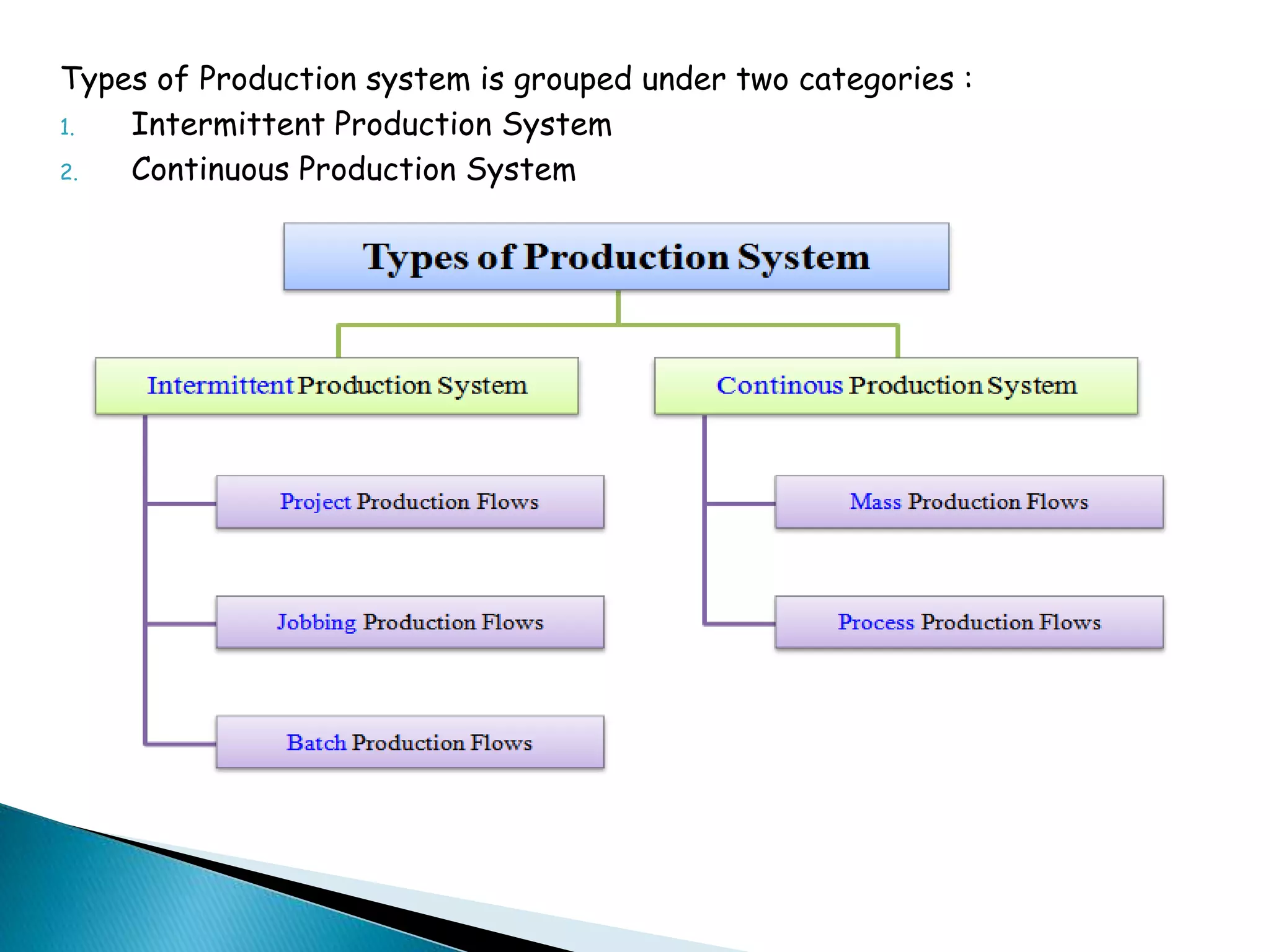
Types of Production system is grouped under two categories : 
1. Intermittent Production System 
2. Continuous Production System
Intermittent means something that starts (initiates) and stops (halts) 
at irregular (unfixed) intervals (time gaps). 
In the intermittent production system, goods are produced based on 
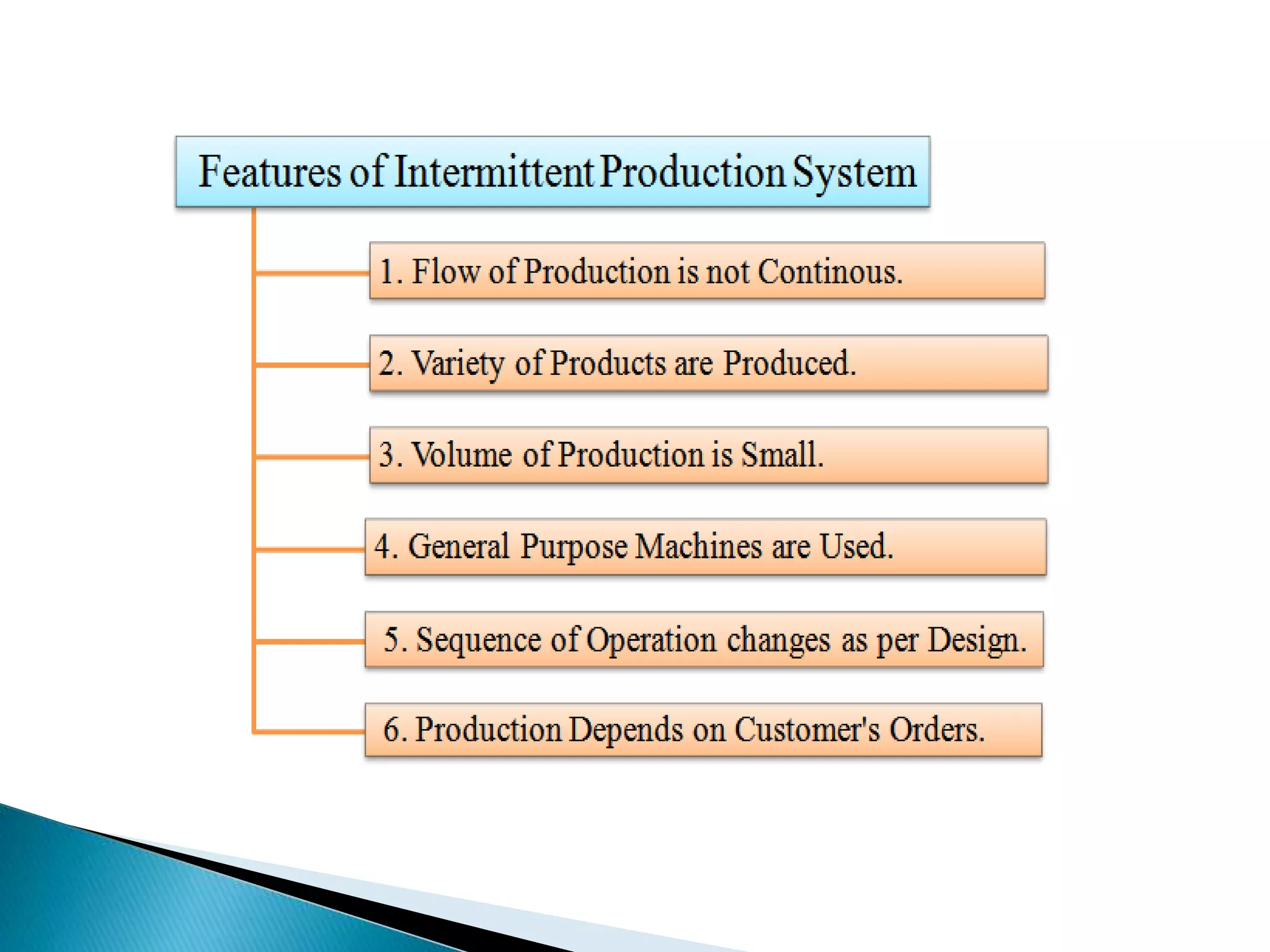
customer's orders. 
These goods are produced on a small scale. 
The flow of production is not continuous. 
In this system, large varieties of products are produced. These 
products are of different sizes. 
The design of these products goes on changing according to the design 
and size of the product. Therefore, this system is very flexible
The work of a goldsmith is purely based on the frequency of his 
customer's orders. The goldsmith makes goods (ornaments) on a small-scale 
basis as per his customer's requirements. Here, ornaments are 
not done on a continuous basis. 
Similarly, the work of a tailor is also based on the number of orders he 
gets from his customers. The clothes are stitched for every customer 
independently by the tailor as per one's measurement and size. Goods 
(stitched clothes) are made on a limited scale and is proportional to the 
number of orders received from customers. Here, stitching is not done 
on a continuous basis.
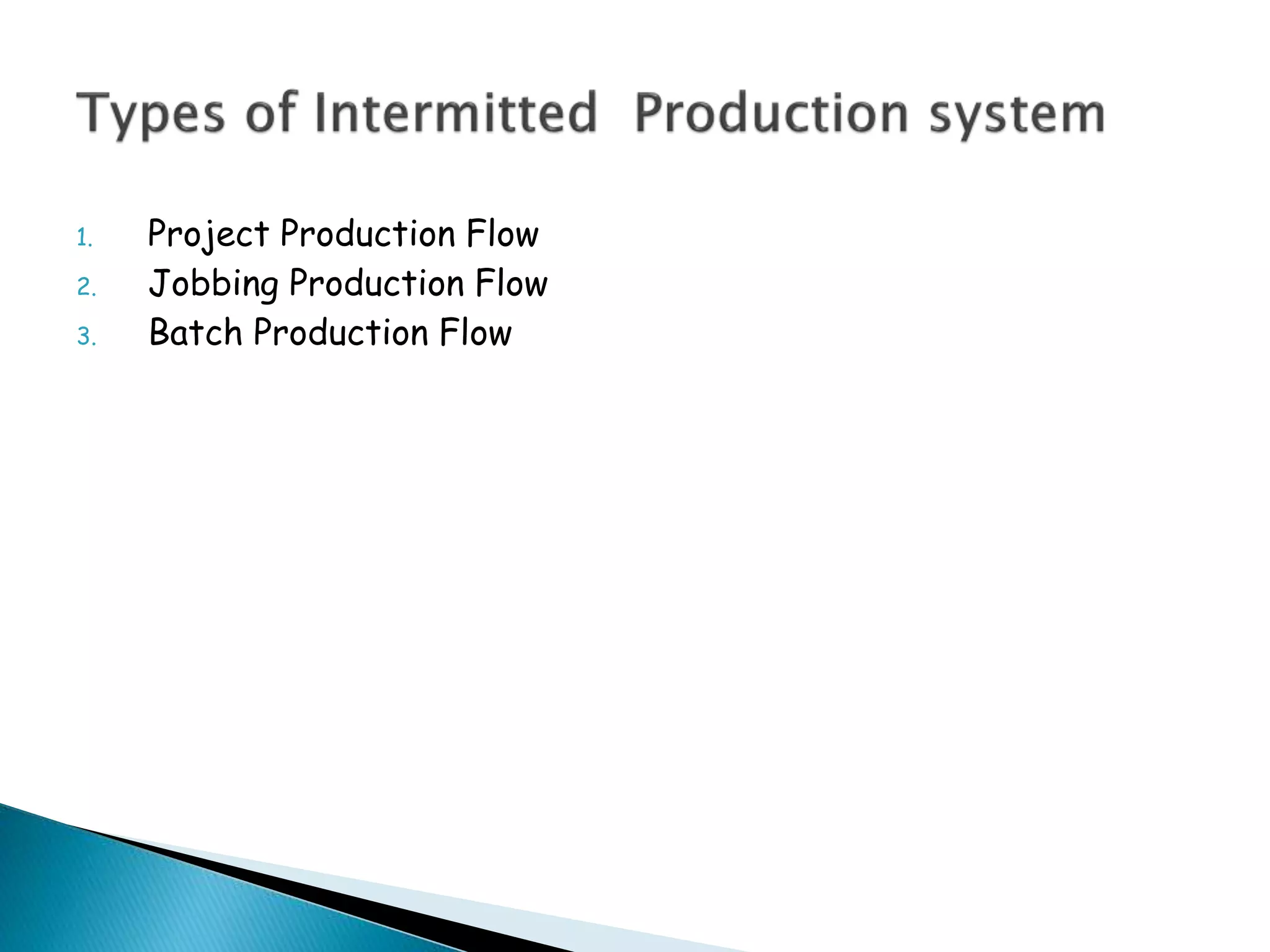
1. Project Production Flow 
2. Jobbing Production Flow 
3. Batch Production Flow
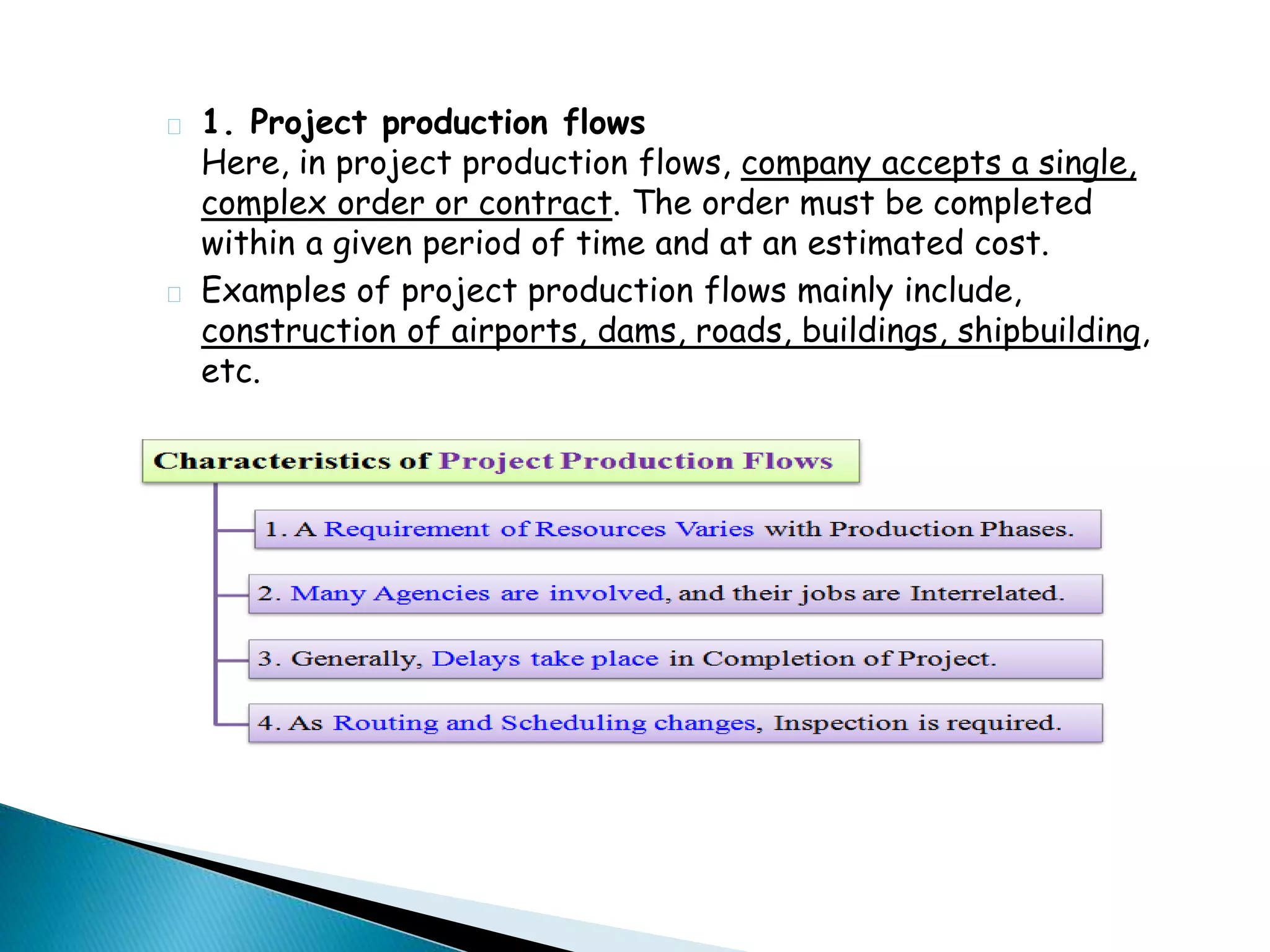
1. Project production flows 
Here, in project production flows, company accepts a single, 
complex order or contract. The order must be completed 
within a given period of time and at an estimated cost. 
Examples of project production flows mainly include, 
construction of airports, dams, roads, buildings, shipbuilding, 
etc.
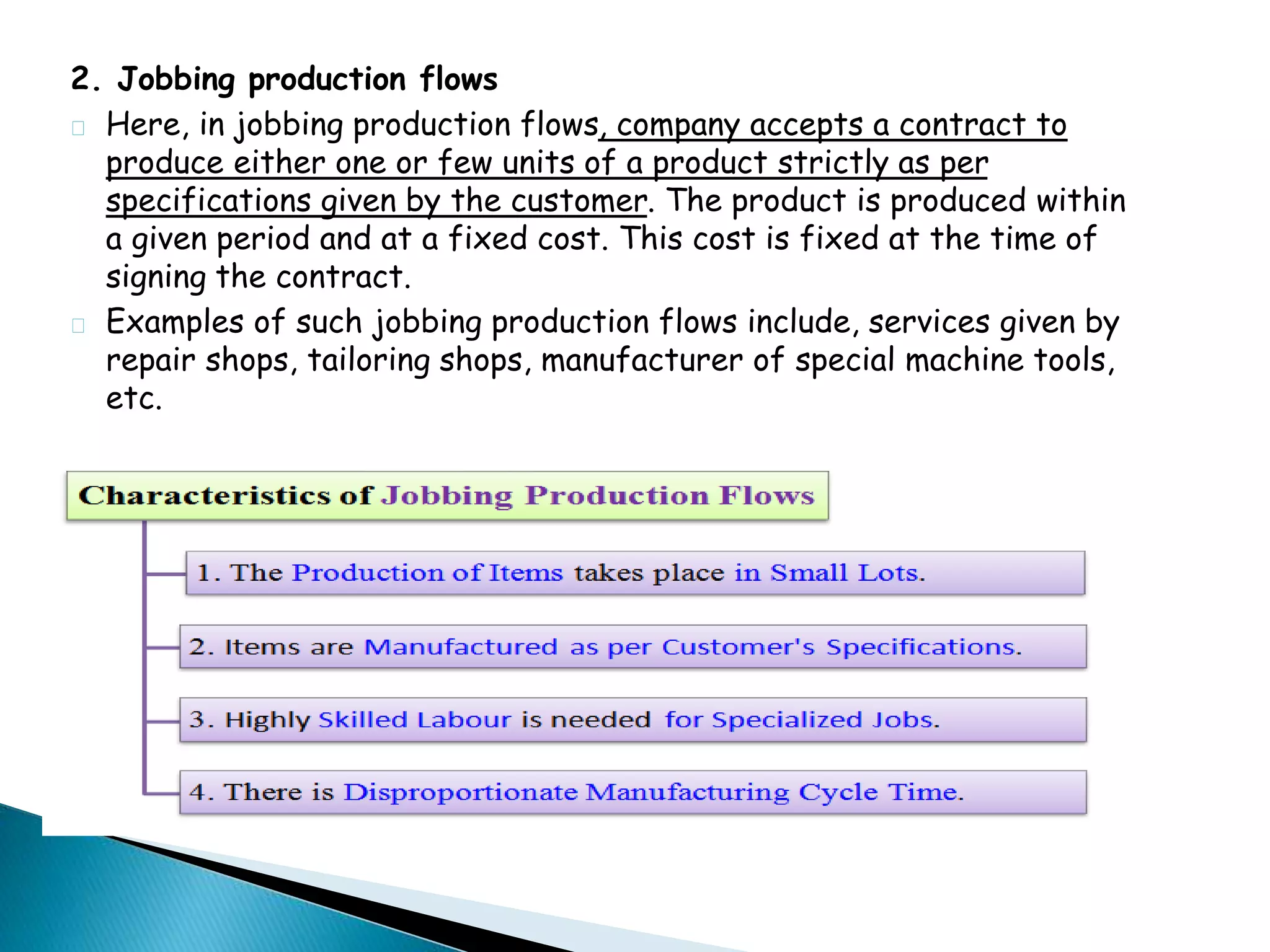
2. Jobbing production flows 
Here, in jobbing production flows, company accepts a contract to 
produce either one or few units of a product strictly as per 
specifications given by the customer. The product is produced within 
a given period and at a fixed cost. This cost is fixed at the time of 
signing the contract. 
Examples of such jobbing production flows include, services given by 
repair shops, tailoring shops, manufacturer of special machine tools, 
etc.
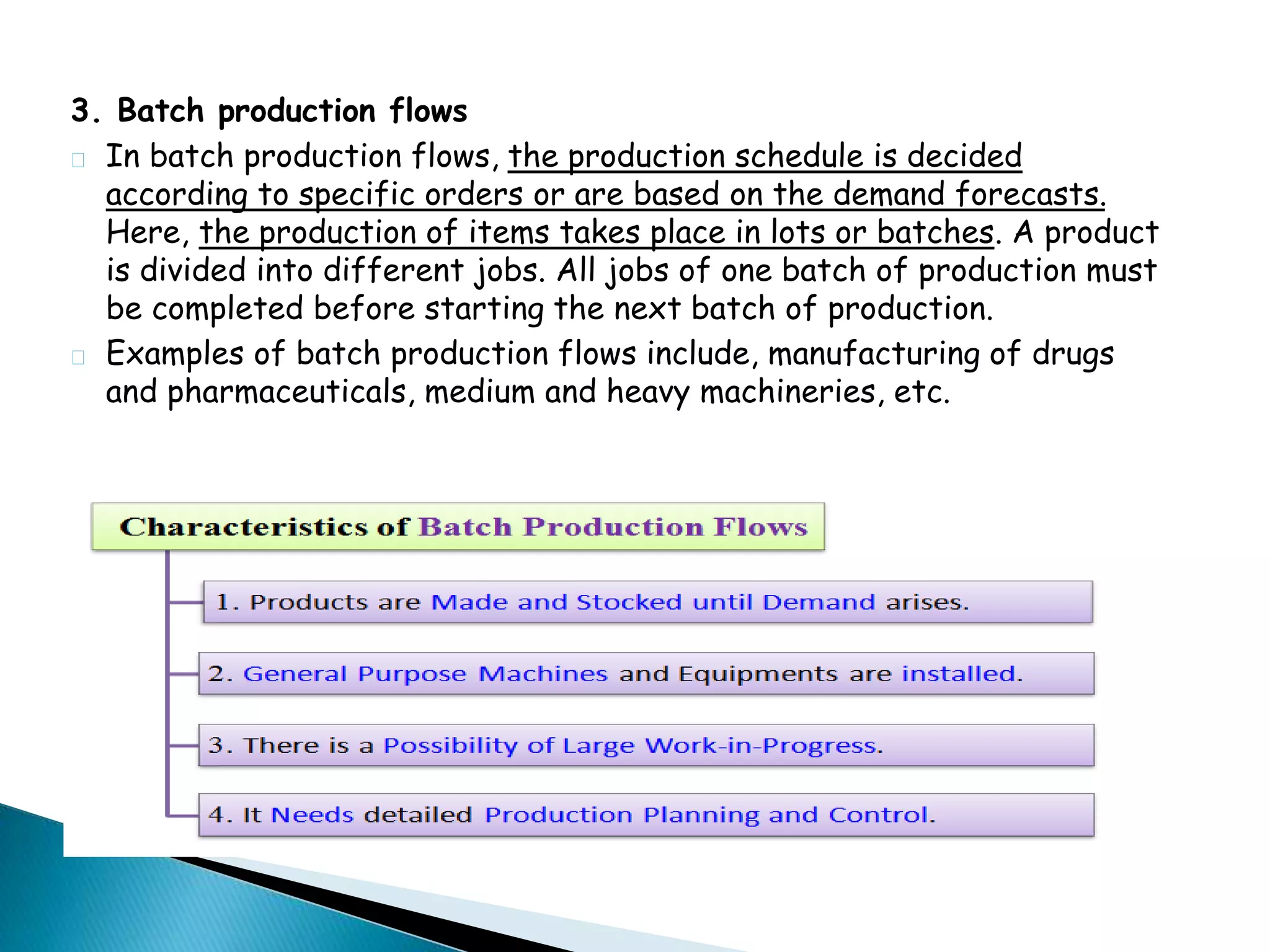
3. Batch production flows 
In batch production flows, the production schedule is decided 
according to specific orders or are based on the demand forecasts. 
Here, the production of items takes place in lots or batches. A product 
is divided into different jobs. All jobs of one batch of production must 
be completed before starting the next batch of production. 
Examples of batch production flows include, manufacturing of drugs 
and pharmaceuticals, medium and heavy machineries, etc.
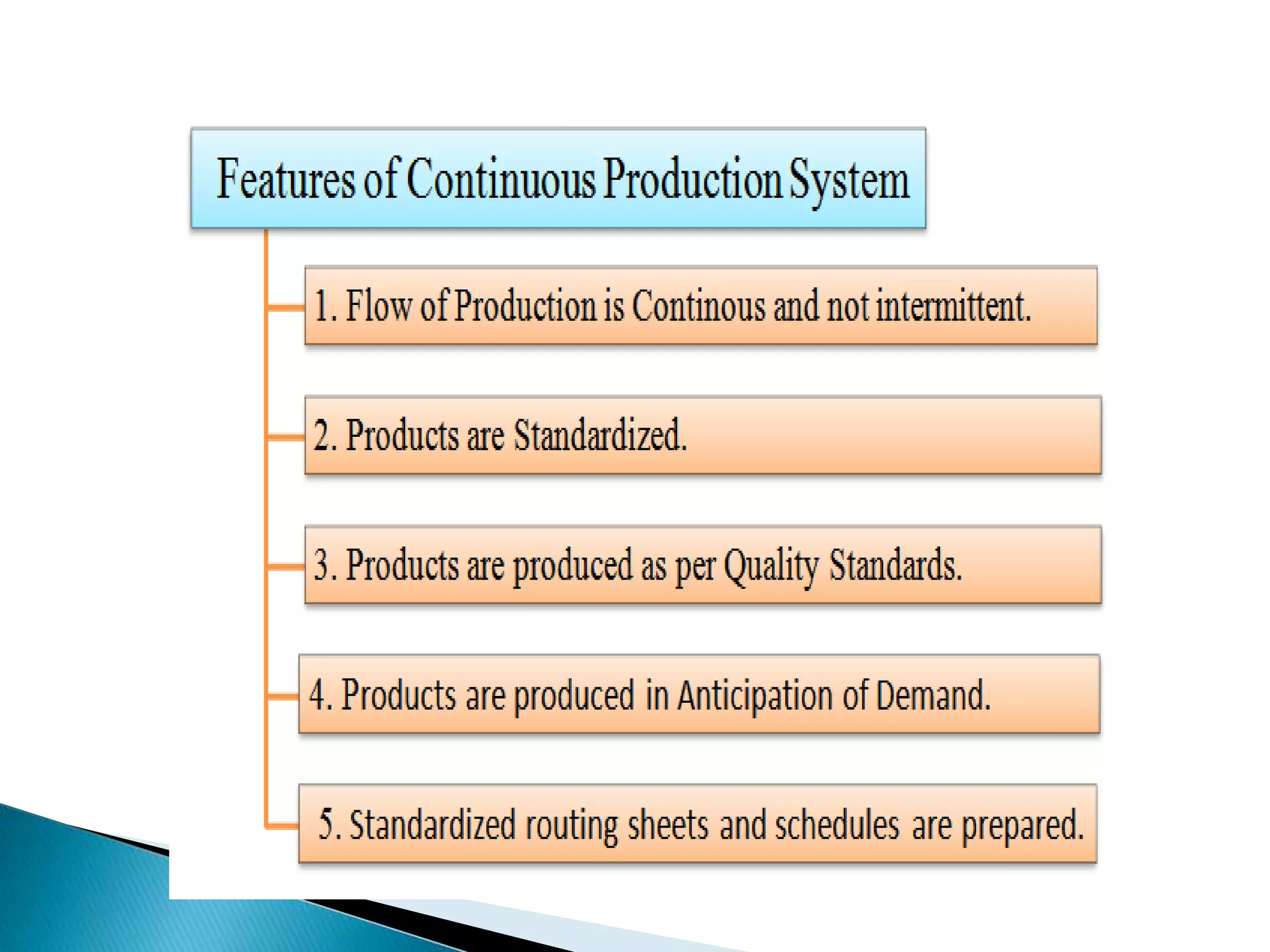
Continuous means something that operates constantly 
without any irregularities or frequent halts. 
In the continuous production system, goods are produced 
constantly as per demand forecast. 
Goods are produced on a large scale for stocking and selling. 
They are not produced on customer's orders. Here, the 
inputs and outputs are standardized along with the 
production process and sequence.
The production system of a food industry is purely based on 
the demand forecast. Here, a large-scale production of food 
takes place. It is also a continuous production. 
The production and processing system of a fuel industry is 
also purely based on, demand forecast. CRUDE OIL and 
other raw sources are processed continuously on a large scale 
to yield usable form of fuel and compensate global energy 
demand.
1. Mass Production Flows 
2. Process Production Flows
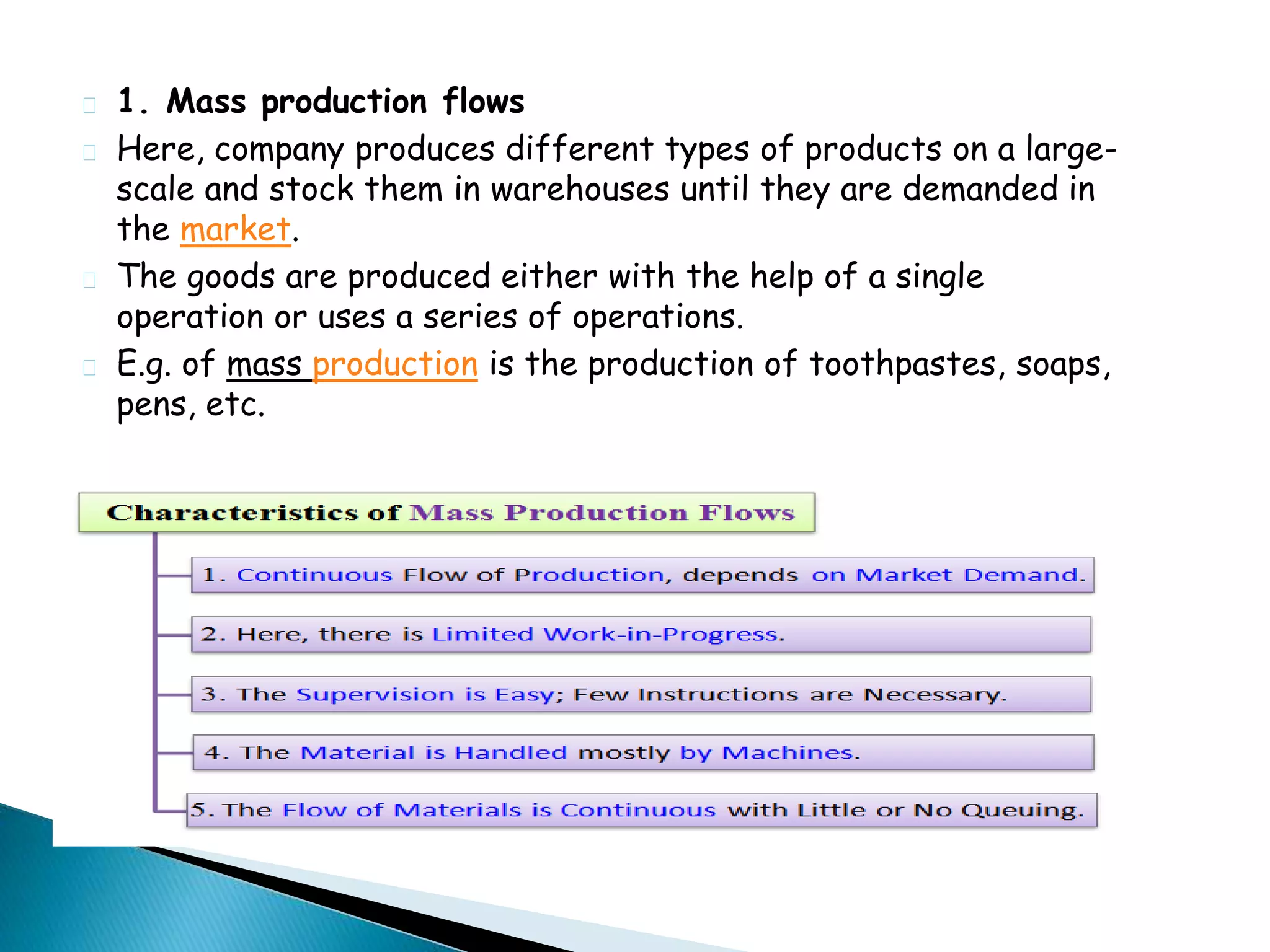
1. Mass production flows 
Here, company produces different types of products on a large-scale 
and stock them in warehouses until they are demanded in 
the market. 
The goods are produced either with the help of a single 
operation or uses a series of operations. 
E.g. of mass production is the production of toothpastes, soaps, 
pens, etc.
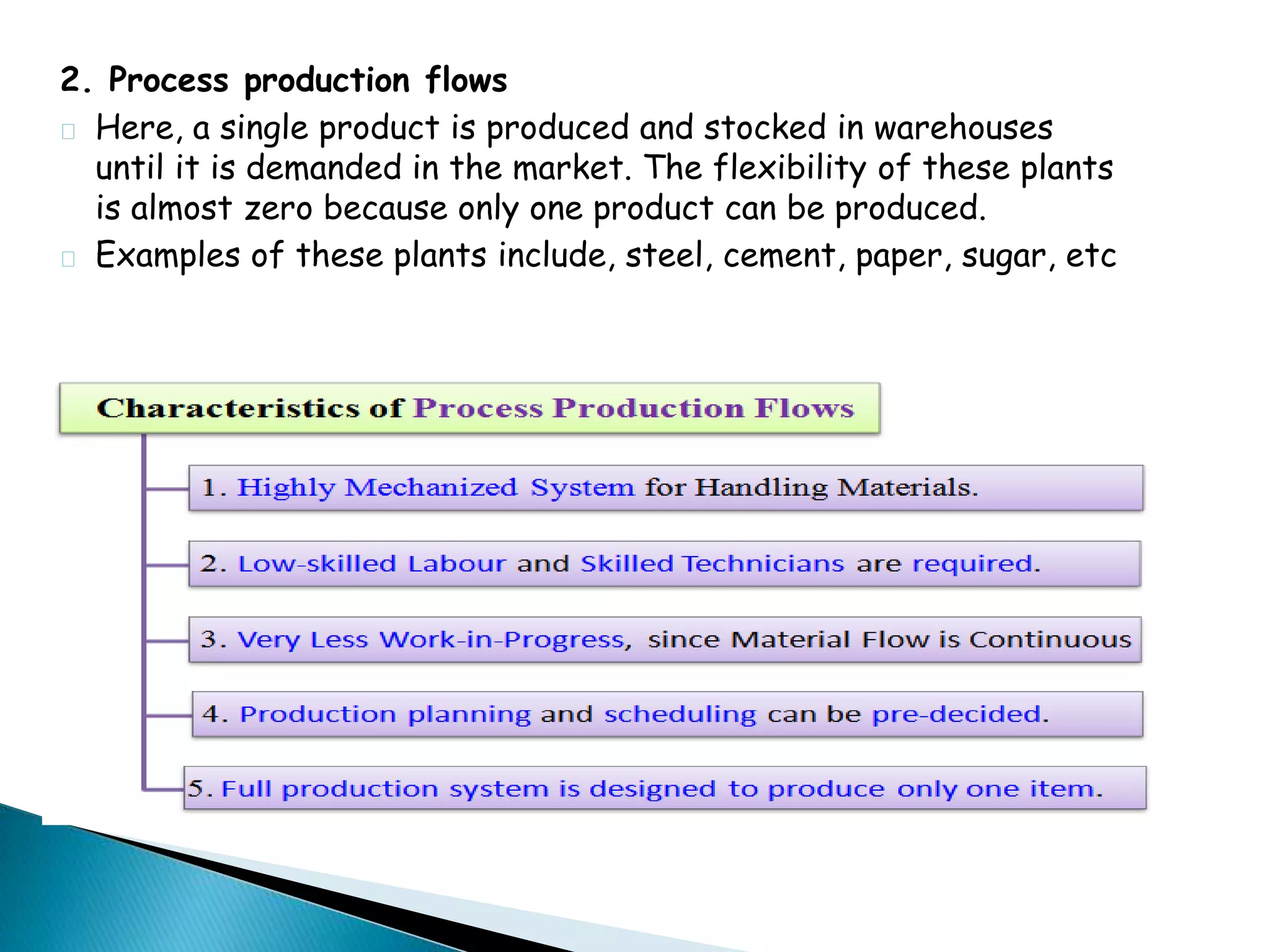
2. Process production flows 
Here, a single product is produced and stocked in warehouses 
until it is demanded in the market. The flexibility of these plants 
is almost zero because only one product can be produced. 
Examples of these plants include, steel, cement, paper, sugar, etc
ANY QUERIES ?
Types of production system

Types of production system

  • 1.
  • 2.
    Types of Productionsystem is grouped under two categories : 1. Intermittent Production System 2. Continuous Production System
  • 3.
    Intermittent means somethingthat starts (initiates) and stops (halts) at irregular (unfixed) intervals (time gaps). In the intermittent production system, goods are produced based on customer's orders. These goods are produced on a small scale. The flow of production is not continuous. In this system, large varieties of products are produced. These products are of different sizes. The design of these products goes on changing according to the design and size of the product. Therefore, this system is very flexible
  • 4.
    The work ofa goldsmith is purely based on the frequency of his customer's orders. The goldsmith makes goods (ornaments) on a small-scale basis as per his customer's requirements. Here, ornaments are not done on a continuous basis. Similarly, the work of a tailor is also based on the number of orders he gets from his customers. The clothes are stitched for every customer independently by the tailor as per one's measurement and size. Goods (stitched clothes) are made on a limited scale and is proportional to the number of orders received from customers. Here, stitching is not done on a continuous basis.
  • 6.
    1. Project ProductionFlow 2. Jobbing Production Flow 3. Batch Production Flow
  • 7.
    1. Project productionflows Here, in project production flows, company accepts a single, complex order or contract. The order must be completed within a given period of time and at an estimated cost. Examples of project production flows mainly include, construction of airports, dams, roads, buildings, shipbuilding, etc.
  • 8.
    2. Jobbing productionflows Here, in jobbing production flows, company accepts a contract to produce either one or few units of a product strictly as per specifications given by the customer. The product is produced within a given period and at a fixed cost. This cost is fixed at the time of signing the contract. Examples of such jobbing production flows include, services given by repair shops, tailoring shops, manufacturer of special machine tools, etc.
  • 9.
    3. Batch productionflows In batch production flows, the production schedule is decided according to specific orders or are based on the demand forecasts. Here, the production of items takes place in lots or batches. A product is divided into different jobs. All jobs of one batch of production must be completed before starting the next batch of production. Examples of batch production flows include, manufacturing of drugs and pharmaceuticals, medium and heavy machineries, etc.
  • 10.
    Continuous means somethingthat operates constantly without any irregularities or frequent halts. In the continuous production system, goods are produced constantly as per demand forecast. Goods are produced on a large scale for stocking and selling. They are not produced on customer's orders. Here, the inputs and outputs are standardized along with the production process and sequence.
  • 11.
    The production systemof a food industry is purely based on the demand forecast. Here, a large-scale production of food takes place. It is also a continuous production. The production and processing system of a fuel industry is also purely based on, demand forecast. CRUDE OIL and other raw sources are processed continuously on a large scale to yield usable form of fuel and compensate global energy demand.
  • 13.
    1. Mass ProductionFlows 2. Process Production Flows
  • 14.
    1. Mass productionflows Here, company produces different types of products on a large-scale and stock them in warehouses until they are demanded in the market. The goods are produced either with the help of a single operation or uses a series of operations. E.g. of mass production is the production of toothpastes, soaps, pens, etc.
  • 15.
    2. Process productionflows Here, a single product is produced and stocked in warehouses until it is demanded in the market. The flexibility of these plants is almost zero because only one product can be produced. Examples of these plants include, steel, cement, paper, sugar, etc
  • 16.