A man is identified by his personality – public image. 
It is the totality of the person and not merely external 
looks, but character, behavioral traits and attitude towards 
life. 
Personality development – is the improvement of 
behavioral traits such as communication skills, 
interpersonal relationships, attitude towards life and 
restoring our ethics.
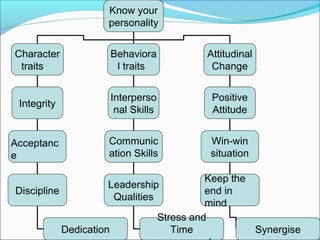
Know your 
personality 
Character 
traits 
Behaviora 
l traits 
Attitudinal 
Change 
Integrity Interperso 
nal Skills 
Positive 
Attitude 
Acceptanc 
e 
Communic 
ation Skills 
Win-win 
situation 
Discipline Leadership 
Qualities 
Keep the 
end in 
mind 
Dedication 
Stress and 
Time 
management 
Synergise
TYPES OF PERSONALITY 
Nine Types 
Perfectionists 
Helpers 
Romantics 
Achievers 
Asserters 
Questioners 
Adventurers 
Observers and 
Peacemakers.
Cont.. 
Perfectionists – are realistic, conscientious and principled 
Ex: Narayan Murthy – Infosys. 
Helpers – are warn, concerned, nurturing and sensitive to other 
people’s needs 
Ex: Mother Teresa. 
Achievers – are eneagetic, optimistic, self assured and goal oriented 
Ex: Sachin Tendulkar 
Romantics – have sensitive feelings and are warm and perceptive 
Ex: M. F. Hussain – great Indian Painter 
Observers – have a need for knowledge and are introverted, curious, 
analytical and insightful. 
Ex: Amartya Sen - Great economist
Cont.. 
Questioners – are responsible and trustworthy. 
Ex: Shabana Azmi 
Adventurers – are energetic, lively and optimistic. They want 
to contribute to the world 
Ex: Vijay Mallya - NRI businessman. 
Asserters – are direct, self-reliant, self confident and 
protective. 
Ex: T. N. Seshan - Chief Election Commissioner. 
Peacemakers – are receptive, good-natured and supportive. 
They seek union with others and the world around them 
Ex: Atal Bihari Vajpayee.
It can help in the following ways 
To learn the business etiquette of exchanging cards, 
wishing on first meeting, bowing when you are 
visiting Japan and the like. 
Voice modulation, diction, communication skills, 
phone etiquette, hygiene, empowerment skills, time 
management and positive thinking. 
To cultivate a friendly, interactive manner. 
Essentials like giving a speech, voice development and 
modulation of voice. 
It enhances the sense of confidence and self-worth.
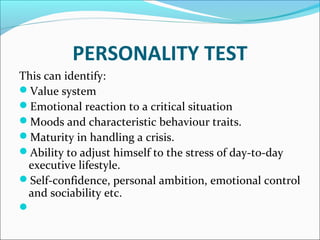
PERSONALITY TEST 
This can identify: 
Value system 
Emotional reaction to a critical situation 
Moods and characteristic behaviour traits. 
Maturity in handling a crisis. 
Ability to adjust himself to the stress of day-to-day 
executive lifestyle. 
Self-confidence, personal ambition, emotional control 
and sociability etc. 

BODY LANGUAGE 
Body language communicates 
much more than words. Body 
language signals are called 
‘leakages’ because you may try 
to tell something, but the truth 
will leak out visually.
AVOID SUCH BODY LANGUAGE 
Crossed arms or legs 
Carrying books or papers across your chest 
Slumped posture 
Sitting perched on the edge of the chair 
Wringing hands 
Tapping foot 
Rocking legs 
Drumming fingers 
Biting nails
Cont.. 
Fiddling with the jewelry or hair 
Covering your mouth with your hand while talking 
Rocking in your chair 
Scratching a lot 
Clearing your throat too much 
Straightening your tie 
Playing with watch or cufflinks 
Hands in the pocket
LOOKING AGGRESSIVE 
Arms folded across the chest 
Staring 
Pointing 
Making a fist 
Leaning over someone
BEHAVING RUDELY 
Working when someone is talking to you 
Puffing 
Tollering 
Smirking 
Whispering 
Cracking knuckles 
Grooming yourself’ 
Standing too close 
Packing up folders and papers well before the meeting is 
over 
Shaking hands too hard or limp handshakes
Cont.. 
Yawning when the meeting is in progress 
Looking at your watch repeatedly 
Blinking a lot 
Fiddling with rings, watches, earrings and chains 
Tapping or clicking pens 
Playing with paper clips 
Jingling money in pocket 
Picking at fingernails 
Twiddling bits of hair 
Smoking
LEADERSHIP QUALITIES 
Courage 
Self-control 
A keen sense of justice and fairness 
Definiteness of plans 
The habit of doing more than being paid for 
A pleasing personality 
Sympathy and understanding 
Mastery of details 
Willingness to assume full responsibility 
Co-operation
PERSONAL QUALITIES 
accurate 
adaptable 
astute 
can work under pressure 
careful 
committed 
competent 
cooperative 
courteous
Cont.. 
decisive 
dedicated 
energetic 
methodical 
meticulous 
orderly 
organized 
positive 
practical
Cont.. 
extrovert 
flexible 
friendly 
get on well with other people 
good communicator 
good sense of humour 
good time-keeper 
hard working 
imaginative
Cont.. 
independent worker 
lively 
logical 
loyal 
self confident 
self motivated 
sensitive 
thorough 
thoughtful 
vigilant 
work well with others
Determinants of personality 
Biological factors Family & 
Social factors Cultural factors Situational factors 
Heredity 
Brain 
Physical features 
1.Socialisation process 
(Behaviour from family & 
social group) 
2. Identification process 
( Selecting ideal person) 
3. Home environment 
(Brought up) 
4.Social Group. 
1. Independence- Australia 
2. Aggression- North Korea 
3. Competition- India 
4. Co-operation- Japan 
1.Positive behaviour 
2.Negative behaviour
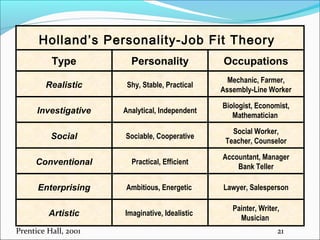
Holland’s Personality-Job Fit Theory 
Type Personality Occupations 
Realistic 
Investigative 
Social 
Conventional 
Enterprising 
Artistic 
Shy, Stable, Practical 
Analytical, Independent 
Sociable, Cooperative 
Practical, Efficient 
Ambitious, Energetic 
Imaginative, Idealistic 
Mechanic, Farmer, 
Assembly-Line Worker 
Biologist, Economist, 
Mathematician 
Social Worker, 
Teacher, Counselor 
Accountant, Manager 
Bank Teller 
Lawyer, Salesperson 
Painter, Writer, 
Musician 
Prentice Hall, 2001 21
Type A and B 
Type A Personality 
•Always moving, 
walking, and eating 
rapidly. 
•Feel impatient with the 
rate at which most 
events take place. 
•Strive to think or do 
two or more things at 
once. 
•Cannot cope with 
leisure time. 
•Are obsessed with 
numbers, measuring 
their success in terms 
of how many or how 
much of everything they 
acquire. 
Type B Personality 
•Never suffer from a 
sense of time urgency 
with its accompanying 
impatience. 
•Feel no need to 
display or discuss 
either their 
achievements or 
accomplishments 
unless such exposure 
is demanded by the 
situation. 
•Play for fun & 
relaxation, instead of 
exhibit their superiority 
at any cost. 
Can relax without guilt.
Big 5 in Short… 
Personality Factors Characters 
1. Conscientiousness 
2. Agreeableness 
3. Neuroticism 
4. Openness 
5. Extroversion 
Careful, dependable and 
self disciplined 
Courteous, good natured, 
empathic and caring. 
Poised, secure and calm. 
Sensitive, flexible, creative and 
curious. 
Outgoing and cautious.
THANK YOU

Personality Development - is the improvement of behavioral traits such as communication skills, interpersonal relationships, attitude towards life and restoring our ethics.

  • 2.
    A man isidentified by his personality – public image. It is the totality of the person and not merely external looks, but character, behavioral traits and attitude towards life. Personality development – is the improvement of behavioral traits such as communication skills, interpersonal relationships, attitude towards life and restoring our ethics.
  • 3.
    Know your personality Character traits Behaviora l traits Attitudinal Change Integrity Interperso nal Skills Positive Attitude Acceptanc e Communic ation Skills Win-win situation Discipline Leadership Qualities Keep the end in mind Dedication Stress and Time management Synergise
  • 4.
    TYPES OF PERSONALITY Nine Types Perfectionists Helpers Romantics Achievers Asserters Questioners Adventurers Observers and Peacemakers.
  • 5.
    Cont.. Perfectionists –are realistic, conscientious and principled Ex: Narayan Murthy – Infosys. Helpers – are warn, concerned, nurturing and sensitive to other people’s needs Ex: Mother Teresa. Achievers – are eneagetic, optimistic, self assured and goal oriented Ex: Sachin Tendulkar Romantics – have sensitive feelings and are warm and perceptive Ex: M. F. Hussain – great Indian Painter Observers – have a need for knowledge and are introverted, curious, analytical and insightful. Ex: Amartya Sen - Great economist
  • 6.
    Cont.. Questioners –are responsible and trustworthy. Ex: Shabana Azmi Adventurers – are energetic, lively and optimistic. They want to contribute to the world Ex: Vijay Mallya - NRI businessman. Asserters – are direct, self-reliant, self confident and protective. Ex: T. N. Seshan - Chief Election Commissioner. Peacemakers – are receptive, good-natured and supportive. They seek union with others and the world around them Ex: Atal Bihari Vajpayee.
  • 7.
    It can helpin the following ways To learn the business etiquette of exchanging cards, wishing on first meeting, bowing when you are visiting Japan and the like. Voice modulation, diction, communication skills, phone etiquette, hygiene, empowerment skills, time management and positive thinking. To cultivate a friendly, interactive manner. Essentials like giving a speech, voice development and modulation of voice. It enhances the sense of confidence and self-worth.
  • 8.
    PERSONALITY TEST Thiscan identify: Value system Emotional reaction to a critical situation Moods and characteristic behaviour traits. Maturity in handling a crisis. Ability to adjust himself to the stress of day-to-day executive lifestyle. Self-confidence, personal ambition, emotional control and sociability etc. 
  • 9.
    BODY LANGUAGE Bodylanguage communicates much more than words. Body language signals are called ‘leakages’ because you may try to tell something, but the truth will leak out visually.
  • 10.
    AVOID SUCH BODYLANGUAGE Crossed arms or legs Carrying books or papers across your chest Slumped posture Sitting perched on the edge of the chair Wringing hands Tapping foot Rocking legs Drumming fingers Biting nails
  • 11.
    Cont.. Fiddling withthe jewelry or hair Covering your mouth with your hand while talking Rocking in your chair Scratching a lot Clearing your throat too much Straightening your tie Playing with watch or cufflinks Hands in the pocket
  • 12.
    LOOKING AGGRESSIVE Armsfolded across the chest Staring Pointing Making a fist Leaning over someone
  • 13.
    BEHAVING RUDELY Workingwhen someone is talking to you Puffing Tollering Smirking Whispering Cracking knuckles Grooming yourself’ Standing too close Packing up folders and papers well before the meeting is over Shaking hands too hard or limp handshakes
  • 14.
    Cont.. Yawning whenthe meeting is in progress Looking at your watch repeatedly Blinking a lot Fiddling with rings, watches, earrings and chains Tapping or clicking pens Playing with paper clips Jingling money in pocket Picking at fingernails Twiddling bits of hair Smoking
  • 15.
    LEADERSHIP QUALITIES Courage Self-control A keen sense of justice and fairness Definiteness of plans The habit of doing more than being paid for A pleasing personality Sympathy and understanding Mastery of details Willingness to assume full responsibility Co-operation
  • 16.
    PERSONAL QUALITIES accurate adaptable astute can work under pressure careful committed competent cooperative courteous
  • 17.
    Cont.. decisive dedicated energetic methodical meticulous orderly organized positive practical
  • 18.
    Cont.. extrovert flexible friendly get on well with other people good communicator good sense of humour good time-keeper hard working imaginative
  • 19.
    Cont.. independent worker lively logical loyal self confident self motivated sensitive thorough thoughtful vigilant work well with others
  • 20.
    Determinants of personality Biological factors Family & Social factors Cultural factors Situational factors Heredity Brain Physical features 1.Socialisation process (Behaviour from family & social group) 2. Identification process ( Selecting ideal person) 3. Home environment (Brought up) 4.Social Group. 1. Independence- Australia 2. Aggression- North Korea 3. Competition- India 4. Co-operation- Japan 1.Positive behaviour 2.Negative behaviour
  • 21.
    Holland’s Personality-Job FitTheory Type Personality Occupations Realistic Investigative Social Conventional Enterprising Artistic Shy, Stable, Practical Analytical, Independent Sociable, Cooperative Practical, Efficient Ambitious, Energetic Imaginative, Idealistic Mechanic, Farmer, Assembly-Line Worker Biologist, Economist, Mathematician Social Worker, Teacher, Counselor Accountant, Manager Bank Teller Lawyer, Salesperson Painter, Writer, Musician Prentice Hall, 2001 21
  • 22.
    Type A andB Type A Personality •Always moving, walking, and eating rapidly. •Feel impatient with the rate at which most events take place. •Strive to think or do two or more things at once. •Cannot cope with leisure time. •Are obsessed with numbers, measuring their success in terms of how many or how much of everything they acquire. Type B Personality •Never suffer from a sense of time urgency with its accompanying impatience. •Feel no need to display or discuss either their achievements or accomplishments unless such exposure is demanded by the situation. •Play for fun & relaxation, instead of exhibit their superiority at any cost. Can relax without guilt.
  • 23.
    Big 5 inShort… Personality Factors Characters 1. Conscientiousness 2. Agreeableness 3. Neuroticism 4. Openness 5. Extroversion Careful, dependable and self disciplined Courteous, good natured, empathic and caring. Poised, secure and calm. Sensitive, flexible, creative and curious. Outgoing and cautious.
  • 24.

Editor's Notes

  • #22 Holland’s personality job-fit model is based on the notion of fit between an individual’s personality and his or her occupational environment. Holland identified six personality types: realistic, investigative, social, conventional, enterprising, and artistic. Each of the six personality types has a congruent occupational environment, as shown in the table above.