GRAVITY DAM
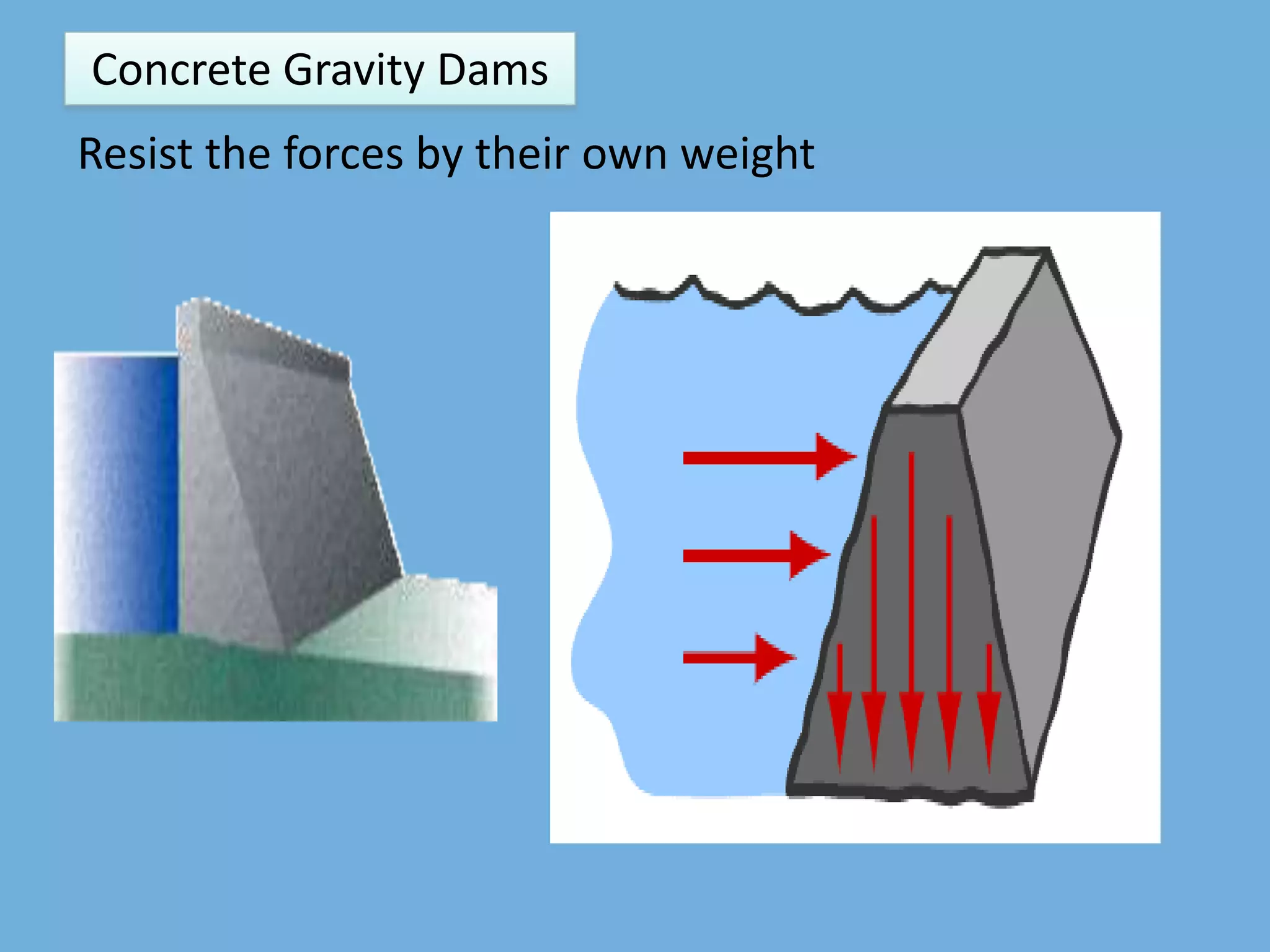
Resist the forces by their own weight
Concrete Gravity Dams
Recep YURTAL Ç.Ü. İnş.Müöl.
Concrete Gravity Dams
INTRODUCTION
 A Dam is a hydraulic structure constructed
across a river or a stream to retain the water.
 The structure which resist external forces by its
own weight.
 This type of structure is most durable, solid and
required little maintenance.
 The dam may be constructed of masonry or
concrete.
TYPICAL CROSS-SECTION
FORCES ACTING ON GRAVITY DAM
 Water pressure
 Weight of the dam
 Uplift pressure
 Silt pressure
 Wave pressure
 Ice pressure
 Pressure due to earthquake forces
WATER PRESSURE
 It is the major external force acting on a
dam.
 The intensity of the pressure varies
triangularly, with a zero intensity at the
water surface, to a value “wh” at depth h
below the water surface.
 Force due to water pressure
P = W H2 / 2
 This acts at a height of h/3 from base of the
dam.
WATER PRESSURE
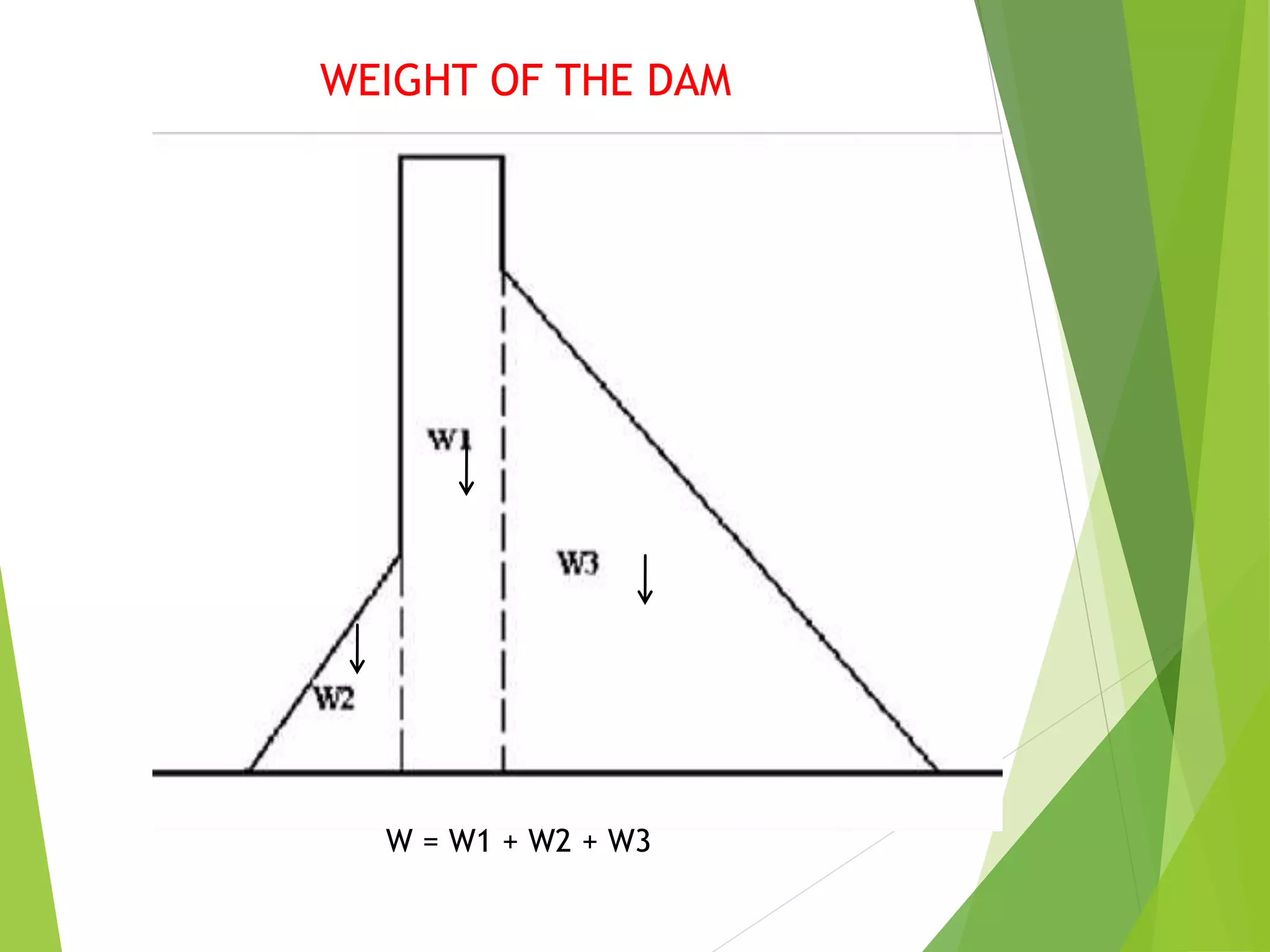
WEIGHT OF THE DAM
 Weight of the dam is the major resisting
force.
 Unit length of the dam is consider.
 Total weight of the dam acts at the
center of gravity of this section.
WEIGHT OF THE DAM
W = W1 + W2 + W3
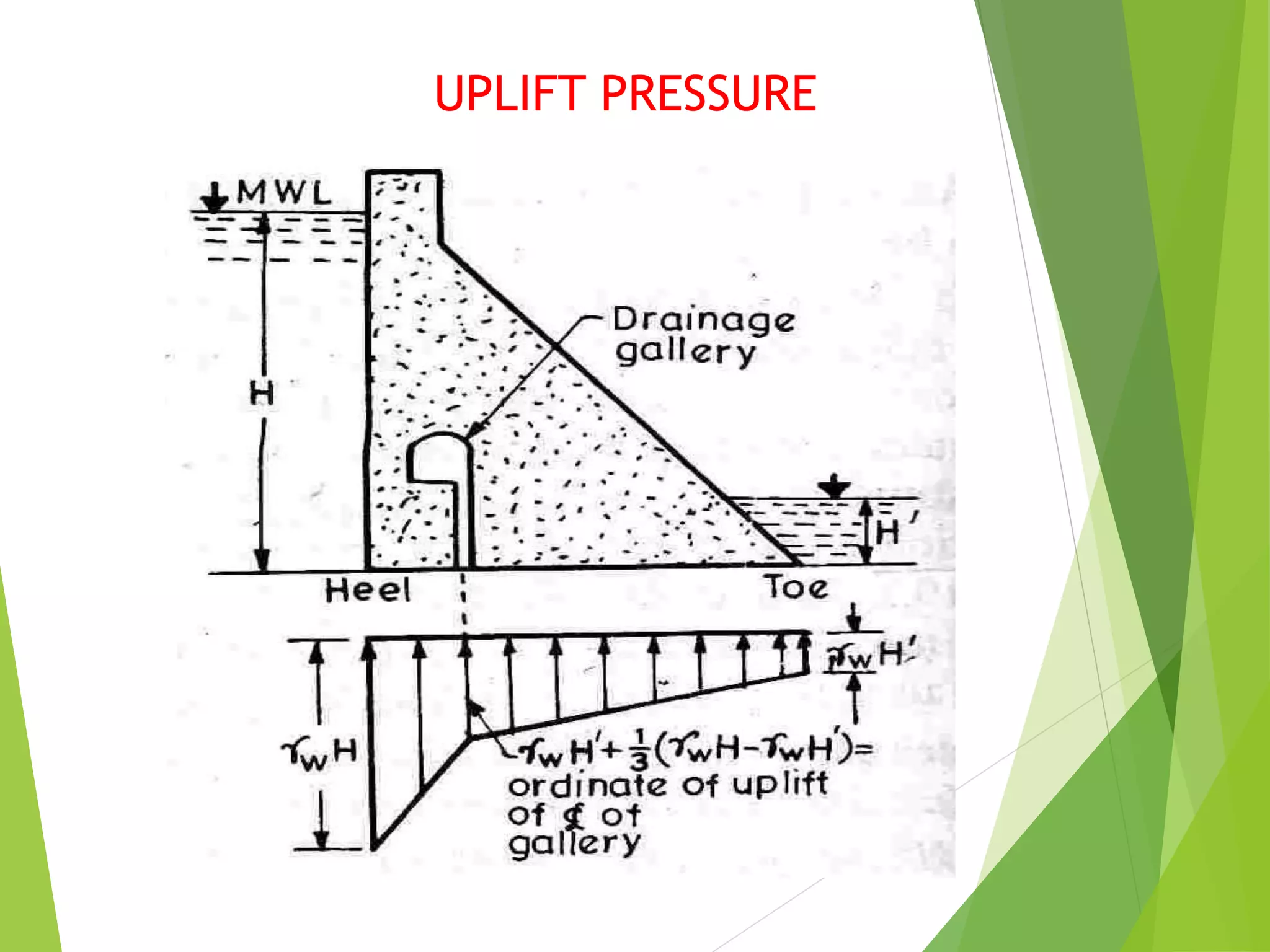
UPLIFT PRESSURE
 Uplift pressure is the upward pressure
exerted by water as it seeps through the
body of the dam or its foundation.
 Seeping water exerts pressure on the
base of the dam and it depends upon
water head.
UPLIFT PRESSURE
SILT PRESSURE
 Silt gets deposited against the upstream face
of the dam.
 If h is the height of the silt deposited, then
the force exerted by this silt in addition to
external water pressure, can be
Psilt = γsub .h2 . Ka / 2
 It acts at h/3 from base.
 Ka = the coefficient of active earth pressure
 γsub = submerged unit weight of silt material
 h = height of silt deposited
WAVE PRESSURE
 Waves are generated on the surface of the
reservoir by the blowing winds, which cause
pressure towards the downstream side.
 Waves pressure depends upon the wave height.
hw =
V= wind velocity in km/hr
F= Fetch or straight length of water
expanse in km.
Pw = 2.4 γw . hw
 It acts at hw/2 above the still water surface.
ICE PRESSURE
 The ice may be formed on the water surface
of the reservoir in cold countries, may
sometimes melt and expand.
 The dam face has to resist the thrust exerted
by the expending ice.
 The magnitude of this force varies from 250 to
1500 kN/m2 depending upon the temperature
variations.
 An average, a value of 500 kN/m2 may be
allowed under ordinary conditions.
EARTHQUAKE FORCES
 If the dam to be designed, is to be located
in a region which is susceptible to
earthquakes, allowance must be made for
the stresses generated by the earthquakes.
 An earthquakes produces waves which are
capable of shaking the earth upon which
the dam is resting, in every possible
direction.

Types of forces

  • 1.
  • 2.
    Resist the forcesby their own weight Concrete Gravity Dams
  • 3.
    Recep YURTAL Ç.Ü.İnş.Müöl. Concrete Gravity Dams
  • 4.
    INTRODUCTION  A Damis a hydraulic structure constructed across a river or a stream to retain the water.  The structure which resist external forces by its own weight.  This type of structure is most durable, solid and required little maintenance.  The dam may be constructed of masonry or concrete.
  • 5.
  • 6.
    FORCES ACTING ONGRAVITY DAM  Water pressure  Weight of the dam  Uplift pressure  Silt pressure  Wave pressure  Ice pressure  Pressure due to earthquake forces
  • 8.
    WATER PRESSURE  Itis the major external force acting on a dam.  The intensity of the pressure varies triangularly, with a zero intensity at the water surface, to a value “wh” at depth h below the water surface.  Force due to water pressure P = W H2 / 2  This acts at a height of h/3 from base of the dam.
  • 9.
  • 10.
    WEIGHT OF THEDAM  Weight of the dam is the major resisting force.  Unit length of the dam is consider.  Total weight of the dam acts at the center of gravity of this section.
  • 11.
    WEIGHT OF THEDAM W = W1 + W2 + W3
  • 12.
    UPLIFT PRESSURE  Upliftpressure is the upward pressure exerted by water as it seeps through the body of the dam or its foundation.  Seeping water exerts pressure on the base of the dam and it depends upon water head.
  • 13.
  • 14.
    SILT PRESSURE  Siltgets deposited against the upstream face of the dam.  If h is the height of the silt deposited, then the force exerted by this silt in addition to external water pressure, can be Psilt = γsub .h2 . Ka / 2  It acts at h/3 from base.  Ka = the coefficient of active earth pressure  γsub = submerged unit weight of silt material  h = height of silt deposited
  • 15.
    WAVE PRESSURE  Wavesare generated on the surface of the reservoir by the blowing winds, which cause pressure towards the downstream side.  Waves pressure depends upon the wave height. hw = V= wind velocity in km/hr F= Fetch or straight length of water expanse in km. Pw = 2.4 γw . hw  It acts at hw/2 above the still water surface.
  • 16.
    ICE PRESSURE  Theice may be formed on the water surface of the reservoir in cold countries, may sometimes melt and expand.  The dam face has to resist the thrust exerted by the expending ice.  The magnitude of this force varies from 250 to 1500 kN/m2 depending upon the temperature variations.  An average, a value of 500 kN/m2 may be allowed under ordinary conditions.
  • 17.
    EARTHQUAKE FORCES  Ifthe dam to be designed, is to be located in a region which is susceptible to earthquakes, allowance must be made for the stresses generated by the earthquakes.  An earthquakes produces waves which are capable of shaking the earth upon which the dam is resting, in every possible direction.