Chapter 16
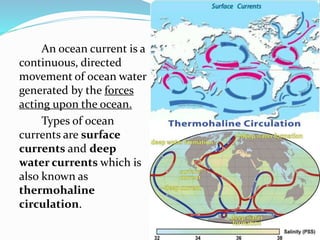
An ocean current is a
continuous, directed
movement of ocean water
generated by the forces
acting upon the ocean.
Types of ocean
currents are surface
currents and deep
water currents which is
also known as
thermohaline
circulation.
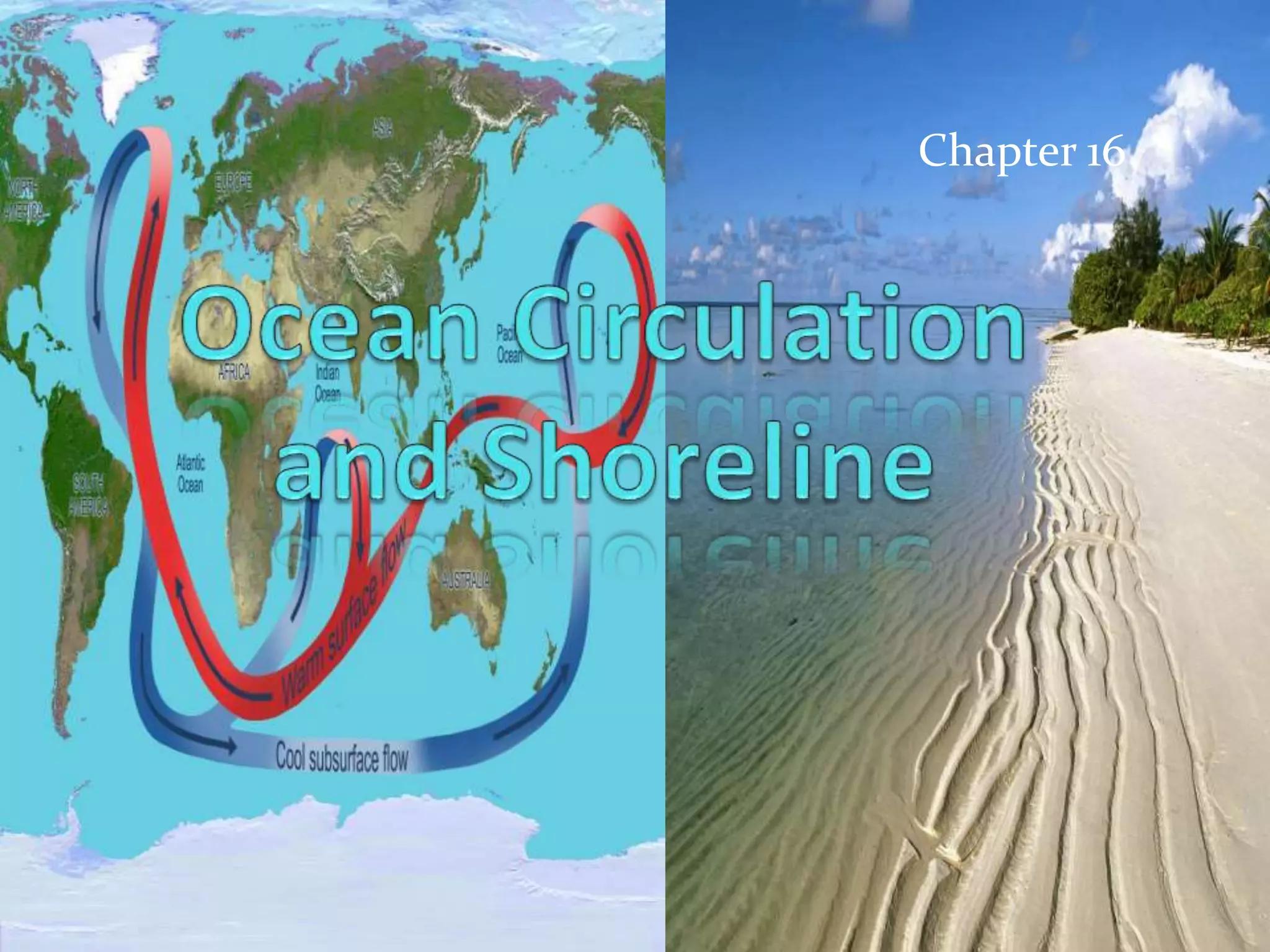
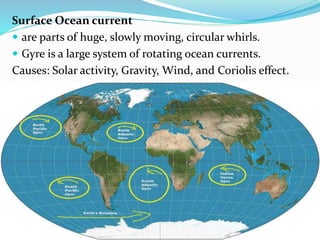
Surface Ocean current
 are parts of huge, slowly moving, circular whirls.
 Gyre is a large system of rotating ocean currents.
Causes: Solar activity, Gravity, Wind, and Coriolis effect.
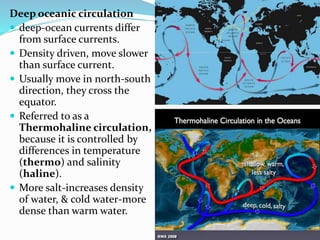
Deep oceanic circulation
 deep-ocean currents differ
from surface currents.
 Density driven, move slower
than surface current.
 Usually move in north-south
direction, they cross the
equator.
 Referred to as a
Thermohaline circulation,
because it is controlled by
differences in temperature
(thermo) and salinity
(haline).
 More salt-increases density
of water, & cold water-more
dense than warm water.
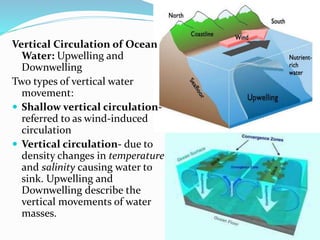
Vertical Circulation of Ocean
Water: Upwelling and
Downwelling
Two types of vertical water
movement:
 Shallow vertical circulation-
referred to as wind-induced
circulation
 Vertical circulation- due to
density changes in temperature
and salinity causing water to
sink. Upwelling and
Downwelling describe the
vertical movements of water
masses.
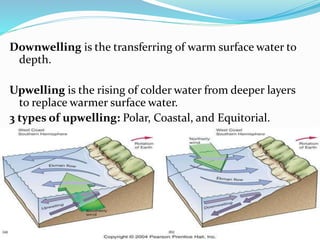
Downwelling is the transferring of warm surface water to
depth.
Upwelling is the rising of colder water from deeper layers
to replace warmer surface water.
3 types of upwelling: Polar, Coastal, and Equitorial.
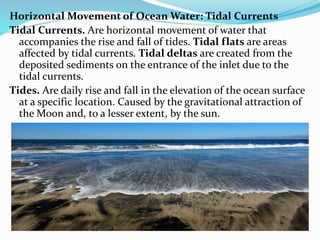
Horizontal Movement of Ocean Water: Tidal Currents
Tidal Currents. Are horizontal movement of water that
accompanies the rise and fall of tides. Tidal flats are areas
affected by tidal currents. Tidal deltas are created from the
deposited sediments on the entrance of the inlet due to the
tidal currents.
Tides. Are daily rise and fall in the elevation of the ocean surface
at a specific location. Caused by the gravitational attraction of
the Moon and, to a lesser extent, by the sun.
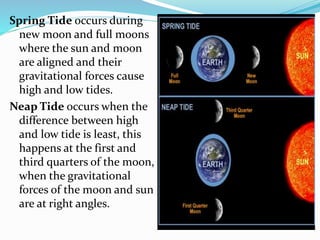
Spring Tide occurs during
new moon and full moons
where the sun and moon
are aligned and their
gravitational forces cause
high and low tides.
Neap Tide occurs when the
difference between high
and low tide is least, this
happens at the first and
third quarters of the moon,
when the gravitational
forces of the moon and sun
are at right angles.
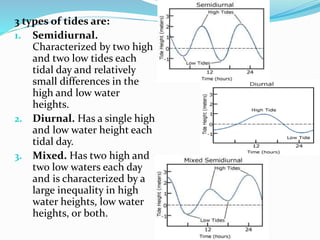
3 types of tides are:
1. Semidiurnal.
Characterized by two high
and two low tides each
tidal day and relatively
small differences in the
high and low water
heights.
2. Diurnal. Has a single high
and low water height each
tidal day.
3. Mixed. Has two high and
two low waters each day
and is characterized by a
large inequality in high
water heights, low water
heights, or both.
Forward movement of ocean water:
Waves
Ocean wave. Is the forward movement of
the ocean’s water due to the oscillation
of water particles.
Wave Trains. Are waves that travel in
groups.
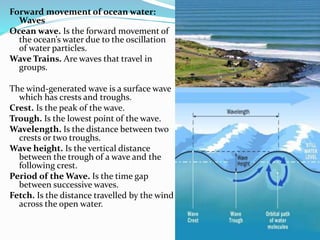
The wind-generated wave is a surface wave
which has crests and troughs.
Crest. Is the peak of the wave.
Trough. Is the lowest point of the wave.
Wavelength. Is the distance between two
crests or two troughs.
Wave height. Is the vertical distance
between the trough of a wave and the
following crest.
Period of the Wave. Is the time gap
between successive waves.
Fetch. Is the distance travelled by the wind
across the open water.
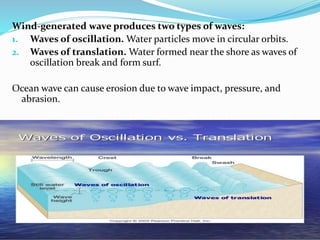
Wind-generated wave produces two types of waves:
1. Waves of oscillation. Water particles move in circular orbits.
2. Waves of translation. Water formed near the shore as waves of
oscillation break and form surf.
Ocean wave can cause erosion due to wave impact, pressure, and
abrasion.
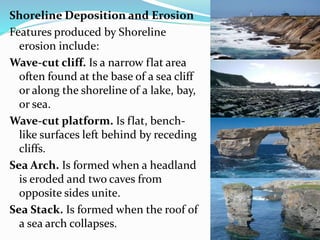
Shoreline Deposition and Erosion
Features produced by Shoreline
erosion include:
Wave-cut cliff. Is a narrow flat area
often found at the base of a sea cliff
or along the shoreline of a lake, bay,
or sea.
Wave-cut platform. Is flat, bench-
like surfaces left behind by receding
cliffs.
Sea Arch. Is formed when a headland
is eroded and two caves from
opposite sides unite.
Sea Stack. Is formed when the roof of
a sea arch collapses.
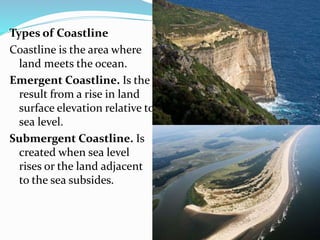
Types of Coastline
Coastline is the area where
land meets the ocean.
Emergent Coastline. Is the
result from a rise in land
surface elevation relative to
sea level.
Submergent Coastline. Is
created when sea level
rises or the land adjacent
to the sea subsides.

Unit iv-chapter-16-ocean-circulation

  • 1.
  • 2.
    An ocean currentis a continuous, directed movement of ocean water generated by the forces acting upon the ocean. Types of ocean currents are surface currents and deep water currents which is also known as thermohaline circulation.
  • 3.
    Surface Ocean current are parts of huge, slowly moving, circular whirls.  Gyre is a large system of rotating ocean currents. Causes: Solar activity, Gravity, Wind, and Coriolis effect.
  • 4.
    Deep oceanic circulation deep-ocean currents differ from surface currents.  Density driven, move slower than surface current.  Usually move in north-south direction, they cross the equator.  Referred to as a Thermohaline circulation, because it is controlled by differences in temperature (thermo) and salinity (haline).  More salt-increases density of water, & cold water-more dense than warm water.
  • 5.
    Vertical Circulation ofOcean Water: Upwelling and Downwelling Two types of vertical water movement:  Shallow vertical circulation- referred to as wind-induced circulation  Vertical circulation- due to density changes in temperature and salinity causing water to sink. Upwelling and Downwelling describe the vertical movements of water masses.
  • 6.
    Downwelling is thetransferring of warm surface water to depth. Upwelling is the rising of colder water from deeper layers to replace warmer surface water. 3 types of upwelling: Polar, Coastal, and Equitorial.
  • 7.
    Horizontal Movement ofOcean Water: Tidal Currents Tidal Currents. Are horizontal movement of water that accompanies the rise and fall of tides. Tidal flats are areas affected by tidal currents. Tidal deltas are created from the deposited sediments on the entrance of the inlet due to the tidal currents. Tides. Are daily rise and fall in the elevation of the ocean surface at a specific location. Caused by the gravitational attraction of the Moon and, to a lesser extent, by the sun.
  • 8.
    Spring Tide occursduring new moon and full moons where the sun and moon are aligned and their gravitational forces cause high and low tides. Neap Tide occurs when the difference between high and low tide is least, this happens at the first and third quarters of the moon, when the gravitational forces of the moon and sun are at right angles.
  • 9.
    3 types oftides are: 1. Semidiurnal. Characterized by two high and two low tides each tidal day and relatively small differences in the high and low water heights. 2. Diurnal. Has a single high and low water height each tidal day. 3. Mixed. Has two high and two low waters each day and is characterized by a large inequality in high water heights, low water heights, or both.
  • 10.
    Forward movement ofocean water: Waves Ocean wave. Is the forward movement of the ocean’s water due to the oscillation of water particles. Wave Trains. Are waves that travel in groups. The wind-generated wave is a surface wave which has crests and troughs. Crest. Is the peak of the wave. Trough. Is the lowest point of the wave. Wavelength. Is the distance between two crests or two troughs. Wave height. Is the vertical distance between the trough of a wave and the following crest. Period of the Wave. Is the time gap between successive waves. Fetch. Is the distance travelled by the wind across the open water.
  • 11.
    Wind-generated wave producestwo types of waves: 1. Waves of oscillation. Water particles move in circular orbits. 2. Waves of translation. Water formed near the shore as waves of oscillation break and form surf. Ocean wave can cause erosion due to wave impact, pressure, and abrasion.
  • 12.
    Shoreline Deposition andErosion Features produced by Shoreline erosion include: Wave-cut cliff. Is a narrow flat area often found at the base of a sea cliff or along the shoreline of a lake, bay, or sea. Wave-cut platform. Is flat, bench- like surfaces left behind by receding cliffs. Sea Arch. Is formed when a headland is eroded and two caves from opposite sides unite. Sea Stack. Is formed when the roof of a sea arch collapses.
  • 13.
    Types of Coastline Coastlineis the area where land meets the ocean. Emergent Coastline. Is the result from a rise in land surface elevation relative to sea level. Submergent Coastline. Is created when sea level rises or the land adjacent to the sea subsides.