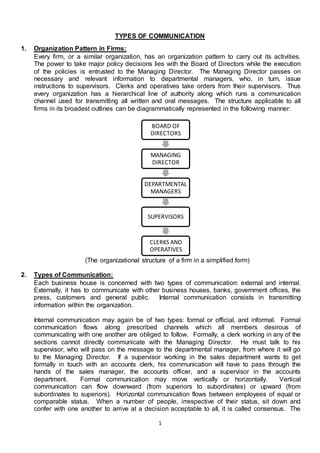
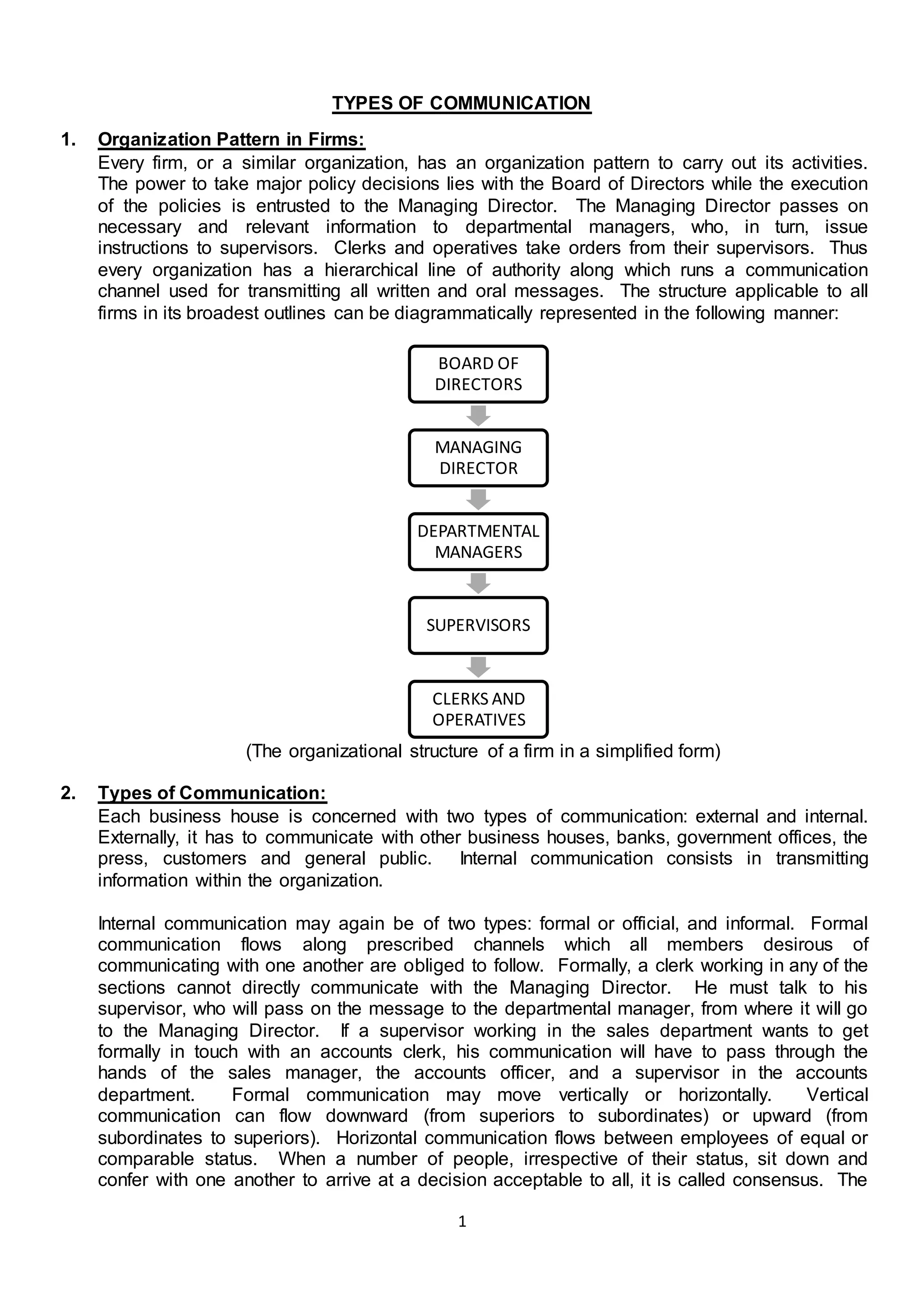
1. The document discusses types of communication within organizations, including formal downward and upward communication channels. Downward communication flows from superiors to subordinates along hierarchical lines. Upward communication allows feedback from subordinates to superiors.
2. Downward communication aims to give directives, explain policies, provide performance updates, and give job context. It is conducted through letters, circulars, meetings, and orally. Limitations include under-communication, delay, lost information, distortion, and built-in resistance from subordinates.
3. Effective downward communication requires managers to be informed, follow a communication plan, decentralize authority, and communicate to the correct person in the hierarchy. Upward communication provides feedback and an outlet for employee