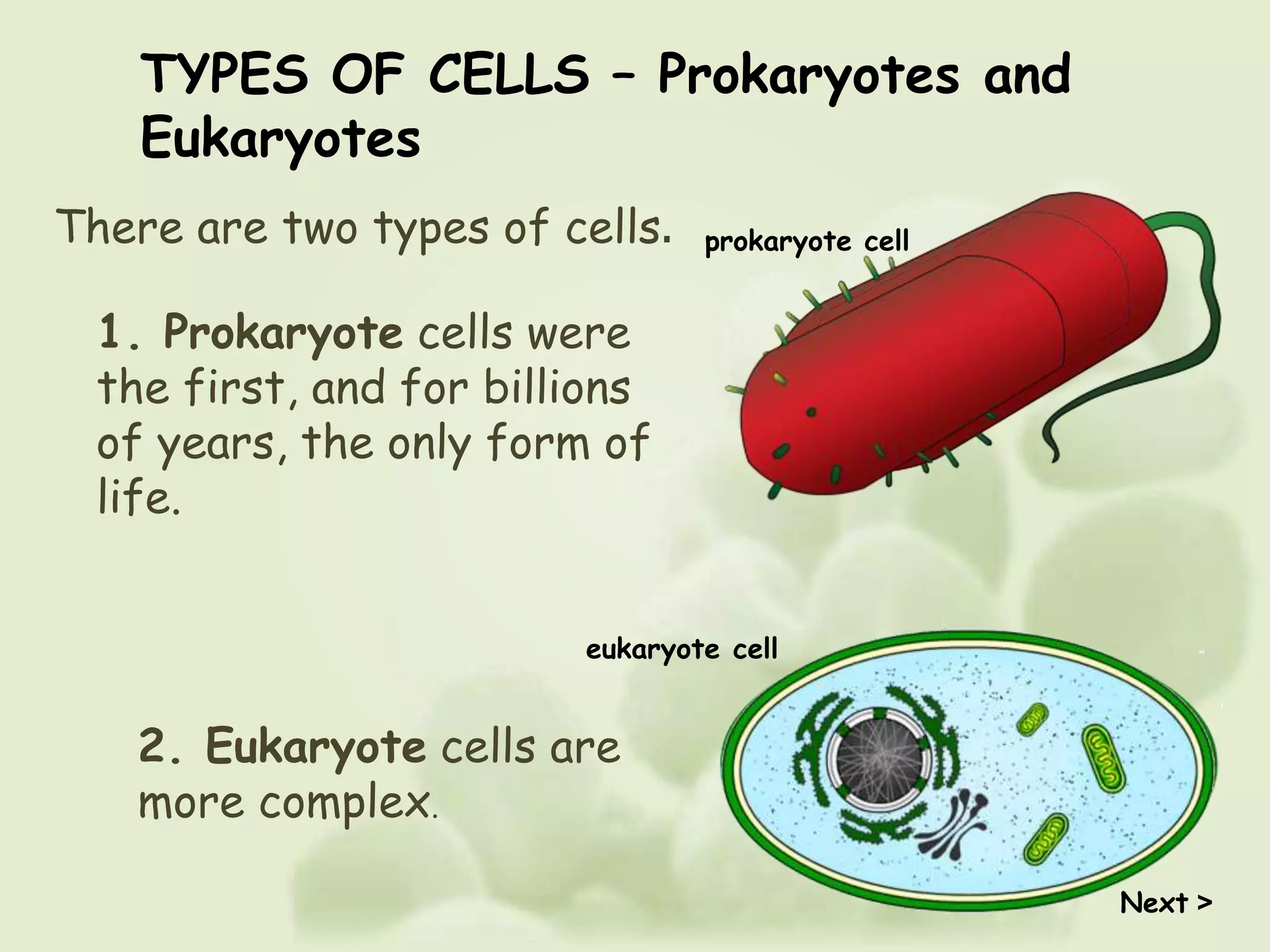
There are two types of cells.
TYPES OF CELLS – Prokaryotes and
Eukaryotes
1. Prokaryote cells were
the first, and for billions
of years, the only form of
life.
2. Eukaryote cells are
more complex.
prokaryote cell
eukaryote cell
Next >
Prokaryote cell
Eukaryote cell
Next >
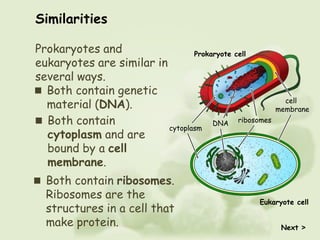
 Both contain
cytoplasm and are
bound by a cell
membrane.
Similarities
 Both contain ribosomes.
Ribosomes are the
structures in a cell that
make protein.
 Both contain genetic
material (DNA).
Prokaryotes and
eukaryotes are similar in
several ways.
DNA ribosomes
cytoplasm
cell
membrane
Next >
Differences
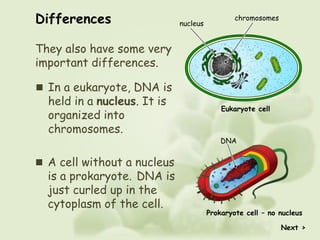
 A cell without a nucleus
is a prokaryote. DNA is
just curled up in the
cytoplasm of the cell.
They also have some very
important differences.
 In a eukaryote, DNA is
held in a nucleus. It is
organized into
chromosomes.
Eukaryote cell
nucleus
chromosomes
Prokaryote cell – no nucleus
DNA
Eukaryote cell
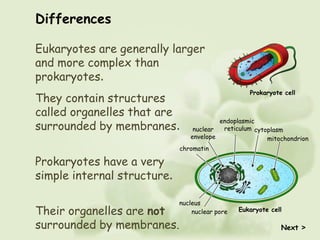
Eukaryotes are generally larger
and more complex than
prokaryotes.
Next >
Differences
Prokaryotes have a very
simple internal structure.
mitochondrion
endoplasmic
reticulum cytoplasm
nuclear pore
nucleus
chromatin
nuclear
envelope
Prokaryote cell
They contain structures
called organelles that are
surrounded by membranes.
Their organelles are not
surrounded by membranes.
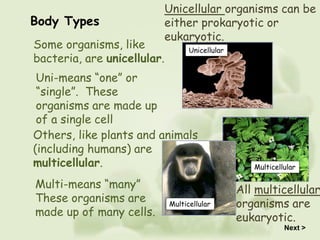
Unicellular
Multicellular
Multicellular
Others, like plants and animals
(including humans) are
multicellular.
Uni-means “one” or
“single”. These
organisms are made up
of a single cell
Multi-means “many”
These organisms are
made up of many cells.
Some organisms, like
bacteria, are unicellular.
Next >
Body Types
Unicellular organisms can be
either prokaryotic or
eukaryotic.
All multicellular
organisms are
eukaryotic.
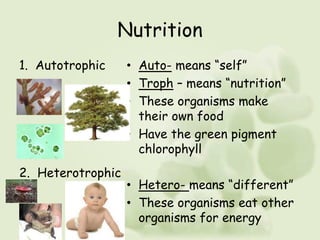
Nutrition
1. Autotrophic
2. Heterotrophic
• Auto- means “self”
• Troph – means “nutrition”
• These organisms make
their own food
• Have the green pigment
chlorophyll
• Hetero- means “different”
• These organisms eat other
organisms for energy

Types of cells notes ppt

  • 1.
    There are twotypes of cells. TYPES OF CELLS – Prokaryotes and Eukaryotes 1. Prokaryote cells were the first, and for billions of years, the only form of life. 2. Eukaryote cells are more complex. prokaryote cell eukaryote cell Next >
  • 2.
    Prokaryote cell Eukaryote cell Next>  Both contain cytoplasm and are bound by a cell membrane. Similarities  Both contain ribosomes. Ribosomes are the structures in a cell that make protein.  Both contain genetic material (DNA). Prokaryotes and eukaryotes are similar in several ways. DNA ribosomes cytoplasm cell membrane
  • 3.
    Next > Differences  Acell without a nucleus is a prokaryote. DNA is just curled up in the cytoplasm of the cell. They also have some very important differences.  In a eukaryote, DNA is held in a nucleus. It is organized into chromosomes. Eukaryote cell nucleus chromosomes Prokaryote cell – no nucleus DNA
  • 4.
    Eukaryote cell Eukaryotes aregenerally larger and more complex than prokaryotes. Next > Differences Prokaryotes have a very simple internal structure. mitochondrion endoplasmic reticulum cytoplasm nuclear pore nucleus chromatin nuclear envelope Prokaryote cell They contain structures called organelles that are surrounded by membranes. Their organelles are not surrounded by membranes.
  • 5.
    Unicellular Multicellular Multicellular Others, like plantsand animals (including humans) are multicellular. Uni-means “one” or “single”. These organisms are made up of a single cell Multi-means “many” These organisms are made up of many cells. Some organisms, like bacteria, are unicellular. Next > Body Types Unicellular organisms can be either prokaryotic or eukaryotic. All multicellular organisms are eukaryotic.
  • 6.
    Nutrition 1. Autotrophic 2. Heterotrophic •Auto- means “self” • Troph – means “nutrition” • These organisms make their own food • Have the green pigment chlorophyll • Hetero- means “different” • These organisms eat other organisms for energy