Three Stages of Interphase
Introduction
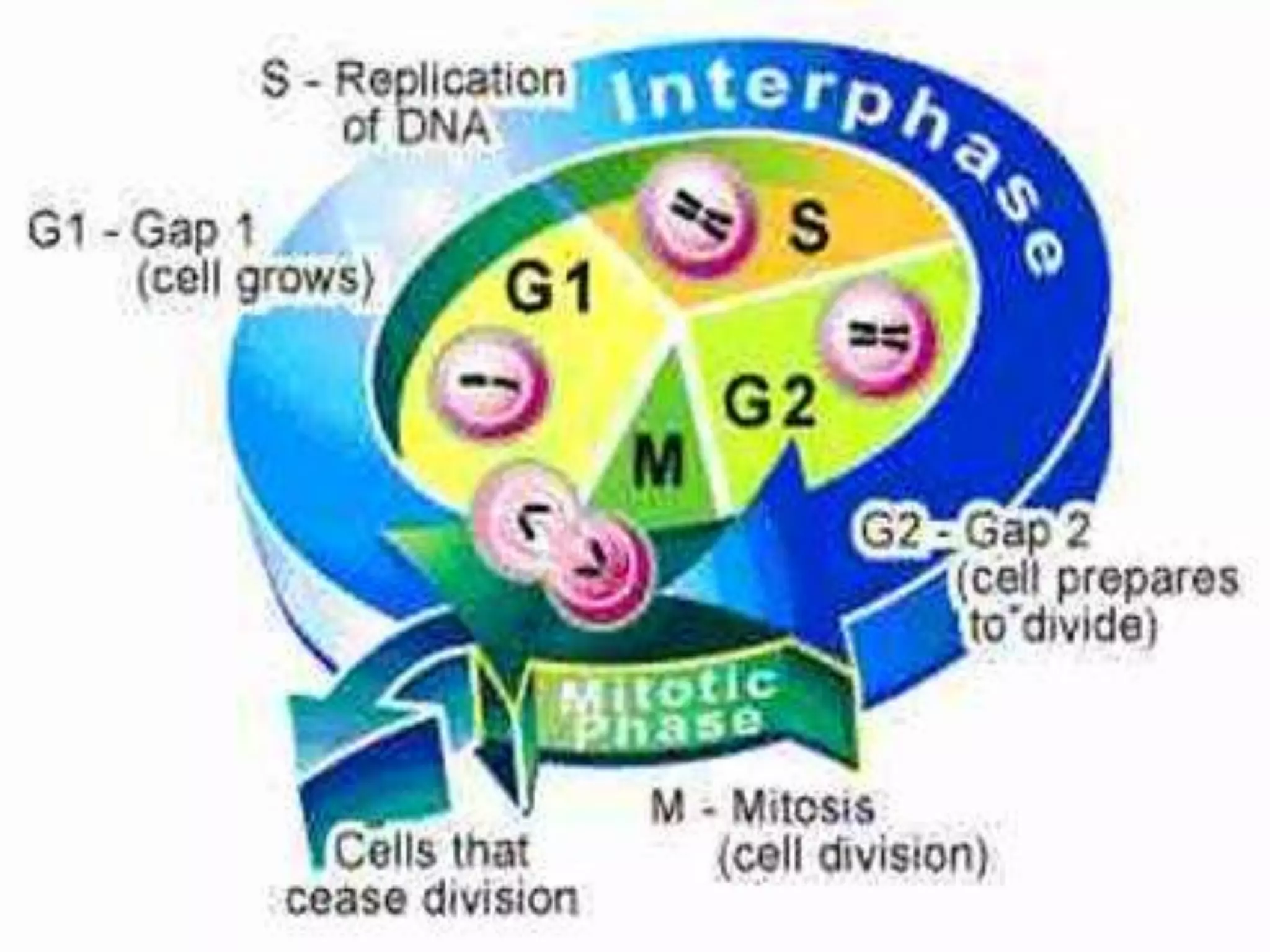
• The stages in a cell that is progressing towards
cell division is called the cell cycle. The cell
cycle is broadly divided into two phases: the
interphase and the mitotic phase. Interphase
is the phase during which the growth of the
cells take place along with the metabolic
activity but the nuclear division in the cell
does not occur. The three stages included
within the interphase are the G1, S and G2.
G1 Phase (the first Gap Phase):the first
Stage of Interphase
• During the G1 phase or the Gap 1 phase, the protein synthesis
and the RNA synthesis within the cell resumes that was
interrupted during the process of mitosis. Growth and young
cell maturation occurs, which accomplish the physiological
function. G1 phase is the phase during which the cell cycle
starts with the synthesis of RNA and proteins required by the
young cells for their growth and maturity. The time period of
the G1 phase of the interphase is varied highly among the
different species’ eukaryotic cells. For example, faster
renovation tissues like the mucosa and the endometrial
epithelium require very short G1 periods as compared to the
muscles or connective tissues that do not require frequent
repair or renovation. G1 phase is usually termed as the prior
to DNA synthesis phase.
S Phase: the Second Stage of
Interphase
• The DNA synthesis place as the name suggests, S
which stands for synthesis. Soon after the G1
phase, DNA checking and subsequent repair
occurs during the variable pause phase before
the transition of the cell cycle to the S phase. The
S phase of the interphase deals with the semi-
conservative synthesis of DNA occurs. Replication
of cellular DNA begins with the S phase, which
when gets duplicated with the cell containing
nearly double the amount of chromosomes, the
cells from the S phase move into the G2 phase.
G2 Phase (the Second Gap Phase): the
third Stage of Interphase
• During the G2 phase, there is an increase in the synthesis
of the RNA and the protein, which is followed by another
round of proof reading and subsequent repair among the
newly synthesized DNA sequences before the cell cycle
transits to the mitotic cycle. The mitotic spindle formed
from the cytokinetic fibers start forming and the cell
ensures the number of chromosomes and the organelles
present, which further leads the cell cycle from the
interphase to the mitotic phase.

Three stages of Interphase

  • 1.
    Three Stages ofInterphase
  • 2.
    Introduction • The stagesin a cell that is progressing towards cell division is called the cell cycle. The cell cycle is broadly divided into two phases: the interphase and the mitotic phase. Interphase is the phase during which the growth of the cells take place along with the metabolic activity but the nuclear division in the cell does not occur. The three stages included within the interphase are the G1, S and G2.
  • 4.
    G1 Phase (thefirst Gap Phase):the first Stage of Interphase • During the G1 phase or the Gap 1 phase, the protein synthesis and the RNA synthesis within the cell resumes that was interrupted during the process of mitosis. Growth and young cell maturation occurs, which accomplish the physiological function. G1 phase is the phase during which the cell cycle starts with the synthesis of RNA and proteins required by the young cells for their growth and maturity. The time period of the G1 phase of the interphase is varied highly among the different species’ eukaryotic cells. For example, faster renovation tissues like the mucosa and the endometrial epithelium require very short G1 periods as compared to the muscles or connective tissues that do not require frequent repair or renovation. G1 phase is usually termed as the prior to DNA synthesis phase.
  • 5.
    S Phase: theSecond Stage of Interphase • The DNA synthesis place as the name suggests, S which stands for synthesis. Soon after the G1 phase, DNA checking and subsequent repair occurs during the variable pause phase before the transition of the cell cycle to the S phase. The S phase of the interphase deals with the semi- conservative synthesis of DNA occurs. Replication of cellular DNA begins with the S phase, which when gets duplicated with the cell containing nearly double the amount of chromosomes, the cells from the S phase move into the G2 phase.
  • 6.
    G2 Phase (theSecond Gap Phase): the third Stage of Interphase • During the G2 phase, there is an increase in the synthesis of the RNA and the protein, which is followed by another round of proof reading and subsequent repair among the newly synthesized DNA sequences before the cell cycle transits to the mitotic cycle. The mitotic spindle formed from the cytokinetic fibers start forming and the cell ensures the number of chromosomes and the organelles present, which further leads the cell cycle from the interphase to the mitotic phase.