
Functional Anatomy of Prokaryotic
       and Eukaryotic Cells
• Prokaryote comes from the Greek words
  for prenucleus
• Eukaryote comes from the Greek words
  for true nucleus.
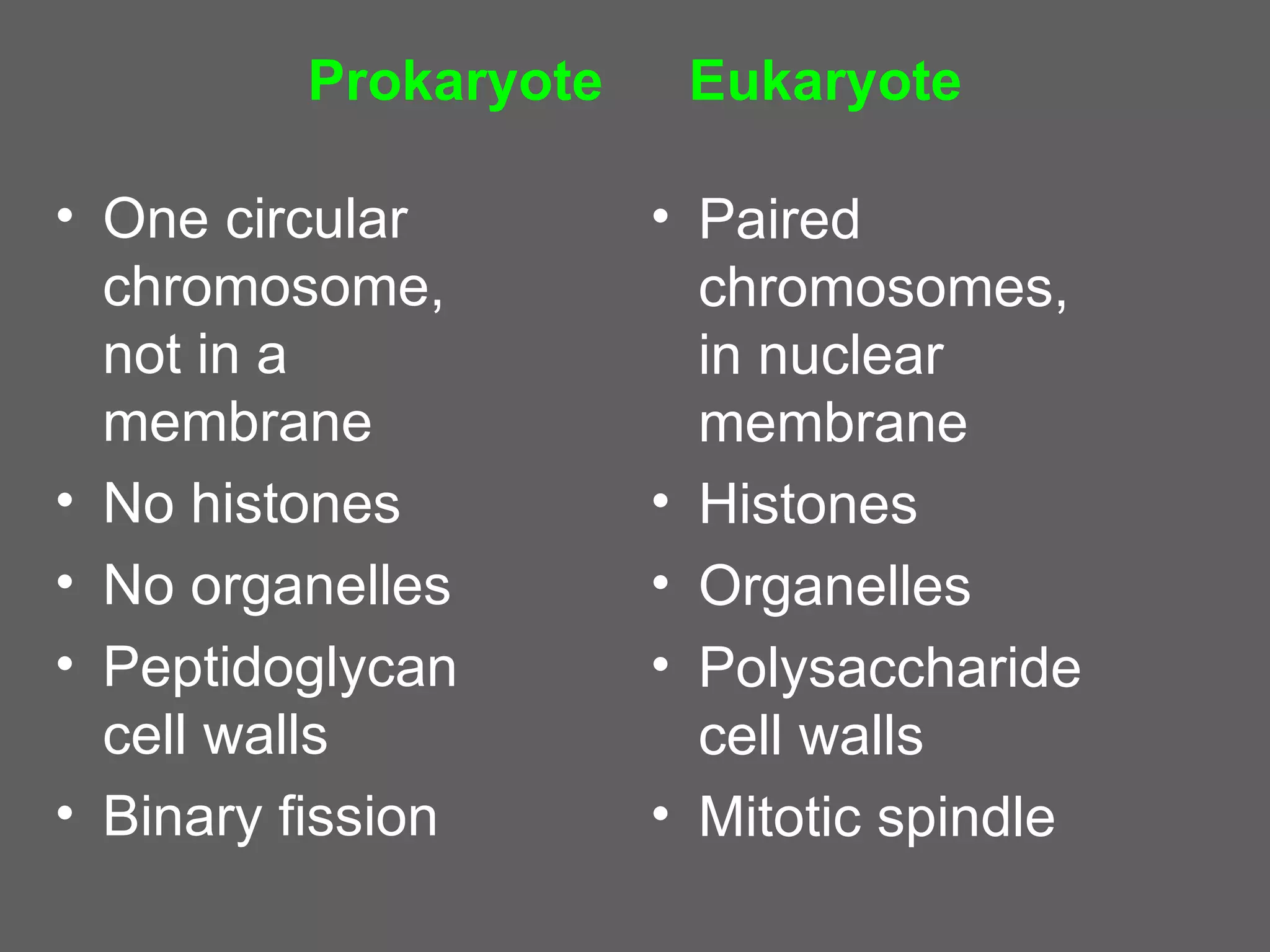
Prokaryote    Eukaryote

• One circular         • Paired
  chromosome,            chromosomes,
  not in a               in nuclear
  membrane               membrane
• No histones          • Histones
• No organelles        • Organelles
• Peptidoglycan        • Polysaccharide
  cell walls             cell walls
• Binary fission       • Mitotic spindle
Prokaryote
• One circular chromosome,
            not in a membrane
• No histones
• No organelles
• Peptidoglycan cell walls
• Binary fission
Eukaryote
•   Paired chromosomes, in nuclear membrane
•   Histones
•   Organelles
•   Polysaccharide cell walls
•   Mitotic spindle
Prokaryote
• Average size: 0.2 -1.0 µm   2 - 8 µm
• Basic shapes
Arrangements
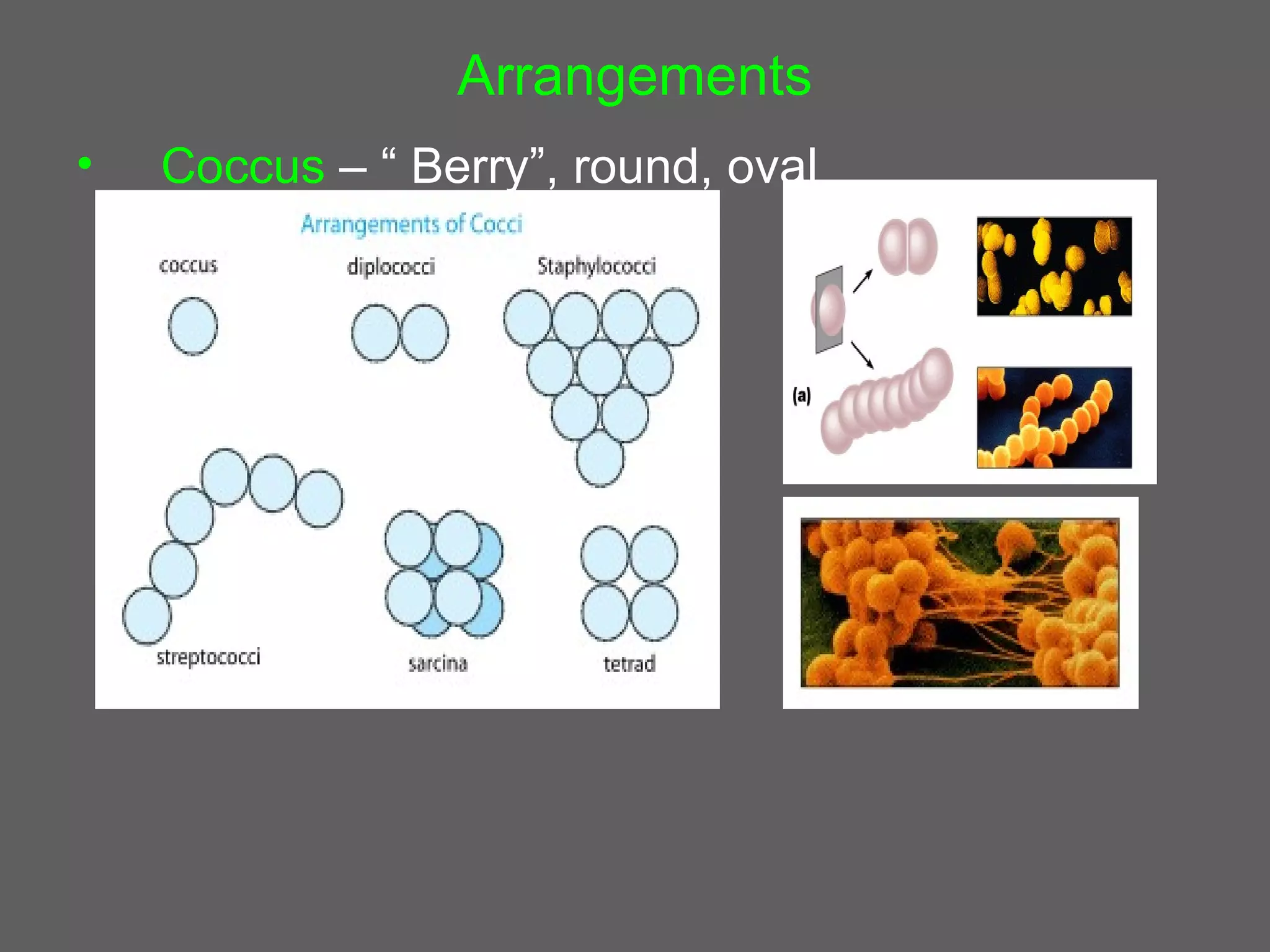
•   Coccus – “ Berry”, round, oval
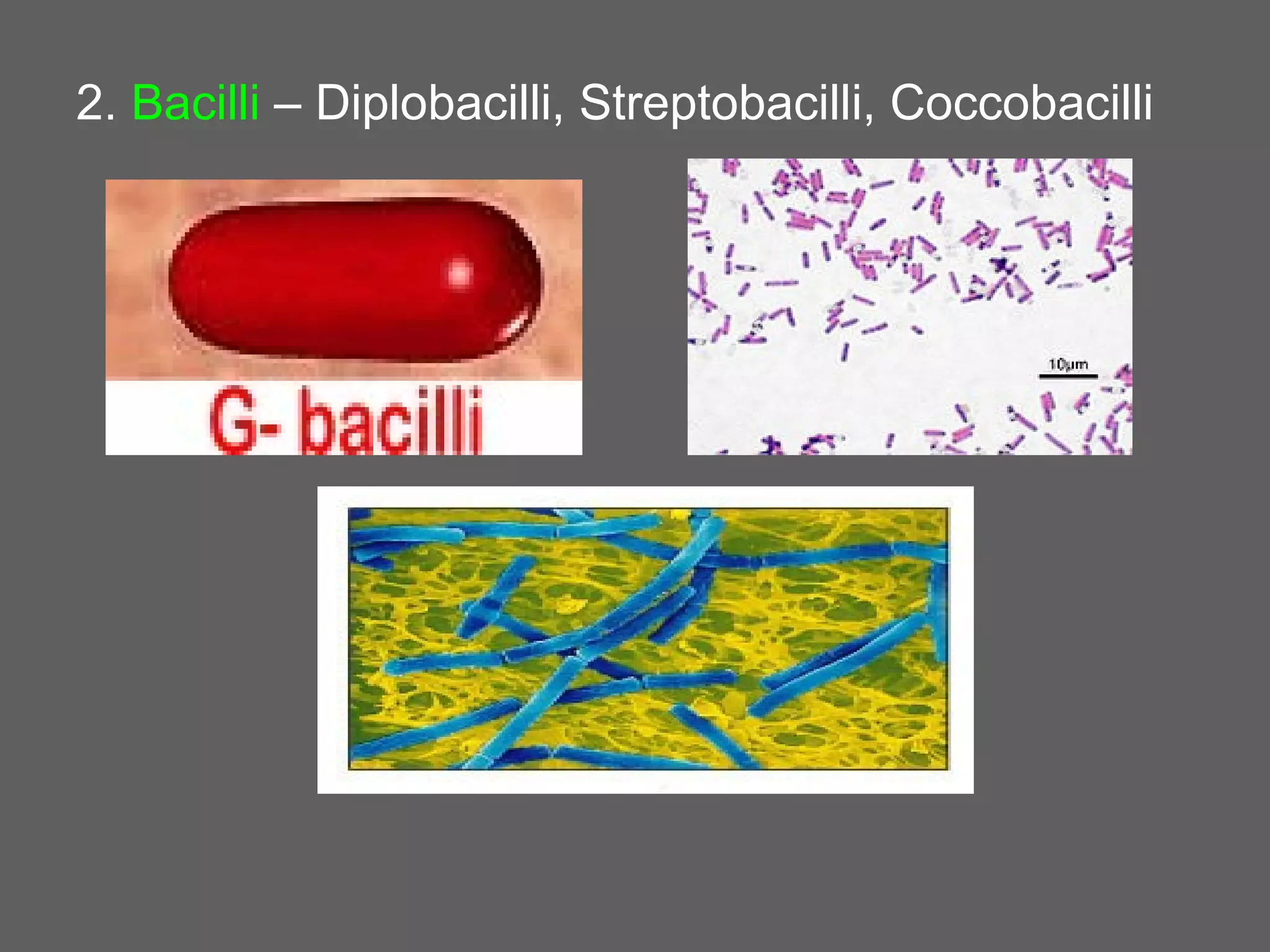
2. Bacilli – Diplobacilli, Streptobacilli, Coccobacilli
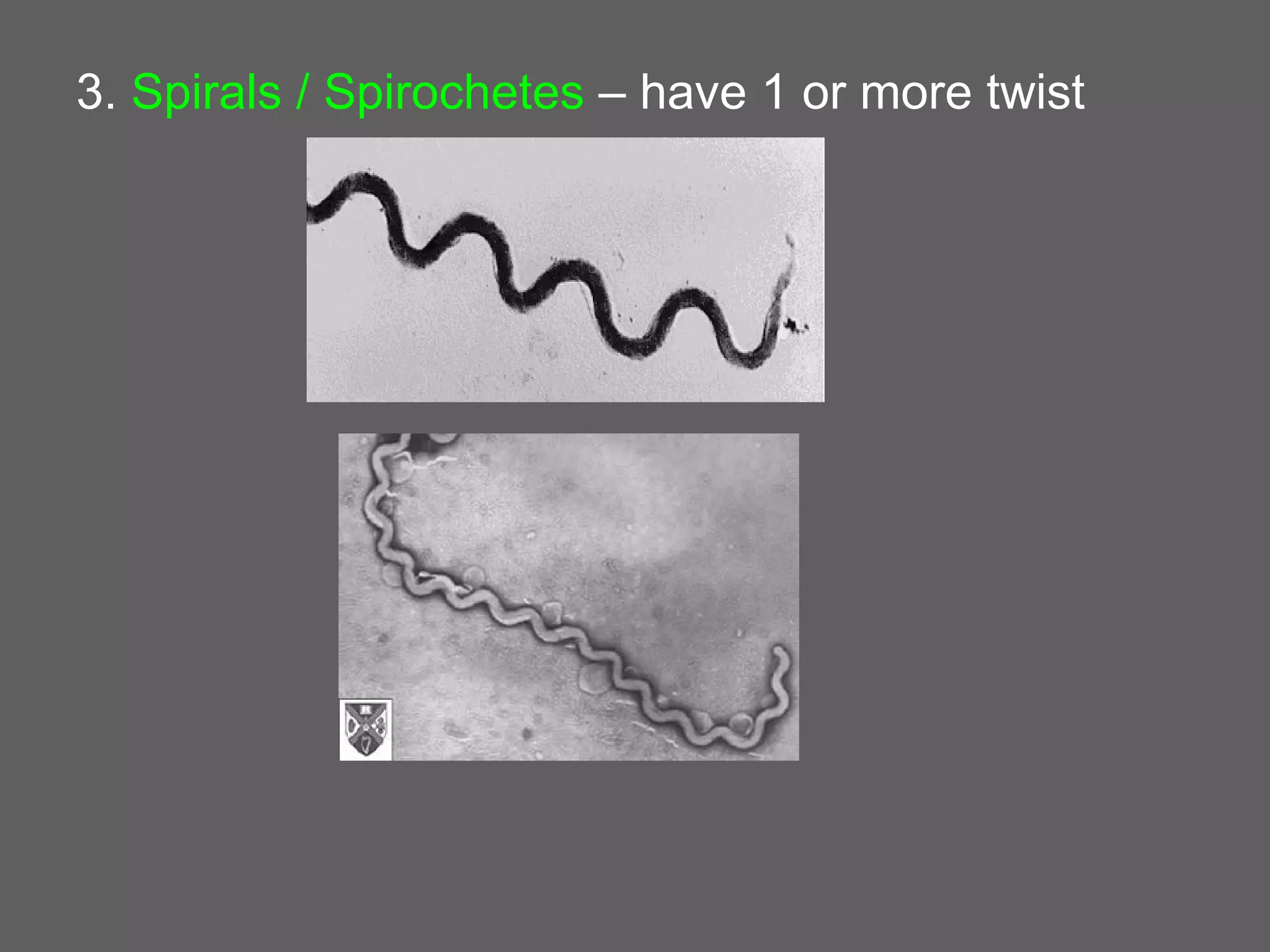
3. Spirals / Spirochetes – have 1 or more twist
Structures External to the Cell wall
•   1. Glycocalyx
•   2. Flagella
•   3. Axial Filaments
•   4. Fimbria
•   5 Pilus
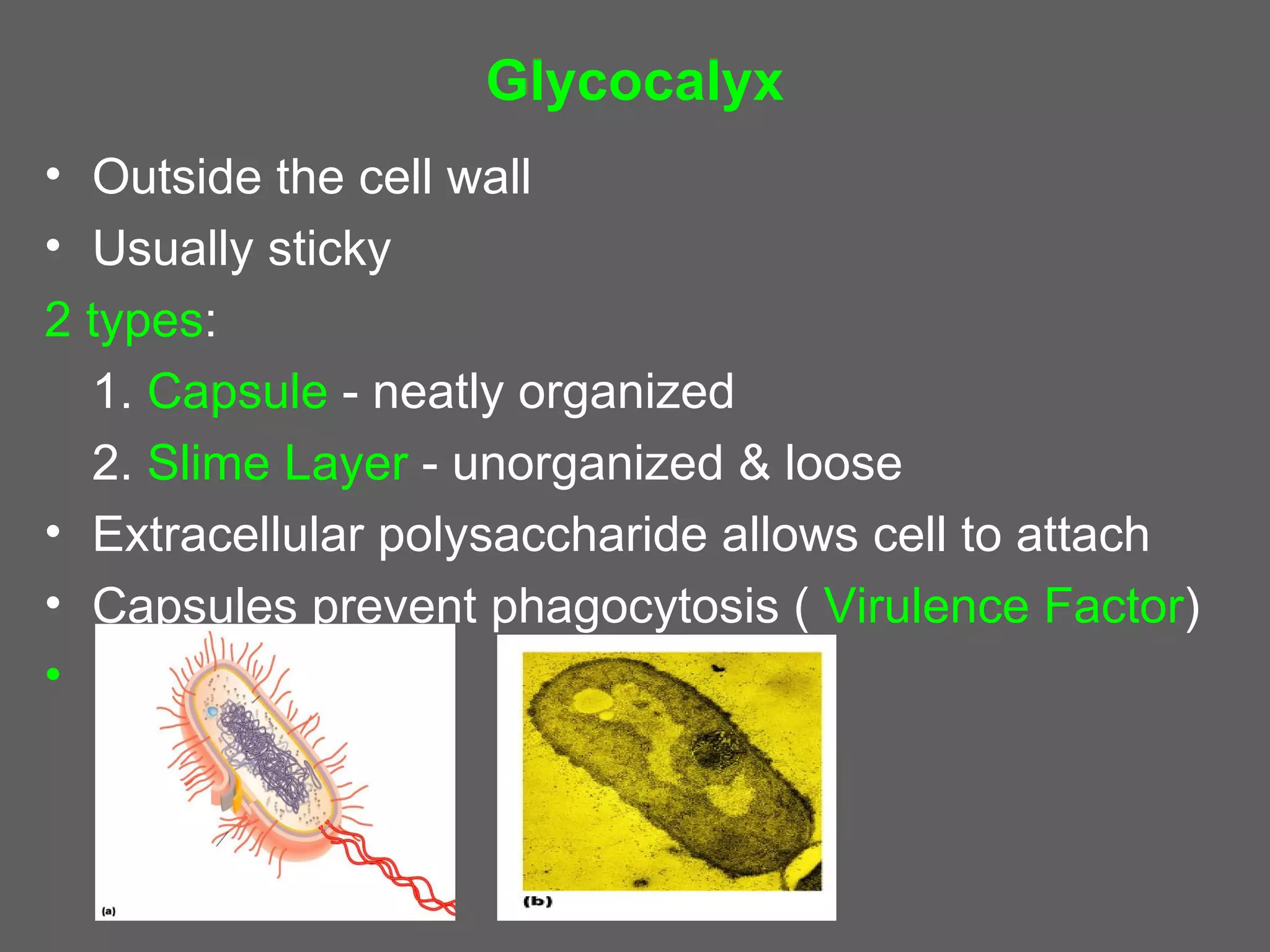
Glycocalyx
• Outside the cell wall
• Usually sticky
2 types:
  1. Capsule - neatly organized
  2. Slime Layer - unorganized & loose
• Extracellular polysaccharide allows cell to attach
• Capsules prevent phagocytosis ( Virulence Factor)
•
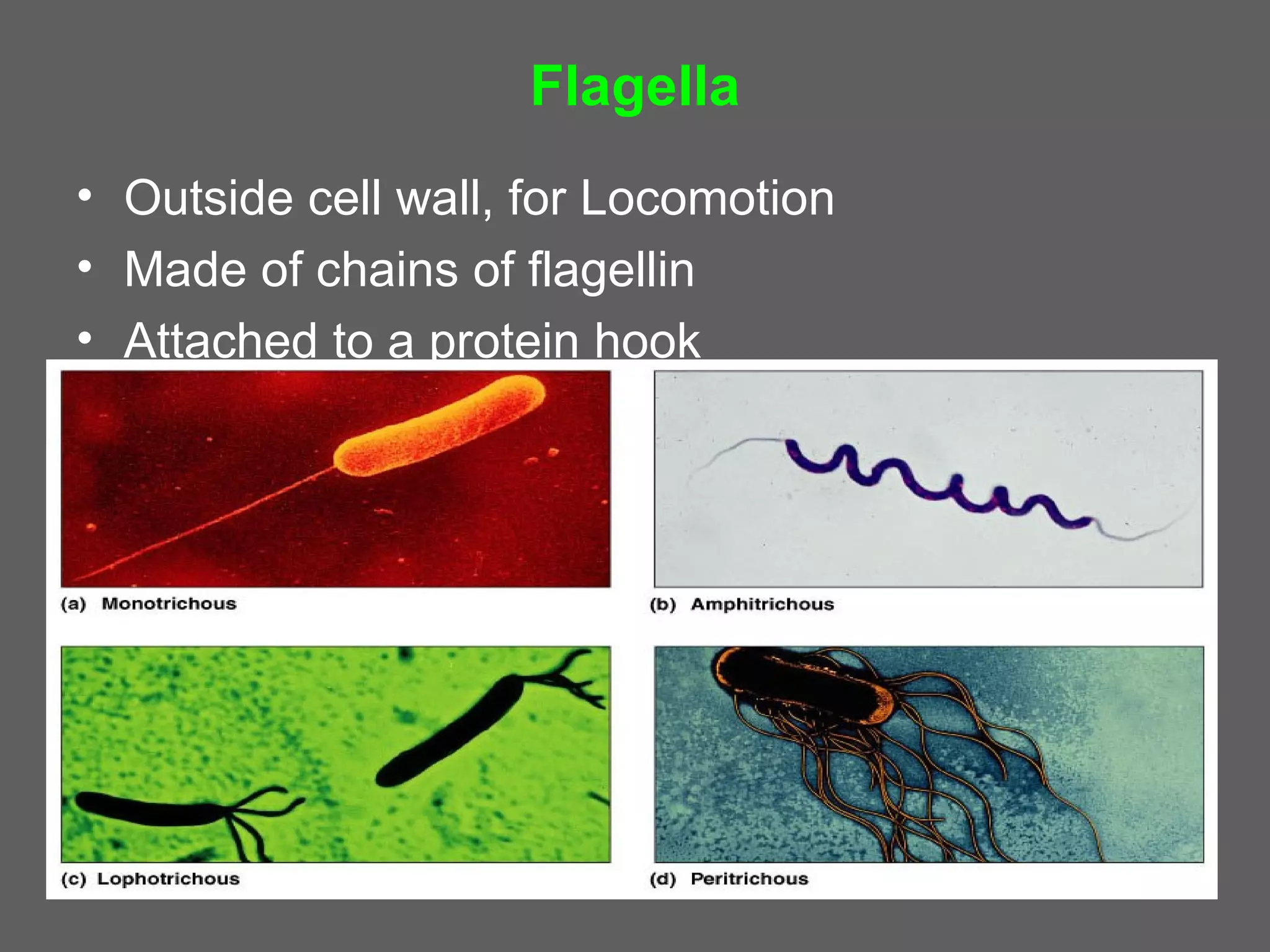
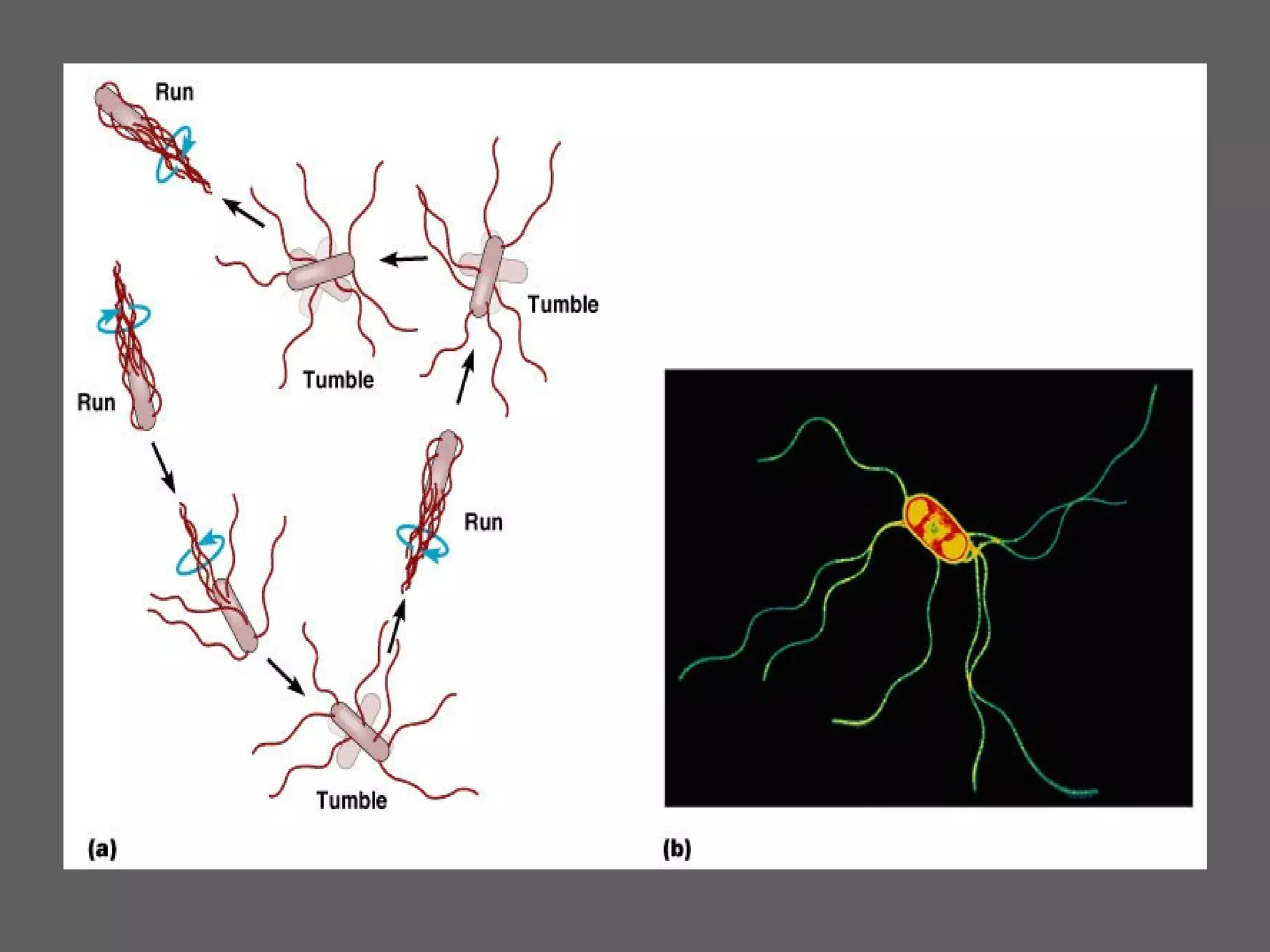
Flagella
• Outside cell wall, for Locomotion
• Made of chains of flagellin
• Attached to a protein hook
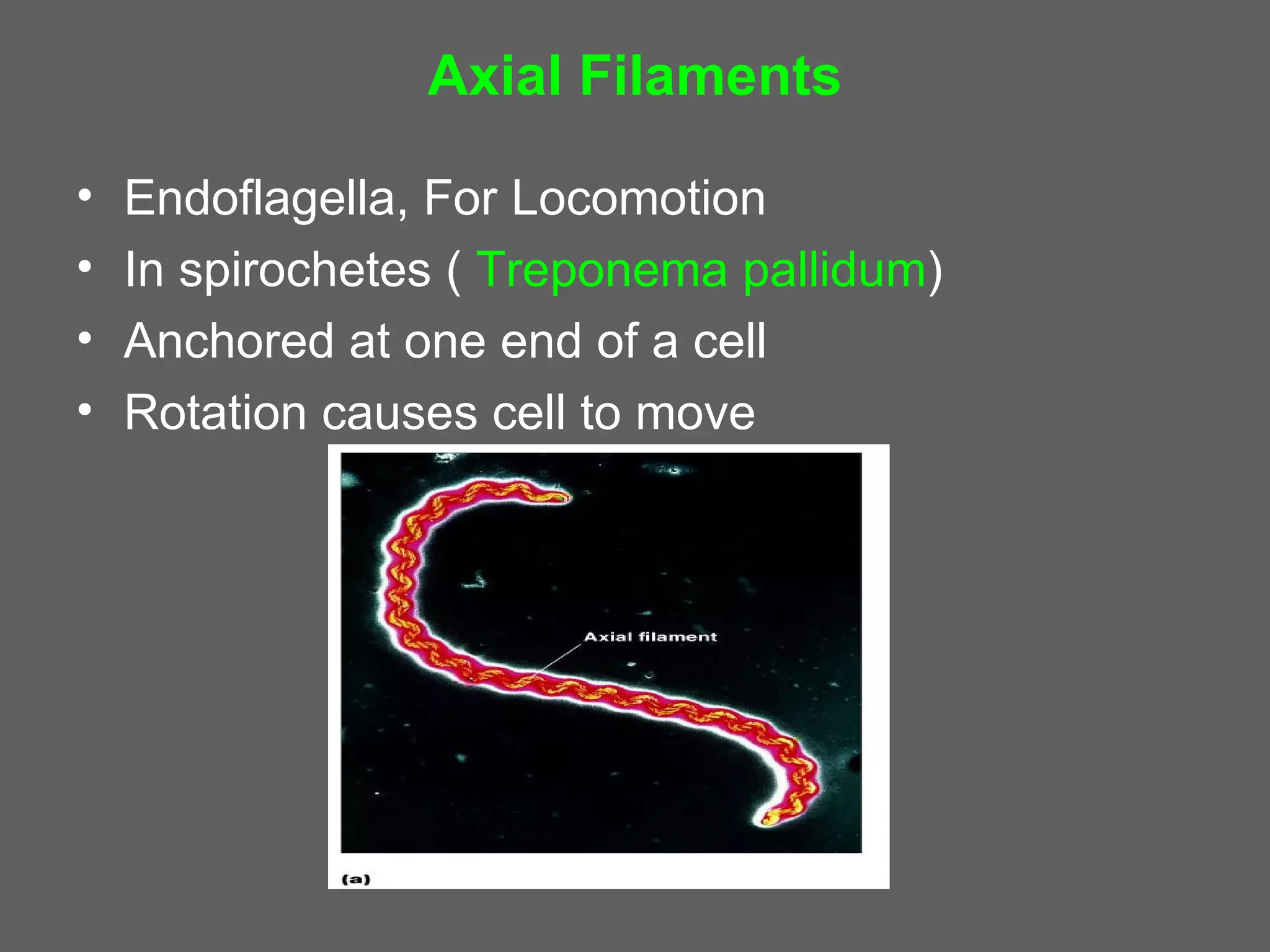
Axial Filaments

•   Endoflagella, For Locomotion
•   In spirochetes ( Treponema pallidum)
•   Anchored at one end of a cell
•   Rotation causes cell to move
Fimbria & Pilus
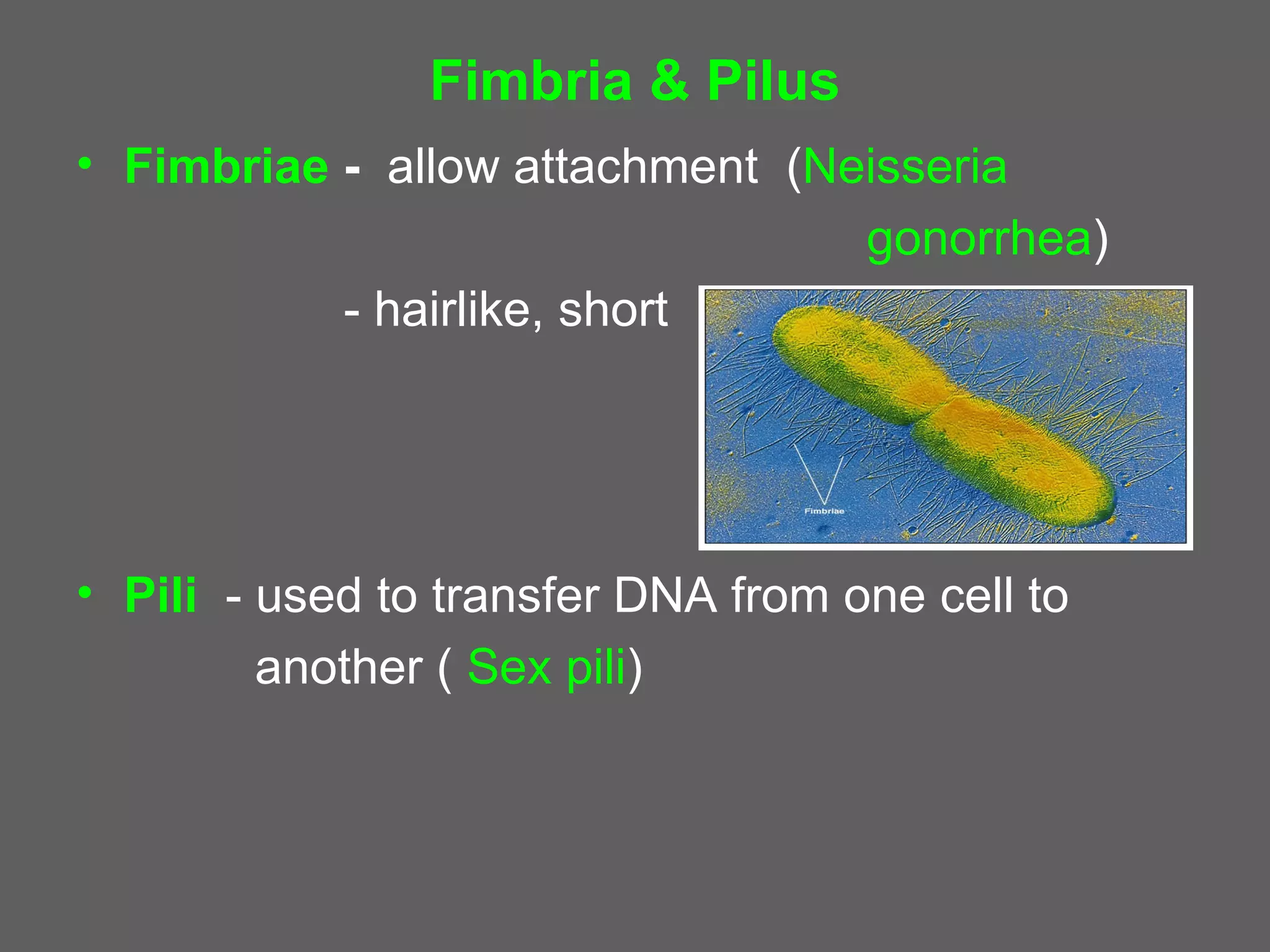
• Fimbriae - allow attachment (Neisseria
                                 gonorrhea)
           - hairlike, short


• Pili - used to transfer DNA from one cell to
         another ( Sex pili)
Cell Wall
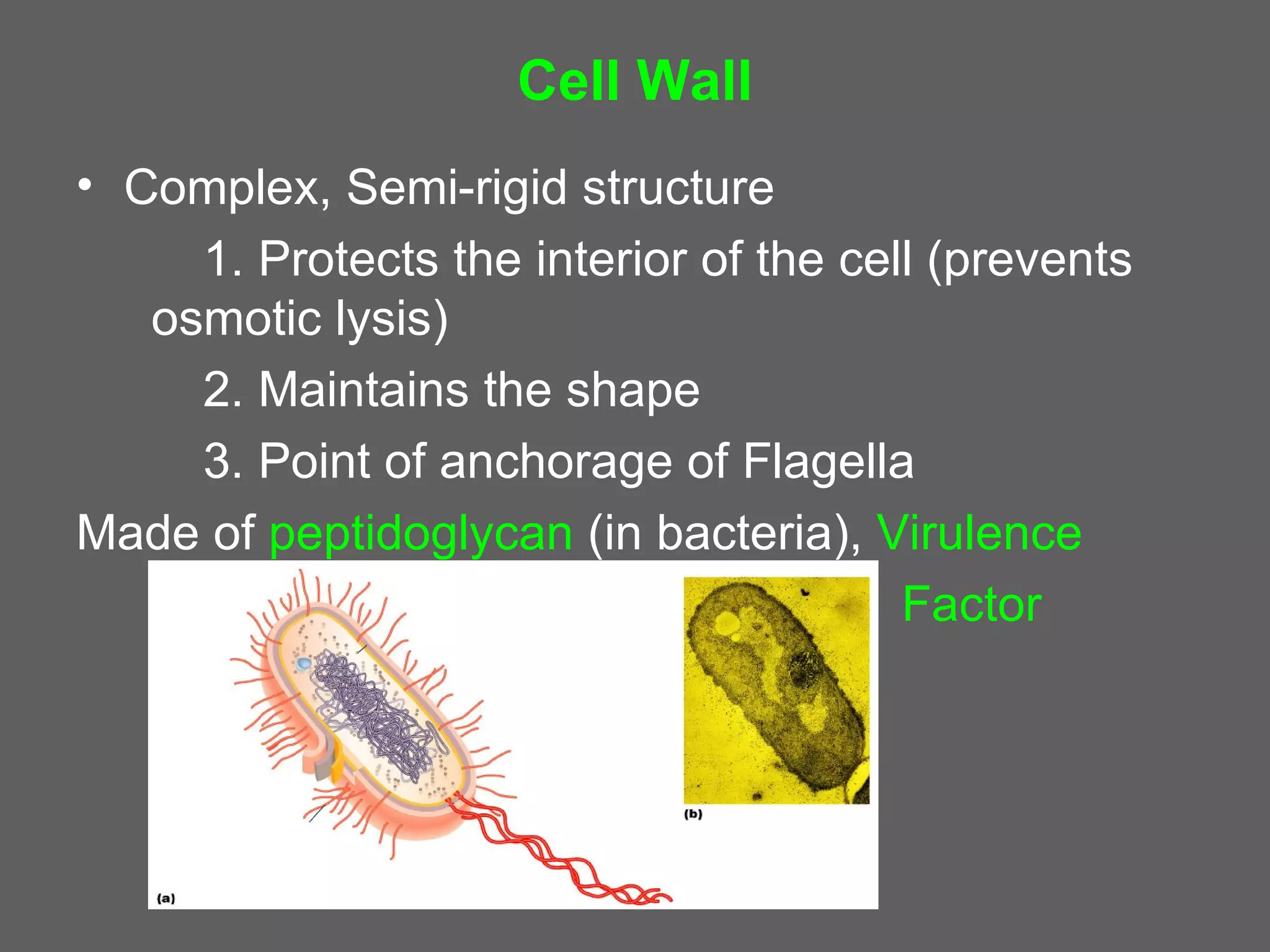
• Complex, Semi-rigid structure
     1. Protects the interior of the cell (prevents
   osmotic lysis)
     2. Maintains the shape
     3. Point of anchorage of Flagella
Made of peptidoglycan (in bacteria), Virulence
                                        Factor
Peptidoglycan
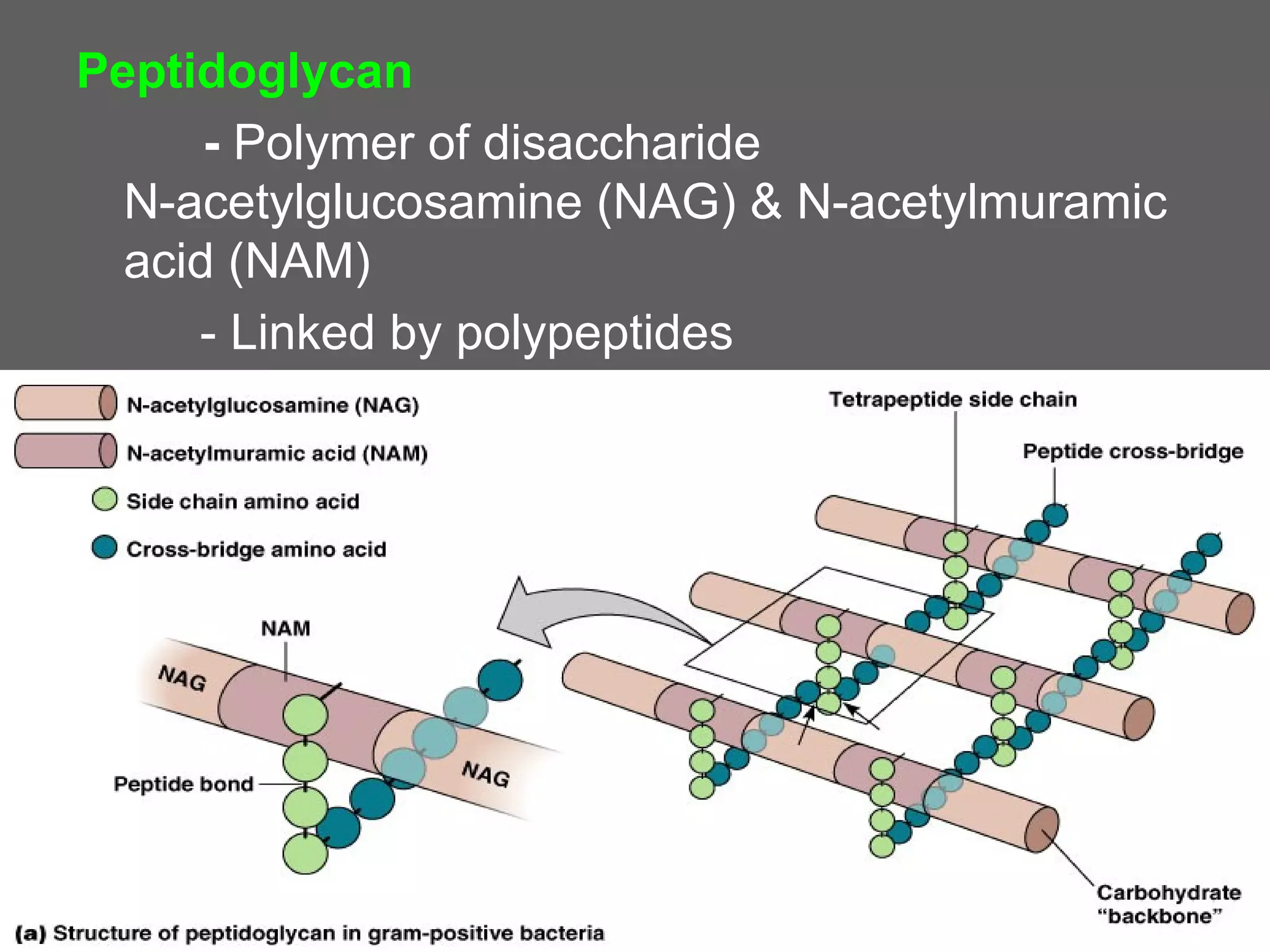
      - Polymer of disaccharide
  N-acetylglucosamine (NAG) & N-acetylmuramic
  acid (NAM)
     - Linked by polypeptides
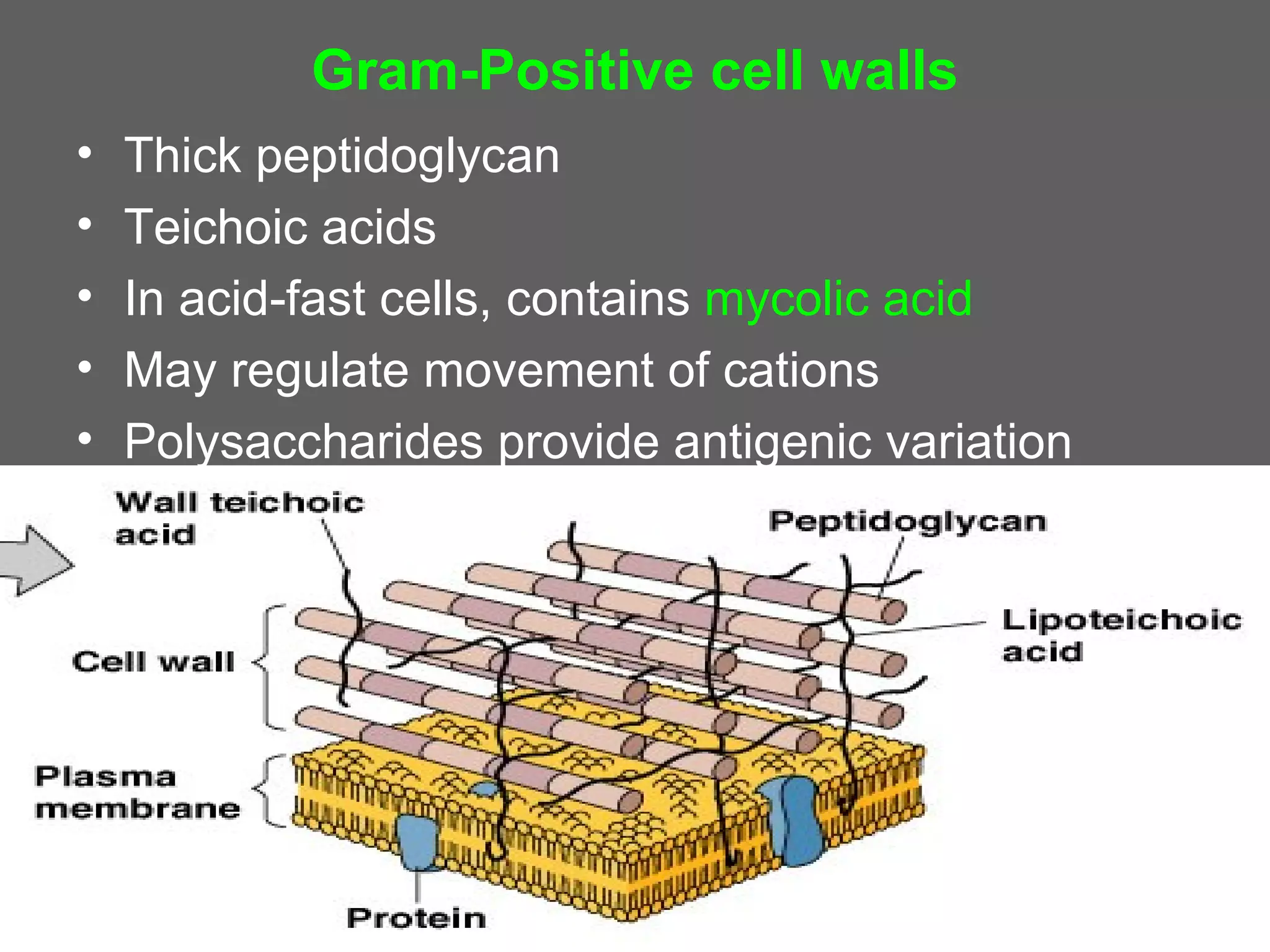
Gram-Positive cell walls
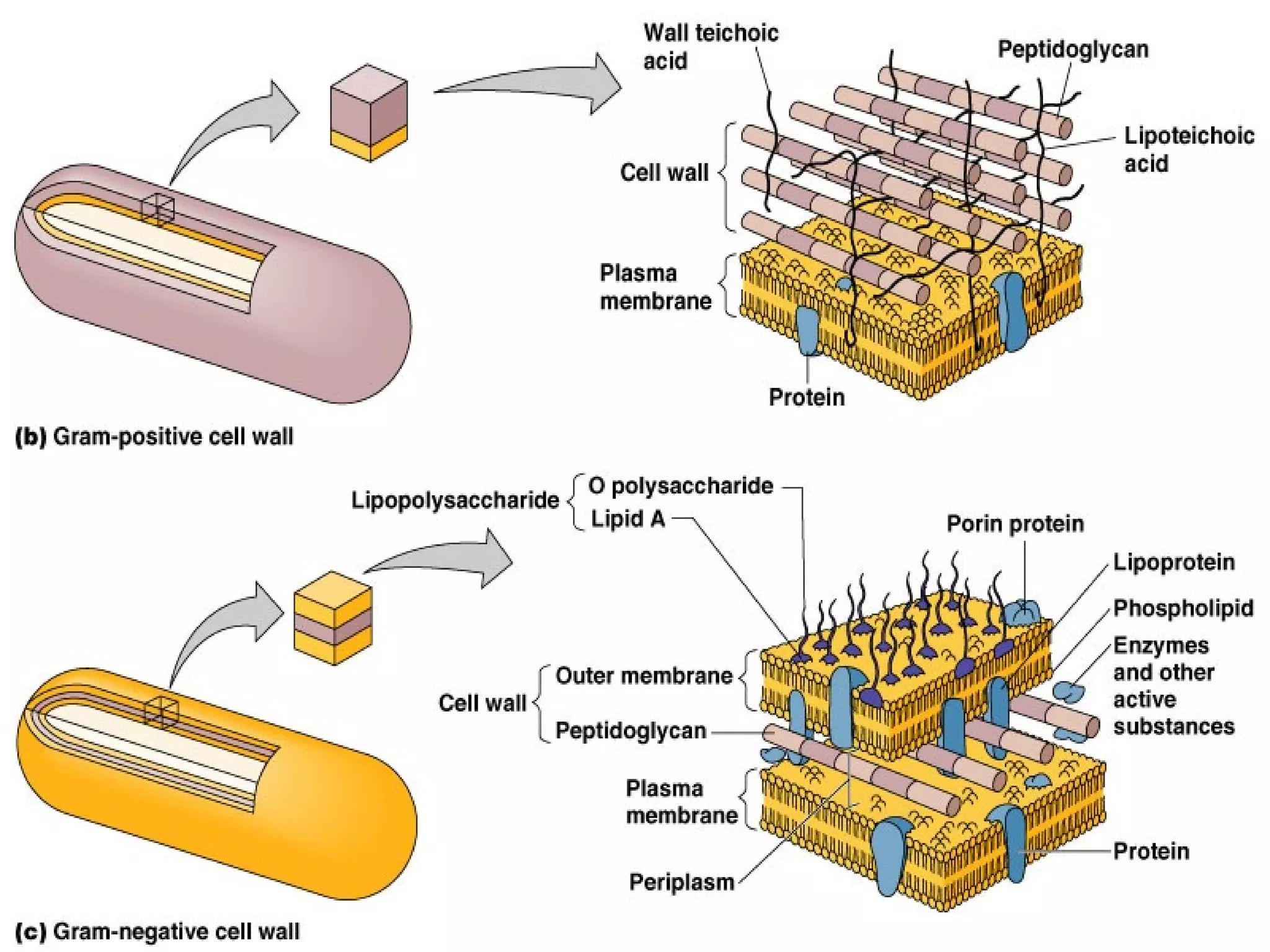
•   Thick peptidoglycan
•   Teichoic acids
•   In acid-fast cells, contains mycolic acid
•   May regulate movement of cations
•   Polysaccharides provide antigenic variation
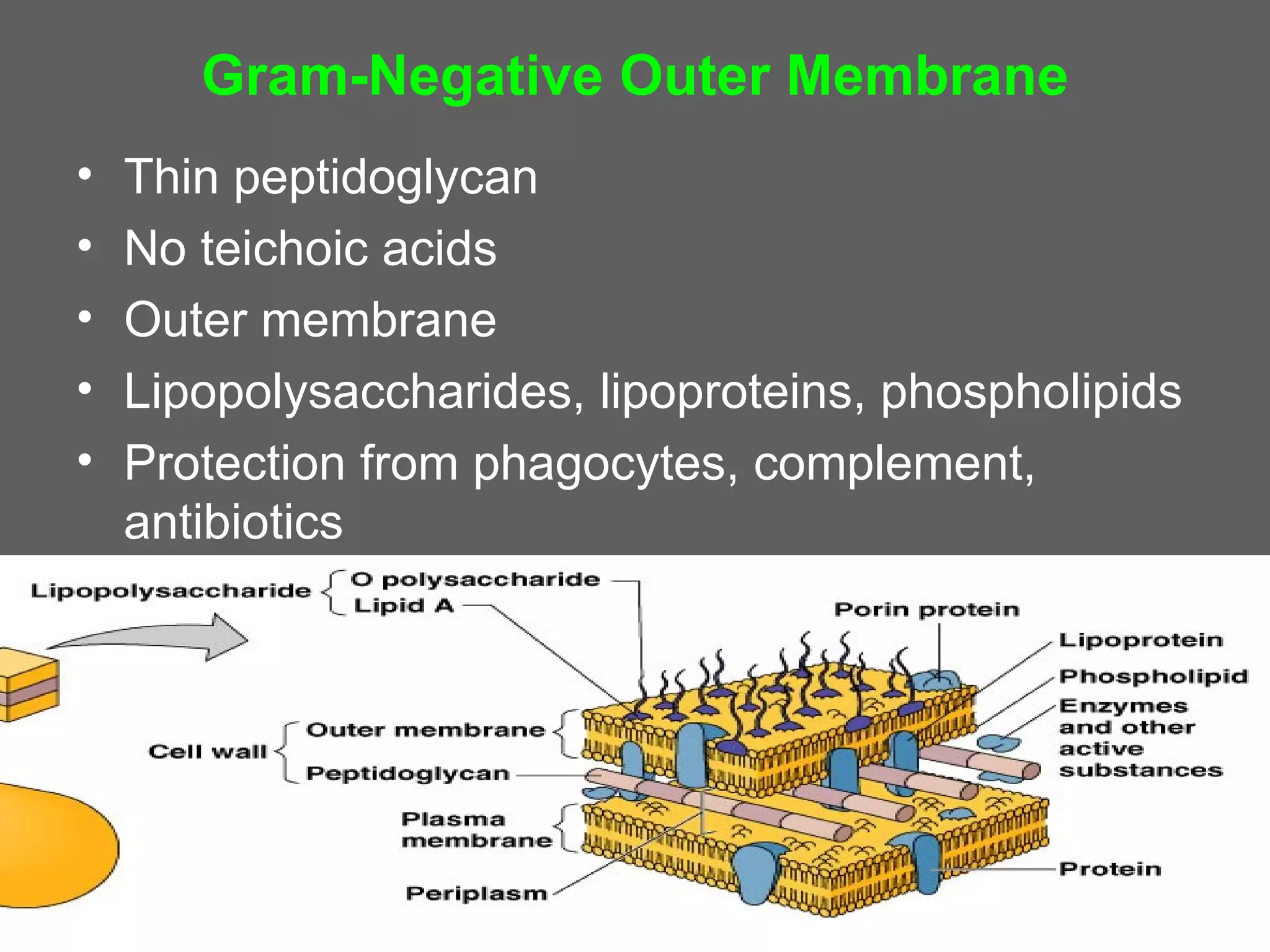
Gram-Negative Outer Membrane
•   Thin peptidoglycan
•   No teichoic acids
•   Outer membrane
•   Lipopolysaccharides, lipoproteins, phospholipids
•   Protection from phagocytes, complement,
    antibiotics
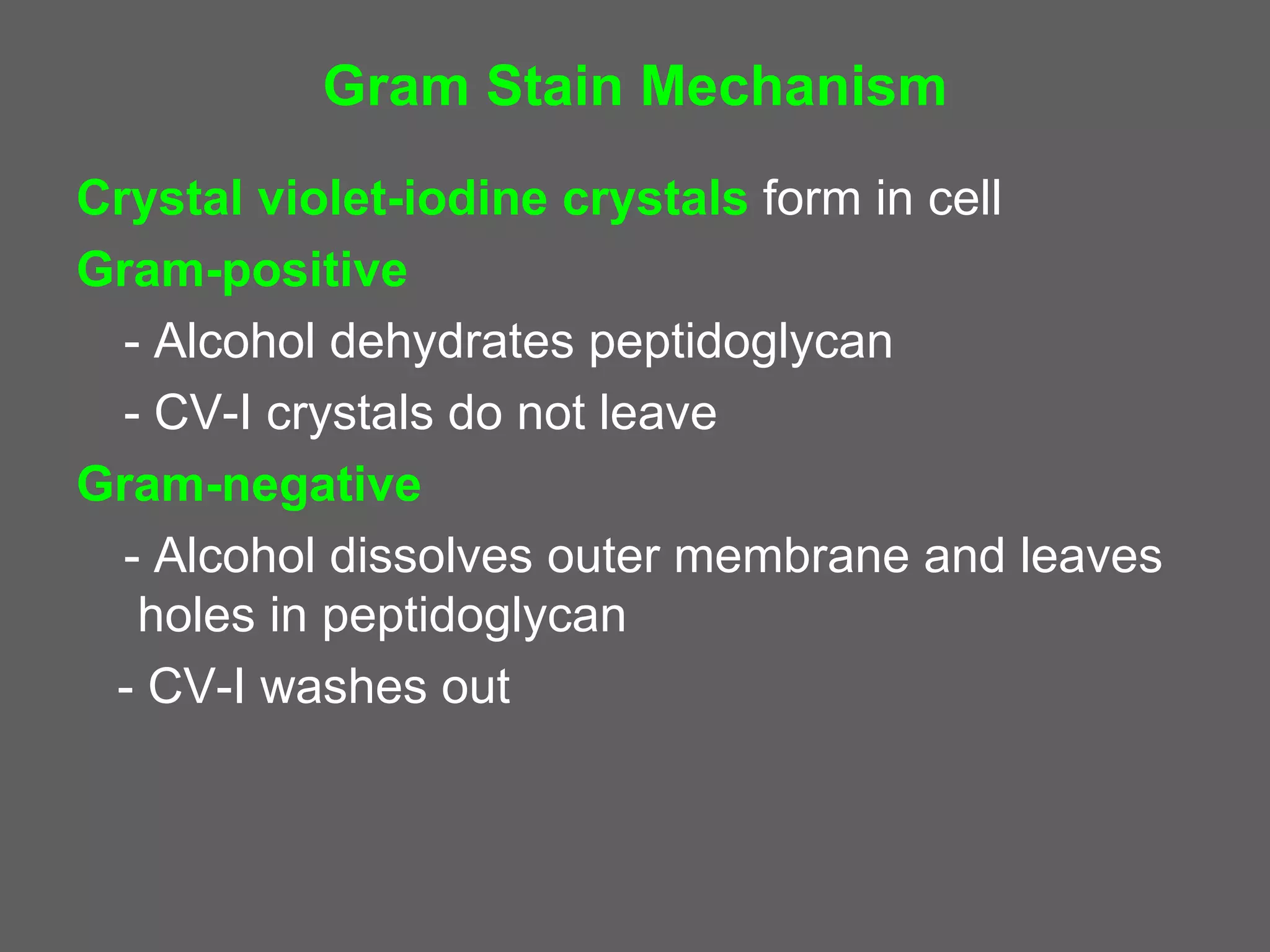
Gram Stain Mechanism
Crystal violet-iodine crystals form in cell
Gram-positive
  - Alcohol dehydrates peptidoglycan
  - CV-I crystals do not leave
Gram-negative
  - Alcohol dissolves outer membrane and leaves
   holes in peptidoglycan
 - CV-I washes out
Structures Internal to the Cell Wall
•   1. Plasma Membrane
•   2. Cytoplasm
•   3. Nuclear area
•   4. Ribosomes
•   5. Inclusion bodies
•   6. Endospores
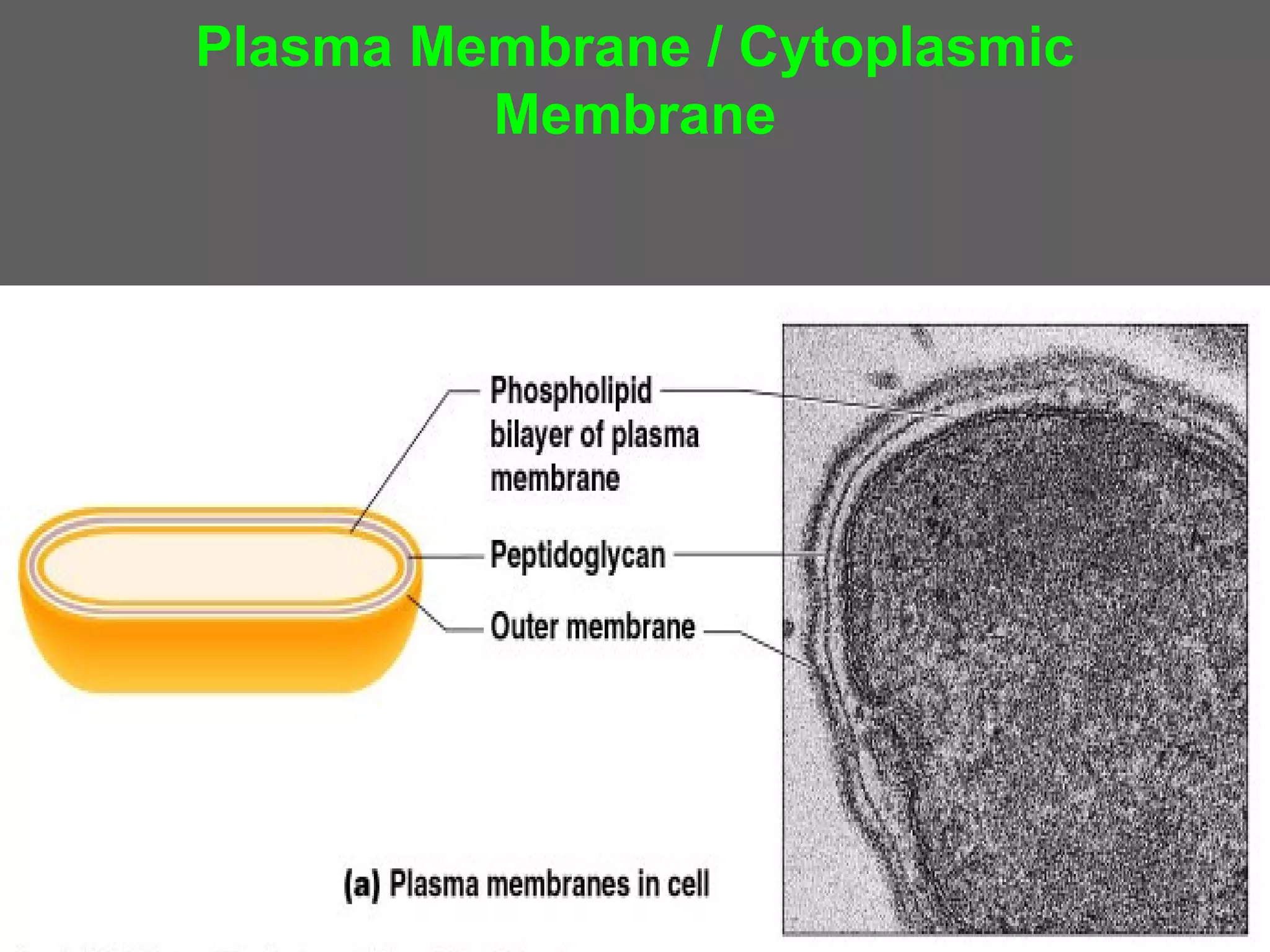
Plasma Membrane / Cytoplasmic
         Membrane
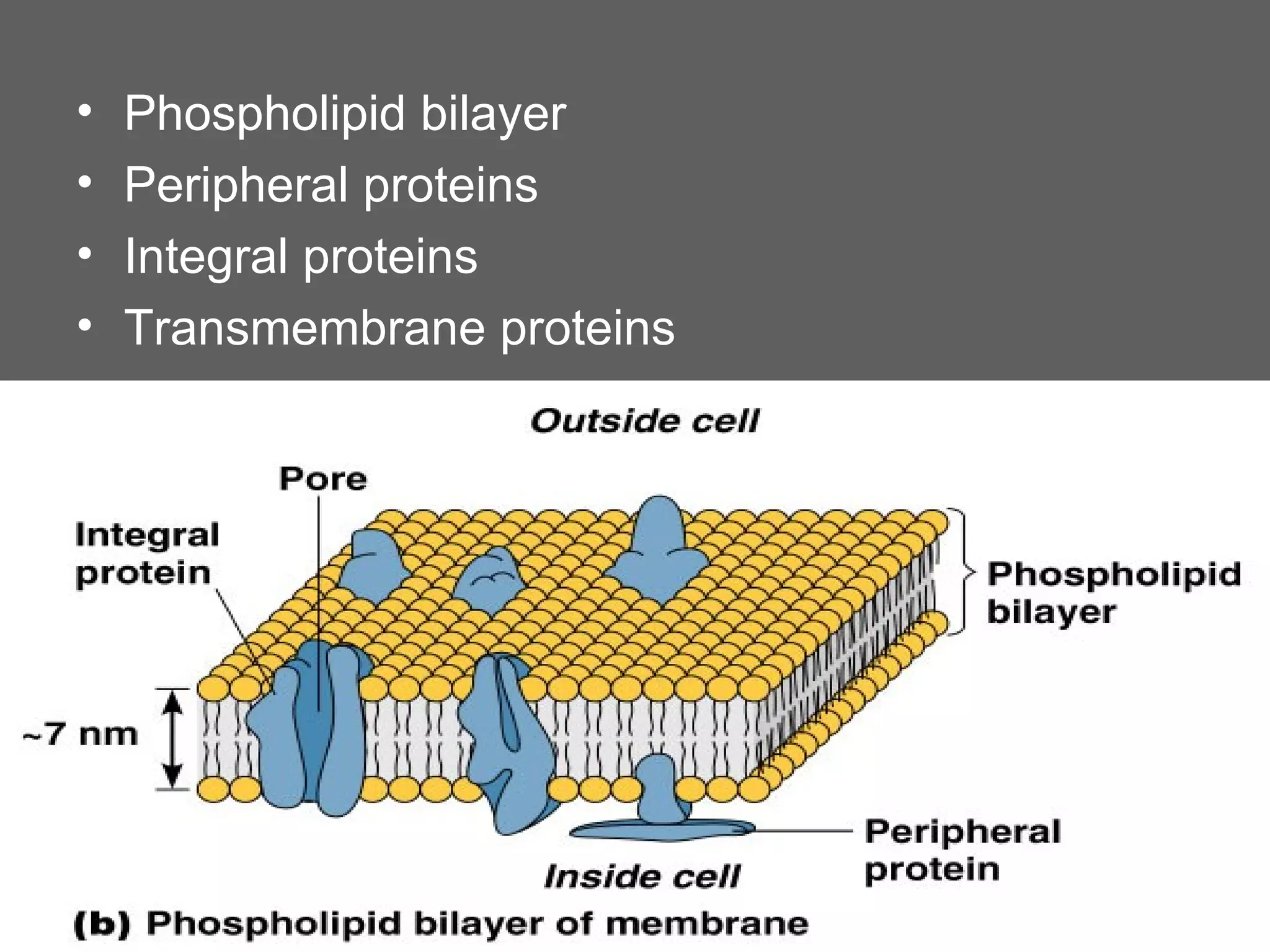
•   Phospholipid bilayer
•   Peripheral proteins
•   Integral proteins
•   Transmembrane proteins
• Selective permeability allows passage of some
  molecules
      Large molecules – inhibited
      Small molecules – allowed to pass
                       - H+, O, Lipid soluble
• Damage to the membrane by alcohols,
  quaternary ammonium (detergents) and
  polymyxin antibiotics causes leakage of cell
  contents.
Movement Across Membranes
• Simple diffusion – Movement of a solute from
                      an area of high concentration
                      to an area of low
                      concentration.
• Facilitative diffusion - Solute combines with a
                      transporter protein in the
                      membrane.
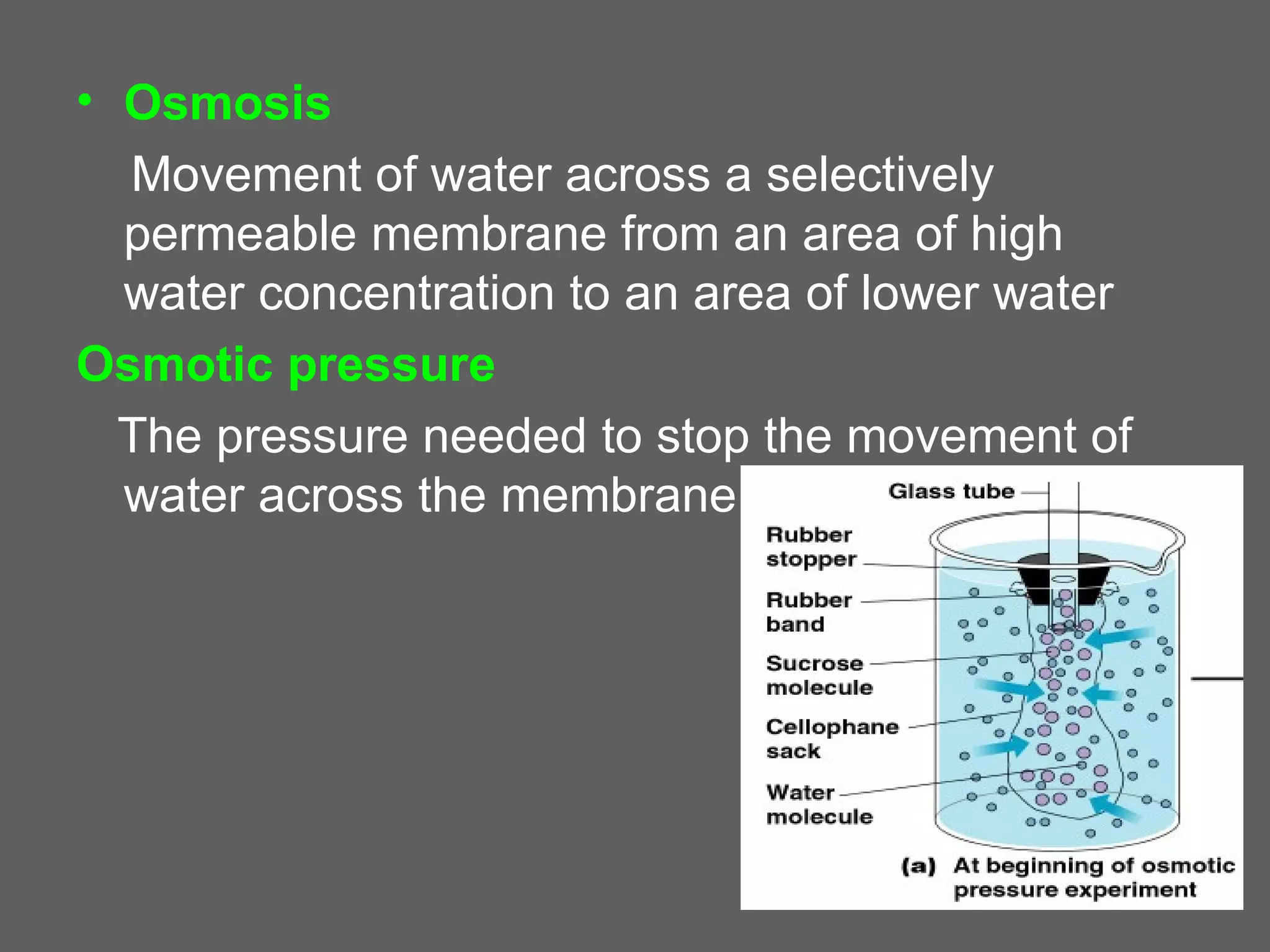
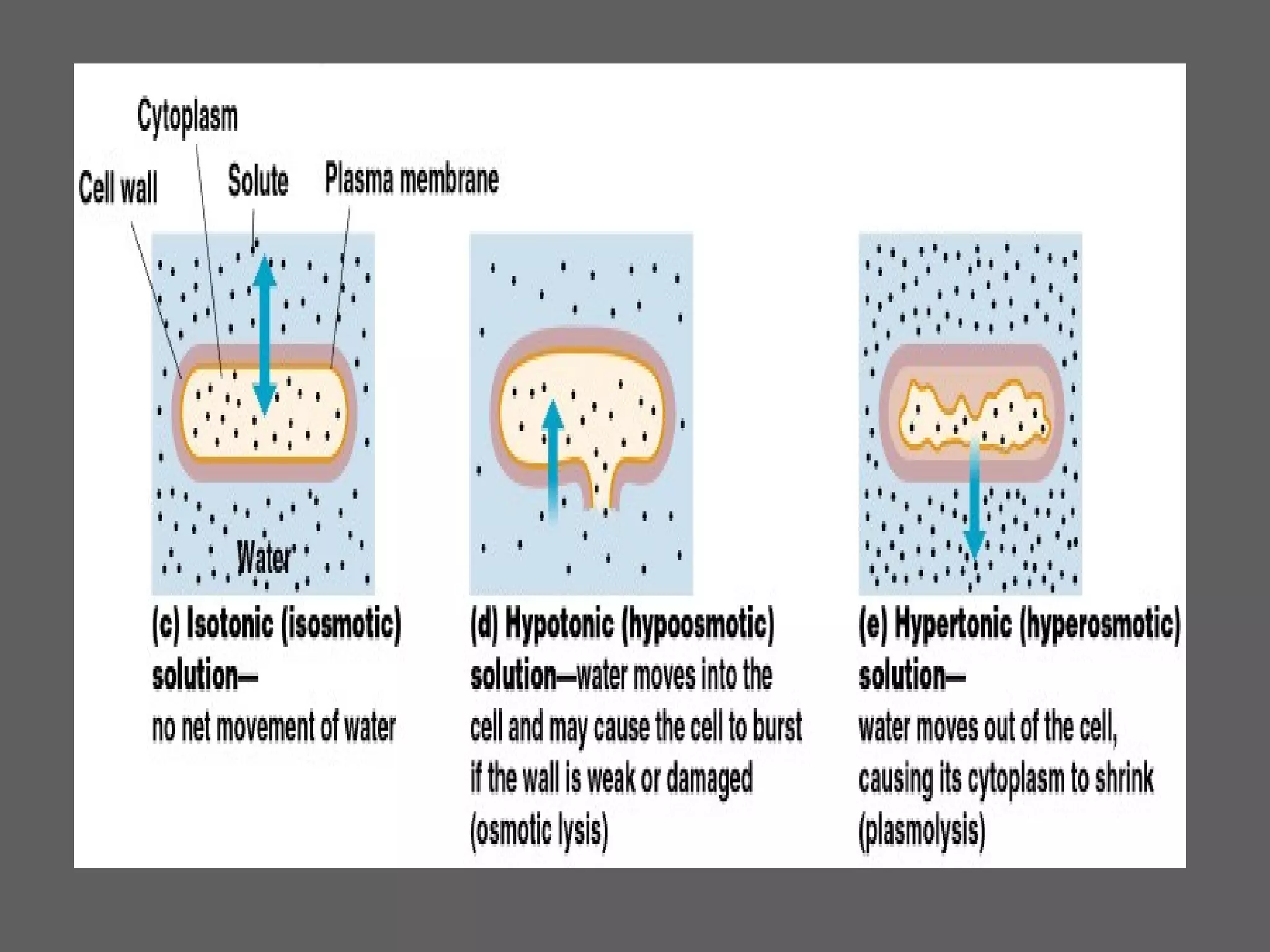
• Osmosis
  Movement of water across a selectively
  permeable membrane from an area of high
  water concentration to an area of lower water
Osmotic pressure
  The pressure needed to stop the movement of
  water across the membrane.
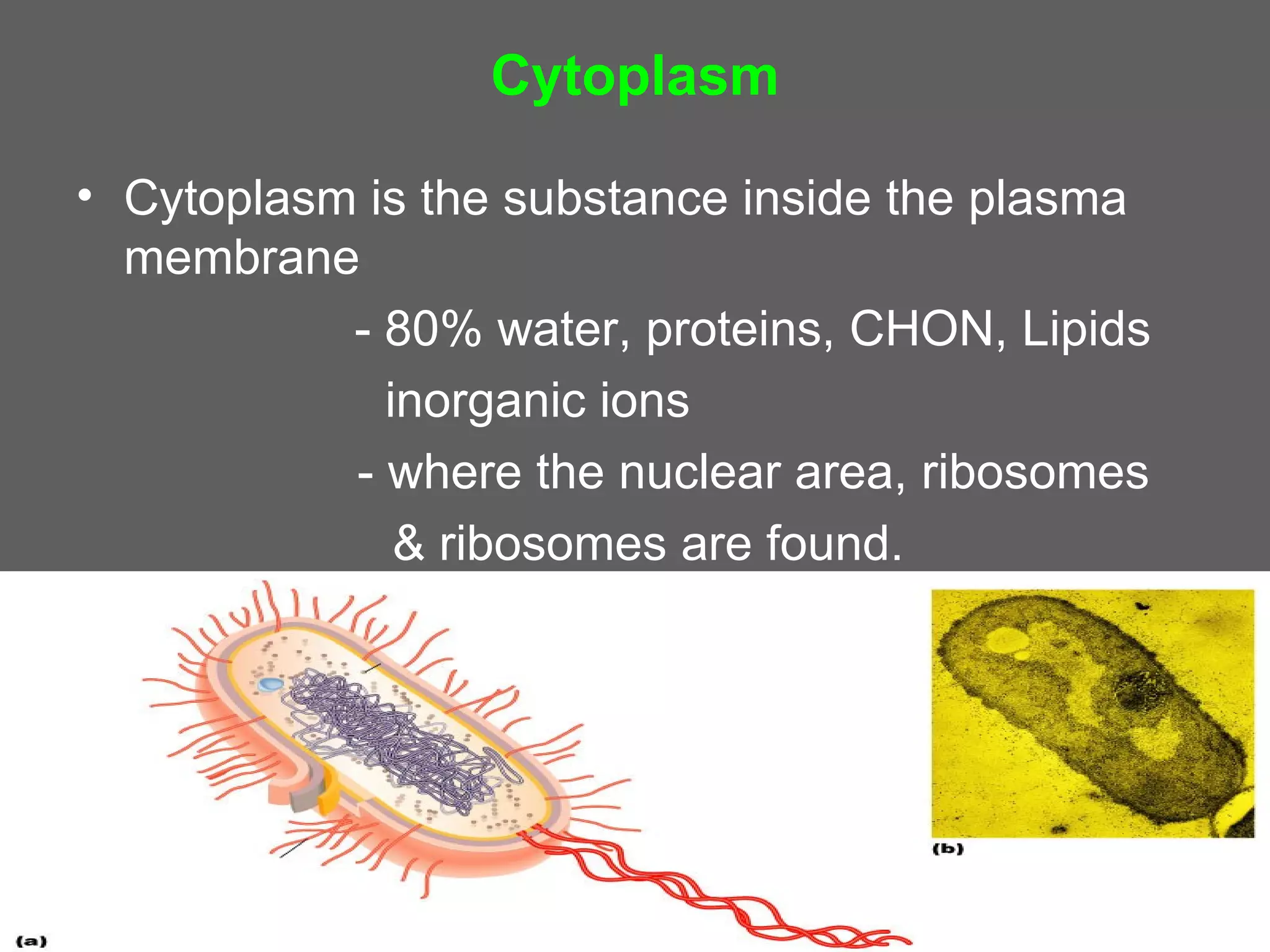
Cytoplasm

• Cytoplasm is the substance inside the plasma
  membrane
           - 80% water, proteins, CHON, Lipids
             inorganic ions
           - where the nuclear area, ribosomes
              & ribosomes are found.
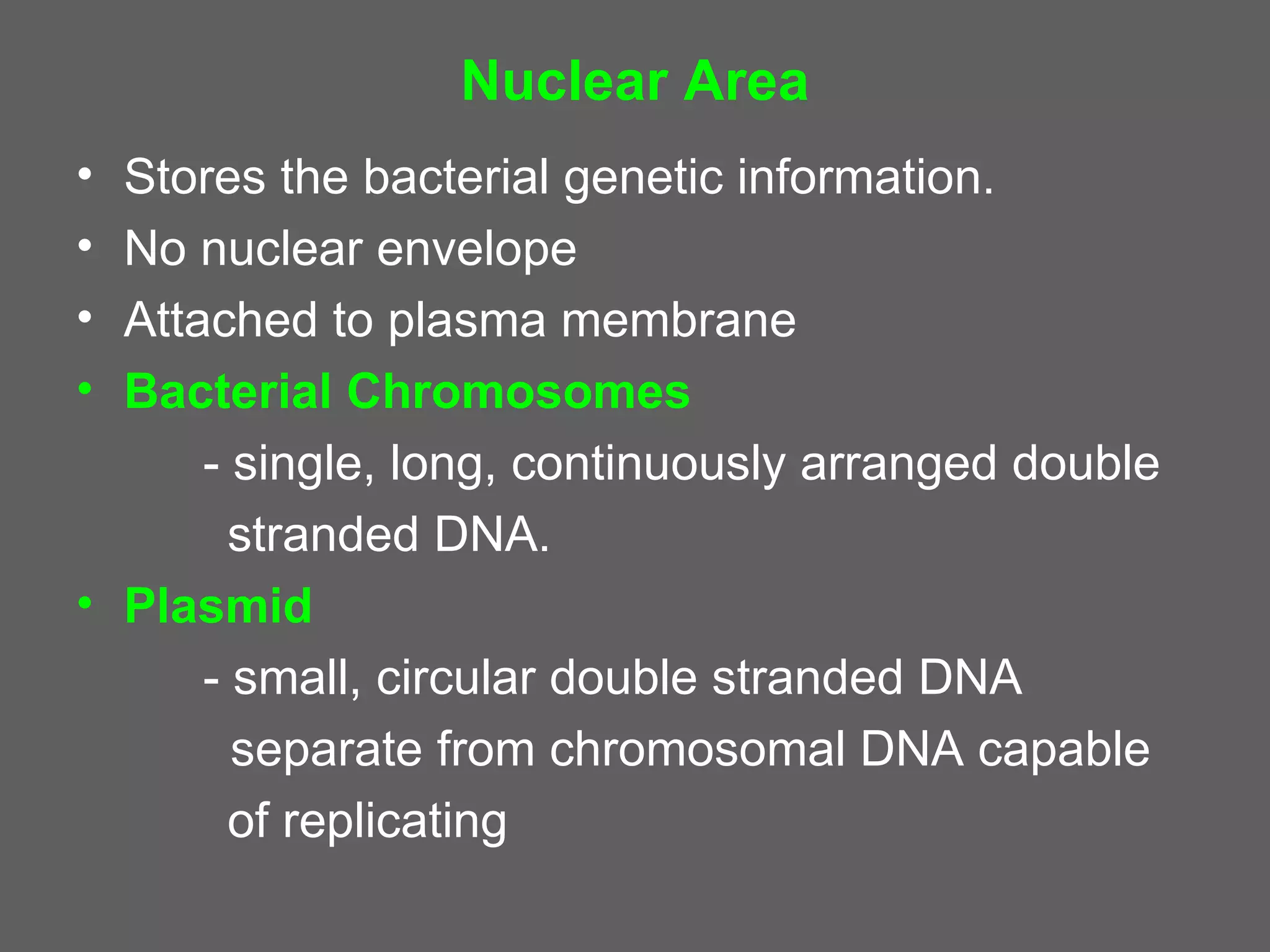
Nuclear Area
• Stores the bacterial genetic information.
• No nuclear envelope
• Attached to plasma membrane
• Bacterial Chromosomes
      - single, long, continuously arranged double
        stranded DNA.
• Plasmid
      - small, circular double stranded DNA
        separate from chromosomal DNA capable
        of replicating
• Function of Plasmids:
     1. Genes for antibiotic resistance
     2. Tolerance to toxic metals
     3. Production of toxins
     4. Synthesis of enzymes
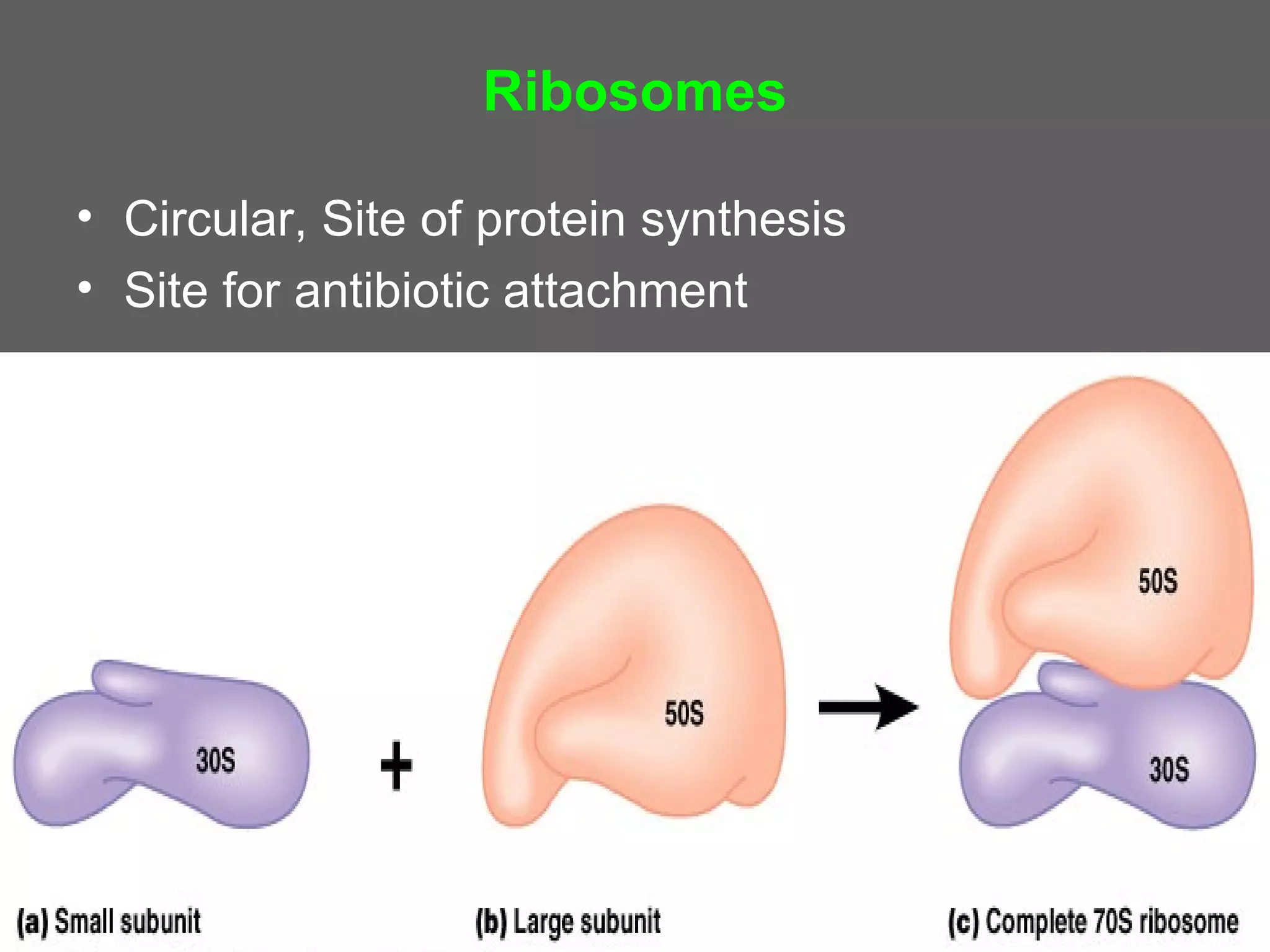
Ribosomes

• Circular, Site of protein synthesis
• Site for antibiotic attachment
Inclusions
•   Metachromatic granules
•   Polysaccharide granules
•   Lipid inclusions
•   Sulfur granules
•   Magnetosomes
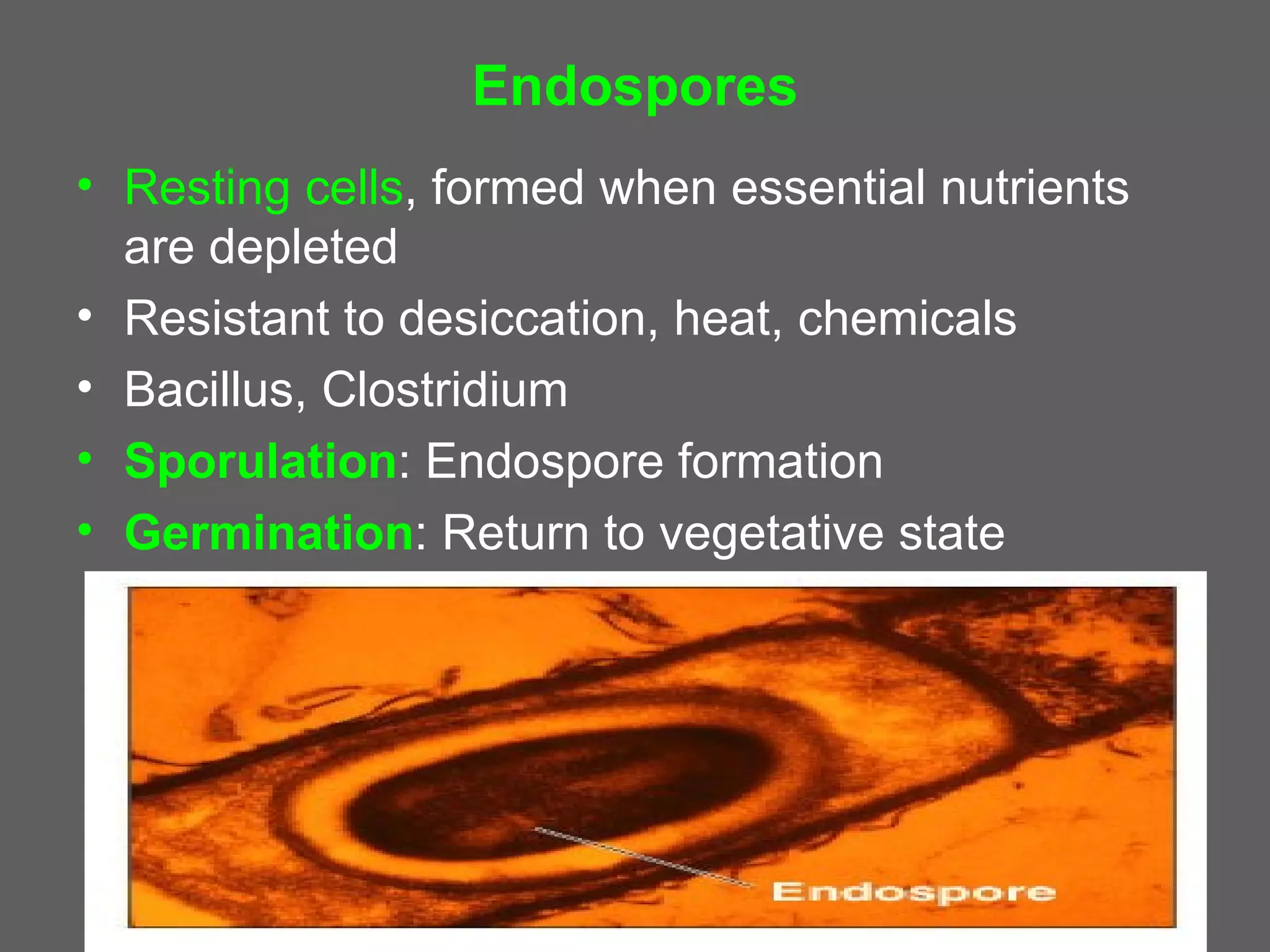
Endospores
• Resting cells, formed when essential nutrients
  are depleted
• Resistant to desiccation, heat, chemicals
• Bacillus, Clostridium
• Sporulation: Endospore formation
• Germination: Return to vegetative state
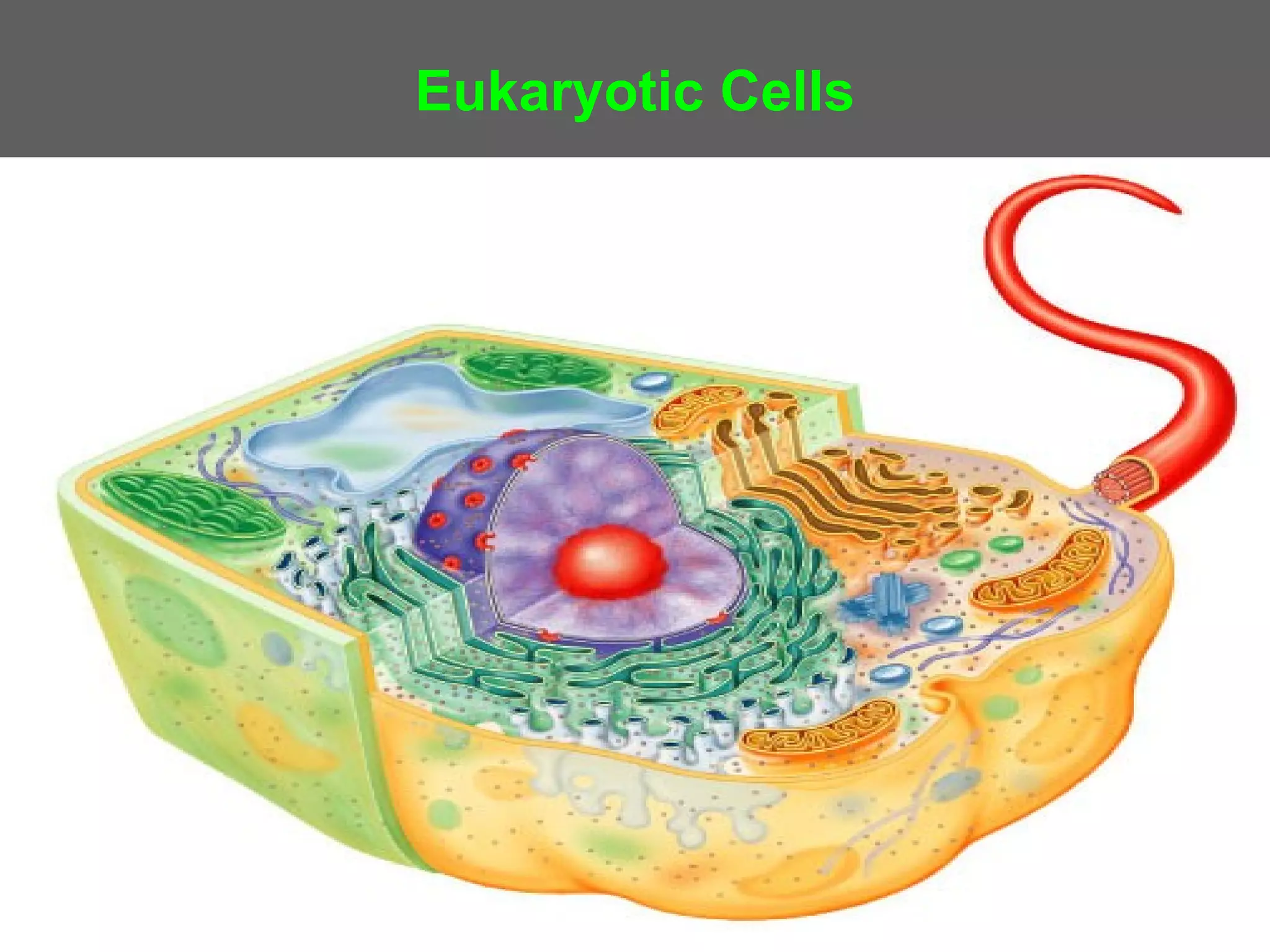
Eukaryotic Cells
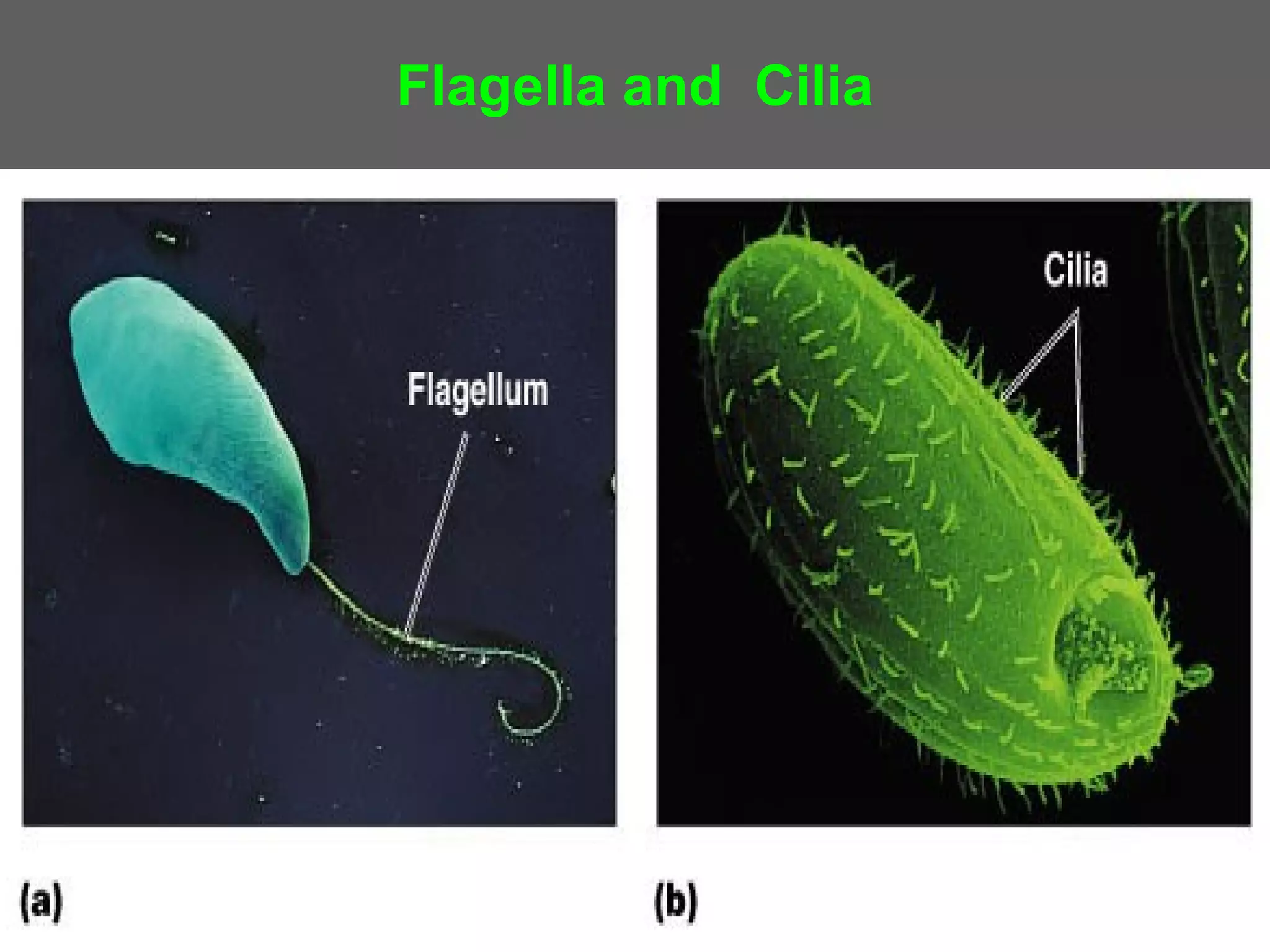
Flagella and Cilia
Cell Wall
• Cell wall
     Plants, algae, fungi
     Carbohydrates
• Cellulose, chitin, glucan, mannan
• Glycocalyx
     Carbohydrates extending from animal
        plasma membrane
     Bonded to proteins and lipids in membrane
     No Peptidoglycan
Plasma Membrane
•   Phospholipid bilayer
•   Peripheral proteins
•   Integral proteins
•   Transmembrane proteins
•   Sterols
•   Glycocalyx carbohydrates
•   Selective permeability allows passage of some
    molecules
•       Simple diffusion
•       Facilitative diffusion
•       Osmosis
•       Active transport
• Endocytosis
• Phagocytosis: Pseudopods extend and engulf
                   particles
• Pinocytosis: Membrane folds inward bringing in
               fluid and dissolved substances
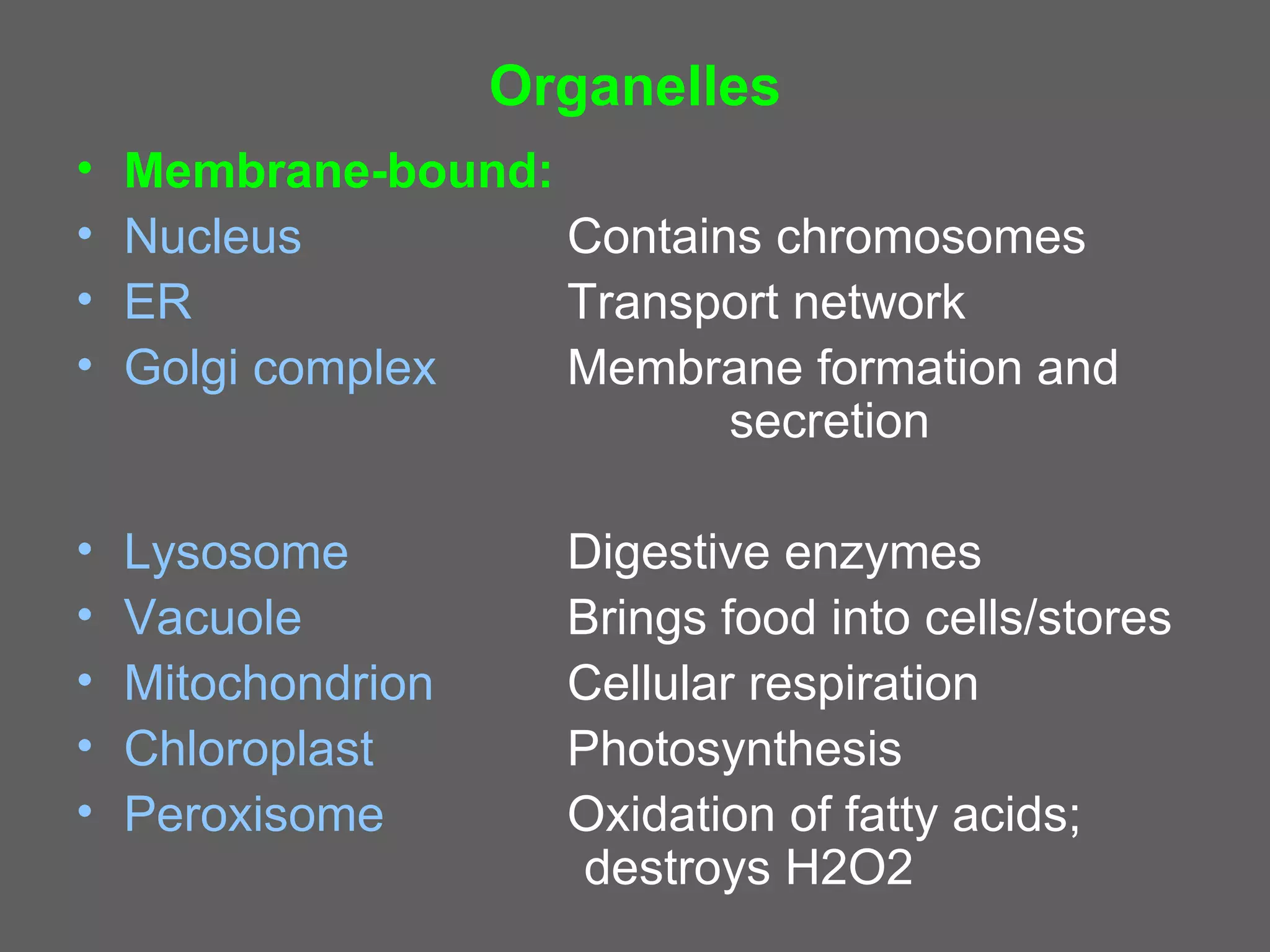
Organelles
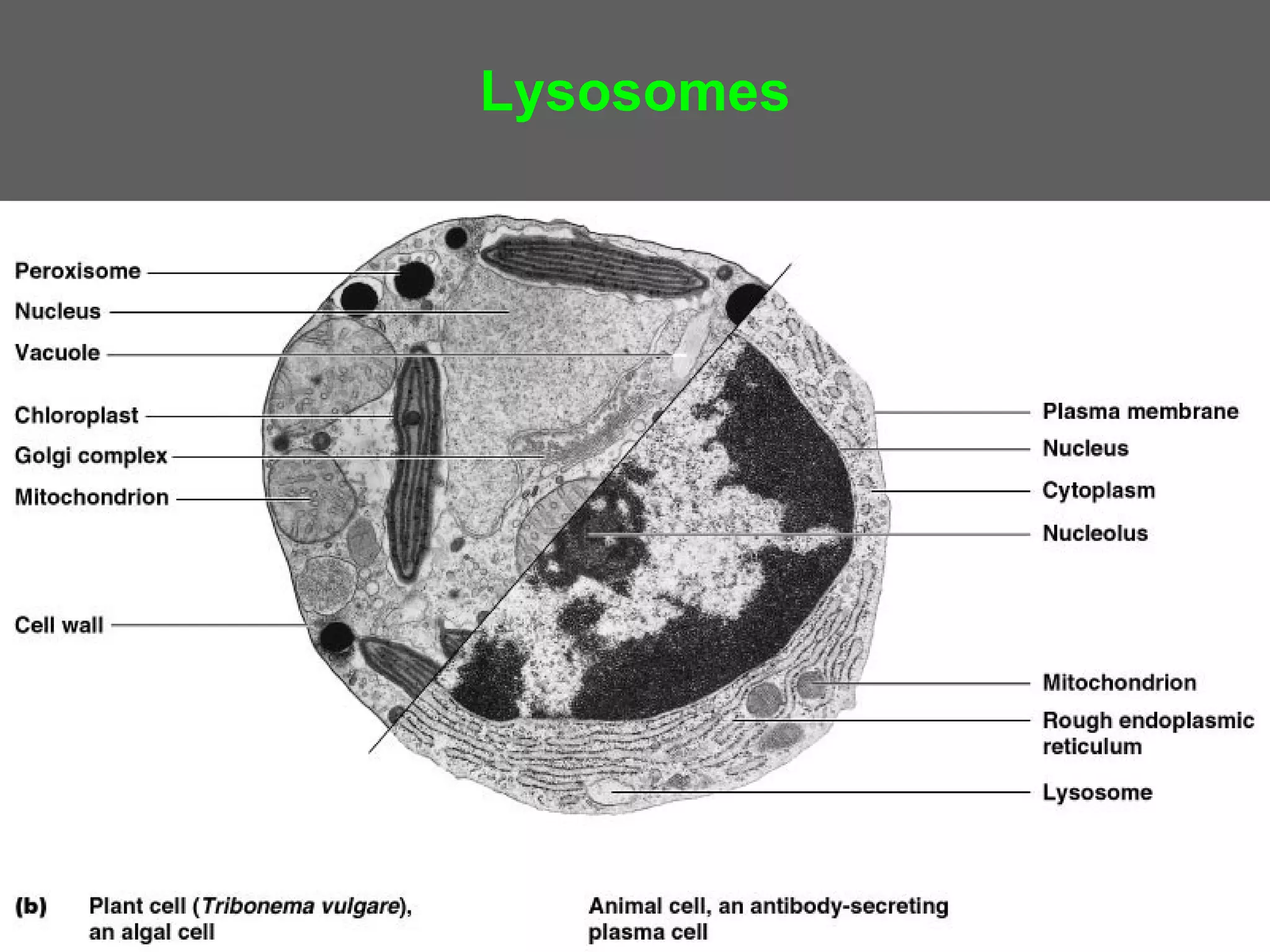
•   Membrane-bound:
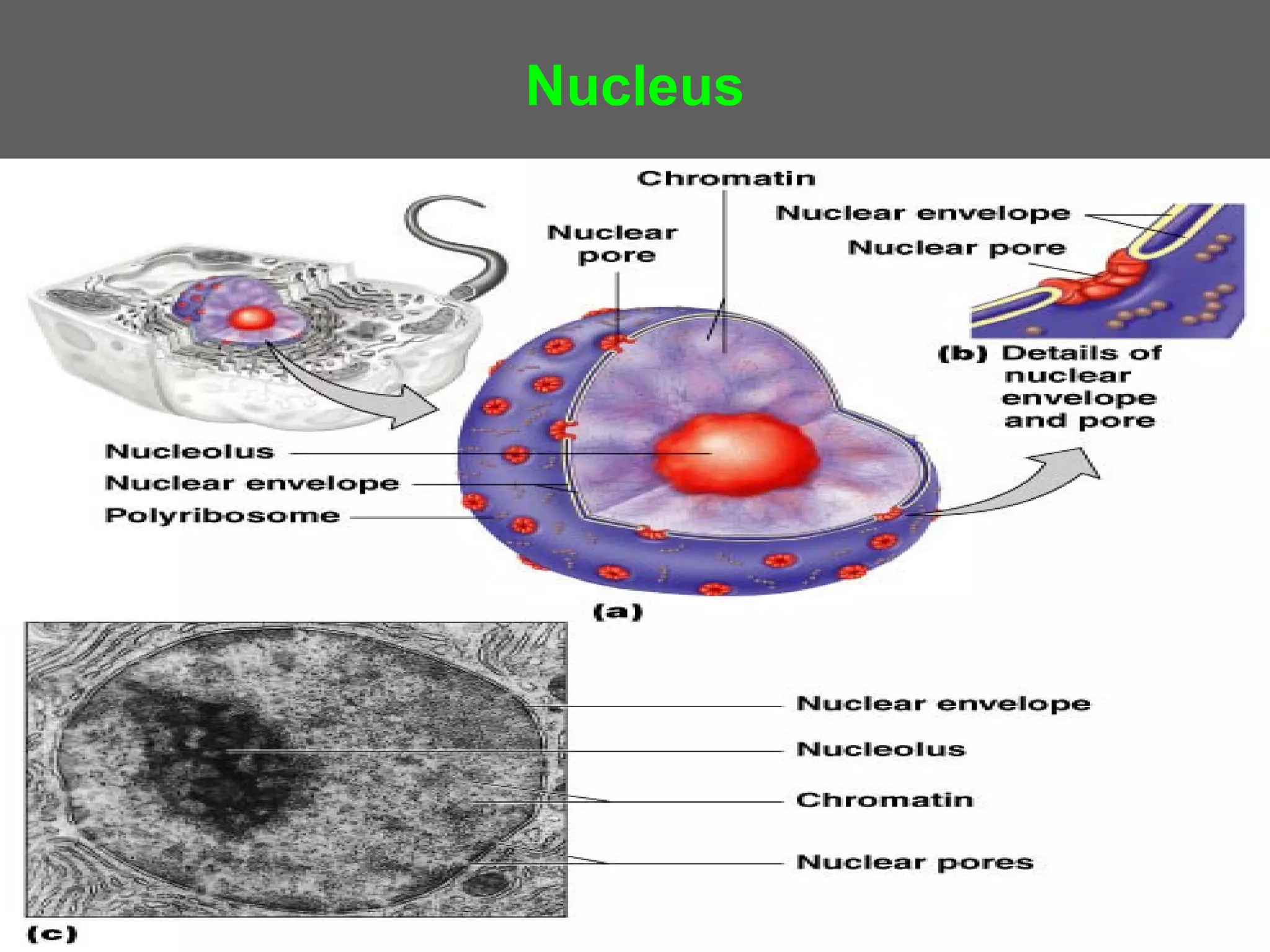
•   Nucleus         Contains chromosomes
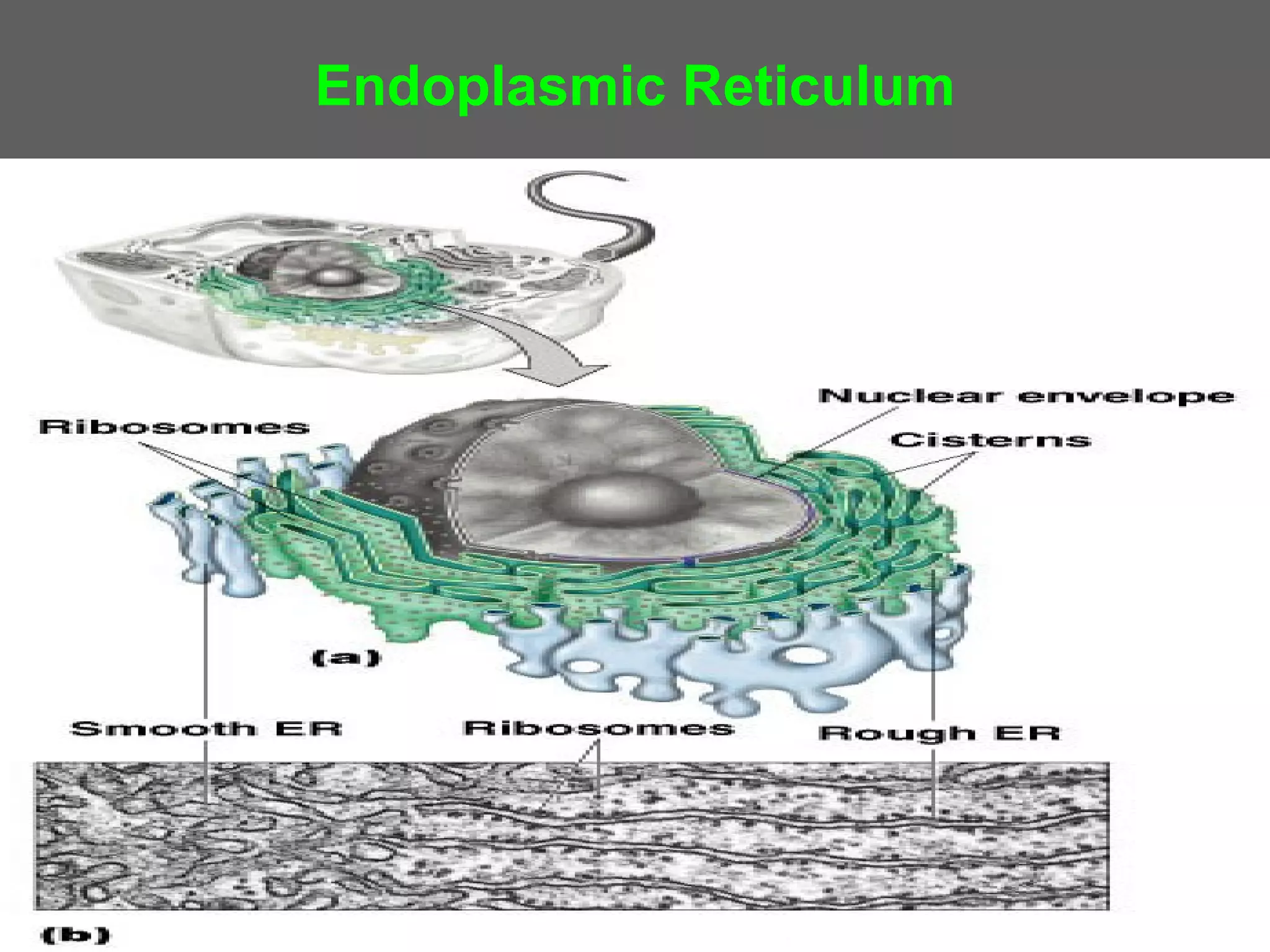
•   ER              Transport network
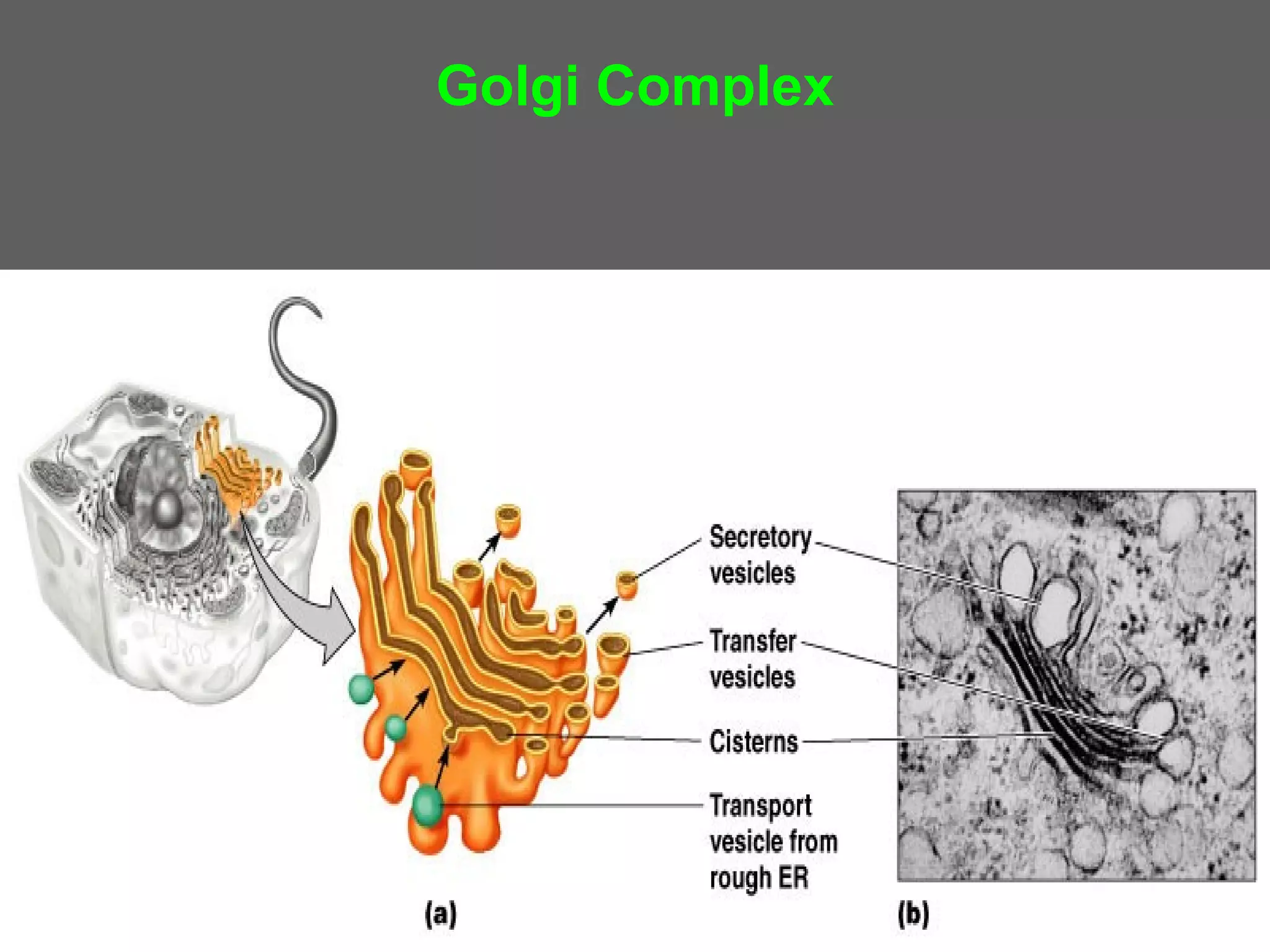
•   Golgi complex   Membrane formation and
                           secretion

•   Lysosome          Digestive enzymes
•   Vacuole           Brings food into cells/stores
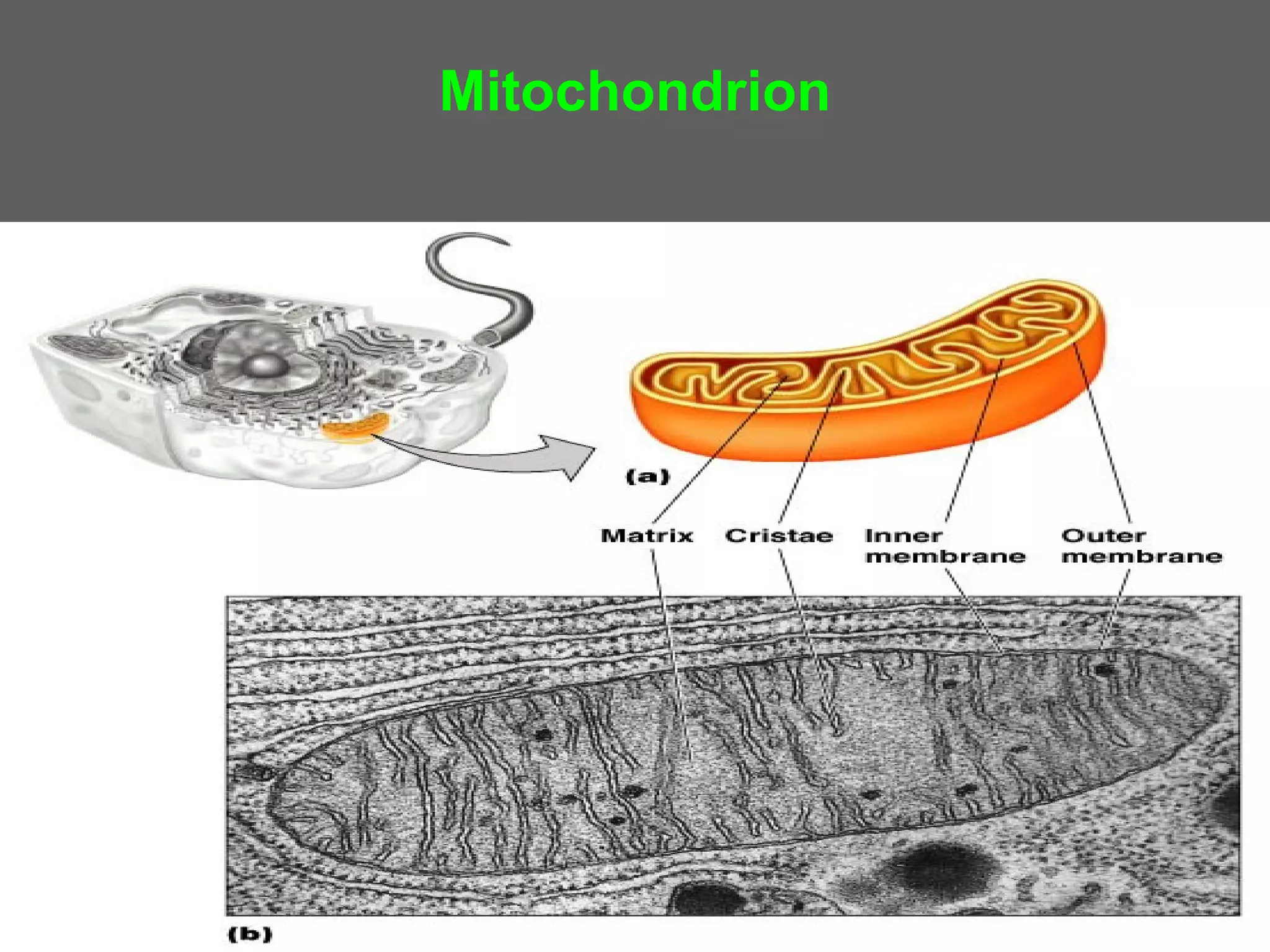
•   Mitochondrion     Cellular respiration
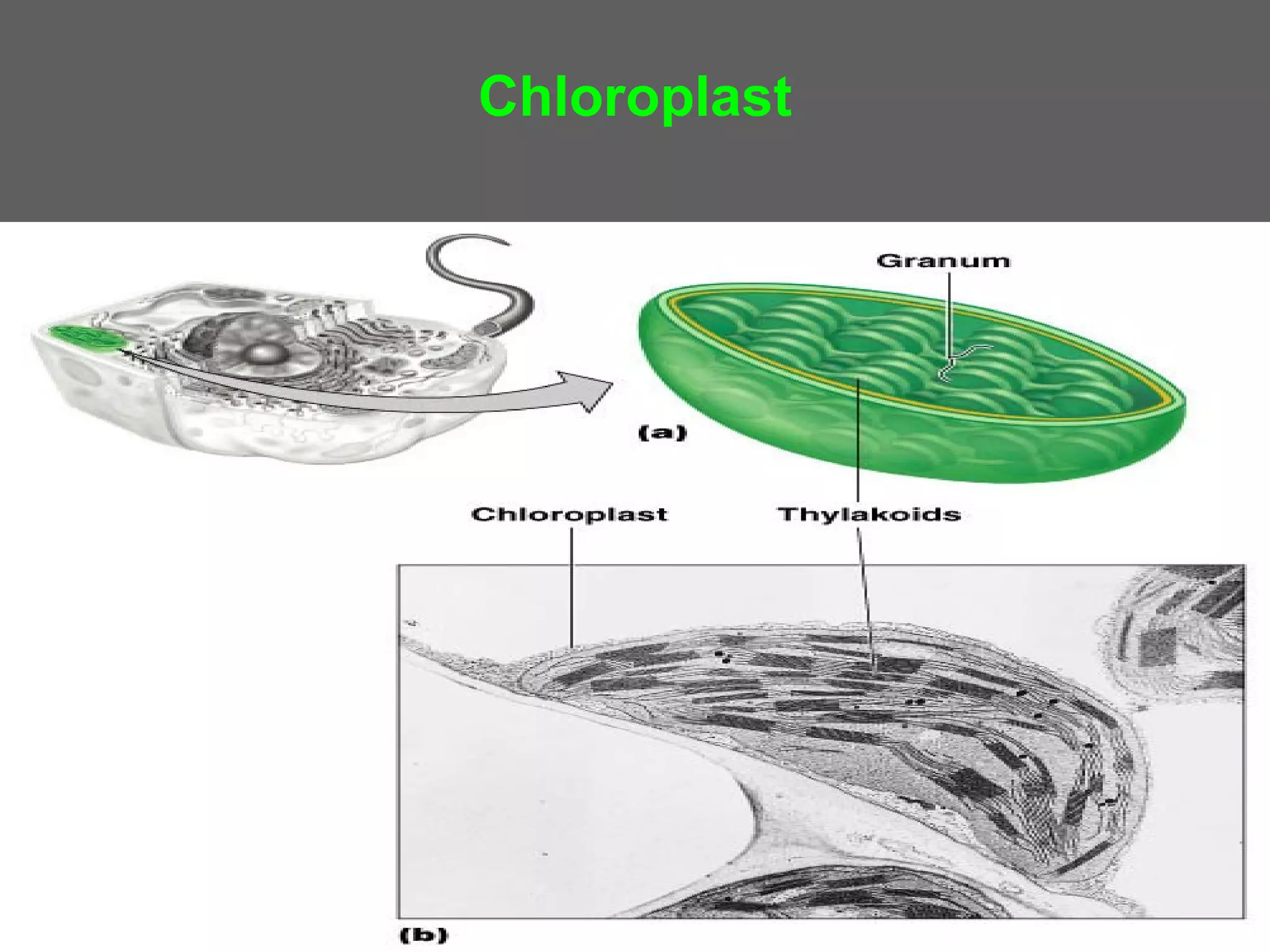
•   Chloroplast       Photosynthesis
•   Peroxisome        Oxidation of fatty acids;
                       destroys H2O2
Nucleus
Endoplasmic Reticulum
Golgi Complex
Lysosomes
Mitochondrion
Chloroplast

Prokaryotic & eukaryotic cells 3

  • 1.
    Functional Anatomy ofProkaryotic and Eukaryotic Cells
  • 2.
    • Prokaryote comesfrom the Greek words for prenucleus • Eukaryote comes from the Greek words for true nucleus.
  • 3.
    Prokaryote Eukaryote • One circular • Paired chromosome, chromosomes, not in a in nuclear membrane membrane • No histones • Histones • No organelles • Organelles • Peptidoglycan • Polysaccharide cell walls cell walls • Binary fission • Mitotic spindle
  • 4.
    Prokaryote • One circularchromosome, not in a membrane • No histones • No organelles • Peptidoglycan cell walls • Binary fission
  • 5.
    Eukaryote • Paired chromosomes, in nuclear membrane • Histones • Organelles • Polysaccharide cell walls • Mitotic spindle
  • 6.
    Prokaryote • Average size:0.2 -1.0 µm 2 - 8 µm • Basic shapes
  • 7.
    Arrangements • Coccus – “ Berry”, round, oval
  • 8.
    2. Bacilli –Diplobacilli, Streptobacilli, Coccobacilli
  • 9.
    3. Spirals /Spirochetes – have 1 or more twist
  • 10.
    Structures External tothe Cell wall • 1. Glycocalyx • 2. Flagella • 3. Axial Filaments • 4. Fimbria • 5 Pilus
  • 11.
    Glycocalyx • Outside thecell wall • Usually sticky 2 types: 1. Capsule - neatly organized 2. Slime Layer - unorganized & loose • Extracellular polysaccharide allows cell to attach • Capsules prevent phagocytosis ( Virulence Factor) •
  • 12.
    Flagella • Outside cellwall, for Locomotion • Made of chains of flagellin • Attached to a protein hook
  • 14.
    Axial Filaments • Endoflagella, For Locomotion • In spirochetes ( Treponema pallidum) • Anchored at one end of a cell • Rotation causes cell to move
  • 15.
    Fimbria & Pilus •Fimbriae - allow attachment (Neisseria gonorrhea) - hairlike, short • Pili - used to transfer DNA from one cell to another ( Sex pili)
  • 16.
    Cell Wall • Complex,Semi-rigid structure 1. Protects the interior of the cell (prevents osmotic lysis) 2. Maintains the shape 3. Point of anchorage of Flagella Made of peptidoglycan (in bacteria), Virulence Factor
  • 17.
    Peptidoglycan - Polymer of disaccharide N-acetylglucosamine (NAG) & N-acetylmuramic acid (NAM) - Linked by polypeptides
  • 19.
    Gram-Positive cell walls • Thick peptidoglycan • Teichoic acids • In acid-fast cells, contains mycolic acid • May regulate movement of cations • Polysaccharides provide antigenic variation
  • 20.
    Gram-Negative Outer Membrane • Thin peptidoglycan • No teichoic acids • Outer membrane • Lipopolysaccharides, lipoproteins, phospholipids • Protection from phagocytes, complement, antibiotics
  • 21.
    Gram Stain Mechanism Crystalviolet-iodine crystals form in cell Gram-positive - Alcohol dehydrates peptidoglycan - CV-I crystals do not leave Gram-negative - Alcohol dissolves outer membrane and leaves holes in peptidoglycan - CV-I washes out
  • 22.
    Structures Internal tothe Cell Wall • 1. Plasma Membrane • 2. Cytoplasm • 3. Nuclear area • 4. Ribosomes • 5. Inclusion bodies • 6. Endospores
  • 23.
    Plasma Membrane /Cytoplasmic Membrane
  • 24.
    Phospholipid bilayer • Peripheral proteins • Integral proteins • Transmembrane proteins
  • 25.
    • Selective permeabilityallows passage of some molecules Large molecules – inhibited Small molecules – allowed to pass - H+, O, Lipid soluble • Damage to the membrane by alcohols, quaternary ammonium (detergents) and polymyxin antibiotics causes leakage of cell contents.
  • 26.
    Movement Across Membranes •Simple diffusion – Movement of a solute from an area of high concentration to an area of low concentration. • Facilitative diffusion - Solute combines with a transporter protein in the membrane.
  • 28.
    • Osmosis Movement of water across a selectively permeable membrane from an area of high water concentration to an area of lower water Osmotic pressure The pressure needed to stop the movement of water across the membrane.
  • 30.
    Cytoplasm • Cytoplasm isthe substance inside the plasma membrane - 80% water, proteins, CHON, Lipids inorganic ions - where the nuclear area, ribosomes & ribosomes are found.
  • 31.
    Nuclear Area • Storesthe bacterial genetic information. • No nuclear envelope • Attached to plasma membrane • Bacterial Chromosomes - single, long, continuously arranged double stranded DNA. • Plasmid - small, circular double stranded DNA separate from chromosomal DNA capable of replicating
  • 32.
    • Function ofPlasmids: 1. Genes for antibiotic resistance 2. Tolerance to toxic metals 3. Production of toxins 4. Synthesis of enzymes
  • 33.
    Ribosomes • Circular, Siteof protein synthesis • Site for antibiotic attachment
  • 34.
    Inclusions • Metachromatic granules • Polysaccharide granules • Lipid inclusions • Sulfur granules • Magnetosomes
  • 35.
    Endospores • Resting cells,formed when essential nutrients are depleted • Resistant to desiccation, heat, chemicals • Bacillus, Clostridium • Sporulation: Endospore formation • Germination: Return to vegetative state
  • 36.
  • 37.
  • 38.
    Cell Wall • Cellwall Plants, algae, fungi Carbohydrates • Cellulose, chitin, glucan, mannan • Glycocalyx Carbohydrates extending from animal plasma membrane Bonded to proteins and lipids in membrane No Peptidoglycan
  • 39.
    Plasma Membrane • Phospholipid bilayer • Peripheral proteins • Integral proteins • Transmembrane proteins • Sterols • Glycocalyx carbohydrates • Selective permeability allows passage of some molecules • Simple diffusion • Facilitative diffusion • Osmosis • Active transport
  • 40.
    • Endocytosis • Phagocytosis:Pseudopods extend and engulf particles • Pinocytosis: Membrane folds inward bringing in fluid and dissolved substances
  • 41.
    Organelles • Membrane-bound: • Nucleus Contains chromosomes • ER Transport network • Golgi complex Membrane formation and secretion • Lysosome Digestive enzymes • Vacuole Brings food into cells/stores • Mitochondrion Cellular respiration • Chloroplast Photosynthesis • Peroxisome Oxidation of fatty acids; destroys H2O2
  • 42.
  • 43.
  • 44.
  • 45.
  • 46.
  • 47.