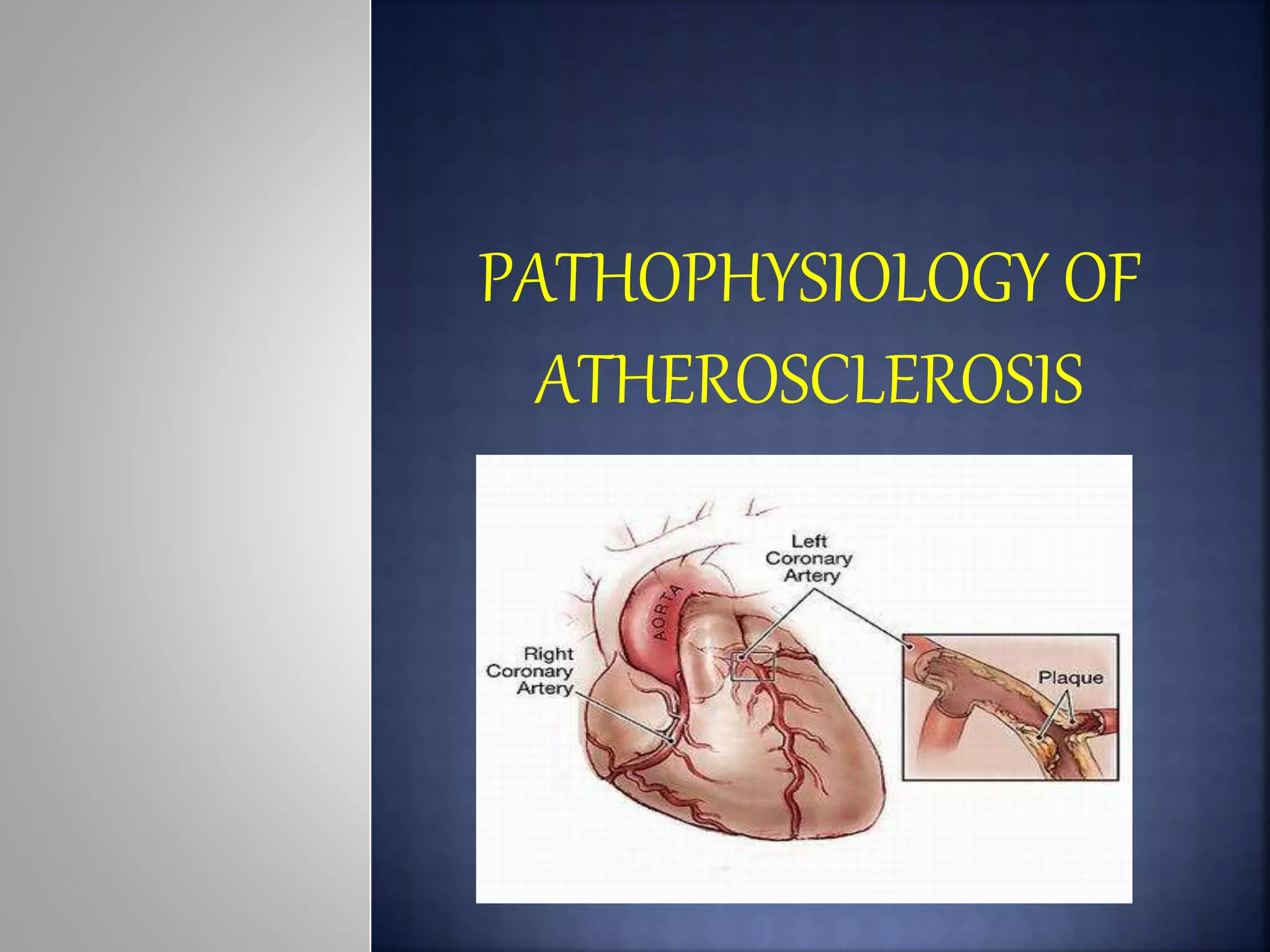
PATHOPHYSIOLOGY OF
ATHEROSCLEROSIS
INTRODUCTION:
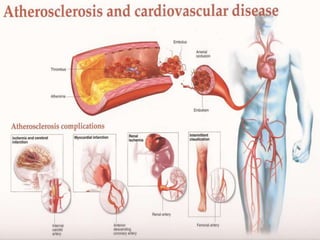
 Atherosclerosis, is the single largest cause of death and disability in the western
world.
 It is higher in men than in women, because of dietary habits, smoking and
mental stress.
 Atherosclerosis derives its name from the Greek words ‘sclerosis’ meaning
hardening and ‘athere’ meaning gruel (accumulation of lipid).
 This is characterized by accumulation of cholesterol, infiltration of
macrophages, proliferation of smooth muscle cells (SMC), accumulation of
connective tissue components and formation of thrombus.
 Appears earliest in the aorta (during fetal life), later in coronary arteries and
cerebral arteries.
 Some lesions regress while others become complicated.
CLASSIFICATION OF ATHEROSCLEROTIC LESIONS
The lesions associated with atherosclerosis are of 3 types:
 The fatty streak
 The fibrous atheromatous plaque
 Complicated lesion
ETIOLOGY
 Characterized by a focal deposit of cholesterol and lipid, primarily within
the intimal wall of the artery.
 Endothelial lining altered as a result of inflammation and injury
GENETIC BASIS OF ATHEROSCLEROSIS
 Genetic alterations adversely promote the development of atherosclerotic
disease.
 Apart from numerous individual mutations in distinct genes resulting in well
defined phenotypes, allelic polymorphism or variations of normal genes without
fully developed syndromes frequently occur cardiovascular diseases.
 Genetic factors other than those involving lipid metabolism have also been
implicated in atherogenesis.
 Genetic variations in coagulation factors and fibrinogen are responsible for
increased thrombogenicity.
 Genetic alterations of the renin-angiotensin pathway and certain variants of
endothelial nitric oxide (NO) synthase have also been associated with
hypertension and coronary artery disease.
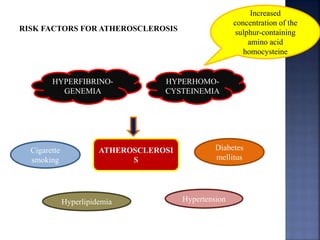
RISK FACTORS FOR ATHEROSCLEROSIS
Diabetes
mellitus
Hyperlipidemia
Cigarette
smoking
ATHEROSCLEROSI
S
Hypertension
HYPERHOMO-
CYSTEINEMIA
Increased
concentration of the
sulphur-containing
amino acid
homocysteine
HYPERFIBRINO-
GENEMIA
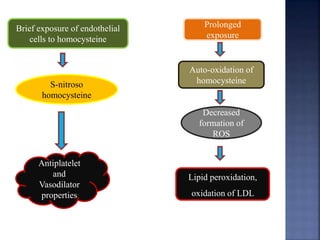
Brief exposure of endothelial
cells to homocysteine
S-nitroso
homocysteine
Antiplatelet
and
Vasodilator
properties
Auto-oxidation of
homocysteine
Decreased
formation of
ROS
Prolonged
exposure
Lipid peroxidation,
oxidation of LDL
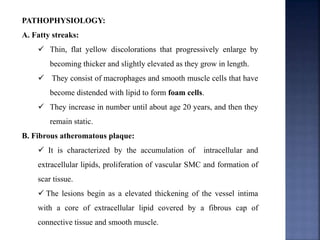
PATHOPHYSIOLOGY:
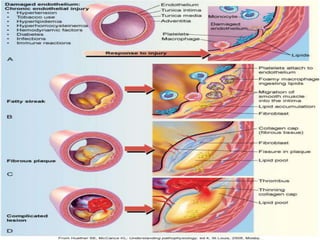
A. Fatty streaks:
 Thin, flat yellow discolorations that progressively enlarge by
becoming thicker and slightly elevated as they grow in length.
 They consist of macrophages and smooth muscle cells that have
become distended with lipid to form foam cells.
 They increase in number until about age 20 years, and then they
remain static.
B. Fibrous atheromatous plaque:
 It is characterized by the accumulation of intracellular and
extracellular lipids, proliferation of vascular SMC and formation of
scar tissue.
 The lesions begin as a elevated thickening of the vessel intima
with a core of extracellular lipid covered by a fibrous cap of
connective tissue and smooth muscle.
As the lesions increase in size, they encroach on the lumen of the
artery and eventually may occlude the vessel or predispose to thrombus
formation, causing a reduction of blood flow.
C. Complicated lesions:
Characterized by
 Hemorrhage
 Ulceration
 Scar tissue deposits
 Thrombosis is the most important complication of atherosclerosis.
 It is caused by slowing of blood flow in the region of the plaque and
ulceration of the plaque.
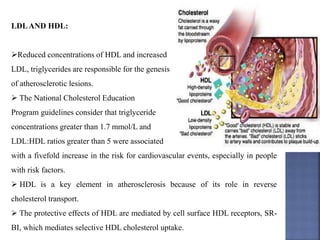
LDLAND HDL:
Reduced concentrations of HDL and increased
LDL, triglycerides are responsible for the genesis
of atherosclerotic lesions.
 The National Cholesterol Education
Program guidelines consider that triglyceride
concentrations greater than 1.7 mmol/L and
LDL:HDL ratios greater than 5 were associated
with a fivefold increase in the risk for cardiovascular events, especially in people
with risk factors.
 HDL is a key element in atherosclerosis because of its role in reverse
cholesterol transport.
 The protective effects of HDL are mediated by cell surface HDL receptors, SR-
BI, which mediates selective HDL cholesterol uptake.
FUNCTIONS OF HDL:
(a) inhibition of monocyte adhesion and migration into the arterial intima
(b) acceptor, transporter and inactivator of oxidized LDL (oxLDL) lipids.
(c) stimulation of cell repair and proliferation
(d) preservation of endothelium-dependant vascular activity
(e) inhibition of growth factor-induced VSMC proliferation
(f) prevention of thrombosis.
 The LDL is removed from the circulation by either LDL receptors (located
on hepatocytes) or by scavenger cells (monocytes or macrophages).
 The uptake of LDL by macrophages in the arterial wall can result in the
accumulation of insoluble cholesterol esters, the formation of foam cells, and
the development of atherosclerosis.
 Activated macrophages release free radicals that oxidize LDL.
 Oxidized LDL is not recognized at the cell receptor level and so it remains
longer into the blood stream.
 Oxidized LDL is toxic to the endothelium, causing endothelial loss and
exposure of the subendothelial tissue to blood components:
 It has chemotactic effect on lymphocytes and monocytes;
 It has chemotactic effect on SMC of artery and form cytokines, adhesion
molecules in the endothelium;
 It inhibits EDRF, favoring vasospasm
 It stimulates immune system (production of antibodies against oxidized
LDL).
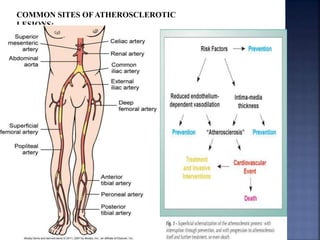
COMMON SITES OF ATHEROSCLEROTIC
LESIONS:
Atherosclerosis pathophysiology

Atherosclerosis pathophysiology

  • 1.
  • 2.
    INTRODUCTION:  Atherosclerosis, isthe single largest cause of death and disability in the western world.  It is higher in men than in women, because of dietary habits, smoking and mental stress.  Atherosclerosis derives its name from the Greek words ‘sclerosis’ meaning hardening and ‘athere’ meaning gruel (accumulation of lipid).  This is characterized by accumulation of cholesterol, infiltration of macrophages, proliferation of smooth muscle cells (SMC), accumulation of connective tissue components and formation of thrombus.  Appears earliest in the aorta (during fetal life), later in coronary arteries and cerebral arteries.  Some lesions regress while others become complicated.
  • 3.
    CLASSIFICATION OF ATHEROSCLEROTICLESIONS The lesions associated with atherosclerosis are of 3 types:  The fatty streak  The fibrous atheromatous plaque  Complicated lesion ETIOLOGY  Characterized by a focal deposit of cholesterol and lipid, primarily within the intimal wall of the artery.  Endothelial lining altered as a result of inflammation and injury
  • 4.
    GENETIC BASIS OFATHEROSCLEROSIS  Genetic alterations adversely promote the development of atherosclerotic disease.  Apart from numerous individual mutations in distinct genes resulting in well defined phenotypes, allelic polymorphism or variations of normal genes without fully developed syndromes frequently occur cardiovascular diseases.  Genetic factors other than those involving lipid metabolism have also been implicated in atherogenesis.  Genetic variations in coagulation factors and fibrinogen are responsible for increased thrombogenicity.  Genetic alterations of the renin-angiotensin pathway and certain variants of endothelial nitric oxide (NO) synthase have also been associated with hypertension and coronary artery disease.
  • 5.
    RISK FACTORS FORATHEROSCLEROSIS Diabetes mellitus Hyperlipidemia Cigarette smoking ATHEROSCLEROSI S Hypertension HYPERHOMO- CYSTEINEMIA Increased concentration of the sulphur-containing amino acid homocysteine HYPERFIBRINO- GENEMIA
  • 6.
    Brief exposure ofendothelial cells to homocysteine S-nitroso homocysteine Antiplatelet and Vasodilator properties Auto-oxidation of homocysteine Decreased formation of ROS Prolonged exposure Lipid peroxidation, oxidation of LDL
  • 7.
    PATHOPHYSIOLOGY: A. Fatty streaks: Thin, flat yellow discolorations that progressively enlarge by becoming thicker and slightly elevated as they grow in length.  They consist of macrophages and smooth muscle cells that have become distended with lipid to form foam cells.  They increase in number until about age 20 years, and then they remain static. B. Fibrous atheromatous plaque:  It is characterized by the accumulation of intracellular and extracellular lipids, proliferation of vascular SMC and formation of scar tissue.  The lesions begin as a elevated thickening of the vessel intima with a core of extracellular lipid covered by a fibrous cap of connective tissue and smooth muscle.
  • 9.
    As the lesionsincrease in size, they encroach on the lumen of the artery and eventually may occlude the vessel or predispose to thrombus formation, causing a reduction of blood flow. C. Complicated lesions: Characterized by  Hemorrhage  Ulceration  Scar tissue deposits  Thrombosis is the most important complication of atherosclerosis.  It is caused by slowing of blood flow in the region of the plaque and ulceration of the plaque.
  • 10.
    LDLAND HDL: Reduced concentrationsof HDL and increased LDL, triglycerides are responsible for the genesis of atherosclerotic lesions.  The National Cholesterol Education Program guidelines consider that triglyceride concentrations greater than 1.7 mmol/L and LDL:HDL ratios greater than 5 were associated with a fivefold increase in the risk for cardiovascular events, especially in people with risk factors.  HDL is a key element in atherosclerosis because of its role in reverse cholesterol transport.  The protective effects of HDL are mediated by cell surface HDL receptors, SR- BI, which mediates selective HDL cholesterol uptake.
  • 11.
    FUNCTIONS OF HDL: (a)inhibition of monocyte adhesion and migration into the arterial intima (b) acceptor, transporter and inactivator of oxidized LDL (oxLDL) lipids. (c) stimulation of cell repair and proliferation (d) preservation of endothelium-dependant vascular activity (e) inhibition of growth factor-induced VSMC proliferation (f) prevention of thrombosis.  The LDL is removed from the circulation by either LDL receptors (located on hepatocytes) or by scavenger cells (monocytes or macrophages).  The uptake of LDL by macrophages in the arterial wall can result in the accumulation of insoluble cholesterol esters, the formation of foam cells, and the development of atherosclerosis.
  • 12.
     Activated macrophagesrelease free radicals that oxidize LDL.  Oxidized LDL is not recognized at the cell receptor level and so it remains longer into the blood stream.  Oxidized LDL is toxic to the endothelium, causing endothelial loss and exposure of the subendothelial tissue to blood components:  It has chemotactic effect on lymphocytes and monocytes;  It has chemotactic effect on SMC of artery and form cytokines, adhesion molecules in the endothelium;  It inhibits EDRF, favoring vasospasm  It stimulates immune system (production of antibodies against oxidized LDL).
  • 14.
    COMMON SITES OFATHEROSCLEROTIC LESIONS: