Cardiovascular diseases
By: Ovya pugalenthi aruna
Contents
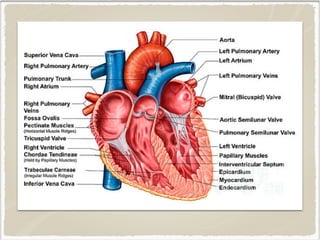
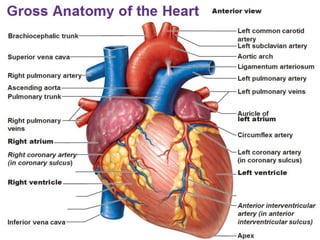
Internal view of the heart
Chambers
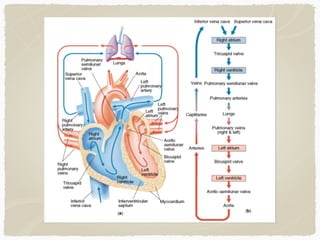
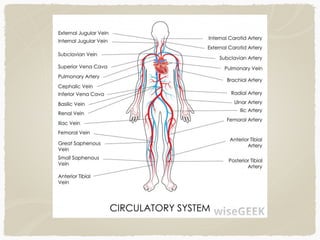
Circulations of the heart
Diseases of the heart
Diseases of the blood vessels
Diagnosis
Treatment
Chambers
The heart is divided by a septum into two halves. The
halves are in turn divided into chambers. The upper two
chambers of the heart are called atria and the lower two
chambers are called ventricles. Valves allow blood to
flow in one direction between the chambers of the
heart.
Circulations of the heart
Diseases of the heart
The diseases and conditions affecting the heart are
collectively known as heart disease.
The heart consists of a muscle that pumps blood, arteries that
supply blood to the heart muscle, and valves that ensure that
the blood within the heart is pumped in the correct direction.
Problems can arise in any of these areas.
Like cardiovascular disease, heart disease is a term that's
somewhat loose and broad, and it's often used that way.
Heart disease is an umbrella term for a number of different diseases
which affect the heart. The most common heart diseases are:
!Coronary artery disease.

!Coronary heart disease.

!Ischaemic heart disease.

!Cardiovascular disease

!Pulmonary heart disease.
!Hereditary heart disease.
!Hypertensive heart disease.
!Inflammatory heart disease.
!Valvular heart disease.
!Pericardial disease

!Congenital heart disease
!Heart failure
Coronary artery disease : These are diseases of the arteries that supply the heart
muscle with blood. CAD is one of the most common forms of heart disease and
the leading cause of heart attacks. It generally means that blood flow through
the coronary arteries has become obstructed. The most common cause of such
obstructions is a condition called atherosclerosis, a largely preventable type of
vascular disease. Coronary artery disease can lead to other heart problems, such
as chest pain (angina) and heart attack (myocardial infarction).
Coronary heart disease : A disease of the heart itself caused by the accumulation
of atheromatous plaques within the walls of the arteries that supply the
myocardium.
Ischaemic heart disease : Another disease of the heart itself, characterized by
reduced blood supply to the organ.
Cardiovascular disease : A sub-umbrella term for a number of diseases that that
affect the heart itself and/or the blood vessel system, especially the veins and
arteries leading to and from the heart. Causes of cardiovascular disease include
diabetes mellitus, hypertension and hypercholesterolemia.
Pulmonary heart disease : A failure of the right side of the heart.
Hereditary heart disease : Disease caused by in-avoidable genetic factors
Hypertensive heart disease : Heart disease caused by high blood
pressure, especially localised high blood pressure
Inflammatory heart disease : Heart disease that involves inflammation of
the heart muscle and/or the tissue surrounding it.
Valvular heart disease: Heart disease that affects the valves of the heart.
Pericardial disease : These are diseases of the sac that encases the heart
(pericardium). Pericardial disorders include inflammation (pericarditis),
fluid accumulation (pericardial effusion) and stiffness (constrictive
pericarditis). These can occur alone or together. The causes of
pericardial disease vary, as do the problems they may lead to. For
instance, pericarditis can occur after a heart attack and, as a result, lead
to pericardial effusion or chest pain.

Congenital heart disease : These are forms of heart disease that develop before
birth (congenital). Congenital heart disease is a broad term and includes a wide
range of diseases and conditions. These diseases can affect the formation of the
heart muscle or its chambers or valves. They include such conditions as
narrowing of a section of the aorta (coarctation) or holes in the heart (atrial or
ventricular septal defect). Some congenital heart defects may be apparent right
at the time of birth, while others may not be detected until later in life.
Heart failure : Often called congestive heart failure, is a condition in which the
heart can't pump enough blood to the body's organs and tissues. It doesn't
mean the heart has failed and can't pump blood at all. With this less effective
pumping, vital organs don't get enough blood, causing such signs and symptoms
as shortness of breath, fluid retention and fatigue. Congestive heart failure is
technically reserved for situations in which heart failure has led to fluid buildup
in the body. Not all heart failure is congestive, but the terms are often used
interchangeably. Heart failure may develop suddenly or over many years. It may
occur as a result of other cardiovascular conditions that have damaged or
weakened the heart, such as coronary artery disease or cardiomyopathy.
Diseases of the blood vessels
Blood vessels are essentially hollow tubes that carry blood to the organs and tissues throughout the body.
Some type of blood vessel diseases:
!Arteriosclerosis and atherosclerosis.
!High blood pressure (hypertension).
!Stroke.

!Aneurysm.
!Peripheral arterial disease and claudication.
!Vasculitis.

!Venous incompetence.

!Venous thrombosis.
!Varicose veins.
!Lymphedema.
Arteriosclerosis and atherosclerosis: are conditions in which the walls of the
arteries become thick and stiff. This can sometimes restrict blood flow to
the organs and tissues. The process of this thickening and stiffening is
arteriosclerosis. Atherosclerosis is the most common form of
arteriosclerosis. Although the two terms are often used interchangeably,
atherosclerosis refers to hardening of the arteries caused by accumulation of
fatty deposits (plaques) and other substances. The heart is one of the organs
commonly affected by atherosclerosis. When the arteries of the heart
(coronary arteries) narrow – may experience chest pain or a heart attack.
High blood pressure (hypertension): is the excessive force of blood pumping
through the blood vessels. It's perhaps the most common form of
cardiovascular disease in the Western world, affecting about one in four
Americans. Although potentially life-threatening, it’s one of the most
preventable and treatable types of cardiovascular disease. High blood
pressure also causes many other types of cardiovascular disease, such as
stroke and heart failure.
Stroke: is a sudden loss of brain function. It occurs when

blood flow to the brain is interrupted (ischemic stroke) or
when blood vessels in the brain rupture (hemorrhagic
stroke). These, in turn, cause the death of brain cells in the
affected areas. Stroke is often thought of as a neurological
disorder because of the many complications it causes.
Aneurysm: is a bulge or weakness in the wall of an artery or
vein. Aneurysms usually enlarge over time. Because of that,
they have the potential to rupture and cause life-threatening
bleeding. Aneurysms can occur in arteries in any location in
the body. The most common sites include the abdominal
aorta and the arteries at the base of the brain.
Peripheral arterial disease and claudication: may be more
familiar with claudication — pain in the arms or legs during
exercise — than the term "peripheral arterial disease."
Strictly speaking, claudication is a symptom of peripheral
arterial disease. However, claudication is often referred to
as a disease itself. Peripheral arterial disease is a disorder in
which the arteries supplying blood to the limbs — usually
the legs — become clogged or partially blocked. When this
happens, the arms and legs are left with less blood than
they need to keep up with demand. Claudication symptoms
may then develop. When the obstruction is mild, may have
such symptoms as pain in the legs during strenuous
exercise. As the disease progresses and arteries become
more obstructed, may have pain or cramping in the legs
even when not active.
Vasculitis: This is an inflammation of the blood vessels. It usually
involves the arteries but may also affect veins and capillaries. The
inflammation may damage the wall of the artery or vein and impair
blood flow to the region of the body supplied by that vessel. Sometimes
vasculitis occurs along with a generalized disorder, such as lupus or
rheumatoid arthritis, but it may also occur on its own.
Venous incompetence: This is a condition in which blood flows the
wrong way in the veins. Veins have tiny valves that are designed to
promote blood flow in a forward direction, back to the heart. But if
such conditions as infection, inflammation, abnormal blood clotting, or
even high-back pressure in pregnancy, the valves may become damaged
and incompetent. That allows blood to flow backward and pool in the
legs when sitting or standing. May develop such complications as
prominent and painful varicose veins, skin changes, ulcers and swelling
in the legs. When venous incompetence occurs in the arms, may
experience pain and swelling in the arms and prominent veins.
Venous thrombosis: This is the formation of a blood clot (thrombus) in a
vein. This condition may damage the vein and its valves. In addition,
clots that break off and travel in the bloodstream can lodge in the lungs,
a condition known as pulmonary embolism. In some cases, this type of
clot can also cause a stroke. May be more familiar with deep vein
thrombosis, in which a clot develops deep within a muscle, such as one
in the calf.
Varicose veins: This is a condition in which the veins become twisted
and enlarged. The veins are usually located on the backs of the calves or
on the inside of the legs, from the groin to the ankle. When valves in the
veins don't function properly, blood can accumulate in the legs, causing
the veins to bulge and twist. The veins appear blue because they contain
less oxygen.
Lymphedema: This is an obstruction of the lymphatic vessels. It results
in an excessive buildup of fluid, which can cause swelling and pain. It
can be caused by infections, trauma, tumors, surgery and radiation
treatment. In rare cases, someone may be born with lymphedema.
Arrhythmia/ dysrhythmia
Heart block / trio ventricular block
Failure of conduction of impulses through the
A.V.Node.
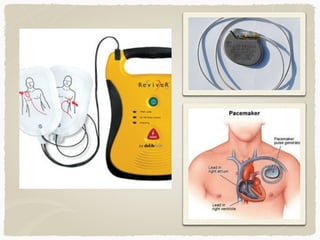
Damage to the S.A.Node causes week impulses failing to
reach the ventricles. Cardiac pacemaker establishes
normal rhythm. It is a small, battery-operated electronic
device. It is inserted under the skin. It has leads that
travel through a large vein to the heart, where the wires
are anchored, which send the electrical impulses to the
heart.
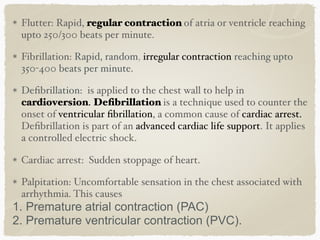
Flutter: Rapid, regular contraction of atria or ventricle reaching
upto 250/300 beats per minute.
Fibrillation: Rapid, random, irregular contraction reaching upto
350-400 beats per minute.
Defibrillation: is applied to the chest wall to help in
cardioversion. Defibrillation is a technique used to counter the
onset of ventricular fibrillation, a common cause of cardiac arrest.
Defibrillation is part of an advanced cardiac life support. It applies
a controlled electric shock.
Cardiac arrest: Sudden stoppage of heart.
Palpitation: Uncomfortable sensation in the chest associated with
arrhythmia. This causes
1. Premature atrial contraction (PAC)

2. Premature ventricular contraction (PVC).
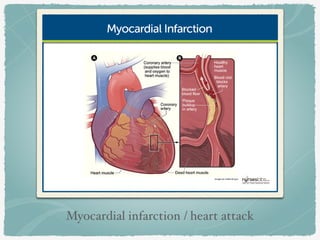
Myocardial infarction / heart attack
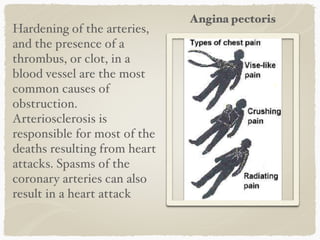
Hardening of the arteries,
and the presence of a
thrombus, or clot, in a
blood vessel are the most
common causes of
obstruction.
Arteriosclerosis is
responsible for most of the
deaths resulting from heart
attacks. Spasms of the
coronary arteries can also
result in a heart attack
Angina pectoris
Diagnosis
Blood test : Laboratory tests are used to detect the risk factors for heart
diseases. These include detection of the fats, cholesterol and lipid
components of blood including LDL, HDL, Triglycerides. Blood sugar
and Glycosylated haemoglobin is measured for detection of diabetes. C-
reactive protein (CRP) and other protein markers like Apolipoprotein A1
and B are used to detect inflammation that may lead to heart diseases.
During a heart attack, heart muscle cells die and release proteins into the
bloodstream. Blood tests can measure the amount of these proteins in
the bloodstream. High levels of these proteins are a sign of a recent heart
attack. One of the markers of heart attack is the Cardiac Troponin-T.
Other biomarkers include fibrinogen and PAI-1, high levels of
homocysteine, elevated asymmetric dimethylarginine and elevated brain
natriuretic peptide (also known as B-type) (BNP).
Electrocardiogram : This is a simple and a painless test that records the
heart’s electrical activity. The patient is strapped to the instrument with
several patches or leads placed over his or her chest, wrists and ankles. A
small portable machine records the activities of the heart on a strip of graph
paper. The test shows how fast the heart is beating and its rhythm. The
strength and timing of the electrical signals as they pass through the heart
are also seen. An EKG/ECG can help detect a heart attack, attacks of angina,
arrhythmias etc.
Stress testing : For this test, the patient is made to work hard e.g. run on a
treadmill or exercise while the leads of EKG/ECG are placed over their body.
Those who cannot exercise are given pills to raise their heart rate. The test
detects the effects of the exercise on the heart. In patients with
atheroisclerosis and coronary heart diseases the arteries that are narrowed by
plaques cannot supply adequate blood to the heart muscles while it is beating
faster. This may lead to shortness of breath and chest pain. The EKG/ECG
pattern, arrhythmias etc. also show the possibility of a coronary artery
disease.
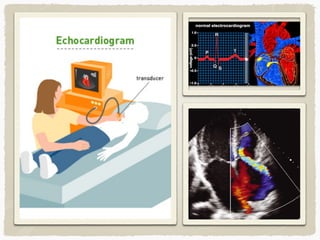
Echocardiography : This test uses sound waves to create a moving
picture of the heart. This is also a painless test where a probe is rolled
over the chest and the machine creates the image of the heart on the
monitor. This provides information on the shape, size, workings, valves
and chambers of the heart. Echocardiography may also be combined
with Doppler to show the areas of poor blood supply to the heart. It
shows the areas of the heart muscle that are not contracting normally,
and previous injury to the heart muscle.
Coronary angiography and cardiac catheterisation : This test is an
invasive test. A dye is injected into the veins to reach the coronary
arteries. This is done via coronary catheterisation. Thereafter detailed
pictures of the blood vessels of the heart are taken using special
imaging methods. This is called coronary angiography. Cardiac
catheterisation involves threading of a thin, flexible tube called a
catheter via a blood vessels in the arm, groin (upper thigh), or neck.
The tube is inserted under imaging guidance till it reaches the heart.
Coronary angiography detects blockages in the large coronary arteries.
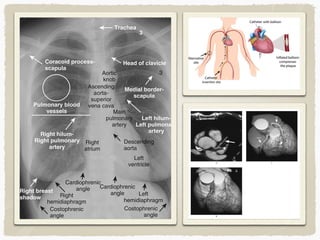
Chest x ray : This is a test that shows the shape and size
of the heart lungs and major blood vessels. This is a test
seldom used in diagnosis of heart diseases as it does not
provide added information over echocardiography and
other imaging studies.
Electron-beam computed tomography : EBCT helps to
detect the calcium deposits or calcifications in the walls
of the coronary arteries. These are early markers of
atherosclerosis and coronary heart disease. This is not a
routine test in coronary heart disease.
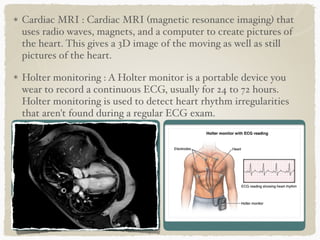
Cardiac MRI : Cardiac MRI (magnetic resonance imaging) that
uses radio waves, magnets, and a computer to create pictures of
the heart. This gives a 3D image of the moving as well as still
pictures of the heart.
Holter monitoring : A Holter monitor is a portable device you
wear to record a continuous ECG, usually for 24 to 72 hours.
Holter monitoring is used to detect heart rhythm irregularities
that aren't found during a regular ECG exam.
Treatment
Allopathic:
"Angiotensin II receptor blockers
"Angiotensin-converting enzyme (ACE) nhibitors
"Beta blockers
"Cholesterol medications: Consider the options
"Nitrates— Oral (Systemic) 

"Nitrates— Sublingual, Chewable, or Buccal (Systemic) 

"Nitrates— Topical (Systemic) 

"Statins: Are these cholesterol-lowering drugs right? 

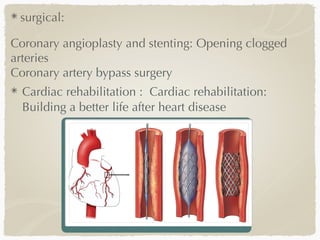
surgical:
Coronary angioplasty and stenting: Opening clogged
arteries
Coronary artery bypass surgery
Cardiac rehabilitation : Cardiac rehabilitation:
Building a better life after heart disease
Thank you

cardiovascular diseases

  • 1.
  • 2.
    Contents Internal view ofthe heart Chambers Circulations of the heart Diseases of the heart Diseases of the blood vessels Diagnosis Treatment
  • 4.
    Chambers The heart isdivided by a septum into two halves. The halves are in turn divided into chambers. The upper two chambers of the heart are called atria and the lower two chambers are called ventricles. Valves allow blood to flow in one direction between the chambers of the heart.
  • 5.
  • 9.
    Diseases of theheart The diseases and conditions affecting the heart are collectively known as heart disease. The heart consists of a muscle that pumps blood, arteries that supply blood to the heart muscle, and valves that ensure that the blood within the heart is pumped in the correct direction. Problems can arise in any of these areas. Like cardiovascular disease, heart disease is a term that's somewhat loose and broad, and it's often used that way.
  • 10.
    Heart disease isan umbrella term for a number of different diseases which affect the heart. The most common heart diseases are: !Coronary artery disease.
 !Coronary heart disease.
 !Ischaemic heart disease.
 !Cardiovascular disease
 !Pulmonary heart disease. !Hereditary heart disease. !Hypertensive heart disease. !Inflammatory heart disease. !Valvular heart disease. !Pericardial disease
 !Congenital heart disease !Heart failure
  • 11.
    Coronary artery disease: These are diseases of the arteries that supply the heart muscle with blood. CAD is one of the most common forms of heart disease and the leading cause of heart attacks. It generally means that blood flow through the coronary arteries has become obstructed. The most common cause of such obstructions is a condition called atherosclerosis, a largely preventable type of vascular disease. Coronary artery disease can lead to other heart problems, such as chest pain (angina) and heart attack (myocardial infarction). Coronary heart disease : A disease of the heart itself caused by the accumulation of atheromatous plaques within the walls of the arteries that supply the myocardium. Ischaemic heart disease : Another disease of the heart itself, characterized by reduced blood supply to the organ. Cardiovascular disease : A sub-umbrella term for a number of diseases that that affect the heart itself and/or the blood vessel system, especially the veins and arteries leading to and from the heart. Causes of cardiovascular disease include diabetes mellitus, hypertension and hypercholesterolemia.
  • 12.
    Pulmonary heart disease: A failure of the right side of the heart. Hereditary heart disease : Disease caused by in-avoidable genetic factors Hypertensive heart disease : Heart disease caused by high blood pressure, especially localised high blood pressure Inflammatory heart disease : Heart disease that involves inflammation of the heart muscle and/or the tissue surrounding it. Valvular heart disease: Heart disease that affects the valves of the heart. Pericardial disease : These are diseases of the sac that encases the heart (pericardium). Pericardial disorders include inflammation (pericarditis), fluid accumulation (pericardial effusion) and stiffness (constrictive pericarditis). These can occur alone or together. The causes of pericardial disease vary, as do the problems they may lead to. For instance, pericarditis can occur after a heart attack and, as a result, lead to pericardial effusion or chest pain.

  • 13.
    Congenital heart disease: These are forms of heart disease that develop before birth (congenital). Congenital heart disease is a broad term and includes a wide range of diseases and conditions. These diseases can affect the formation of the heart muscle or its chambers or valves. They include such conditions as narrowing of a section of the aorta (coarctation) or holes in the heart (atrial or ventricular septal defect). Some congenital heart defects may be apparent right at the time of birth, while others may not be detected until later in life. Heart failure : Often called congestive heart failure, is a condition in which the heart can't pump enough blood to the body's organs and tissues. It doesn't mean the heart has failed and can't pump blood at all. With this less effective pumping, vital organs don't get enough blood, causing such signs and symptoms as shortness of breath, fluid retention and fatigue. Congestive heart failure is technically reserved for situations in which heart failure has led to fluid buildup in the body. Not all heart failure is congestive, but the terms are often used interchangeably. Heart failure may develop suddenly or over many years. It may occur as a result of other cardiovascular conditions that have damaged or weakened the heart, such as coronary artery disease or cardiomyopathy.
  • 14.
    Diseases of theblood vessels Blood vessels are essentially hollow tubes that carry blood to the organs and tissues throughout the body. Some type of blood vessel diseases: !Arteriosclerosis and atherosclerosis. !High blood pressure (hypertension). !Stroke.
 !Aneurysm. !Peripheral arterial disease and claudication. !Vasculitis.
 !Venous incompetence.
 !Venous thrombosis. !Varicose veins. !Lymphedema.
  • 15.
    Arteriosclerosis and atherosclerosis:are conditions in which the walls of the arteries become thick and stiff. This can sometimes restrict blood flow to the organs and tissues. The process of this thickening and stiffening is arteriosclerosis. Atherosclerosis is the most common form of arteriosclerosis. Although the two terms are often used interchangeably, atherosclerosis refers to hardening of the arteries caused by accumulation of fatty deposits (plaques) and other substances. The heart is one of the organs commonly affected by atherosclerosis. When the arteries of the heart (coronary arteries) narrow – may experience chest pain or a heart attack. High blood pressure (hypertension): is the excessive force of blood pumping through the blood vessels. It's perhaps the most common form of cardiovascular disease in the Western world, affecting about one in four Americans. Although potentially life-threatening, it’s one of the most preventable and treatable types of cardiovascular disease. High blood pressure also causes many other types of cardiovascular disease, such as stroke and heart failure.
  • 16.
    Stroke: is asudden loss of brain function. It occurs when blood flow to the brain is interrupted (ischemic stroke) or when blood vessels in the brain rupture (hemorrhagic stroke). These, in turn, cause the death of brain cells in the affected areas. Stroke is often thought of as a neurological disorder because of the many complications it causes. Aneurysm: is a bulge or weakness in the wall of an artery or vein. Aneurysms usually enlarge over time. Because of that, they have the potential to rupture and cause life-threatening bleeding. Aneurysms can occur in arteries in any location in the body. The most common sites include the abdominal aorta and the arteries at the base of the brain.
  • 17.
    Peripheral arterial diseaseand claudication: may be more familiar with claudication — pain in the arms or legs during exercise — than the term "peripheral arterial disease." Strictly speaking, claudication is a symptom of peripheral arterial disease. However, claudication is often referred to as a disease itself. Peripheral arterial disease is a disorder in which the arteries supplying blood to the limbs — usually the legs — become clogged or partially blocked. When this happens, the arms and legs are left with less blood than they need to keep up with demand. Claudication symptoms may then develop. When the obstruction is mild, may have such symptoms as pain in the legs during strenuous exercise. As the disease progresses and arteries become more obstructed, may have pain or cramping in the legs even when not active.
  • 18.
    Vasculitis: This isan inflammation of the blood vessels. It usually involves the arteries but may also affect veins and capillaries. The inflammation may damage the wall of the artery or vein and impair blood flow to the region of the body supplied by that vessel. Sometimes vasculitis occurs along with a generalized disorder, such as lupus or rheumatoid arthritis, but it may also occur on its own. Venous incompetence: This is a condition in which blood flows the wrong way in the veins. Veins have tiny valves that are designed to promote blood flow in a forward direction, back to the heart. But if such conditions as infection, inflammation, abnormal blood clotting, or even high-back pressure in pregnancy, the valves may become damaged and incompetent. That allows blood to flow backward and pool in the legs when sitting or standing. May develop such complications as prominent and painful varicose veins, skin changes, ulcers and swelling in the legs. When venous incompetence occurs in the arms, may experience pain and swelling in the arms and prominent veins.
  • 19.
    Venous thrombosis: Thisis the formation of a blood clot (thrombus) in a vein. This condition may damage the vein and its valves. In addition, clots that break off and travel in the bloodstream can lodge in the lungs, a condition known as pulmonary embolism. In some cases, this type of clot can also cause a stroke. May be more familiar with deep vein thrombosis, in which a clot develops deep within a muscle, such as one in the calf. Varicose veins: This is a condition in which the veins become twisted and enlarged. The veins are usually located on the backs of the calves or on the inside of the legs, from the groin to the ankle. When valves in the veins don't function properly, blood can accumulate in the legs, causing the veins to bulge and twist. The veins appear blue because they contain less oxygen. Lymphedema: This is an obstruction of the lymphatic vessels. It results in an excessive buildup of fluid, which can cause swelling and pain. It can be caused by infections, trauma, tumors, surgery and radiation treatment. In rare cases, someone may be born with lymphedema.
  • 20.
    Arrhythmia/ dysrhythmia Heart block/ trio ventricular block Failure of conduction of impulses through the A.V.Node. Damage to the S.A.Node causes week impulses failing to reach the ventricles. Cardiac pacemaker establishes normal rhythm. It is a small, battery-operated electronic device. It is inserted under the skin. It has leads that travel through a large vein to the heart, where the wires are anchored, which send the electrical impulses to the heart.
  • 21.
    Flutter: Rapid, regularcontraction of atria or ventricle reaching upto 250/300 beats per minute. Fibrillation: Rapid, random, irregular contraction reaching upto 350-400 beats per minute. Defibrillation: is applied to the chest wall to help in cardioversion. Defibrillation is a technique used to counter the onset of ventricular fibrillation, a common cause of cardiac arrest. Defibrillation is part of an advanced cardiac life support. It applies a controlled electric shock. Cardiac arrest: Sudden stoppage of heart. Palpitation: Uncomfortable sensation in the chest associated with arrhythmia. This causes 1. Premature atrial contraction (PAC)
 2. Premature ventricular contraction (PVC).
  • 23.
  • 24.
    Hardening of thearteries, and the presence of a thrombus, or clot, in a blood vessel are the most common causes of obstruction. Arteriosclerosis is responsible for most of the deaths resulting from heart attacks. Spasms of the coronary arteries can also result in a heart attack Angina pectoris
  • 25.
    Diagnosis Blood test :Laboratory tests are used to detect the risk factors for heart diseases. These include detection of the fats, cholesterol and lipid components of blood including LDL, HDL, Triglycerides. Blood sugar and Glycosylated haemoglobin is measured for detection of diabetes. C- reactive protein (CRP) and other protein markers like Apolipoprotein A1 and B are used to detect inflammation that may lead to heart diseases. During a heart attack, heart muscle cells die and release proteins into the bloodstream. Blood tests can measure the amount of these proteins in the bloodstream. High levels of these proteins are a sign of a recent heart attack. One of the markers of heart attack is the Cardiac Troponin-T. Other biomarkers include fibrinogen and PAI-1, high levels of homocysteine, elevated asymmetric dimethylarginine and elevated brain natriuretic peptide (also known as B-type) (BNP).
  • 26.
    Electrocardiogram : Thisis a simple and a painless test that records the heart’s electrical activity. The patient is strapped to the instrument with several patches or leads placed over his or her chest, wrists and ankles. A small portable machine records the activities of the heart on a strip of graph paper. The test shows how fast the heart is beating and its rhythm. The strength and timing of the electrical signals as they pass through the heart are also seen. An EKG/ECG can help detect a heart attack, attacks of angina, arrhythmias etc. Stress testing : For this test, the patient is made to work hard e.g. run on a treadmill or exercise while the leads of EKG/ECG are placed over their body. Those who cannot exercise are given pills to raise their heart rate. The test detects the effects of the exercise on the heart. In patients with atheroisclerosis and coronary heart diseases the arteries that are narrowed by plaques cannot supply adequate blood to the heart muscles while it is beating faster. This may lead to shortness of breath and chest pain. The EKG/ECG pattern, arrhythmias etc. also show the possibility of a coronary artery disease.
  • 28.
    Echocardiography : Thistest uses sound waves to create a moving picture of the heart. This is also a painless test where a probe is rolled over the chest and the machine creates the image of the heart on the monitor. This provides information on the shape, size, workings, valves and chambers of the heart. Echocardiography may also be combined with Doppler to show the areas of poor blood supply to the heart. It shows the areas of the heart muscle that are not contracting normally, and previous injury to the heart muscle. Coronary angiography and cardiac catheterisation : This test is an invasive test. A dye is injected into the veins to reach the coronary arteries. This is done via coronary catheterisation. Thereafter detailed pictures of the blood vessels of the heart are taken using special imaging methods. This is called coronary angiography. Cardiac catheterisation involves threading of a thin, flexible tube called a catheter via a blood vessels in the arm, groin (upper thigh), or neck. The tube is inserted under imaging guidance till it reaches the heart. Coronary angiography detects blockages in the large coronary arteries.
  • 29.
    Chest x ray: This is a test that shows the shape and size of the heart lungs and major blood vessels. This is a test seldom used in diagnosis of heart diseases as it does not provide added information over echocardiography and other imaging studies. Electron-beam computed tomography : EBCT helps to detect the calcium deposits or calcifications in the walls of the coronary arteries. These are early markers of atherosclerosis and coronary heart disease. This is not a routine test in coronary heart disease.
  • 31.
    Cardiac MRI :Cardiac MRI (magnetic resonance imaging) that uses radio waves, magnets, and a computer to create pictures of the heart. This gives a 3D image of the moving as well as still pictures of the heart. Holter monitoring : A Holter monitor is a portable device you wear to record a continuous ECG, usually for 24 to 72 hours. Holter monitoring is used to detect heart rhythm irregularities that aren't found during a regular ECG exam.
  • 32.
    Treatment Allopathic: "Angiotensin II receptorblockers "Angiotensin-converting enzyme (ACE) nhibitors "Beta blockers "Cholesterol medications: Consider the options "Nitrates— Oral (Systemic) 
 "Nitrates— Sublingual, Chewable, or Buccal (Systemic) 
 "Nitrates— Topical (Systemic) 
 "Statins: Are these cholesterol-lowering drugs right? 

  • 33.
    surgical: Coronary angioplasty andstenting: Opening clogged arteries Coronary artery bypass surgery Cardiac rehabilitation : Cardiac rehabilitation: Building a better life after heart disease
  • 34.