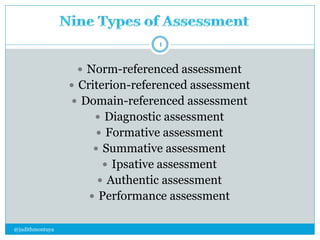
 Norm-referenced assessment 
 Criterion-referenced assessment 
 Domain-referenced assessment 
 Diagnostic assessment 
 Formative assessment 
 Summative assessment 
 Ipsative assessment 
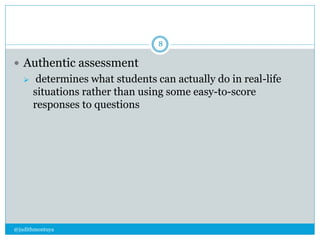
 Authentic assessment 
 Performance assessment 
@judithmontuya 
1
 Formative assessment 
 pinpoints whether students have achieved the 
objective of the lesson taught. it’s main purpose is to 
determine the gap between the intended objective and 
actual student’s performance. 
@judithmontuya 
2
Types of Formative Assessment 
@judithmontuya 
3 
 Question and Answer in the Lesson 
 Short Tests and Quizzes 
 Homework Exercises 
 Observation of Performance 
 Assignments 
 Projects 
 Written Questions / Exercises with Short, Extended 
or Multiple-choice Answers 
 Simulations, Business Games 
 Conferencing / Reviews / Audit
Examples of formative assessments include asking 
students to: 
@judithmontuya 
4 
 draw a concept map in class to represent their 
understanding of a topic 
 submit one or two sentences identifying the main 
point of a lecture 
 turn in a research proposal for early feedback
 Summative assessment 
 considered as the terminal assessment of learning. the 
main purpose of this is to give rating or grades to 
students based on their performance or achievement. 
This provides data on what students have achieved in a 
given period of time. 
@judithmontuya 
5
Examples of summative assessments include: 
@judithmontuya 
6 
 a midterm exam 
 a final project 
 a paper 
 a senior recital
 Ipsative assessment 
 refers to the process of self-assessment. One of the 
principles of evaluation states that, “evaluation should 
provide for self-assessment.” 
@judithmontuya 
7
 Authentic assessment 
 determines what students can actually do in real-life 
situations rather than using some easy-to-score 
responses to questions 
@judithmontuya 
8
@judithmontuya 
9 
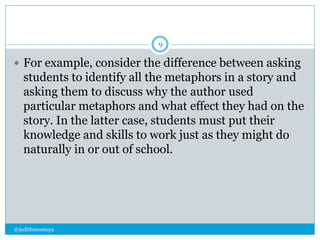
 For example, consider the difference between asking 
students to identify all the metaphors in a story and 
asking them to discuss why the author used 
particular metaphors and what effect they had on the 
story. In the latter case, students must put their 
knowledge and skills to work just as they might do 
naturally in or out of school.
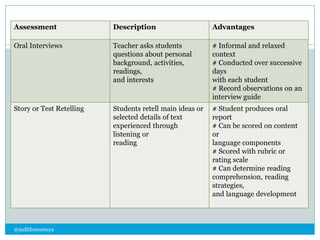
Assessment Description Advantages 
@judithmontuya 
10 
Oral Interviews Teacher asks students 
questions about personal 
background, activities, 
readings, 
and interests 
# Informal and relaxed 
context 
# Conducted over successive 
days 
with each student 
# Record observations on an 
interview guide 
Story or Test Retelling Students retell main ideas or 
selected details of text 
experienced through 
listening or 
reading 
# Student produces oral 
report 
# Can be scored on content 
or 
language components 
# Scored with rubric or 
rating scale 
# Can determine reading 
comprehension, reading 
strategies, 
and language development
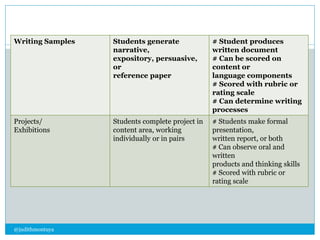
Writing Samples Students gen1e1rate 
@judithmontuya 
narrative, 
expository, persuasive, 
or 
reference paper 
# Student produces 
written document 
# Can be scored on 
content or 
language components 
# Scored with rubric or 
rating scale 
# Can determine writing 
processes 
Projects/ 
Exhibitions 
Students complete project in 
content area, working 
individually or in pairs 
# Students make formal 
presentation, 
written report, or both 
# Can observe oral and 
written 
products and thinking skills 
# Scored with rubric or 
rating scale
@judithmontuya 
12 
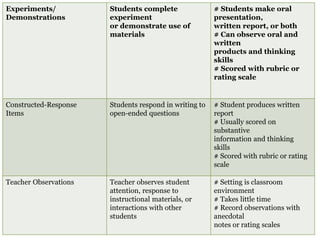
Experiments/ 
Demonstrations 
Students complete 
experiment 
or demonstrate use of 
materials 
# Students make oral 
presentation, 
written report, or both 
# Can observe oral and 
written 
products and thinking 
skills 
# Scored with rubric or 
rating scale 
Constructed-Response 
Items 
Students respond in writing to 
open-ended questions 
# Student produces written 
report 
# Usually scored on 
substantive 
information and thinking 
skills 
# Scored with rubric or rating 
scale 
Teacher Observations Teacher observes student 
attention, response to 
instructional materials, or 
interactions with other 
students 
# Setting is classroom 
environment 
# Takes little time 
# Record observations with 
anecdotal 
notes or rating scales
@judithmontuya 
13 
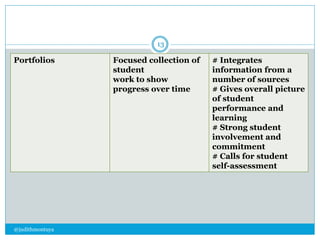
Portfolios Focused collection of 
student 
work to show 
progress over time 
# Integrates 
information from a 
number of sources 
# Gives overall picture 
of student 
performance and 
learning 
# Strong student 
involvement and 
commitment 
# Calls for student 
self-assessment
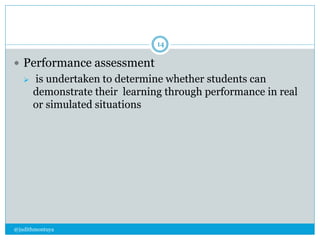
 Performance assessment 
 is undertaken to determine whether students can 
demonstrate their learning through performance in real 
or simulated situations 
@judithmontuya 
14
Examples of Performance Assessments 
@judithmontuya 
15 
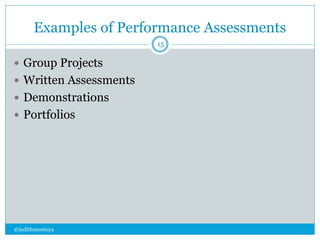
 Group Projects 
 Written Assessments 
 Demonstrations 
 Portfolios
@judithmontuya 
16
@judithmontuya 
17
@judithmontuya 
18

Types of assessment(2)

  • 1.
     Norm-referenced assessment  Criterion-referenced assessment  Domain-referenced assessment  Diagnostic assessment  Formative assessment  Summative assessment  Ipsative assessment  Authentic assessment  Performance assessment @judithmontuya 1
  • 2.
     Formative assessment  pinpoints whether students have achieved the objective of the lesson taught. it’s main purpose is to determine the gap between the intended objective and actual student’s performance. @judithmontuya 2
  • 3.
    Types of FormativeAssessment @judithmontuya 3  Question and Answer in the Lesson  Short Tests and Quizzes  Homework Exercises  Observation of Performance  Assignments  Projects  Written Questions / Exercises with Short, Extended or Multiple-choice Answers  Simulations, Business Games  Conferencing / Reviews / Audit
  • 4.
    Examples of formativeassessments include asking students to: @judithmontuya 4  draw a concept map in class to represent their understanding of a topic  submit one or two sentences identifying the main point of a lecture  turn in a research proposal for early feedback
  • 5.
     Summative assessment  considered as the terminal assessment of learning. the main purpose of this is to give rating or grades to students based on their performance or achievement. This provides data on what students have achieved in a given period of time. @judithmontuya 5
  • 6.
    Examples of summativeassessments include: @judithmontuya 6  a midterm exam  a final project  a paper  a senior recital
  • 7.
     Ipsative assessment  refers to the process of self-assessment. One of the principles of evaluation states that, “evaluation should provide for self-assessment.” @judithmontuya 7
  • 8.
     Authentic assessment  determines what students can actually do in real-life situations rather than using some easy-to-score responses to questions @judithmontuya 8
  • 9.
    @judithmontuya 9 For example, consider the difference between asking students to identify all the metaphors in a story and asking them to discuss why the author used particular metaphors and what effect they had on the story. In the latter case, students must put their knowledge and skills to work just as they might do naturally in or out of school.
  • 10.
    Assessment Description Advantages @judithmontuya 10 Oral Interviews Teacher asks students questions about personal background, activities, readings, and interests # Informal and relaxed context # Conducted over successive days with each student # Record observations on an interview guide Story or Test Retelling Students retell main ideas or selected details of text experienced through listening or reading # Student produces oral report # Can be scored on content or language components # Scored with rubric or rating scale # Can determine reading comprehension, reading strategies, and language development
  • 11.
    Writing Samples Studentsgen1e1rate @judithmontuya narrative, expository, persuasive, or reference paper # Student produces written document # Can be scored on content or language components # Scored with rubric or rating scale # Can determine writing processes Projects/ Exhibitions Students complete project in content area, working individually or in pairs # Students make formal presentation, written report, or both # Can observe oral and written products and thinking skills # Scored with rubric or rating scale
  • 12.
    @judithmontuya 12 Experiments/ Demonstrations Students complete experiment or demonstrate use of materials # Students make oral presentation, written report, or both # Can observe oral and written products and thinking skills # Scored with rubric or rating scale Constructed-Response Items Students respond in writing to open-ended questions # Student produces written report # Usually scored on substantive information and thinking skills # Scored with rubric or rating scale Teacher Observations Teacher observes student attention, response to instructional materials, or interactions with other students # Setting is classroom environment # Takes little time # Record observations with anecdotal notes or rating scales
  • 13.
    @judithmontuya 13 PortfoliosFocused collection of student work to show progress over time # Integrates information from a number of sources # Gives overall picture of student performance and learning # Strong student involvement and commitment # Calls for student self-assessment
  • 14.
     Performance assessment  is undertaken to determine whether students can demonstrate their learning through performance in real or simulated situations @judithmontuya 14
  • 15.
    Examples of PerformanceAssessments @judithmontuya 15  Group Projects  Written Assessments  Demonstrations  Portfolios
  • 16.
  • 17.
  • 18.