Harindu Udapitiya, 
Temporary Lecturer, 
Division of Pharmacology. 
Tuberculosis
Overview 
1. Imporatance 
2. Pathology of TB 
3. Clinical features 
4. Investigations 
5. Management
1. Importance 
• It is estimated that one-third of the world’s 
population are infected with tuberculosis.
• Sri lanka-About 9000 new cases of 
tuberculosis are notified every year, of which 
around 60% are smear-positive pulmonary TB 
cases.
Important for us
1.Pathology of TB 
• Tuberculosis is caused by four main 
mycobacterial species. 
1. Mycobacterium tuberculosis 
2. Mycobacterium bovis 
3. Mycobacterium africanum 
4. Mycobacterium microti
Transmission 
• Person-to-person through 
the air by a person with 
active TB disease of the 
lungs . 
• Less frequently 
transmitted by: Ingestion 
of M. bovis found in 
unpasteurized milk
Manifestations
Primary secondary 
• Seen in non immune 
people. 
• Usually childhood cases 
• Subpleural mid zone 
• Lymph nodes are always 
involved 
• Seen in immune people 
• Often adults 
• Lung apices 
• Lymph nodes are not 
always involved
3. Clinical features
Symptoms 
• 1. General symptoms 
• 2. Pulmonary TB 
• 3. Extrapulmonary TB
1.General Symptoms 
1. Evening law grade fever 
2. Night sweating 
3. Loss of weight 
4. Loss of appetite 
5. fatigue
2. Pulmonary TB 
1. Chronic cough 
2. Chest pain 
3. haemoptysis
3. Extrapulmonary TB
Signs 
• General Ex 
1. Cachexia 
2. Lymphadenopathy 
3. Clubbing 
4. Cutaneous lessions
• Respiratory Ex 
1. Signs of respiratory depression 
2. Signs of pleural effusion, collapse 
3. Signs of consolidation 
4. Signs of fibrosis
4. Investigations 
1. Investigations for diagnosis 
2. Supportive Investigations
1.Investigations for diagnosis 
1.Sputum examination 
– Early morning sputum culture 
– 3 days 
– from laryngeal swab or bronchial washing In small 
children.Gastric lavage can be examined. 
– Stain for AFB with Ziehl-Neelson stain.
2. Sputum culture 
– Lowenstein-Jensen 
– often requires more than 3-4 weeks
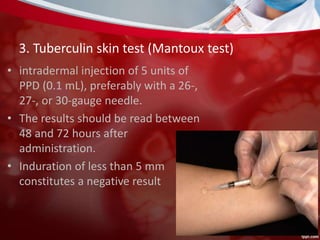
3. Tuberculin skin test (Mantoux test) 
• intradermal injection of 5 units of 
PPD (0.1 mL), preferably with a 26-, 
27-, or 30-gauge needle. 
• The results should be read between 
48 and 72 hours after 
administration. 
• Induration of less than 5 mm 
constitutes a negative result
4. Nucleic Acid Amplification Tests 
• In tissue, polymerase chain reaction (PCR) 
amplification techniques can be used to detect M 
tuberculosis -specific DNA sequences.
2.Supportive Investigations 
1. Chest x ray 
Hilar 
lyphadenopathy
Upper lobe 
fibrosis
cavitation
• 2. CT Scan 
• To diagnose TB that has spread throughout the body 
(miliary TB) and to detect lung cavities caused by TB. 
• 3. MRI 
• In bone TB
5. Management 
• Multidrug therapy
• Usually 6 months, sometimes 9 months 
• Four drugs for two months Isoniazid ,Rifampicin, 
Ethambutol ,Pyrazinamide 
• Two drugs for four or seven months Isoniazid, 
Rifampicin 
• DOT is given
• Patients with TB who are receiving pyrazinamide 
should undergo baseline and periodic serum uric 
acid assessments. 
• patients with TB who are receiving long-term 
ethambutol therapy should undergo baseline and 
periodic visual acuity and red-green color perception 
testing.
Latent TB 
• Isoniazid +/- rifampacin 
CNS TB 
• 12 months Tx
Prevention 
• BCG vaccine
Summery 
1. Pathology of TB 
Primary Vs secondary TB 
2. Clinical presentation 
Symptoms 
Signs
3. Investigations 
Ix for Dx 
Supportive Ix 
4. Management
References 
• Kumar and clerk 
• Medscape 
• Robbins’ Pathologic 
• CDC guidelines
Tuberculosis harindu

Tuberculosis harindu

  • 1.
    Harindu Udapitiya, TemporaryLecturer, Division of Pharmacology. Tuberculosis
  • 2.
    Overview 1. Imporatance 2. Pathology of TB 3. Clinical features 4. Investigations 5. Management
  • 3.
    1. Importance •It is estimated that one-third of the world’s population are infected with tuberculosis.
  • 4.
    • Sri lanka-About9000 new cases of tuberculosis are notified every year, of which around 60% are smear-positive pulmonary TB cases.
  • 6.
  • 7.
    1.Pathology of TB • Tuberculosis is caused by four main mycobacterial species. 1. Mycobacterium tuberculosis 2. Mycobacterium bovis 3. Mycobacterium africanum 4. Mycobacterium microti
  • 8.
    Transmission • Person-to-personthrough the air by a person with active TB disease of the lungs . • Less frequently transmitted by: Ingestion of M. bovis found in unpasteurized milk
  • 9.
  • 10.
    Primary secondary •Seen in non immune people. • Usually childhood cases • Subpleural mid zone • Lymph nodes are always involved • Seen in immune people • Often adults • Lung apices • Lymph nodes are not always involved
  • 11.
  • 12.
    Symptoms • 1.General symptoms • 2. Pulmonary TB • 3. Extrapulmonary TB
  • 13.
    1.General Symptoms 1.Evening law grade fever 2. Night sweating 3. Loss of weight 4. Loss of appetite 5. fatigue
  • 16.
    2. Pulmonary TB 1. Chronic cough 2. Chest pain 3. haemoptysis
  • 17.
  • 18.
    Signs • GeneralEx 1. Cachexia 2. Lymphadenopathy 3. Clubbing 4. Cutaneous lessions
  • 19.
    • Respiratory Ex 1. Signs of respiratory depression 2. Signs of pleural effusion, collapse 3. Signs of consolidation 4. Signs of fibrosis
  • 20.
    4. Investigations 1.Investigations for diagnosis 2. Supportive Investigations
  • 21.
    1.Investigations for diagnosis 1.Sputum examination – Early morning sputum culture – 3 days – from laryngeal swab or bronchial washing In small children.Gastric lavage can be examined. – Stain for AFB with Ziehl-Neelson stain.
  • 22.
    2. Sputum culture – Lowenstein-Jensen – often requires more than 3-4 weeks
  • 23.
    3. Tuberculin skintest (Mantoux test) • intradermal injection of 5 units of PPD (0.1 mL), preferably with a 26-, 27-, or 30-gauge needle. • The results should be read between 48 and 72 hours after administration. • Induration of less than 5 mm constitutes a negative result
  • 24.
    4. Nucleic AcidAmplification Tests • In tissue, polymerase chain reaction (PCR) amplification techniques can be used to detect M tuberculosis -specific DNA sequences.
  • 25.
    2.Supportive Investigations 1.Chest x ray Hilar lyphadenopathy
  • 26.
  • 27.
  • 28.
    • 2. CTScan • To diagnose TB that has spread throughout the body (miliary TB) and to detect lung cavities caused by TB. • 3. MRI • In bone TB
  • 29.
    5. Management •Multidrug therapy
  • 30.
    • Usually 6months, sometimes 9 months • Four drugs for two months Isoniazid ,Rifampicin, Ethambutol ,Pyrazinamide • Two drugs for four or seven months Isoniazid, Rifampicin • DOT is given
  • 31.
    • Patients withTB who are receiving pyrazinamide should undergo baseline and periodic serum uric acid assessments. • patients with TB who are receiving long-term ethambutol therapy should undergo baseline and periodic visual acuity and red-green color perception testing.
  • 32.
    Latent TB •Isoniazid +/- rifampacin CNS TB • 12 months Tx
  • 33.
  • 34.
    Summery 1. Pathologyof TB Primary Vs secondary TB 2. Clinical presentation Symptoms Signs
  • 35.
    3. Investigations Ixfor Dx Supportive Ix 4. Management
  • 36.
    References • Kumarand clerk • Medscape • Robbins’ Pathologic • CDC guidelines

Editor's Notes

  • #34 protects against miliary TB and TB meningitis. Except in neonates, a tuberculin skin test should always be done before administering BCG. BCG is given as a single intradermal injection .