TRANSPIRATION
ALI HASSAN VIRK
TRANSPIRATION
 Transpiration is the process of water movement through
a plant and its evaporation from aerial parts, such as
leaves, stems and flowers. Water is necessary for plants
but only a small amount of water taken up by the roots
is used for growth and metabolism.
 What is transpiration in plants?
 Transpiration is the process where plants absorb water
through the roots and then give off water vapor through
pores in their leaves. An example of transpiration is
when a plant absorbs water in its roots.
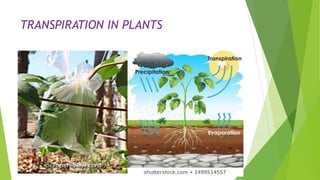
TRANSPIRATION IN PLANTS
What causes transpiration ʔ
 Transpiration is the loss of water from the plant
through evaporation at the leaf surface. It is the
main driver of water movement in the xylem.
 Transpiration is caused by the evaporation of
water at the leaf–atmosphere interface; it creates
negative pressure (tension) equivalent to –2 MPa
at the leaf surface
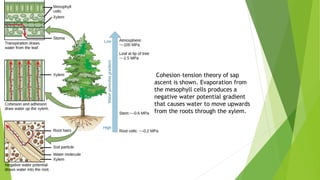
Cohesion–tension theory of sap
ascent is shown. Evaporation from
the mesophyll cells produces a
negative water potential gradient
that causes water to move upwards
from the roots through the xylem.
Types Of Transpiration
 THE THREE MAJOR TYPES OF TRANSPIRATION
A. STOMATAL TRANSPIRATION
B. LENTICULAR TRANSPIRATION
C. CUTICULAR TRANSPIRATION
 TRANSPIRATION mainly takes place through surface
of leaves. It is known as
Foliar transpiration (more than 90%).
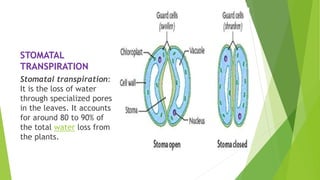
STOMATAL
TRANSPIRATION
Stomatal transpiration:
It is the loss of water
through specialized pores
in the leaves. It accounts
for around 80 to 90% of
the total water loss from
the plants.
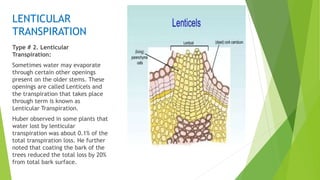
LENTICULAR
TRANSPIRATION
Type # 2. Lenticular
Transpiration:
Sometimes water may evaporate
through certain other openings
present on the older stems. These
openings are called Lenticels and
the transpiration that takes place
through term is known as
Lenticular Transpiration.
Huber observed in some plants that
water lost by lenticular
transpiration was about 0.1% of the
total transpiration loss. He further
noted that coating the bark of the
trees reduced the total loss by 20%
from total bark surface.
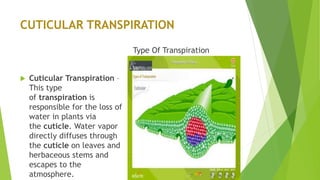
CUTICULAR TRANSPIRATION
 Cuticular Transpiration –
This type
of transpiration is
responsible for the loss of
water in plants via
the cuticle. Water vapor
directly diffuses through
the cuticle on leaves and
herbaceous stems and
escapes to the
atmosphere.
Type Of Transpiration
SIGNIFICANCE OF TRANSPIRATION
 The significance of transpiration is explained below:
 Transpiration helps in the conduction of water and
minerals to different parts of the plants.
 Due to the continuous elimination of water from the plant
body, there is a balance of water maintained within the
plant.
 It maintains osmosis and keeps the cells rigid.
 A suction force is created by transpiration that helps in
the upward movement of water in the plant
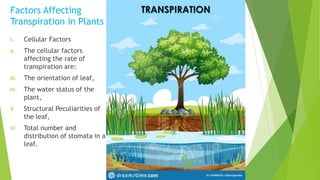
Factors Affecting
Transpiration in Plants
I. Cellular Factors
II. The cellular factors
affecting the rate of
transpiration are:
III. The orientation of leaf,
IV. The water status of the
plant,
V. Structural Peculiarities of
the leaf,
VI. Total number and
distribution of stomata in a
leaf.
TRANSPIRATION

TRANSPIRATION

  • 1.
  • 2.
    TRANSPIRATION  Transpiration isthe process of water movement through a plant and its evaporation from aerial parts, such as leaves, stems and flowers. Water is necessary for plants but only a small amount of water taken up by the roots is used for growth and metabolism.  What is transpiration in plants?  Transpiration is the process where plants absorb water through the roots and then give off water vapor through pores in their leaves. An example of transpiration is when a plant absorbs water in its roots.
  • 3.
  • 4.
    What causes transpirationʔ  Transpiration is the loss of water from the plant through evaporation at the leaf surface. It is the main driver of water movement in the xylem.  Transpiration is caused by the evaporation of water at the leaf–atmosphere interface; it creates negative pressure (tension) equivalent to –2 MPa at the leaf surface
  • 5.
    Cohesion–tension theory ofsap ascent is shown. Evaporation from the mesophyll cells produces a negative water potential gradient that causes water to move upwards from the roots through the xylem.
  • 6.
    Types Of Transpiration THE THREE MAJOR TYPES OF TRANSPIRATION A. STOMATAL TRANSPIRATION B. LENTICULAR TRANSPIRATION C. CUTICULAR TRANSPIRATION  TRANSPIRATION mainly takes place through surface of leaves. It is known as Foliar transpiration (more than 90%).
  • 7.
    STOMATAL TRANSPIRATION Stomatal transpiration: It isthe loss of water through specialized pores in the leaves. It accounts for around 80 to 90% of the total water loss from the plants.
  • 8.
    LENTICULAR TRANSPIRATION Type # 2.Lenticular Transpiration: Sometimes water may evaporate through certain other openings present on the older stems. These openings are called Lenticels and the transpiration that takes place through term is known as Lenticular Transpiration. Huber observed in some plants that water lost by lenticular transpiration was about 0.1% of the total transpiration loss. He further noted that coating the bark of the trees reduced the total loss by 20% from total bark surface.
  • 9.
    CUTICULAR TRANSPIRATION  CuticularTranspiration – This type of transpiration is responsible for the loss of water in plants via the cuticle. Water vapor directly diffuses through the cuticle on leaves and herbaceous stems and escapes to the atmosphere. Type Of Transpiration
  • 10.
    SIGNIFICANCE OF TRANSPIRATION The significance of transpiration is explained below:  Transpiration helps in the conduction of water and minerals to different parts of the plants.  Due to the continuous elimination of water from the plant body, there is a balance of water maintained within the plant.  It maintains osmosis and keeps the cells rigid.  A suction force is created by transpiration that helps in the upward movement of water in the plant
  • 11.
    Factors Affecting Transpiration inPlants I. Cellular Factors II. The cellular factors affecting the rate of transpiration are: III. The orientation of leaf, IV. The water status of the plant, V. Structural Peculiarities of the leaf, VI. Total number and distribution of stomata in a leaf.