



TAPASWINI BEHERA
BY:-
INTRODUCTION
WHAT IS SAP ??
ASCENT OF SAP
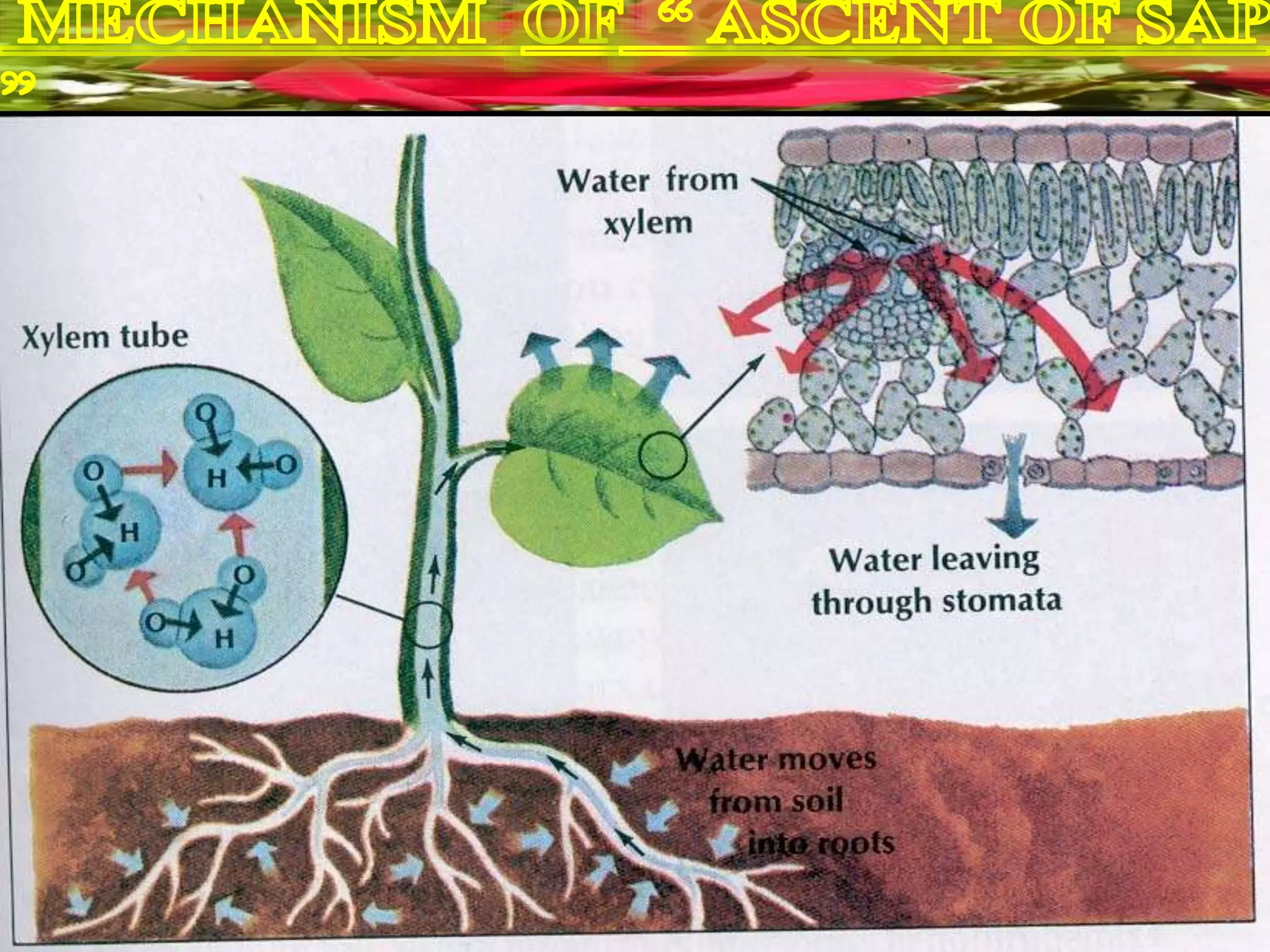
MECHANISM OF ASCENT OF SAP
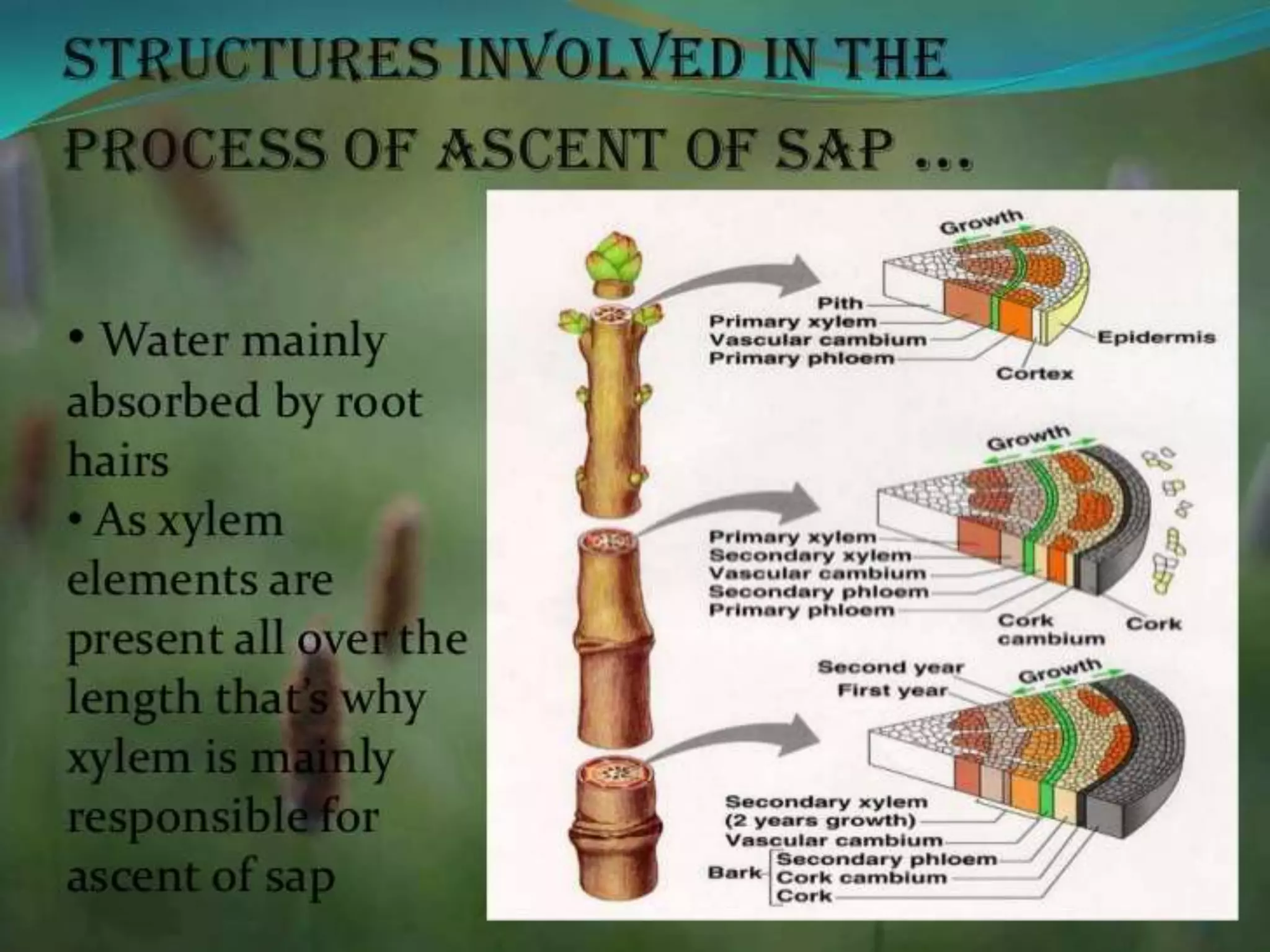
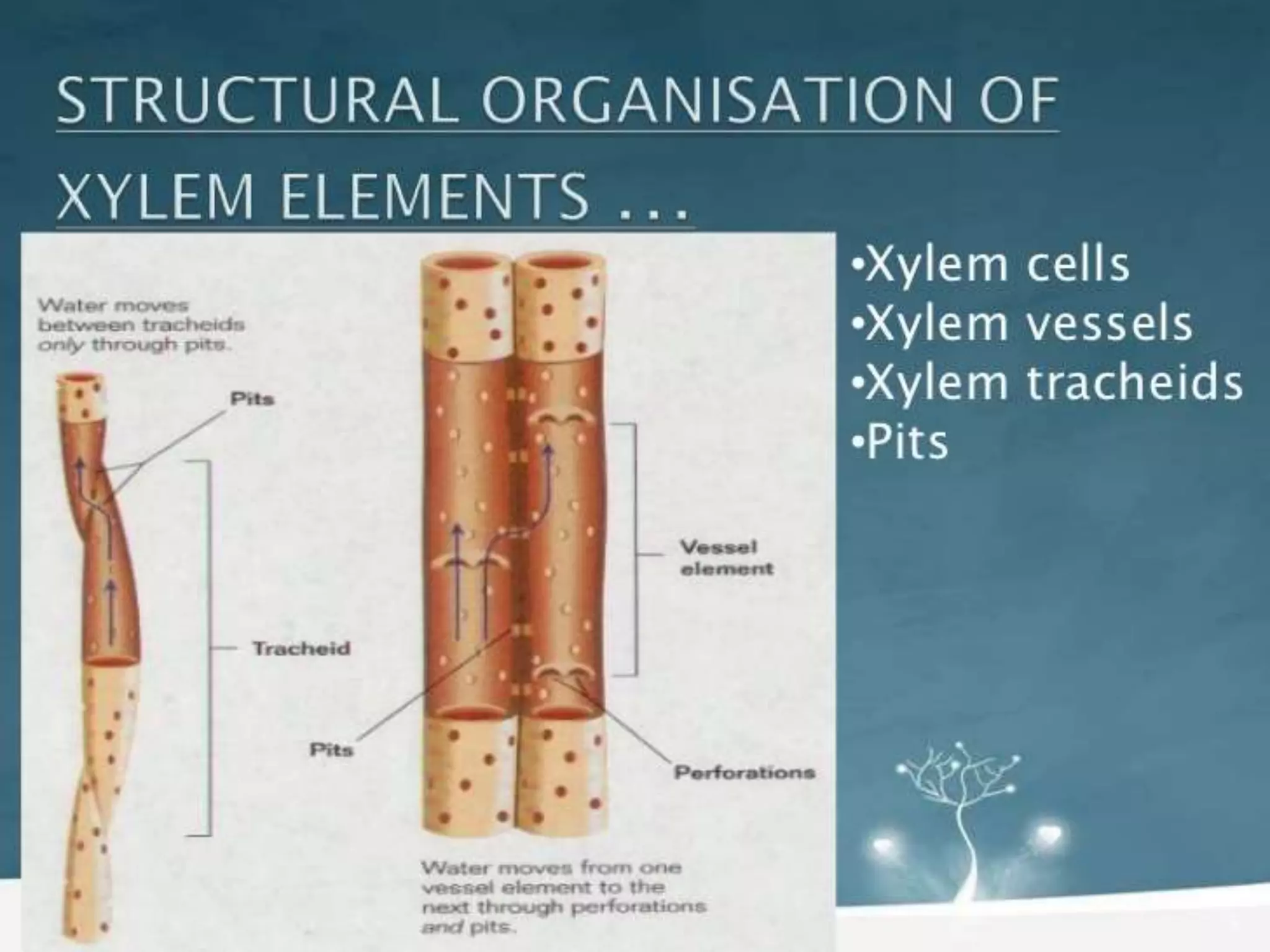
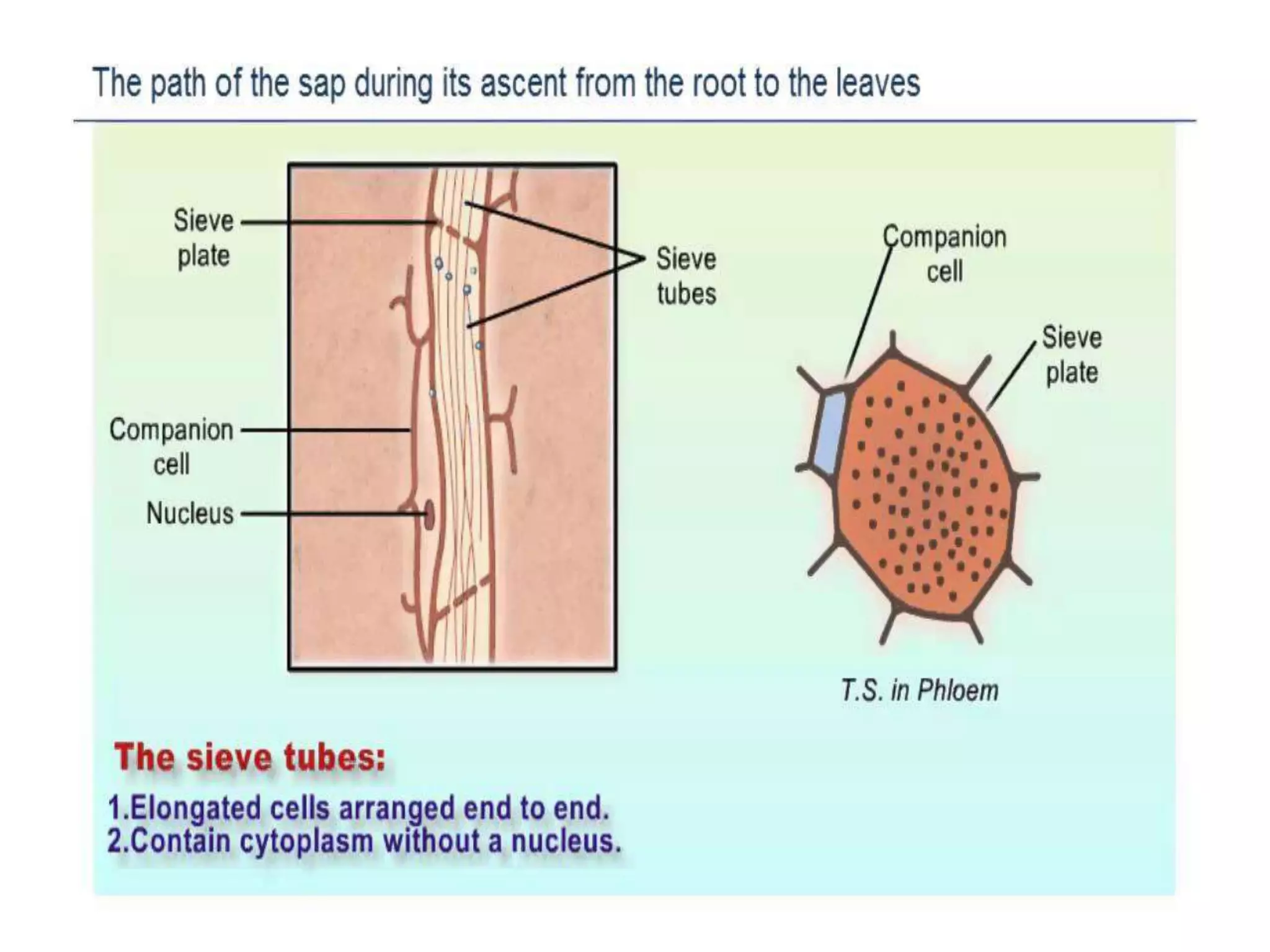
STRUCTURES INVOLBED IN THE PROCESS
OF ASCENT OF SAP
THEORIES OF ASCENT OF SAP
CONCLUSION
SAP IS THE DIUTE
SOLUTION OF WATER
AND
MINERAL IONS ABSORBED
FROM SOIL WHICH
MOVES
UPWARD FROM ROOT TO
VARIOUS PARTS OF PLANTS.
What is ASCENT OF SAP ??
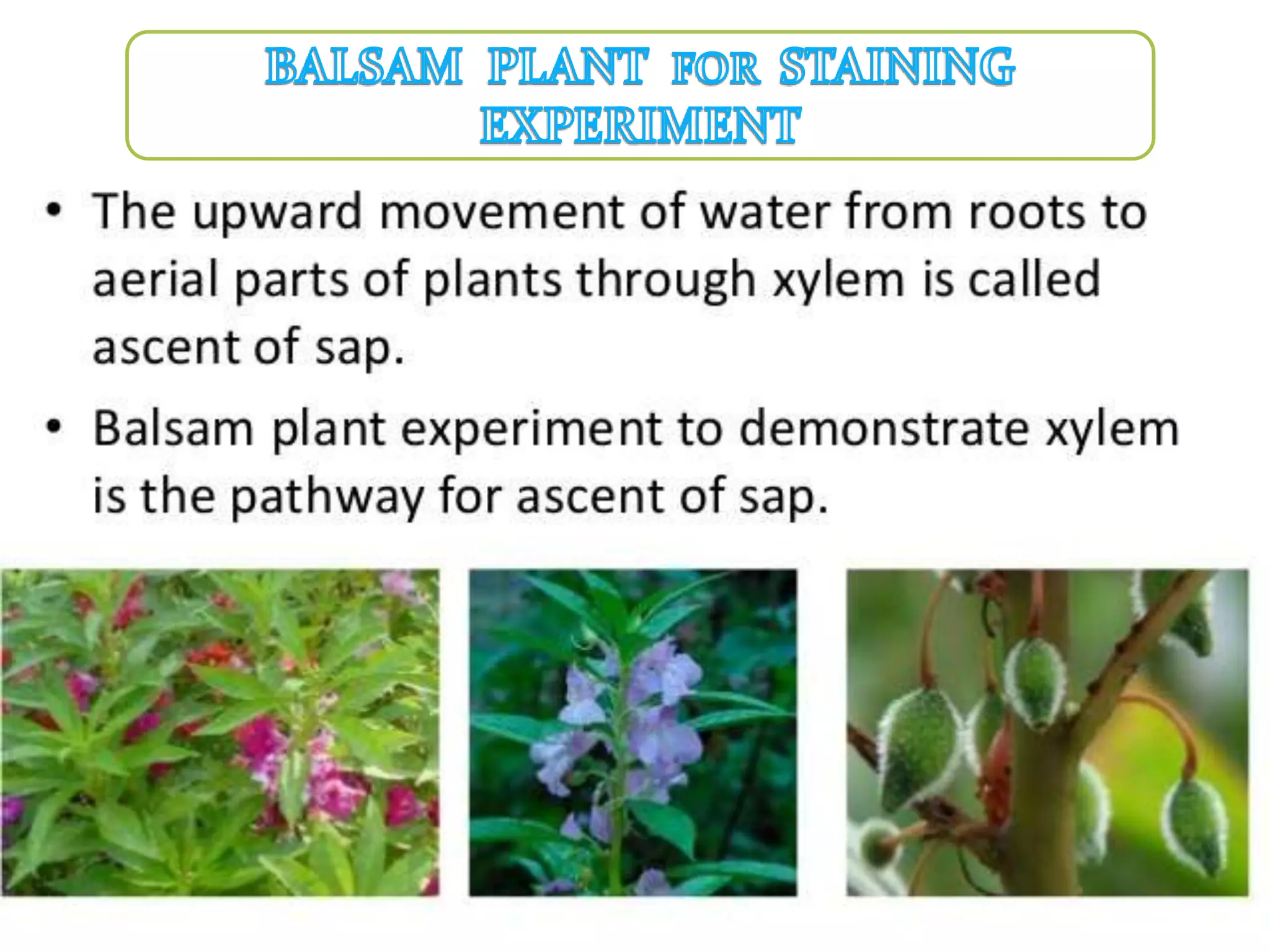
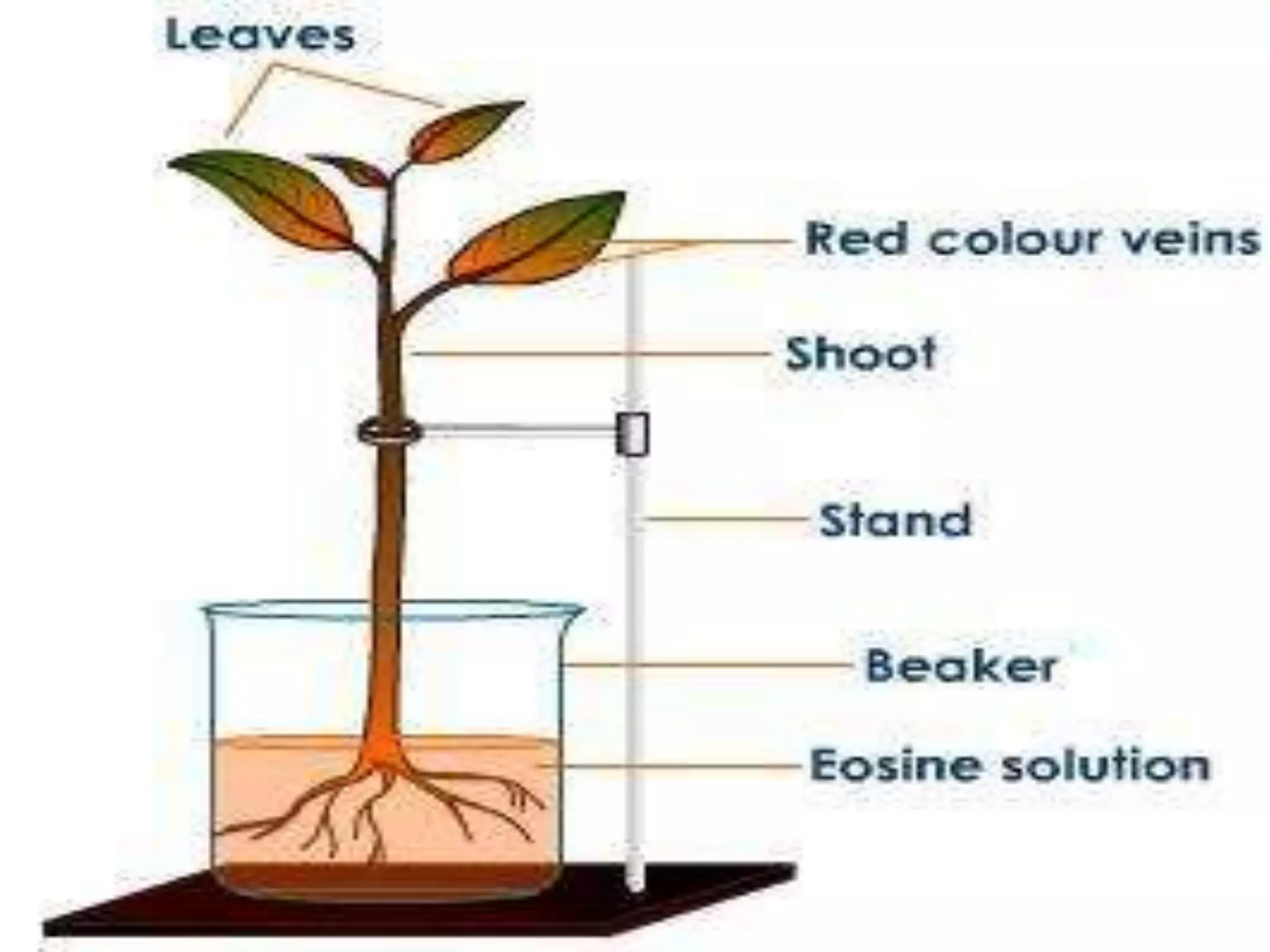
The upward movement of water from the root
to aerial parts of the plant body is called
ascent of sap or often called translocation of
water. It is fascinating to understand how
water moves in plants to such great heights
such as 400 ft. or more. For example, trees
like Sequoia semipervians are as tall as 300 to
400 ft. They are the 4000 yrs old and giants
among the tree plants. These plants transport
water through their stem must be incredible.
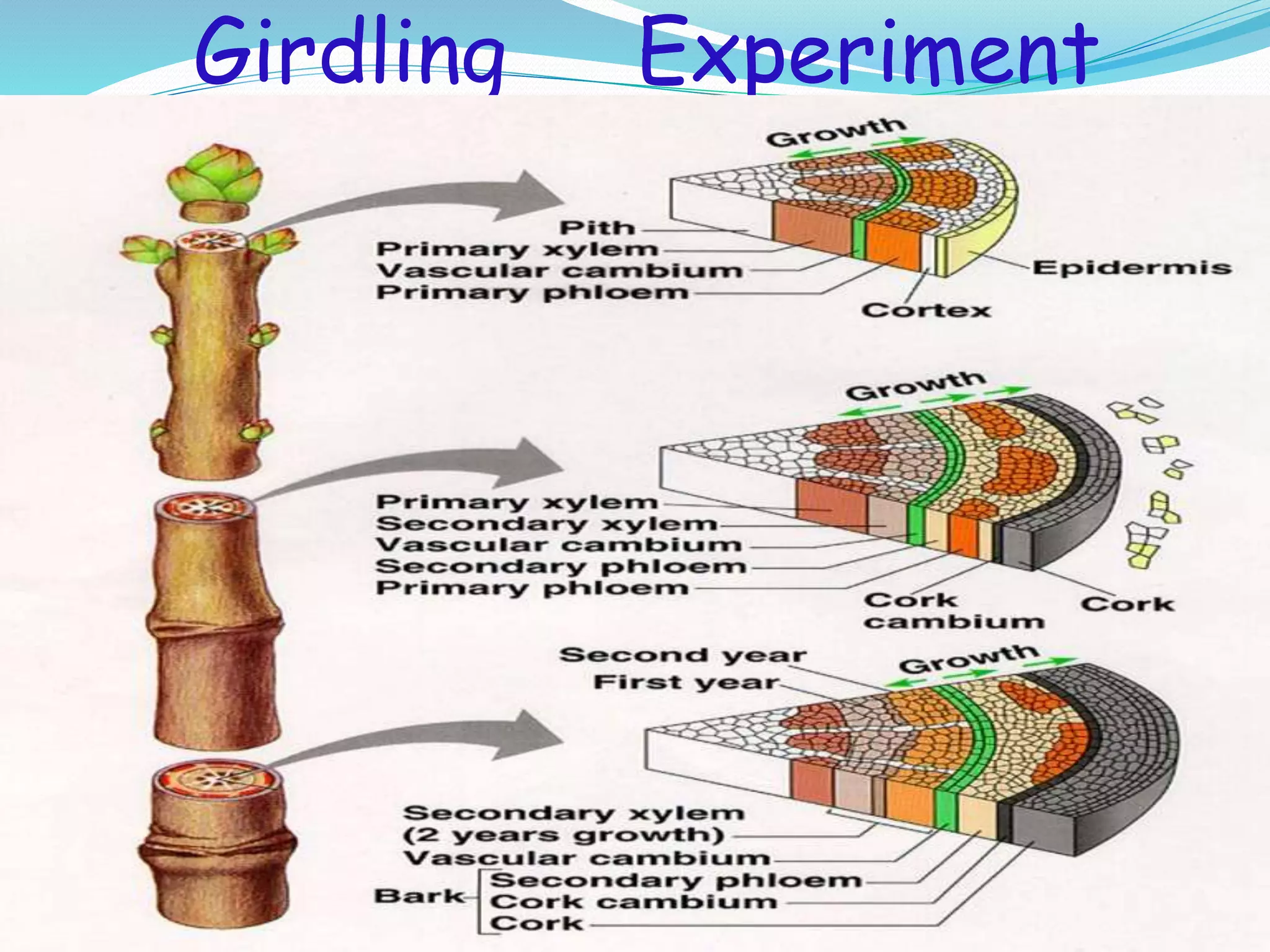
Girdling Experiment
The logic of the experiment is to find out which of
the stem structures are involved in the
transportation of sap, it may be cortical tissue,
phloem or xylem elements, using a sharp blade; it
is possible to put an incision in the stem till it
reaches the hard part of the stem. Then a ring
of tissue can be removed which consists of cortex
and phloem, leaving behind the xylem elements
intact. This experiment is to determine which of
the stem components are used in the ascent of
sap. However the removal of cortex and phloem
by girdling experiment does not affect the
movement of sap. Thus it can be concluded that
xylem is alone responsible for the ascent of sap.
GIRDLING EXPERIMENT
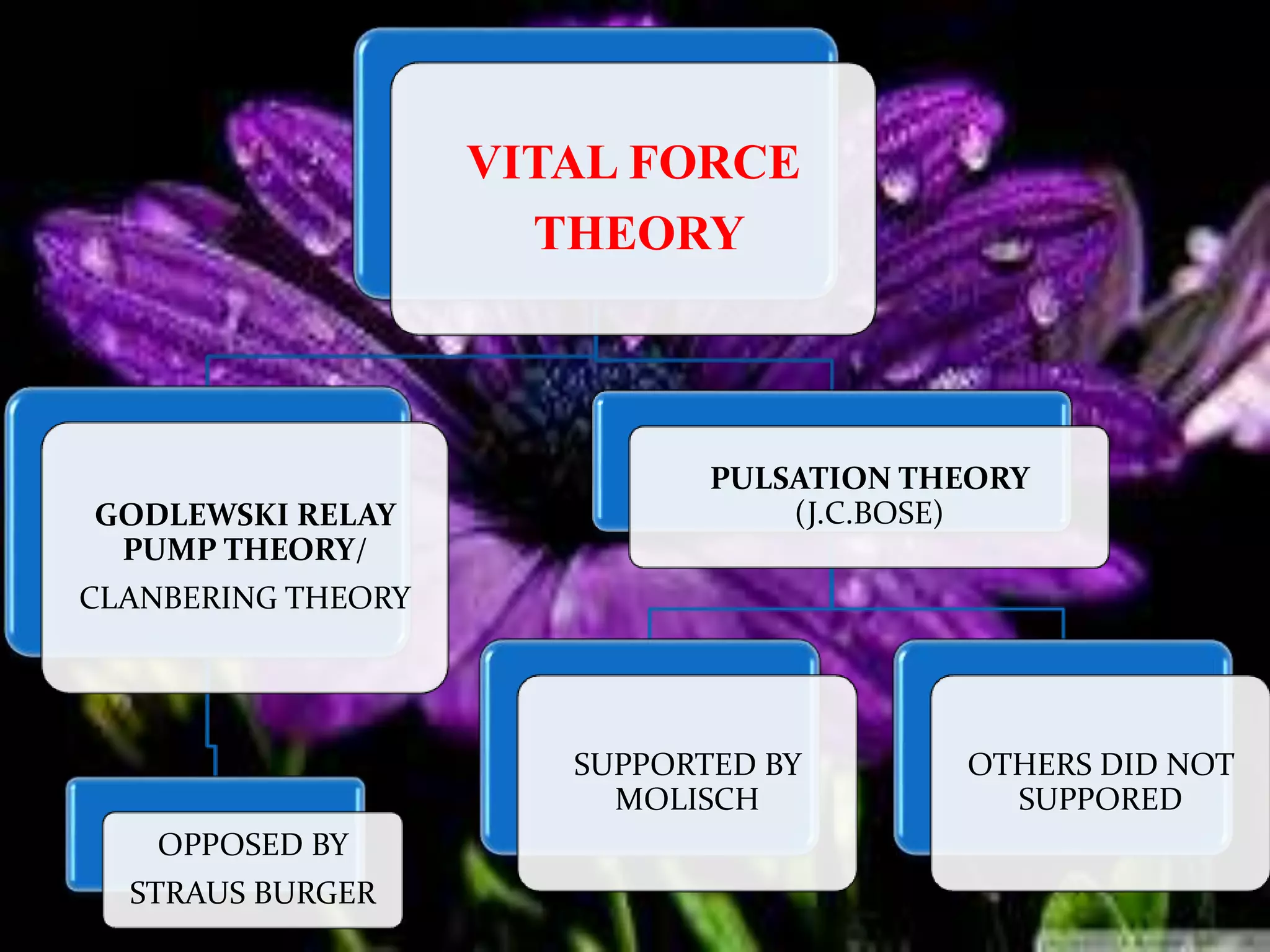
VITAL FORCE
THEORY
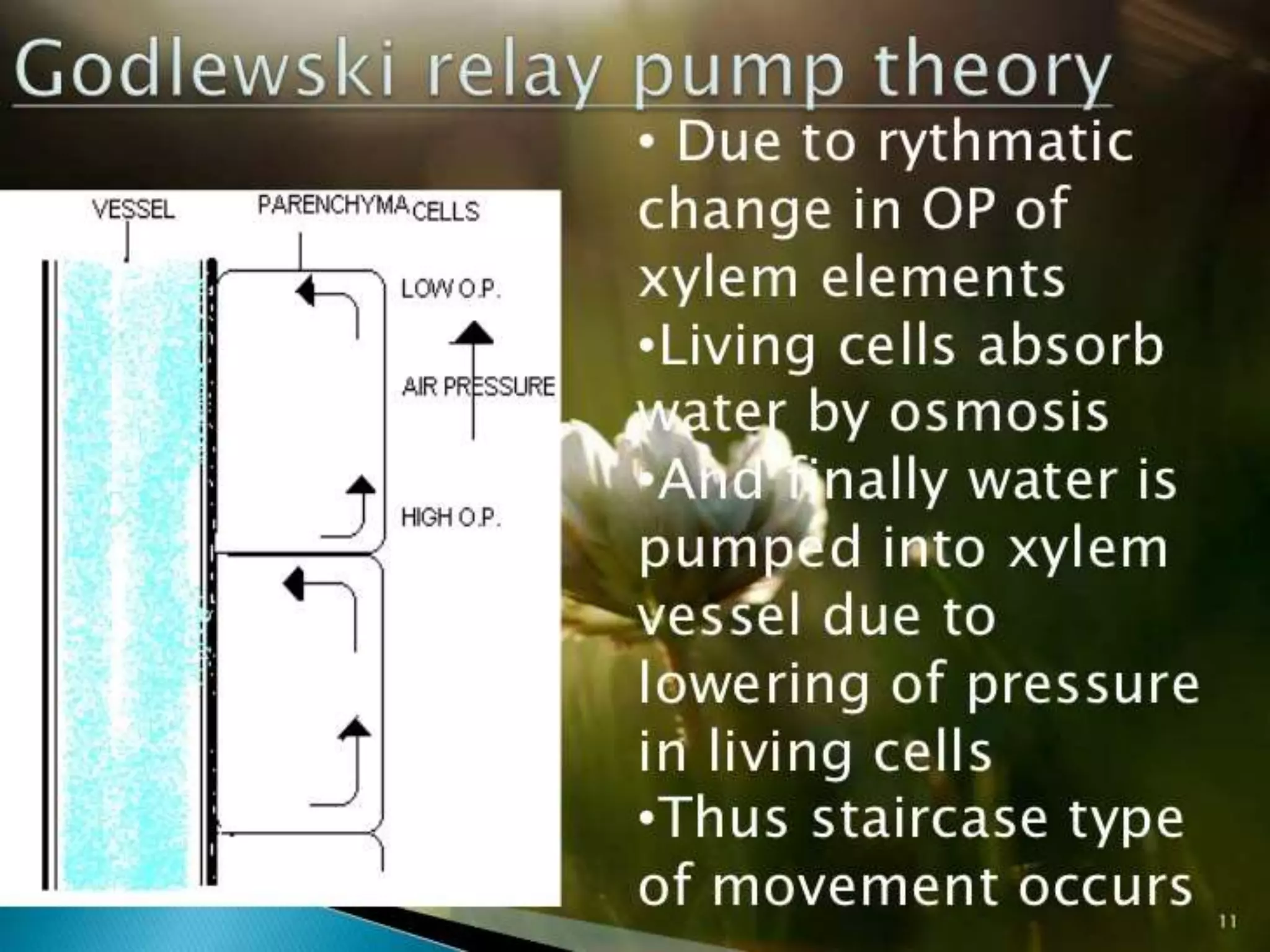
GODLEWSKI RELAY
PUMP THEORY/
CLANBERING THEORY
OPPOSED BY
STRAUS BURGER
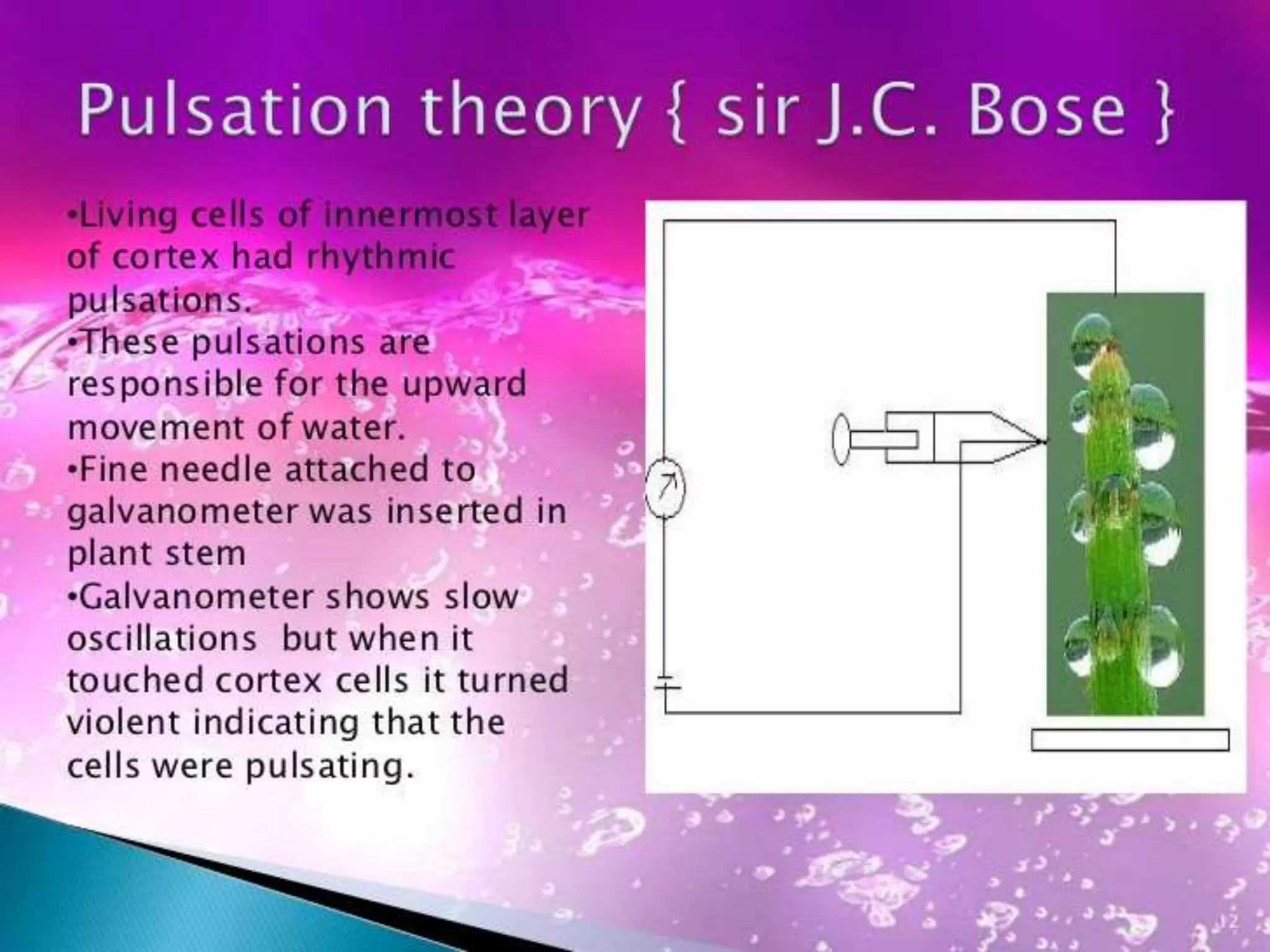
PULSATION THEORY
(J.C.BOSE)
SUPPORTED BY
MOLISCH
OTHERS DID NOT
SUPPORED
VITAL FORCE THEORY
According to these theories the forces
required for ascent Of sap are generated in
living cells of plants. some of the important
Vital foce theories are GODLEWSKI RELAY
PUMPTHEORY AND
PULSATIONTHEORY.
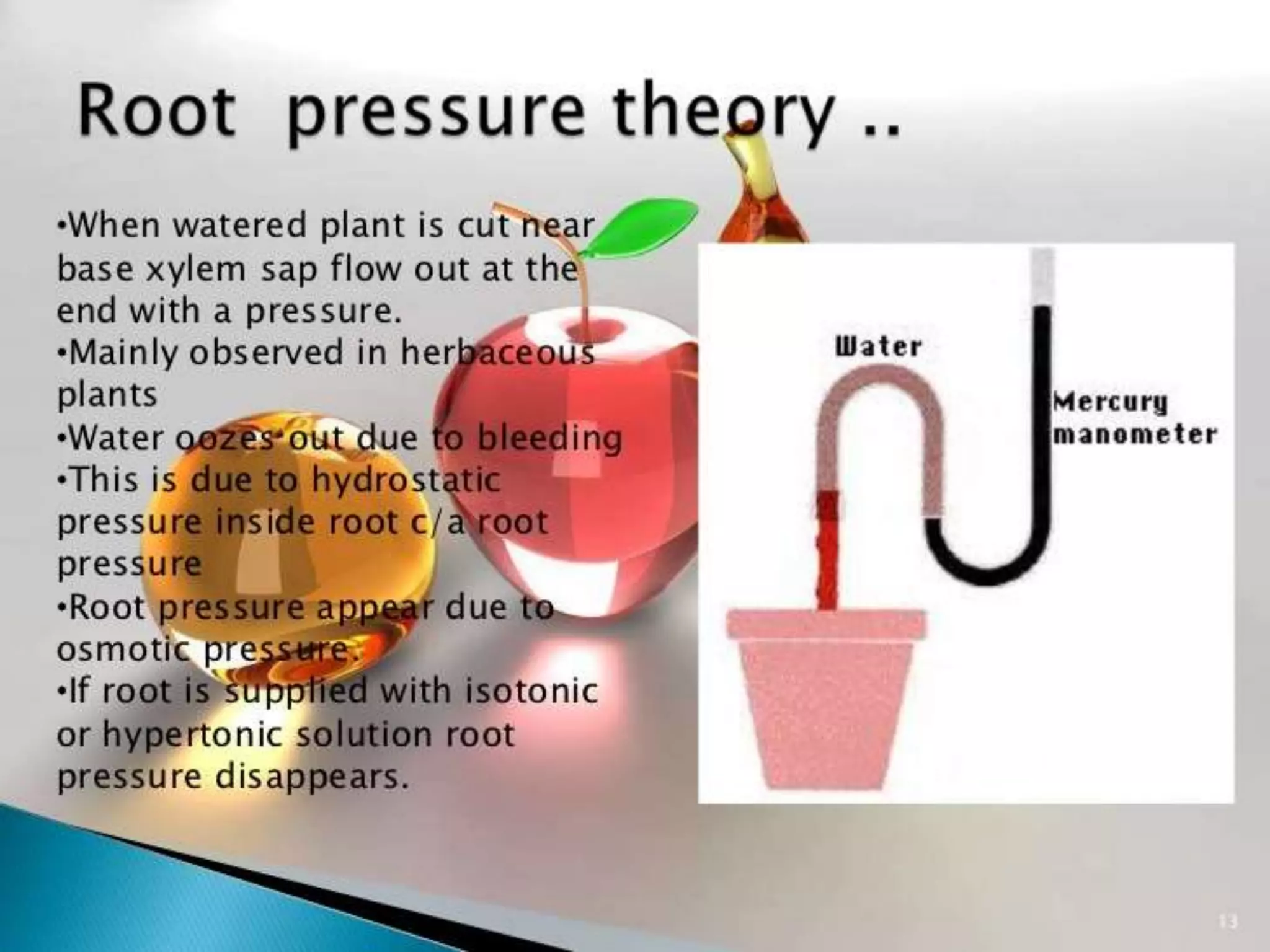
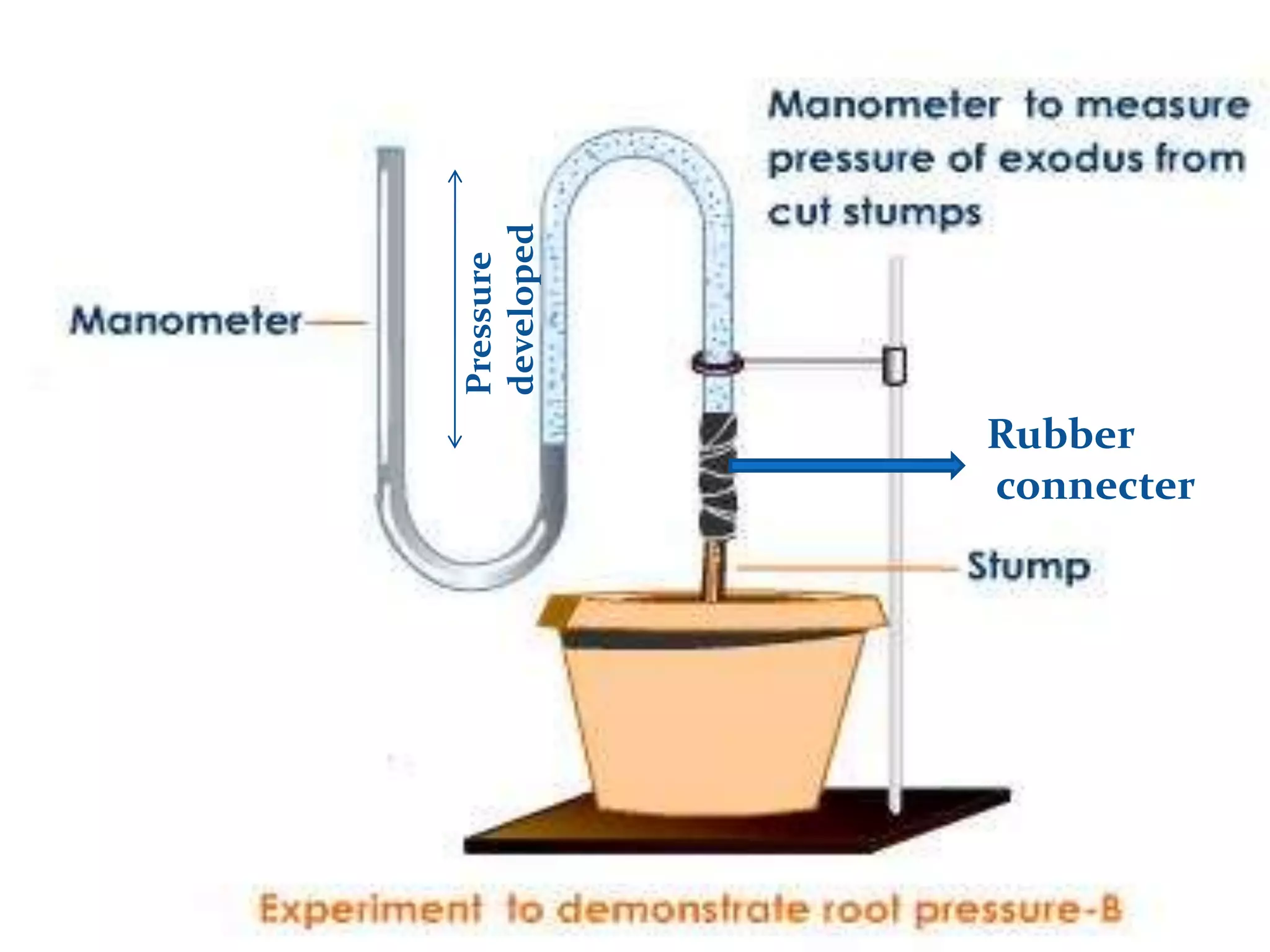
Rubber
connecterPressure
developed
COHESION TRANSPIRATION PULL
MECHANISM
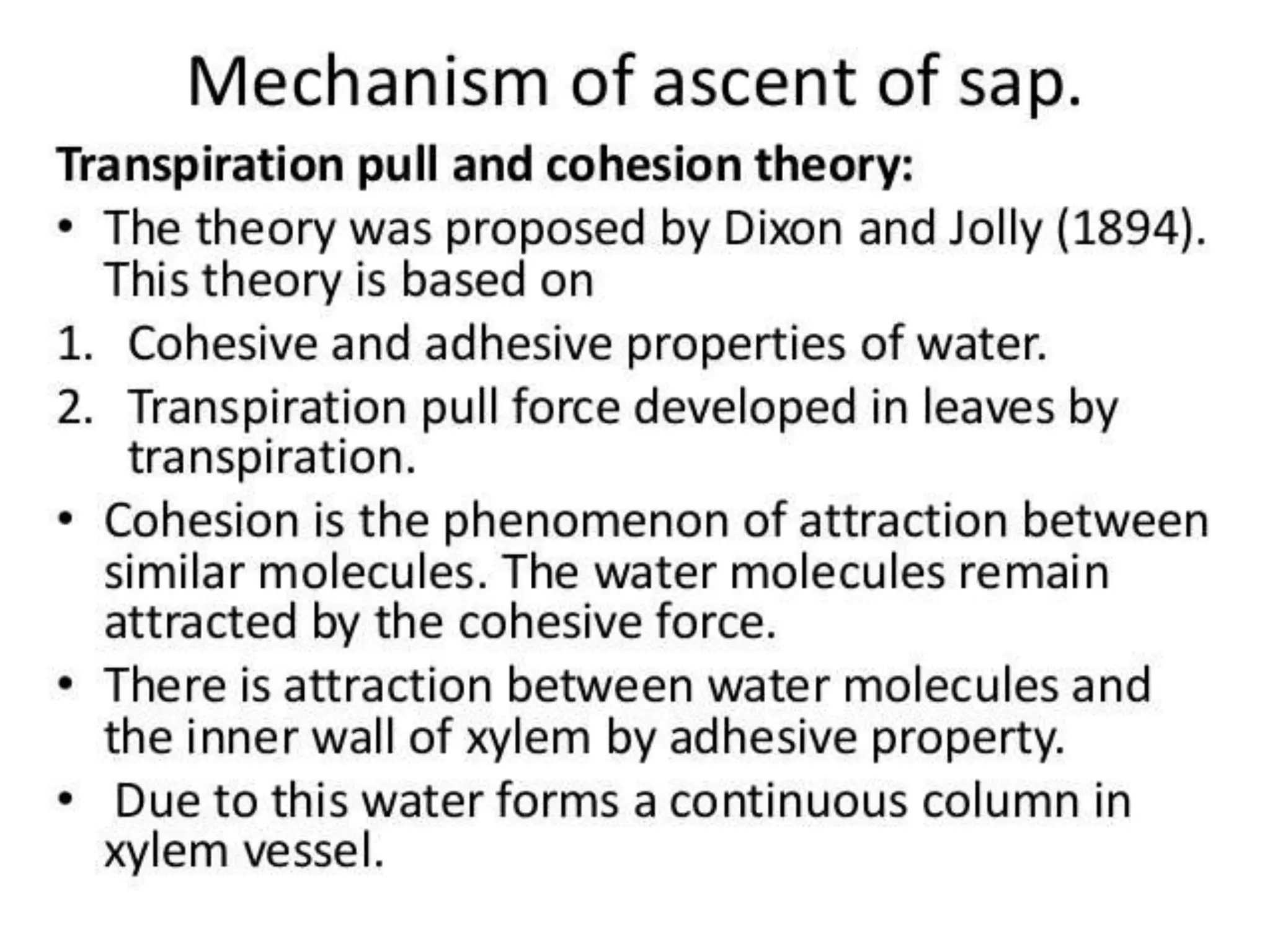
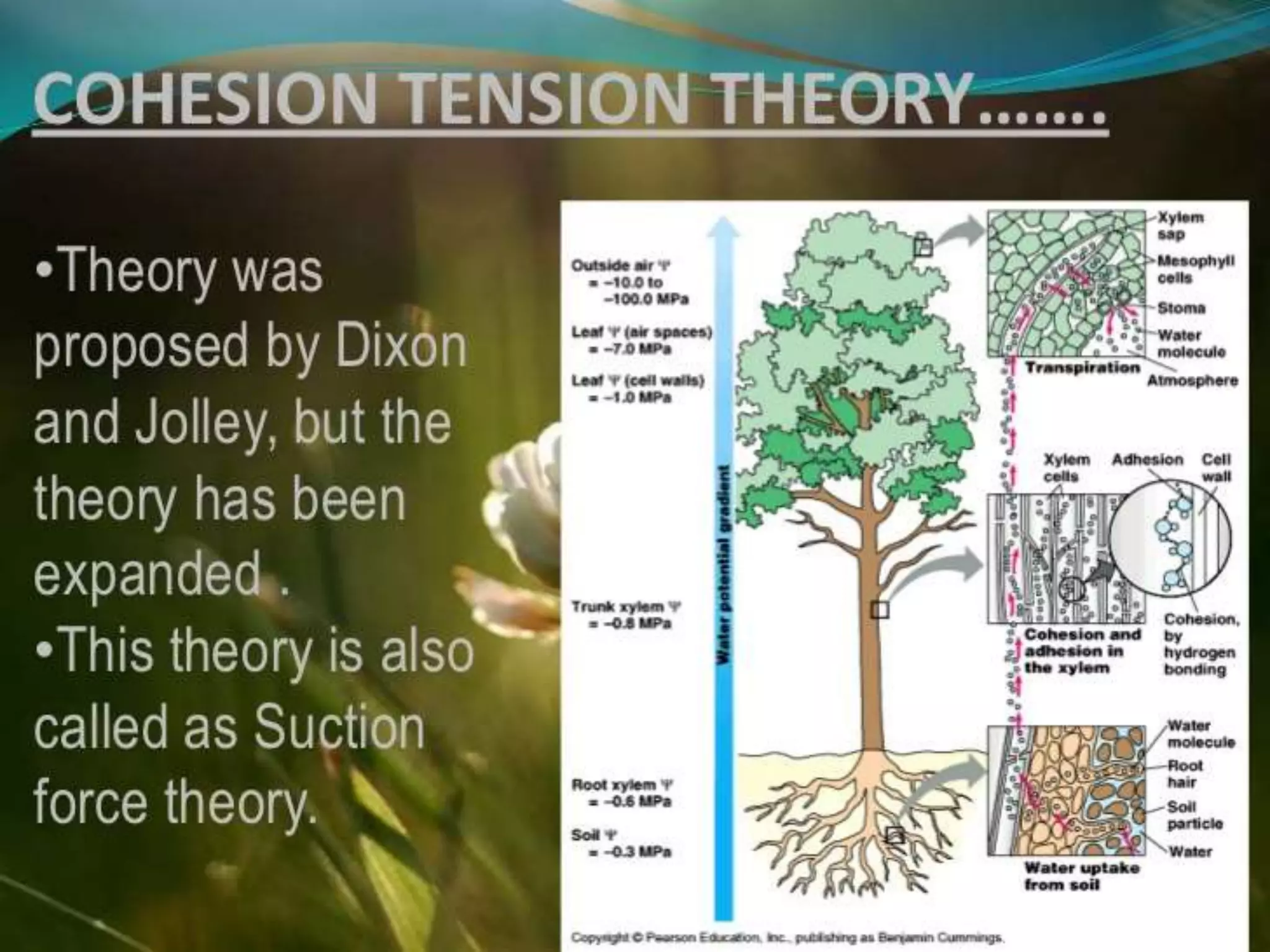
This theory was proposed by Dixon and
Jolley,
but in later years, the theory has been
expanded and modified to explain certain
observations that were not explained
before. Among the notable scientists who
supported this concept are Curtis and Clark
(1951), Krammar, Hamel and Levit. This
theory is also called as Suction force theory
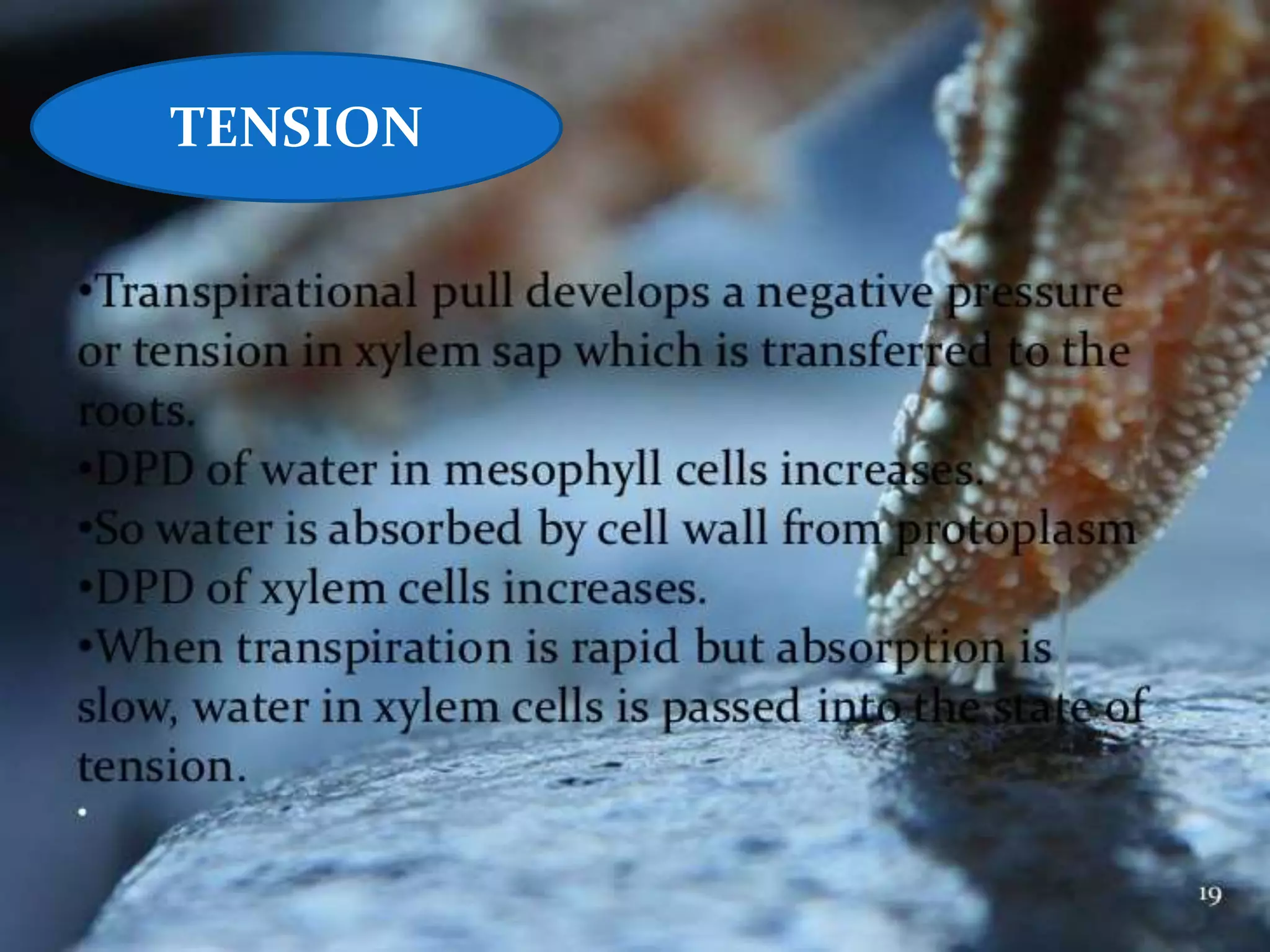
TENSION
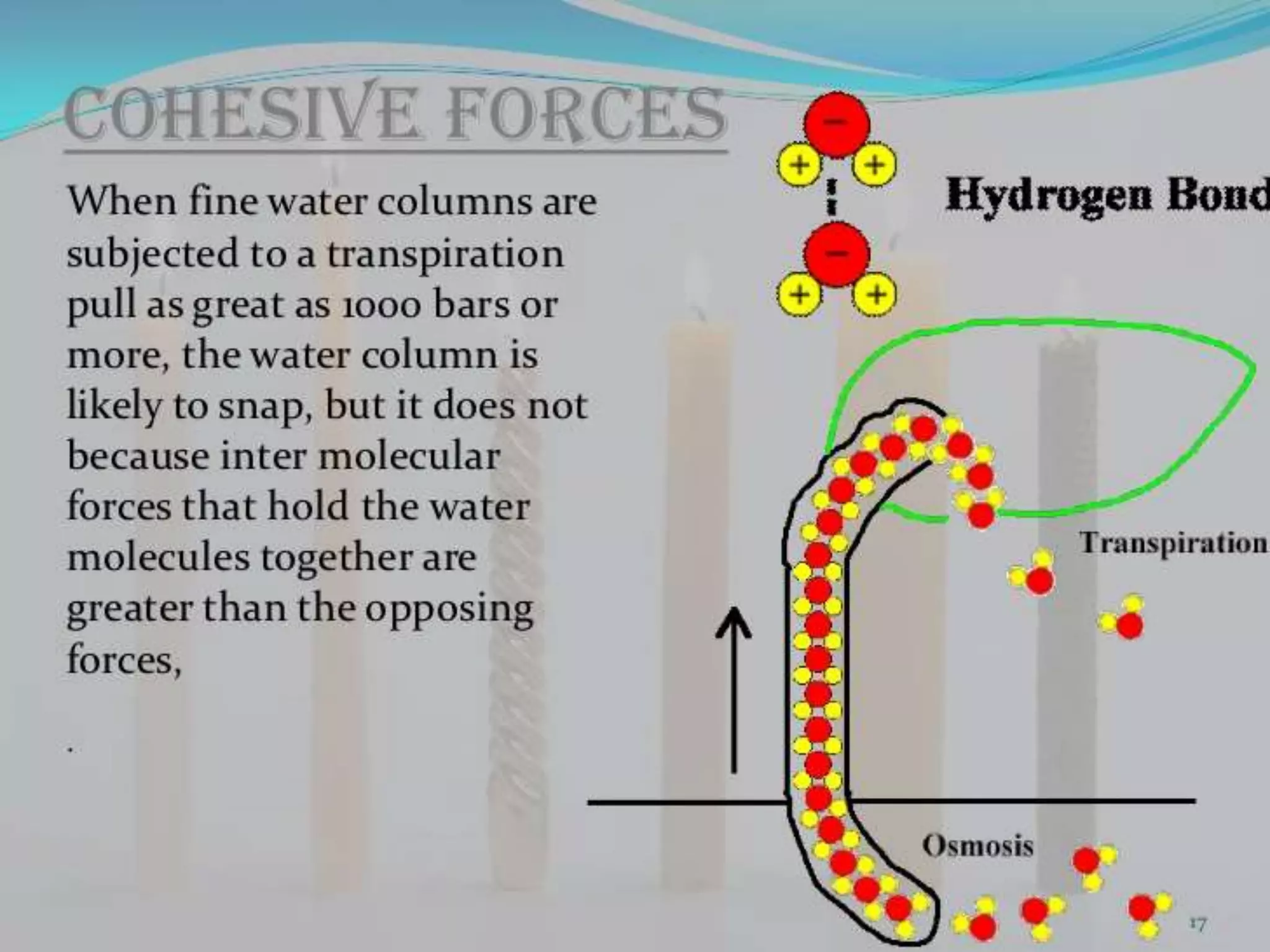
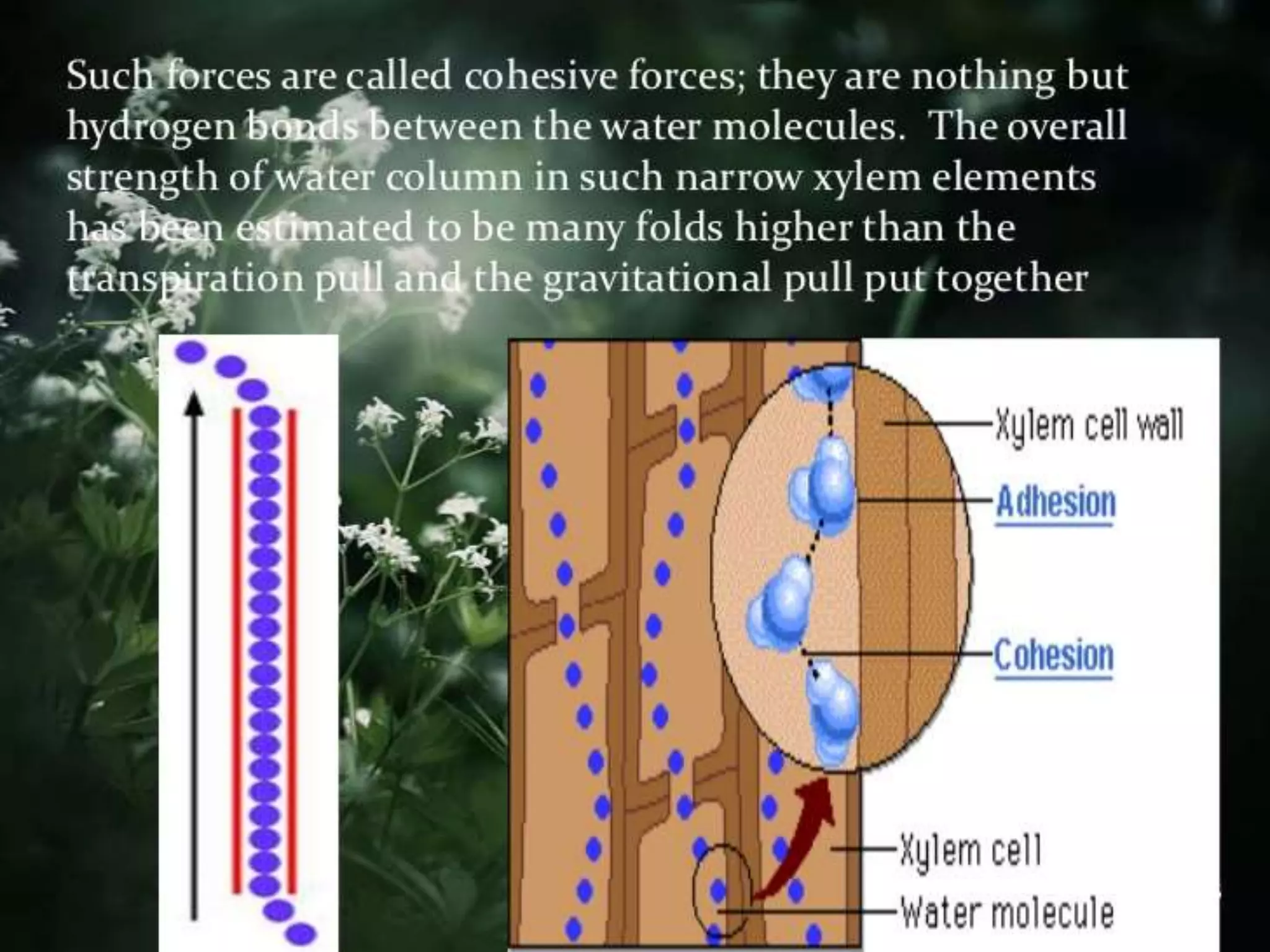
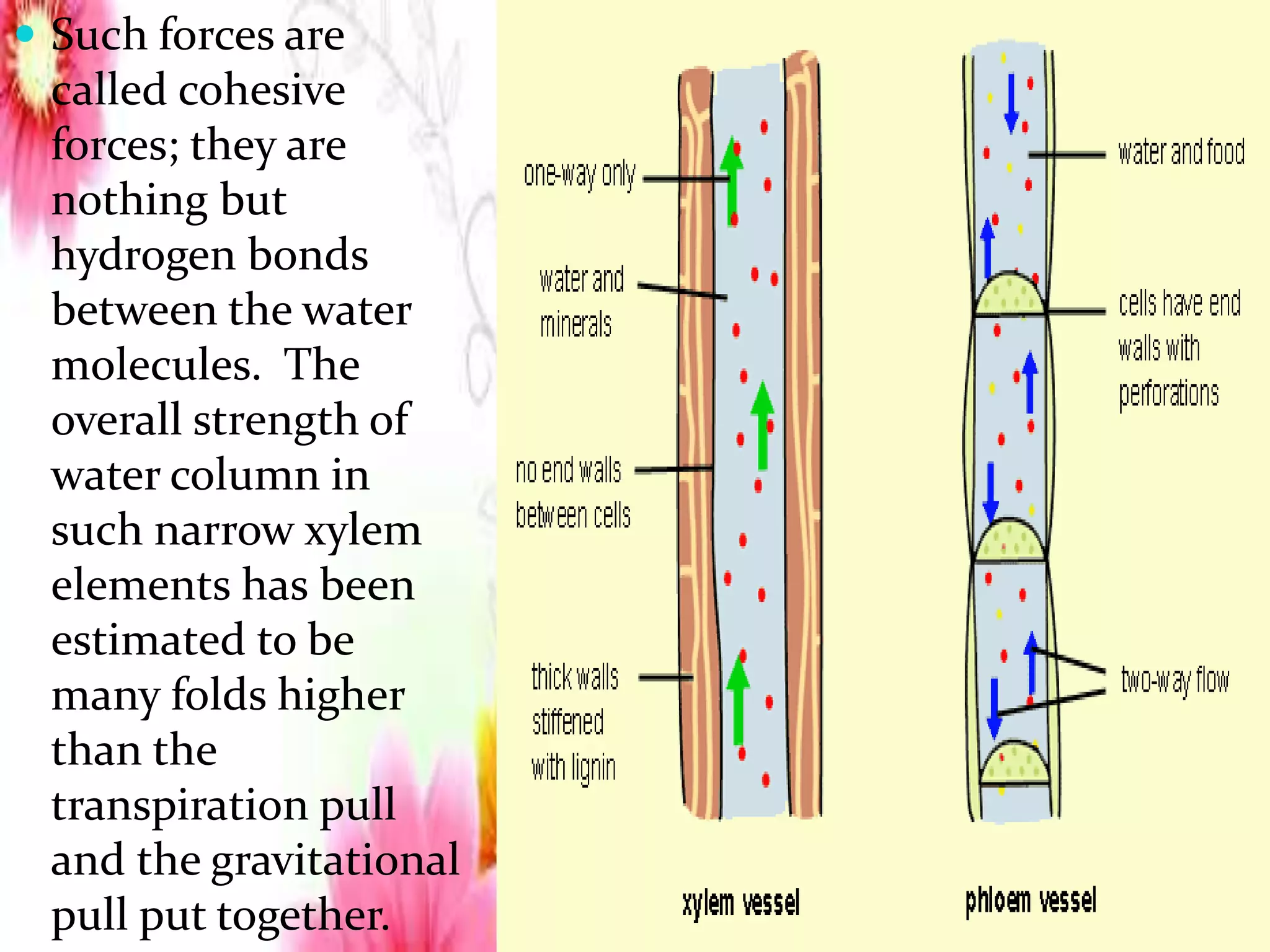
 Such forces are
called cohesive
forces; they are
nothing but
hydrogen bonds
between the water
molecules. The
overall strength of
water column in
such narrow xylem
elements has been
estimated to be
many folds higher
than the
transpiration pull
and the gravitational
pull put together.
EVIDENCE IN SUPPORT OF COHESION
TRANSPIRATION PULL THEORY
1. Transpiration pull developed in the aerial regions at 50% RH in
the air is more than 1000 bars.
2. Cohesive force that holds the water molecules in a column as
narrow as xylem vessels is very strong and they withstand the opposing
transpiration and gravitational pulls.
3. Because of the opposing forces, tension develops in the water
column. As a result, xylem elements become slightly narrow. This
results in the contraction and expansion of the stem which has been
demonstrated by using dendrometer. The diurnal behavior of rhythmic
contraction and expansion is a good evidence for the water column to
be in tension which the transpiration is rapid or not.
5. The forces that operate cohesion transpiration pull are just
passive forces and no metabolic energy is involved in this phenomenon,
because present the movement of water upwards.
Ascent of sap
Ascent of sap
Ascent of sap
Ascent of sap

Ascent of sap

  • 1.
  • 2.
    INTRODUCTION WHAT IS SAP?? ASCENT OF SAP MECHANISM OF ASCENT OF SAP STRUCTURES INVOLBED IN THE PROCESS OF ASCENT OF SAP THEORIES OF ASCENT OF SAP CONCLUSION
  • 3.
    SAP IS THEDIUTE SOLUTION OF WATER AND MINERAL IONS ABSORBED FROM SOIL WHICH MOVES UPWARD FROM ROOT TO VARIOUS PARTS OF PLANTS.
  • 4.
    What is ASCENTOF SAP ?? The upward movement of water from the root to aerial parts of the plant body is called ascent of sap or often called translocation of water. It is fascinating to understand how water moves in plants to such great heights such as 400 ft. or more. For example, trees like Sequoia semipervians are as tall as 300 to 400 ft. They are the 4000 yrs old and giants among the tree plants. These plants transport water through their stem must be incredible.
  • 9.
  • 10.
    The logic ofthe experiment is to find out which of the stem structures are involved in the transportation of sap, it may be cortical tissue, phloem or xylem elements, using a sharp blade; it is possible to put an incision in the stem till it reaches the hard part of the stem. Then a ring of tissue can be removed which consists of cortex and phloem, leaving behind the xylem elements intact. This experiment is to determine which of the stem components are used in the ascent of sap. However the removal of cortex and phloem by girdling experiment does not affect the movement of sap. Thus it can be concluded that xylem is alone responsible for the ascent of sap. GIRDLING EXPERIMENT
  • 17.
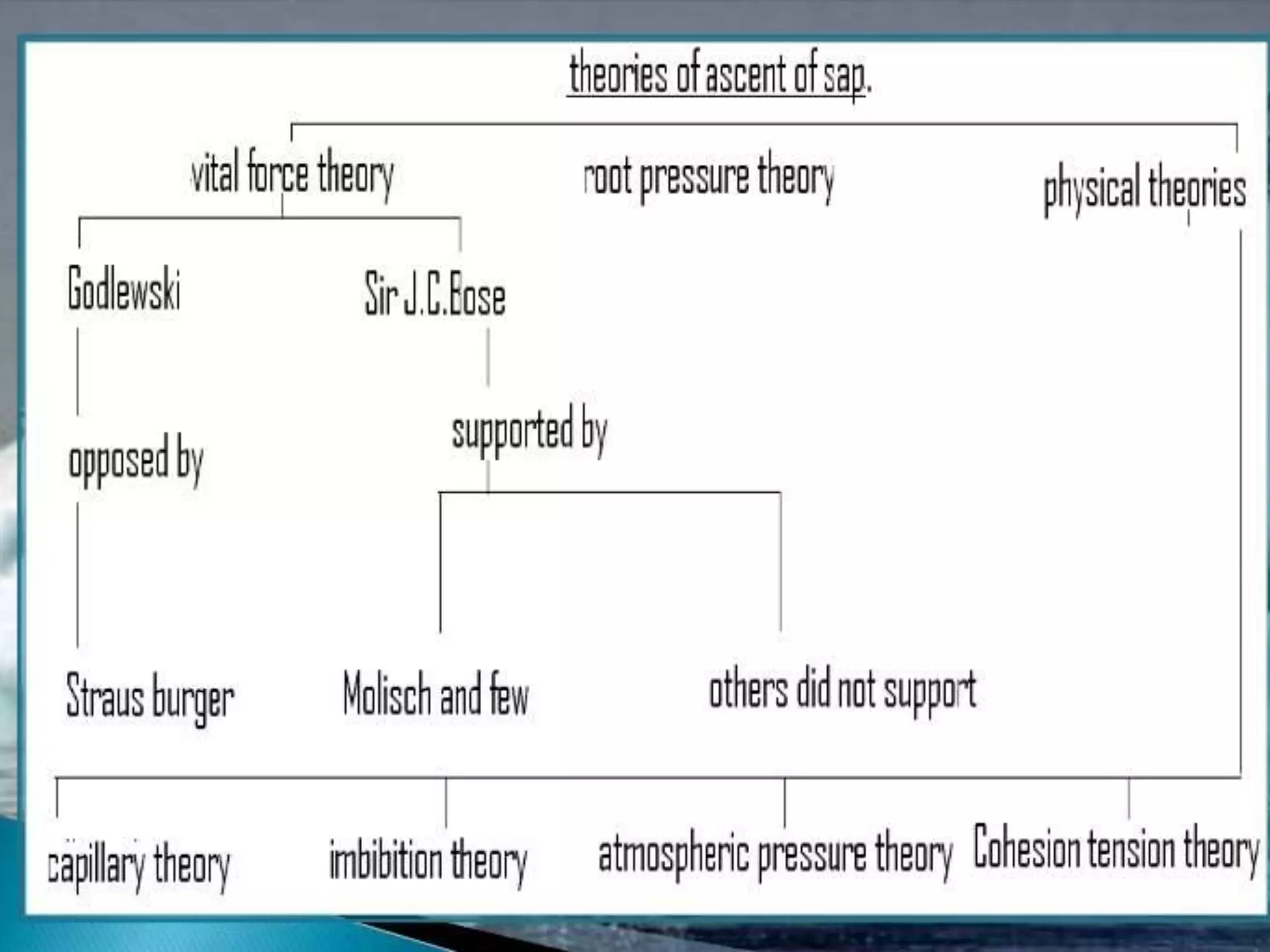
    VITAL FORCE THEORY GODLEWSKI RELAY PUMPTHEORY/ CLANBERING THEORY OPPOSED BY STRAUS BURGER PULSATION THEORY (J.C.BOSE) SUPPORTED BY MOLISCH OTHERS DID NOT SUPPORED
  • 18.
    VITAL FORCE THEORY Accordingto these theories the forces required for ascent Of sap are generated in living cells of plants. some of the important Vital foce theories are GODLEWSKI RELAY PUMPTHEORY AND PULSATIONTHEORY.
  • 22.
  • 25.
    COHESION TRANSPIRATION PULL MECHANISM Thistheory was proposed by Dixon and Jolley, but in later years, the theory has been expanded and modified to explain certain observations that were not explained before. Among the notable scientists who supported this concept are Curtis and Clark (1951), Krammar, Hamel and Levit. This theory is also called as Suction force theory
  • 26.
  • 29.
     Such forcesare called cohesive forces; they are nothing but hydrogen bonds between the water molecules. The overall strength of water column in such narrow xylem elements has been estimated to be many folds higher than the transpiration pull and the gravitational pull put together.
  • 30.
    EVIDENCE IN SUPPORTOF COHESION TRANSPIRATION PULL THEORY 1. Transpiration pull developed in the aerial regions at 50% RH in the air is more than 1000 bars. 2. Cohesive force that holds the water molecules in a column as narrow as xylem vessels is very strong and they withstand the opposing transpiration and gravitational pulls. 3. Because of the opposing forces, tension develops in the water column. As a result, xylem elements become slightly narrow. This results in the contraction and expansion of the stem which has been demonstrated by using dendrometer. The diurnal behavior of rhythmic contraction and expansion is a good evidence for the water column to be in tension which the transpiration is rapid or not. 5. The forces that operate cohesion transpiration pull are just passive forces and no metabolic energy is involved in this phenomenon, because present the movement of water upwards.