Transition
Class 3
PERSUASIVE ORAL
PRESENTATION
Hook your
audience!
Your opening will need to:
 Engage your audience.
 Establish your issue.
 Establish your contention.
 Establish your approach.
 Establish your overall tone.
So how can you hook an
audience?
 Start with a story.
 Start with a misdirect.
 Start with a joke.
 Start with a series of rhetorical questions.
 Start with a metaphor.
 Start with a shocking or provocative
statement.
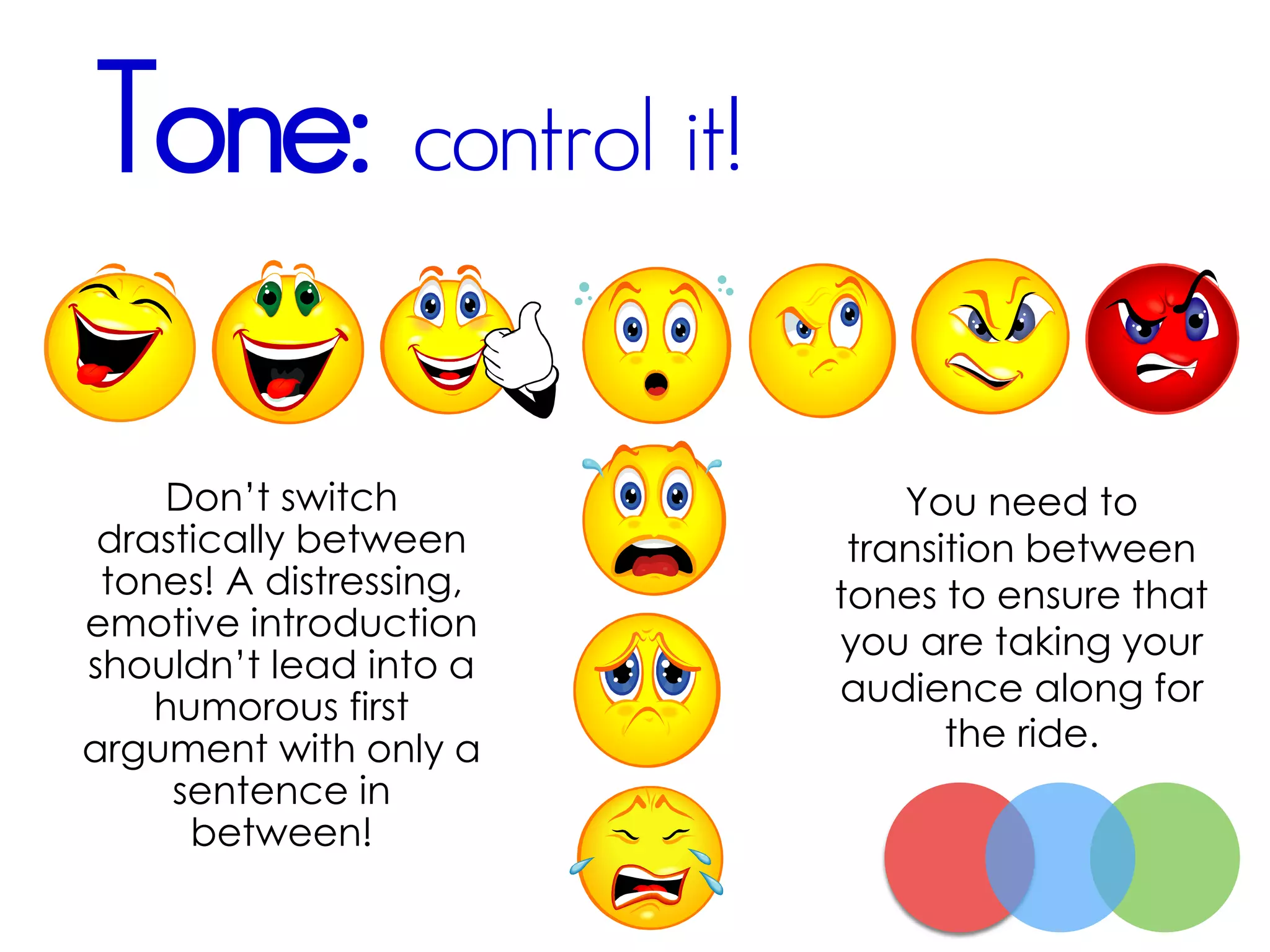
Tone: control it!
Don’t switch
drastically between
tones! A distressing,
emotive introduction
shouldn’t lead into a
humorous first
argument with only a
sentence in
between!
You need to
transition between
tones to ensure that
you are taking your
audience along for
the ride.
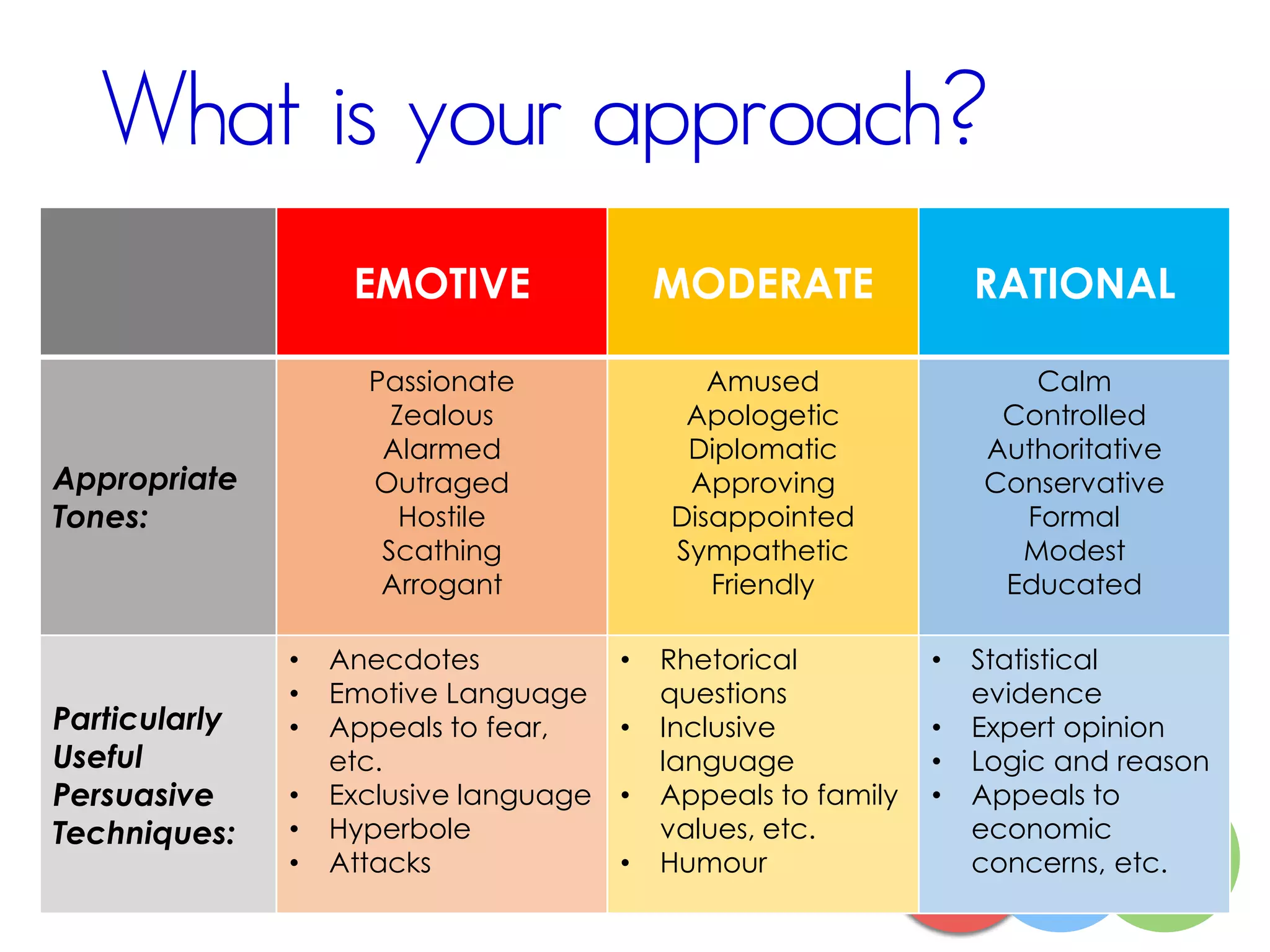
EMOTIVE MODERATE RATIONAL
Appropriate
Tones:
Passionate
Zealous
Alarmed
Outraged
Hostile
Scathing
Arrogant
Amused
Apologetic
Diplomatic
Approving
Disappointed
Sympathetic
Friendly
Calm
Controlled
Authoritative
Conservative
Formal
Modest
Educated
Particularly
Useful
Persuasive
Techniques:
• Anecdotes
• Emotive Language
• Appeals to fear,
etc.
• Exclusive language
• Hyperbole
• Attacks
• Rhetorical
questions
• Inclusive
language
• Appeals to family
values, etc.
• Humour
• Statistical
evidence
• Expert opinion
• Logic and reason
• Appeals to
economic
concerns, etc.
What is your approach?
Delivery
(it helps everything!)
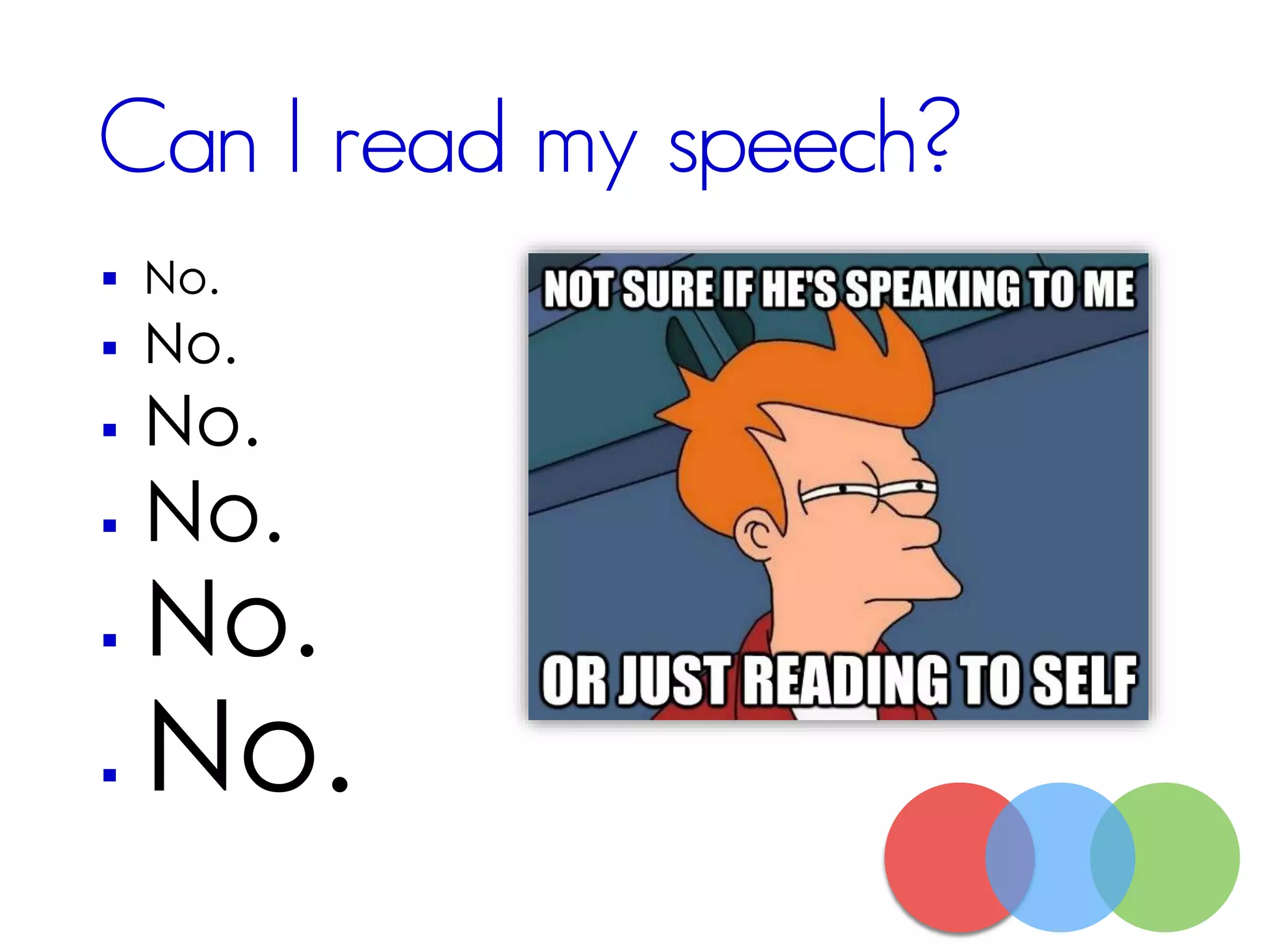
Can I read my speech?
 No.
 No.
 No.
 No.
 No.
 No.
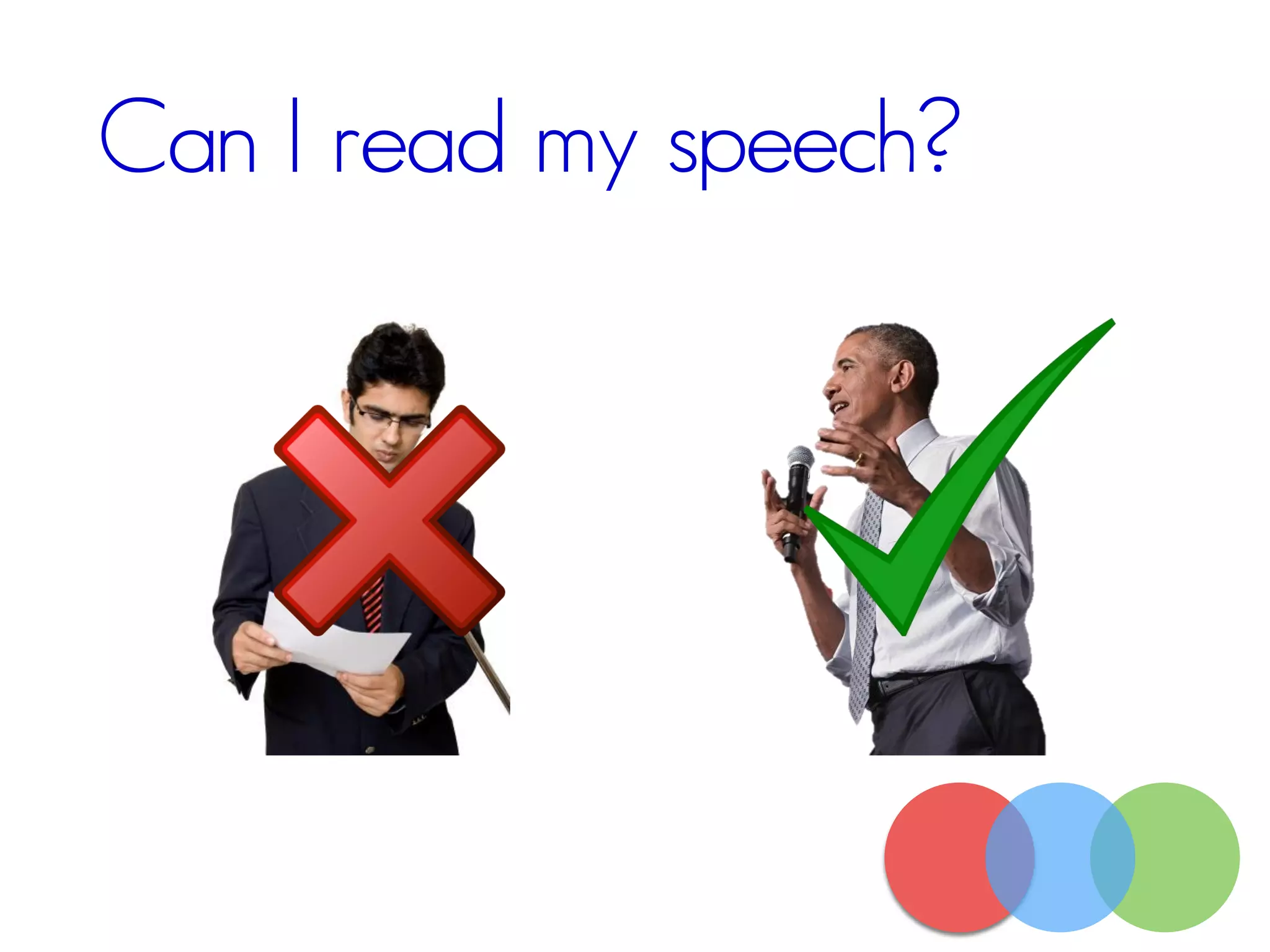
Can I read my speech?
Why not?
 Because it completely disengages your
audience.
 Because it kills your delivery.
 Because it destroys your structure.
 Because, if you don’t care enough about
what you’re saying to be able to memorise it
and look up at us, then don’t expect us to be
persuaded by you.
So what do I do?
 Try to memorise as much of your speech as
possible.
 Have cue cards, but use dot points only. They
are prompts (i.e. ‘cue’s’), not a script.
 Have palm cards that are discreet.
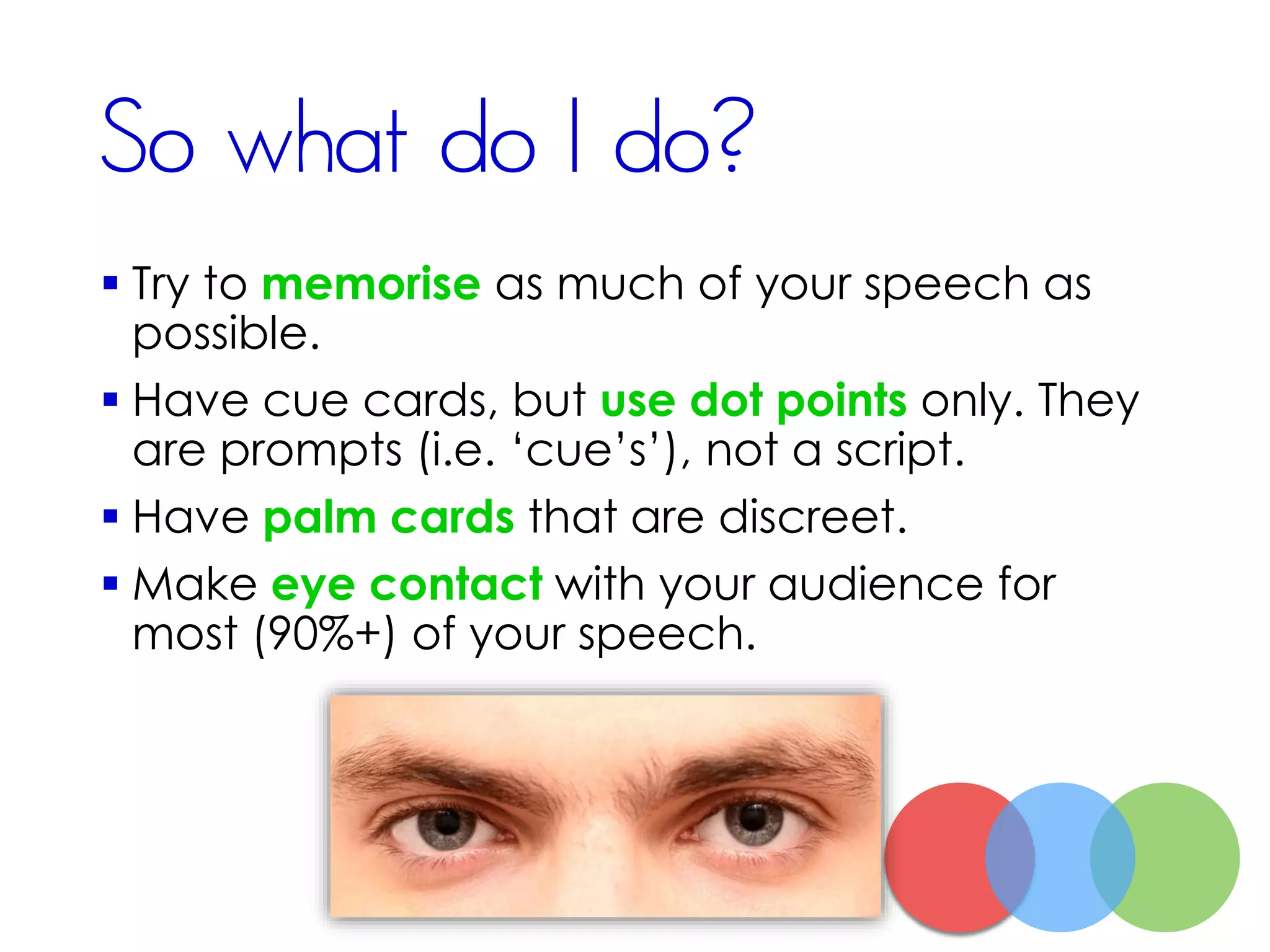
 Make eye contact with your audience for
most (90%+) of your speech.
Why do teachers keep going on
about eye contact?
 Eye contact isn’t the ‘holy grail’ that gives you
A+ delivery.
 Rather, it is an essential first step to unlocking
any sort of meaningful engagement with your
audience.
 Looking at your audience allows you to react
to them, and allows you to control things like
PACE, TONE, VOLUME, STANCE and HAND
GESTURES much more effectively.
So how do I improve my
delivery?
 Lots of rehearsal. LOTS.
 Practising in front of a mirror.
 Practising in front of an audience.
 Recording yourself and reviewing your
performance.
 Looking at high-quality examples of
delivery that you can emulate.
Always ask:
WHAT EFFECT WILL
THIS HAVE ON MY
AUDIENCE?
Remember:
TRY TO ESTABLISH THE
MEDIA CONTEXT OF
YOUR ISSUE EARLY ON.
Holiday Homework
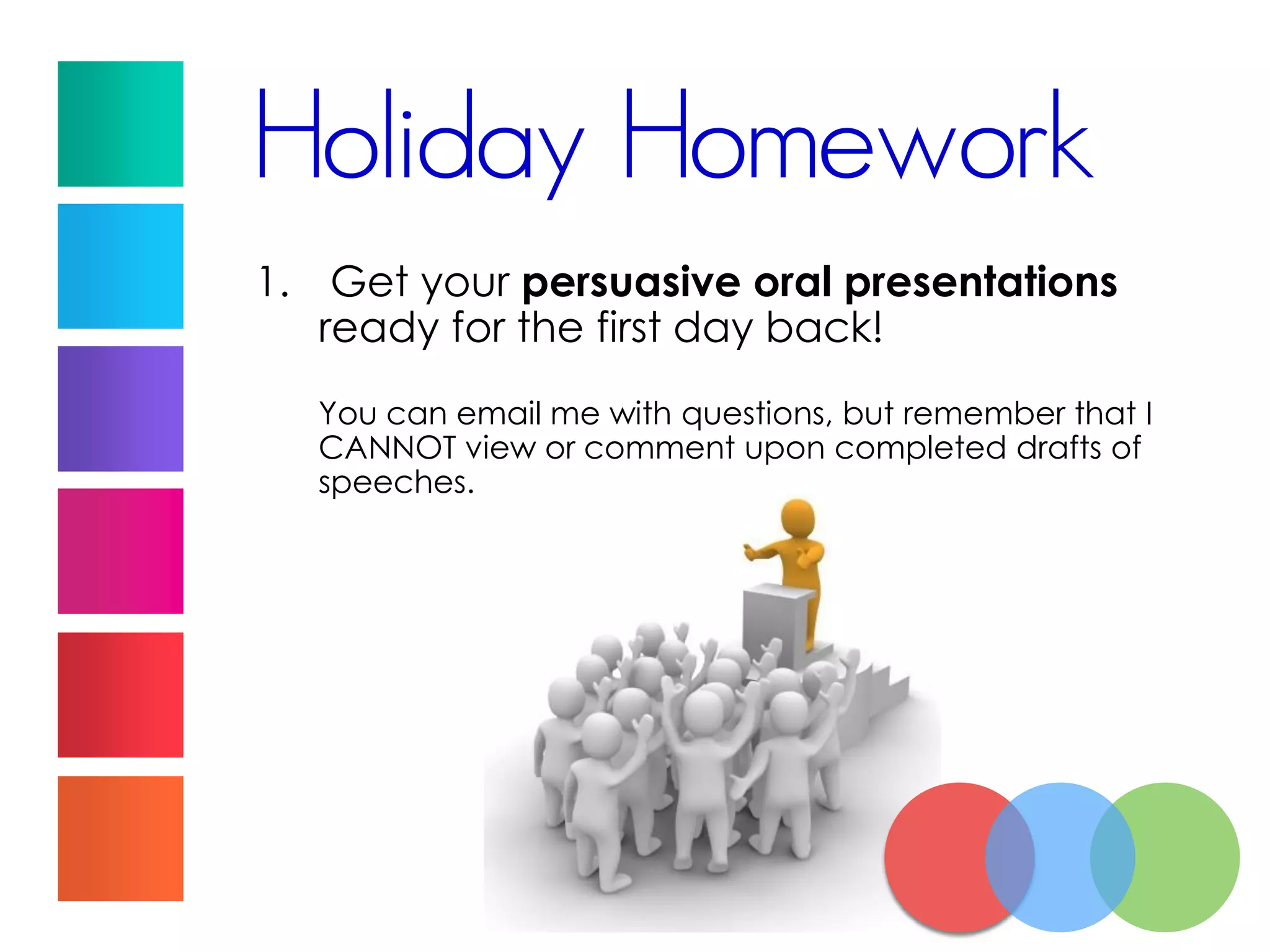
1. Get your persuasive oral presentations
ready for the first day back!
You can email me with questions, but remember that I
CANNOT view or comment upon completed drafts of
speeches.
Holiday Homework
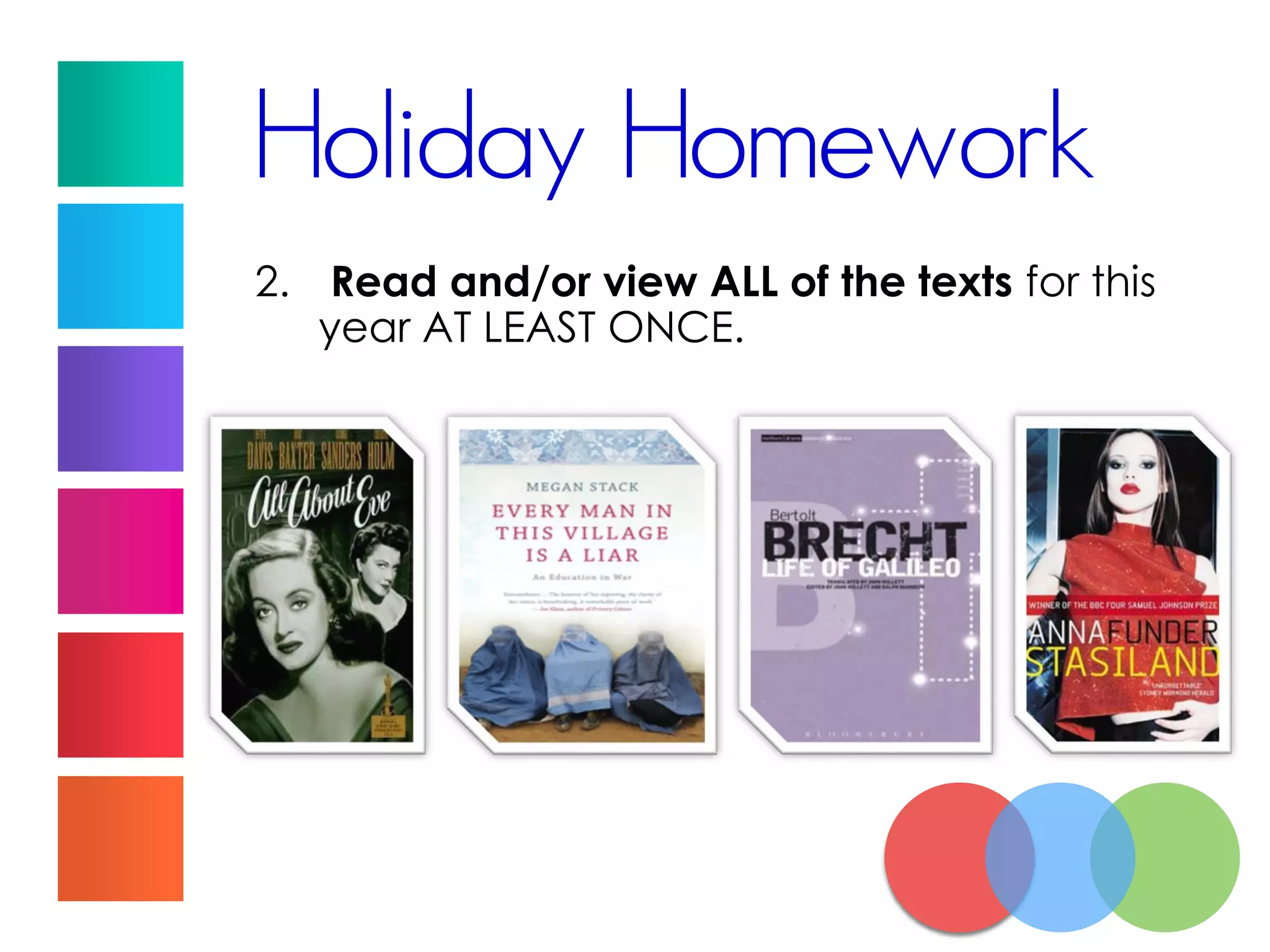
2. Read and/or view ALL of the texts for this
year AT LEAST ONCE.
Holiday Homework
3. Begin annotating your texts.
Holiday Homework
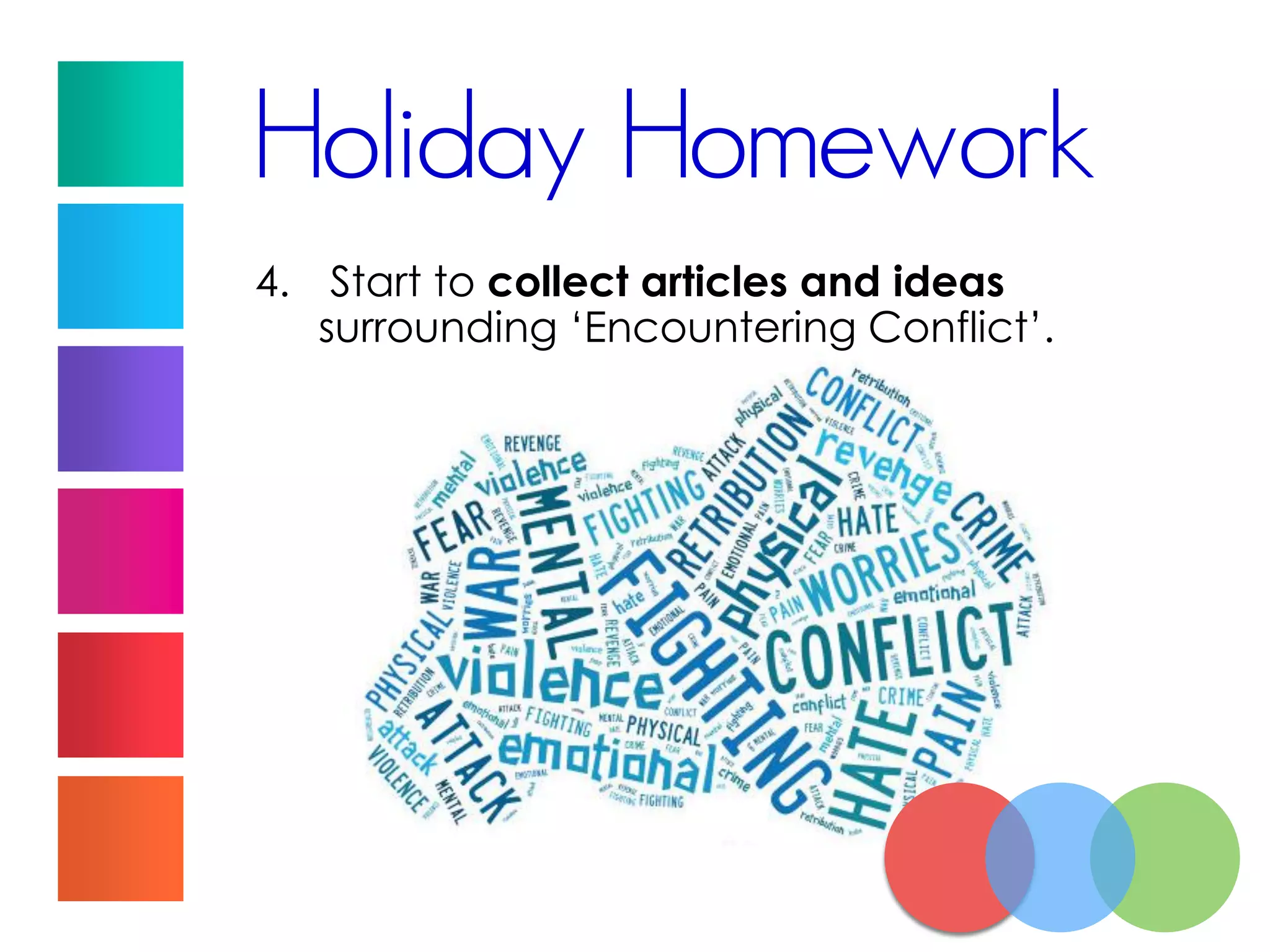
4. Start to collect articles and ideas
surrounding ‘Encountering Conflict’.

Transition Class 3

  • 1.
  • 2.
  • 3.
    Your opening willneed to:  Engage your audience.  Establish your issue.  Establish your contention.  Establish your approach.  Establish your overall tone.
  • 4.
    So how canyou hook an audience?  Start with a story.  Start with a misdirect.  Start with a joke.  Start with a series of rhetorical questions.  Start with a metaphor.  Start with a shocking or provocative statement.
  • 5.
    Tone: control it! Don’tswitch drastically between tones! A distressing, emotive introduction shouldn’t lead into a humorous first argument with only a sentence in between! You need to transition between tones to ensure that you are taking your audience along for the ride.
  • 6.
    EMOTIVE MODERATE RATIONAL Appropriate Tones: Passionate Zealous Alarmed Outraged Hostile Scathing Arrogant Amused Apologetic Diplomatic Approving Disappointed Sympathetic Friendly Calm Controlled Authoritative Conservative Formal Modest Educated Particularly Useful Persuasive Techniques: •Anecdotes • Emotive Language • Appeals to fear, etc. • Exclusive language • Hyperbole • Attacks • Rhetorical questions • Inclusive language • Appeals to family values, etc. • Humour • Statistical evidence • Expert opinion • Logic and reason • Appeals to economic concerns, etc. What is your approach?
  • 7.
  • 8.
    Can I readmy speech?  No.  No.  No.  No.  No.  No.
  • 9.
    Can I readmy speech?
  • 10.
    Why not?  Becauseit completely disengages your audience.  Because it kills your delivery.  Because it destroys your structure.  Because, if you don’t care enough about what you’re saying to be able to memorise it and look up at us, then don’t expect us to be persuaded by you.
  • 11.
    So what doI do?  Try to memorise as much of your speech as possible.  Have cue cards, but use dot points only. They are prompts (i.e. ‘cue’s’), not a script.  Have palm cards that are discreet.  Make eye contact with your audience for most (90%+) of your speech.
  • 12.
    Why do teacherskeep going on about eye contact?  Eye contact isn’t the ‘holy grail’ that gives you A+ delivery.  Rather, it is an essential first step to unlocking any sort of meaningful engagement with your audience.  Looking at your audience allows you to react to them, and allows you to control things like PACE, TONE, VOLUME, STANCE and HAND GESTURES much more effectively.
  • 13.
    So how doI improve my delivery?  Lots of rehearsal. LOTS.  Practising in front of a mirror.  Practising in front of an audience.  Recording yourself and reviewing your performance.  Looking at high-quality examples of delivery that you can emulate.
  • 14.
    Always ask: WHAT EFFECTWILL THIS HAVE ON MY AUDIENCE?
  • 15.
    Remember: TRY TO ESTABLISHTHE MEDIA CONTEXT OF YOUR ISSUE EARLY ON.
  • 16.
    Holiday Homework 1. Getyour persuasive oral presentations ready for the first day back! You can email me with questions, but remember that I CANNOT view or comment upon completed drafts of speeches.
  • 17.
    Holiday Homework 2. Readand/or view ALL of the texts for this year AT LEAST ONCE.
  • 18.
    Holiday Homework 3. Beginannotating your texts.
  • 19.
    Holiday Homework 4. Startto collect articles and ideas surrounding ‘Encountering Conflict’.