Transition
Class 2
PERSUASIVE ORAL
PRESENTATION
Persuasive
Techniques...
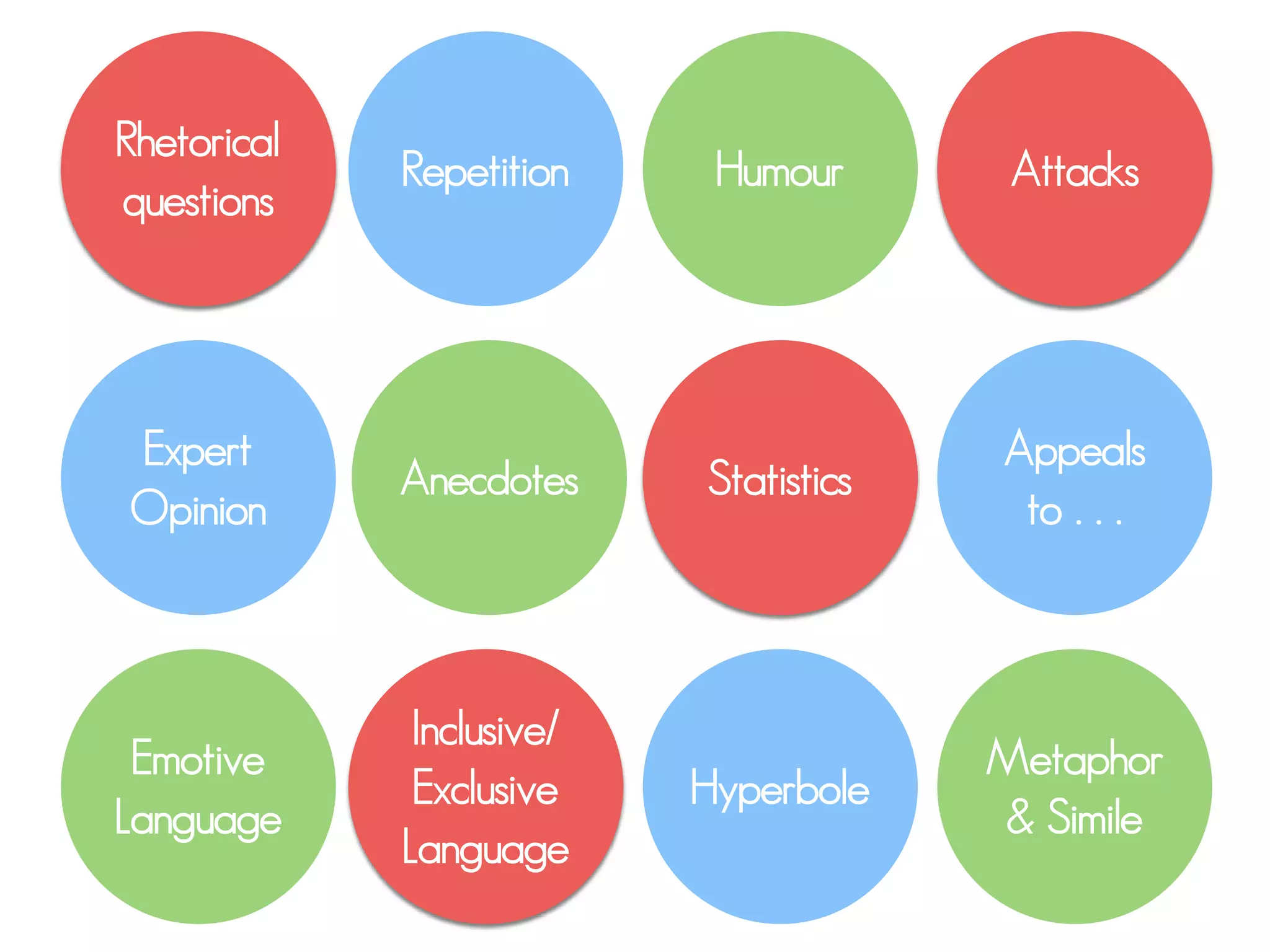
Rhetorical
questions
Anecdotes
Repetition
Statistics
Humour
Expert
Opinion
Emotive
Language
Inclusive/
Exclusive
Language
Hyperbole
Attacks
Metaphor
& Simile
Appeals
to . . .
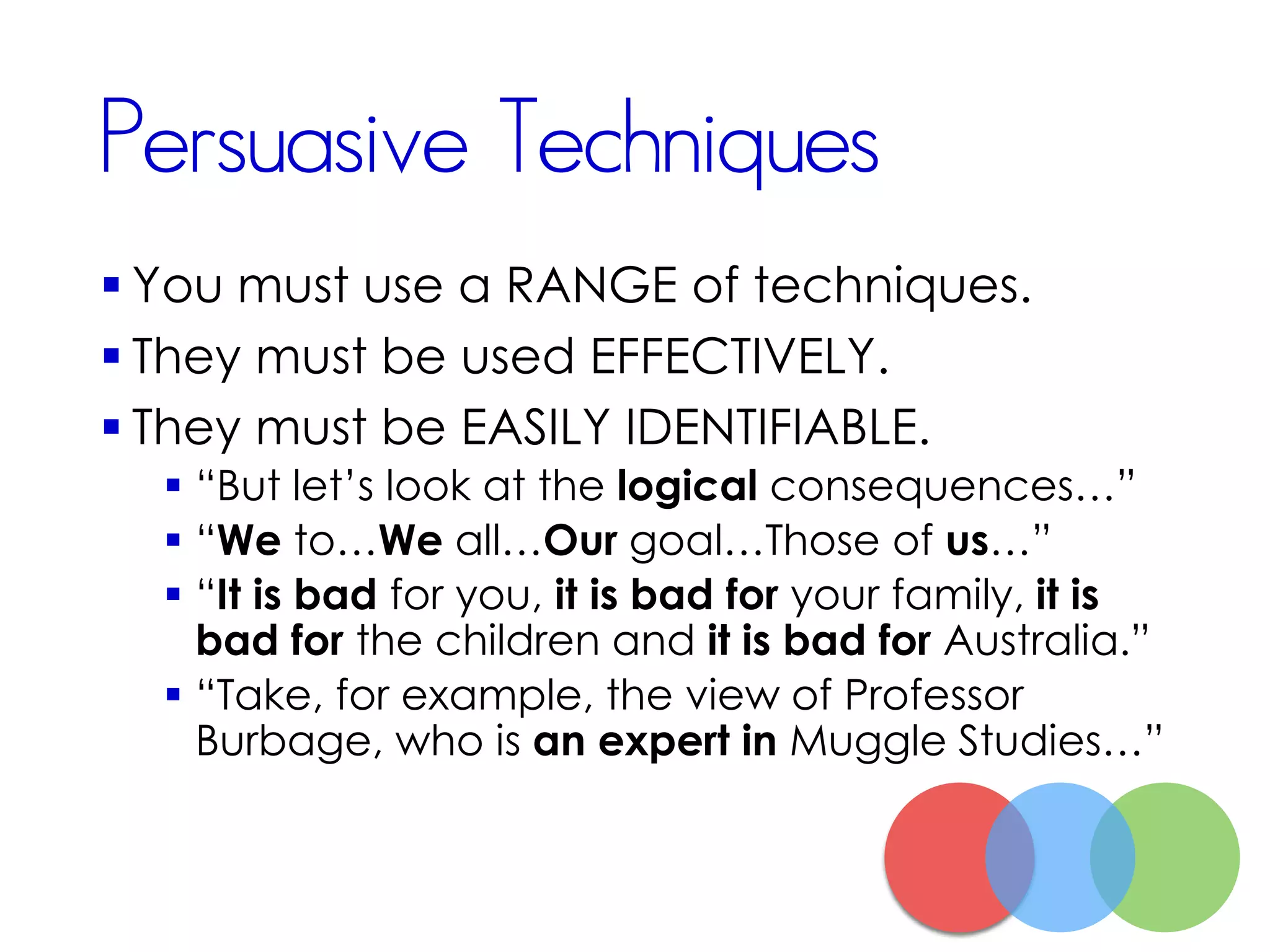
Persuasive Techniques
 You must use a RANGE of techniques.
 They must be used EFFECTIVELY.
 They must be EASILY IDENTIFIABLE.
 “But let’s look at the logical consequences…”
 “We to…We all…Our goal…Those of us…”
 “It is bad for you, it is bad for your family, it is
bad for the children and it is bad for Australia.”
 “Take, for example, the view of Professor
Burbage, who is an expert in Muggle Studies…”
Structure of an
(oral) Argument
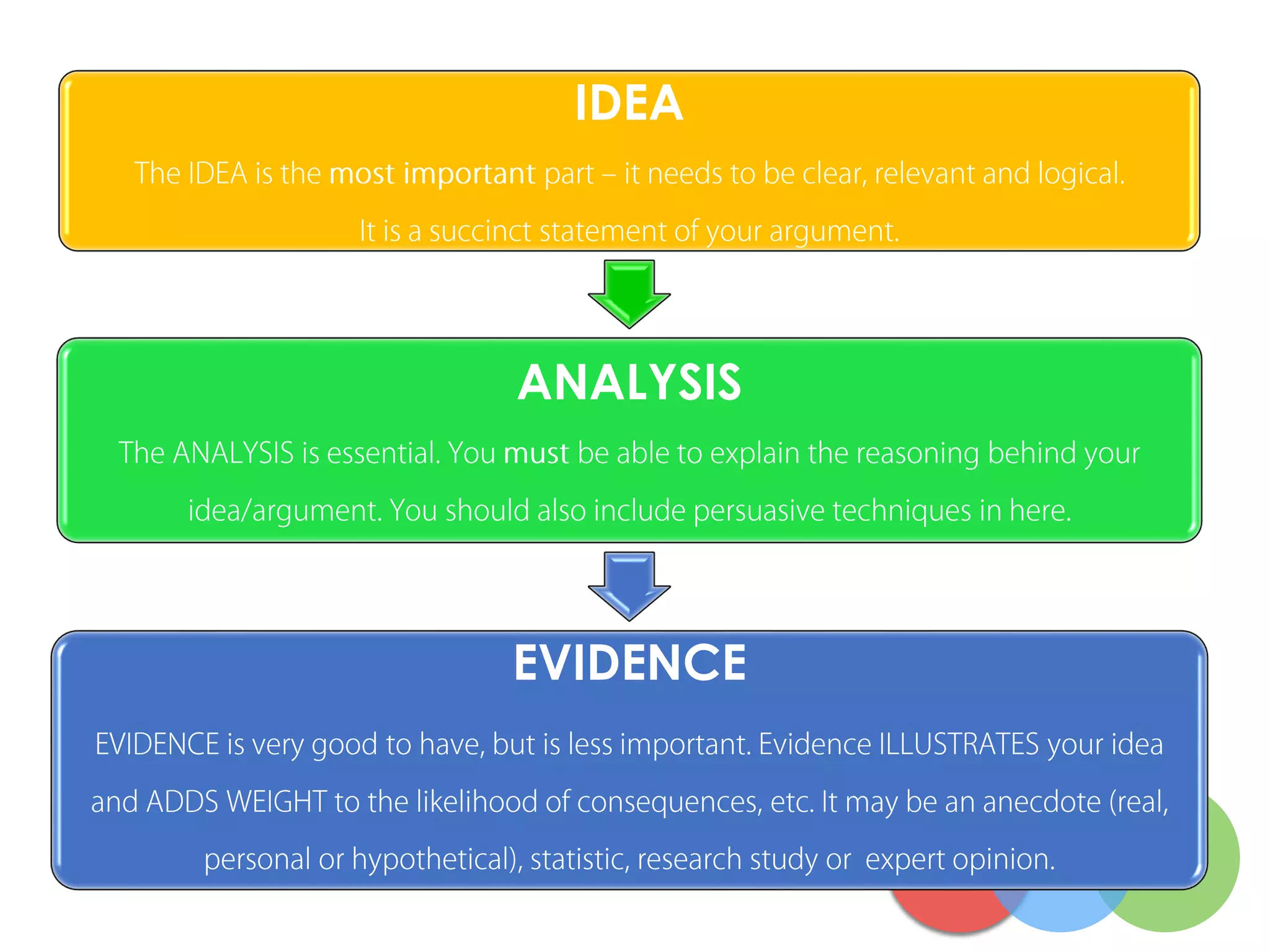
IDEA
ANALYSIS
EVIDENCE
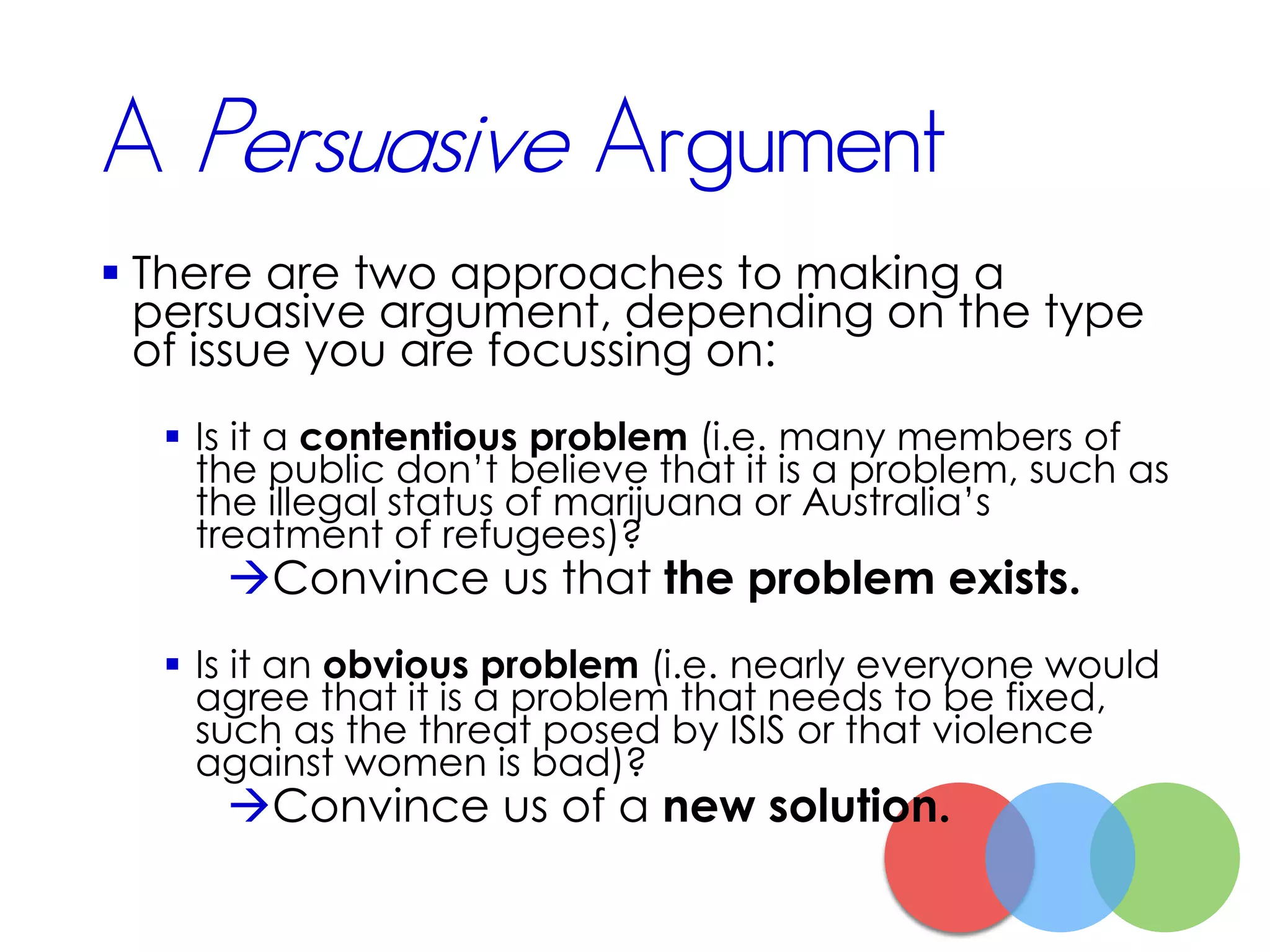
A Persuasive Argument
 There are two approaches to making a
persuasive argument, depending on the type
of issue you are focussing on:
 Is it a contentious problem (i.e. many members of
the public don’t believe that it is a problem, such as
the illegal status of marijuana or Australia’s
treatment of refugees)?
Convince us that the problem exists.
 Is it an obvious problem (i.e. nearly everyone would
agree that it is a problem that needs to be fixed,
such as the threat posed by ISIS or that violence
against women is bad)?
Convince us of a new solution.
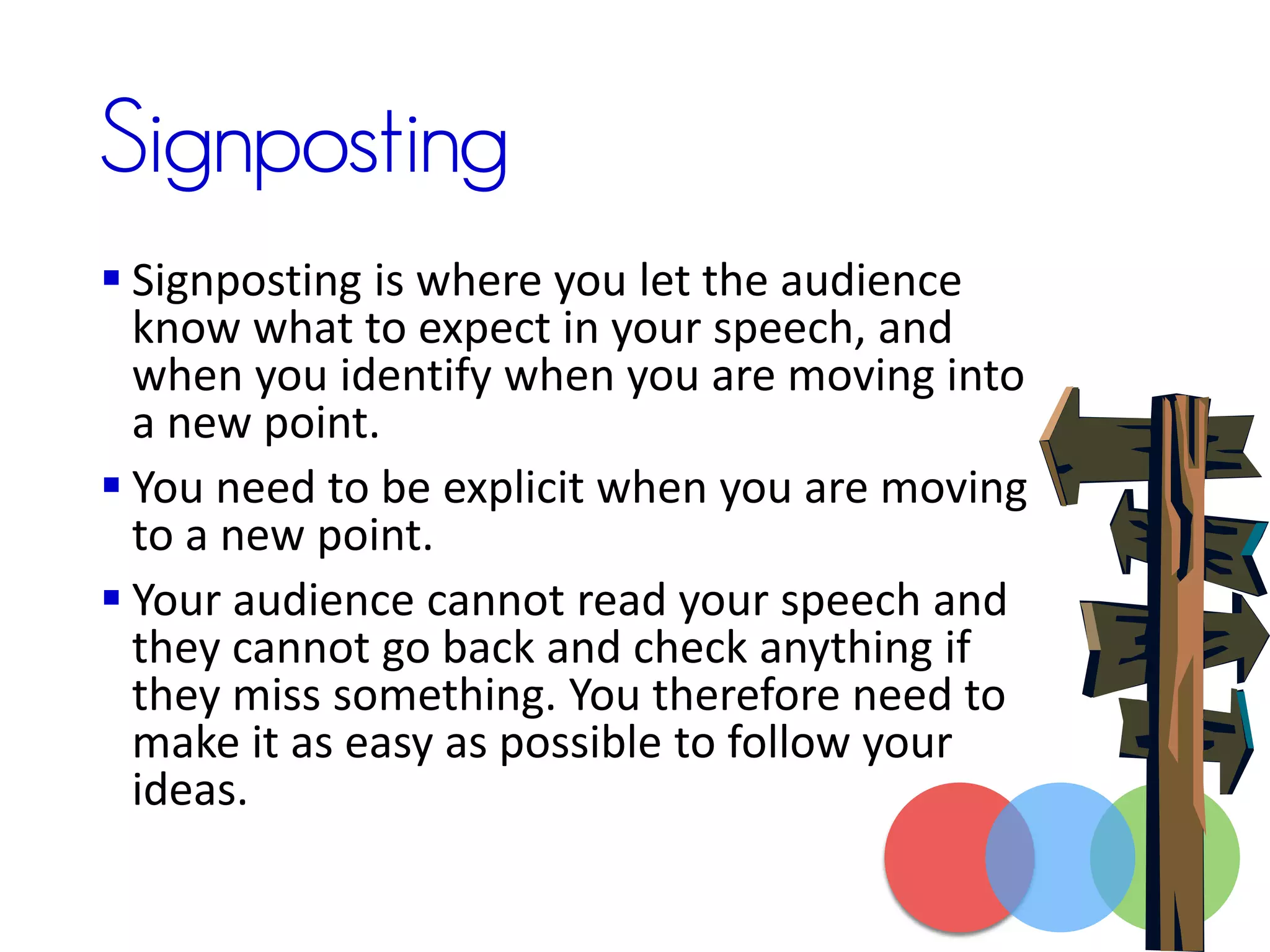
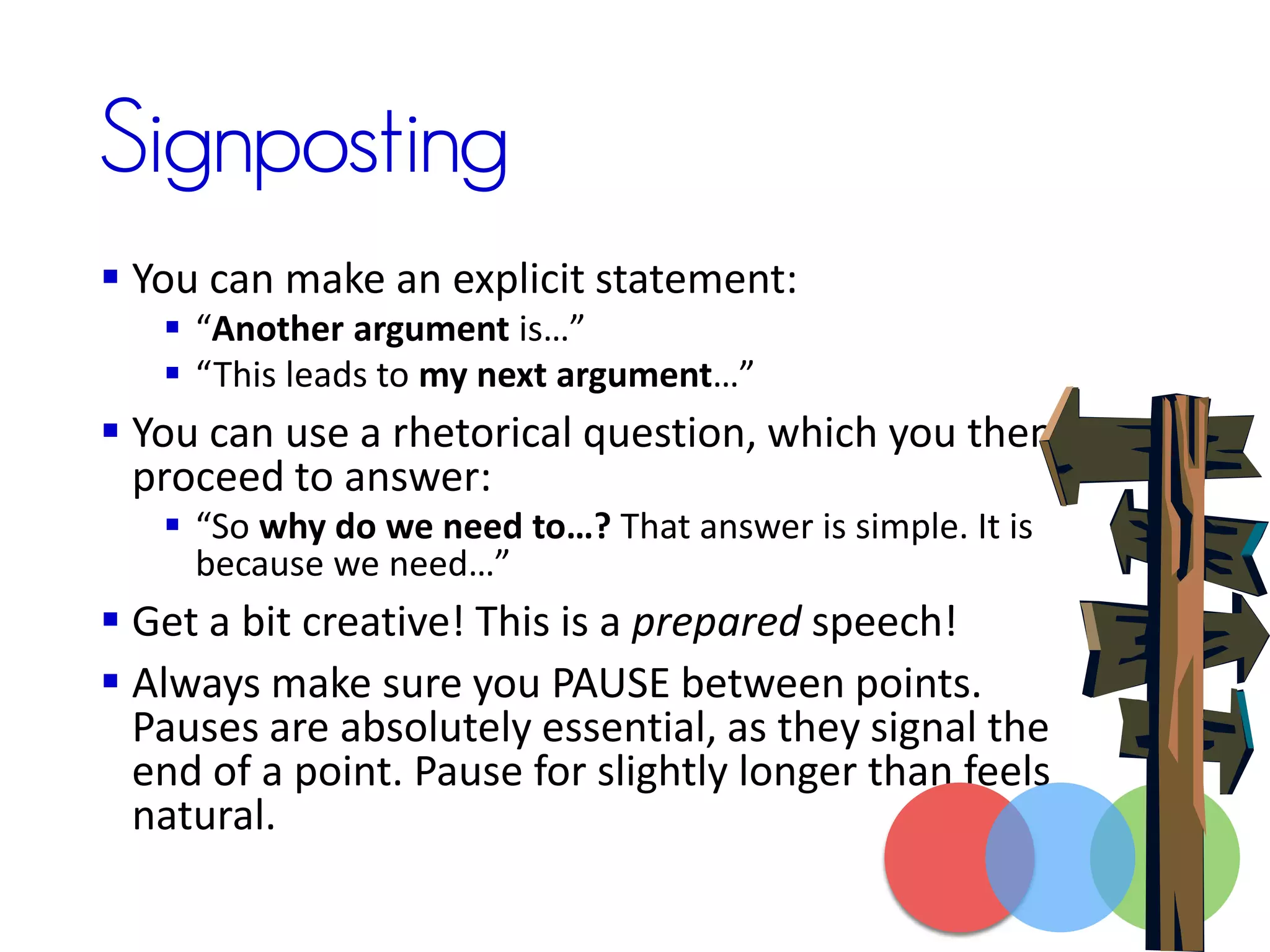
Signposting
 Signposting is where you let the audience
know what to expect in your speech, and
when you identify when you are moving into
a new point.
 You need to be explicit when you are moving
to a new point.
 Your audience cannot read your speech and
they cannot go back and check anything if
they miss something. You therefore need to
make it as easy as possible to follow your
ideas.
Signposting
 You can make an explicit statement:
 “Another argument is…”
 “This leads to my next argument…”
 You can use a rhetorical question, which you then
proceed to answer:
 “So why do we need to…? That answer is simple. It is
because we need…”
 Get a bit creative! This is a prepared speech!
 Always make sure you PAUSE between points.
Pauses are absolutely essential, as they signal the
end of a point. Pause for slightly longer than feels
natural.
Rebuttal
Arguments
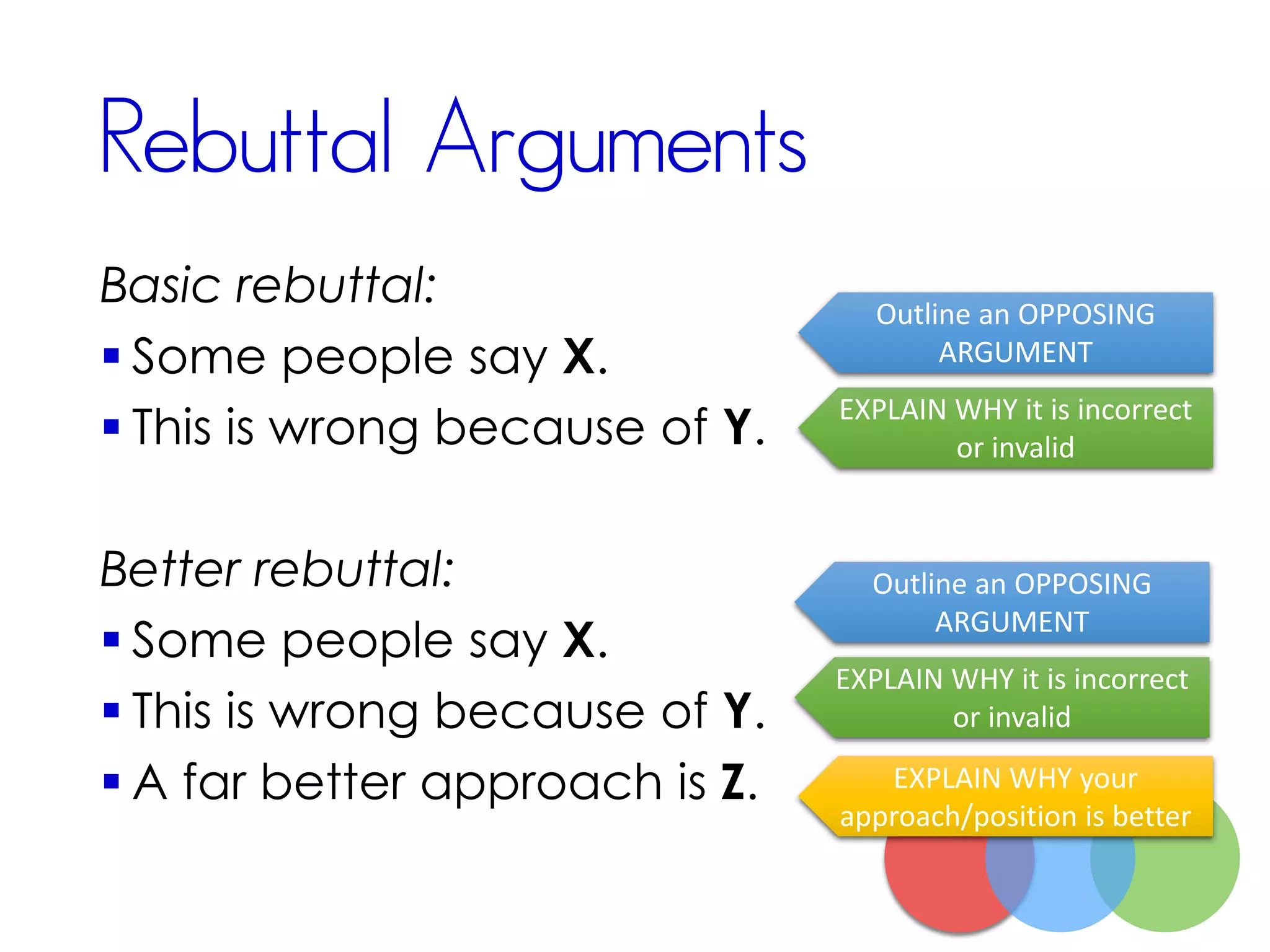
Rebuttal Arguments
Basic rebuttal:
 Some people say X.
 This is wrong because of Y.
Better rebuttal:
 Some people say X.
 This is wrong because of Y.
 A far better approach is Z.
Outline an OPPOSING
ARGUMENT
EXPLAIN WHY it is incorrect
or invalid
EXPLAIN WHY your
approach/position is better
Outline an OPPOSING
ARGUMENT
EXPLAIN WHY it is incorrect
or invalid
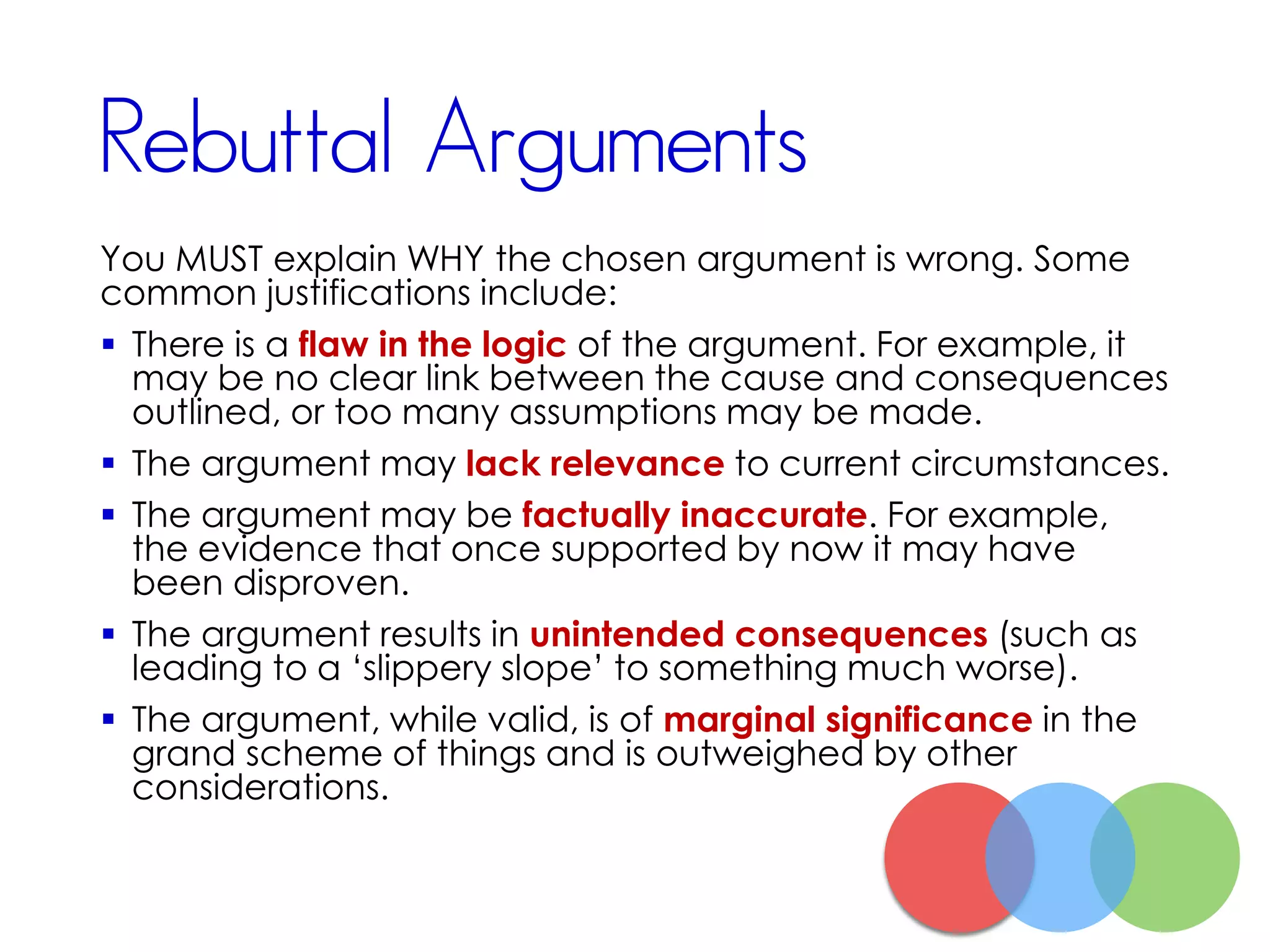
Rebuttal Arguments
You MUST explain WHY the chosen argument is wrong. Some
common justifications include:
 There is a flaw in the logic of the argument. For example, it
may be no clear link between the cause and consequences
outlined, or too many assumptions may be made.
 The argument may lack relevance to current circumstances.
 The argument may be factually inaccurate. For example,
the evidence that once supported by now it may have
been disproven.
 The argument results in unintended consequences (such as
leading to a ‘slippery slope’ to something much worse).
 The argument, while valid, is of marginal significance in the
grand scheme of things and is outweighed by other
considerations.
Ending a
Speech
Basic Approaches...
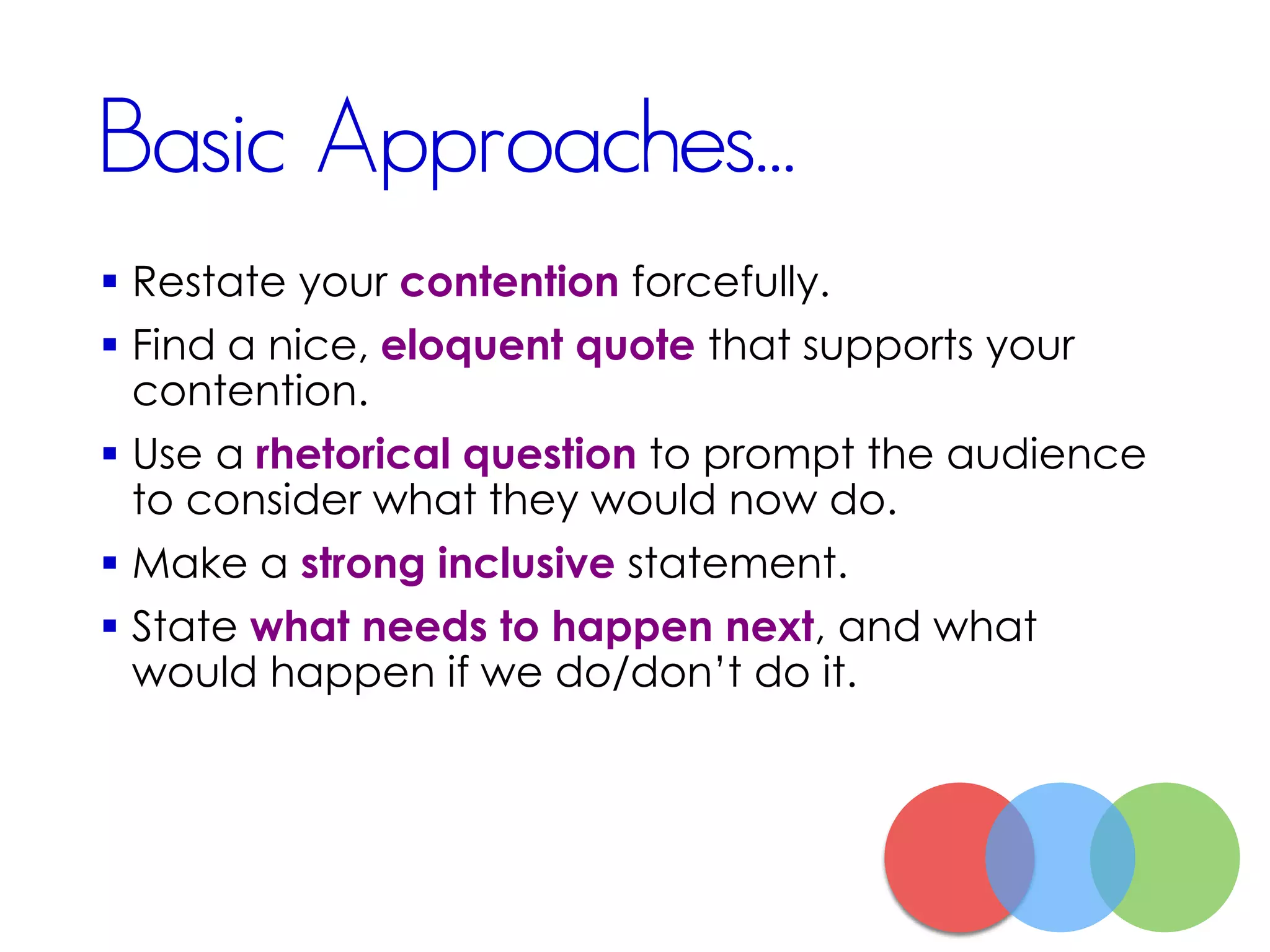
 Restate your contention forcefully.
 Find a nice, eloquent quote that supports your
contention.
 Use a rhetorical question to prompt the audience
to consider what they would now do.
 Make a strong inclusive statement.
 State what needs to happen next, and what
would happen if we do/don’t do it.
Add a bit of ‘wow’...
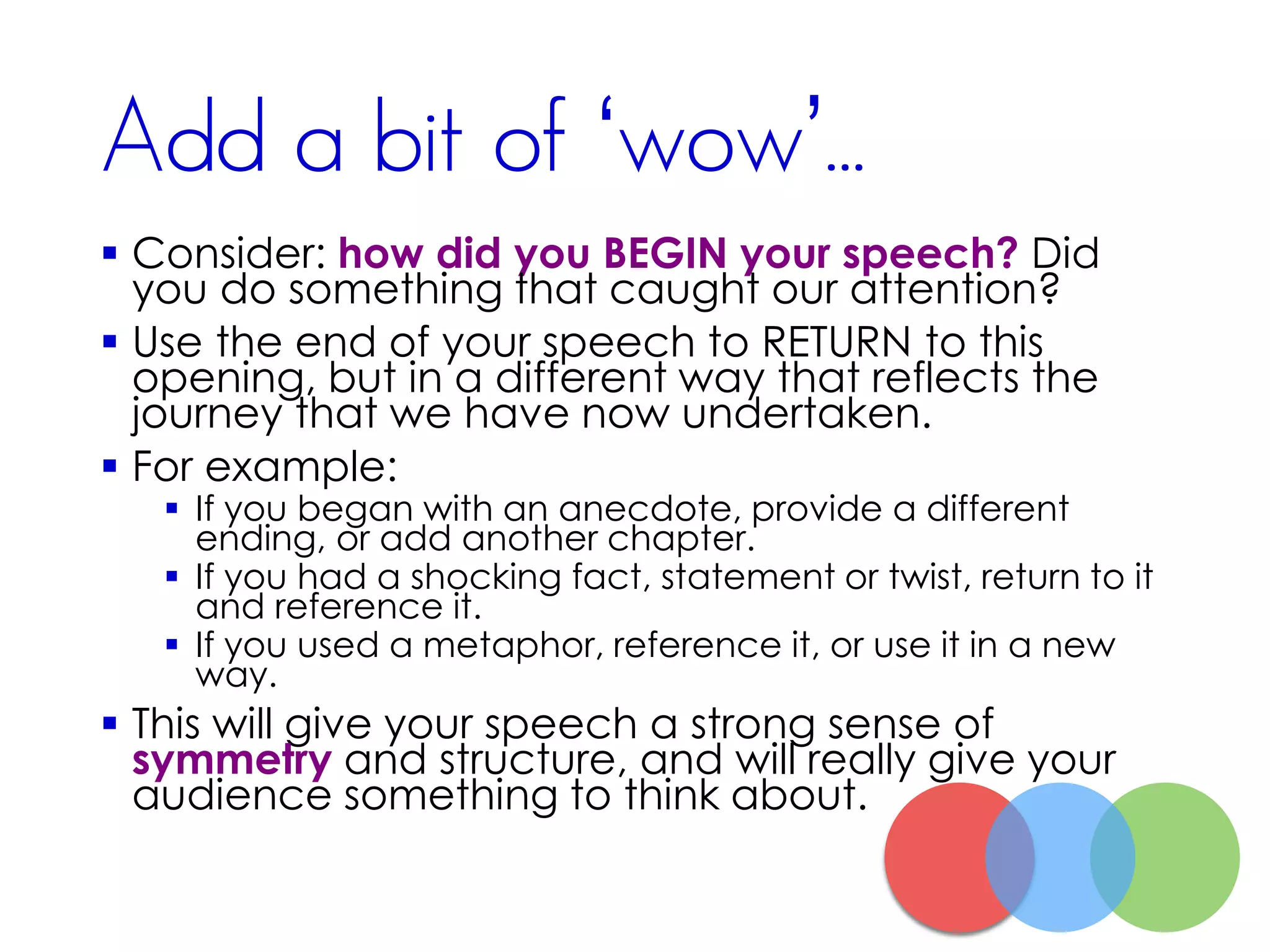
 Consider: how did you BEGIN your speech? Did
you do something that caught our attention?
 Use the end of your speech to RETURN to this
opening, but in a different way that reflects the
journey that we have now undertaken.
 For example:
 If you began with an anecdote, provide a different
ending, or add another chapter.
 If you had a shocking fact, statement or twist, return to it
and reference it.
 If you used a metaphor, reference it, or use it in a new
way.
 This will give your speech a strong sense of
symmetry and structure, and will really give your
audience something to think about.
Useful Resources:
Debating and Public Speaking Page:
learn.stleonards.vic.edu.au/debating/
STL Link  Cocurriculum  Debating
• The Elements of Good Delivery
• Hooking your Audience
• Rebuttal
• Matter (basic argument construction)
• Manner (basic delivery)
• Look at examples of high-quality speeches!
Useful Resources:
Don’t forget the blog:
learn.stleonards.vic.edu.au/vceeng/
category/mr-mcdonald/
STL Link  VCE English Class Notes  Mr McDonald
• All my resources from 2015, including information
on persuasive devices, speech structure, examples
of speeches, delivery notes, etc., has been re-
uploaded so you can access them.
For next class:
1. Research and plan your speech using
the planning sheet.
2. Have your CONTENTION, ARGUMENTS
and fair amount of your EVIDENCE
completed in an appropriate amount of
detail.
3. Be prepared to hand in your planning
sheets by the end of the class.
NOTE: this is the only opportunity to get
feedback on this Assessment Task!

Transition Class 2

  • 1.
  • 2.
  • 3.
  • 4.
    Persuasive Techniques  Youmust use a RANGE of techniques.  They must be used EFFECTIVELY.  They must be EASILY IDENTIFIABLE.  “But let’s look at the logical consequences…”  “We to…We all…Our goal…Those of us…”  “It is bad for you, it is bad for your family, it is bad for the children and it is bad for Australia.”  “Take, for example, the view of Professor Burbage, who is an expert in Muggle Studies…”
  • 5.
  • 6.
  • 7.
    A Persuasive Argument There are two approaches to making a persuasive argument, depending on the type of issue you are focussing on:  Is it a contentious problem (i.e. many members of the public don’t believe that it is a problem, such as the illegal status of marijuana or Australia’s treatment of refugees)? Convince us that the problem exists.  Is it an obvious problem (i.e. nearly everyone would agree that it is a problem that needs to be fixed, such as the threat posed by ISIS or that violence against women is bad)? Convince us of a new solution.
  • 8.
    Signposting  Signposting iswhere you let the audience know what to expect in your speech, and when you identify when you are moving into a new point.  You need to be explicit when you are moving to a new point.  Your audience cannot read your speech and they cannot go back and check anything if they miss something. You therefore need to make it as easy as possible to follow your ideas.
  • 9.
    Signposting  You canmake an explicit statement:  “Another argument is…”  “This leads to my next argument…”  You can use a rhetorical question, which you then proceed to answer:  “So why do we need to…? That answer is simple. It is because we need…”  Get a bit creative! This is a prepared speech!  Always make sure you PAUSE between points. Pauses are absolutely essential, as they signal the end of a point. Pause for slightly longer than feels natural.
  • 10.
  • 11.
    Rebuttal Arguments Basic rebuttal: Some people say X.  This is wrong because of Y. Better rebuttal:  Some people say X.  This is wrong because of Y.  A far better approach is Z. Outline an OPPOSING ARGUMENT EXPLAIN WHY it is incorrect or invalid EXPLAIN WHY your approach/position is better Outline an OPPOSING ARGUMENT EXPLAIN WHY it is incorrect or invalid
  • 12.
    Rebuttal Arguments You MUSTexplain WHY the chosen argument is wrong. Some common justifications include:  There is a flaw in the logic of the argument. For example, it may be no clear link between the cause and consequences outlined, or too many assumptions may be made.  The argument may lack relevance to current circumstances.  The argument may be factually inaccurate. For example, the evidence that once supported by now it may have been disproven.  The argument results in unintended consequences (such as leading to a ‘slippery slope’ to something much worse).  The argument, while valid, is of marginal significance in the grand scheme of things and is outweighed by other considerations.
  • 13.
  • 14.
    Basic Approaches...  Restateyour contention forcefully.  Find a nice, eloquent quote that supports your contention.  Use a rhetorical question to prompt the audience to consider what they would now do.  Make a strong inclusive statement.  State what needs to happen next, and what would happen if we do/don’t do it.
  • 15.
    Add a bitof ‘wow’...  Consider: how did you BEGIN your speech? Did you do something that caught our attention?  Use the end of your speech to RETURN to this opening, but in a different way that reflects the journey that we have now undertaken.  For example:  If you began with an anecdote, provide a different ending, or add another chapter.  If you had a shocking fact, statement or twist, return to it and reference it.  If you used a metaphor, reference it, or use it in a new way.  This will give your speech a strong sense of symmetry and structure, and will really give your audience something to think about.
  • 16.
    Useful Resources: Debating andPublic Speaking Page: learn.stleonards.vic.edu.au/debating/ STL Link  Cocurriculum  Debating • The Elements of Good Delivery • Hooking your Audience • Rebuttal • Matter (basic argument construction) • Manner (basic delivery) • Look at examples of high-quality speeches!
  • 17.
    Useful Resources: Don’t forgetthe blog: learn.stleonards.vic.edu.au/vceeng/ category/mr-mcdonald/ STL Link  VCE English Class Notes  Mr McDonald • All my resources from 2015, including information on persuasive devices, speech structure, examples of speeches, delivery notes, etc., has been re- uploaded so you can access them.
  • 18.
    For next class: 1.Research and plan your speech using the planning sheet. 2. Have your CONTENTION, ARGUMENTS and fair amount of your EVIDENCE completed in an appropriate amount of detail. 3. Be prepared to hand in your planning sheets by the end of the class. NOTE: this is the only opportunity to get feedback on this Assessment Task!