Oral Presentation

    By:
S.Naga Laxmi    09RG1A0491
   ECE-B
What is an Oral Presentation?
 An oral presentation is generally a speech or
  vocal performance, occasionally accompanied
  by visually based presentations such as a
  slideshow.
 An oral presentation is where you show your
  knowledge on a particular subject. You might
  be able to choose your topic, or maybe you
  have been given something to research and
  talk about to audience...
Objectives of Oral Presentation
 Select appropriate points of emphasis in your
  presentation.
 Develop a useful level of detail.
 Choose and prepare appropriate visual aids.
 Create a tone that is sensitive to your
  audience's circumstance.


Determine                   Adapt the      Gather
   the       Analyze the                 informatio
              audience      message
 purpose                                      n
Necessities of oral
presentation
 Preparation and planning
 Structure of speech and language
 Visuals
 Create interest in audience
skills required for an Oral
Presentation?
  • Come across natural and relaxed.
  • Be understandable.
  • Say something useful.
  • Be memorable.
Importance of non-verbal
communication
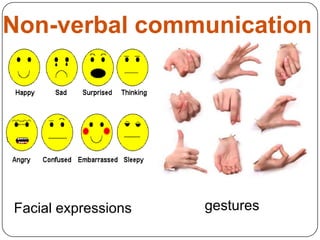
   Non verbal communication :
    posture, appearance, listening, eye contact, hand
    gestures and facial expressions.
   five main functions of non-verbal
    communication:
   to express emotions                         65%
   communicate interpersonal relationships
   support verbal interaction      35%
   reflect personality
   perform rituals, such as greetings
                          10%
      and goodbyes
                         oral    Visual alone   Visual & oral
Non-verbal communication


Facial expressions   gestures
Importance of verbal
communication
   Verbal communication includes
     rate, volume, pitch as well as articulation and
     pronunciation. Verbal communication also
     includes sign language and written forms of
     communication.
   five main functions of verbal
     communication:
   To impart knowledge.
   Clarification.
erbal nonverbal communication


                          Verbal communication
How to Improve Verbal and Non-
verbal Communication
   Effective listening
   Body language
   Intonations
   Ex:Record yourself with both a video camera
   and an audio recorder to see how you
   communicate non-verbally.
How to sell yourself with your
presentation
   Making a good first impression.
   Speak professionally
   “Polish Up Your Public Speaking Skills in
    Advance!”
   “At all stages of your career you need to sell
    yourself, your ideas, your value, and your
    ability”.
Conclusion
 Clarify the Purpose of your Presentation
 Clearly Define your Audience
 Research your Topic
 Organize your Information and Prepare your
  Message
 Prepare the Outline of your Message
 Rehearse your Presentation
Oral presentation
Oral presentation

Oral presentation

  • 1.
    Oral Presentation By: S.Naga Laxmi 09RG1A0491 ECE-B
  • 2.
    What is anOral Presentation?  An oral presentation is generally a speech or vocal performance, occasionally accompanied by visually based presentations such as a slideshow.  An oral presentation is where you show your knowledge on a particular subject. You might be able to choose your topic, or maybe you have been given something to research and talk about to audience...
  • 3.
    Objectives of OralPresentation  Select appropriate points of emphasis in your presentation.  Develop a useful level of detail.  Choose and prepare appropriate visual aids.  Create a tone that is sensitive to your audience's circumstance. Determine Adapt the Gather the Analyze the informatio audience message purpose n
  • 4.
    Necessities of oral presentation Preparation and planning  Structure of speech and language  Visuals  Create interest in audience
  • 5.
    skills required foran Oral Presentation? • Come across natural and relaxed. • Be understandable. • Say something useful. • Be memorable.
  • 6.
    Importance of non-verbal communication  Non verbal communication : posture, appearance, listening, eye contact, hand gestures and facial expressions. five main functions of non-verbal communication:  to express emotions 65%  communicate interpersonal relationships  support verbal interaction 35%  reflect personality  perform rituals, such as greetings 10% and goodbyes oral Visual alone Visual & oral
  • 7.
  • 8.
    Importance of verbal communication  Verbal communication includes rate, volume, pitch as well as articulation and pronunciation. Verbal communication also includes sign language and written forms of communication. five main functions of verbal communication:  To impart knowledge.  Clarification.
  • 9.
    erbal nonverbal communication Verbal communication
  • 10.
    How to ImproveVerbal and Non- verbal Communication  Effective listening  Body language  Intonations  Ex:Record yourself with both a video camera and an audio recorder to see how you communicate non-verbally.
  • 11.
    How to sellyourself with your presentation  Making a good first impression.  Speak professionally  “Polish Up Your Public Speaking Skills in Advance!”  “At all stages of your career you need to sell yourself, your ideas, your value, and your ability”.
  • 12.
    Conclusion  Clarify thePurpose of your Presentation  Clearly Define your Audience  Research your Topic  Organize your Information and Prepare your Message  Prepare the Outline of your Message  Rehearse your Presentation