RNA Synthesis or “Transcription”
By
Prachee Rajput
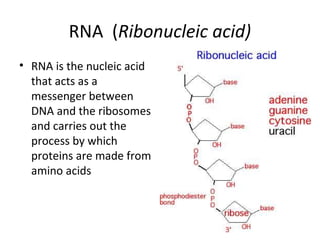
RNA (Ribonucleic acid)
• RNA is the nucleic acid
that acts as a
messenger between
DNA and the ribosomes
and carries out the
process by which
proteins are made from
amino acids
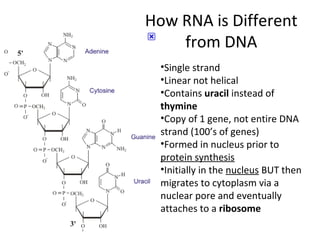
How RNA is Different
from DNA
•Single strand
•Linear not helical
•Contains uracil instead of
thymine
•Copy of 1 gene, not entire DNA
strand (100’s of genes)
•Formed in nucleus prior to
protein synthesis
•Initially in the nucleus BUT then
migrates to cytoplasm via a
nuclear pore and eventually
attaches to a ribosome
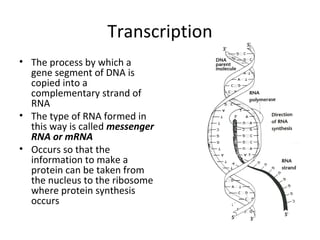
Transcription
• The process by which a
gene segment of DNA is
copied into a
complementary strand of
RNA
• The type of RNA formed in
this way is called messenger
RNA or mRNA
• Occurs so that the
information to make a
protein can be taken from
the nucleus to the ribosome
where protein synthesis
occurs
There are two other types of RNA:
• Transfer RNA (tRNA):
carries amino acids (the
building blocks of
proteins) to the
ribosome where they
can be bonded together
• Ribosomal RNA (rRNA) :
small organelle (the
ribosome) is made of
this kind of rRNA and
proteins. The ribosome
supplies the site where
the reaction to link
amino acids together
occurs.
Lets take a closer look at the steps to
make mRNA or transcription:
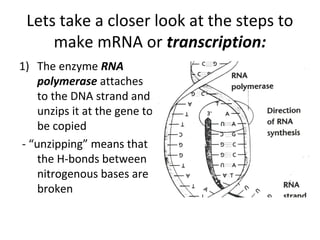
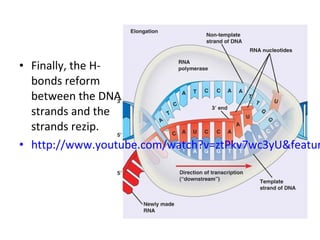
1) The enzyme RNA
polymerase attaches
to the DNA strand and
unzips it at the gene to
be copied
- “unzipping” means that
the H-bonds between
nitrogenous bases are
broken
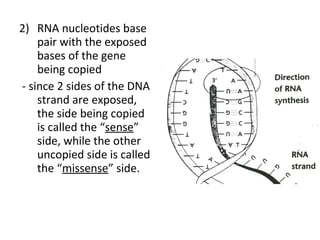
2) RNA nucleotides base
pair with the exposed
bases of the gene
being copied
- since 2 sides of the DNA
strand are exposed,
the side being copied
is called the “sense”
side, while the other
uncopied side is called
the “missense” side.
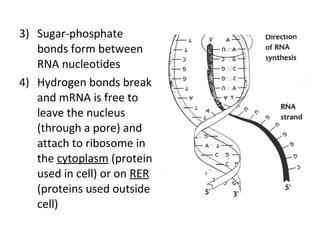
3) Sugar-phosphate
bonds form between
RNA nucleotides
4) Hydrogen bonds break
and mRNA is free to
leave the nucleus
(through a pore) and
attach to ribosome in
the cytoplasm (protein
used in cell) or on RER
(proteins used outside
cell)
• Finally, the H-
bonds reform
between the DNA
strands and the
strands rezip.
• http://www.youtube.com/watch?v=ztPkv7wc3yU&featur
A sequence…
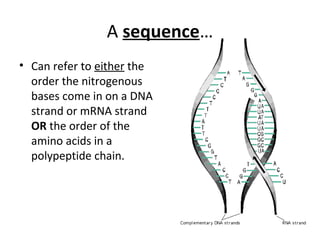
• Can refer to either the
order the nitrogenous
bases come in on a DNA
strand or mRNA strand
OR the order of the
amino acids in a
polypeptide chain.
The sequence of nitrogenous bases on
an mRNA strand is read in a specific
way…
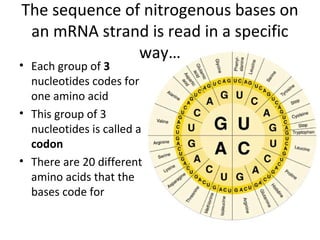
• Each group of 3
nucleotides codes for
one amino acid
• This group of 3
nucleotides is called a
codon
• There are 20 different
amino acids that the
bases code for
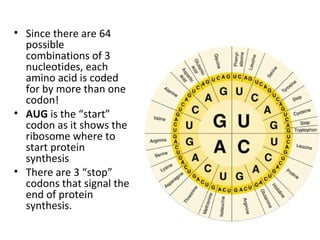
• Since there are 64
possible
combinations of 3
nucleotides, each
amino acid is coded
for by more than one
codon!
• AUG is the “start”
codon as it shows the
ribosome where to
start protein
synthesis
• There are 3 “stop”
codons that signal the
end of protein
synthesis.
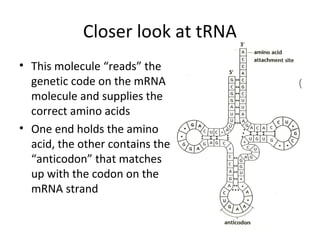
Closer look at tRNA
• This molecule “reads” the
genetic code on the mRNA
molecule and supplies the
correct amino acids
• One end holds the amino
acid, the other contains the
“anticodon” that matches
up with the codon on the
mRNA strand
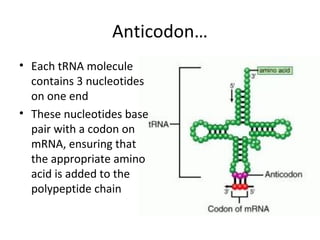
Anticodon…
• Each tRNA molecule
contains 3 nucleotides
on one end
• These nucleotides base
pair with a codon on
mRNA, ensuring that
the appropriate amino
acid is added to the
polypeptide chain

Transcription

  • 1.
    RNA Synthesis or“Transcription” By Prachee Rajput
  • 2.
    RNA (Ribonucleic acid) •RNA is the nucleic acid that acts as a messenger between DNA and the ribosomes and carries out the process by which proteins are made from amino acids
  • 3.
    How RNA isDifferent from DNA •Single strand •Linear not helical •Contains uracil instead of thymine •Copy of 1 gene, not entire DNA strand (100’s of genes) •Formed in nucleus prior to protein synthesis •Initially in the nucleus BUT then migrates to cytoplasm via a nuclear pore and eventually attaches to a ribosome
  • 4.
    Transcription • The processby which a gene segment of DNA is copied into a complementary strand of RNA • The type of RNA formed in this way is called messenger RNA or mRNA • Occurs so that the information to make a protein can be taken from the nucleus to the ribosome where protein synthesis occurs
  • 5.
    There are twoother types of RNA: • Transfer RNA (tRNA): carries amino acids (the building blocks of proteins) to the ribosome where they can be bonded together • Ribosomal RNA (rRNA) : small organelle (the ribosome) is made of this kind of rRNA and proteins. The ribosome supplies the site where the reaction to link amino acids together occurs.
  • 6.
    Lets take acloser look at the steps to make mRNA or transcription: 1) The enzyme RNA polymerase attaches to the DNA strand and unzips it at the gene to be copied - “unzipping” means that the H-bonds between nitrogenous bases are broken
  • 7.
    2) RNA nucleotidesbase pair with the exposed bases of the gene being copied - since 2 sides of the DNA strand are exposed, the side being copied is called the “sense” side, while the other uncopied side is called the “missense” side.
  • 8.
    3) Sugar-phosphate bonds formbetween RNA nucleotides 4) Hydrogen bonds break and mRNA is free to leave the nucleus (through a pore) and attach to ribosome in the cytoplasm (protein used in cell) or on RER (proteins used outside cell)
  • 9.
    • Finally, theH- bonds reform between the DNA strands and the strands rezip. • http://www.youtube.com/watch?v=ztPkv7wc3yU&featur
  • 10.
    A sequence… • Canrefer to either the order the nitrogenous bases come in on a DNA strand or mRNA strand OR the order of the amino acids in a polypeptide chain.
  • 11.
    The sequence ofnitrogenous bases on an mRNA strand is read in a specific way… • Each group of 3 nucleotides codes for one amino acid • This group of 3 nucleotides is called a codon • There are 20 different amino acids that the bases code for
  • 12.
    • Since thereare 64 possible combinations of 3 nucleotides, each amino acid is coded for by more than one codon! • AUG is the “start” codon as it shows the ribosome where to start protein synthesis • There are 3 “stop” codons that signal the end of protein synthesis.
  • 13.
    Closer look attRNA • This molecule “reads” the genetic code on the mRNA molecule and supplies the correct amino acids • One end holds the amino acid, the other contains the “anticodon” that matches up with the codon on the mRNA strand
  • 14.
    Anticodon… • Each tRNAmolecule contains 3 nucleotides on one end • These nucleotides base pair with a codon on mRNA, ensuring that the appropriate amino acid is added to the polypeptide chain