




1
Training Techniques
Dr.C.V. Suresh Babu
2
Same stuff Different Day
3
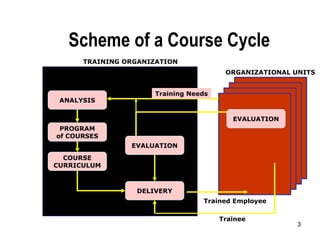
Scheme of a Course Cycle
ORGANIZATIONAL UNITS
Trainee
TRAINING ORGANIZATION
EVALUATION
PROGRAM
of COURSES
COURSE
CURRICULUM
DELIVERY
EVALUATION
ANALYSIS
Training Needs
EVALUATION
EVALUATION
Trained Employee
4
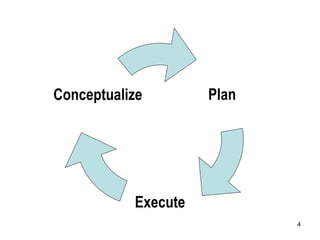
Plan
Execute
Conceptualize
5
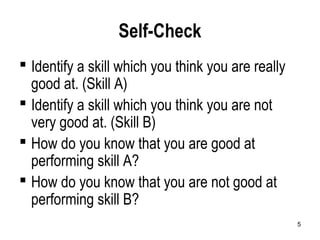
Self-Check
 Identify a skill which you think you are really
good at. (Skill A)
 Identify a skill which you think you are not
very good at. (Skill B)
 How do you know that you are good at
performing skill A?
 How do you know that you are not good at
performing skill B?
6
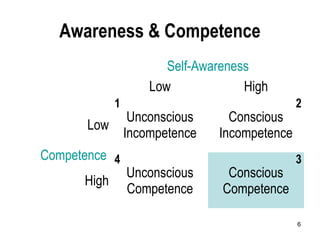
Awareness & Competence
Self-Awareness
Low High
Low
Unconscious
Incompetence
Conscious
Incompetence
High
Unconscious
Competence
Conscious
Competence
Competence
1
3
2
4
7
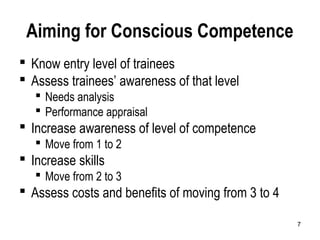
Aiming for Conscious Competence
 Know entry level of trainees
 Assess trainees’ awareness of that level
 Needs analysis
 Performance appraisal
 Increase awareness of level of competence
 Move from 1 to 2
 Increase skills
 Move from 2 to 3
 Assess costs and benefits of moving from 3 to 4
8
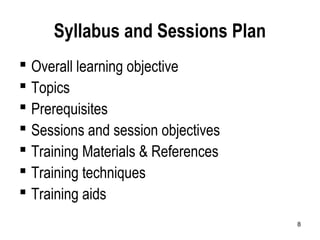
Syllabus and Sessions Plan
 Overall learning objective
 Topics
 Prerequisites
 Sessions and session objectives
 Training Materials & References
 Training techniques
 Training aids
9
Training Methods
10
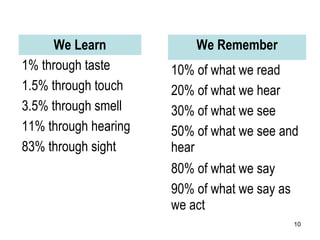
We Learn
1% through taste
1.5% through touch
3.5% through smell
11% through hearing
83% through sight
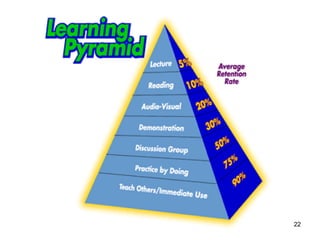
We Remember
10% of what we read
20% of what we hear
30% of what we see
50% of what we see and
hear
80% of what we say
90% of what we say as
we act
11
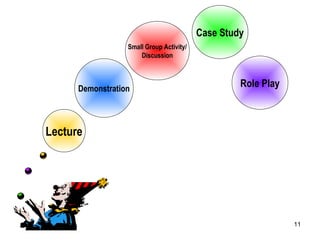
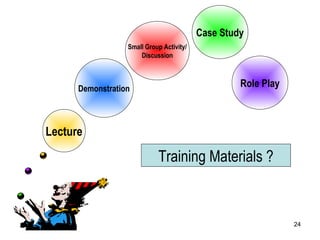
Lecture
Demonstration
Small Group Activity/
Discussion
Case Study
Role Play
12
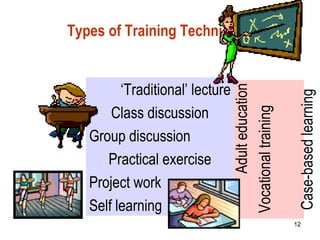
Adulteducation
Vocationaltraining
Case-basedlearning
Types of Training Techniques
‘Traditional’ lecture
Class discussion
Group discussion
Practical exercise
Project work
Self learning
13
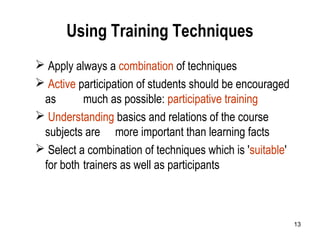
Using Training Techniques
 Apply always a combination of techniques
 Active participation of students should be encouraged
as much as possible: participative training
 Understanding basics and relations of the course
subjects are more important than learning facts
 Select a combination of techniques which is 'suitable'
for both trainers as well as participants
14
Lecture Training
Advantages :
a quick and simple way to provide information to large
groups. 
rather when compared to the other
forms of training
allows for the giving and taking of questions
15
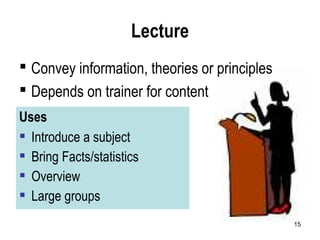
Lecture
 Convey information, theories or principles
 Depends on trainer for content
Uses
 Introduce a subject
 Bring Facts/statistics
 Overview
 Large groups
16Keep It Simple and Short
17
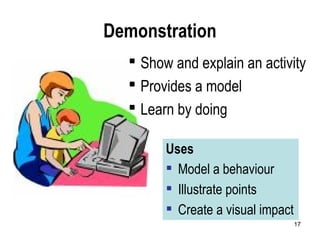
Demonstration
 Show and explain an activity
 Provides a model
 Learn by doing
Uses
 Model a behaviour
 Illustrate points
 Create a visual impact
18
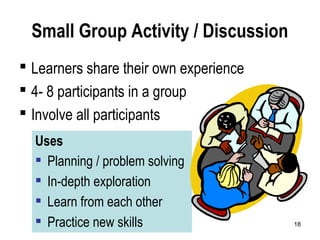
Small Group Activity / Discussion
 Learners share their own experience
 4- 8 participants in a group
 Involve all participants
Uses
 Planning / problem solving
 In-depth exploration
 Learn from each other
 Practice new skills
19
20
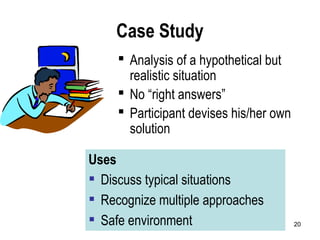
Case Study
 Analysis of a hypothetical but
realistic situation
 No “right answers”
 Participant devises his/her own
solution
Uses
 Discuss typical situations
 Recognize multiple approaches
 Safe environment
21
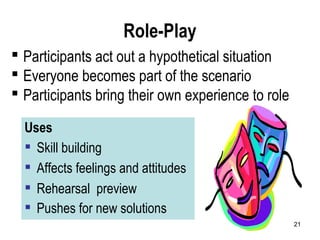
Role-Play
 Participants act out a hypothetical situation
 Everyone becomes part of the scenario
 Participants bring their own experience to role
Uses
 Skill building
 Affects feelings and attitudes
 Rehearsal preview
 Pushes for new solutions
22
23
24
Lecture
Demonstration
Small Group Activity/
Discussion
Case Study
Role Play
Training Materials ?
25
Applying Principles of Adult
Learning and Retention
Recall: Principles of Adult Learning
Learning Styles, Communication Styles
26
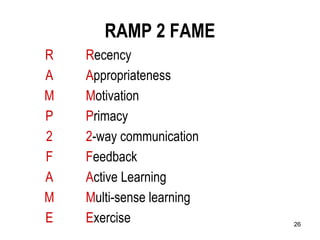
RAMP 2 FAME
R Recency
A Appropriateness
M Motivation
P Primacy
2 2-way communication
F Feedback
A Active Learning
M Multi-sense learning
E Exercise
27
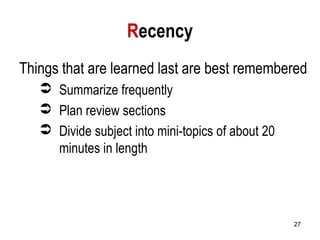
Recency
Things that are learned last are best remembered
 Summarize frequently
 Plan review sections
 Divide subject into mini-topics of about 20
minutes in length
28
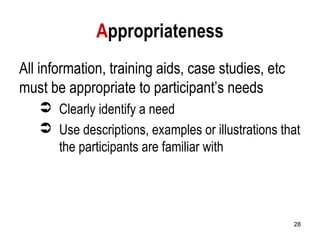
Appropriateness
All information, training aids, case studies, etc
must be appropriate to participant’s needs
 Clearly identify a need
 Use descriptions, examples or illustrations that
the participants are familiar with
29
Motivation
Participants must want to learn, must be ready to
learn, must have some reason to learn
 Presenter must also be motivated
 Identify a need for the participants
 Move from the known to the unknown
30
Primacy
Things learned first are learnt best
 Short presentations
 Interesting beginning
 Updates on direction and progress of learning
 Get things right the first time
31
2-way communication
Communicate with participants
 Include interactive activities in sessions plan
 Match body language with verbal message
32
Feedback
Trainer and trainee need information from each
other
 Include feedback activities (e.g., questions;
tests) in sessions plan
 Give feedback on performance immediately
 Positive and negative feedback
 Acknowledge good work (positive
reinforcement)
33
Active learning
Participants learn more when they are actively
involved in the learning process
 Use practical exercises
 Use questions
 Get the participants to DO it
34
Multiple-sense learning
Learning is more effective if participants use more
than one of five senses
 Tell AND show
 I see and I forget
I hear and I remember
I do and I understand.
Confucius a. 450 BC
35
Exercise
Things that are repeated are best remembered
 Hear, see, practice, practice
 Frequent questions
 Frequent recall
 Give exercises

Training techniques

  • 1.
  • 2.
  • 3.
    3 Scheme of aCourse Cycle ORGANIZATIONAL UNITS Trainee TRAINING ORGANIZATION EVALUATION PROGRAM of COURSES COURSE CURRICULUM DELIVERY EVALUATION ANALYSIS Training Needs EVALUATION EVALUATION Trained Employee
  • 4.
  • 5.
    5 Self-Check  Identify askill which you think you are really good at. (Skill A)  Identify a skill which you think you are not very good at. (Skill B)  How do you know that you are good at performing skill A?  How do you know that you are not good at performing skill B?
  • 6.
    6 Awareness & Competence Self-Awareness LowHigh Low Unconscious Incompetence Conscious Incompetence High Unconscious Competence Conscious Competence Competence 1 3 2 4
  • 7.
    7 Aiming for ConsciousCompetence  Know entry level of trainees  Assess trainees’ awareness of that level  Needs analysis  Performance appraisal  Increase awareness of level of competence  Move from 1 to 2  Increase skills  Move from 2 to 3  Assess costs and benefits of moving from 3 to 4
  • 8.
    8 Syllabus and SessionsPlan  Overall learning objective  Topics  Prerequisites  Sessions and session objectives  Training Materials & References  Training techniques  Training aids
  • 9.
  • 10.
    10 We Learn 1% throughtaste 1.5% through touch 3.5% through smell 11% through hearing 83% through sight We Remember 10% of what we read 20% of what we hear 30% of what we see 50% of what we see and hear 80% of what we say 90% of what we say as we act
  • 11.
  • 12.
    12 Adulteducation Vocationaltraining Case-basedlearning Types of TrainingTechniques ‘Traditional’ lecture Class discussion Group discussion Practical exercise Project work Self learning
  • 13.
    13 Using Training Techniques Apply always a combination of techniques  Active participation of students should be encouraged as much as possible: participative training  Understanding basics and relations of the course subjects are more important than learning facts  Select a combination of techniques which is 'suitable' for both trainers as well as participants
  • 14.
    14 Lecture Training Advantages : aquick and simple way to provide information to large groups.  rather when compared to the other forms of training allows for the giving and taking of questions
  • 15.
    15 Lecture  Convey information,theories or principles  Depends on trainer for content Uses  Introduce a subject  Bring Facts/statistics  Overview  Large groups
  • 16.
  • 17.
    17 Demonstration  Show andexplain an activity  Provides a model  Learn by doing Uses  Model a behaviour  Illustrate points  Create a visual impact
  • 18.
    18 Small Group Activity/ Discussion  Learners share their own experience  4- 8 participants in a group  Involve all participants Uses  Planning / problem solving  In-depth exploration  Learn from each other  Practice new skills
  • 19.
  • 20.
    20 Case Study  Analysisof a hypothetical but realistic situation  No “right answers”  Participant devises his/her own solution Uses  Discuss typical situations  Recognize multiple approaches  Safe environment
  • 21.
    21 Role-Play  Participants actout a hypothetical situation  Everyone becomes part of the scenario  Participants bring their own experience to role Uses  Skill building  Affects feelings and attitudes  Rehearsal preview  Pushes for new solutions
  • 22.
  • 23.
  • 24.
  • 25.
    25 Applying Principles ofAdult Learning and Retention Recall: Principles of Adult Learning Learning Styles, Communication Styles
  • 26.
    26 RAMP 2 FAME RRecency A Appropriateness M Motivation P Primacy 2 2-way communication F Feedback A Active Learning M Multi-sense learning E Exercise
  • 27.
    27 Recency Things that arelearned last are best remembered  Summarize frequently  Plan review sections  Divide subject into mini-topics of about 20 minutes in length
  • 28.
    28 Appropriateness All information, trainingaids, case studies, etc must be appropriate to participant’s needs  Clearly identify a need  Use descriptions, examples or illustrations that the participants are familiar with
  • 29.
    29 Motivation Participants must wantto learn, must be ready to learn, must have some reason to learn  Presenter must also be motivated  Identify a need for the participants  Move from the known to the unknown
  • 30.
    30 Primacy Things learned firstare learnt best  Short presentations  Interesting beginning  Updates on direction and progress of learning  Get things right the first time
  • 31.
    31 2-way communication Communicate withparticipants  Include interactive activities in sessions plan  Match body language with verbal message
  • 32.
    32 Feedback Trainer and traineeneed information from each other  Include feedback activities (e.g., questions; tests) in sessions plan  Give feedback on performance immediately  Positive and negative feedback  Acknowledge good work (positive reinforcement)
  • 33.
    33 Active learning Participants learnmore when they are actively involved in the learning process  Use practical exercises  Use questions  Get the participants to DO it
  • 34.
    34 Multiple-sense learning Learning ismore effective if participants use more than one of five senses  Tell AND show  I see and I forget I hear and I remember I do and I understand. Confucius a. 450 BC
  • 35.
    35 Exercise Things that arerepeated are best remembered  Hear, see, practice, practice  Frequent questions  Frequent recall  Give exercises

Editor's Notes

  • #2 Training Techniques: Training Methods UN SIAP AIDOS 2006
  • #4 Training Techniques: Training Methods UN SIAP AIDOS 2006
  • #9 Training Techniques: Training Methods UN SIAP AIDOS 2006
  • #11 Training Techniques: Training Methods UN SIAP AIDOS 2006
  • #12 Training Techniques: Training Methods UN SIAP AIDOS 2006
  • #13 Training Techniques: Training Methods UN SIAP AIDOS 2006
  • #14 Training Techniques: Training Methods UN SIAP AIDOS 2006
  • #16 Training Techniques: Training Methods UN SIAP AIDOS 2006 Good because: A lot of material in a short time Good introduction Lecturer has control But... Communication is one-way Learner is passive Need good presentation skills Inappropriate for changing behaviour Retention is low unless complemented with a more practical technique
  • #18 Training Techniques: Training Methods UN SIAP AIDOS 2006 Good because: Learners can see what is being explained Gives learners confidence in subject matter Holds group’s attention But: Time consuming Must be very accurate in order to serve as a good model
  • #19 Training Techniques: Training Methods UN SIAP AIDOS 2006 Good because: Learners have control Individual experience comes out Reinforces issues raised in presentation But: Task and timeframe must be very clear Participants may need guidance on how to interact (ground rules)
  • #21 Training Techniques: Training Methods UN SIAP AIDOS 2006 Good because: Learners can relate to real life examples Stimulating Hypothetical, therefore no risk in providing diverging solutions/opinions But... Case must be well-written and participants must be able to identify Requires a lot of time and planning Debriefing must be well crafted and executed
  • #22 Training Techniques: Training Methods UN SIAP AIDOS 2006 Good because: Stimulating & fun Relevant – exact situations learners are dealing with Allows participants to see things from another (person’s) perspective But... Guidance for roles must be well thought-out and explained Facilitator must monitor closely and know when to intervene
  • #25 Training Techniques: Training Methods UN SIAP AIDOS 2006