Training  What it is all about!
Why training? Can shorten the time of learning Can reduce the costing Experience is trial and error Can be accidental Bad decisions is also experience Predictability in training
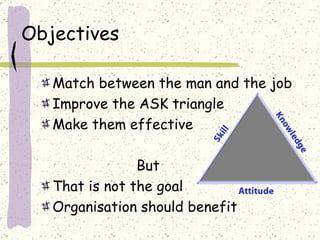
Objectives  Match between the man and the job Improve the ASK triangle Make them effective But That is not the goal Organisation should benefit
 
Justification  Level of service Quality Better use of resources Saving time, material etc Reduced need for supervision Identification of potential Improved morale
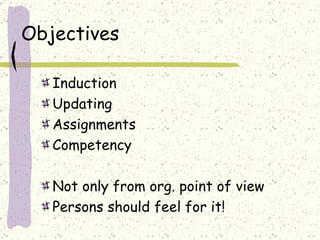
Objectives  Induction Updating Assignments Competency  Not only from org. point of view Persons should feel for it!
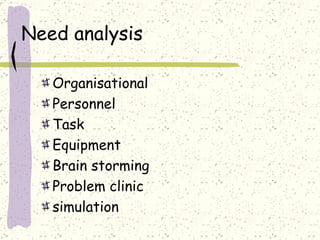
Need analysis Organisational Personnel Task Equipment Brain storming Problem clinic simulation
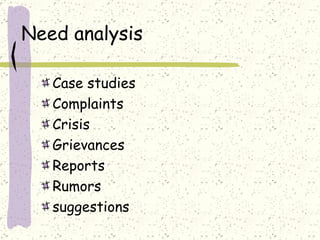
Need analysis Case studies Complaints Crisis Grievances Reports Rumors suggestions
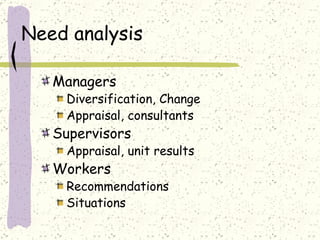
Need analysis Managers  Diversification, Change Appraisal, consultants Supervisors  Appraisal, unit results Workers Recommendations  Situations
Training plan Felt need Tangible results Right trainers Right resources Right time Right methods
The five laws of learning : Intensity Exercise Effect Primacy and Disuse Use ”signposting”
Methodology  Depends on purpose Information, skill Attitudes are important Level of trainees Cost factor
Methodology  Participatory Feed back Real life situation learner’s point of view
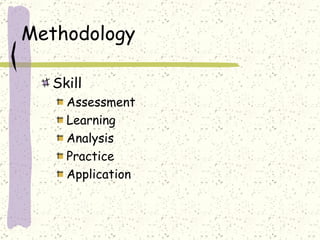
Methodology  Skill Assessment  Learning Analysis Practice Application
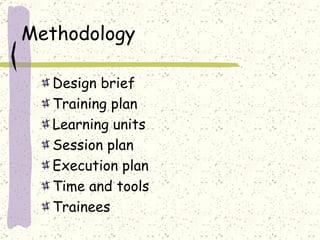
Methodology  Design brief Training plan Learning units Session plan Execution plan Time and tools Trainees
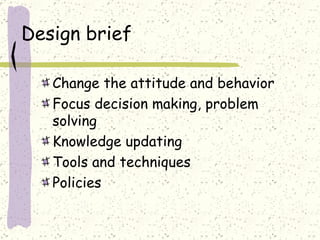
Design brief Change the attitude and behavior Focus decision making, problem solving Knowledge updating Tools and techniques Policies
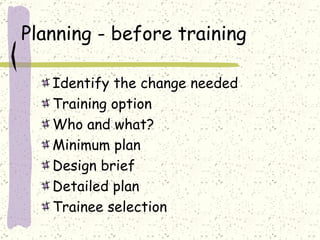
Planning - before training Identify the change needed Training option Who and what? Minimum plan Design brief Detailed plan Trainee selection
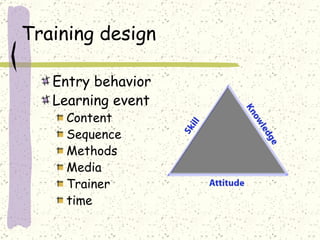
Training design Entry behavior Learning event Content Sequence Methods Media Trainer time
Objectives  Knowledge Skill Attitude  In learners terms Statement of performance Observable measurable
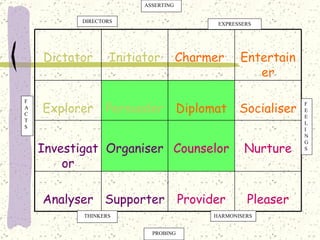
ASSERTING PROBING DIRECTORS EXPRESSERS THINKERS HARMONISERS F A C T S F EELINGS Pleaser Provider Supporter Analyser Nurture Counselor Organiser Investigator Socialiser Diplomat Persuader Explorer Entertainer Charmer  Initiator Dictator
An ideal trainer Enthusiastic Positive in attitude People oriented Persuasive Inquirer – Learner Organised Enjoys the job Communicator Knows the job
Trainer? Be specific Focus attention Last man Discipline Synergy Trainer, learner, mgmt, and? performance
Communication  Know your trainees Know your teaching point Know your support material Plan the tools Check up  Update Make it lively
Presentation tools Session plan Tool plan Prepared OHP Multimedia On the spot ( Chalk and Talk or?) Interventions Questionaires
Dealing with questions   /problem participants Open, closed or reflexive questions: what they mean and how to respond to them.  How to deal with the most challenging personality types
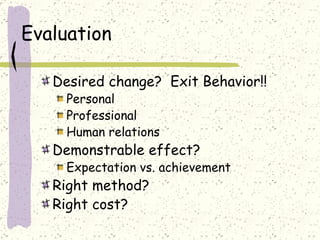
Evaluation  Desired change?  Exit Behavior!! Personal Professional Human relations Demonstrable effect? Expectation vs. achievement Right method? Right cost?
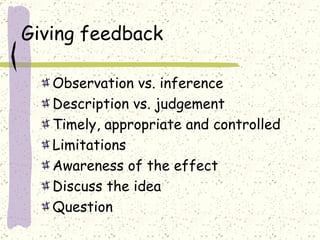
Giving feedback Observation vs. inference Description vs. judgement Timely, appropriate and controlled Limitations Awareness of the effect Discuss the idea Question
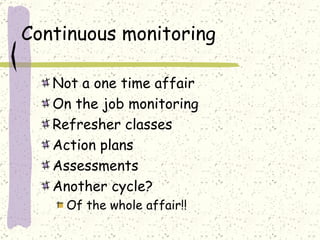
Continuous monitoring Not a one time affair On the job monitoring Refresher classes Action plans Assessments Another cycle? Of the whole affair!!
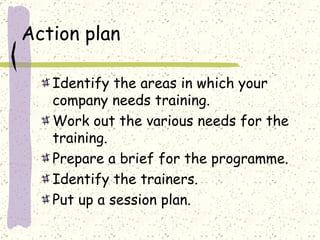
Action plan Identify the areas in which your company needs training. Work out the various needs for the training. Prepare a brief for the programme. Identify the trainers. Put up a session plan.

Training The Trainer

  • 1.
    Training Whatit is all about!
  • 2.
    Why training? Canshorten the time of learning Can reduce the costing Experience is trial and error Can be accidental Bad decisions is also experience Predictability in training
  • 3.
    Objectives Matchbetween the man and the job Improve the ASK triangle Make them effective But That is not the goal Organisation should benefit
  • 4.
  • 5.
    Justification Levelof service Quality Better use of resources Saving time, material etc Reduced need for supervision Identification of potential Improved morale
  • 6.
    Objectives InductionUpdating Assignments Competency Not only from org. point of view Persons should feel for it!
  • 7.
    Need analysis OrganisationalPersonnel Task Equipment Brain storming Problem clinic simulation
  • 8.
    Need analysis Casestudies Complaints Crisis Grievances Reports Rumors suggestions
  • 9.
    Need analysis Managers Diversification, Change Appraisal, consultants Supervisors Appraisal, unit results Workers Recommendations Situations
  • 10.
    Training plan Feltneed Tangible results Right trainers Right resources Right time Right methods
  • 11.
    The five lawsof learning : Intensity Exercise Effect Primacy and Disuse Use ”signposting”
  • 12.
    Methodology Dependson purpose Information, skill Attitudes are important Level of trainees Cost factor
  • 13.
    Methodology ParticipatoryFeed back Real life situation learner’s point of view
  • 14.
    Methodology SkillAssessment Learning Analysis Practice Application
  • 15.
    Methodology Designbrief Training plan Learning units Session plan Execution plan Time and tools Trainees
  • 16.
    Design brief Changethe attitude and behavior Focus decision making, problem solving Knowledge updating Tools and techniques Policies
  • 17.
    Planning - beforetraining Identify the change needed Training option Who and what? Minimum plan Design brief Detailed plan Trainee selection
  • 18.
    Training design Entrybehavior Learning event Content Sequence Methods Media Trainer time
  • 19.
    Objectives KnowledgeSkill Attitude In learners terms Statement of performance Observable measurable
  • 20.
    ASSERTING PROBING DIRECTORSEXPRESSERS THINKERS HARMONISERS F A C T S F EELINGS Pleaser Provider Supporter Analyser Nurture Counselor Organiser Investigator Socialiser Diplomat Persuader Explorer Entertainer Charmer Initiator Dictator
  • 21.
    An ideal trainerEnthusiastic Positive in attitude People oriented Persuasive Inquirer – Learner Organised Enjoys the job Communicator Knows the job
  • 22.
    Trainer? Be specificFocus attention Last man Discipline Synergy Trainer, learner, mgmt, and? performance
  • 23.
    Communication Knowyour trainees Know your teaching point Know your support material Plan the tools Check up Update Make it lively
  • 24.
    Presentation tools Sessionplan Tool plan Prepared OHP Multimedia On the spot ( Chalk and Talk or?) Interventions Questionaires
  • 25.
    Dealing with questions /problem participants Open, closed or reflexive questions: what they mean and how to respond to them. How to deal with the most challenging personality types
  • 26.
    Evaluation Desiredchange? Exit Behavior!! Personal Professional Human relations Demonstrable effect? Expectation vs. achievement Right method? Right cost?
  • 27.
    Giving feedback Observationvs. inference Description vs. judgement Timely, appropriate and controlled Limitations Awareness of the effect Discuss the idea Question
  • 28.
    Continuous monitoring Nota one time affair On the job monitoring Refresher classes Action plans Assessments Another cycle? Of the whole affair!!
  • 29.
    Action plan Identifythe areas in which your company needs training. Work out the various needs for the training. Prepare a brief for the programme. Identify the trainers. Put up a session plan.