Writing a Medical
Thesis: Tips for Post-
Graduate Students
What is a medical thesis?
 A medical thesis is the written work resulting from an
original research in the field of Medicine, Nursing,
Pharmacy, and other health and life sciences. It is
submitted by the students in order to obtain a higher
degree from the University.
 However, keep this in mind! The purpose of submitting a
medical thesis is not limited to the achievement of a
doctoral or post-graduate degree. It is a medium to
organize the scientific knowledge in a way to make further
progress in the field.
Writing your medical thesis
After choosing the topic for your research study, collaborate with
your supervisor to design your research study and its goal. Collect
all the information and data pertaining to your research before
proceeding with your clinical trials.
Now, you are ready with your research data and clinical findings.
You just need to pen down your findings in your medical thesis.
That sounds easy, isn’t it?
In reality, it’s not so. But, you need not worry!
Writing a medical
thesis becomes easy
and fun if you
follow the given
steps with
competence
Prepare an outline of the thesis in accordance with the
following sections:
Title
Introduction: Why did you start your study?
Methods Used
Results of the study
Discussion of results
Conclusion
1.Outline the structure of
medical thesis
The title reflects the content of your thesis. For writing a perfect
thesis title:
 Be concise and accurate. The title must neither be too long
nor too short
 Avoid unnecessary words and phrases like “Observation of”
or “A study of”
 Do not use abbreviations
 Avoid grammatical mistakes
2.Writing a title of the
thesis
 Give this background information in brief in the
first paragraph
 Include the importance of the problem and
what is unknown about it in the second
paragraph
 State the purpose, hypothesis, and objective of
your study in the last paragraph
3.Writing an Introduction
Do’s
 Cite the research papers written on your research topic
Don’ts
 Include unnecessary information other than the problem
being examined
 Include the research design, data or conclusion of your
study
 Cite well-known facts
 Include information found in any textbook in the field
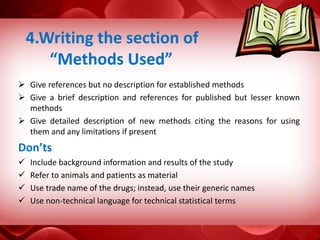
 Give references but no description for established methods
 Give a brief description and references for published but lesser known
methods
 Give detailed description of new methods citing the reasons for using
them and any limitations if present
Don’ts
 Include background information and results of the study
 Refer to animals and patients as material
 Use trade name of the drugs; instead, use their generic names
 Use non-technical language for technical statistical terms
4.Writing the section of
“Methods Used”
Keep in mind the objective of your research while
writing the “Results” section. The findings of the
research can be documented in the form of:
 Text
 Tables
 Figures
 Illustrative graphs
5.Writing your Results
Good medical theses have a targeted discussion keeping it
focused on the topic of the research. Include:
 Statement of the principal findings. Make it clear to show that
your thesis includes new information
 Strengths and weaknesses of your study
 Strengths and weaknesses in relation to the other studies
 A take-home message from your study for clinicians and
policymakers
 Any questions that are left unanswered in your study to propose
new research
6.Discussing your Results
The conclusion of your research study must comprise of:
 The most important statement or remark from the
observations
 Summary of new observations, interpretations, and insights
from the present study
 How your study fills the knowledge gap in its respected field?
 The broader implications of your work
 How can your work be improved by future research?
How to conclude your
medical thesis?
However, avoid any
statement that does not
support your data.
With these tips, write
your medical thesis like
a pro and don’t let it
delay your doctoral
award!
To Know More
E-mail: project@cognibrain.com
Phone: 044-49595223
Visit us: https://www.cognibrain.com/

Tips for Writing a Medical Thesis

  • 1.
    Writing a Medical Thesis:Tips for Post- Graduate Students
  • 2.
    What is amedical thesis?  A medical thesis is the written work resulting from an original research in the field of Medicine, Nursing, Pharmacy, and other health and life sciences. It is submitted by the students in order to obtain a higher degree from the University.  However, keep this in mind! The purpose of submitting a medical thesis is not limited to the achievement of a doctoral or post-graduate degree. It is a medium to organize the scientific knowledge in a way to make further progress in the field.
  • 3.
    Writing your medicalthesis After choosing the topic for your research study, collaborate with your supervisor to design your research study and its goal. Collect all the information and data pertaining to your research before proceeding with your clinical trials. Now, you are ready with your research data and clinical findings. You just need to pen down your findings in your medical thesis. That sounds easy, isn’t it? In reality, it’s not so. But, you need not worry!
  • 4.
    Writing a medical thesisbecomes easy and fun if you follow the given steps with competence
  • 5.
    Prepare an outlineof the thesis in accordance with the following sections: Title Introduction: Why did you start your study? Methods Used Results of the study Discussion of results Conclusion 1.Outline the structure of medical thesis
  • 6.
    The title reflectsthe content of your thesis. For writing a perfect thesis title:  Be concise and accurate. The title must neither be too long nor too short  Avoid unnecessary words and phrases like “Observation of” or “A study of”  Do not use abbreviations  Avoid grammatical mistakes 2.Writing a title of the thesis
  • 7.
     Give thisbackground information in brief in the first paragraph  Include the importance of the problem and what is unknown about it in the second paragraph  State the purpose, hypothesis, and objective of your study in the last paragraph 3.Writing an Introduction
  • 8.
    Do’s  Cite theresearch papers written on your research topic Don’ts  Include unnecessary information other than the problem being examined  Include the research design, data or conclusion of your study  Cite well-known facts  Include information found in any textbook in the field
  • 9.
     Give referencesbut no description for established methods  Give a brief description and references for published but lesser known methods  Give detailed description of new methods citing the reasons for using them and any limitations if present Don’ts  Include background information and results of the study  Refer to animals and patients as material  Use trade name of the drugs; instead, use their generic names  Use non-technical language for technical statistical terms 4.Writing the section of “Methods Used”
  • 10.
    Keep in mindthe objective of your research while writing the “Results” section. The findings of the research can be documented in the form of:  Text  Tables  Figures  Illustrative graphs 5.Writing your Results
  • 11.
    Good medical theseshave a targeted discussion keeping it focused on the topic of the research. Include:  Statement of the principal findings. Make it clear to show that your thesis includes new information  Strengths and weaknesses of your study  Strengths and weaknesses in relation to the other studies  A take-home message from your study for clinicians and policymakers  Any questions that are left unanswered in your study to propose new research 6.Discussing your Results
  • 12.
    The conclusion ofyour research study must comprise of:  The most important statement or remark from the observations  Summary of new observations, interpretations, and insights from the present study  How your study fills the knowledge gap in its respected field?  The broader implications of your work  How can your work be improved by future research? How to conclude your medical thesis?
  • 13.
    However, avoid any statementthat does not support your data. With these tips, write your medical thesis like a pro and don’t let it delay your doctoral award!
  • 14.
    To Know More E-mail:project@cognibrain.com Phone: 044-49595223 Visit us: https://www.cognibrain.com/