Tier 1, 2 and 3 Capital based on
        the Basel II accord


                     Presented by-
                     Nahid Anjum
Agenda
• Basel II accord
  – Core capital (basic equity or Tier 1)
  – Supplementary capital (Tier 2)
  – Short-term subordinated debt covering market
    risk (Tier 3)
Basel II accord
• From the Basel ii Compliance Professionals
  Association (BCPA) the largest association of
  Basel ii Professionals in the world
• The constituents of capital
  – Core capital (basic equity or Tier 1)
  – Supplementary capital (Tier 2)
  – Short-term subordinated debt covering market
    risk (Tier 3)
Core capital (basic equity or tier 1)
• The Committee considers that the key element of
  capital on which the main emphasis should be placed is
  equity capital and disclosed reserves.
• Notwithstanding this emphasis, the member countries
  of the Committee also consider that there are a
  number of other important and legitimate constituents
  of a bank's capital base which may be included within
  the system of measurement
• The Committee has therefore concluded that capital,
  for supervisory purposes, should be defined in two
  tiers in a way which will have the effect of requiring at
  least 50% of a bank's capital base to consist of a core
  element comprised of equity capital and published
  reserves from post-tax retained earnings (Tier 1)
Supplementary capital (tier 2)
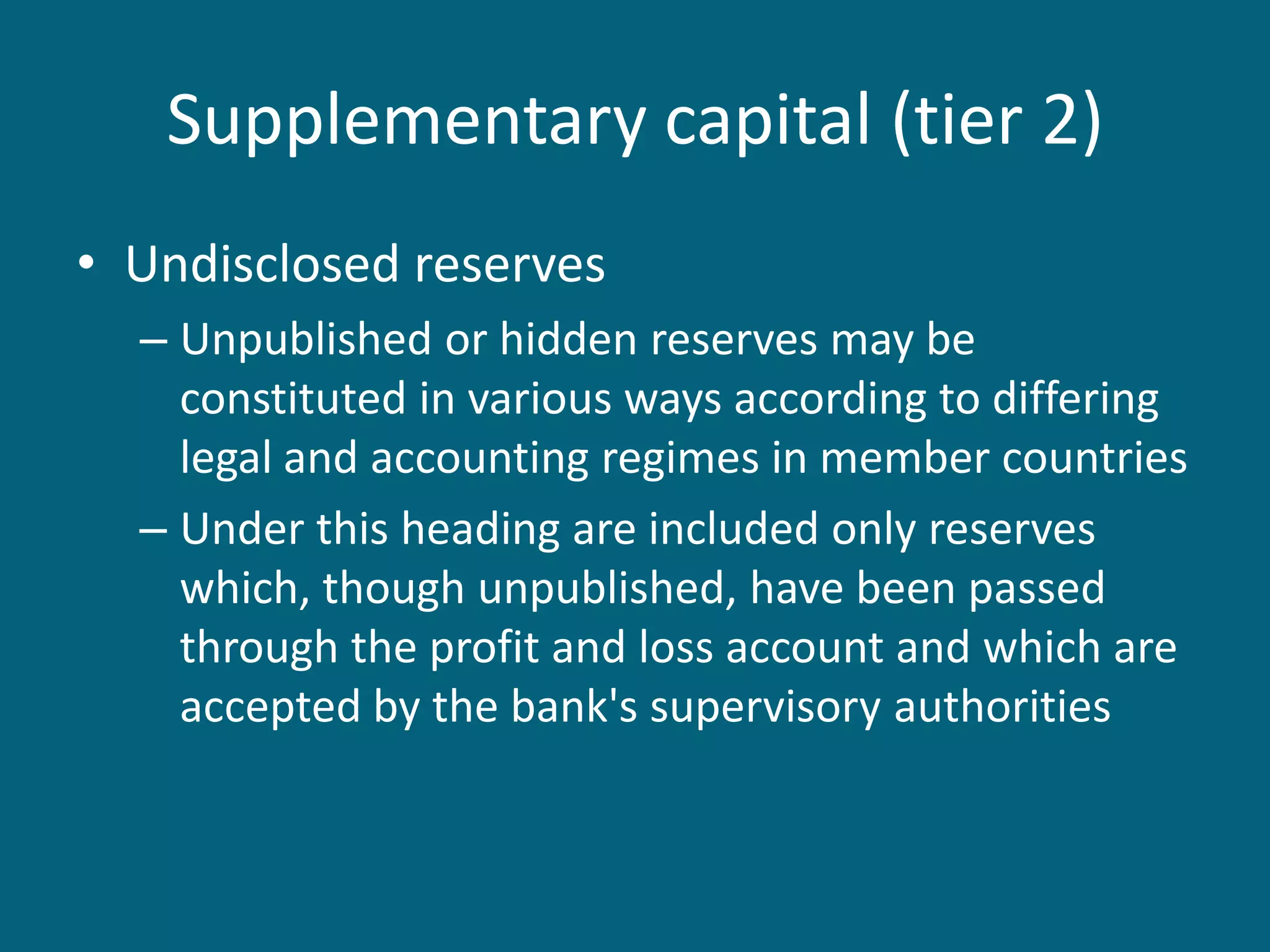
• Undisclosed reserves
  – Unpublished or hidden reserves may be
    constituted in various ways according to differing
    legal and accounting regimes in member countries
  – Under this heading are included only reserves
    which, though unpublished, have been passed
    through the profit and loss account and which are
    accepted by the bank's supervisory authorities
Supplementary capital (tier 2)
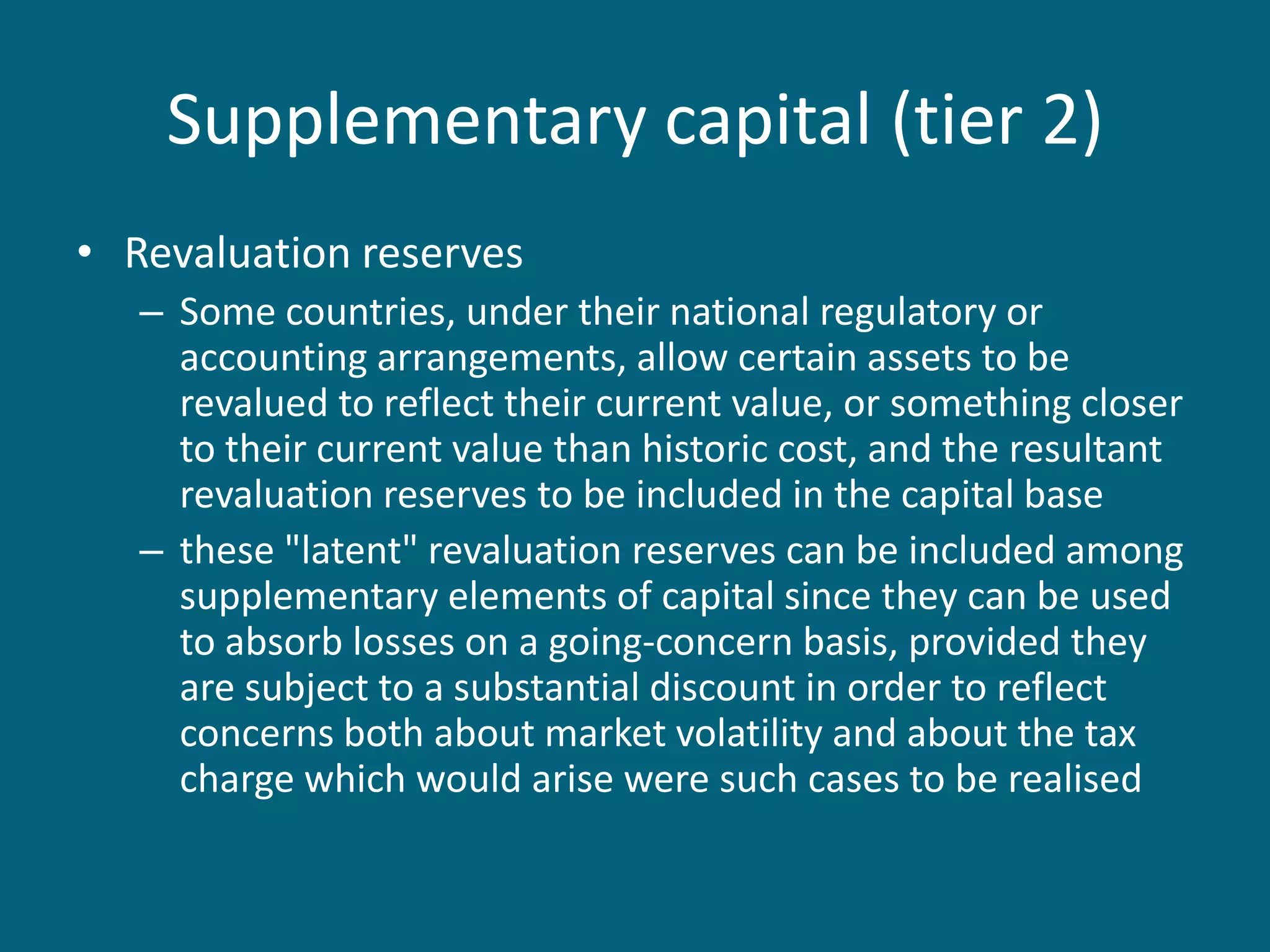
• Revaluation reserves
   – Some countries, under their national regulatory or
     accounting arrangements, allow certain assets to be
     revalued to reflect their current value, or something closer
     to their current value than historic cost, and the resultant
     revaluation reserves to be included in the capital base
   – these "latent" revaluation reserves can be included among
     supplementary elements of capital since they can be used
     to absorb losses on a going-concern basis, provided they
     are subject to a substantial discount in order to reflect
     concerns both about market volatility and about the tax
     charge which would arise were such cases to be realised
Supplementary capital (tier 2)
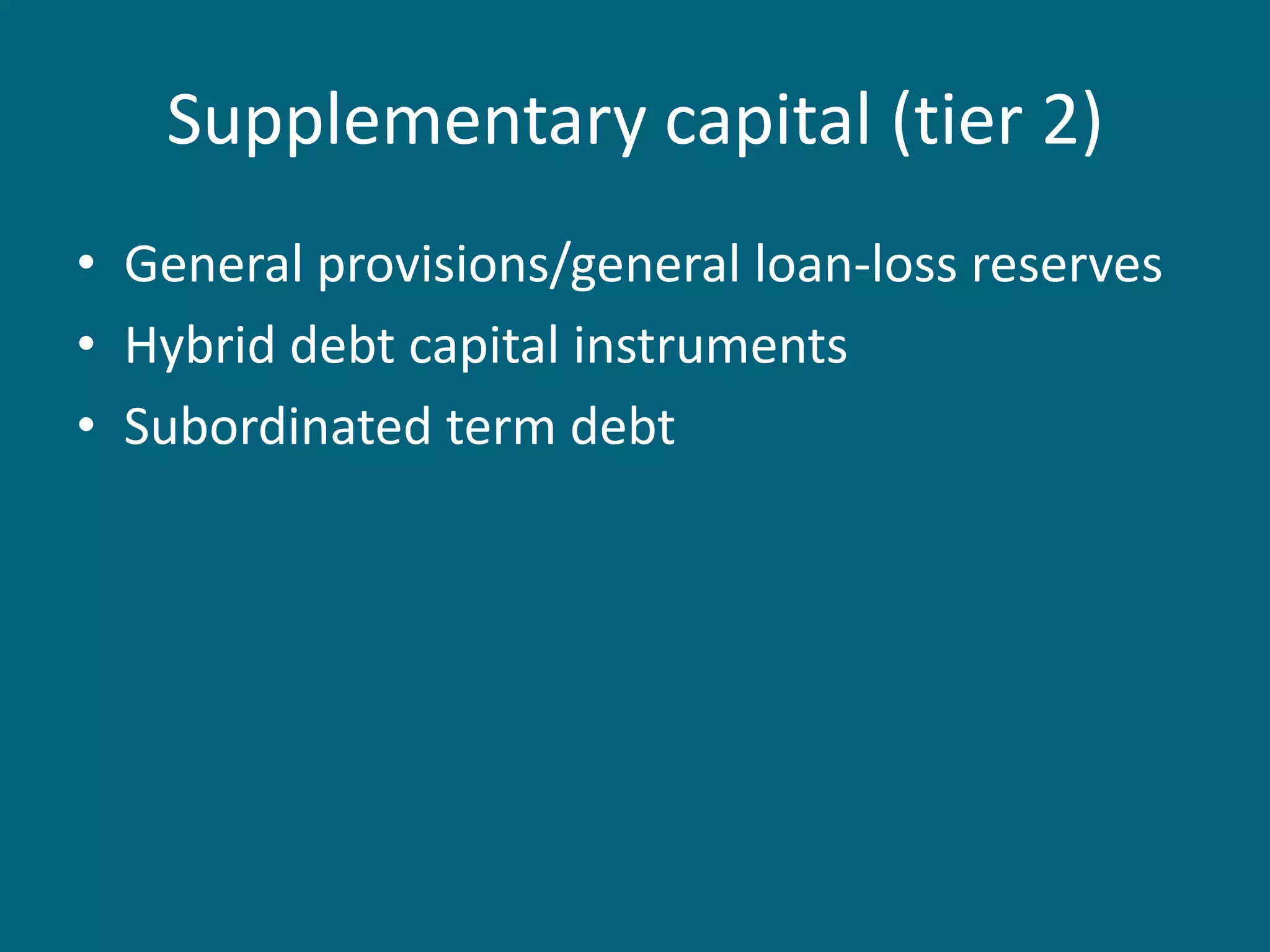
• General provisions/general loan-loss reserves
• Hybrid debt capital instruments
• Subordinated term debt
Short term subordinated debt covering
          market risk (Tier 3)
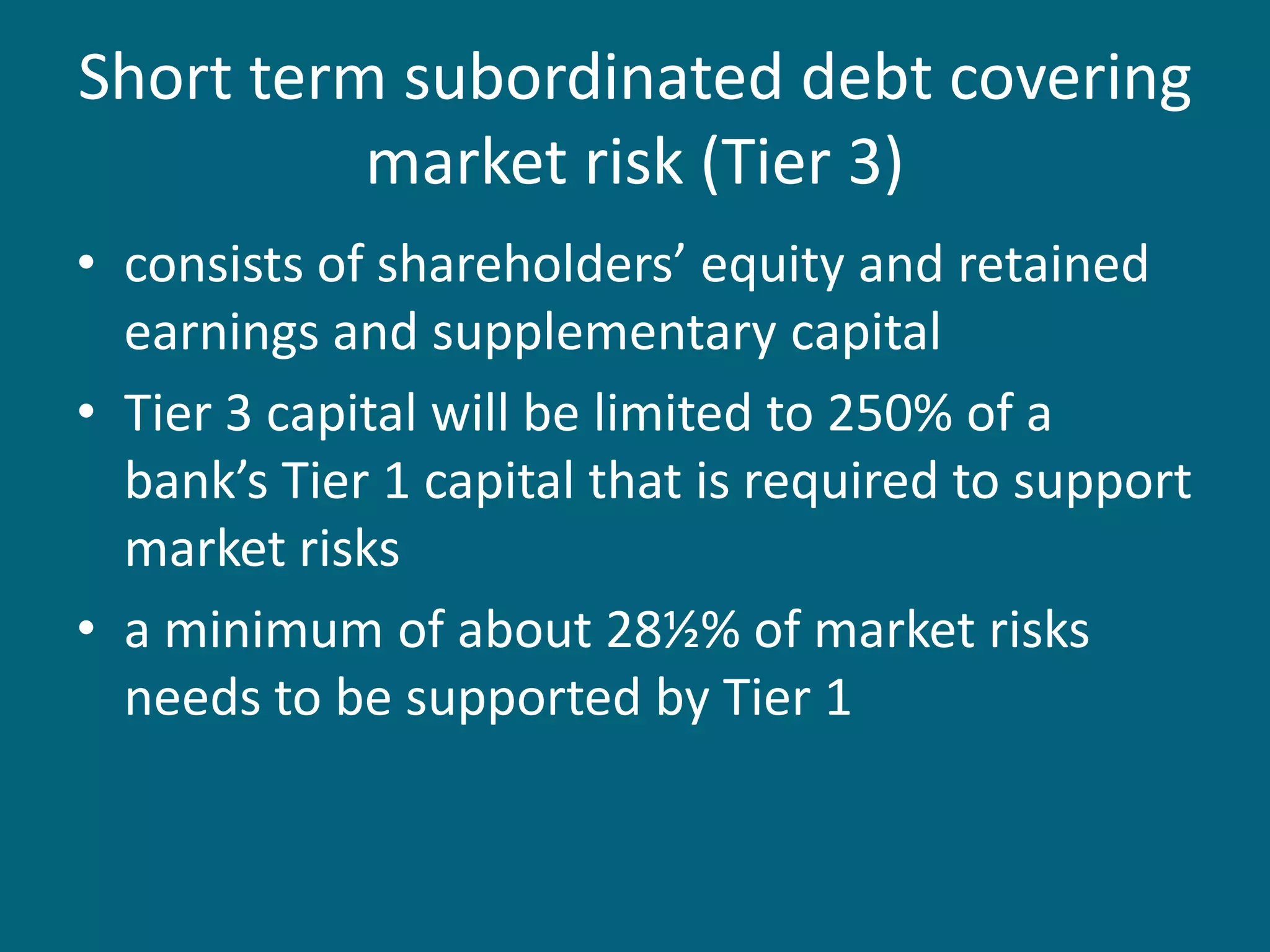
• consists of shareholders’ equity and retained
  earnings and supplementary capital
• Tier 3 capital will be limited to 250% of a
  bank’s Tier 1 capital that is required to support
  market risks
• a minimum of about 28½% of market risks
  needs to be supported by Tier 1
Thank you

Tier 1, 2 and 3 Capital based on the Basel II accord

  • 1.
    Tier 1, 2and 3 Capital based on the Basel II accord Presented by- Nahid Anjum
  • 2.
    Agenda • Basel IIaccord – Core capital (basic equity or Tier 1) – Supplementary capital (Tier 2) – Short-term subordinated debt covering market risk (Tier 3)
  • 3.
    Basel II accord •From the Basel ii Compliance Professionals Association (BCPA) the largest association of Basel ii Professionals in the world • The constituents of capital – Core capital (basic equity or Tier 1) – Supplementary capital (Tier 2) – Short-term subordinated debt covering market risk (Tier 3)
  • 4.
    Core capital (basicequity or tier 1) • The Committee considers that the key element of capital on which the main emphasis should be placed is equity capital and disclosed reserves. • Notwithstanding this emphasis, the member countries of the Committee also consider that there are a number of other important and legitimate constituents of a bank's capital base which may be included within the system of measurement • The Committee has therefore concluded that capital, for supervisory purposes, should be defined in two tiers in a way which will have the effect of requiring at least 50% of a bank's capital base to consist of a core element comprised of equity capital and published reserves from post-tax retained earnings (Tier 1)
  • 5.
    Supplementary capital (tier2) • Undisclosed reserves – Unpublished or hidden reserves may be constituted in various ways according to differing legal and accounting regimes in member countries – Under this heading are included only reserves which, though unpublished, have been passed through the profit and loss account and which are accepted by the bank's supervisory authorities
  • 6.
    Supplementary capital (tier2) • Revaluation reserves – Some countries, under their national regulatory or accounting arrangements, allow certain assets to be revalued to reflect their current value, or something closer to their current value than historic cost, and the resultant revaluation reserves to be included in the capital base – these "latent" revaluation reserves can be included among supplementary elements of capital since they can be used to absorb losses on a going-concern basis, provided they are subject to a substantial discount in order to reflect concerns both about market volatility and about the tax charge which would arise were such cases to be realised
  • 7.
    Supplementary capital (tier2) • General provisions/general loan-loss reserves • Hybrid debt capital instruments • Subordinated term debt
  • 8.
    Short term subordinateddebt covering market risk (Tier 3) • consists of shareholders’ equity and retained earnings and supplementary capital • Tier 3 capital will be limited to 250% of a bank’s Tier 1 capital that is required to support market risks • a minimum of about 28½% of market risks needs to be supported by Tier 1
  • 9.