11/17/14 
ICAAP – Internal 
Capital Adequacy 
Assessment Process
11/17/14 
Presentation on ICAAP 
Overview 
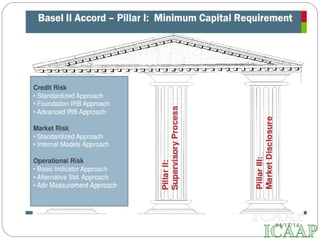
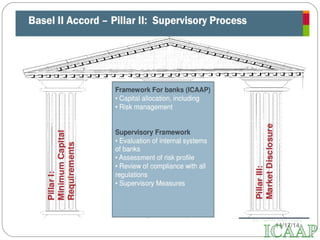
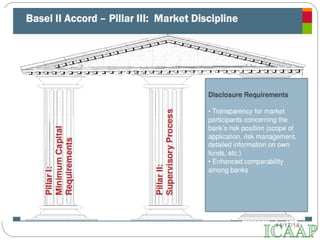
 Basel II and its Three Pillars 
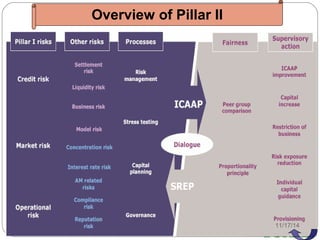
 Overview of Pillar II 
 ICAAP & SREP 
 Risk & Capital 
 ICAAP Process 
 Components of ICAAP 
 Pillar II Risks 
 BOB ICAAP & its implementation 
 Policy 
 Structure 
 Data Collection 
 Reporting
11/17/14
11/17/14
11/17/14
11/17/14 
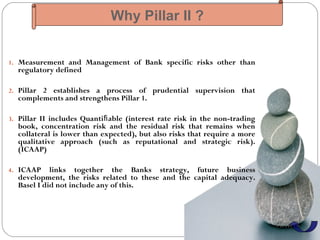
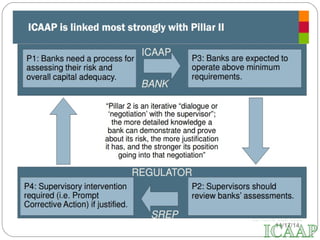
Why Pillar II ? 
1. Measurement and Management of Bank specific risks other than 
regulatory defined 
2. Pillar 2 establishes a process of prudential supervision that 
complements and strengthens Pillar 1. 
3. Pillar II includes Quanti able (interest rate risk fi in the non-trading 
book, concentration risk and the residual risk that remains when 
collateral is lower than expected), but also risks that require a more 
qualitative approach (such as reputational and strategic risk). 
(ICAAP) 
4. ICAAP links together the Banks strategy, future business 
development, the risks related to these and the capital adequacy. 
Basel I did not include any of this.
Overview of Pillar II 
11/17/14
11/17/14
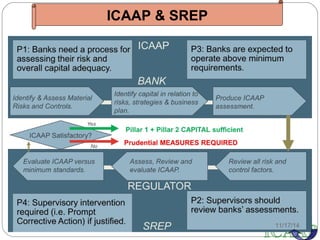
ICAAP & SREP 
11/17/14
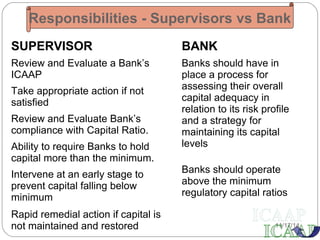
Responsibilities - Supervisors vs Bank 
11/17/14 
SUPERVISOR 
Review and Evaluate a Bank’s 
ICAAP 
Take appropriate action if not 
satisfied 
Review and Evaluate Bank’s 
compliance with Capital Ratio. 
Ability to require Banks to hold 
capital more than the minimum. 
Intervene at an early stage to 
prevent capital falling below 
minimum 
Rapid remedial action if capital is 
not maintained and restored 
BANK 
Banks should have in 
place a process for 
assessing their overall 
capital adequacy in 
relation to its risk profile 
and a strategy for 
maintaining its capital 
levels 
Banks should operate 
above the minimum 
regulatory capital ratios
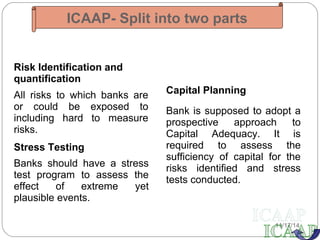
Risk Identification and 
quantification 
All risks to which banks are 
or could be exposed to 
including hard to measure 
risks. 
Stress Testing 
Banks should have a stress 
test program to assess the 
effect of extreme yet 
plausible events. 
Capital Planning 
Bank is supposed to adopt a 
prospective approach to 
Capital Adequacy. It is 
required to assess the 
sufficiency of capital for the 
risks identified and stress 
tests conducted. 
11/17/14 
ICAAP- Split into two parts
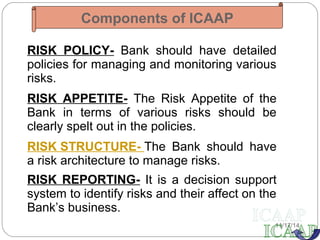
RISK POLICY- Bank should have detailed 
policies for managing and monitoring various 
risks. 
RISK APPETITE- The Risk Appetite of the 
Bank in terms of various risks should be 
clearly spelt out in the policies. 
RISK STRUCTURE- The Bank should have 
a risk architecture to manage risks. 
RISK REPORTING- It is a decision support 
system to identify risks and their affect on the 
Bank’s business. 
11/17/14 
Components of ICAAP
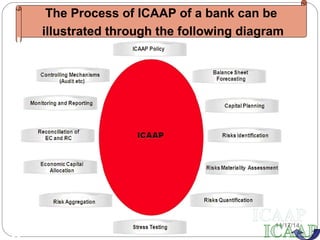
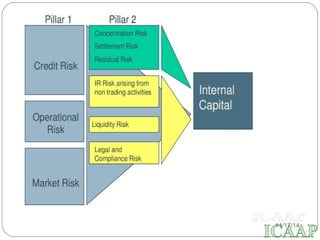
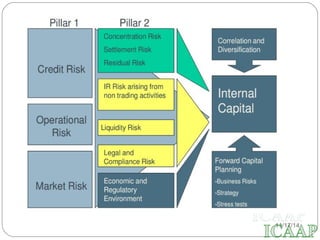
The Process of ICAAP of a bank can be 
illustrated through the following diagram 
11/17/14
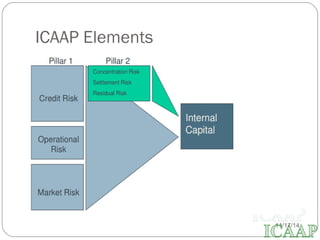
ICAAP Elements 
11/17/14
11/17/14
11/17/14
11/17/14
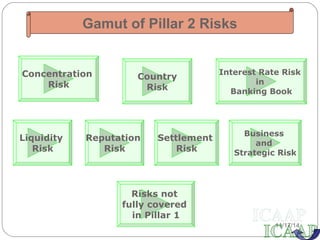
Gamut of Pillar 2 Risks 
Concentration 
Risk 
Country 
Risk 
Interest Rate Risk 
in 
Banking Book 
Risks not 
fully covered 
in Pillar 1 
Liquidity 
Risk 
Reputation 
Risk 
Settlement 
Risk 
Business 
and 
Strategic Risk 
11/17/14
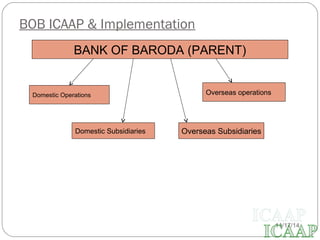
BOB ICAAP & Implementation 
11/17/14 
BANK OF BARODA (PARENT) 
Domestic Operations 
Overseas operations 
Domestic Subsidiaries Overseas Subsidiaries
Data Collection 
The Risk Management Department prepares the ICAAP Document and 
compute the capital requirement against various risks by co-coordinating with 
heads of various departments. The following departments are associated with 
the supply of ICAAP data. 
11/17/14 
Planning Department 
Marketing Department 
Market Risk Management Cell 
Operational Risk Management Cell 
Credit Risk Management Cell 
Corporate Accounts and Taxation Department 
Human Resource Management 
Public Relations and Official Language Department 
ASCROM Cell in Recovery Department
11/17/14 
Company Secretary Department 
Compliance Department 
Legal Department 
Operations and Services Department 
Retail Banking Department 
Wholesale Banking Department 
Mid Office Cell 
International Subsidiaries and Territories
Reporting 
 ICAAP is prepared on quarterly basis and submitted to the ALCO and BOARD for 
review and further directions if any. 
 The reviewed ICAAP document is submitted to the regulator. 
11/17/14
11/17/14 
Thank You..!!

ICAAP - INDIAN BANKS

  • 1.
    11/17/14 ICAAP –Internal Capital Adequacy Assessment Process
  • 2.
    11/17/14 Presentation onICAAP Overview  Basel II and its Three Pillars  Overview of Pillar II  ICAAP & SREP  Risk & Capital  ICAAP Process  Components of ICAAP  Pillar II Risks  BOB ICAAP & its implementation  Policy  Structure  Data Collection  Reporting
  • 3.
  • 4.
  • 5.
  • 6.
    11/17/14 Why PillarII ? 1. Measurement and Management of Bank specific risks other than regulatory defined 2. Pillar 2 establishes a process of prudential supervision that complements and strengthens Pillar 1. 3. Pillar II includes Quanti able (interest rate risk fi in the non-trading book, concentration risk and the residual risk that remains when collateral is lower than expected), but also risks that require a more qualitative approach (such as reputational and strategic risk). (ICAAP) 4. ICAAP links together the Banks strategy, future business development, the risks related to these and the capital adequacy. Basel I did not include any of this.
  • 7.
    Overview of PillarII 11/17/14
  • 8.
  • 9.
    ICAAP & SREP 11/17/14
  • 10.
    Responsibilities - Supervisorsvs Bank 11/17/14 SUPERVISOR Review and Evaluate a Bank’s ICAAP Take appropriate action if not satisfied Review and Evaluate Bank’s compliance with Capital Ratio. Ability to require Banks to hold capital more than the minimum. Intervene at an early stage to prevent capital falling below minimum Rapid remedial action if capital is not maintained and restored BANK Banks should have in place a process for assessing their overall capital adequacy in relation to its risk profile and a strategy for maintaining its capital levels Banks should operate above the minimum regulatory capital ratios
  • 11.
    Risk Identification and quantification All risks to which banks are or could be exposed to including hard to measure risks. Stress Testing Banks should have a stress test program to assess the effect of extreme yet plausible events. Capital Planning Bank is supposed to adopt a prospective approach to Capital Adequacy. It is required to assess the sufficiency of capital for the risks identified and stress tests conducted. 11/17/14 ICAAP- Split into two parts
  • 12.
    RISK POLICY- Bankshould have detailed policies for managing and monitoring various risks. RISK APPETITE- The Risk Appetite of the Bank in terms of various risks should be clearly spelt out in the policies. RISK STRUCTURE- The Bank should have a risk architecture to manage risks. RISK REPORTING- It is a decision support system to identify risks and their affect on the Bank’s business. 11/17/14 Components of ICAAP
  • 13.
    The Process ofICAAP of a bank can be illustrated through the following diagram 11/17/14
  • 14.
  • 15.
  • 16.
  • 17.
  • 18.
    Gamut of Pillar2 Risks Concentration Risk Country Risk Interest Rate Risk in Banking Book Risks not fully covered in Pillar 1 Liquidity Risk Reputation Risk Settlement Risk Business and Strategic Risk 11/17/14
  • 19.
    BOB ICAAP &Implementation 11/17/14 BANK OF BARODA (PARENT) Domestic Operations Overseas operations Domestic Subsidiaries Overseas Subsidiaries
  • 20.
    Data Collection TheRisk Management Department prepares the ICAAP Document and compute the capital requirement against various risks by co-coordinating with heads of various departments. The following departments are associated with the supply of ICAAP data. 11/17/14 Planning Department Marketing Department Market Risk Management Cell Operational Risk Management Cell Credit Risk Management Cell Corporate Accounts and Taxation Department Human Resource Management Public Relations and Official Language Department ASCROM Cell in Recovery Department
  • 21.
    11/17/14 Company SecretaryDepartment Compliance Department Legal Department Operations and Services Department Retail Banking Department Wholesale Banking Department Mid Office Cell International Subsidiaries and Territories
  • 22.
    Reporting  ICAAPis prepared on quarterly basis and submitted to the ALCO and BOARD for review and further directions if any.  The reviewed ICAAP document is submitted to the regulator. 11/17/14
  • 23.