THYROID HORMONE
DISORDERS
AMAL GEORGE
1
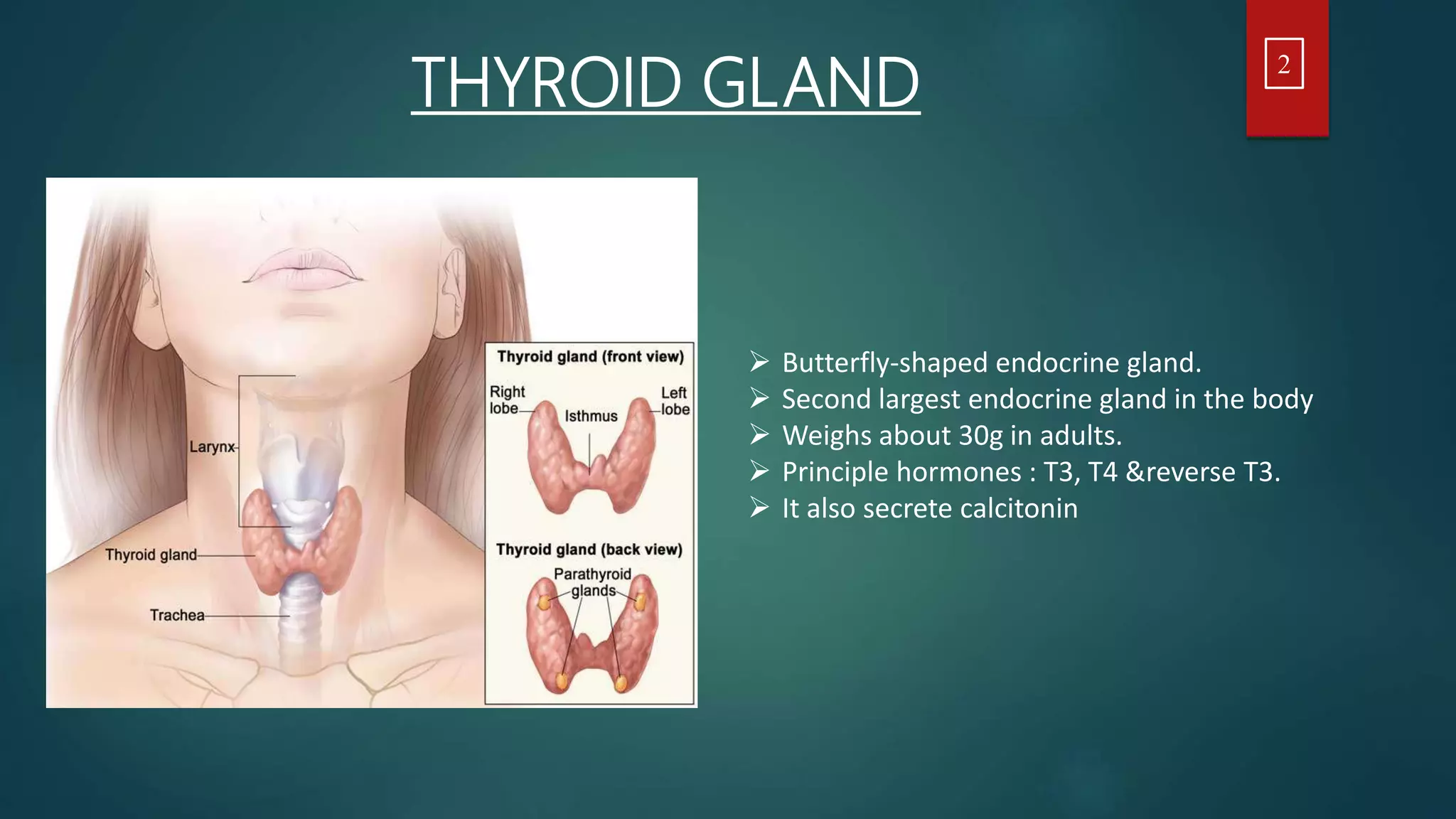
THYROID GLAND
2
 Butterfly-shaped endocrine gland.
 Second largest endocrine gland in the body
 Weighs about 30g in adults.
 Principle hormones : T3, T4 &reverse T3.
 It also secrete calcitonin
FUNCTIONS
 Stimulation and maintenance of metabolic process
 Produces
 Thyroid stimulating hormone (TSH), produced by the pituitary gland, acts
to stimulate hormone production by the thyroid gland.
 Secretes Calcitonin which regulates levels of calcium and phosphate in
the blood
3
Triiodothyronine (T3)
Thyroxine (T4)
HORMONES
 Two principal hormones
 Thyroxine (T4 ) and triiodothyronine (T3)
 Required for homeostasis of all cells
 Influence cell differentiation, growth, and metabolism
 Considered the major metabolic hormones because they target virtually every tissue
 Regulates thyroid hormone production, secretion, and growth
 Is regulated by the negative feedback action of T4 and T3
4
Thyroid-Stimulating Hormone (TSH)
5
 T4 is the primary secretory
product of the thyroid
gland, which is the only
source of T4
 The thyroid secretes
approximately 70-90 g of
T4 per day
 T3 is derived from 2 processes
 The total daily production rate
of T3 is about 15-30 g
 About 80% of circulating T3
comesfrom de iodination of T4
in peripheral tissues
 About 20% comes from direct
thyroid secretion
T4 T3
Hypothalamic-Pituitary-Thyroid Axis
Negative Feedback Mechanism
6
 Disorders of the thyroid are common and consist of 2 general presentations:
changes in the size or shape of the gland or changes in secretion of
hormones from the gland.
 Hypothyroidism refers to the inadequate production of thyroid hormone or
diminished stimulation of the thyroid by TSH
 Hyperthyroidism refers to those conditions in which thyroid hormones are
excessively released due to gland hyper function.
Over view of Disorders
7
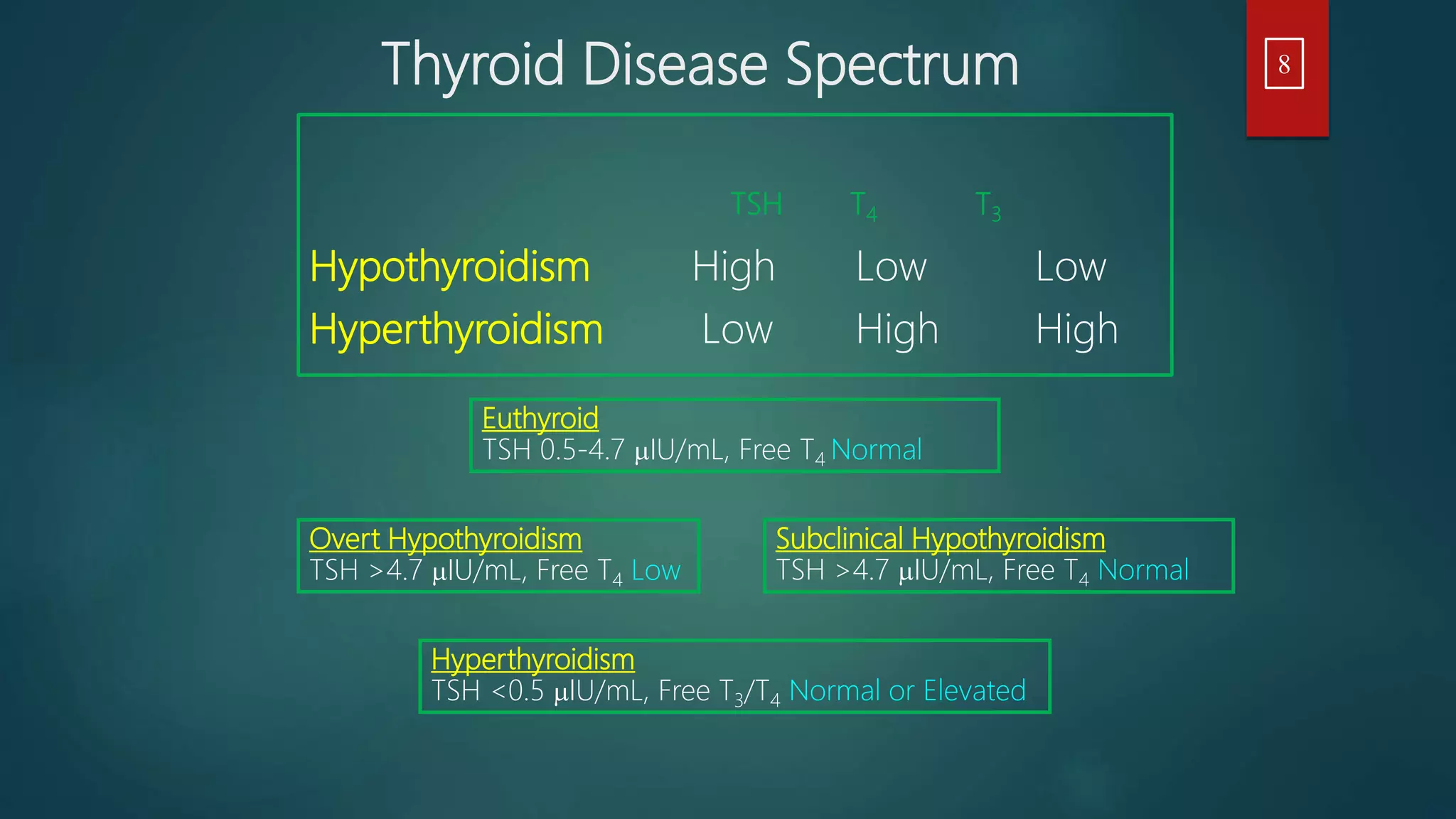
Thyroid Disease Spectrum
TSH T4 T3
Hypothyroidism High Low Low
Hyperthyroidism Low High High
8
Overt Hypothyroidism
TSH >4.7 IU/mL, Free T4 Low
Subclinical Hypothyroidism
TSH >4.7 IU/mL, Free T4 Normal
Euthyroid
TSH 0.5-4.7 IU/mL, Free T4 Normal
Hyperthyroidism
TSH <0.5 IU/mL, Free T3/T4 Normal or Elevated
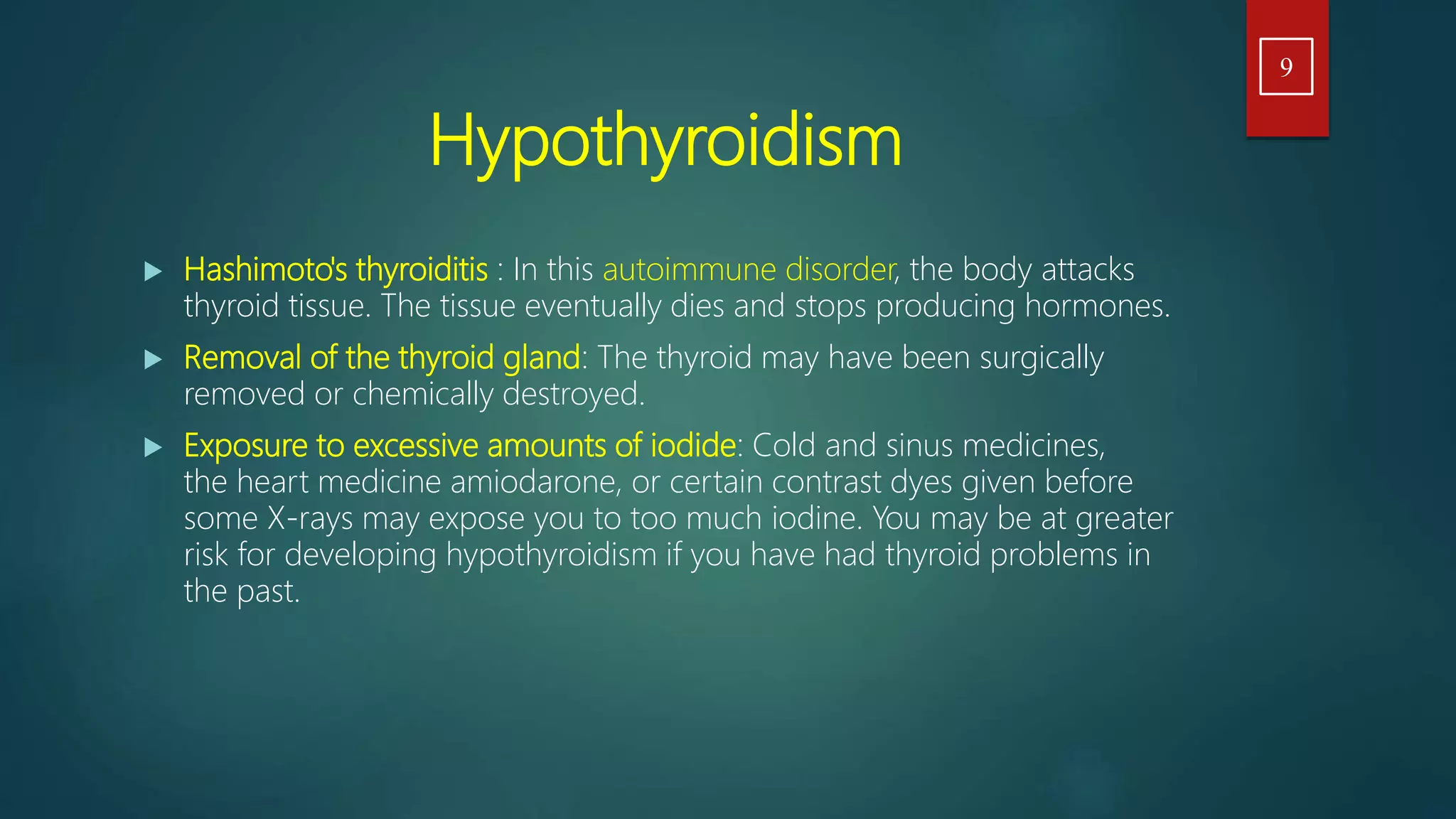
Hypothyroidism
 Hashimoto's thyroiditis : In this autoimmune disorder, the body attacks
thyroid tissue. The tissue eventually dies and stops producing hormones.
 Removal of the thyroid gland: The thyroid may have been surgically
removed or chemically destroyed.
 Exposure to excessive amounts of iodide: Cold and sinus medicines,
the heart medicine amiodarone, or certain contrast dyes given before
some X-rays may expose you to too much iodine. You may be at greater
risk for developing hypothyroidism if you have had thyroid problems in
the past.
9
 Primary hypothyroidism
 From thyroid destruction
 Central or secondary hypothyroidism
 From deficient TSH secretion, generally due to sellar lesions such as pituitary
tumor or craniopharyngioma
 Infrequently is congenital
 Central or tertiary hypothyroidism
 From deficient TSH stimulation above level of pituitary—ie, lesions of
pituitary stalk or hypothalamus
 Is much less common than secondary hypothyroidism
Hypothyroidism: Types
10
 Congenital hypothyroidism
 Agenesis of thyroid
 Defective thyroid hormone biosynthesis due to enzymatic defect
 Thyroid tissue destruction as a result of
 Chronic autoimmune (Hashimoto) thyroiditis
 Radiation (usually radioactive iodine treatment for thyrotoxicosis)
 Thyroidectomy
 Other infiltrative diseases of thyroid (eg, hemochromatosis)
 Drugs with antithyroid actions (eg, lithium, iodine, iodine-containing drugs,
radiographic contrast agents, interferon alpha)
Primary Hypothyroidism:
Underlying Causes
11
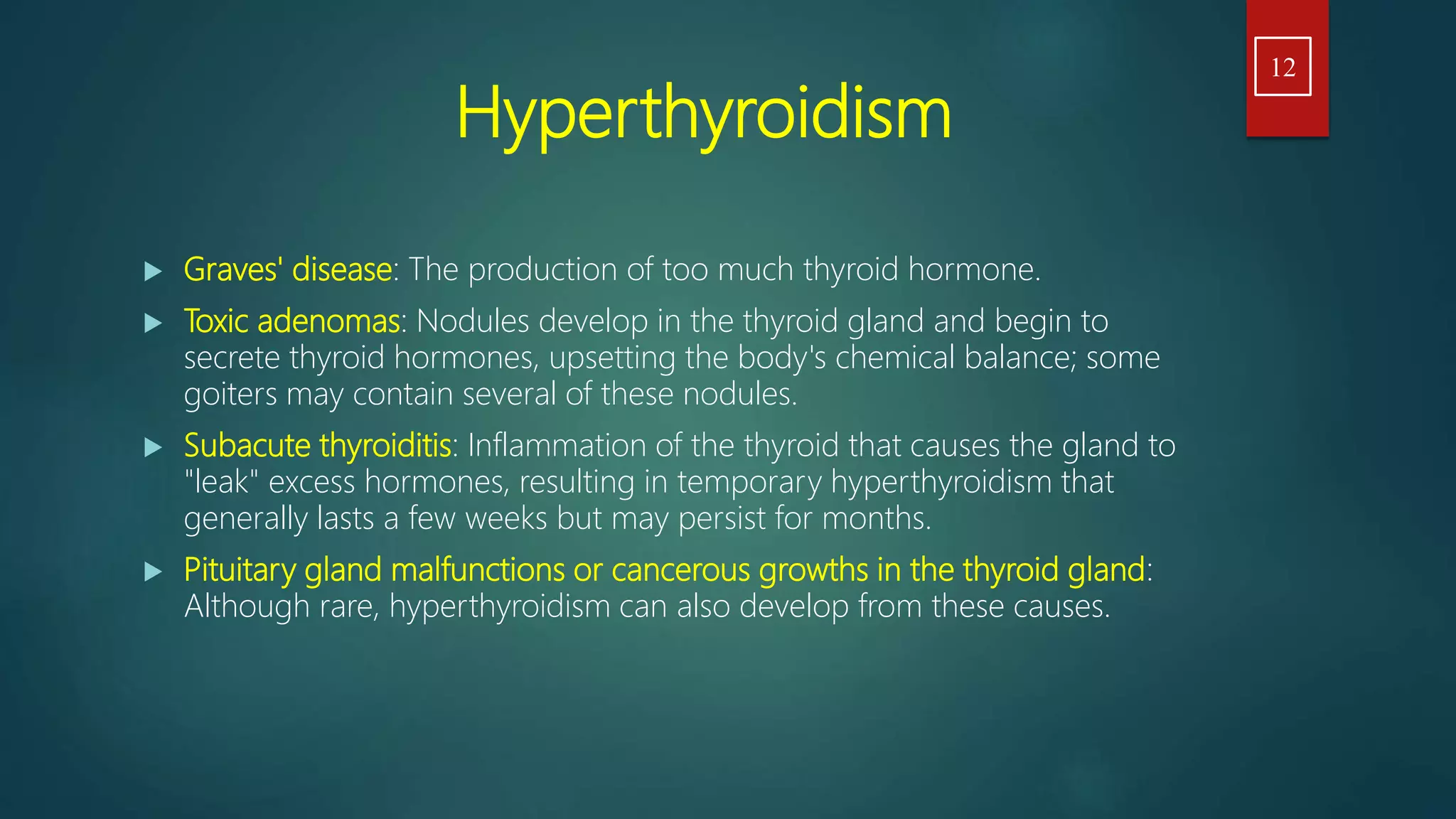
Hyperthyroidism
 Graves' disease: The production of too much thyroid hormone.
 Toxic adenomas: Nodules develop in the thyroid gland and begin to
secrete thyroid hormones, upsetting the body's chemical balance; some
goiters may contain several of these nodules.
 Subacute thyroiditis: Inflammation of the thyroid that causes the gland to
"leak" excess hormones, resulting in temporary hyperthyroidism that
generally lasts a few weeks but may persist for months.
 Pituitary gland malfunctions or cancerous growths in the thyroid gland:
Although rare, hyperthyroidism can also develop from these causes.
12
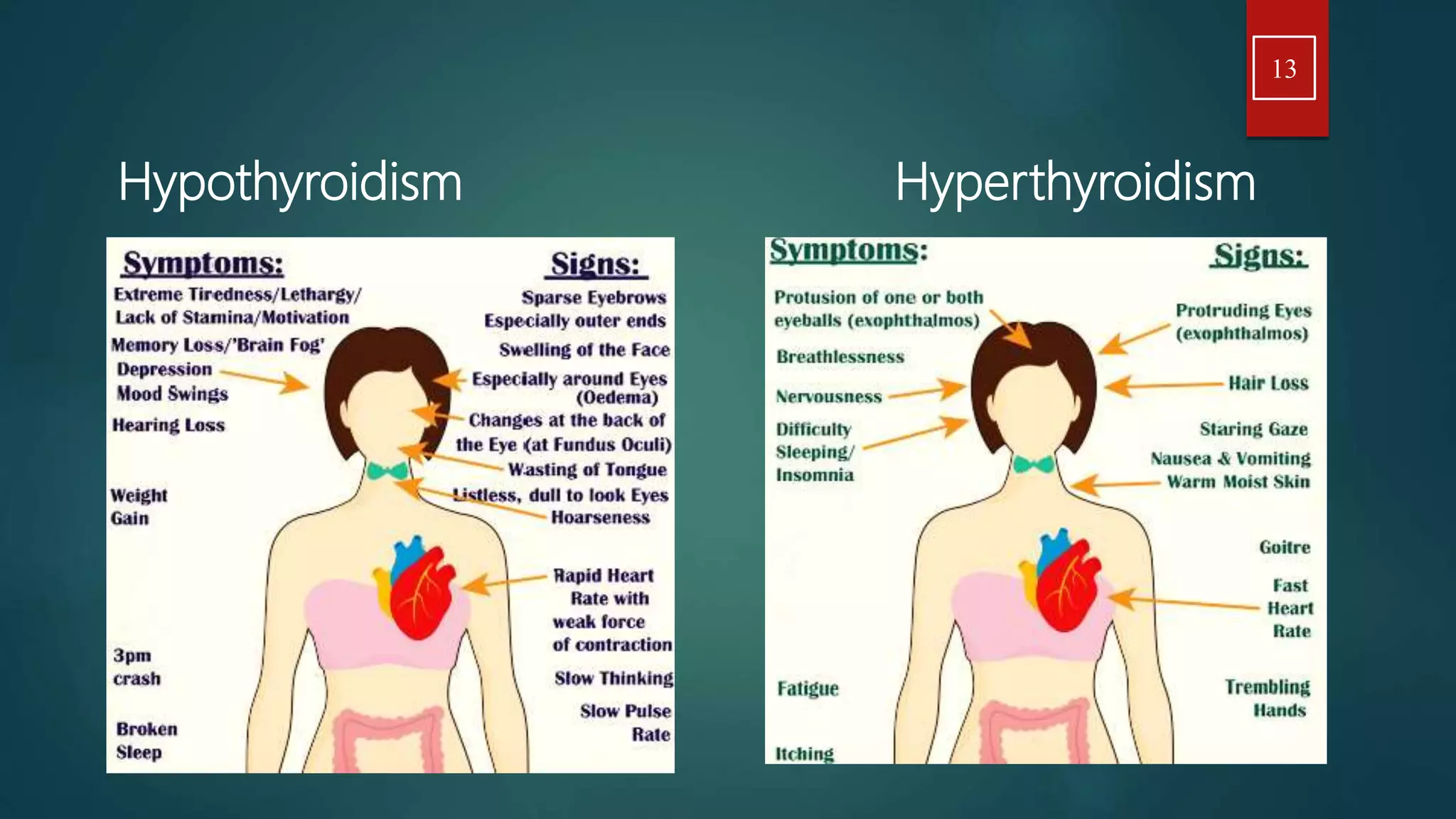
Hypothyroidism Hyperthyroidism
13
14

Thyroid hormone disorders

  • 1.
  • 2.
    THYROID GLAND 2  Butterfly-shapedendocrine gland.  Second largest endocrine gland in the body  Weighs about 30g in adults.  Principle hormones : T3, T4 &reverse T3.  It also secrete calcitonin
  • 3.
    FUNCTIONS  Stimulation andmaintenance of metabolic process  Produces  Thyroid stimulating hormone (TSH), produced by the pituitary gland, acts to stimulate hormone production by the thyroid gland.  Secretes Calcitonin which regulates levels of calcium and phosphate in the blood 3 Triiodothyronine (T3) Thyroxine (T4)
  • 4.
    HORMONES  Two principalhormones  Thyroxine (T4 ) and triiodothyronine (T3)  Required for homeostasis of all cells  Influence cell differentiation, growth, and metabolism  Considered the major metabolic hormones because they target virtually every tissue  Regulates thyroid hormone production, secretion, and growth  Is regulated by the negative feedback action of T4 and T3 4 Thyroid-Stimulating Hormone (TSH)
  • 5.
    5  T4 isthe primary secretory product of the thyroid gland, which is the only source of T4  The thyroid secretes approximately 70-90 g of T4 per day  T3 is derived from 2 processes  The total daily production rate of T3 is about 15-30 g  About 80% of circulating T3 comesfrom de iodination of T4 in peripheral tissues  About 20% comes from direct thyroid secretion T4 T3
  • 6.
  • 7.
     Disorders ofthe thyroid are common and consist of 2 general presentations: changes in the size or shape of the gland or changes in secretion of hormones from the gland.  Hypothyroidism refers to the inadequate production of thyroid hormone or diminished stimulation of the thyroid by TSH  Hyperthyroidism refers to those conditions in which thyroid hormones are excessively released due to gland hyper function. Over view of Disorders 7
  • 8.
    Thyroid Disease Spectrum TSHT4 T3 Hypothyroidism High Low Low Hyperthyroidism Low High High 8 Overt Hypothyroidism TSH >4.7 IU/mL, Free T4 Low Subclinical Hypothyroidism TSH >4.7 IU/mL, Free T4 Normal Euthyroid TSH 0.5-4.7 IU/mL, Free T4 Normal Hyperthyroidism TSH <0.5 IU/mL, Free T3/T4 Normal or Elevated
  • 9.
    Hypothyroidism  Hashimoto's thyroiditis: In this autoimmune disorder, the body attacks thyroid tissue. The tissue eventually dies and stops producing hormones.  Removal of the thyroid gland: The thyroid may have been surgically removed or chemically destroyed.  Exposure to excessive amounts of iodide: Cold and sinus medicines, the heart medicine amiodarone, or certain contrast dyes given before some X-rays may expose you to too much iodine. You may be at greater risk for developing hypothyroidism if you have had thyroid problems in the past. 9
  • 10.
     Primary hypothyroidism From thyroid destruction  Central or secondary hypothyroidism  From deficient TSH secretion, generally due to sellar lesions such as pituitary tumor or craniopharyngioma  Infrequently is congenital  Central or tertiary hypothyroidism  From deficient TSH stimulation above level of pituitary—ie, lesions of pituitary stalk or hypothalamus  Is much less common than secondary hypothyroidism Hypothyroidism: Types 10
  • 11.
     Congenital hypothyroidism Agenesis of thyroid  Defective thyroid hormone biosynthesis due to enzymatic defect  Thyroid tissue destruction as a result of  Chronic autoimmune (Hashimoto) thyroiditis  Radiation (usually radioactive iodine treatment for thyrotoxicosis)  Thyroidectomy  Other infiltrative diseases of thyroid (eg, hemochromatosis)  Drugs with antithyroid actions (eg, lithium, iodine, iodine-containing drugs, radiographic contrast agents, interferon alpha) Primary Hypothyroidism: Underlying Causes 11
  • 12.
    Hyperthyroidism  Graves' disease:The production of too much thyroid hormone.  Toxic adenomas: Nodules develop in the thyroid gland and begin to secrete thyroid hormones, upsetting the body's chemical balance; some goiters may contain several of these nodules.  Subacute thyroiditis: Inflammation of the thyroid that causes the gland to "leak" excess hormones, resulting in temporary hyperthyroidism that generally lasts a few weeks but may persist for months.  Pituitary gland malfunctions or cancerous growths in the thyroid gland: Although rare, hyperthyroidism can also develop from these causes. 12
  • 13.
  • 14.