Presentation on MANAGEMENT OF PATIENT
WITH
HYPERTHYRIODISM AND HYPOTHYRIODISM
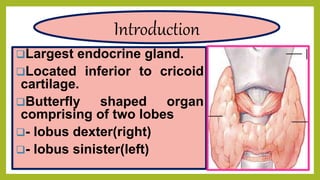
Largest endocrine gland.
Located inferior to cricoid
cartilage.
Butterfly shaped organ
comprising of two lobes
- lobus dexter(right)
- lobus sinister(left)
Introduction
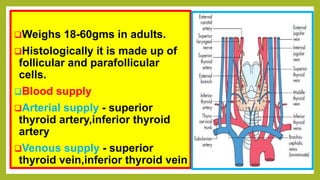
Weighs 18-60gms in adults.
Histologically it is made up of
follicular and parafollicular
cells.
Blood supply
Arterial supply - superior
thyroid artery,inferior thyroid
artery
Venous supply - superior
thyroid vein,inferior thyroid vein
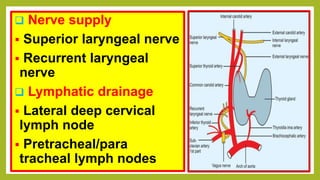
 Nerve supply
 Superior laryngeal nerve
 Recurrent laryngeal
nerve
 Lymphatic drainage
 Lateral deep cervical
lymph node
 Pretracheal/para
tracheal lymph nodes
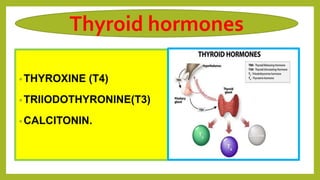
•THYROXINE (T4)
•TRIIODOTHYRONINE(T3)
•CALCITONIN.
Thyroid hormones
1. Levothyroxine (T4)—contains four iodine atoms; maintains
body’s metabolism in a steady state; T4 serves as a precursor
of T3.
2. Triiodothyronine (T3)—contains three iodine atoms;
approximately five times as potent as T4; has a more rapid
metabolic action and utilization than T4 does.
3. Most conversion of T4 to T3 occurs at the cellular level in the
periphery. Some T3 is produced in the thyroid gland.
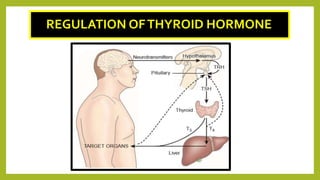
REGULATION OFTHYROID HORMONE
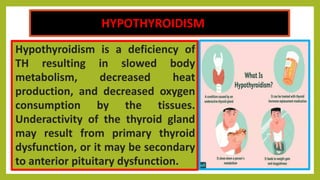
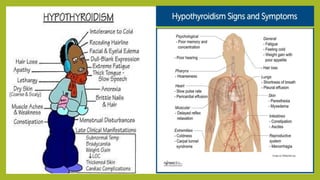
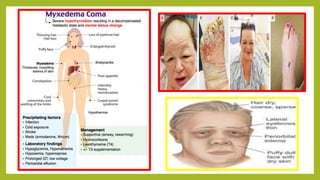
HYPOTHYROIDISM
Hypothyroidism is a deficiency of
TH resulting in slowed body
metabolism, decreased heat
production, and decreased oxygen
consumption by the tissues.
Underactivity of the thyroid gland
may result from primary thyroid
dysfunction, or it may be secondary
to anterior pituitary dysfunction.
INCIDENCE AND PREVALANCE
•The prevalence of hypothyroidism in
the general population has been
reported to be from 0.3% to 3.7% in
the United States and from 0.2% to
5.3% in European countries
The prevalence of overt
hyperthyroidism has been reported as
0.5% to 0.8% in Europe and 0.5% in
the United States.
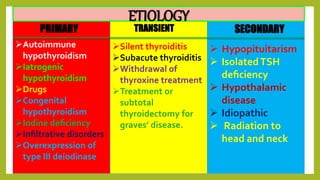
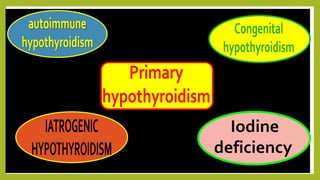
PRIMARY
Autoimmune
hypothyroidism
Iatrogenic
hypothyroidism
Drugs
Congenital
hypothyroidism
Iodine deficiency
Infiltrative disorders
Overexpression of
type III deiodinase
TRANSIENT
Silent thyroiditis
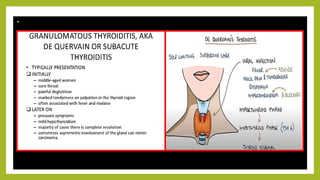
Subacute thyroiditis
Withdrawal of
thyroxine treatment
Treatment or
subtotal
thyroidectomy for
graves’ disease.
SECONDARY
 Hypopituitarism
 IsolatedTSH
deficiency
 Hypothalamic
disease
 Idiopathic
 Radiation to
head and neck
ETIOLOGY
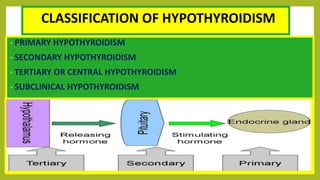
CLASSIFICATION OF HYPOTHYROIDISM
• PRIMARY HYPOTHYROIDISM
• SECONDARY HYPOTHYROIDISM
• TERTIARY OR CENTRAL HYPOTHYROIDISM
• SUBCLINICAL HYPOTHYROIDISM
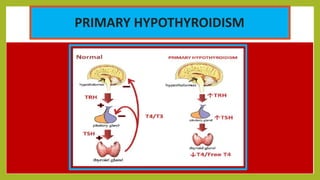
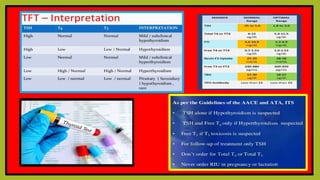
Primary hypothyroidism
•The majority of cases of hypothyroidism are
caused by disease intrinsic to the gland itself.
This is termed primary hypothyroidism.
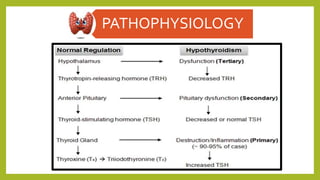
•In primary hypothyroidism, we expect to
find reduced levels of thyroid
hormone accompanied by a raised TSH (due to
lack of negative feedback).
PRIMARY HYPOTHYROIDISM
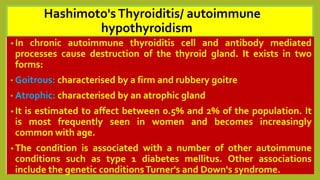
Hashimoto'sThyroiditis/ autoimmune
hypothyroidism
• In chronic autoimmune thyroiditis cell and antibody mediated
processes cause destruction of the thyroid gland. It exists in two
forms:
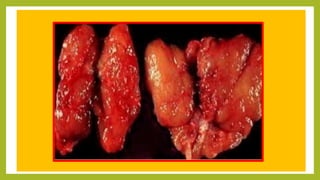
• Goitrous: characterised by a firm and rubbery goitre
• Atrophic: characterised by an atrophic gland
• It is estimated to affect between 0.5% and 2% of the population. It
is most frequently seen in women and becomes increasingly
common with age.
• The condition is associated with a number of other autoimmune
conditions such as type 1 diabetes mellitus. Other associations
include the genetic conditionsTurner's and Down's syndrome.
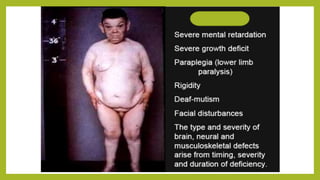
Congenital hypothyroidism
The majority of infants appear normal at birth, and <10% are
diagnosed based on clinical features, which include prolonged
jaundice, feeding problems, hypotonia, enlarged tongue,
delayed bone maturation, and umbilical hernia.
Importantly, permanent neurologic damage results if
treatment is delayed.
 Typical features of adult hypothyroidism may also be
present.
 Other congenital malformations, especially cardiac, are four
times more common in congenital hypothyroidism.
IATROGENIC HYPOTHYROIDISM
Iatrogenic hypothyroidism is a common cause of
hypothyroidism.
In the first 3–4 months after radioiodine treatment, transient
hypothyroidism may occur due to reversible radiation
damage. Low-dose thyroxine treatment can be withdrawn if
recovery occurs.
Mild hypothyroidism after subtotal thyroidectomy may also
resolve after several months, as the gland remnant is
stimulated by increased tsh levels.
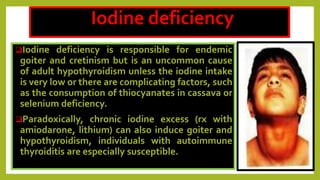
Iodine deficiency
Iodine deficiency is responsible for endemic
goiter and cretinism but is an uncommon cause
of adult hypothyroidism unless the iodine intake
is very low or there are complicating factors, such
as the consumption of thiocyanates in cassava or
selenium deficiency.
Paradoxically, chronic iodine excess (rx with
amiodarone, lithium) can also induce goiter and
hypothyroidism, individuals with autoimmune
thyroiditis are especially susceptible.
SECONDARY HYPOTHYROIDISM
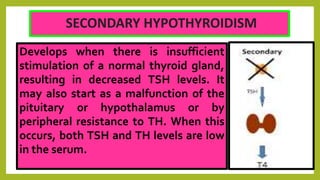
Develops when there is insufficient
stimulation of a normal thyroid gland,
resulting in decreased TSH levels. It
may also start as a malfunction of the
pituitary or hypothalamus or by
peripheral resistance to TH. When this
occurs, both TSH and TH levels are low
in the serum.
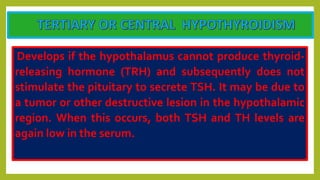
Develops if the hypothalamus cannot produce thyroid-
releasing hormone (TRH) and subsequently does not
stimulate the pituitary to secrete TSH. It may be due to
a tumor or other destructive lesion in the hypothalamic
region. When this occurs, both TSH and TH levels are
again low in the serum.
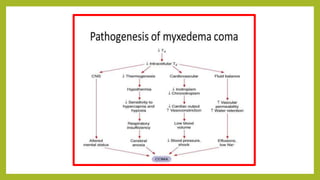
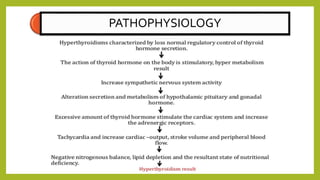
PATHOPHYSIOLOGY
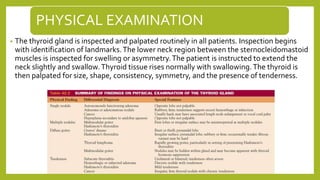
PHYSICAL EXAMINATION
• The thyroid gland is inspected and palpated routinely in all patients. Inspection begins
with identification of landmarks.The lower neck region between the sternocleidomastoid
muscles is inspected for swelling or asymmetry.The patient is instructed to extend the
neck slightly and swallow.Thyroid tissue rises normally with swallowing. The thyroid is
then palpated for size, shape, consistency, symmetry, and the presence of tenderness.
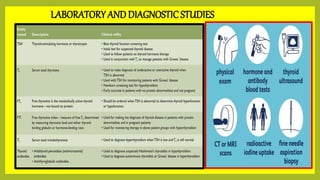
LABORATORY ANDDIAGNOSTICSTUDIES
r
• r
r
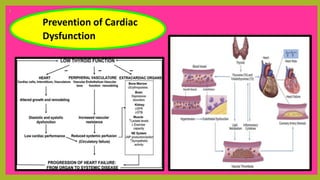
Prevention of Cardiac
Dysfunction
• r
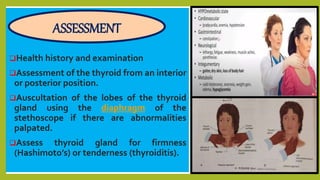
Health history and examination
Assessment of the thyroid from an interior
or posterior position.
Auscultation of the lobes of the thyroid
gland using the diaphragm of the
stethoscope if there are abnormalities
palpated.
Assess thyroid gland for firmness
(Hashimoto’s) or tenderness (thyroiditis).
ASSESSMENT
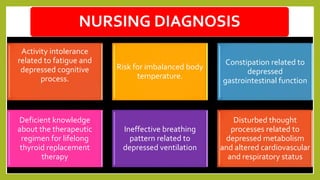
NURSING DIAGNOSIS
Activity intolerance
related to fatigue and
depressed cognitive
process.
Risk for imbalanced body
temperature.
Constipation related to
depressed
gastrointestinal function
Deficient knowledge
about the therapeutic
regimen for lifelong
thyroid replacement
therapy
Ineffective breathing
pattern related to
depressed ventilation
Disturbed thought
processes related to
depressed metabolism
and altered cardiovascular
and respiratory status
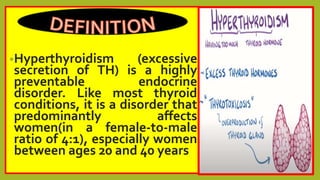
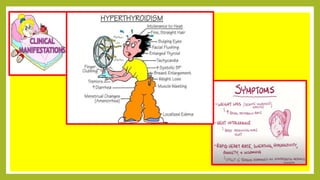
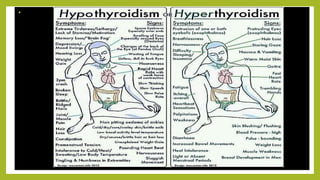
•Hyperthyroidism (excessive
secretion of TH) is a highly
preventable endocrine
disorder. Like most thyroid
conditions, it is a disorder that
predominantly affects
women(in a female-to-male
ratio of 4:1), especially women
between ages 20 and 40 years
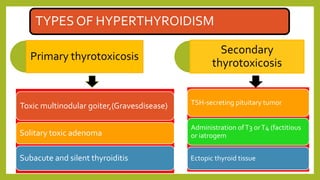
TYPES OF HYPERTHYROIDISM
Primary thyrotoxicosis
Secondary
thyrotoxicosis
TSH-secreting pituitary tumor
Administration ofT3 orT4 (factitious
or iatrogem
Ectopic thyroid tissue
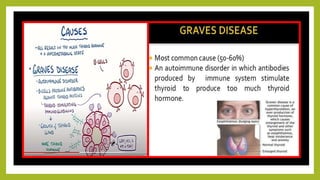
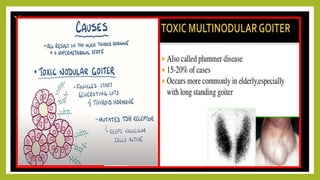
Toxic multinodular goiter,(Gravesdisease)
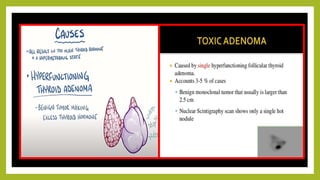
Solitary toxic adenoma
Subacute and silent thyroiditis
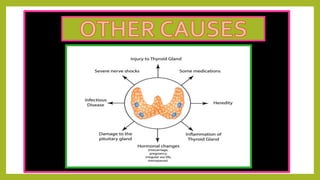
r
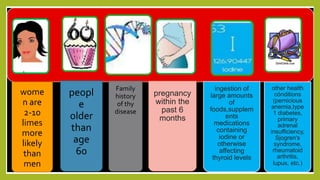
wome
n are
2-10
limes
more
likely
than
men
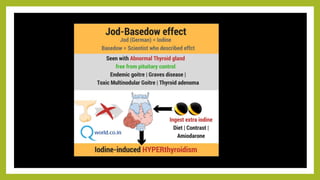
ingestion of
large amounts
of
foods,supplem
ents
medications
containing
iodine or
otherwise
affecting
thyroid levels
other health
cónditions
(pernicious
anemia,type
1 diabetes,
primary
adrenal
insufficiency,
Sjogren's
syndrome,
rheumatoid
arthritis,
lupus, etc.)
pregnancy
within the
past 6
months
Family
history
of thy
disease
peopl
e
older
than
age
60
r
• r
r
• r
• r
r
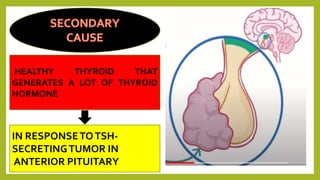
HEALTHY THYROID THAT
GENERATES A LOT OF THYROID
HORMONE
IN RESPONSETOTSH-
SECRETINGTUMOR IN
ANTERIOR PITUITARY
PATHOPHYSIOLOGY
• R
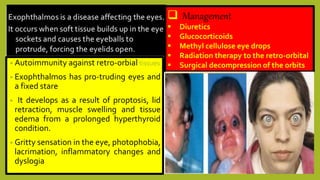
 Management
 Diuretics
 Glucocorticoids
 Methyl cellulose eye drops
 Radiation therapy to the retro-orbital
 Surgical decompression of the orbits• Autoimmunity against retro-orbial tissues
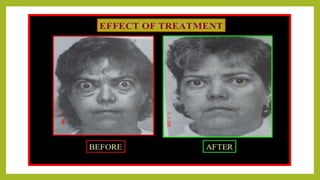
• Exophthalmos has pro-truding eyes and
a fixed stare
• It develops as a result of proptosis, lid
retraction, muscle swelling and tissue
edema from a prolonged hyperthyroid
condition.
• Gritty sensation in the eye, photophobia,
lacrimation, inflammatory changes and
dyslogia
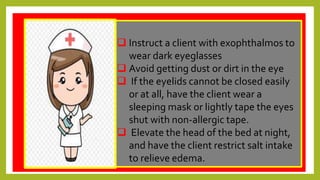
q
 Instruct a client with exophthalmos to
wear dark eyeglasses
 Avoid getting dust or dirt in the eye
 If the eyelids cannot be closed easily
or at all, have the client wear a
sleeping mask or lightly tape the eyes
shut with non-allergic tape.
 Elevate the head of the bed at night,
and have the client restrict salt intake
to relieve edema.
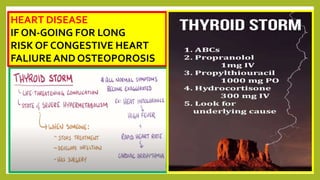
HEART DISEASE
IF ON-GOING FOR LONG
RISK OF CONGESTIVE HEART
FALIURE AND OSTEOPOROSIS
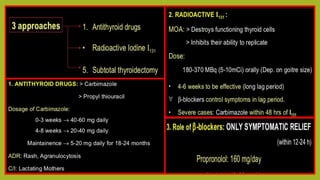
Management
• r
r
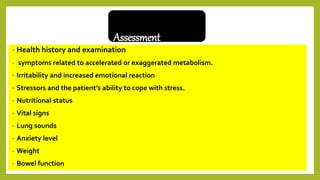
Assessment
• Health history and examination
• symptoms related to accelerated or exaggerated metabolism.
• Irritability and increased emotional reaction
• Stressors and the patient’s ability to cope with stress.
• Nutritional status
• Vital signs
• Lung sounds
• Anxiety level
• Weight
• Bowel function
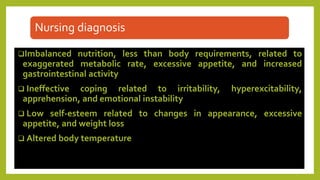
Nursing diagnosis
Imbalanced nutrition, less than body requirements, related to
exaggerated metabolic rate, excessive appetite, and increased
gastrointestinal activity
 Ineffective coping related to irritability, hyperexcitability,
apprehension, and emotional instability
 Low self-esteem related to changes in appearance, excessive
appetite, and weight loss
 Altered body temperature
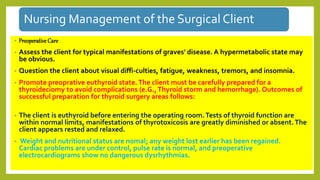
Nursing Management of the Surgical Client
• Preoperative Care
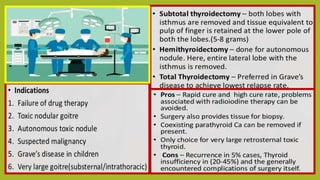
• Assess the client for typical manifestations of graves' disease. A hypermetabolic state may
be obvious.
• Question the client about visual diffi-culties, fatigue, weakness, tremors, and insomnia.
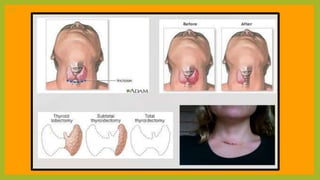
• Promote preoprative euthyroid state.The client must be carefully prepared for a
thyroideciomy to avoid complications (e.G.,Thyroid storm and hemorrhage). Outcomes of
successful preparation for thyroid surgery areas follows:
• The client is euthyroid before entering the operating room.Tests of thyroid function are
within normal limits, manifestations of thyrotoxicosis are greatly diminished or absent.The
client appears rested and relaxed.
• Weight and nutritional status are nomal; any weight lost earlier has been regained.
Cardiac problems are under control, pulse rate is normal, and preoperative
electrocardiograms show no dangerous dysrhythmias.
•Postoperative Care
•ASSESSMENT
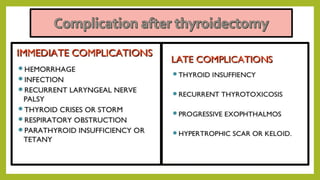
• Monitor for Postoperative Complications.
• Assemble the needed equipment at the bedside before the client returns
from surgery.
• Monitor andTreat Hypocalcemia
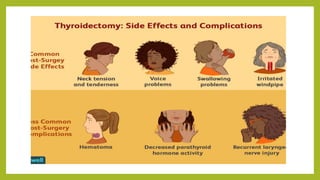
• Hypocalcemia can develop after thyroidectomy if the parathyrold glands
are accidentally removed during surgery.
•PREVENT ANDTREAT COMPLICATIONS
THYROID STROM
• R
conclusion
HYPOTHYROIDISM ANDHYPERTHYROIDISM
Is a chronic condition that afflicts millions of
people worldwide. Proper and timely diagnosis,
along with correct treatment, can go a long way
toward reducing the morbidity and mortality
associated with this disease state..

11.hypo and hyperthyroidism ppt

  • 1.
    Presentation on MANAGEMENTOF PATIENT WITH HYPERTHYRIODISM AND HYPOTHYRIODISM
  • 2.
    Largest endocrine gland. Locatedinferior to cricoid cartilage. Butterfly shaped organ comprising of two lobes - lobus dexter(right) - lobus sinister(left) Introduction
  • 3.
    Weighs 18-60gms inadults. Histologically it is made up of follicular and parafollicular cells. Blood supply Arterial supply - superior thyroid artery,inferior thyroid artery Venous supply - superior thyroid vein,inferior thyroid vein
  • 4.
     Nerve supply Superior laryngeal nerve  Recurrent laryngeal nerve  Lymphatic drainage  Lateral deep cervical lymph node  Pretracheal/para tracheal lymph nodes
  • 5.
  • 6.
    1. Levothyroxine (T4)—containsfour iodine atoms; maintains body’s metabolism in a steady state; T4 serves as a precursor of T3. 2. Triiodothyronine (T3)—contains three iodine atoms; approximately five times as potent as T4; has a more rapid metabolic action and utilization than T4 does. 3. Most conversion of T4 to T3 occurs at the cellular level in the periphery. Some T3 is produced in the thyroid gland.
  • 7.
  • 8.
    HYPOTHYROIDISM Hypothyroidism is adeficiency of TH resulting in slowed body metabolism, decreased heat production, and decreased oxygen consumption by the tissues. Underactivity of the thyroid gland may result from primary thyroid dysfunction, or it may be secondary to anterior pituitary dysfunction.
  • 9.
    INCIDENCE AND PREVALANCE •Theprevalence of hypothyroidism in the general population has been reported to be from 0.3% to 3.7% in the United States and from 0.2% to 5.3% in European countries The prevalence of overt hyperthyroidism has been reported as 0.5% to 0.8% in Europe and 0.5% in the United States.
  • 10.
    PRIMARY Autoimmune hypothyroidism Iatrogenic hypothyroidism Drugs Congenital hypothyroidism Iodine deficiency Infiltrative disorders Overexpressionof type III deiodinase TRANSIENT Silent thyroiditis Subacute thyroiditis Withdrawal of thyroxine treatment Treatment or subtotal thyroidectomy for graves’ disease. SECONDARY  Hypopituitarism  IsolatedTSH deficiency  Hypothalamic disease  Idiopathic  Radiation to head and neck ETIOLOGY
  • 11.
    CLASSIFICATION OF HYPOTHYROIDISM •PRIMARY HYPOTHYROIDISM • SECONDARY HYPOTHYROIDISM • TERTIARY OR CENTRAL HYPOTHYROIDISM • SUBCLINICAL HYPOTHYROIDISM
  • 12.
    Primary hypothyroidism •The majorityof cases of hypothyroidism are caused by disease intrinsic to the gland itself. This is termed primary hypothyroidism. •In primary hypothyroidism, we expect to find reduced levels of thyroid hormone accompanied by a raised TSH (due to lack of negative feedback).
  • 13.
  • 15.
    Hashimoto'sThyroiditis/ autoimmune hypothyroidism • Inchronic autoimmune thyroiditis cell and antibody mediated processes cause destruction of the thyroid gland. It exists in two forms: • Goitrous: characterised by a firm and rubbery goitre • Atrophic: characterised by an atrophic gland • It is estimated to affect between 0.5% and 2% of the population. It is most frequently seen in women and becomes increasingly common with age. • The condition is associated with a number of other autoimmune conditions such as type 1 diabetes mellitus. Other associations include the genetic conditionsTurner's and Down's syndrome.
  • 17.
    Congenital hypothyroidism The majorityof infants appear normal at birth, and <10% are diagnosed based on clinical features, which include prolonged jaundice, feeding problems, hypotonia, enlarged tongue, delayed bone maturation, and umbilical hernia. Importantly, permanent neurologic damage results if treatment is delayed.  Typical features of adult hypothyroidism may also be present.  Other congenital malformations, especially cardiac, are four times more common in congenital hypothyroidism.
  • 19.
    IATROGENIC HYPOTHYROIDISM Iatrogenic hypothyroidismis a common cause of hypothyroidism. In the first 3–4 months after radioiodine treatment, transient hypothyroidism may occur due to reversible radiation damage. Low-dose thyroxine treatment can be withdrawn if recovery occurs. Mild hypothyroidism after subtotal thyroidectomy may also resolve after several months, as the gland remnant is stimulated by increased tsh levels.
  • 20.
    Iodine deficiency Iodine deficiencyis responsible for endemic goiter and cretinism but is an uncommon cause of adult hypothyroidism unless the iodine intake is very low or there are complicating factors, such as the consumption of thiocyanates in cassava or selenium deficiency. Paradoxically, chronic iodine excess (rx with amiodarone, lithium) can also induce goiter and hypothyroidism, individuals with autoimmune thyroiditis are especially susceptible.
  • 21.
    SECONDARY HYPOTHYROIDISM Develops whenthere is insufficient stimulation of a normal thyroid gland, resulting in decreased TSH levels. It may also start as a malfunction of the pituitary or hypothalamus or by peripheral resistance to TH. When this occurs, both TSH and TH levels are low in the serum.
  • 22.
    Develops if thehypothalamus cannot produce thyroid- releasing hormone (TRH) and subsequently does not stimulate the pituitary to secrete TSH. It may be due to a tumor or other destructive lesion in the hypothalamic region. When this occurs, both TSH and TH levels are again low in the serum.
  • 23.
  • 27.
    PHYSICAL EXAMINATION • Thethyroid gland is inspected and palpated routinely in all patients. Inspection begins with identification of landmarks.The lower neck region between the sternocleidomastoid muscles is inspected for swelling or asymmetry.The patient is instructed to extend the neck slightly and swallow.Thyroid tissue rises normally with swallowing. The thyroid is then palpated for size, shape, consistency, symmetry, and the presence of tenderness.
  • 28.
  • 29.
  • 31.
  • 34.
  • 35.
  • 37.
    Health history andexamination Assessment of the thyroid from an interior or posterior position. Auscultation of the lobes of the thyroid gland using the diaphragm of the stethoscope if there are abnormalities palpated. Assess thyroid gland for firmness (Hashimoto’s) or tenderness (thyroiditis). ASSESSMENT
  • 38.
    NURSING DIAGNOSIS Activity intolerance relatedto fatigue and depressed cognitive process. Risk for imbalanced body temperature. Constipation related to depressed gastrointestinal function Deficient knowledge about the therapeutic regimen for lifelong thyroid replacement therapy Ineffective breathing pattern related to depressed ventilation Disturbed thought processes related to depressed metabolism and altered cardiovascular and respiratory status
  • 41.
    •Hyperthyroidism (excessive secretion ofTH) is a highly preventable endocrine disorder. Like most thyroid conditions, it is a disorder that predominantly affects women(in a female-to-male ratio of 4:1), especially women between ages 20 and 40 years
  • 42.
    TYPES OF HYPERTHYROIDISM Primarythyrotoxicosis Secondary thyrotoxicosis TSH-secreting pituitary tumor Administration ofT3 orT4 (factitious or iatrogem Ectopic thyroid tissue Toxic multinodular goiter,(Gravesdisease) Solitary toxic adenoma Subacute and silent thyroiditis
  • 43.
  • 44.
    wome n are 2-10 limes more likely than men ingestion of largeamounts of foods,supplem ents medications containing iodine or otherwise affecting thyroid levels other health cónditions (pernicious anemia,type 1 diabetes, primary adrenal insufficiency, Sjogren's syndrome, rheumatoid arthritis, lupus, etc.) pregnancy within the past 6 months Family history of thy disease peopl e older than age 60
  • 45.
  • 46.
  • 47.
  • 48.
  • 49.
  • 50.
  • 51.
    HEALTHY THYROID THAT GENERATESA LOT OF THYROID HORMONE IN RESPONSETOTSH- SECRETINGTUMOR IN ANTERIOR PITUITARY
  • 52.
  • 53.
  • 55.
     Management  Diuretics Glucocorticoids  Methyl cellulose eye drops  Radiation therapy to the retro-orbital  Surgical decompression of the orbits• Autoimmunity against retro-orbial tissues • Exophthalmos has pro-truding eyes and a fixed stare • It develops as a result of proptosis, lid retraction, muscle swelling and tissue edema from a prolonged hyperthyroid condition. • Gritty sensation in the eye, photophobia, lacrimation, inflammatory changes and dyslogia
  • 56.
    q  Instruct aclient with exophthalmos to wear dark eyeglasses  Avoid getting dust or dirt in the eye  If the eyelids cannot be closed easily or at all, have the client wear a sleeping mask or lightly tape the eyes shut with non-allergic tape.  Elevate the head of the bed at night, and have the client restrict salt intake to relieve edema.
  • 57.
    HEART DISEASE IF ON-GOINGFOR LONG RISK OF CONGESTIVE HEART FALIURE AND OSTEOPOROSIS
  • 59.
  • 63.
  • 66.
  • 67.
    Assessment • Health historyand examination • symptoms related to accelerated or exaggerated metabolism. • Irritability and increased emotional reaction • Stressors and the patient’s ability to cope with stress. • Nutritional status • Vital signs • Lung sounds • Anxiety level • Weight • Bowel function
  • 68.
    Nursing diagnosis Imbalanced nutrition,less than body requirements, related to exaggerated metabolic rate, excessive appetite, and increased gastrointestinal activity  Ineffective coping related to irritability, hyperexcitability, apprehension, and emotional instability  Low self-esteem related to changes in appearance, excessive appetite, and weight loss  Altered body temperature
  • 69.
    Nursing Management ofthe Surgical Client • Preoperative Care • Assess the client for typical manifestations of graves' disease. A hypermetabolic state may be obvious. • Question the client about visual diffi-culties, fatigue, weakness, tremors, and insomnia. • Promote preoprative euthyroid state.The client must be carefully prepared for a thyroideciomy to avoid complications (e.G.,Thyroid storm and hemorrhage). Outcomes of successful preparation for thyroid surgery areas follows: • The client is euthyroid before entering the operating room.Tests of thyroid function are within normal limits, manifestations of thyrotoxicosis are greatly diminished or absent.The client appears rested and relaxed. • Weight and nutritional status are nomal; any weight lost earlier has been regained. Cardiac problems are under control, pulse rate is normal, and preoperative electrocardiograms show no dangerous dysrhythmias.
  • 70.
    •Postoperative Care •ASSESSMENT • Monitorfor Postoperative Complications. • Assemble the needed equipment at the bedside before the client returns from surgery. • Monitor andTreat Hypocalcemia • Hypocalcemia can develop after thyroidectomy if the parathyrold glands are accidentally removed during surgery. •PREVENT ANDTREAT COMPLICATIONS THYROID STROM
  • 71.
  • 72.
    conclusion HYPOTHYROIDISM ANDHYPERTHYROIDISM Is achronic condition that afflicts millions of people worldwide. Proper and timely diagnosis, along with correct treatment, can go a long way toward reducing the morbidity and mortality associated with this disease state..