1.Definition of Emergent Literacy
a. Characteristics of Emergent Reader
2. Transitions in the Perspective of Emergent Literacy
 Marie Clay (1996) was the first one who used the
term emergent literacy.
 Emergent Literacy is based on an assumption
that a child acquires some knowledge about
language, reading and writing even before
attending any formal education.
 She asserted that literacy development begins
early in life and is ongoing.
 Teale( 1987) described emergent literacy as the early
signs of reading and writing demonstrated by young
children, even before they begin to take formal
instruction to reading and writing, and such early
signs and ways are recognized by most adults.
 Teale (1982)viewed literacy as the result of children’s
involvement in reading activities facilitated by literate
adults.
 The concept of emergent literacy suggests that all
children who come to school already have certain
experiences and interests in learning (Teale, 1987).
Thus, refers to competencies and
literacy skills in early childhood.
 Teale and Sulzby pointed out the reference for the
term emergent literacy over traditional readiness.
 Emergent or emerging means that children are
always in the process of becoming literate, probably,
since they are just a few months old (Teale, 1987).
 SULZBY(1991) defines LITERACY as the reading and
writing behaviors of young children that precede and
develop into conventional literacy.
 Display curiosity about books and readings.
 Pretend read and write.
 Rely on pictures to tell the story but are beginning to
focus on print.
 May know some letter names and sound association
 Can write some letters, usually in their own names.
Changes has always defined literacy. Changes defines
literacy instruction. These transitions are marked by:
1) Basic literacy which emphasizes the reading and
writing of young learners to construct meaning for
themselves;
2) Socio – cultural literacy which emphasizes the
importance of social interaction of children to
construct cultural – specific meanings and to
demonstrate literacy practices as social events and
cultural phenomena; and
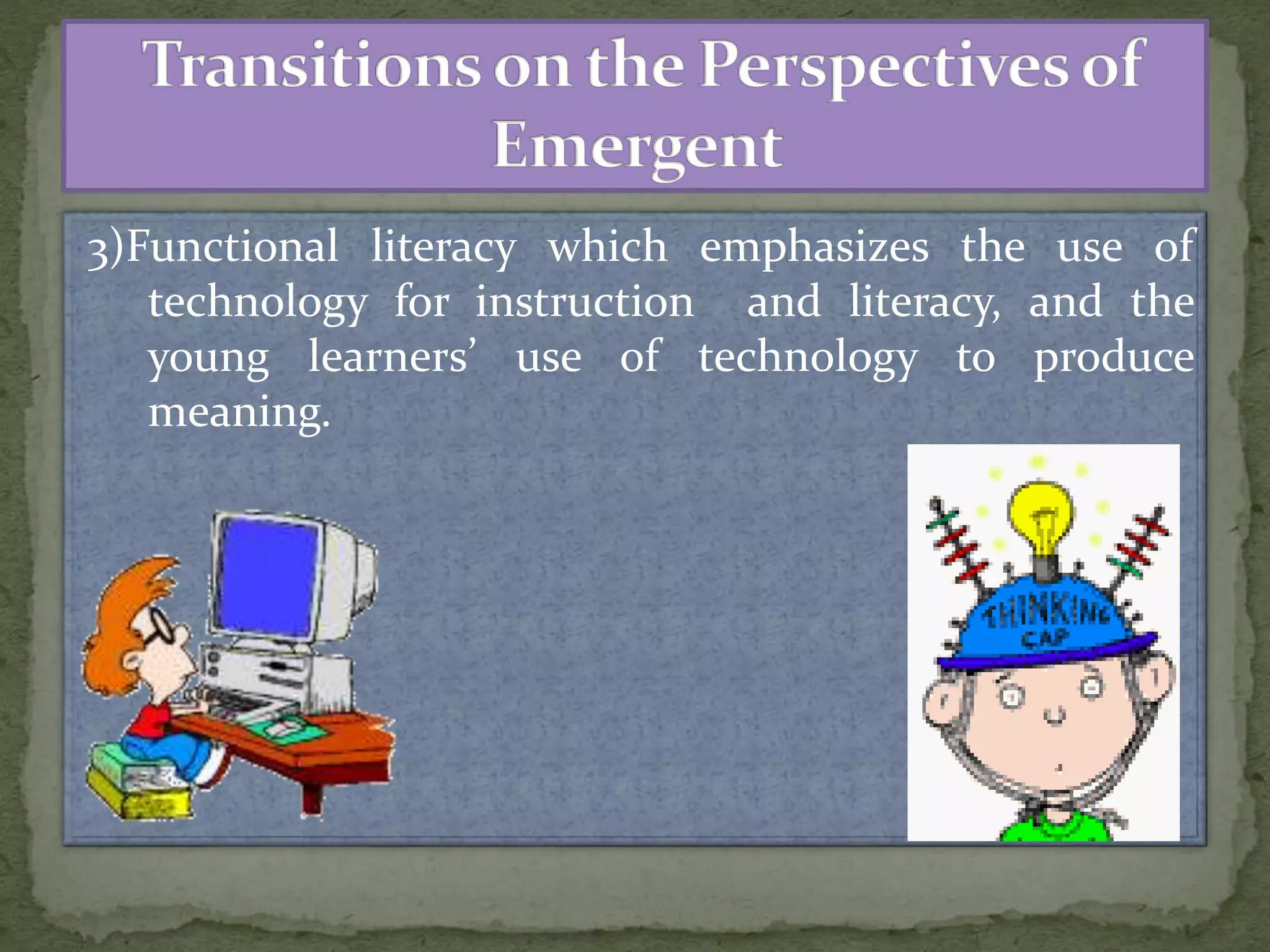
3)Functional literacy which emphasizes the use of
technology for instruction and literacy, and the
young learners’ use of technology to produce
meaning.
Group 1:
ABAD, EDEN N.
ABUNDO, LYNETTE L.
ALBERTO, CHINLY RUTH T.
BALISACAN, DIANA ROSE M.
JOBELLE D. BAUTISTA
BEED-3A

Theories of learning and early literacy (definition, characteristics, transition)

  • 1.
    1.Definition of EmergentLiteracy a. Characteristics of Emergent Reader 2. Transitions in the Perspective of Emergent Literacy
  • 2.
     Marie Clay(1996) was the first one who used the term emergent literacy.  Emergent Literacy is based on an assumption that a child acquires some knowledge about language, reading and writing even before attending any formal education.  She asserted that literacy development begins early in life and is ongoing.
  • 3.
     Teale( 1987)described emergent literacy as the early signs of reading and writing demonstrated by young children, even before they begin to take formal instruction to reading and writing, and such early signs and ways are recognized by most adults.  Teale (1982)viewed literacy as the result of children’s involvement in reading activities facilitated by literate adults.
  • 4.
     The conceptof emergent literacy suggests that all children who come to school already have certain experiences and interests in learning (Teale, 1987). Thus, refers to competencies and literacy skills in early childhood.
  • 5.
     Teale andSulzby pointed out the reference for the term emergent literacy over traditional readiness.  Emergent or emerging means that children are always in the process of becoming literate, probably, since they are just a few months old (Teale, 1987).
  • 6.
     SULZBY(1991) definesLITERACY as the reading and writing behaviors of young children that precede and develop into conventional literacy.
  • 7.
     Display curiosityabout books and readings.  Pretend read and write.  Rely on pictures to tell the story but are beginning to focus on print.  May know some letter names and sound association  Can write some letters, usually in their own names.
  • 8.
    Changes has alwaysdefined literacy. Changes defines literacy instruction. These transitions are marked by: 1) Basic literacy which emphasizes the reading and writing of young learners to construct meaning for themselves; 2) Socio – cultural literacy which emphasizes the importance of social interaction of children to construct cultural – specific meanings and to demonstrate literacy practices as social events and cultural phenomena; and
  • 9.
    3)Functional literacy whichemphasizes the use of technology for instruction and literacy, and the young learners’ use of technology to produce meaning.
  • 11.
    Group 1: ABAD, EDENN. ABUNDO, LYNETTE L. ALBERTO, CHINLY RUTH T. BALISACAN, DIANA ROSE M. JOBELLE D. BAUTISTA BEED-3A