Literacy Environment Analysis
Angela Beavers
Walden University
Dr. Phyllis McCully
READ 6706 Literacy Development PreK-3
June 15, 2016
Table of Content
 The Emergent Literacy Learner
 The Beginning Literacy Learner
 Getting to Know Emergent and
Beginning Literacy Learners
 Selecting Text
 Emergent Literacy Learner Lesson
 Beginning Literacy Learner Lesson
 Reflection
 References
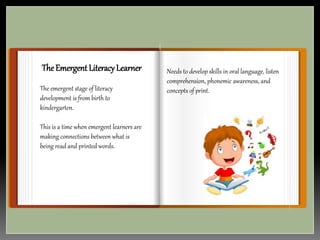
The Emergent Literacy Learner
The emergent stage of literacy
development is from birth to
kindergarten.
This is a time when emergent learners are
making connections between what is
being read and printed words.
Needs to develop skills in oral language, listen
comprehension, phonemic awareness, and
concepts of print.
The Beginning LiteracyLearner
The beginning stage of literacy
development is from late kindergarten to
1st or 2nd grade.
This is a time training time when
beginning literacy learners are learning
how to read.
Beginning literacy learners need to practice
their literacy skills to become fluent.
Need to read out loud to have time to process
what they are reading.
Teachers need to talk to their
students to find out about them.
 What are their interest?
 What is their culture?
 How do they feel about reading?
 What is their English language
proficiency level?
Getting to KnowEmergent and
LiteracyLearners
Teachers need assess students to…
 Determine their individual
literacy needs as learners.
 To plan developmental
appropriate literacy lessons.
 To track students literacy growth
Getting to KnowEmergent and
LiteracyLearners
The 3rd dimensions to the literacy
matric is the difficulty
considerations.
 Readability
 Concept Density
 Text Length
 Text Structure
 Size of Print
 Visual Support
Selecting Text
Selecting text and how it is used needs to
be based on the needs of the students
(Laureate Education, 2014a).
Literacy Matrix
Linguistic
Semiotic
Narrative
Informational
Text Selection for Lesson
Emergent LiteracyLesson
The emergent learner for this lesson was a five
year old male pre-k student.
Lesson topic based on time of year, getting
ready for Summer.
Areas of need based on assessment
o Oral language
o Listening Comprehension
o Phonemic Awareness
o Concepts About Print
Narrative
Informational
Digital
Emergent LiteracyLesson
Activities to support literacy development.
 Oral book discussion about summer
 Language Experience Chart-I like
summer because…
 Sentence Writing and Reading-I like
summer.
 Story drawing and Dictating
 Cloze Reading-rhyming words
Text Selections for Lesson
Beginning Literacy Lesson
The beginning learner for this lesson was a nine
year old male 2nd grade struggling reader.
The lesson was based on his interest of dinosaurs.
Areas of need based on assessment
o Alphabet Knowledge
o Letter recognition
o Letter sound recognition
o Reading fluency and automatic recognition
Narrative
Informational
Digital
Beginning Literacy Lesson
Activities to support literacy development.
 Oral book discussion about
Dinosaurs
 KWL
 Dinosaur Letter Matching Sound
Game
 Writing Activity-If I were a dinosaur
How to use the literacy matrix to select text for
the needs of my students, has inspired me. I
thought I was using a good variety texts in my
lessons, but the matrix helped me realized I
needed to use a better mixture of texts and
include more informational texts selections.
Emergent and beginning literacy learners need
similar literacy instruction in phonemic
awareness, phonics, fluency, comprehension,
and writing based on their individual needs as
learns.
Reflection
I have realized through this course that it is
important to get to know my students. I need to know
more than their developmental learning levels, I need
to know who they are as individuals. My students
interest, their cultures, and their families are
important tools when planning a motivating
instructional activating.
References
Laureate Education (Producer). (2014a).
Analyzing and selecting texts [Video file].
Baltimore,
MD:Author. Retrieved from
https://class.waldenu.edu
Laureate Education (Producer). (2014c). The
beginning reader [Video file]. Baltimore, MD:
Author. Retrieved from
https://class.waldenu.edu
Laureate Education (Producer). (2014j). Getting
to KnowYour Students [Video file]. Baltimore,
MD:Author. Retrieved from
https://class.waldenu.edu
Reutzel, D. R., & Cooter, R. B., Jr. (2016). Strategies
for reading assessment and instruction:
Helping every child succeed (5th ed.). Boston, MA:
Pearson.
Roskos, K., Neuman, S.B., (2012) Helping Children
Become More KnowledgeableThroughText. The
ReadingTeacher. 66(3), 207-210.
Roskos, K., Neuman, S. B., (2014). Best Practices in
Reading. The ReadingTeacher. 67(7), 507
511.
Strickland, D. & Riley-Ayers, S., (2006). Early
Literacy: Policy and Practice in the Preschool
Years. Retrieved from
http://www.readingrockets.org/article/early-
literacy-policy-and-practice-preschool-years
Literacy Environment Analysis
Angela Beavers
Walden University
Dr. Phyllis McCully
READ 6706 Literacy Development PreK-3
June 15, 2016

Literacy Environment Analysis

  • 1.
    Literacy Environment Analysis AngelaBeavers Walden University Dr. Phyllis McCully READ 6706 Literacy Development PreK-3 June 15, 2016
  • 2.
    Table of Content The Emergent Literacy Learner  The Beginning Literacy Learner  Getting to Know Emergent and Beginning Literacy Learners  Selecting Text  Emergent Literacy Learner Lesson  Beginning Literacy Learner Lesson  Reflection  References
  • 3.
    The Emergent LiteracyLearner The emergent stage of literacy development is from birth to kindergarten. This is a time when emergent learners are making connections between what is being read and printed words. Needs to develop skills in oral language, listen comprehension, phonemic awareness, and concepts of print.
  • 4.
    The Beginning LiteracyLearner Thebeginning stage of literacy development is from late kindergarten to 1st or 2nd grade. This is a time training time when beginning literacy learners are learning how to read. Beginning literacy learners need to practice their literacy skills to become fluent. Need to read out loud to have time to process what they are reading.
  • 5.
    Teachers need totalk to their students to find out about them.  What are their interest?  What is their culture?  How do they feel about reading?  What is their English language proficiency level? Getting to KnowEmergent and LiteracyLearners
  • 6.
    Teachers need assessstudents to…  Determine their individual literacy needs as learners.  To plan developmental appropriate literacy lessons.  To track students literacy growth Getting to KnowEmergent and LiteracyLearners
  • 7.
    The 3rd dimensionsto the literacy matric is the difficulty considerations.  Readability  Concept Density  Text Length  Text Structure  Size of Print  Visual Support Selecting Text Selecting text and how it is used needs to be based on the needs of the students (Laureate Education, 2014a). Literacy Matrix Linguistic Semiotic Narrative Informational
  • 8.
    Text Selection forLesson Emergent LiteracyLesson The emergent learner for this lesson was a five year old male pre-k student. Lesson topic based on time of year, getting ready for Summer. Areas of need based on assessment o Oral language o Listening Comprehension o Phonemic Awareness o Concepts About Print Narrative Informational Digital
  • 9.
    Emergent LiteracyLesson Activities tosupport literacy development.  Oral book discussion about summer  Language Experience Chart-I like summer because…  Sentence Writing and Reading-I like summer.  Story drawing and Dictating  Cloze Reading-rhyming words
  • 10.
    Text Selections forLesson Beginning Literacy Lesson The beginning learner for this lesson was a nine year old male 2nd grade struggling reader. The lesson was based on his interest of dinosaurs. Areas of need based on assessment o Alphabet Knowledge o Letter recognition o Letter sound recognition o Reading fluency and automatic recognition Narrative Informational Digital
  • 11.
    Beginning Literacy Lesson Activitiesto support literacy development.  Oral book discussion about Dinosaurs  KWL  Dinosaur Letter Matching Sound Game  Writing Activity-If I were a dinosaur
  • 12.
    How to usethe literacy matrix to select text for the needs of my students, has inspired me. I thought I was using a good variety texts in my lessons, but the matrix helped me realized I needed to use a better mixture of texts and include more informational texts selections. Emergent and beginning literacy learners need similar literacy instruction in phonemic awareness, phonics, fluency, comprehension, and writing based on their individual needs as learns. Reflection I have realized through this course that it is important to get to know my students. I need to know more than their developmental learning levels, I need to know who they are as individuals. My students interest, their cultures, and their families are important tools when planning a motivating instructional activating.
  • 13.
    References Laureate Education (Producer).(2014a). Analyzing and selecting texts [Video file]. Baltimore, MD:Author. Retrieved from https://class.waldenu.edu Laureate Education (Producer). (2014c). The beginning reader [Video file]. Baltimore, MD: Author. Retrieved from https://class.waldenu.edu Laureate Education (Producer). (2014j). Getting to KnowYour Students [Video file]. Baltimore, MD:Author. Retrieved from https://class.waldenu.edu Reutzel, D. R., & Cooter, R. B., Jr. (2016). Strategies for reading assessment and instruction: Helping every child succeed (5th ed.). Boston, MA: Pearson. Roskos, K., Neuman, S.B., (2012) Helping Children Become More KnowledgeableThroughText. The ReadingTeacher. 66(3), 207-210. Roskos, K., Neuman, S. B., (2014). Best Practices in Reading. The ReadingTeacher. 67(7), 507 511. Strickland, D. & Riley-Ayers, S., (2006). Early Literacy: Policy and Practice in the Preschool Years. Retrieved from http://www.readingrockets.org/article/early- literacy-policy-and-practice-preschool-years
  • 14.
    Literacy Environment Analysis AngelaBeavers Walden University Dr. Phyllis McCully READ 6706 Literacy Development PreK-3 June 15, 2016