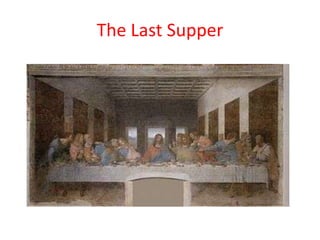
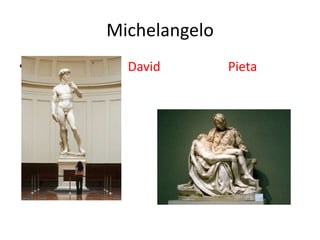
The Renaissance period from 1400-1600 saw a rebirth of interest in classical antiquity in art and intellectual pursuits. The Black Death and Crusades weakened the feudal system and exposed Europeans to new ideas. In Italy, wealthy patrons supported artists and scholars, leading to more realistic paintings and sculptures that glorified the human form. The printing press allowed mass-production of books and spread of new ideas, while scientific thinkers like Copernicus and Galileo challenged the Church's authority. The Protestant Reformation led by Luther and Calvin further questioned the Catholic Church, dividing Europe along religious lines.




![Renaissance [full colorized]](https://cdn.slidesharecdn.com/ss_thumbnails/renaissancefullcolorized-190208134922-thumbnail.jpg?width=640&height=640&fit=bounds)


