After WWI ended President Wilson
said, “Everything for which America
fought has been accomplished.”
Instead, the treaty that ended the
war, along with economic depression
that followed, contributed to the rise of
anti-democratic governments in both
Europe and Asia
Chapter 19
A World In Flames
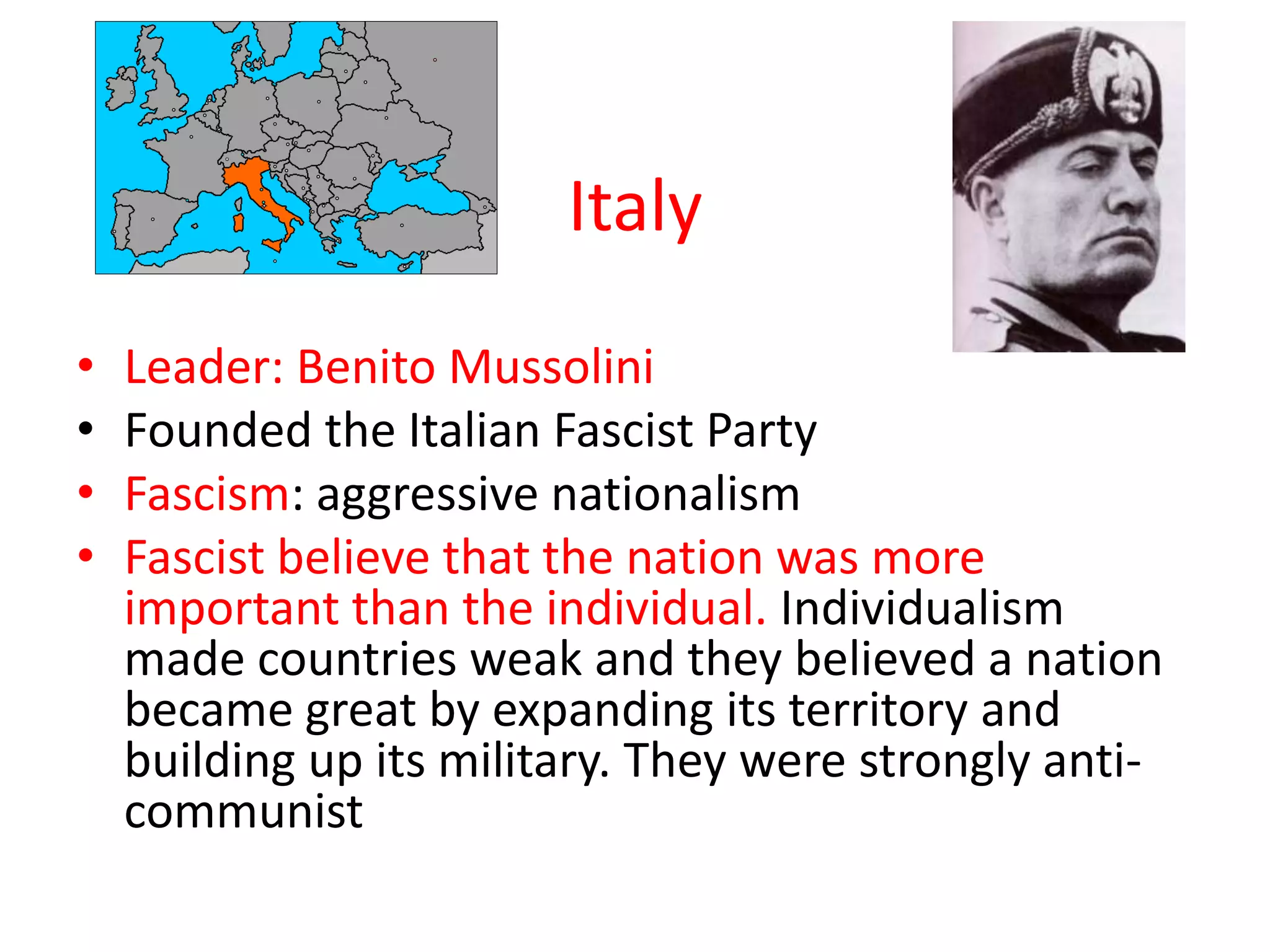
Italy
• Leader: Benito Mussolini
• Founded the Italian Fascist Party
• Fascism: aggressive nationalism
• Fascist believe that the nation was more
important than the individual. Individualism
made countries weak and they believed a nation
became great by expanding its territory and
building up its military. They were strongly anti-
communist
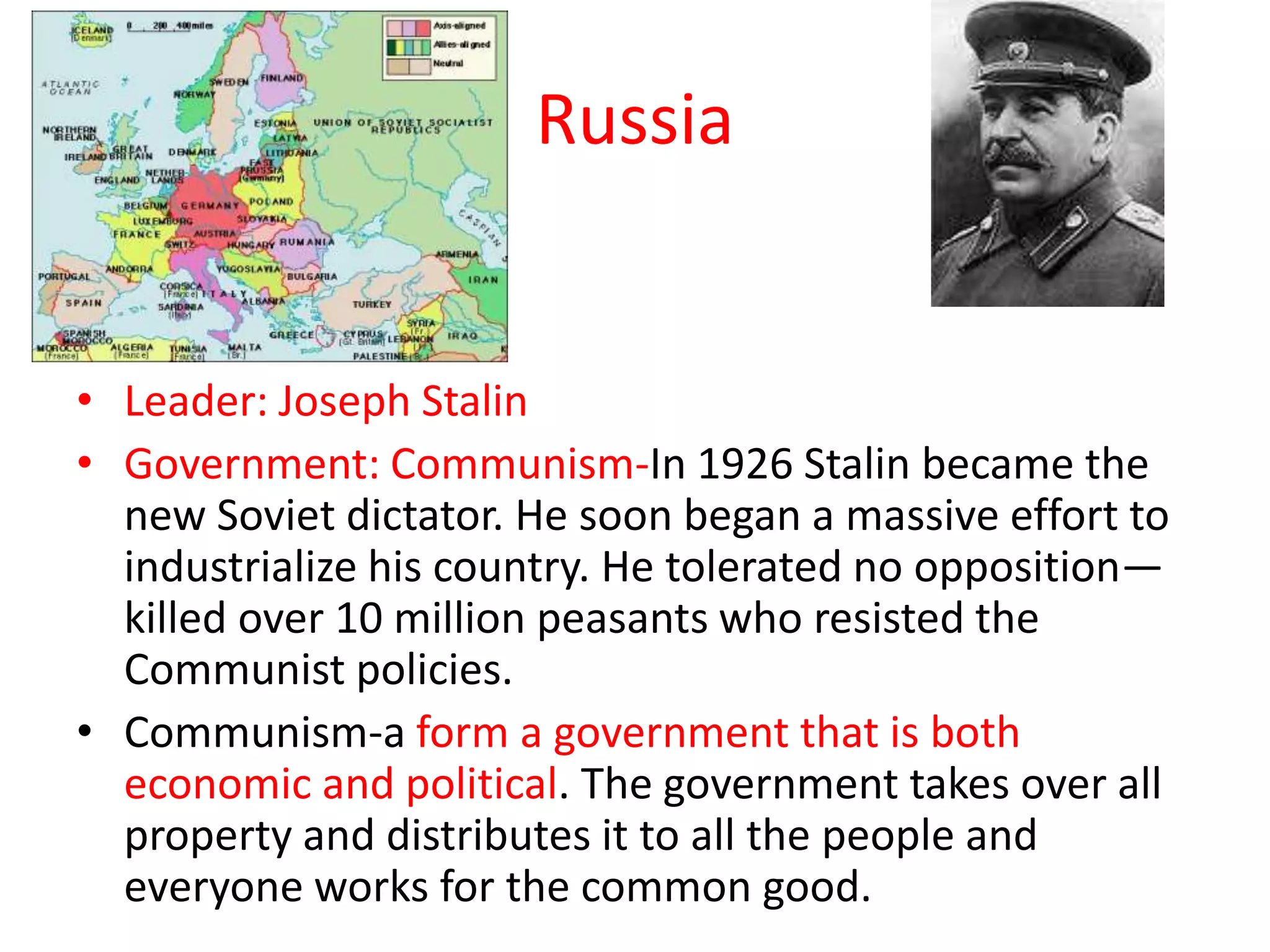
Russia
• Leader: Joseph Stalin
• Government: Communism-In 1926 Stalin became the
new Soviet dictator. He soon began a massive effort to
industrialize his country. He tolerated no opposition—
killed over 10 million peasants who resisted the
Communist policies.
• Communism-a form a government that is both
economic and political. The government takes over all
property and distributes it to all the people and
everyone works for the common good.
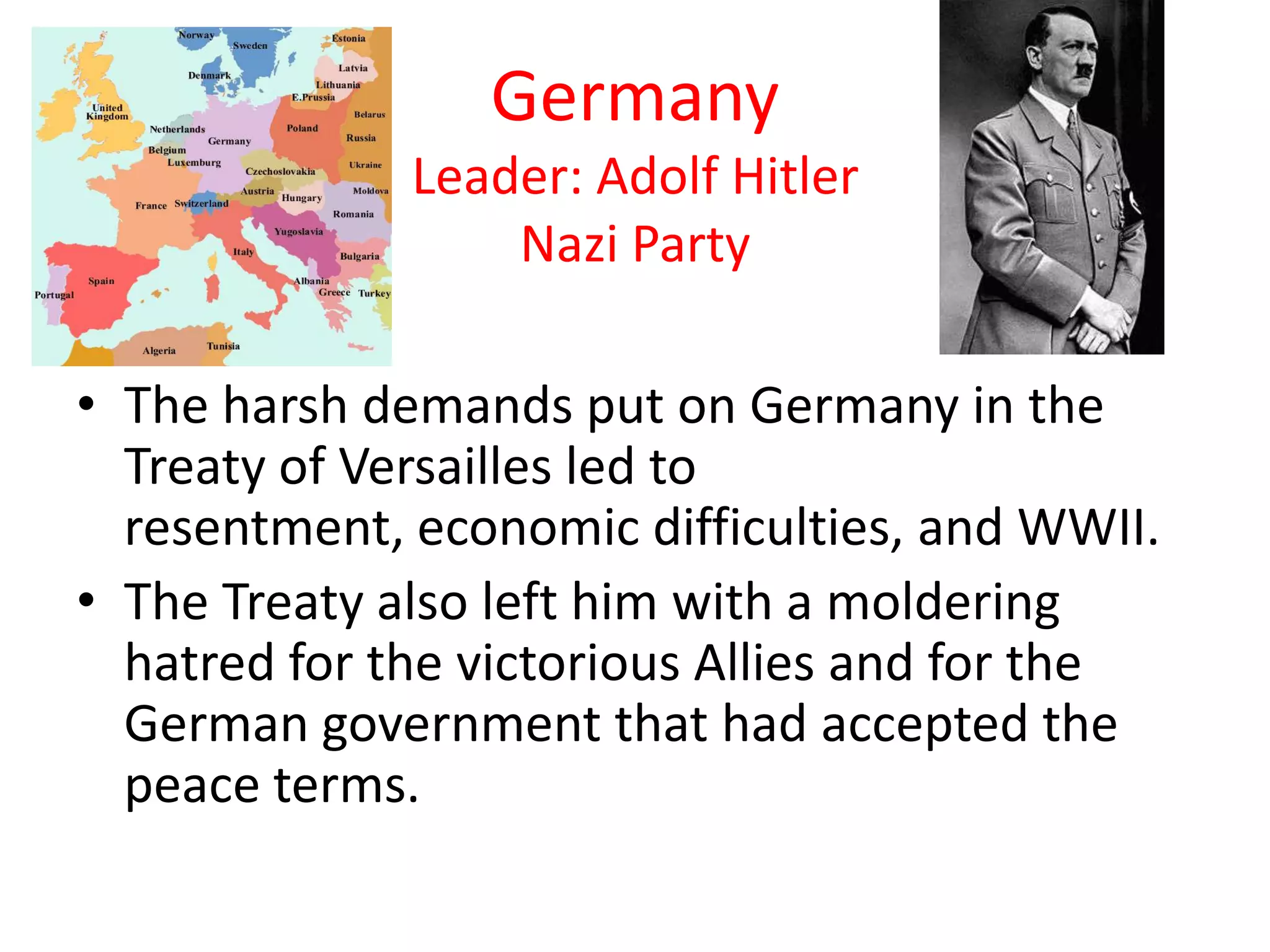
Germany
Leader: Adolf Hitler
Nazi Party
• The harsh demands put on Germany in the
Treaty of Versailles led to
resentment, economic difficulties, and WWII.
• The Treaty also left him with a moldering
hatred for the victorious Allies and for the
German government that had accepted the
peace terms.
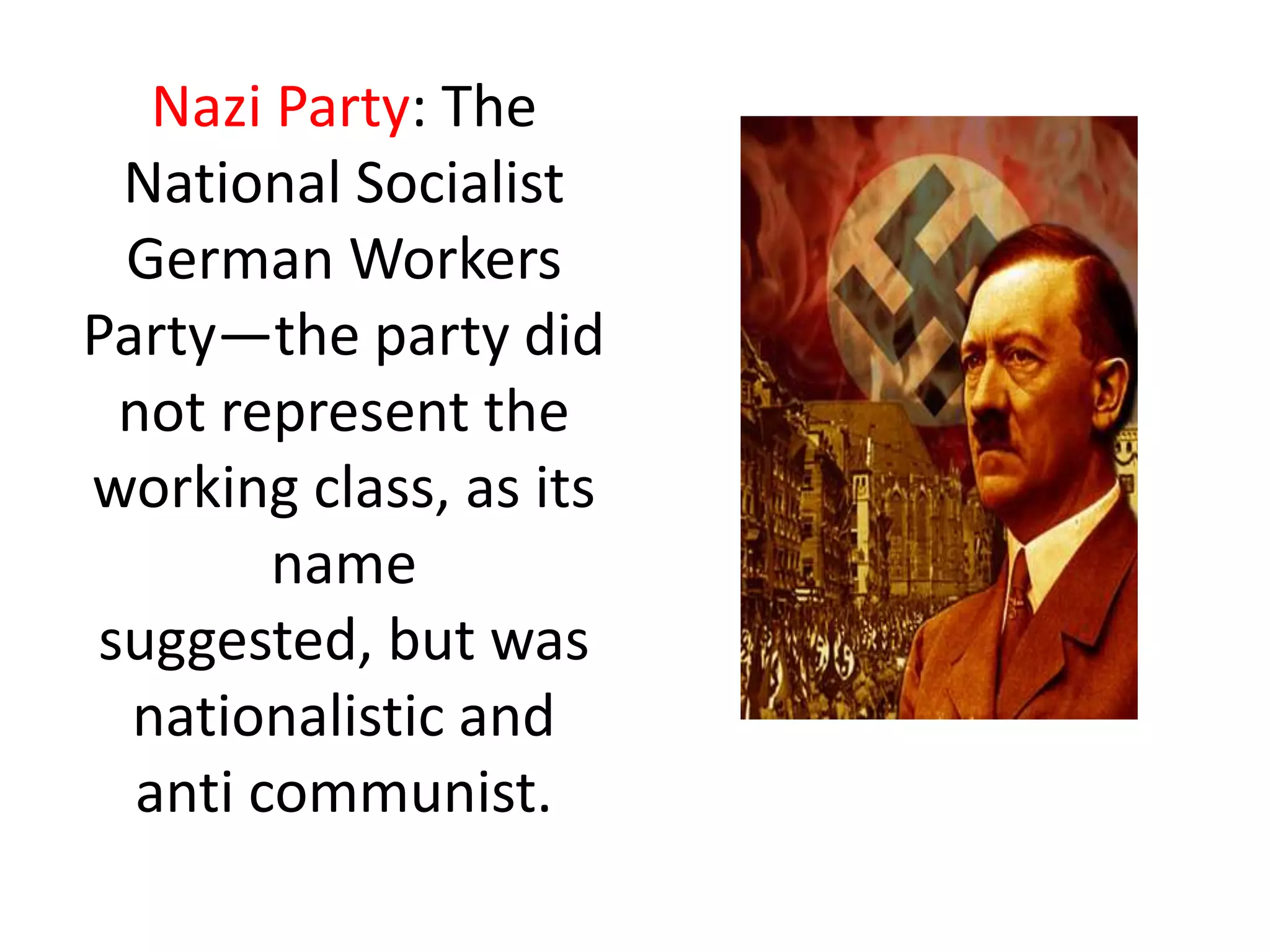
Nazi Party: The
National Socialist
German Workers
Party—the party did
not represent the
working class, as its
name
suggested, but was
nationalistic and
anti communist.
Hitler raises to power. He writes a
autobiography, titled Mein Kampf (My Struggles).
In it he calls for the unification of all Germans under
one government. He claimed that Germans, particularly
blond, blue eyed Germans, belonged to a master race
called Aryans. He also believed in something called
lebensraum, or living space, and called for Germany to
expand east into Poland and Russia. He also believed
that Slavic people were inferior and that German
should enslave them. His prejudice was strongest
however toward Jews.
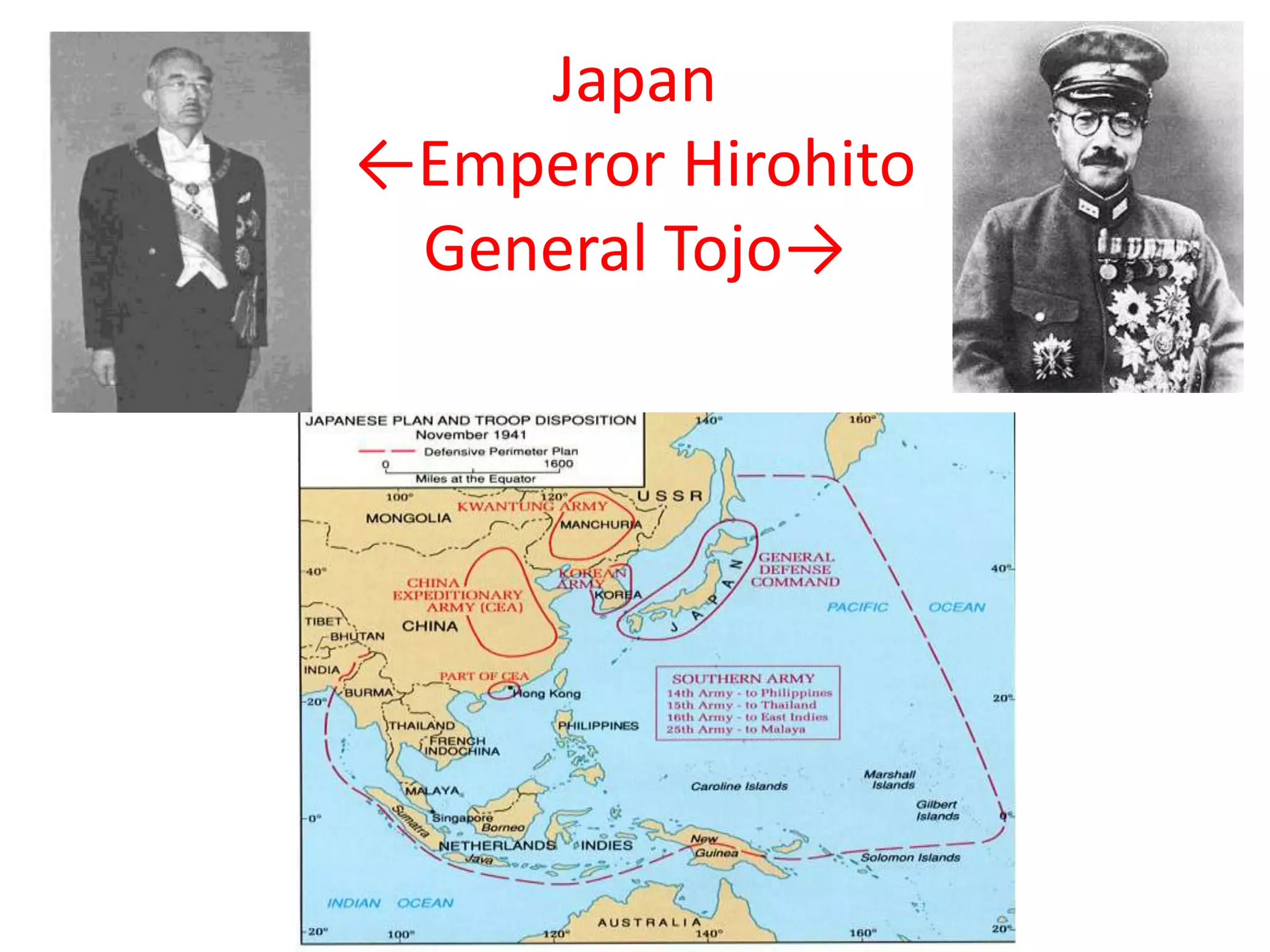
Japan
←Emperor Hirohito
General Tojo→
• During the early 1930’s Japan also suffered
from an economic depression. Japanese
military leaders and the civilians who
supported them argued that the only way for
Japan to get needed resources was to seize
territory. They targeted the resource rich
province of Manchuria in the northern China
as the perfect place to conquer. Their reign of
conquering did not stop there.
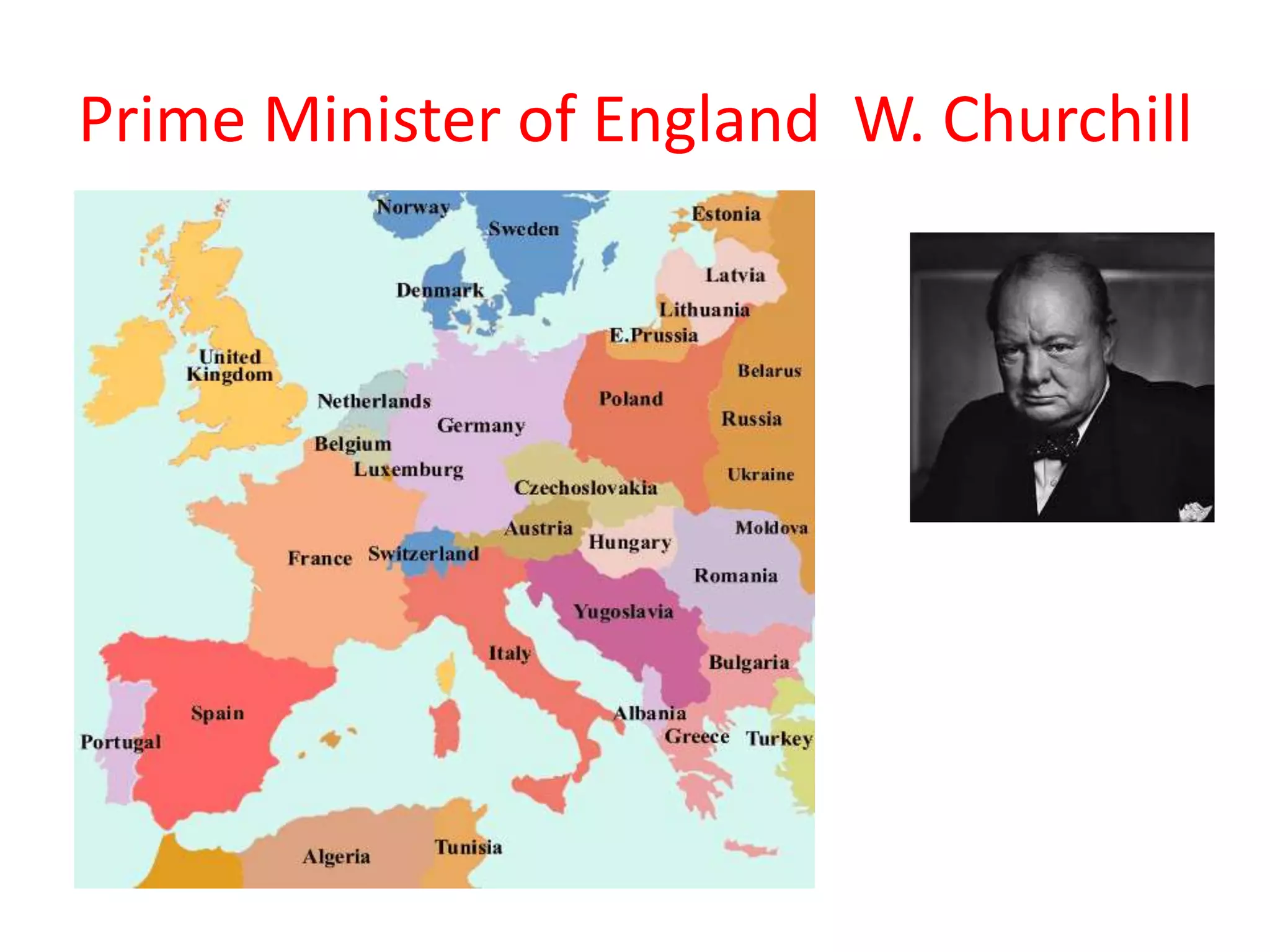
Prime Minister of England W. Churchill
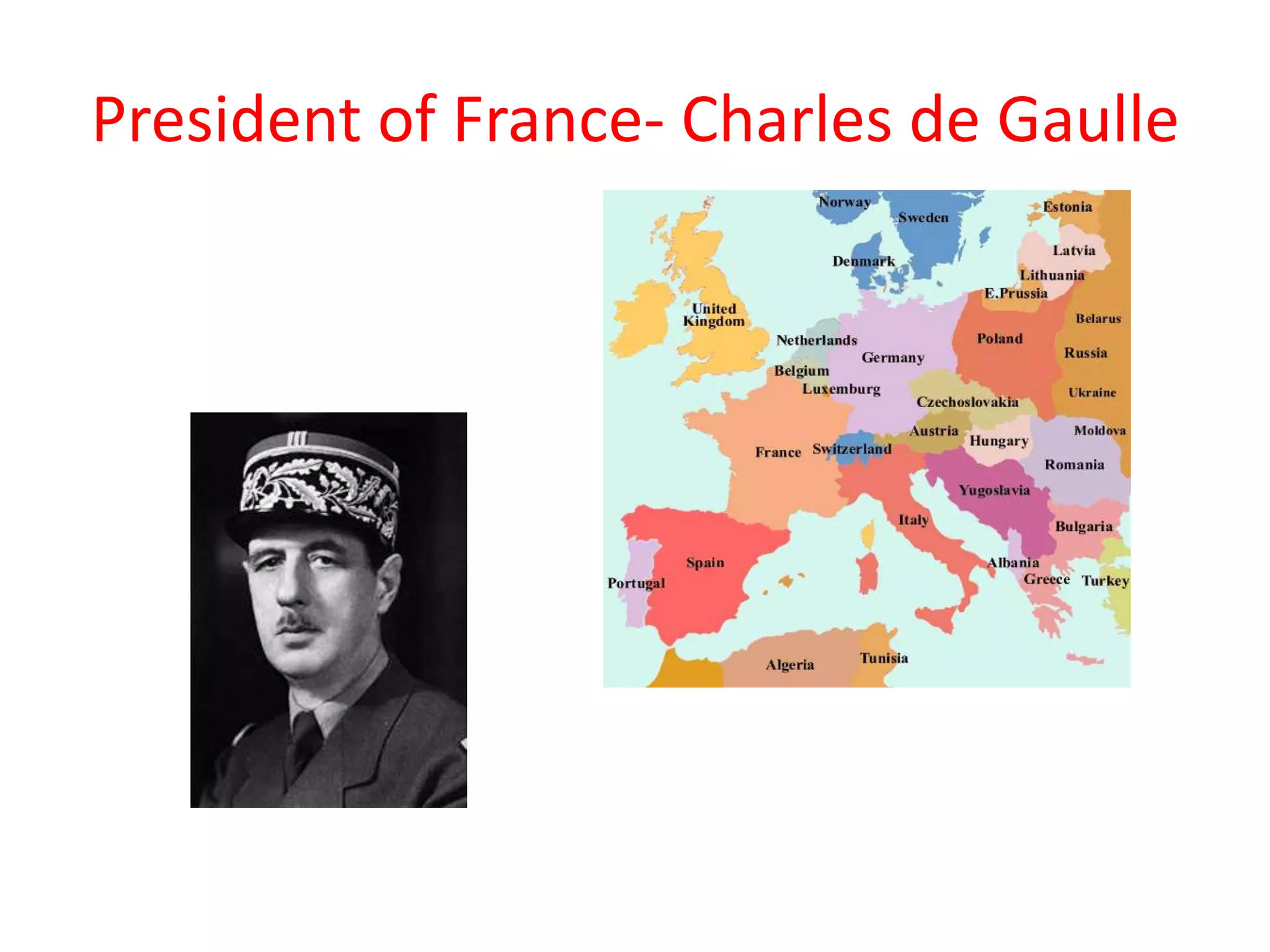
President of France- Charles de Gaulle
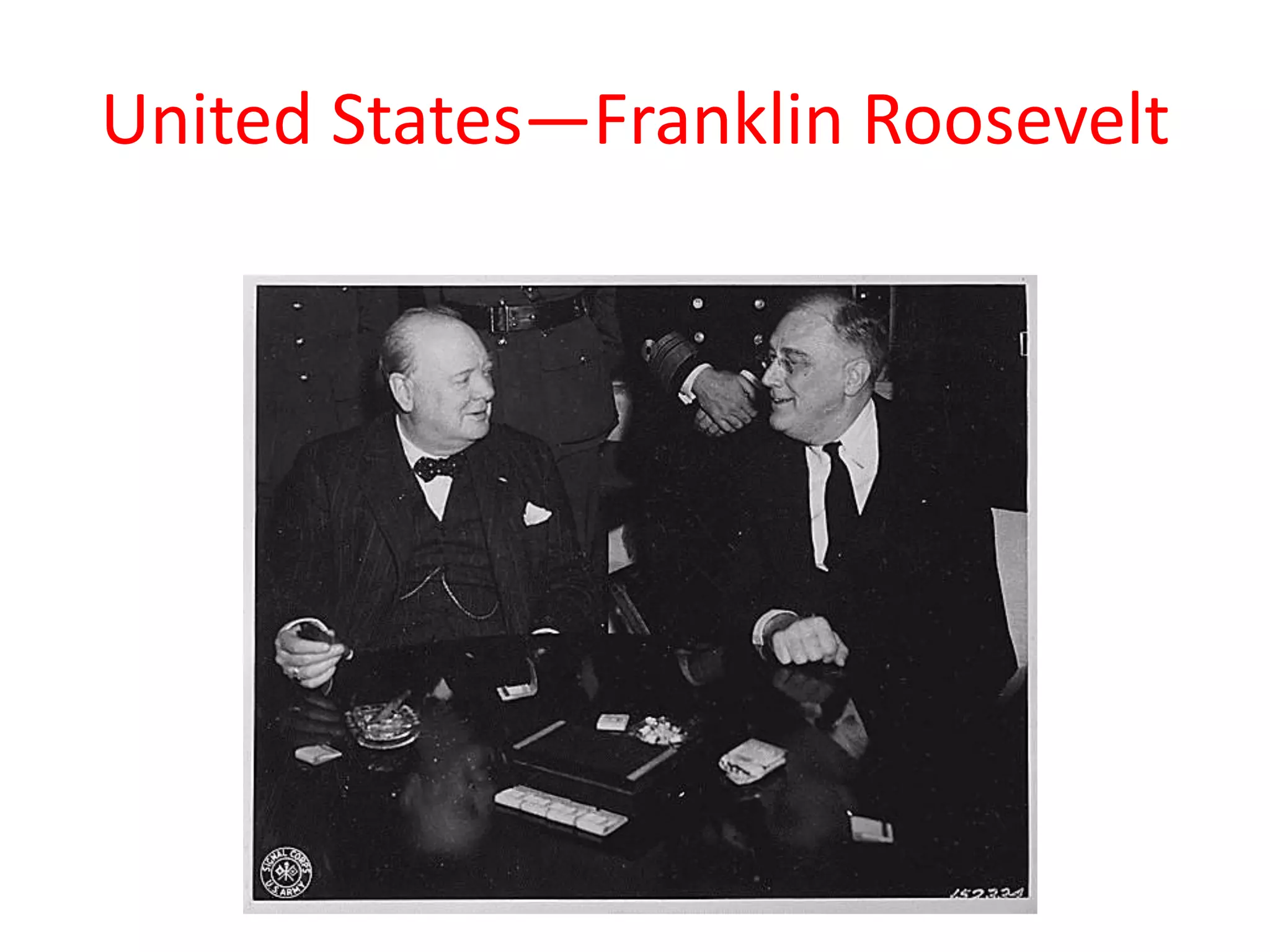
United States—Franklin Roosevelt
World War II Begins
• By the late 1930’s Germany had rebuilt—
against the Versailles Treaty of WWI.
• European leaders did not try and stop Hitler at
first—WHY?
Reasons for not stopping Hitler
• Shadow of WWI
• Bringing all Germany speaking regions of
Europe was reasonable.
• Hitler would be satisfied.
• BUT…
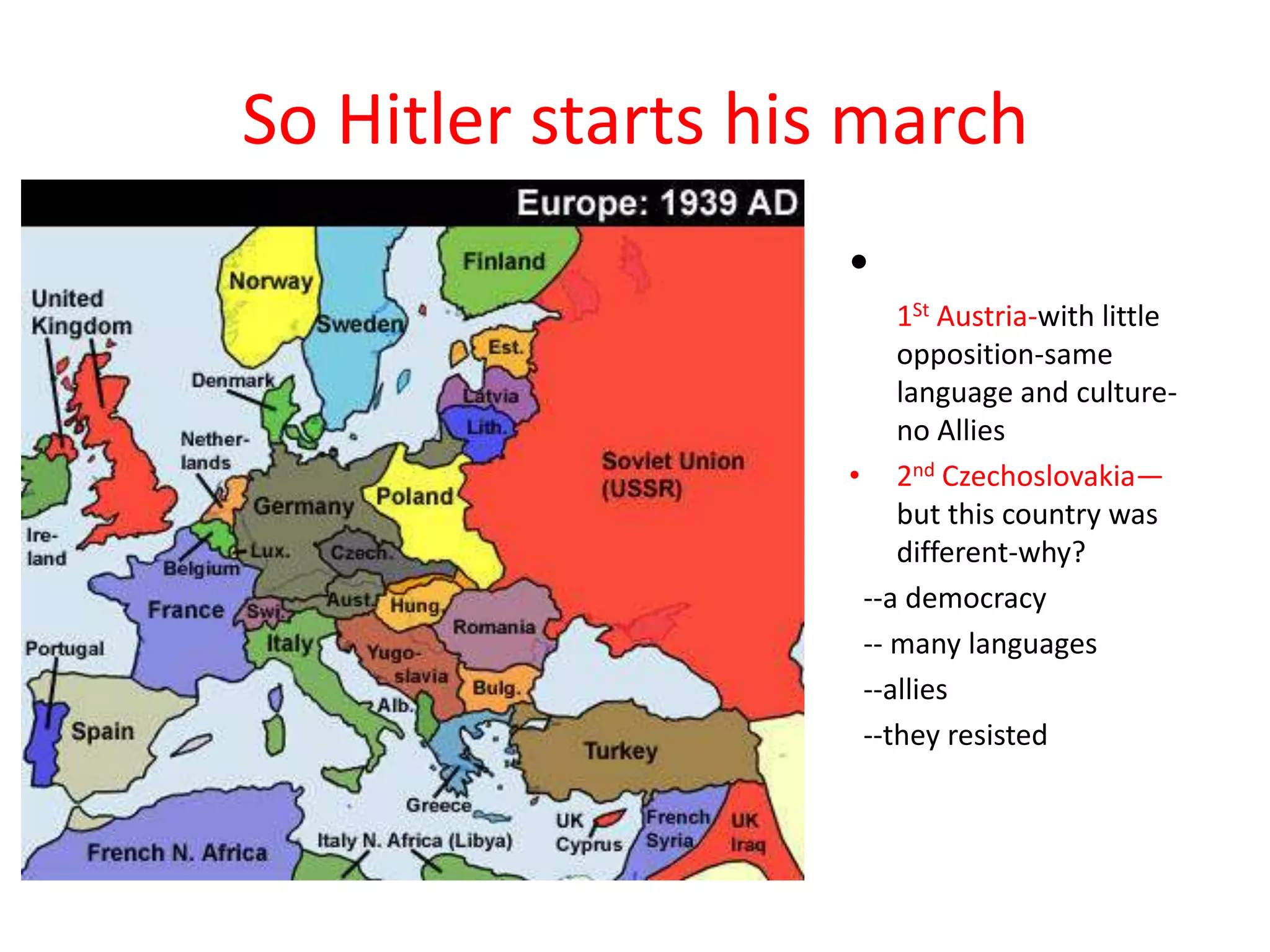
So Hitler starts his march
•
1St Austria-with little
opposition-same
language and culture-
no Allies
• 2nd Czechoslovakia—
but this country was
different-why?
--a democracy
-- many languages
--allies
--they resisted
Munich Conference
• Britain, France, Italy and Germany met in
Munich to decide the fate of Czechoslovakia.
• To prevent another war, they agreed to
Hitler's demands-- a policy that came to be
known as appeasement. Appeasement is the
policy of giving concessions in exchange for
peace.
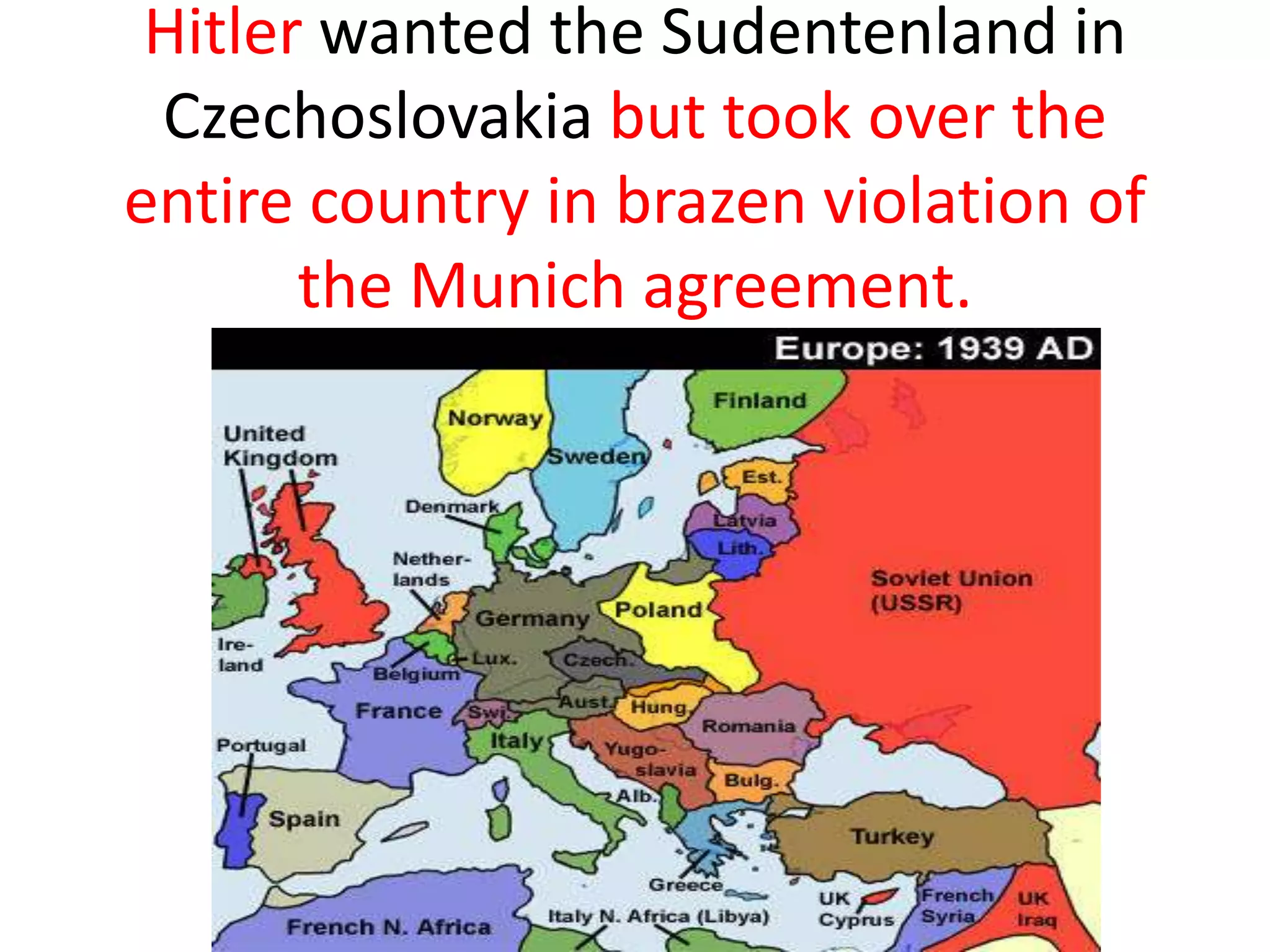
Hitler wanted the Sudentenland in
Czechoslovakia but took over the
entire country in brazen violation of
the Munich agreement.
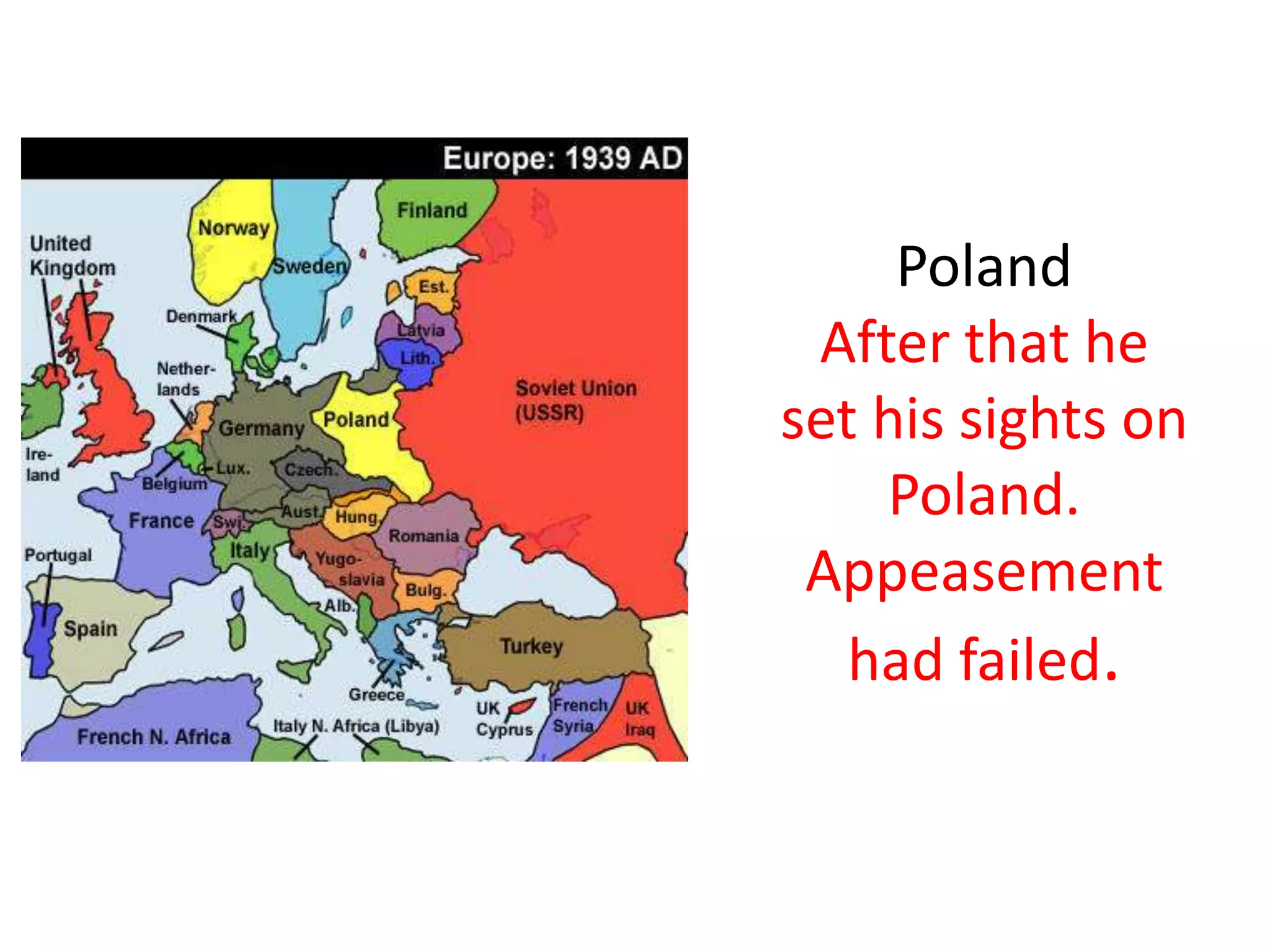
Poland
After that he
set his sights on
Poland.
Appeasement
had failed.
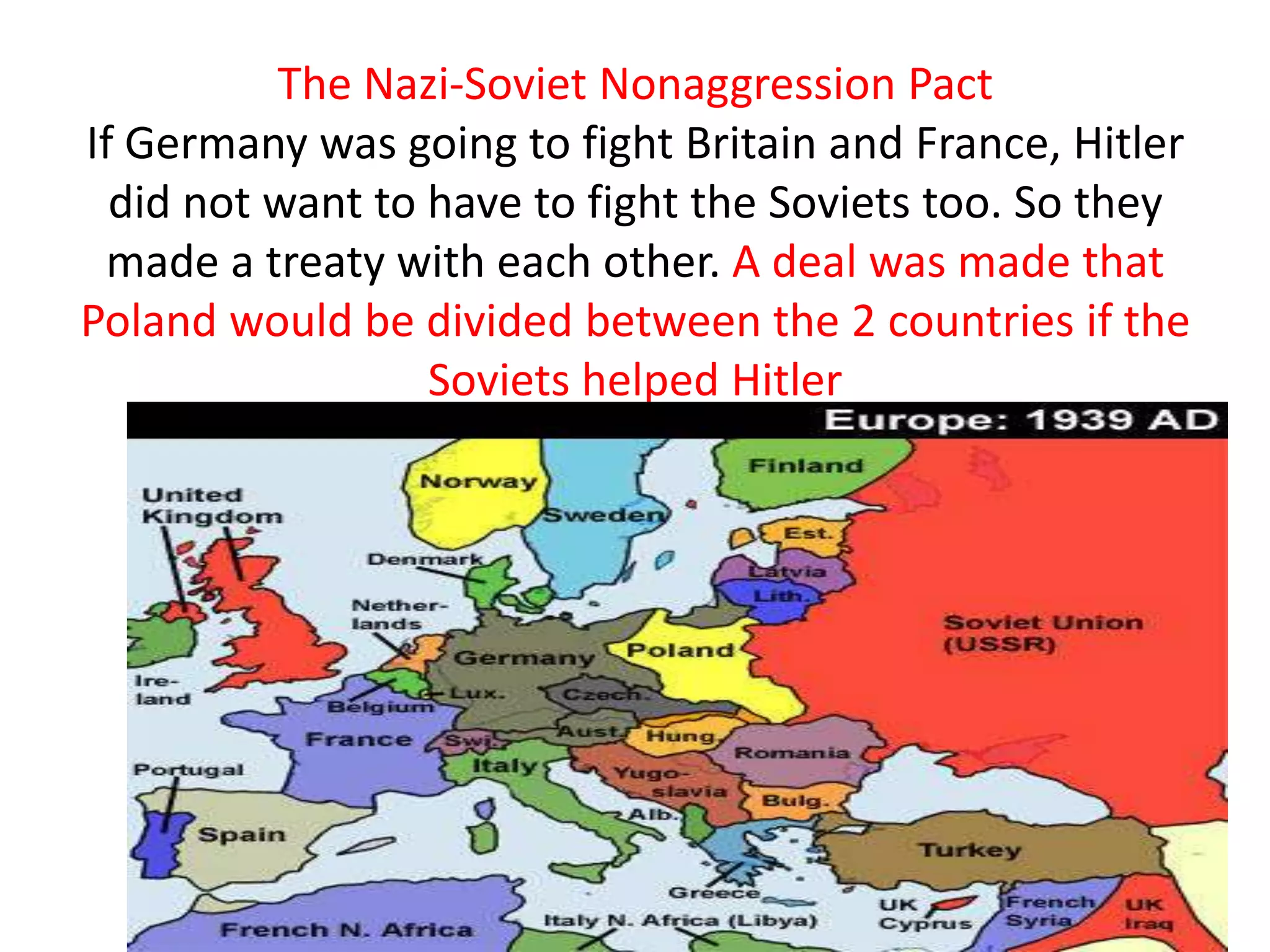
• The British announced that if Poland went to
war to defend its territory, Britain and France
would come to its aid. In 1939 Hitler ordered
the German army to invade Poland.
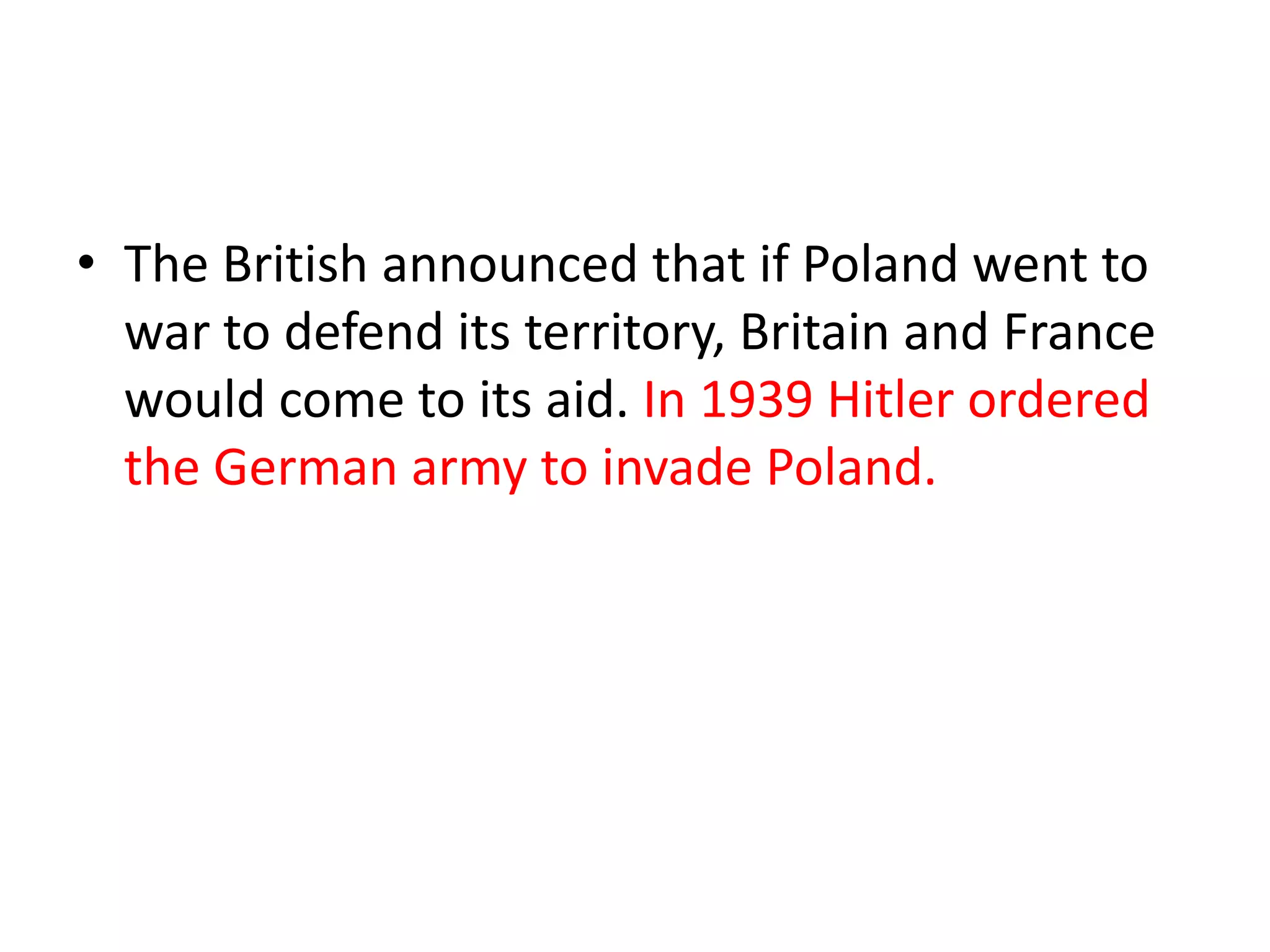
The Nazi-Soviet Nonaggression Pact
If Germany was going to fight Britain and France, Hitler
did not want to have to fight the Soviets too. So they
made a treaty with each other. A deal was made that
Poland would be divided between the 2 countries if the
Soviets helped Hitler
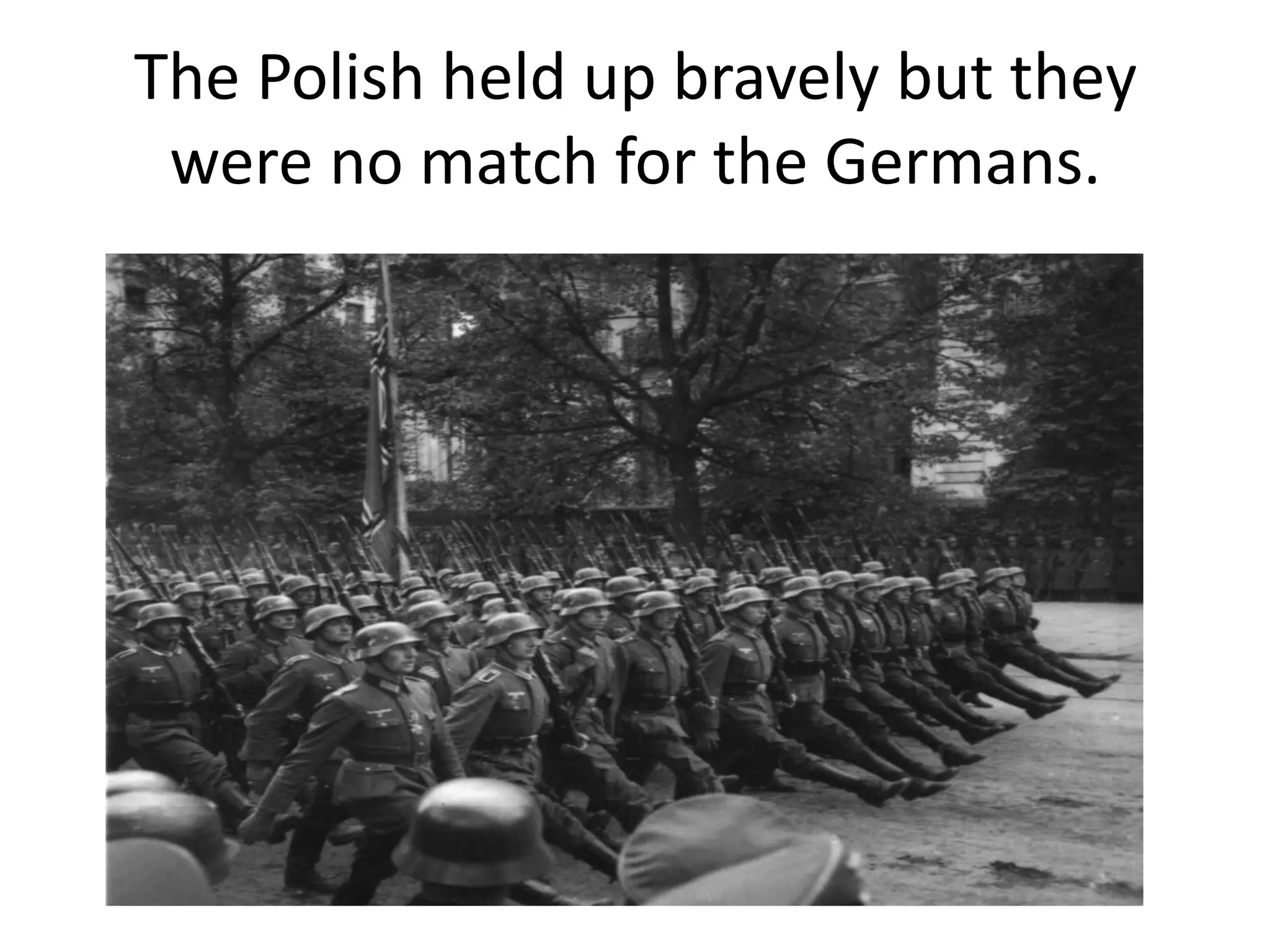
The Polish held up bravely but they
were no match for the Germans.
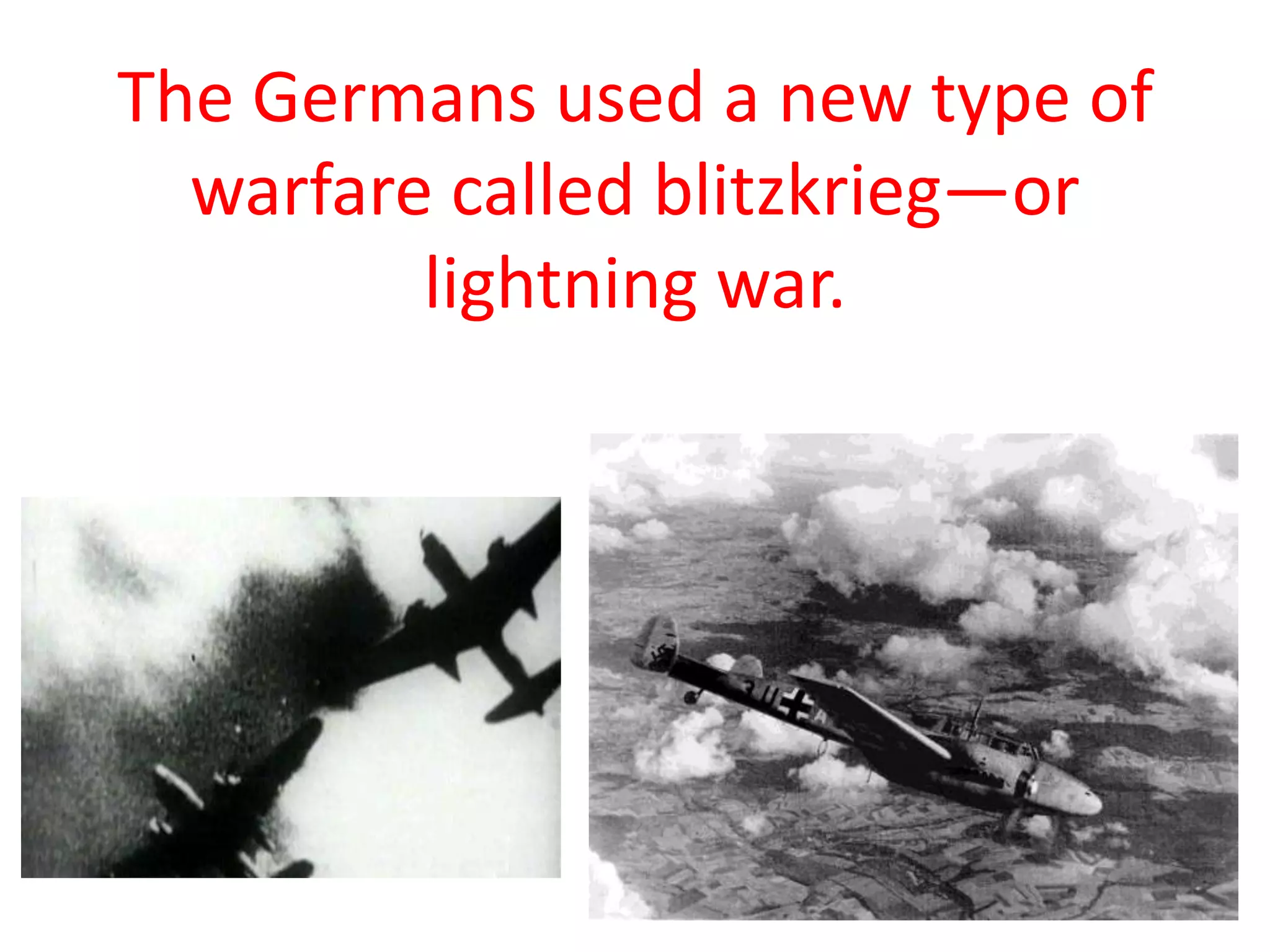
The Germans used a new type of
warfare called blitzkrieg—or
lightning war.
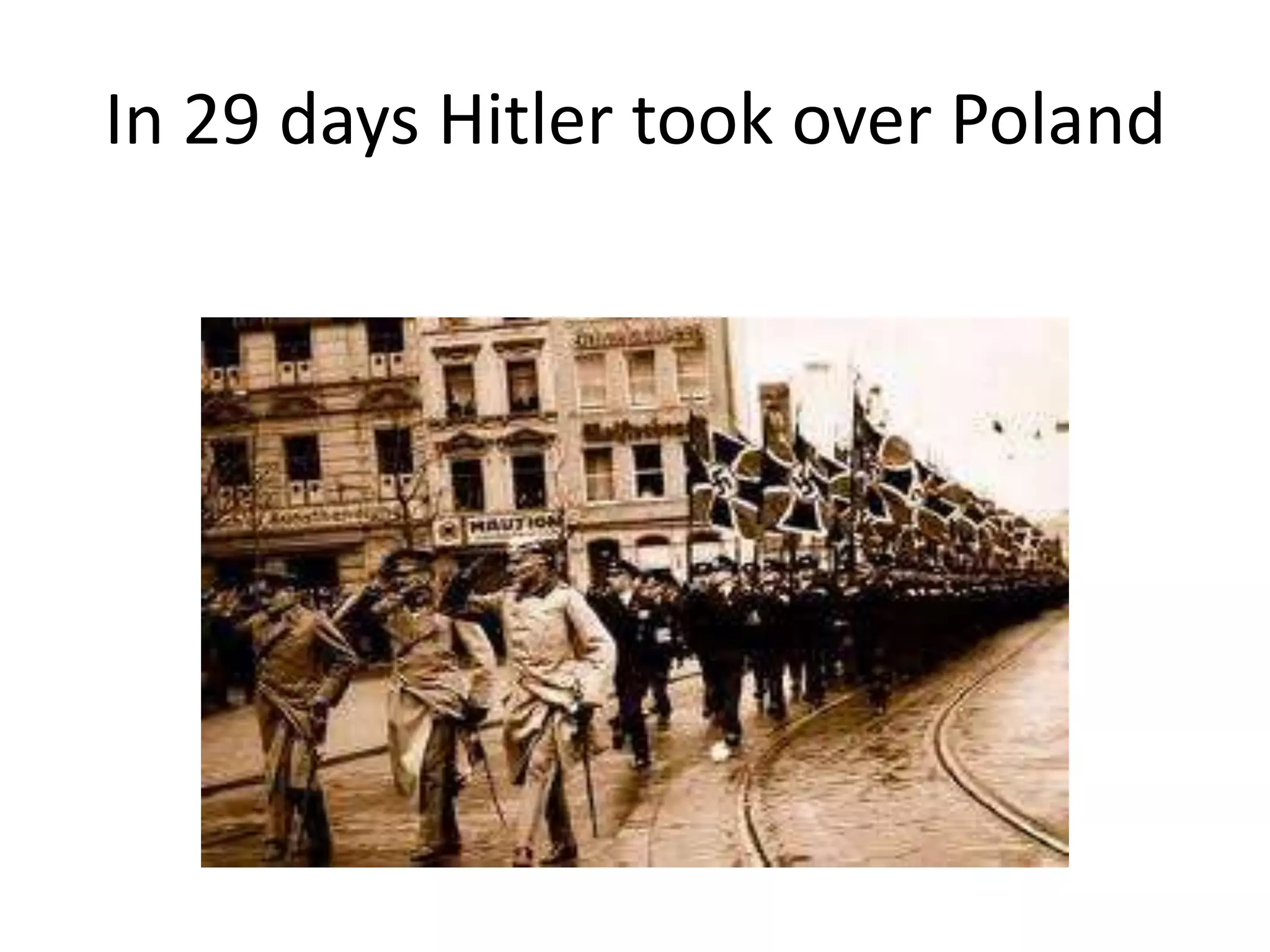
In 29 days Hitler took over Poland
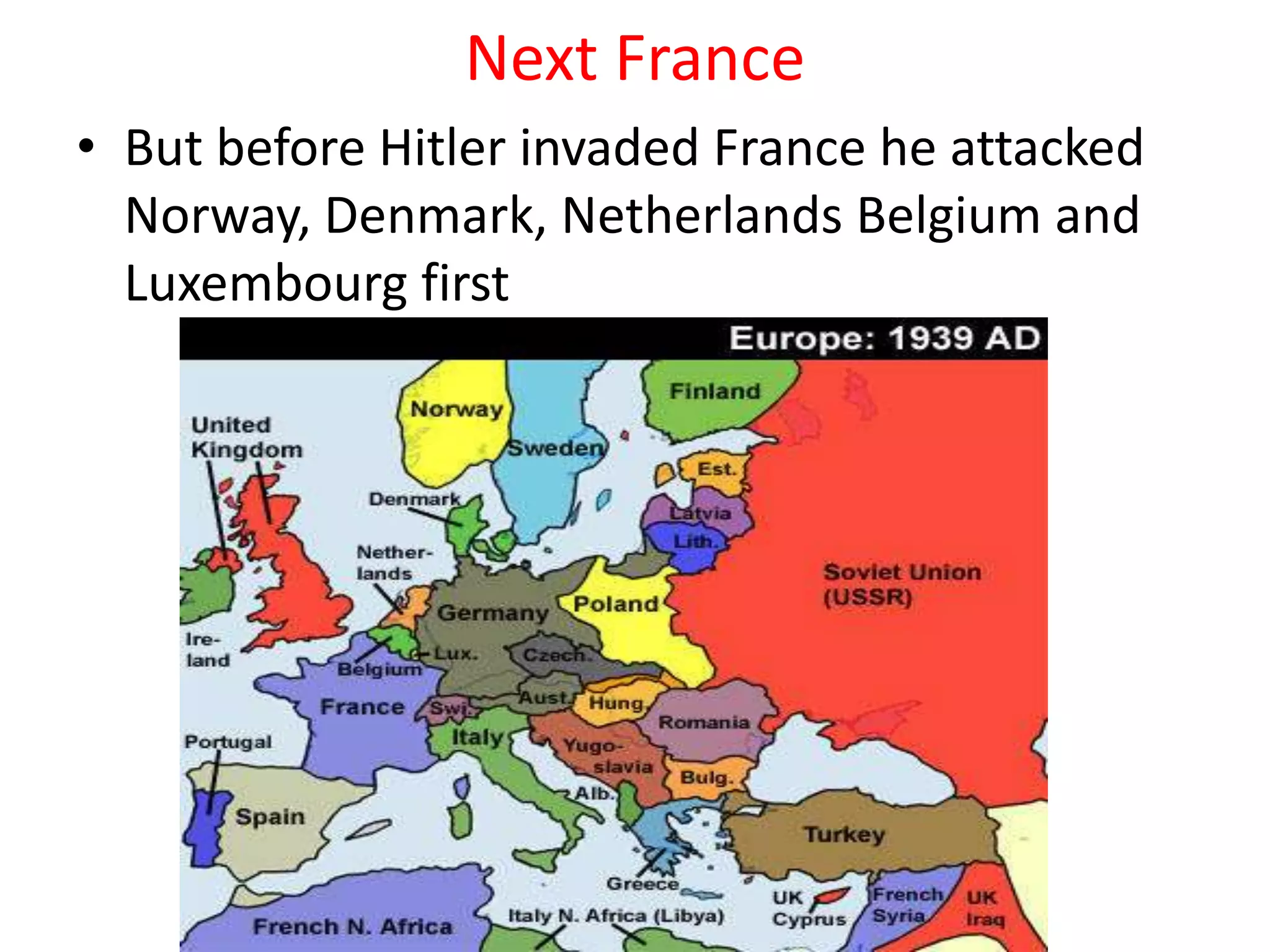
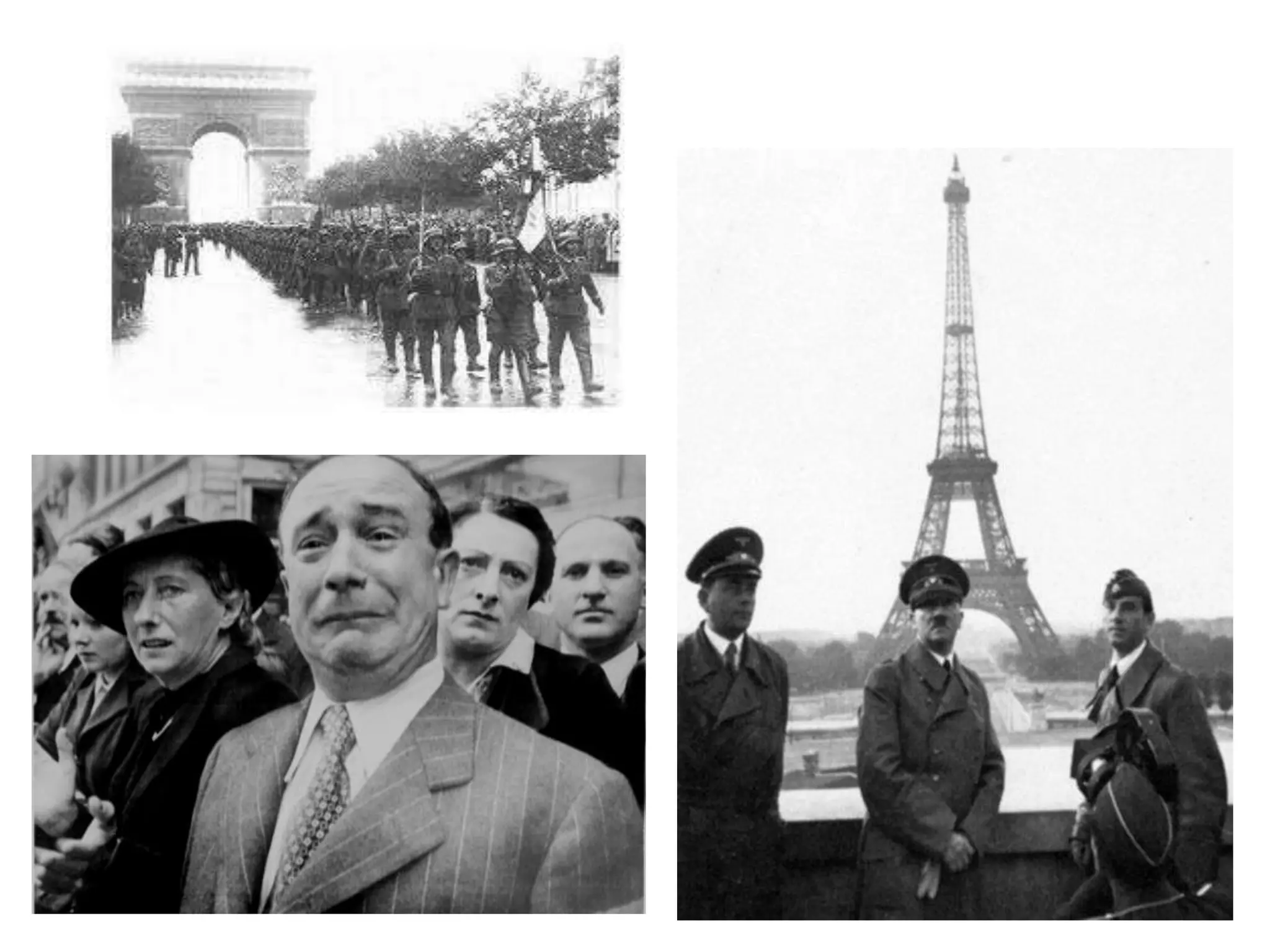
Next France
• But before Hitler invaded France he attacked
Norway, Denmark, Netherlands Belgium and
Luxembourg first
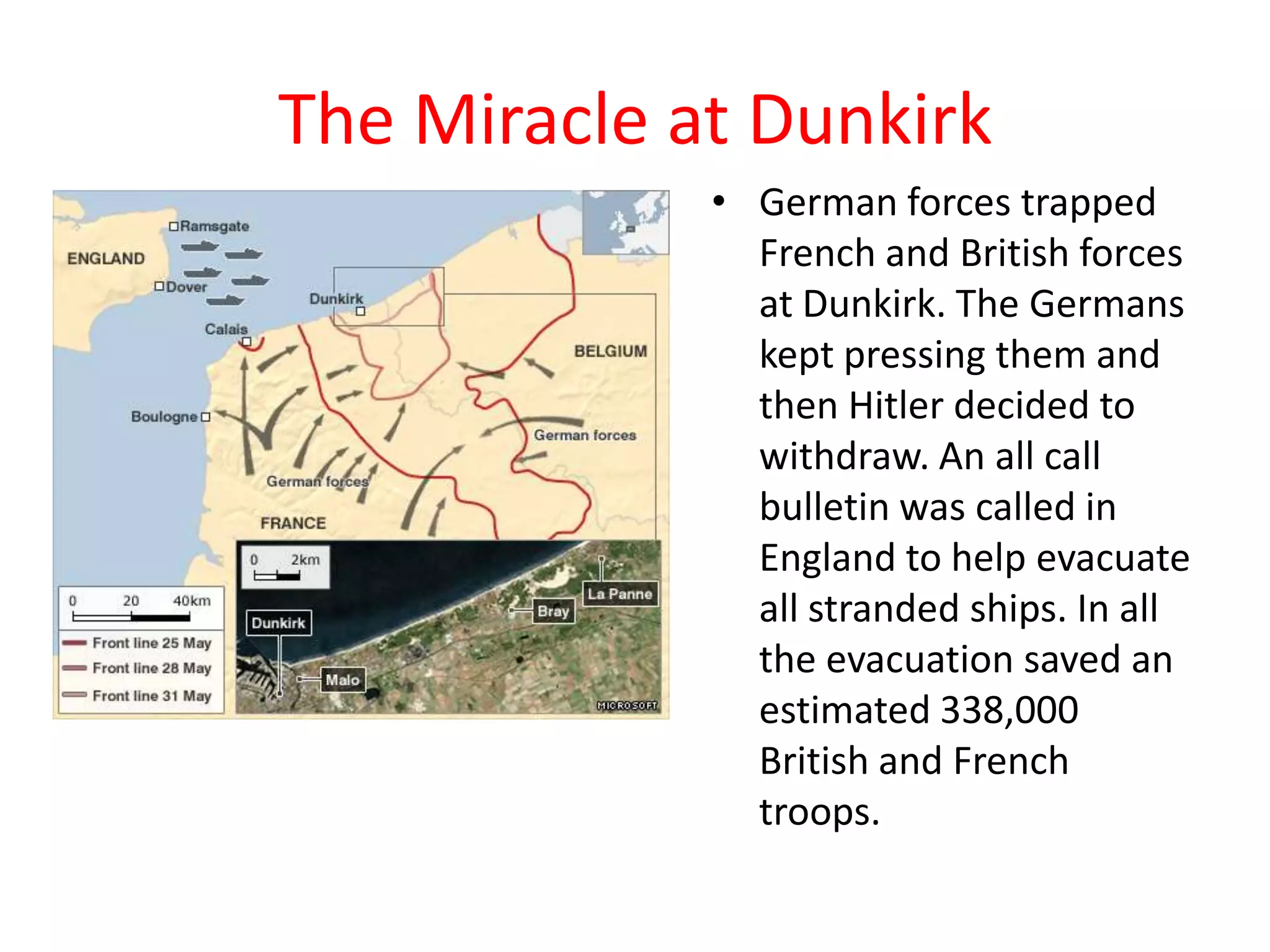
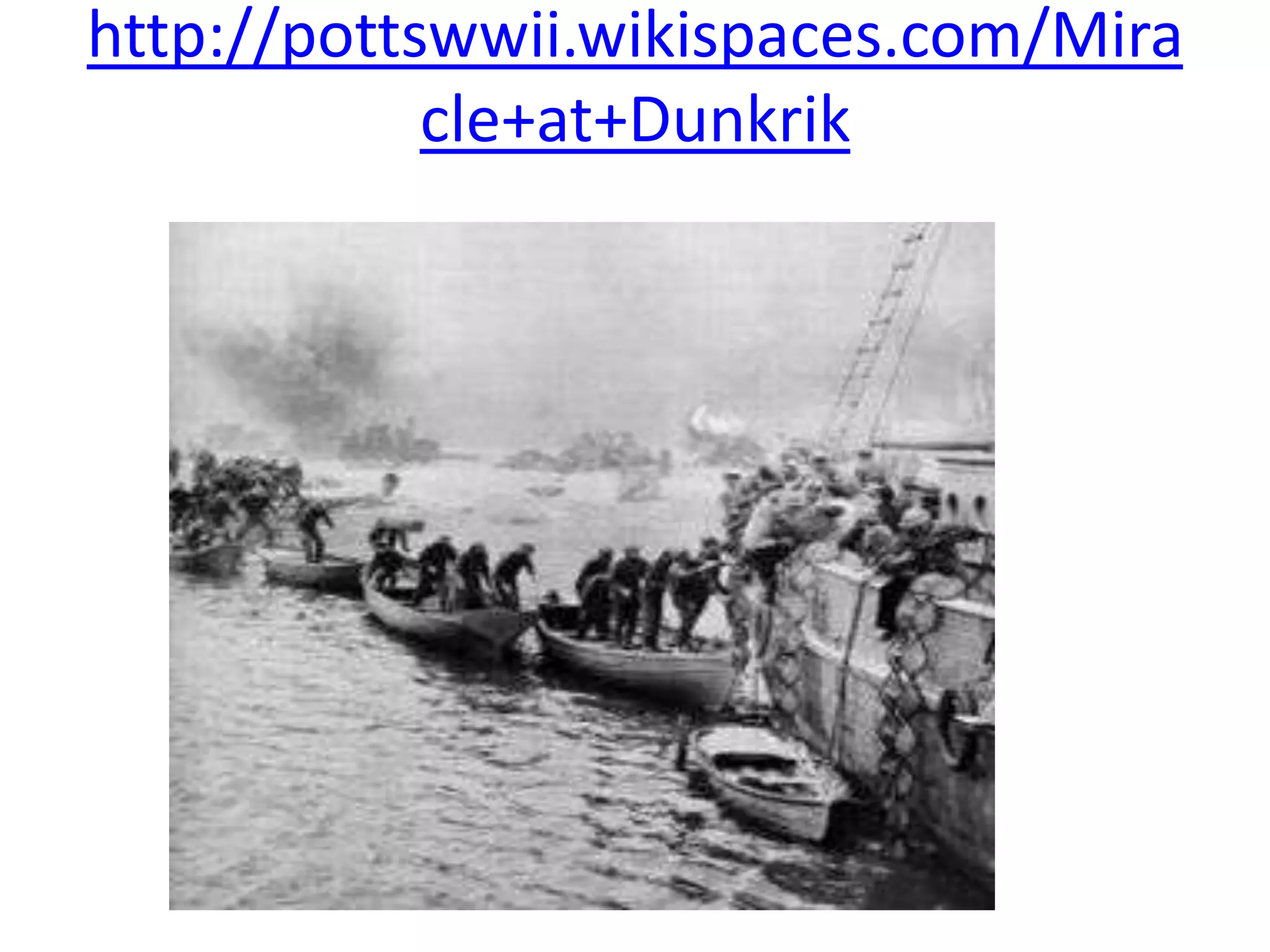
The Miracle at Dunkirk
• German forces trapped
French and British forces
at Dunkirk. The Germans
kept pressing them and
then Hitler decided to
withdraw. An all call
bulletin was called in
England to help evacuate
all stranded ships. In all
the evacuation saved an
estimated 338,000
British and French
troops.
http://pottswwii.wikispaces.com/Mira
cle+at+Dunkrik
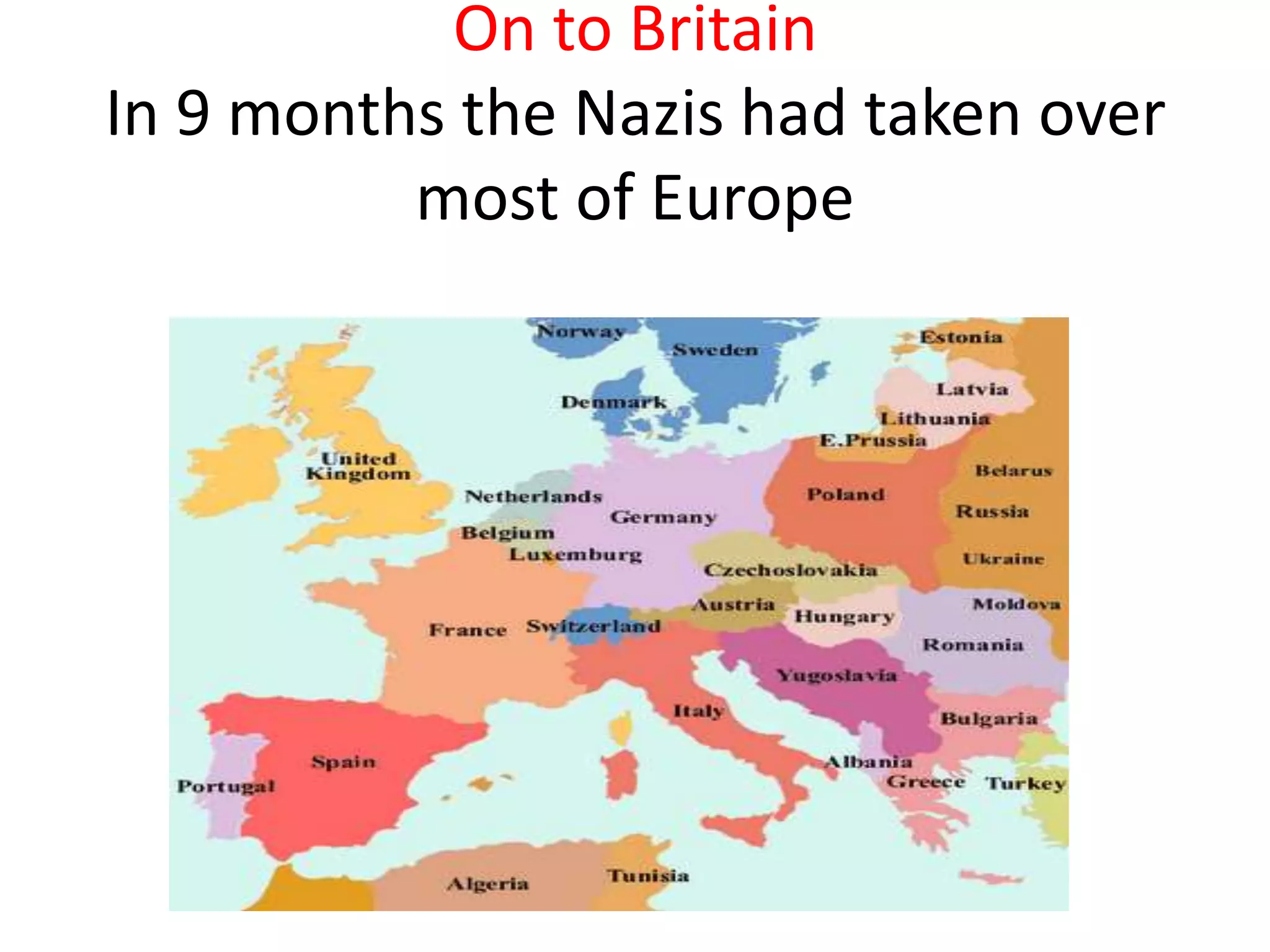
On to Britain
In 9 months the Nazis had taken over
most of Europe
Hitler fully expected the British to negotiate
peace after France surrendered. But for
Churchill, peace was not an option.
Churchill delivered a defiant speech in
Parliament, intended not only to rally the
British people but to alert the isolationist
United States to Britain's plight.
http://youtu.be/9-axJTzj0VU
Battle of Britain
• When Hitler realized that Britain would not
surrender, he ordered his commanders to
prepare to invade—Operation Sea Lion
• In June 1940, the German air force, Luftwaffe,
began to attack British shipping, then an all
out air battle to destroy the British RAF and
then finally Hitler began to bomb London and
other major cities. This air battle became
known as the Battle of Britain.
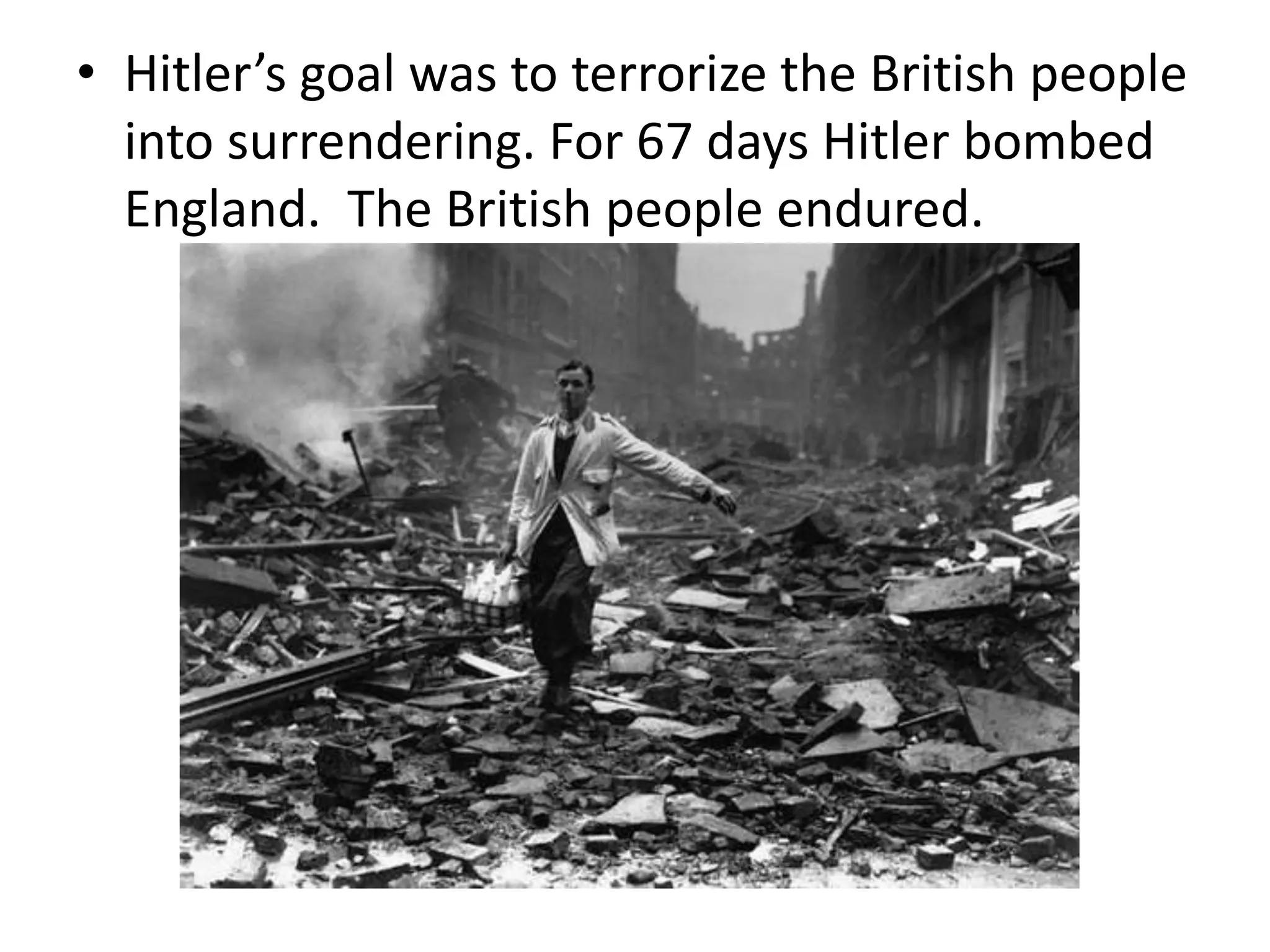
• Hitler’s goal was to terrorize the British people
into surrendering. For 67 days Hitler bombed
England. The British people endured.
Radar
• Although the British RAF was greatly
outnumbered, the British had one major
advantage—Radar-a new technology. By
pacing radar stations long their coast, the
British were able to detect incoming German
aircraft and directly intercept them.
• After the loss of many German planes, Hitler
called off the invasion of Britain.
• The skill of a few hundred pilots saved Britain
from invasion.
Praising the pilots, Churchill told
Parliament, “Never in the field of
human conflict was so much
owed, by so many, to so few”
http://youtu.be/BbcvmI2b9AM

Ch 19 w wii reg redo

  • 1.
    After WWI endedPresident Wilson said, “Everything for which America fought has been accomplished.” Instead, the treaty that ended the war, along with economic depression that followed, contributed to the rise of anti-democratic governments in both Europe and Asia Chapter 19 A World In Flames
  • 2.
    Italy • Leader: BenitoMussolini • Founded the Italian Fascist Party • Fascism: aggressive nationalism • Fascist believe that the nation was more important than the individual. Individualism made countries weak and they believed a nation became great by expanding its territory and building up its military. They were strongly anti- communist
  • 3.
    Russia • Leader: JosephStalin • Government: Communism-In 1926 Stalin became the new Soviet dictator. He soon began a massive effort to industrialize his country. He tolerated no opposition— killed over 10 million peasants who resisted the Communist policies. • Communism-a form a government that is both economic and political. The government takes over all property and distributes it to all the people and everyone works for the common good.
  • 4.
    Germany Leader: Adolf Hitler NaziParty • The harsh demands put on Germany in the Treaty of Versailles led to resentment, economic difficulties, and WWII. • The Treaty also left him with a moldering hatred for the victorious Allies and for the German government that had accepted the peace terms.
  • 5.
    Nazi Party: The NationalSocialist German Workers Party—the party did not represent the working class, as its name suggested, but was nationalistic and anti communist.
  • 6.
    Hitler raises topower. He writes a autobiography, titled Mein Kampf (My Struggles). In it he calls for the unification of all Germans under one government. He claimed that Germans, particularly blond, blue eyed Germans, belonged to a master race called Aryans. He also believed in something called lebensraum, or living space, and called for Germany to expand east into Poland and Russia. He also believed that Slavic people were inferior and that German should enslave them. His prejudice was strongest however toward Jews.
  • 7.
  • 8.
    • During theearly 1930’s Japan also suffered from an economic depression. Japanese military leaders and the civilians who supported them argued that the only way for Japan to get needed resources was to seize territory. They targeted the resource rich province of Manchuria in the northern China as the perfect place to conquer. Their reign of conquering did not stop there.
  • 9.
    Prime Minister ofEngland W. Churchill
  • 10.
    President of France-Charles de Gaulle
  • 11.
  • 12.
    World War IIBegins • By the late 1930’s Germany had rebuilt— against the Versailles Treaty of WWI. • European leaders did not try and stop Hitler at first—WHY?
  • 13.
    Reasons for notstopping Hitler • Shadow of WWI • Bringing all Germany speaking regions of Europe was reasonable. • Hitler would be satisfied. • BUT…
  • 15.
    So Hitler startshis march • 1St Austria-with little opposition-same language and culture- no Allies • 2nd Czechoslovakia— but this country was different-why? --a democracy -- many languages --allies --they resisted
  • 16.
    Munich Conference • Britain,France, Italy and Germany met in Munich to decide the fate of Czechoslovakia. • To prevent another war, they agreed to Hitler's demands-- a policy that came to be known as appeasement. Appeasement is the policy of giving concessions in exchange for peace.
  • 17.
    Hitler wanted theSudentenland in Czechoslovakia but took over the entire country in brazen violation of the Munich agreement.
  • 18.
    Poland After that he sethis sights on Poland. Appeasement had failed.
  • 19.
    • The Britishannounced that if Poland went to war to defend its territory, Britain and France would come to its aid. In 1939 Hitler ordered the German army to invade Poland.
  • 20.
    The Nazi-Soviet NonaggressionPact If Germany was going to fight Britain and France, Hitler did not want to have to fight the Soviets too. So they made a treaty with each other. A deal was made that Poland would be divided between the 2 countries if the Soviets helped Hitler
  • 21.
    The Polish heldup bravely but they were no match for the Germans.
  • 22.
    The Germans useda new type of warfare called blitzkrieg—or lightning war.
  • 23.
    In 29 daysHitler took over Poland
  • 24.
    Next France • Butbefore Hitler invaded France he attacked Norway, Denmark, Netherlands Belgium and Luxembourg first
  • 26.
    The Miracle atDunkirk • German forces trapped French and British forces at Dunkirk. The Germans kept pressing them and then Hitler decided to withdraw. An all call bulletin was called in England to help evacuate all stranded ships. In all the evacuation saved an estimated 338,000 British and French troops.
  • 27.
  • 28.
    On to Britain In9 months the Nazis had taken over most of Europe
  • 29.
    Hitler fully expectedthe British to negotiate peace after France surrendered. But for Churchill, peace was not an option. Churchill delivered a defiant speech in Parliament, intended not only to rally the British people but to alert the isolationist United States to Britain's plight. http://youtu.be/9-axJTzj0VU
  • 30.
    Battle of Britain •When Hitler realized that Britain would not surrender, he ordered his commanders to prepare to invade—Operation Sea Lion • In June 1940, the German air force, Luftwaffe, began to attack British shipping, then an all out air battle to destroy the British RAF and then finally Hitler began to bomb London and other major cities. This air battle became known as the Battle of Britain.
  • 31.
    • Hitler’s goalwas to terrorize the British people into surrendering. For 67 days Hitler bombed England. The British people endured.
  • 32.
    Radar • Although theBritish RAF was greatly outnumbered, the British had one major advantage—Radar-a new technology. By pacing radar stations long their coast, the British were able to detect incoming German aircraft and directly intercept them. • After the loss of many German planes, Hitler called off the invasion of Britain. • The skill of a few hundred pilots saved Britain from invasion.
  • 33.
    Praising the pilots,Churchill told Parliament, “Never in the field of human conflict was so much owed, by so many, to so few” http://youtu.be/BbcvmI2b9AM