Renaissance & ReformationRenaissance & Reformation
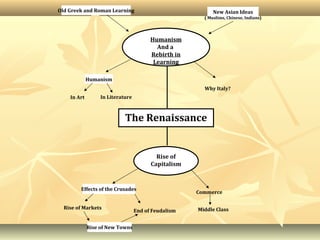
Humanism
And a
Rebirth in
Learning
The Renaissance
Rise of
Capitalism
Old Greek and Roman Learning New Asian Ideas
( Muslims, Chinese, Indians)
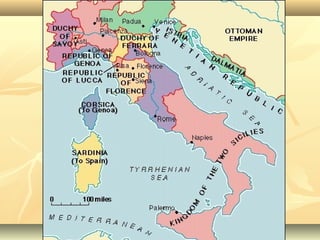
Why Italy?
In Art In Literature
Commerce
Effects of the Crusades
Middle ClassEnd of Feudalism
Humanism
Rise of Markets
Rise of New Towns
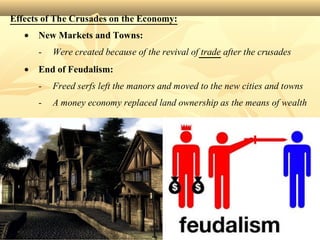
Effects of The Crusades on the Economy:
• New Markets and Towns:
- Were created because of the revival of trade after the crusades
• End of Feudalism:
- Freed serfs left the manors and moved to the new cities and towns
- A money economy replaced land ownership as the means of wealth
The Commercial Revolution
• Commercial Revolution:
- A “change” from a feudal economy to money (market) economy
• Market Economy:
- The demand for a product and the supply available → determines the price of
a product (market system)
• Capitalism:
- An economic system
- Based on using capital → “investment money”
- Prices are determined by the market
• Rise of the Middle Class:
- Created in the new towns
- they were business people; merchants, bankers and craftsmen
• Guilds: business organizations created to promote and protect a certain trade
(craft) in a community or region
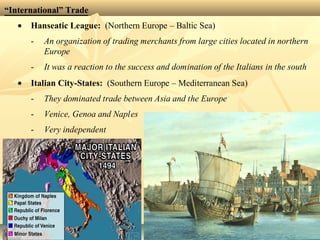
“International” Trade
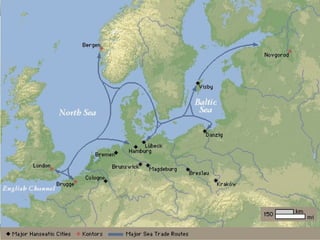
• Hanseatic League: (Northern Europe – Baltic Sea)
- An organization of trading merchants from large cities located in northern
Europe
- It was a reaction to the success and domination of the Italians in the south
• Italian City-States: (Southern Europe – Mediterranean Sea)
- They dominated trade between Asia and the Europe
- Venice, Genoa and Naples
- Very independent
Renewed Interest in Learning (People became more creative and began to look at things from a
different perspective)
• Greek and Roman Learning: was “reborn” in Europe
- Art – Philosophy – Literature - Science
• Asian Learning: (Asian ideas spread to Europe through trade with the Muslims)
- Navigation (sailing)
- Science
- Medicine
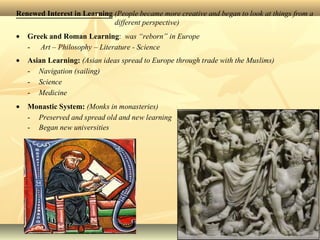
• Monastic System: (Monks in monasteries)
- Preserved and spread old and new learning
- Began new universities
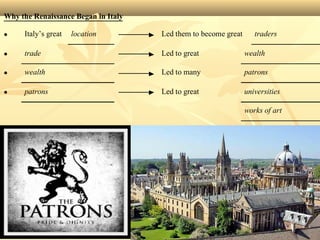
Why the Renaissance Began in Italy
• Italy’s great location Led them to become great traders
• trade Led to great wealth
• wealth Led to many patrons
• patrons Led to great universities
works of art
Florence, Italy:
- Center of the Renaissance artistic world
- Grew from the support of the Medici family
Patrons:
- Wealthy people who sponsored artists and thinkers to do great work
Medici Family:
- Bankers from Florence
- Used their wealth to control politics
- Sponsored great artists in Italy
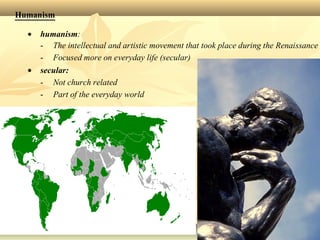
Humanism
• humanism:
- The intellectual and artistic movement that took place during the Renaissance
- Focused more on everyday life (secular)
• secular:
- Not church related
- Part of the everyday world
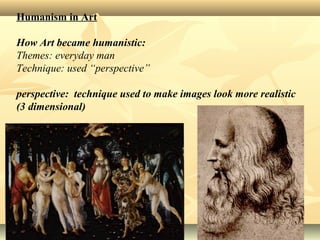
Humanism in Art
How Art became humanistic:
Themes: everyday man
Technique: used “perspective”
perspective: technique used to make images look more realistic
(3 dimensional)
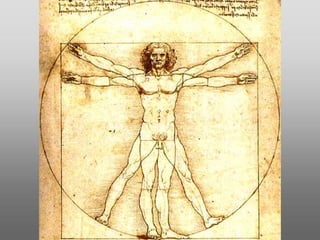
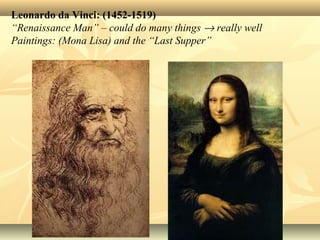
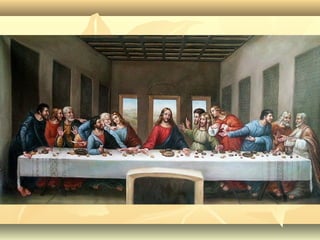
Leonardo da Vinci: (1452-1519)
“Renaissance Man” – could do many things → really well
Paintings: (Mona Lisa) and the “Last Supper”
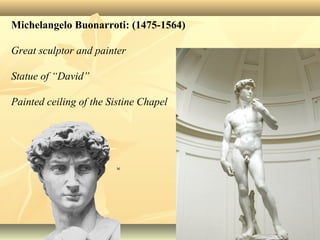
Michelangelo Buonarroti: (1475-1564)
Great sculptor and painter
Statue of “David”
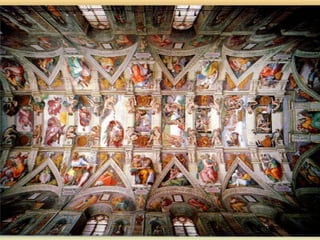
Painted ceiling of the Sistine Chapel
Humanism in Literature
How literature became humanistic: wrote less about religion and more about
everyday life
- Wrote to “entertain “ people
- Wrote in the vernacular
Vernacular: the local everyday language of the people (Italian, French, Spanish,
etc.)
• Dante Alighieri: Italian writer
- Wrote in the vernacular (Italian – not Latin)
- Divine Comedy – put a human touch on heaven and hell
• Cervantes: Spanish writer
- Don Quixote - poked fun at traditions such as knighthood, chivalry and
nobles
• Shakespeare: English writer
- Everyday emotions, situations, and life
Renaissance Technology
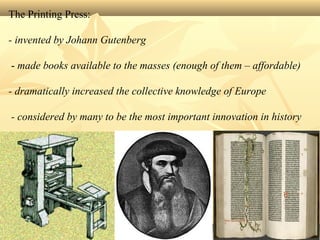
The Printing Press: - invented by Johann Gutenberg
- made books available to the masses (enough of them – affordable)
- dramatically increased the collective knowledge of Europe
- considered by many to be the most important innovation in history
The Printing Press:
- invented by Johann Gutenberg
- made books available to the masses (enough of them – affordable)
- dramatically increased the collective knowledge of Europe
- considered by many to be the most important innovation in history
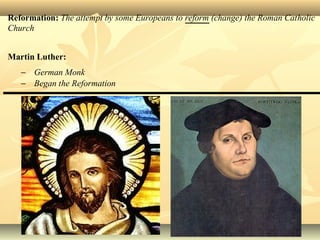
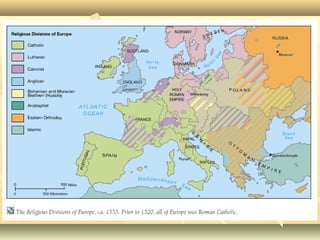
Reformation: The attempt by some Europeans to reform (change) the Roman Catholic
Church
Martin Luther:
− German Monk
− Began the Reformation
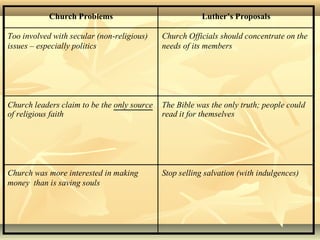
Church Problems Luther’s Proposals
Too involved with secular (non-religious)
issues – especially politics
Church Officials should concentrate on the
needs of its members
Church leaders claim to be the only source
of religious faith
The Bible was the only truth; people could
read it for themselves
Church was more interested in making
money than is saving souls
Stop selling salvation (with indulgences)
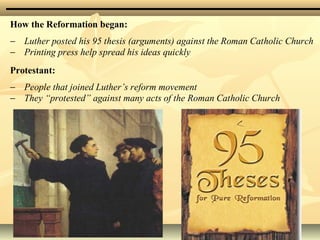
How the Reformation began:
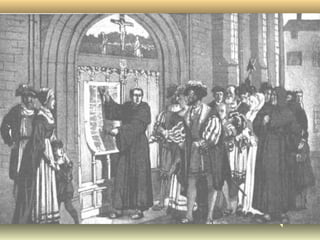
− Luther posted his 95 thesis (arguments) against the Roman Catholic Church
− Printing press help spread his ideas quickly
Protestant:
− People that joined Luther’s reform movement
− They “protested” against many acts of the Roman Catholic Church
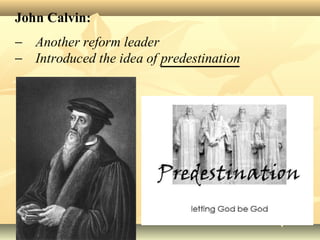
John Calvin:
− Another reform leader
− Introduced the idea of predestination
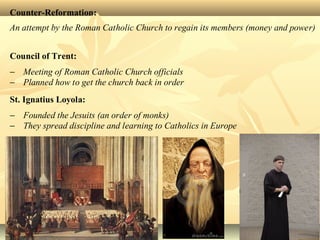
Counter-Reformation:
An attempt by the Roman Catholic Church to regain its members (money and power)
Council of Trent:
− Meeting of Roman Catholic Church officials
− Planned how to get the church back in order
St. Ignatius Loyola:
− Founded the Jesuits (an order of monks)
− They spread discipline and learning to Catholics in Europe
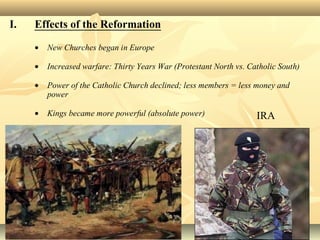
I. Effects of the Reformation
• New Churches began in Europe
• Increased warfare: Thirty Years War (Protestant North vs. Catholic South)
• Power of the Catholic Church declined; less members = less money and
power
• Kings became more powerful (absolute power) IRA
Essential Questions:Essential Questions:
What was the relationship between the rise of
capitalism and the decline of Feudalism?
Essential Questions:Essential Questions:
What impact did capitalism have on the
Renaissance?
Essential Questions:Essential Questions:
How did Renaissance thinking differ from the
Medieval thinking?
Essential Questions:Essential Questions:
How did the Reformation change the Roman
Catholic Church’s leadership role in Europe?

Renaissanse & reformation

  • 1.
  • 2.
    Humanism And a Rebirth in Learning TheRenaissance Rise of Capitalism Old Greek and Roman Learning New Asian Ideas ( Muslims, Chinese, Indians) Why Italy? In Art In Literature Commerce Effects of the Crusades Middle ClassEnd of Feudalism Humanism Rise of Markets Rise of New Towns
  • 4.
    Effects of TheCrusades on the Economy: • New Markets and Towns: - Were created because of the revival of trade after the crusades • End of Feudalism: - Freed serfs left the manors and moved to the new cities and towns - A money economy replaced land ownership as the means of wealth
  • 5.
    The Commercial Revolution •Commercial Revolution: - A “change” from a feudal economy to money (market) economy • Market Economy: - The demand for a product and the supply available → determines the price of a product (market system) • Capitalism: - An economic system - Based on using capital → “investment money” - Prices are determined by the market • Rise of the Middle Class: - Created in the new towns - they were business people; merchants, bankers and craftsmen • Guilds: business organizations created to promote and protect a certain trade (craft) in a community or region
  • 6.
    “International” Trade • HanseaticLeague: (Northern Europe – Baltic Sea) - An organization of trading merchants from large cities located in northern Europe - It was a reaction to the success and domination of the Italians in the south • Italian City-States: (Southern Europe – Mediterranean Sea) - They dominated trade between Asia and the Europe - Venice, Genoa and Naples - Very independent
  • 8.
    Renewed Interest inLearning (People became more creative and began to look at things from a different perspective) • Greek and Roman Learning: was “reborn” in Europe - Art – Philosophy – Literature - Science • Asian Learning: (Asian ideas spread to Europe through trade with the Muslims) - Navigation (sailing) - Science - Medicine • Monastic System: (Monks in monasteries) - Preserved and spread old and new learning - Began new universities
  • 9.
    Why the RenaissanceBegan in Italy • Italy’s great location Led them to become great traders • trade Led to great wealth • wealth Led to many patrons • patrons Led to great universities works of art
  • 11.
    Florence, Italy: - Centerof the Renaissance artistic world - Grew from the support of the Medici family Patrons: - Wealthy people who sponsored artists and thinkers to do great work Medici Family: - Bankers from Florence - Used their wealth to control politics - Sponsored great artists in Italy
  • 12.
    Humanism • humanism: - Theintellectual and artistic movement that took place during the Renaissance - Focused more on everyday life (secular) • secular: - Not church related - Part of the everyday world
  • 13.
    Humanism in Art HowArt became humanistic: Themes: everyday man Technique: used “perspective” perspective: technique used to make images look more realistic (3 dimensional)
  • 15.
    Leonardo da Vinci:(1452-1519) “Renaissance Man” – could do many things → really well Paintings: (Mona Lisa) and the “Last Supper”
  • 17.
    Michelangelo Buonarroti: (1475-1564) Greatsculptor and painter Statue of “David” Painted ceiling of the Sistine Chapel
  • 19.
    Humanism in Literature Howliterature became humanistic: wrote less about religion and more about everyday life - Wrote to “entertain “ people - Wrote in the vernacular Vernacular: the local everyday language of the people (Italian, French, Spanish, etc.) • Dante Alighieri: Italian writer - Wrote in the vernacular (Italian – not Latin) - Divine Comedy – put a human touch on heaven and hell • Cervantes: Spanish writer - Don Quixote - poked fun at traditions such as knighthood, chivalry and nobles • Shakespeare: English writer - Everyday emotions, situations, and life Renaissance Technology The Printing Press: - invented by Johann Gutenberg - made books available to the masses (enough of them – affordable) - dramatically increased the collective knowledge of Europe - considered by many to be the most important innovation in history
  • 20.
    The Printing Press: -invented by Johann Gutenberg - made books available to the masses (enough of them – affordable) - dramatically increased the collective knowledge of Europe - considered by many to be the most important innovation in history
  • 21.
    Reformation: The attemptby some Europeans to reform (change) the Roman Catholic Church Martin Luther: − German Monk − Began the Reformation
  • 22.
    Church Problems Luther’sProposals Too involved with secular (non-religious) issues – especially politics Church Officials should concentrate on the needs of its members Church leaders claim to be the only source of religious faith The Bible was the only truth; people could read it for themselves Church was more interested in making money than is saving souls Stop selling salvation (with indulgences)
  • 23.
    How the Reformationbegan: − Luther posted his 95 thesis (arguments) against the Roman Catholic Church − Printing press help spread his ideas quickly Protestant: − People that joined Luther’s reform movement − They “protested” against many acts of the Roman Catholic Church
  • 25.
    John Calvin: − Anotherreform leader − Introduced the idea of predestination
  • 26.
    Counter-Reformation: An attempt bythe Roman Catholic Church to regain its members (money and power) Council of Trent: − Meeting of Roman Catholic Church officials − Planned how to get the church back in order St. Ignatius Loyola: − Founded the Jesuits (an order of monks) − They spread discipline and learning to Catholics in Europe
  • 27.
    I. Effects ofthe Reformation • New Churches began in Europe • Increased warfare: Thirty Years War (Protestant North vs. Catholic South) • Power of the Catholic Church declined; less members = less money and power • Kings became more powerful (absolute power) IRA
  • 29.
    Essential Questions:Essential Questions: Whatwas the relationship between the rise of capitalism and the decline of Feudalism?
  • 30.
    Essential Questions:Essential Questions: Whatimpact did capitalism have on the Renaissance?
  • 31.
    Essential Questions:Essential Questions: Howdid Renaissance thinking differ from the Medieval thinking?
  • 32.
    Essential Questions:Essential Questions: Howdid the Reformation change the Roman Catholic Church’s leadership role in Europe?