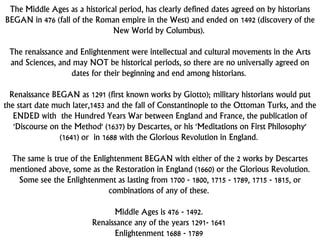
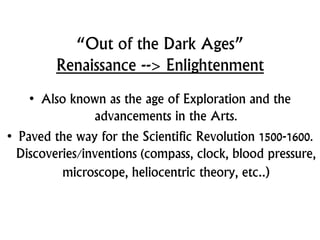
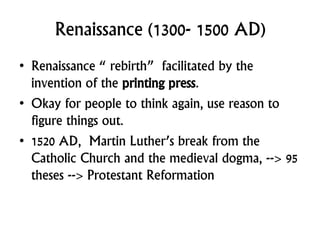
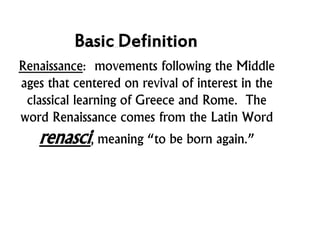
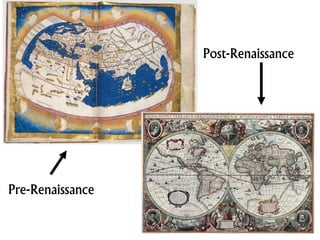
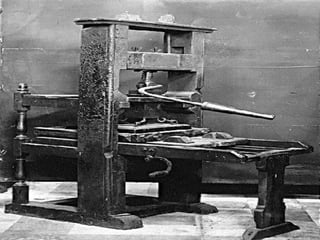
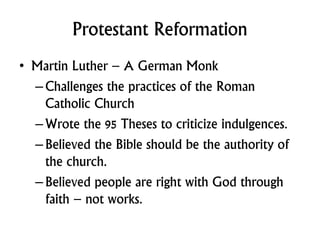
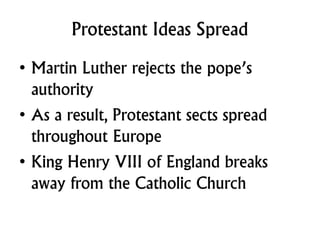
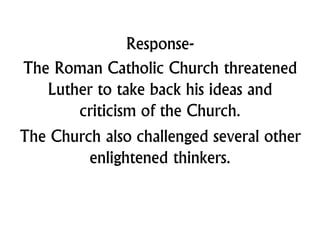
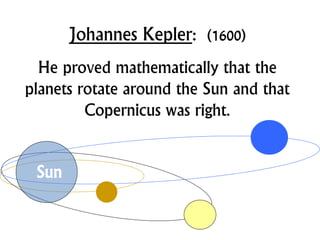
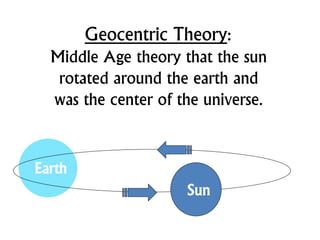
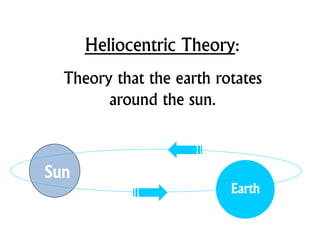
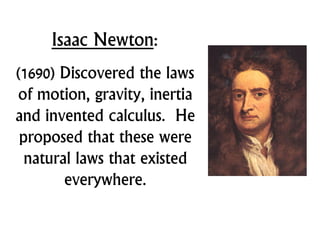
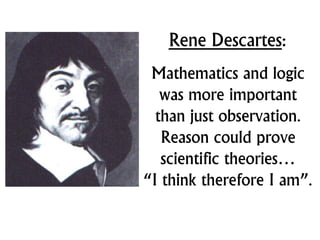
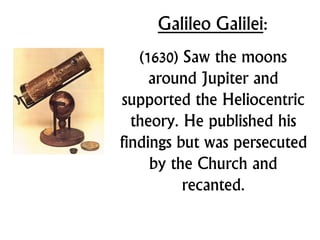
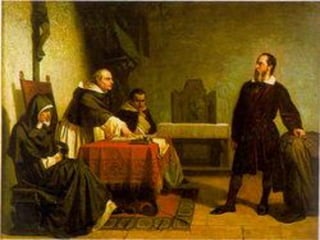
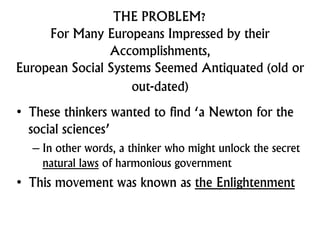
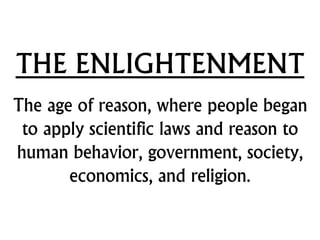
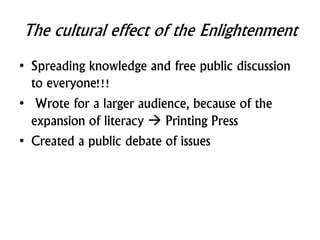
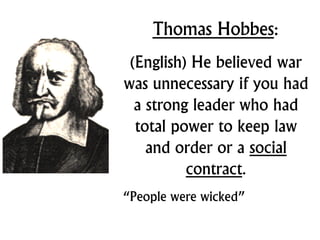
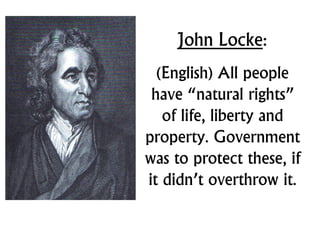
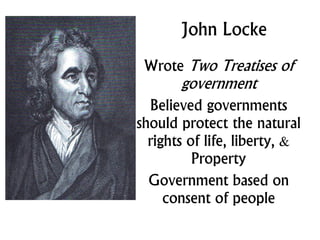
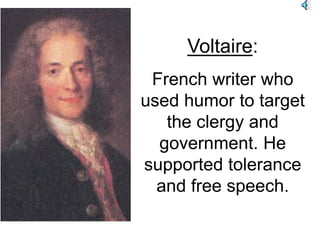
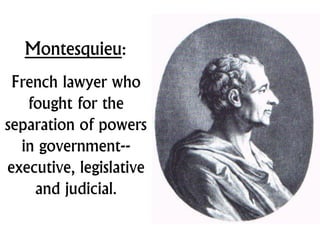
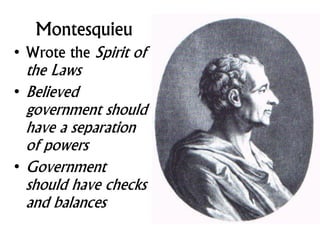
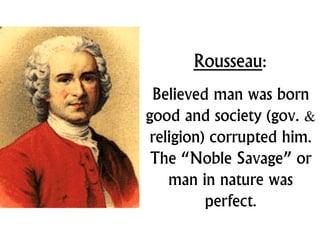
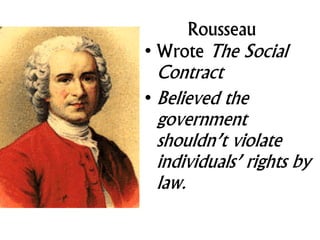
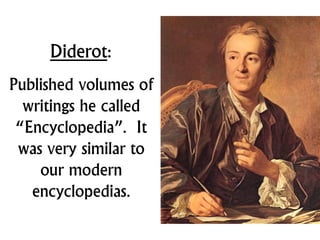
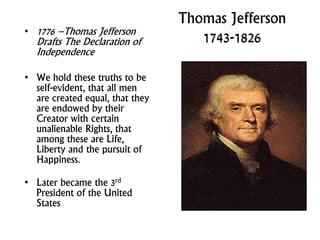
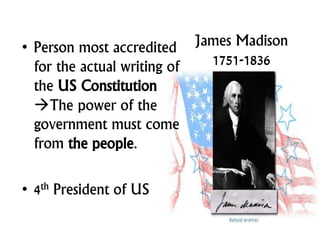
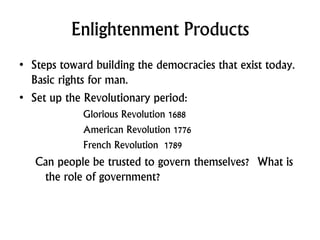
The Renaissance period saw a revival of classical Greco-Roman ideas in Europe between the 14th and 17th centuries. This cultural and intellectual movement was spurred by increased trade and wealth in Italian city-states, which exposed people to new ideas. Major developments included the printing press spreading knowledge, Copernicus and Galileo challenging the Church's geocentric view of the universe, and the Protestant Reformation questioning Church authority. The subsequent Enlightenment applied reason to philosophy, government, and society, promoting ideas of individual rights and challenging absolute monarchies. Thinkers like Locke, Montesquieu, Voltaire, and Rousseau influenced revolutions in America and France seeking more democratic forms of government.



![Middle ages [ppt]](https://cdn.slidesharecdn.com/ss_thumbnails/middleagesppt-190208135629-thumbnail.jpg?width=640&height=640&fit=bounds)


![The Crusades[1]](https://cdn.slidesharecdn.com/ss_thumbnails/the-crusades1-1232483809244971-2-thumbnail.jpg?width=640&height=640&fit=bounds)


