The pedagogy of MOOCs
Terese Bird and Gráinne Conole,
University of Leicester
14th March 2014
Open Education Week Webinar
National
Teaching
Fellow 2012 Ascilite fellow 2012EDEN fellow 2013
Outline
• Overview of MOOCs
• Overview of eMundus
• Pedagogical approaches
• MOOC classification
• Describing MOOCs
• Evaluating MOOCs
OER and MOOCs
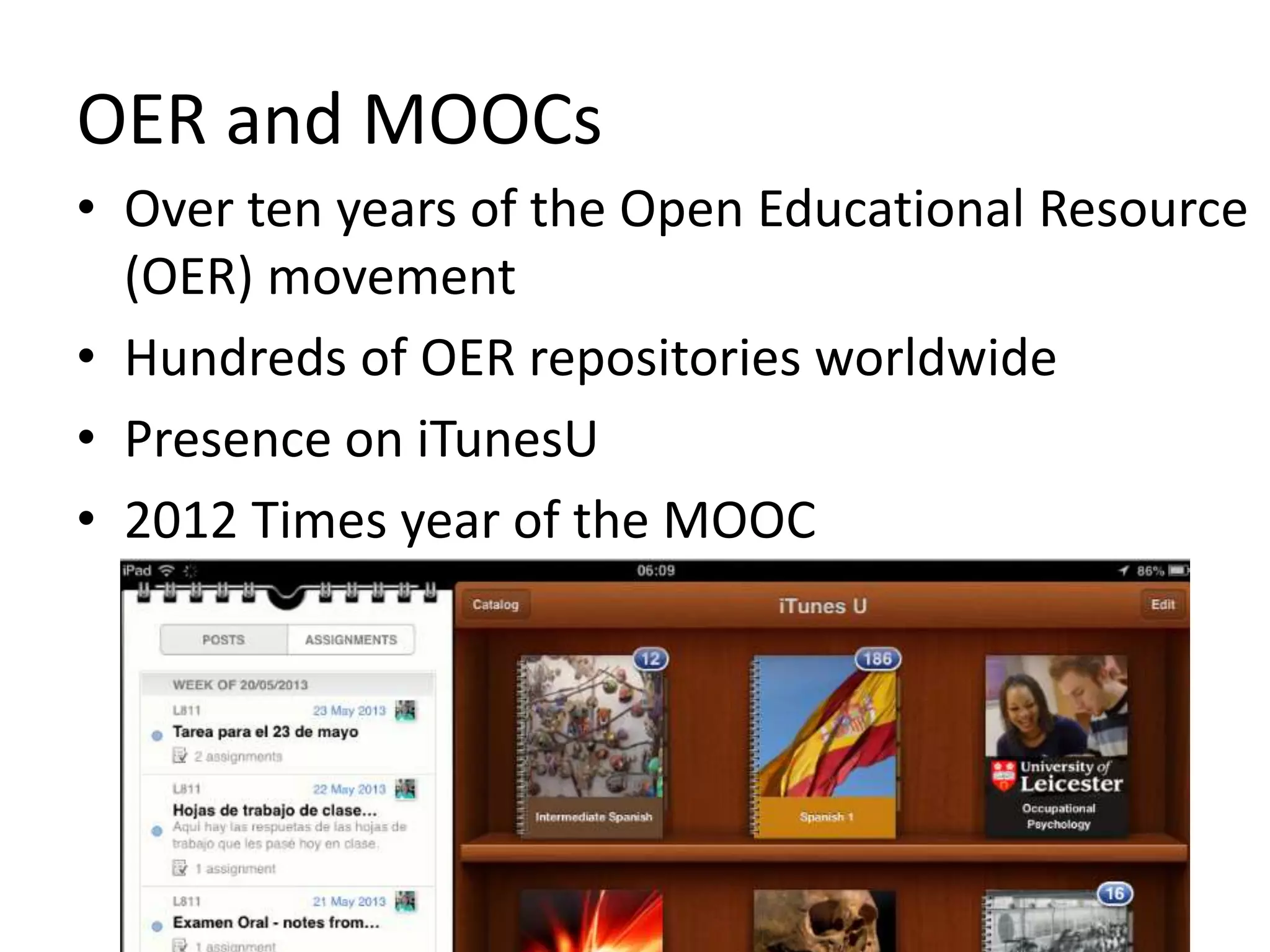
• Over ten years of the Open Educational Resource
(OER) movement
• Hundreds of OER repositories worldwide
• Presence on iTunesU
• 2012 Times year of the MOOC
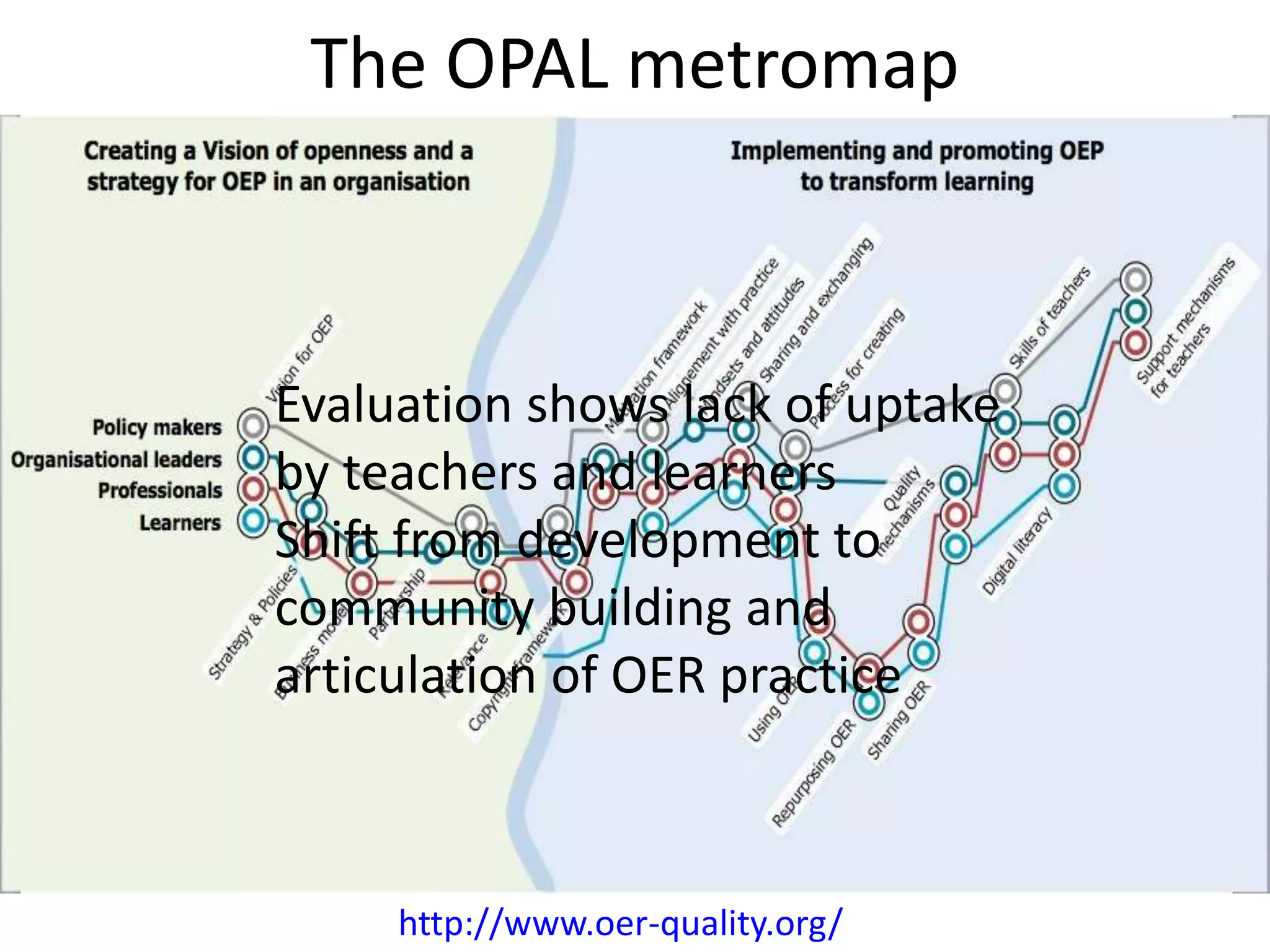
The OPAL metromap
http://www.oer-quality.org/
Evaluation shows lack of uptake
by teachers and learners
Shift from development to
community building and
articulation of OER practice
POERUP outputs
• An inventory of more than 300 OER initiatives
http://poerup.referata.com/wiki/Countries_with_OER_initiatives
• 11 country reports and 13 mini-reports
http://poerup.referata.com/wiki/Countries
• 7 in-depth case studies
• 3 EU-wide policy papers
The emergence of MOOCs
• CCK08
– Connectivist MOOC (cMOOC)
– Siemens, Downes and Cormier
– Evaluation (Fini, 2009)
– http://www.irrodl.org/index.php/irrodl/article/view/643/1402
• Emergence of large-scale xMOOCs
• UK-based FutureLearn
• Launch of Massey on Open2Study
• What are MOOCs?
– http://www.youtube.com/watch?v=eW3gMGqcZQc
• List of MOOCs
– http://www.mooc-list.com/
• EFQUEL series of blogs
– http://mooc.efquel.org/
• ICDE list of MOOC reports
– http://tinyurl.com/gconole-MOOC
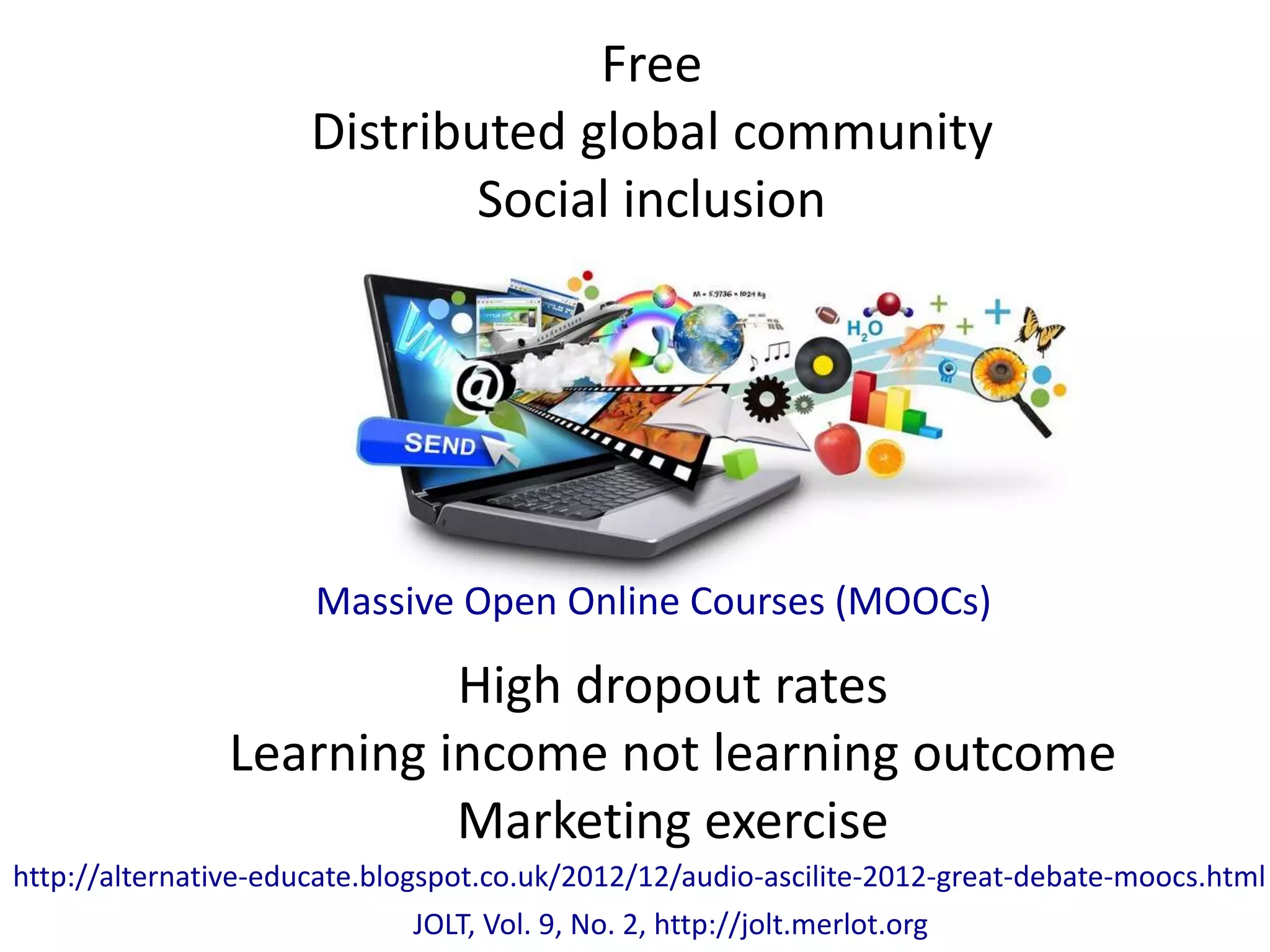
Massive Open Online Courses (MOOCs)
Free
Distributed global community
Social inclusion
High dropout rates
Learning income not learning outcome
Marketing exercise
http://alternative-educate.blogspot.co.uk/2012/12/audio-ascilite-2012-great-debate-moocs.html
JOLT, Vol. 9, No. 2, http://jolt.merlot.org
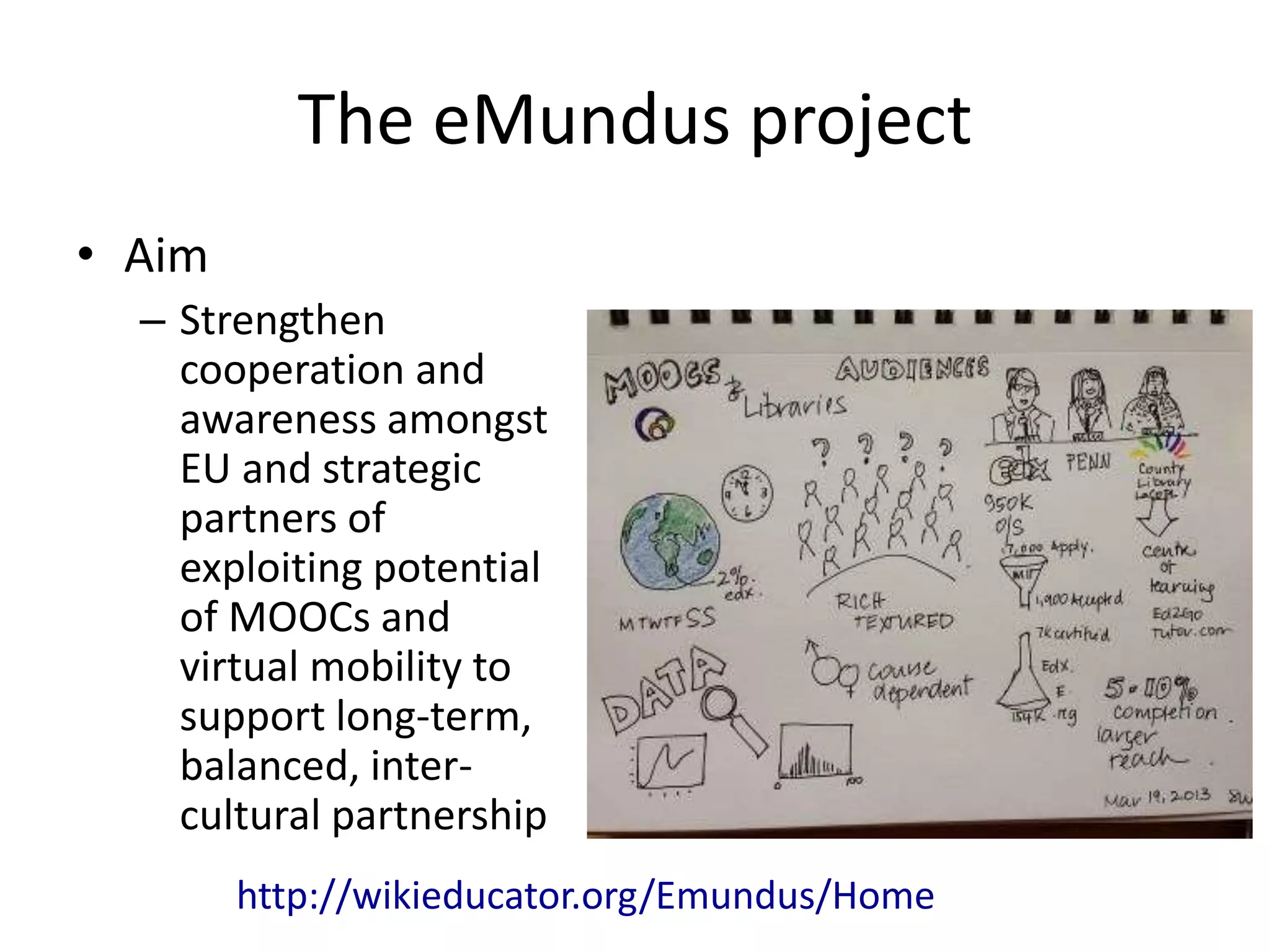
The eMundus project
• Aim
– Strengthen
cooperation and
awareness amongst
EU and strategic
partners of
exploiting potential
of MOOCs and
virtual mobility to
support long-term,
balanced, inter-
cultural partnership
http://wikieducator.org/Emundus/Home
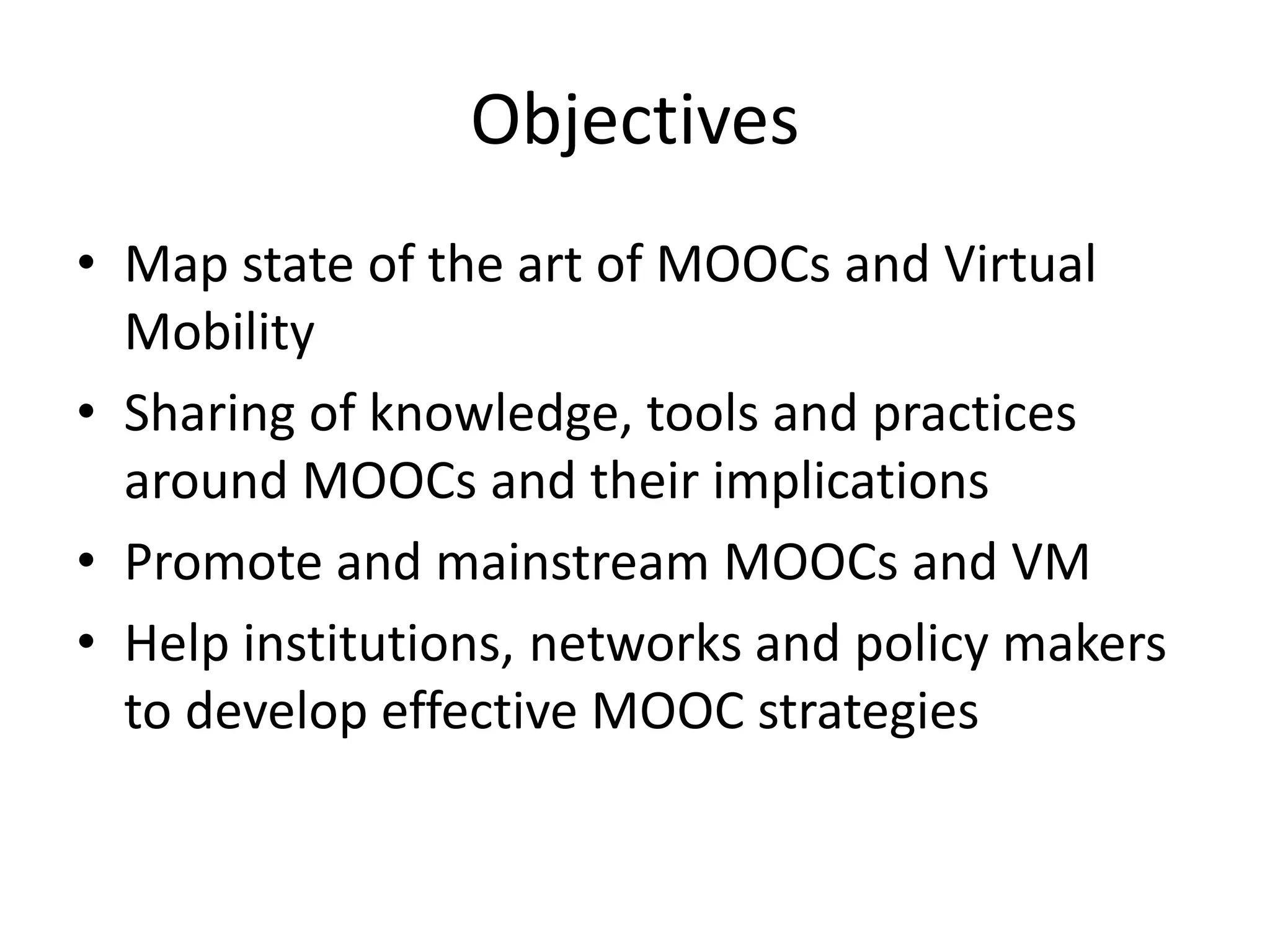
Objectives
• Map state of the art of MOOCs and Virtual
Mobility
• Sharing of knowledge, tools and practices
around MOOCs and their implications
• Promote and mainstream MOOCs and VM
• Help institutions, networks and policy makers
to develop effective MOOC strategies
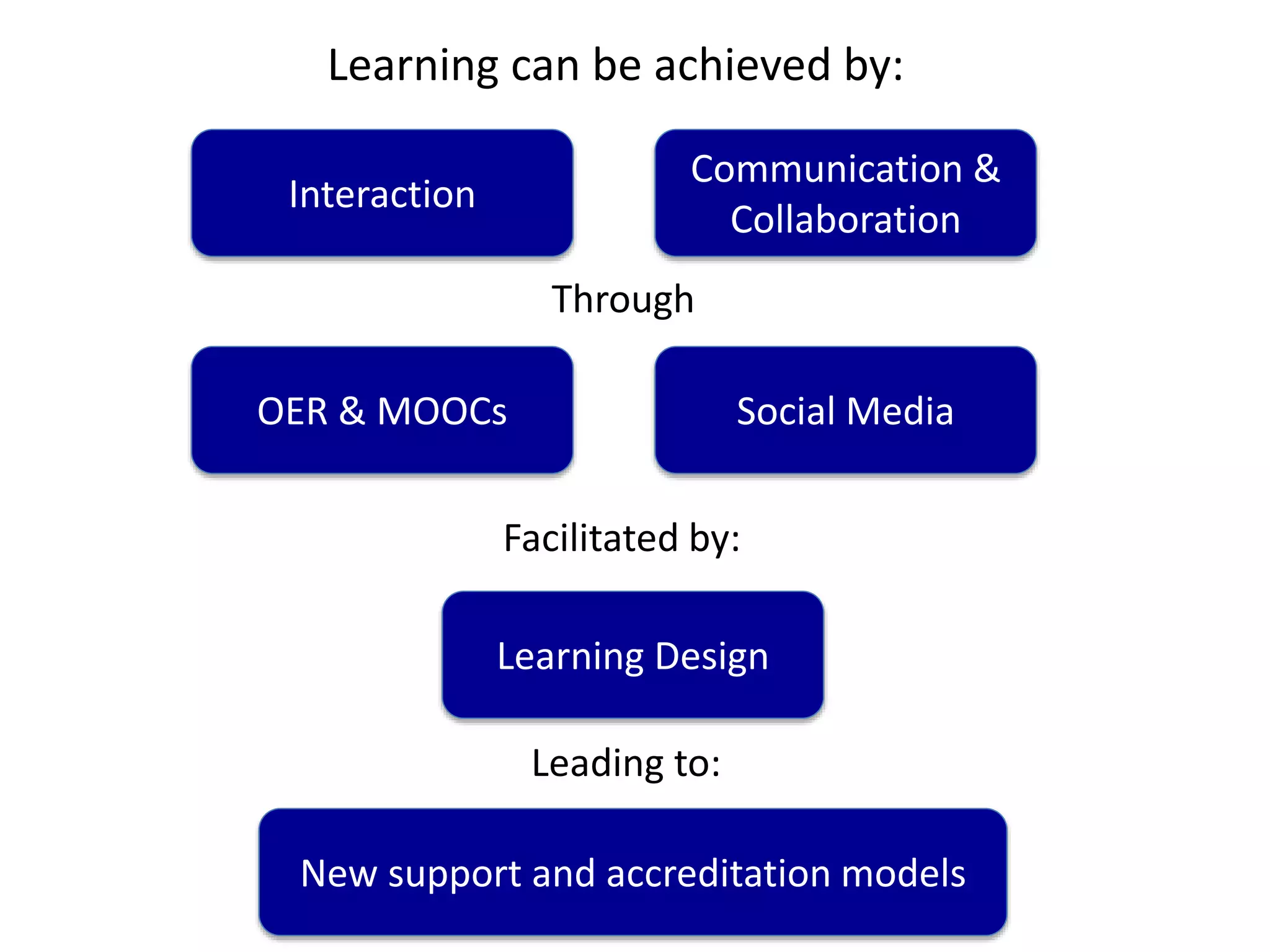
Learning can be achieved by:
Interaction
Communication &
Collaboration
Through
OER & MOOCs Social Media
Facilitated by:
Learning Design
Leading to:
New support and accreditation models
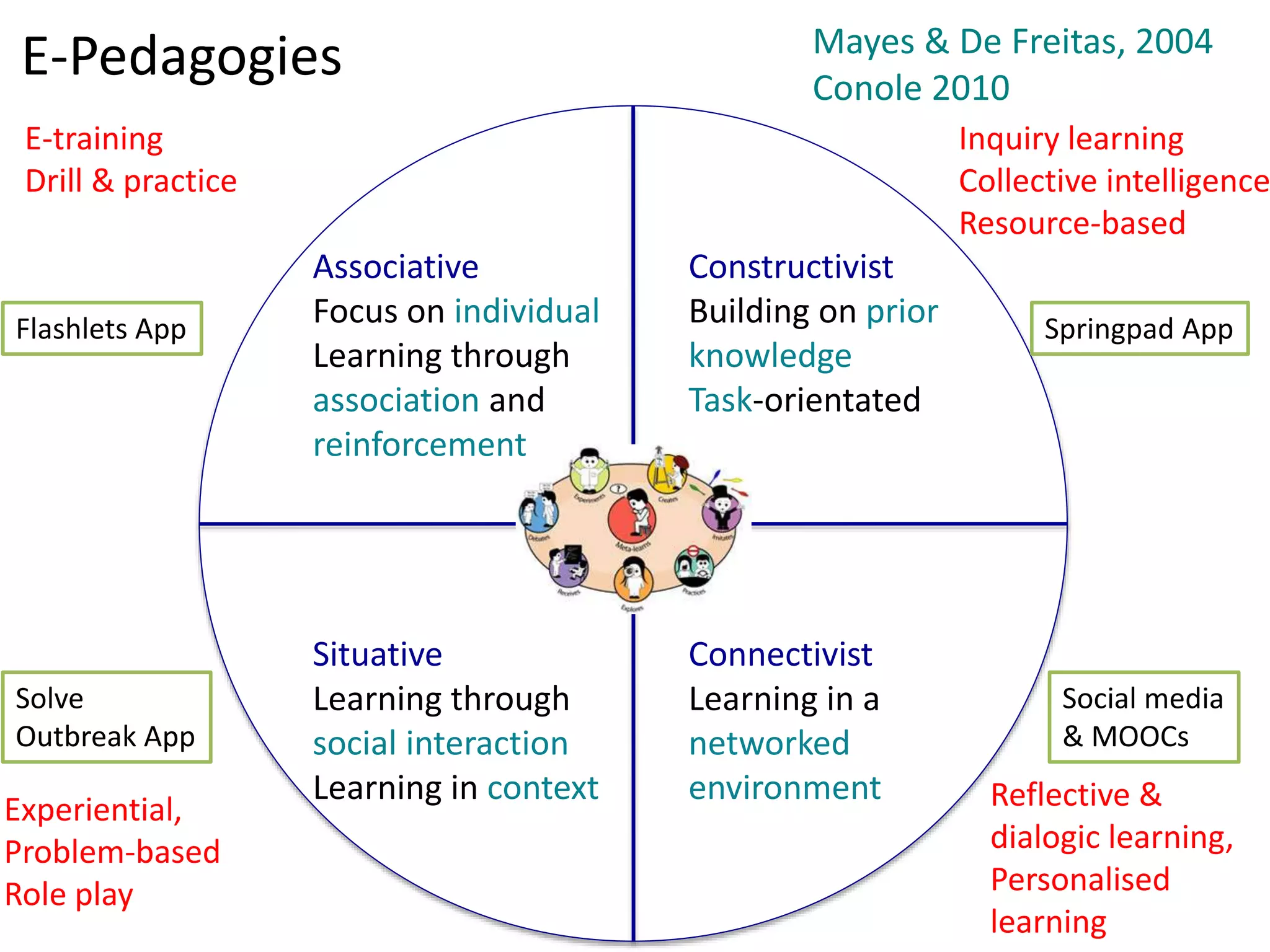
A
Constructivist
Building on prior
knowledge
Task-orientated
Situative
Learning through
social interaction
Learning in context
Connectivist
Learning in a
networked
environment
E-Pedagogies Mayes & De Freitas, 2004
Conole 2010
E-training
Drill & practice
Inquiry learning
Collective intelligence
Resource-based
Experiential,
Problem-based
Role play
Reflective &
dialogic learning,
Personalised
learning
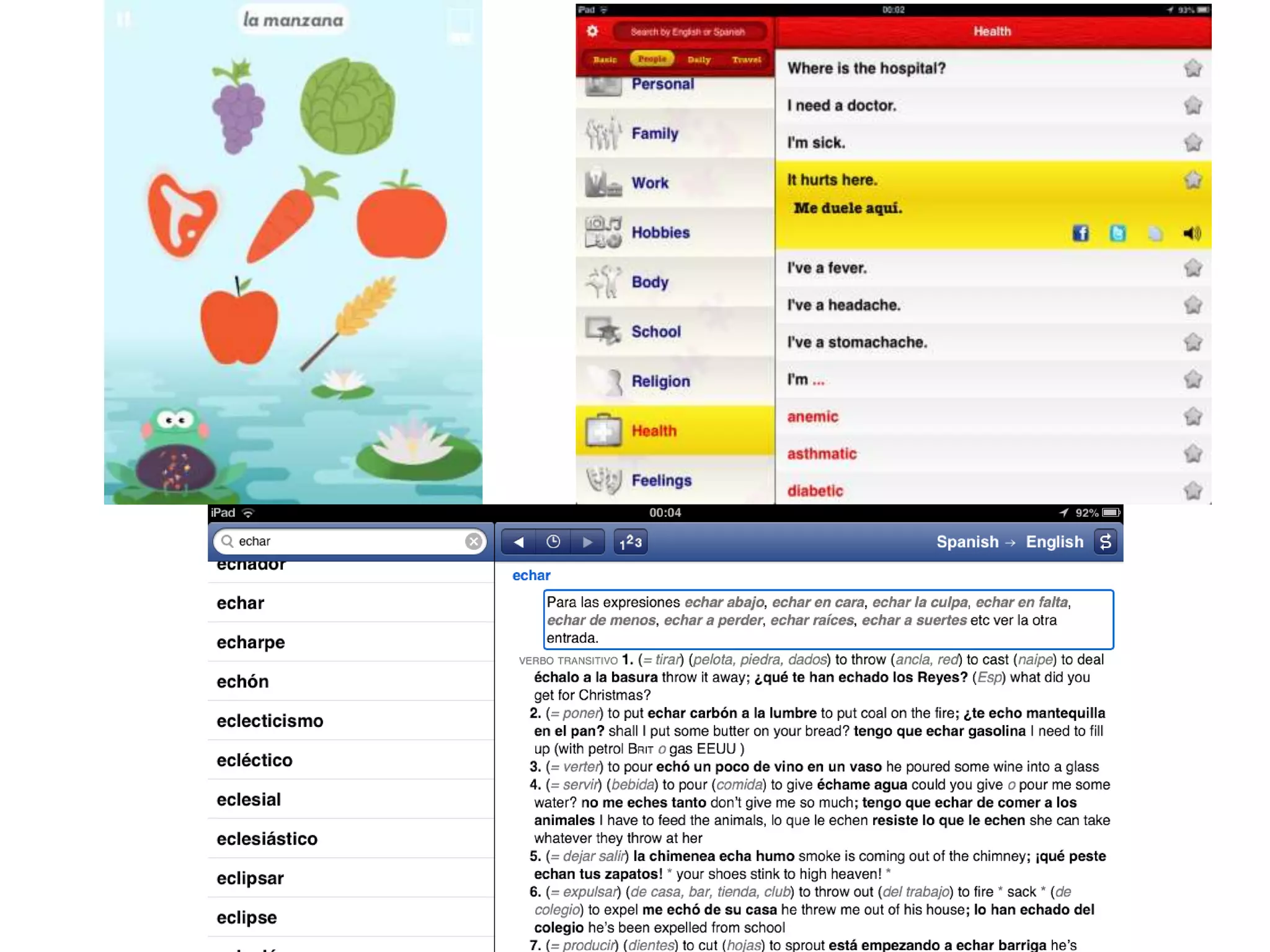
Flashlets App Springpad App
Solve
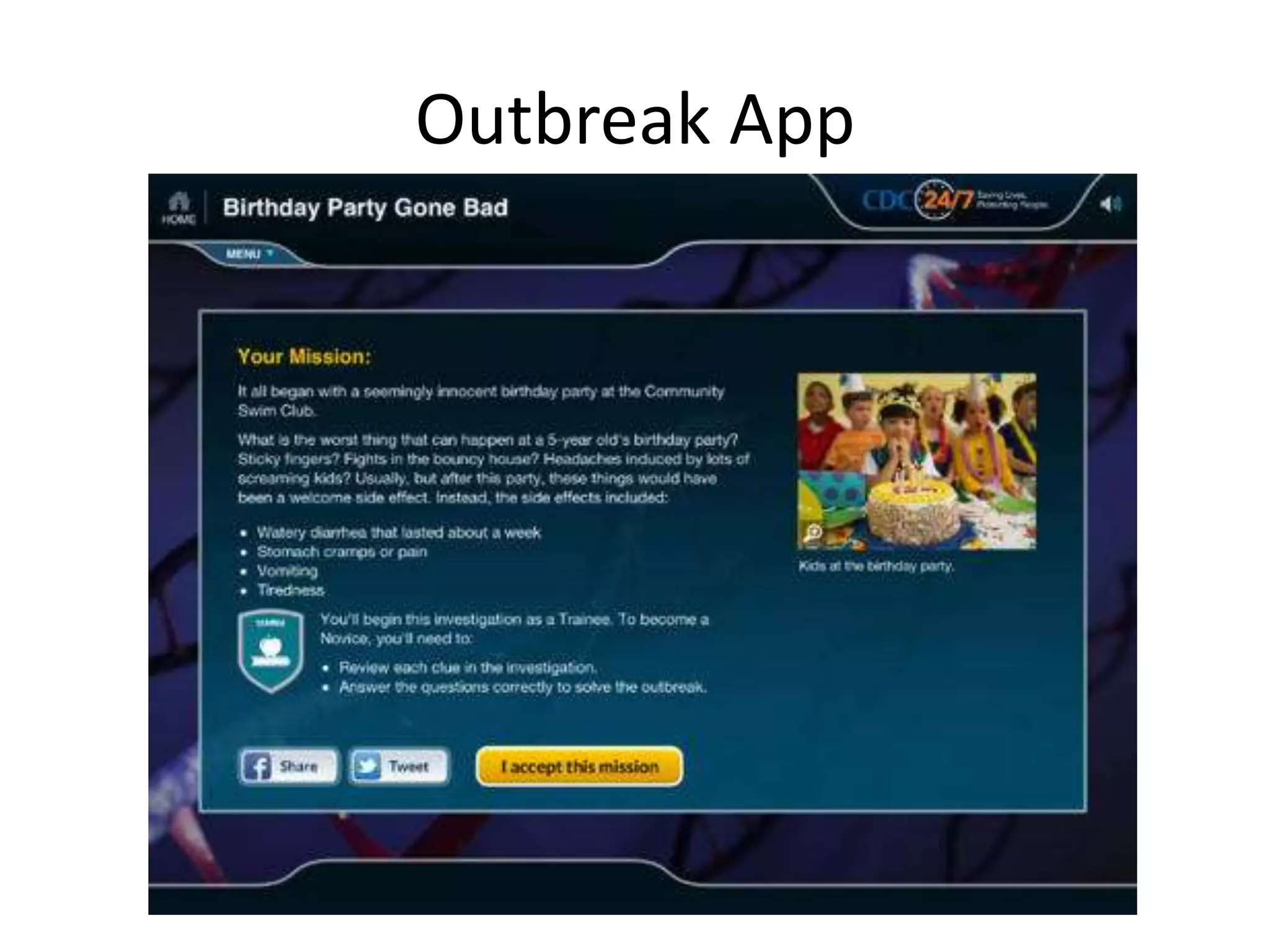
Outbreak App
Social media
& MOOCs
Associative
Focus on individual
Learning through
association and
reinforcement
Pedagogical approaches
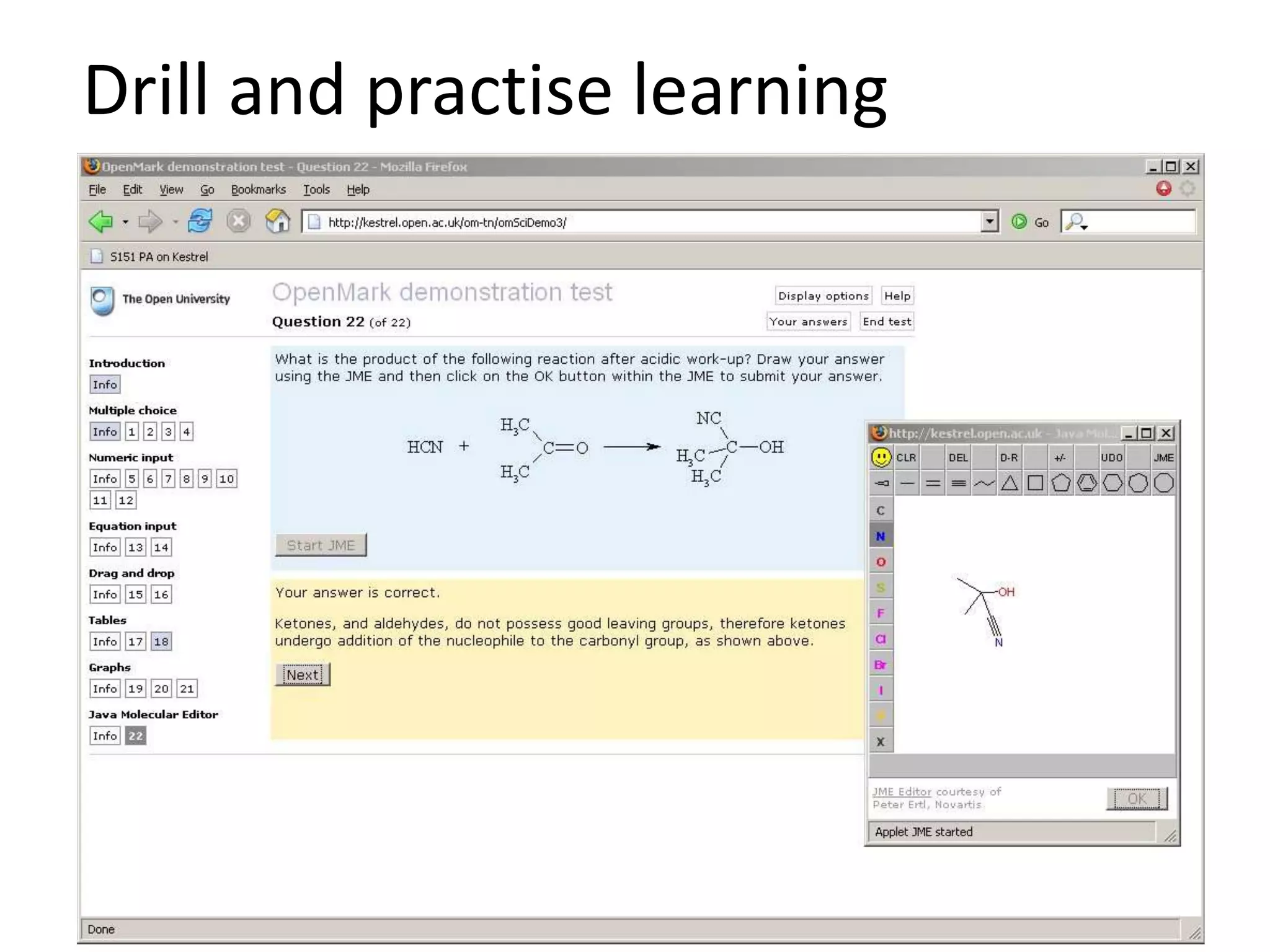
Drill & practise
learning
Inquiry
learning
Situated
learning
Immersive
learning
Drill and practise learning
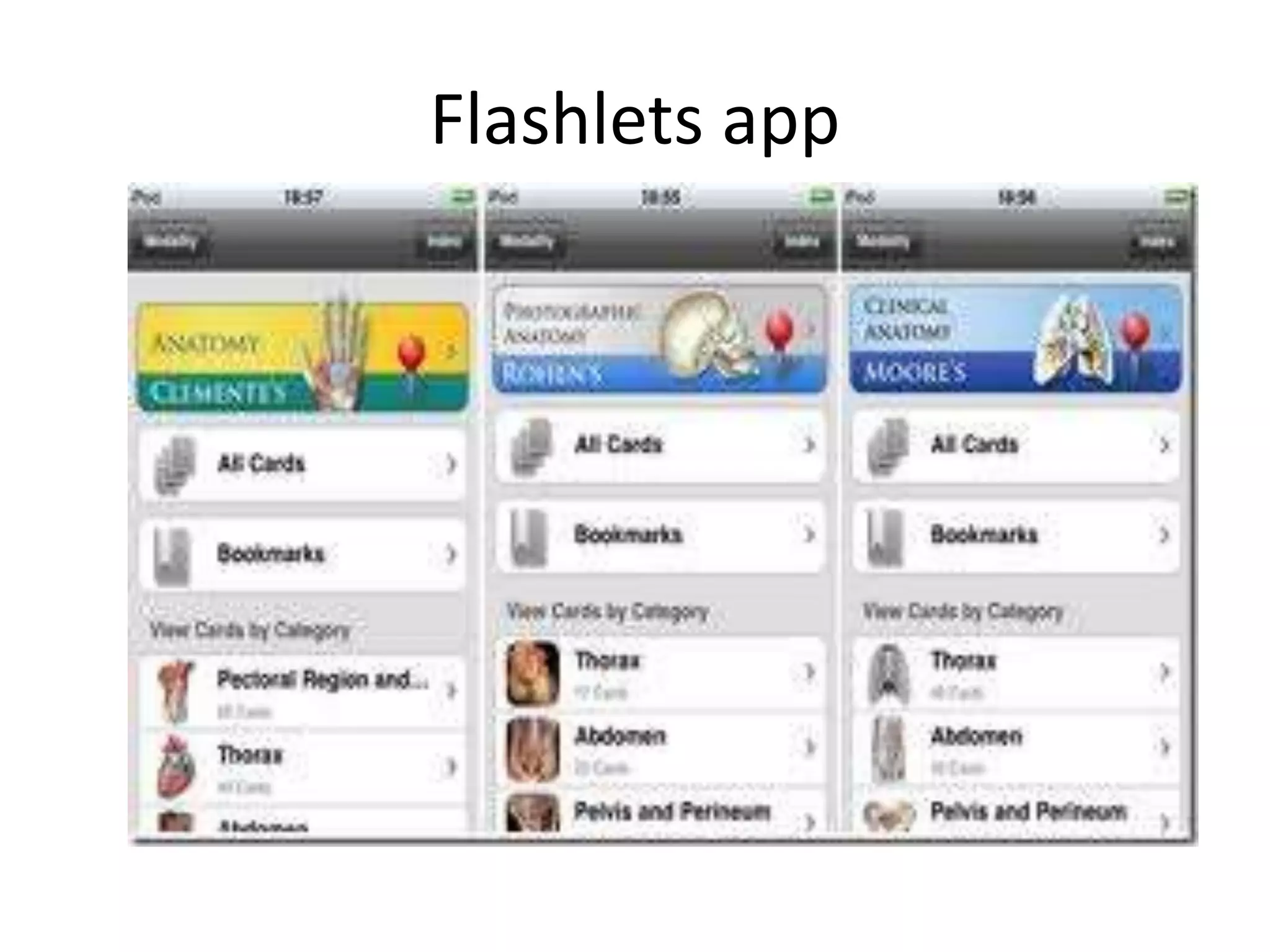
Flashlets app
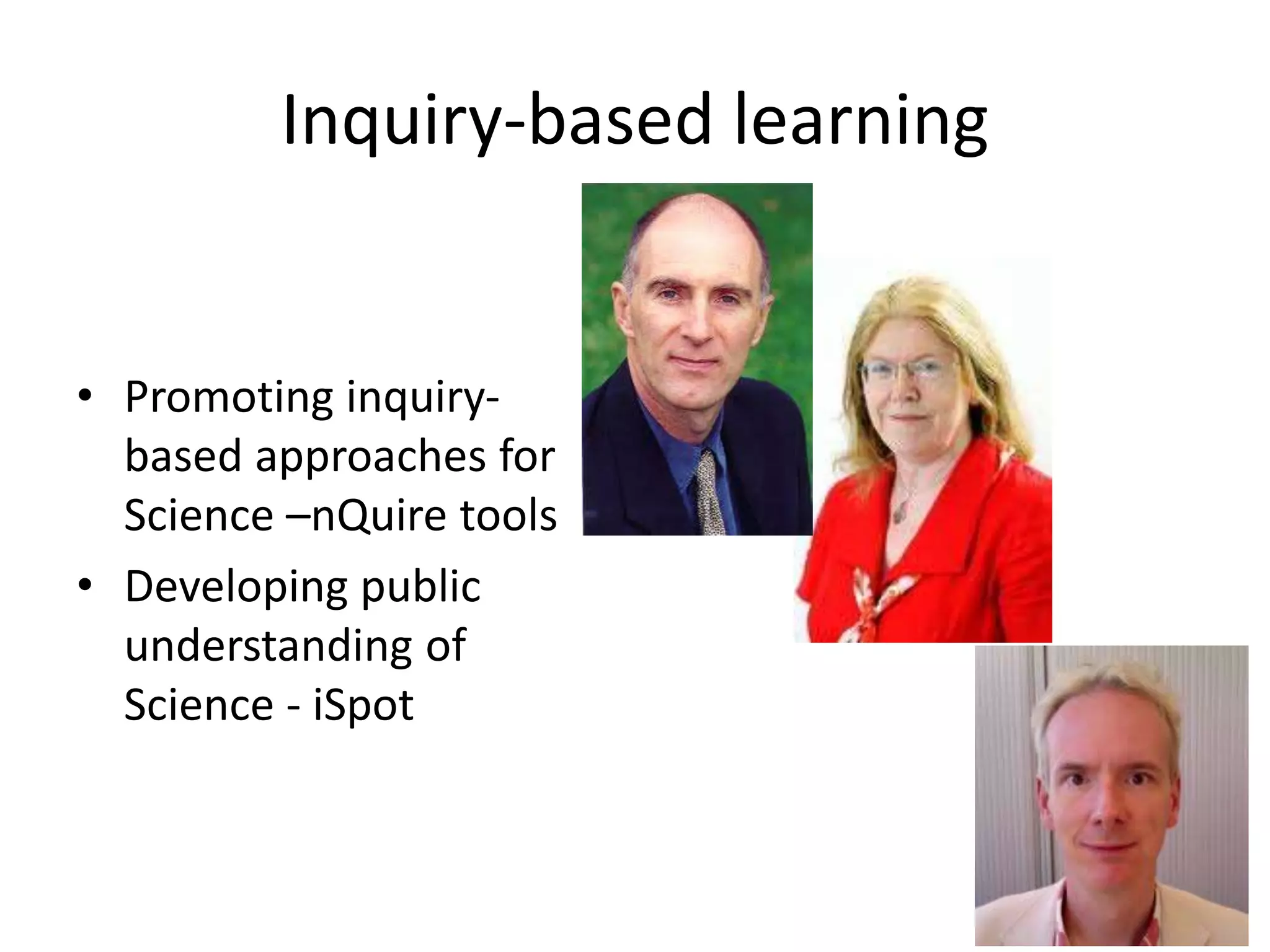
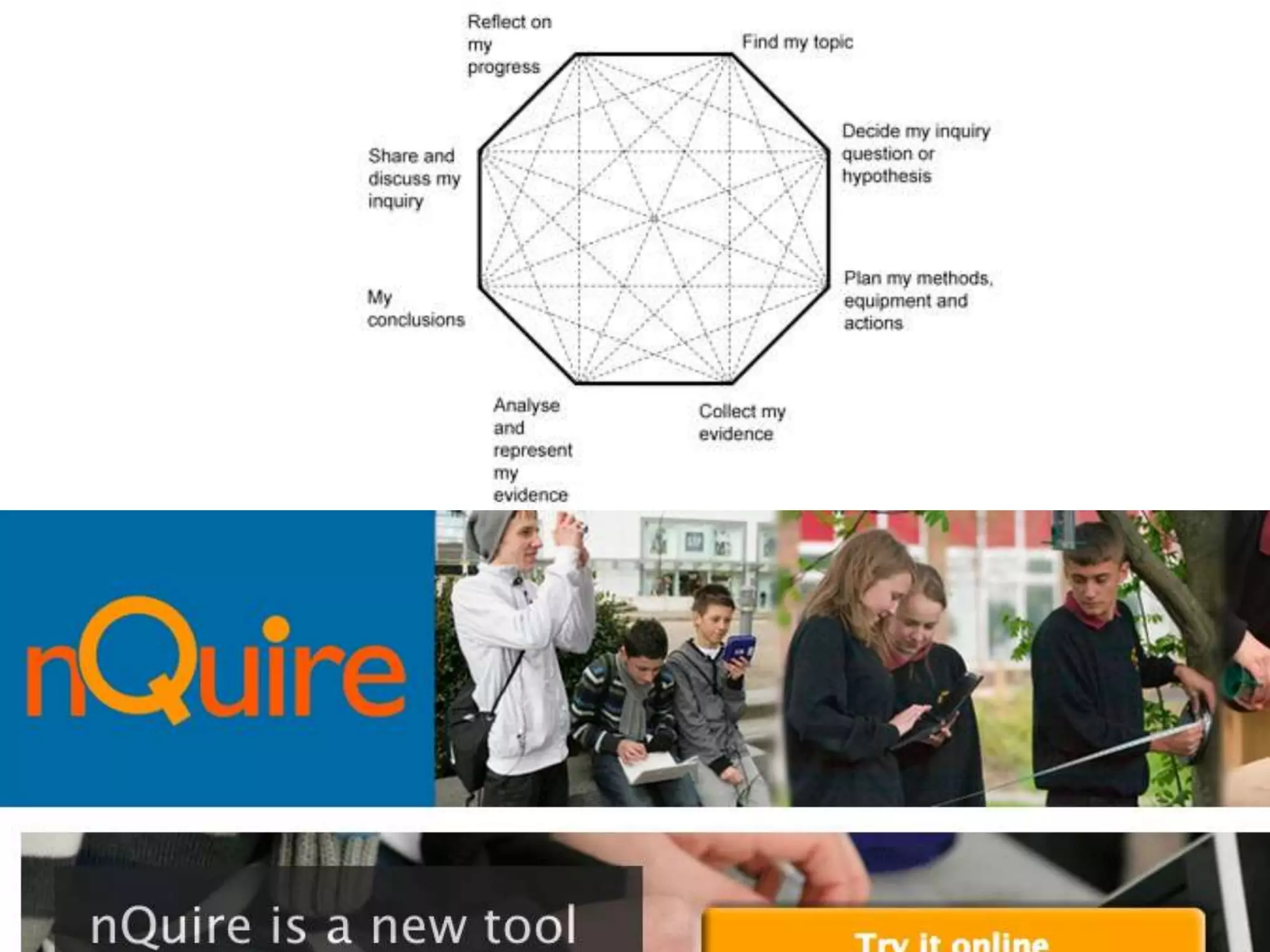
Inquiry-based learning
• Promoting inquiry-
based approaches for
Science –nQuire tools
• Developing public
understanding of
Science - iSpot
Springpad curation
Situated learning
Archeological digs
Medical wards
Art exhibitions
Cyber-law
Virtual language exchange
Beyond formal schooling http://www.jibbigo.com/
Mark Childs
Swift project
Paul Rudman and Suzanne Lavelle
Outbreak App
Immersive learning
OLDS MOOC
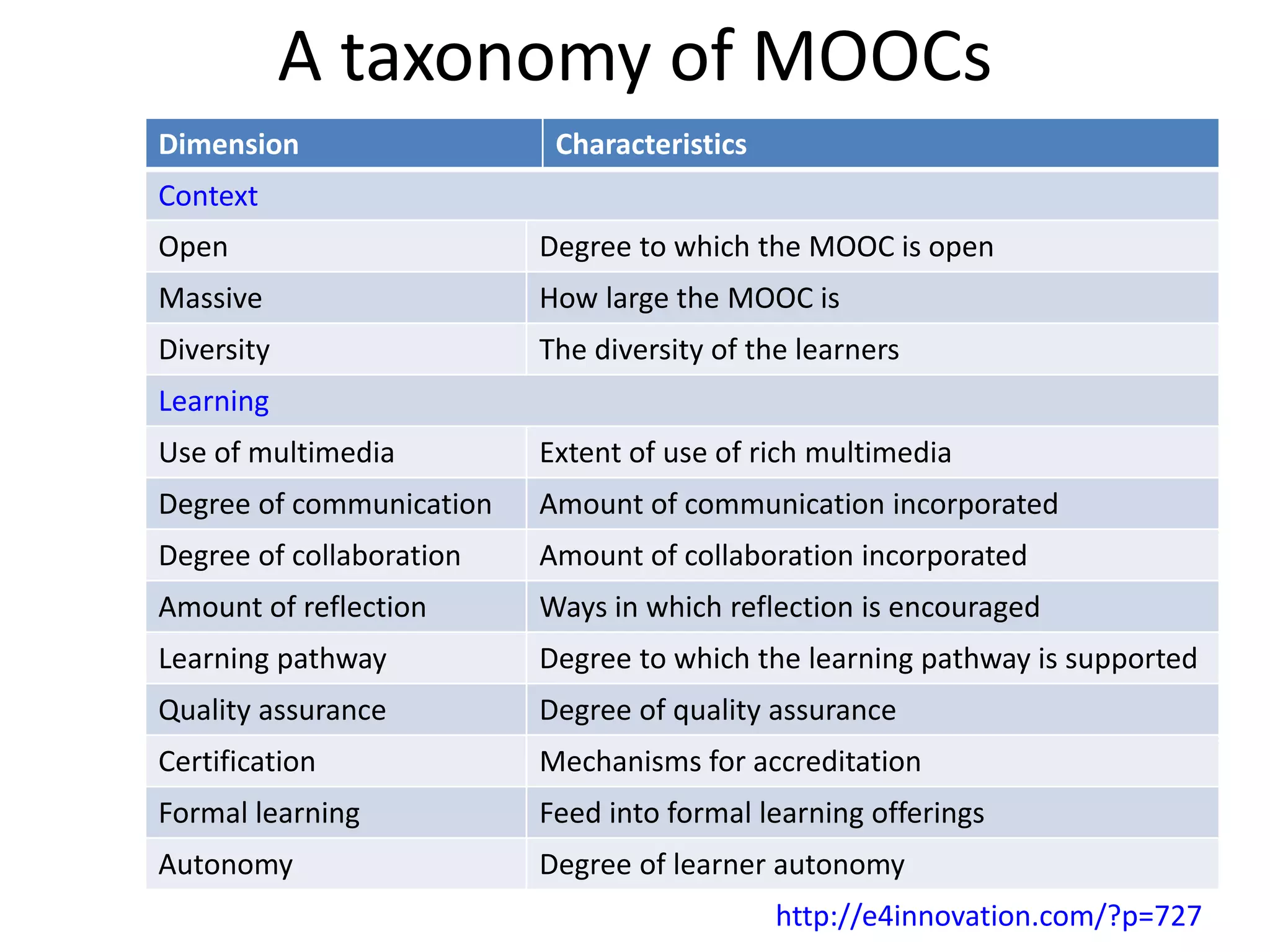
Dimension Characteristics
Context
Open Degree to which the MOOC is open
Massive How large the MOOC is
Diversity The diversity of the learners
Learning
Use of multimedia Extent of use of rich multimedia
Degree of communication Amount of communication incorporated
Degree of collaboration Amount of collaboration incorporated
Amount of reflection Ways in which reflection is encouraged
Learning pathway Degree to which the learning pathway is supported
Quality assurance Degree of quality assurance
Certification Mechanisms for accreditation
Formal learning Feed into formal learning offerings
Autonomy Degree of learner autonomy
A taxonomy of MOOCs
http://e4innovation.com/?p=727
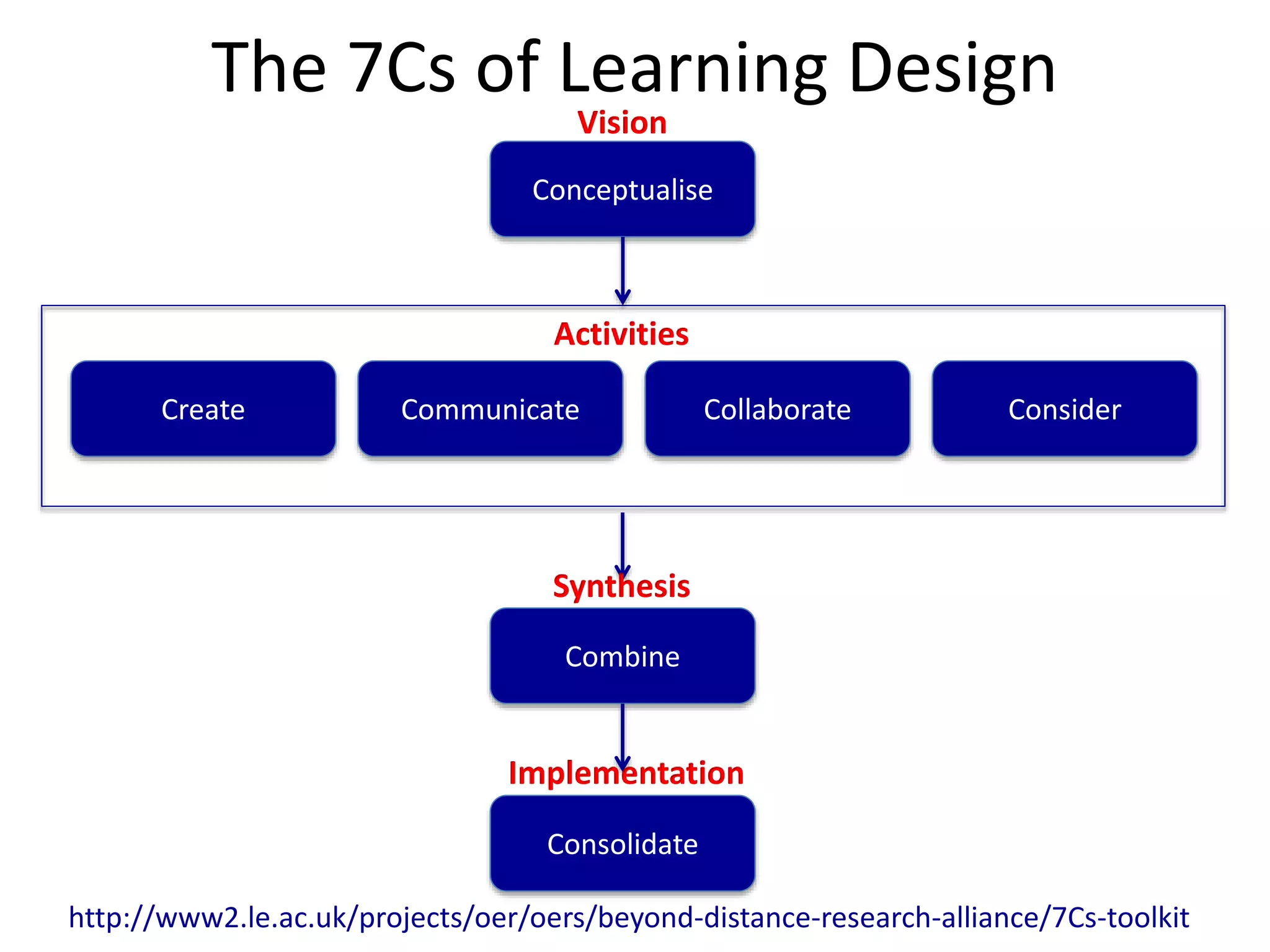
The 7Cs of Learning Design
Conceptualise
Vision
CommunicateCreate ConsiderCollaborate
Activities
Combine
Synthesis
Consolidate
Implementation
http://www2.le.ac.uk/projects/oer/oers/beyond-distance-research-alliance/7Cs-toolkit
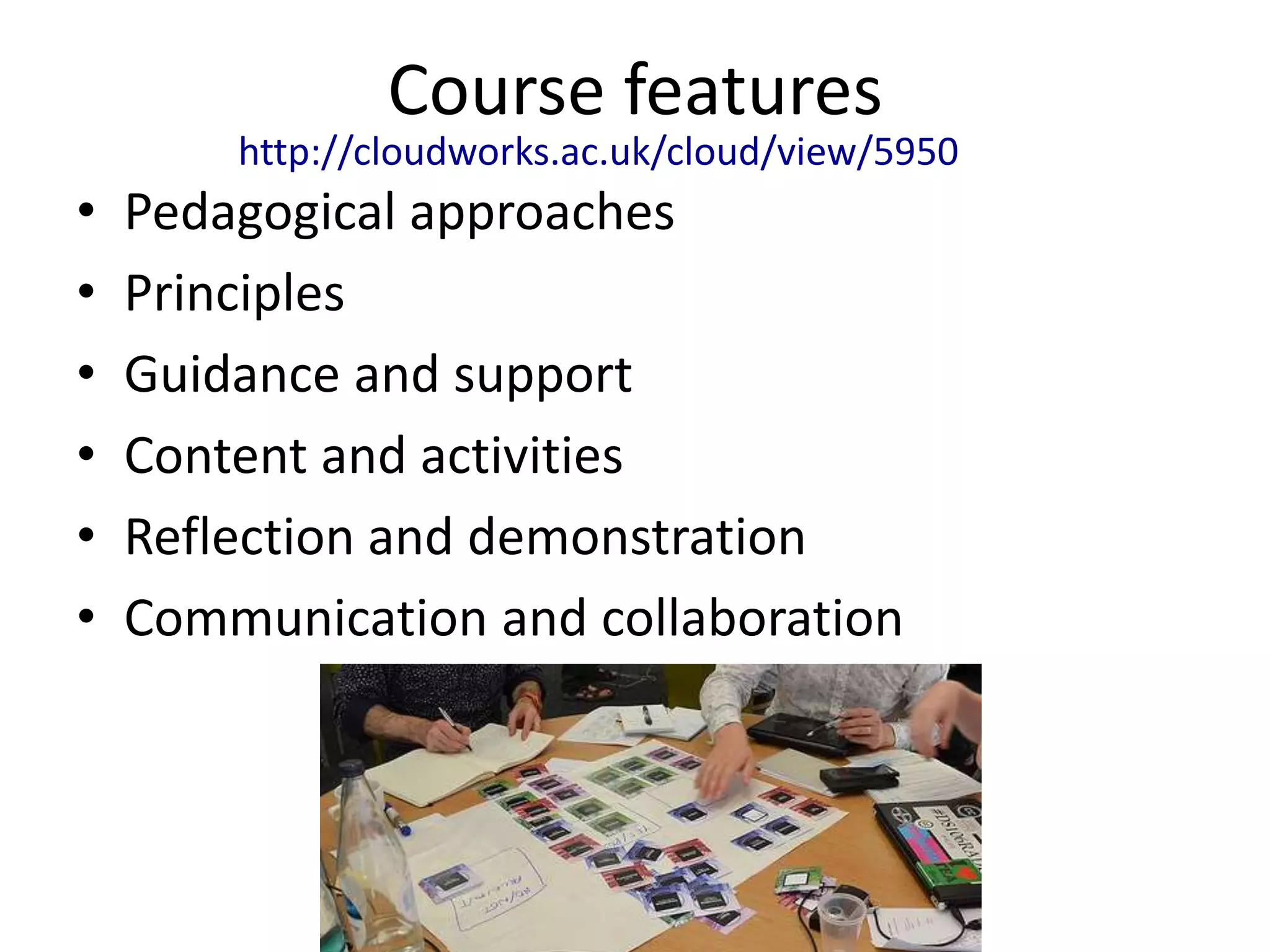
Course features
• Pedagogical approaches
• Principles
• Guidance and support
• Content and activities
• Reflection and demonstration
• Communication and collaboration
http://cloudworks.ac.uk/cloud/view/5950
Activity profile
• Types of learner activities
– Assimilative
– Information Handling
– Communication
– Production
– Experiential
– Adaptive
– Assessment
Start End
Learning
Outcomes
LO1
LO2
LO3
LO4
Assessment LO1
LO2 LO3 LO4
Week 1
Topic 1
Week 2
Topic 2
Week 3
Topic 3
Week 4
Topic 4
Formal
Informal
Individual Social
Blended courses
DL+ social media
Trad. campus courses
DL courses
OER
xMOOCs
OER + Social media
cMOOCs
APEL
ePortforlios
OERu
Badges
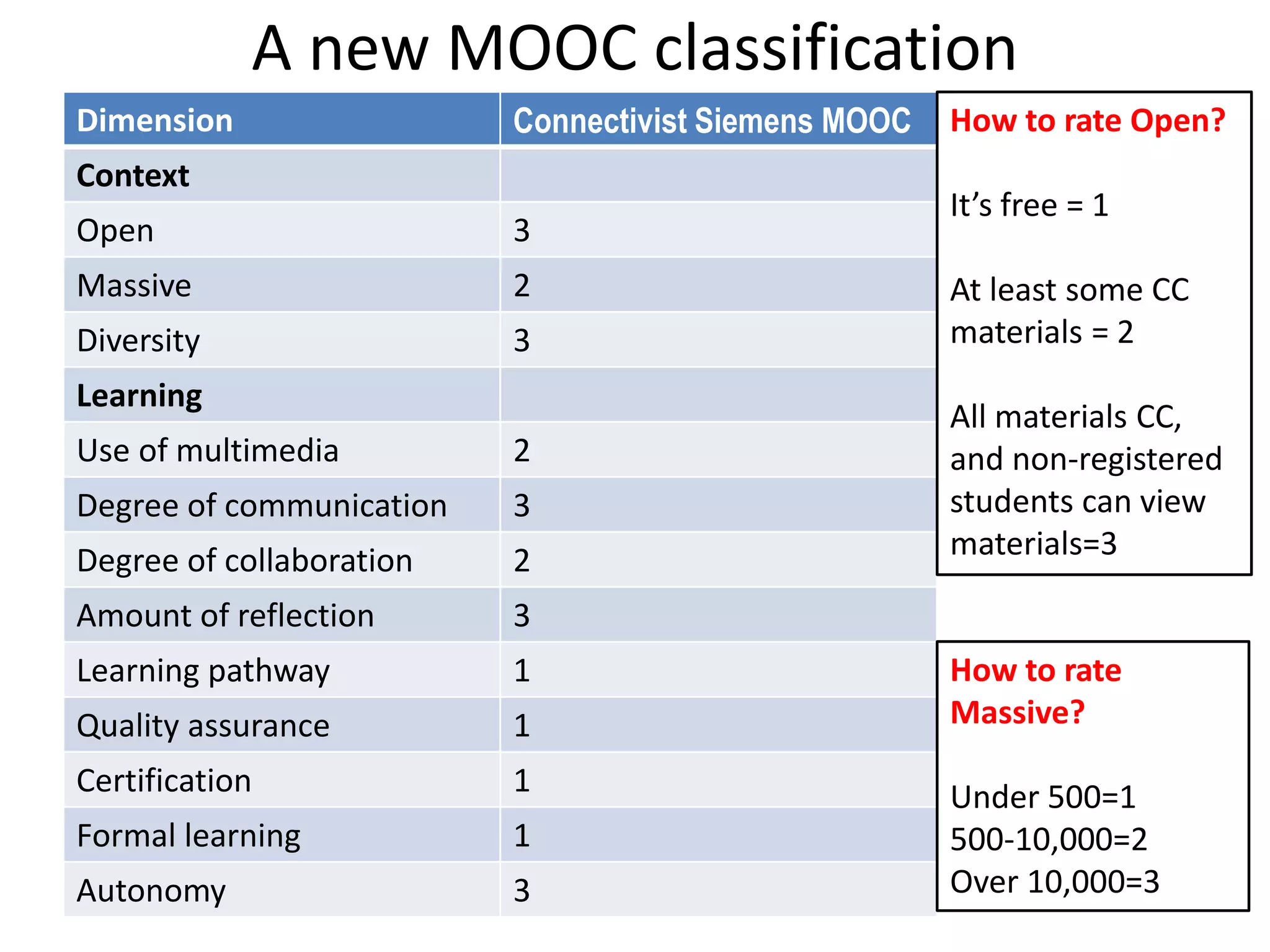
A new MOOC classification
Dimension Connectivist Siemens MOOC
Context
Open 3
Massive 2
Diversity 3
Learning
Use of multimedia 2
Degree of communication 3
Degree of collaboration 2
Amount of reflection 3
Learning pathway 1
Quality assurance 1
Certification 1
Formal learning 1
Autonomy 3
For each
dimension, give
the MOOC a
score:
Low=1,
Medium=2
High=3
A new MOOC classification
Dimension Connectivist Siemens MOOC
Context
Open 3
Massive 2
Diversity 3
Learning
Use of multimedia 2
Degree of communication 3
Degree of collaboration 2
Amount of reflection 3
Learning pathway 1
Quality assurance 1
Certification 1
Formal learning 1
Autonomy 3
How to rate Open?
It’s free = 1
At least some CC
materials = 2
All materials CC,
and non-registered
students can view
materials=3
How to rate
Massive?
Under 500=1
500-10,000=2
Over 10,000=3
MOOCs by pedagogical approach
PLUS:
Cognitive
Associative
Associating a stimulus with a response – operant conditioning.
Create a new stimulus response.
Intermediate Chinese from Open University of China on iTunes U
http://tinyurl.com/chineselang
Cognitive
Learning by experiencing a stimuli but not doing
anything. The way in which a person is encouraged to
contemplate.
Coursera Songwriting
https://www.coursera.org/course/songwriting
Constructivist
Adding meaning to, and building upon, what I
already know
Open University Course Design MOOC ‘OLDS’
http://www.olds.ac.uk
Situative
Learning that occurs in the same context in
which it will be used.
Coursera Introduction to Clinical Neurology
https://www.coursera.org/course/clinicalneurology
Connectivist
About who or what learning resources we have
access to. People as resources.
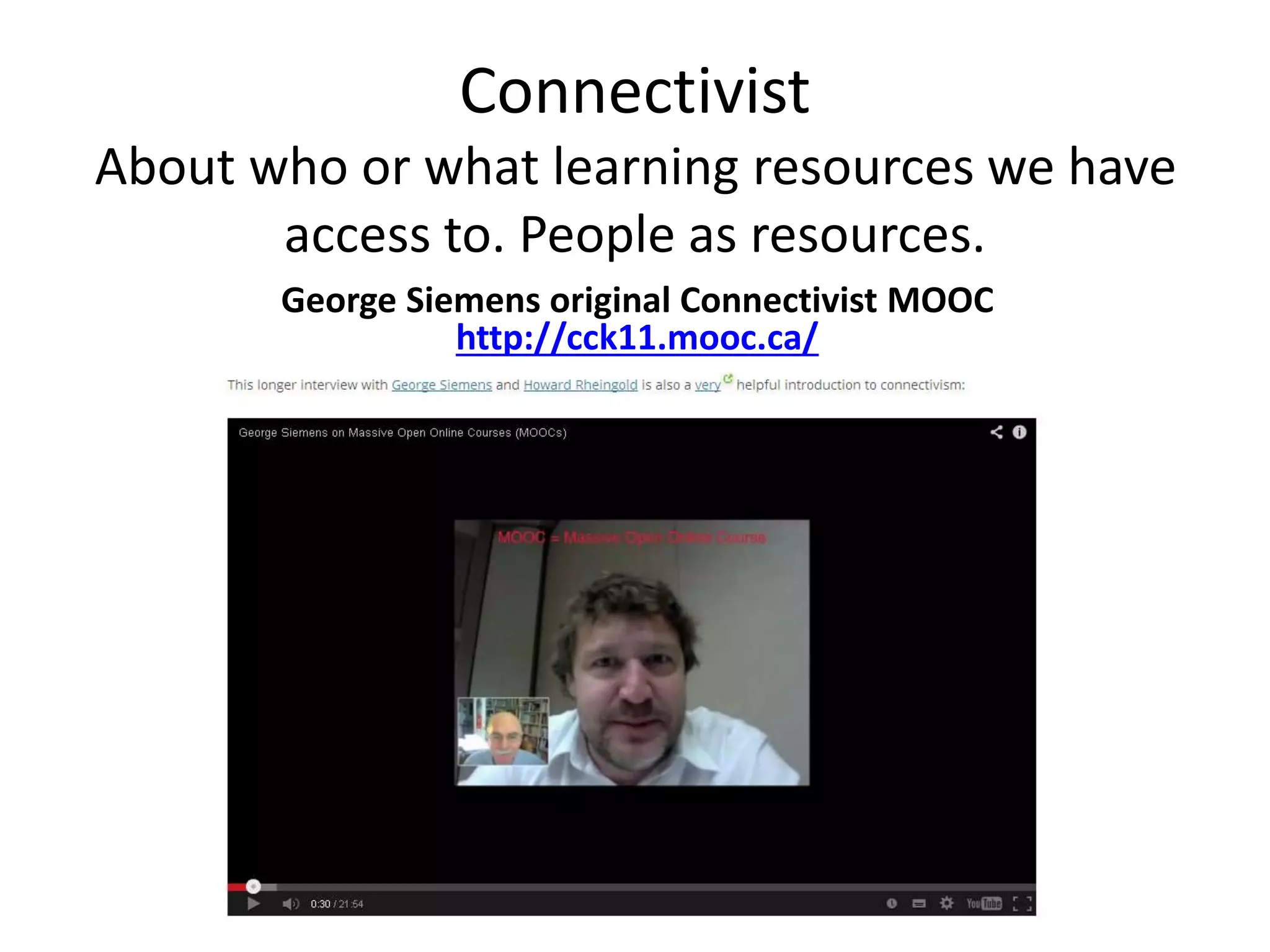
George Siemens original Connectivist MOOC
http://cck11.mooc.ca/
MOOCs by pedagogical approach
Dimension Associative
Chinese
Cognitive
Songwriting
Constructivist
OLDS
Situative
Neuro
Connectivist
Siemens
Context
Open 1 1 3 1 3
Massive 1 2 1 2 2
Diversity 1 2 2 2 3
Learning
Use of multimedia 3 2 2 2 2
Degree of communication 1 1 2 2 3
Degree of collaboration 1 1 2 2 2
Amt of reflection 1 1 2 1 3
Learning pathway 1 1 2 2 2
Quality assurance 2 2 2 2 1
Certification 1 2 2 2 1
Formal learning 1 1 2 1 1
Autonomy 3 3 3 2 3
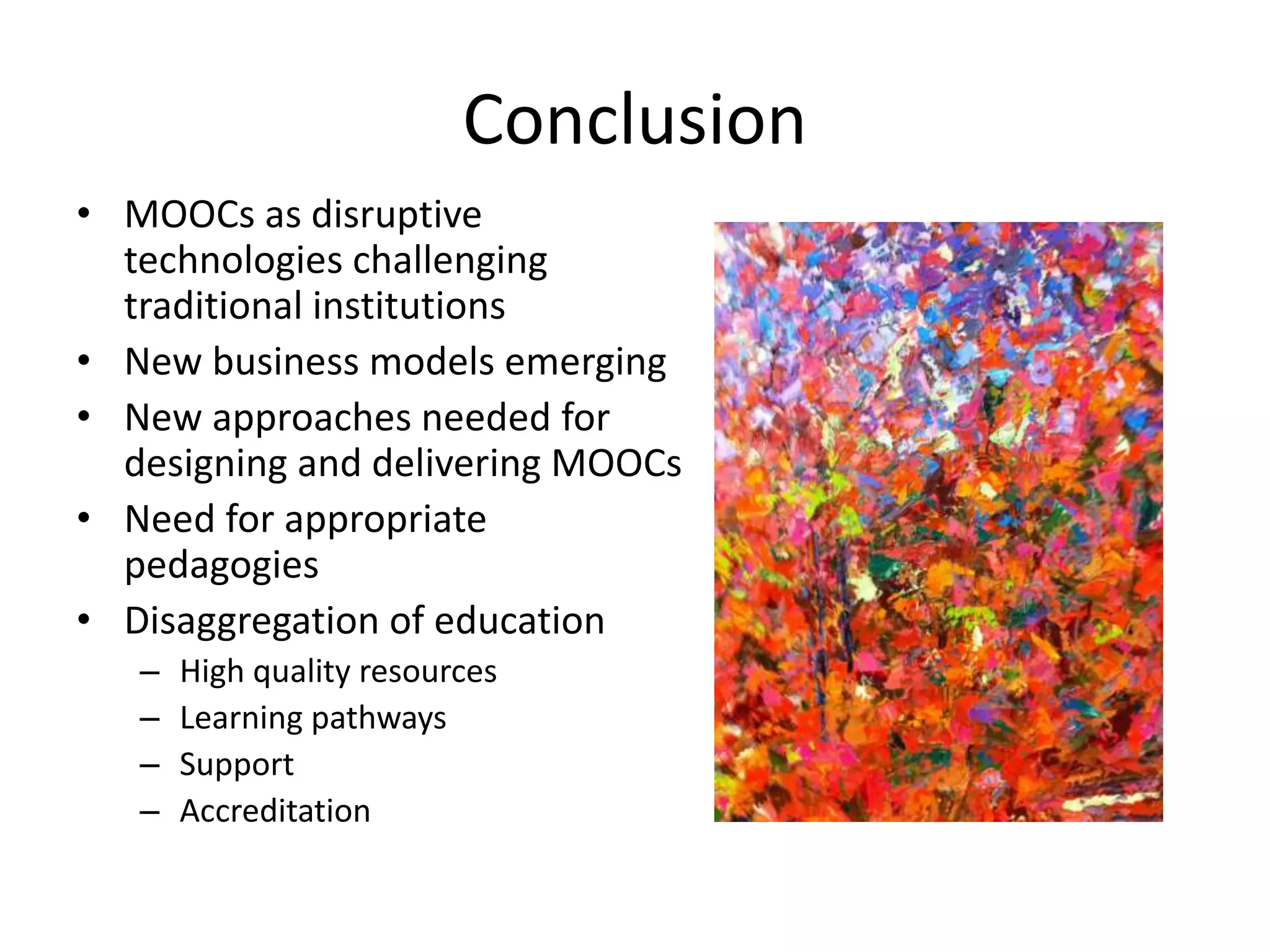
Conclusion
• MOOCs as disruptive
technologies challenging
traditional institutions
• New business models emerging
• New approaches needed for
designing and delivering MOOCs
• Need for appropriate
pedagogies
• Disaggregation of education
– High quality resources
– Learning pathways
– Support
– Accreditation
http://www.slideshare.net/GrainneConole
http://www.le.ac.uk/ili
grainne.conole@le.ac.uk
http://e4innovation.com
@gconole

The Pedagogy of MOOCs

  • 1.
    The pedagogy ofMOOCs Terese Bird and Gráinne Conole, University of Leicester 14th March 2014 Open Education Week Webinar National Teaching Fellow 2012 Ascilite fellow 2012EDEN fellow 2013
  • 2.
    Outline • Overview ofMOOCs • Overview of eMundus • Pedagogical approaches • MOOC classification • Describing MOOCs • Evaluating MOOCs
  • 3.
    OER and MOOCs •Over ten years of the Open Educational Resource (OER) movement • Hundreds of OER repositories worldwide • Presence on iTunesU • 2012 Times year of the MOOC
  • 4.
    The OPAL metromap http://www.oer-quality.org/ Evaluationshows lack of uptake by teachers and learners Shift from development to community building and articulation of OER practice
  • 5.
    POERUP outputs • Aninventory of more than 300 OER initiatives http://poerup.referata.com/wiki/Countries_with_OER_initiatives • 11 country reports and 13 mini-reports http://poerup.referata.com/wiki/Countries • 7 in-depth case studies • 3 EU-wide policy papers
  • 6.
    The emergence ofMOOCs • CCK08 – Connectivist MOOC (cMOOC) – Siemens, Downes and Cormier – Evaluation (Fini, 2009) – http://www.irrodl.org/index.php/irrodl/article/view/643/1402 • Emergence of large-scale xMOOCs • UK-based FutureLearn • Launch of Massey on Open2Study • What are MOOCs? – http://www.youtube.com/watch?v=eW3gMGqcZQc • List of MOOCs – http://www.mooc-list.com/ • EFQUEL series of blogs – http://mooc.efquel.org/ • ICDE list of MOOC reports – http://tinyurl.com/gconole-MOOC
  • 7.
    Massive Open OnlineCourses (MOOCs) Free Distributed global community Social inclusion High dropout rates Learning income not learning outcome Marketing exercise http://alternative-educate.blogspot.co.uk/2012/12/audio-ascilite-2012-great-debate-moocs.html JOLT, Vol. 9, No. 2, http://jolt.merlot.org
  • 8.
    The eMundus project •Aim – Strengthen cooperation and awareness amongst EU and strategic partners of exploiting potential of MOOCs and virtual mobility to support long-term, balanced, inter- cultural partnership http://wikieducator.org/Emundus/Home
  • 9.
    Objectives • Map stateof the art of MOOCs and Virtual Mobility • Sharing of knowledge, tools and practices around MOOCs and their implications • Promote and mainstream MOOCs and VM • Help institutions, networks and policy makers to develop effective MOOC strategies
  • 10.
    Learning can beachieved by: Interaction Communication & Collaboration Through OER & MOOCs Social Media Facilitated by: Learning Design Leading to: New support and accreditation models
  • 11.
    A Constructivist Building on prior knowledge Task-orientated Situative Learningthrough social interaction Learning in context Connectivist Learning in a networked environment E-Pedagogies Mayes & De Freitas, 2004 Conole 2010 E-training Drill & practice Inquiry learning Collective intelligence Resource-based Experiential, Problem-based Role play Reflective & dialogic learning, Personalised learning Flashlets App Springpad App Solve Outbreak App Social media & MOOCs Associative Focus on individual Learning through association and reinforcement
  • 12.
    Pedagogical approaches Drill &practise learning Inquiry learning Situated learning Immersive learning
  • 13.
  • 15.
  • 16.
    Inquiry-based learning • Promotinginquiry- based approaches for Science –nQuire tools • Developing public understanding of Science - iSpot
  • 19.
  • 20.
    Situated learning Archeological digs Medicalwards Art exhibitions Cyber-law Virtual language exchange Beyond formal schooling http://www.jibbigo.com/ Mark Childs
  • 21.
    Swift project Paul Rudmanand Suzanne Lavelle
  • 22.
  • 23.
  • 24.
  • 25.
    Dimension Characteristics Context Open Degreeto which the MOOC is open Massive How large the MOOC is Diversity The diversity of the learners Learning Use of multimedia Extent of use of rich multimedia Degree of communication Amount of communication incorporated Degree of collaboration Amount of collaboration incorporated Amount of reflection Ways in which reflection is encouraged Learning pathway Degree to which the learning pathway is supported Quality assurance Degree of quality assurance Certification Mechanisms for accreditation Formal learning Feed into formal learning offerings Autonomy Degree of learner autonomy A taxonomy of MOOCs http://e4innovation.com/?p=727
  • 26.
    The 7Cs ofLearning Design Conceptualise Vision CommunicateCreate ConsiderCollaborate Activities Combine Synthesis Consolidate Implementation http://www2.le.ac.uk/projects/oer/oers/beyond-distance-research-alliance/7Cs-toolkit
  • 27.
    Course features • Pedagogicalapproaches • Principles • Guidance and support • Content and activities • Reflection and demonstration • Communication and collaboration http://cloudworks.ac.uk/cloud/view/5950
  • 28.
    Activity profile • Typesof learner activities – Assimilative – Information Handling – Communication – Production – Experiential – Adaptive – Assessment
  • 29.
    Start End Learning Outcomes LO1 LO2 LO3 LO4 Assessment LO1 LO2LO3 LO4 Week 1 Topic 1 Week 2 Topic 2 Week 3 Topic 3 Week 4 Topic 4
  • 30.
    Formal Informal Individual Social Blended courses DL+social media Trad. campus courses DL courses OER xMOOCs OER + Social media cMOOCs APEL ePortforlios OERu Badges
  • 31.
    A new MOOCclassification Dimension Connectivist Siemens MOOC Context Open 3 Massive 2 Diversity 3 Learning Use of multimedia 2 Degree of communication 3 Degree of collaboration 2 Amount of reflection 3 Learning pathway 1 Quality assurance 1 Certification 1 Formal learning 1 Autonomy 3 For each dimension, give the MOOC a score: Low=1, Medium=2 High=3
  • 32.
    A new MOOCclassification Dimension Connectivist Siemens MOOC Context Open 3 Massive 2 Diversity 3 Learning Use of multimedia 2 Degree of communication 3 Degree of collaboration 2 Amount of reflection 3 Learning pathway 1 Quality assurance 1 Certification 1 Formal learning 1 Autonomy 3 How to rate Open? It’s free = 1 At least some CC materials = 2 All materials CC, and non-registered students can view materials=3 How to rate Massive? Under 500=1 500-10,000=2 Over 10,000=3
  • 33.
    MOOCs by pedagogicalapproach PLUS: Cognitive
  • 34.
    Associative Associating a stimuluswith a response – operant conditioning. Create a new stimulus response. Intermediate Chinese from Open University of China on iTunes U http://tinyurl.com/chineselang
  • 35.
    Cognitive Learning by experiencinga stimuli but not doing anything. The way in which a person is encouraged to contemplate. Coursera Songwriting https://www.coursera.org/course/songwriting
  • 36.
    Constructivist Adding meaning to,and building upon, what I already know Open University Course Design MOOC ‘OLDS’ http://www.olds.ac.uk
  • 37.
    Situative Learning that occursin the same context in which it will be used. Coursera Introduction to Clinical Neurology https://www.coursera.org/course/clinicalneurology
  • 38.
    Connectivist About who orwhat learning resources we have access to. People as resources. George Siemens original Connectivist MOOC http://cck11.mooc.ca/
  • 39.
    MOOCs by pedagogicalapproach Dimension Associative Chinese Cognitive Songwriting Constructivist OLDS Situative Neuro Connectivist Siemens Context Open 1 1 3 1 3 Massive 1 2 1 2 2 Diversity 1 2 2 2 3 Learning Use of multimedia 3 2 2 2 2 Degree of communication 1 1 2 2 3 Degree of collaboration 1 1 2 2 2 Amt of reflection 1 1 2 1 3 Learning pathway 1 1 2 2 2 Quality assurance 2 2 2 2 1 Certification 1 2 2 2 1 Formal learning 1 1 2 1 1 Autonomy 3 3 3 2 3
  • 40.
    Conclusion • MOOCs asdisruptive technologies challenging traditional institutions • New business models emerging • New approaches needed for designing and delivering MOOCs • Need for appropriate pedagogies • Disaggregation of education – High quality resources – Learning pathways – Support – Accreditation
  • 41.