Downloaded 10 times
![Business Models
• Certification – pay for badge or certificate
• Secure assessments – pay for proctored exams
• Recruitment – employers pay for access to records [Privacy]
• Marking – students pay for markers or tutoring
• Platform sales – sell platform to institutions
• Third party Sponsorships
• Tuition fees
• Publishers – reach new readers and sell more books](https://image.slidesharecdn.com/moocsv1-140313064001-phpapp01/75/The-Rise-of-the-MOOCs-14-2048.jpg)
![References
• Bates, T (2012) What's right and what's wrong about Coursera-style MOOCs?
http://www.tonybates.ca/2012/08/05/whats-right-and-whats-wrong-aboutcoursera-style-
moocs/
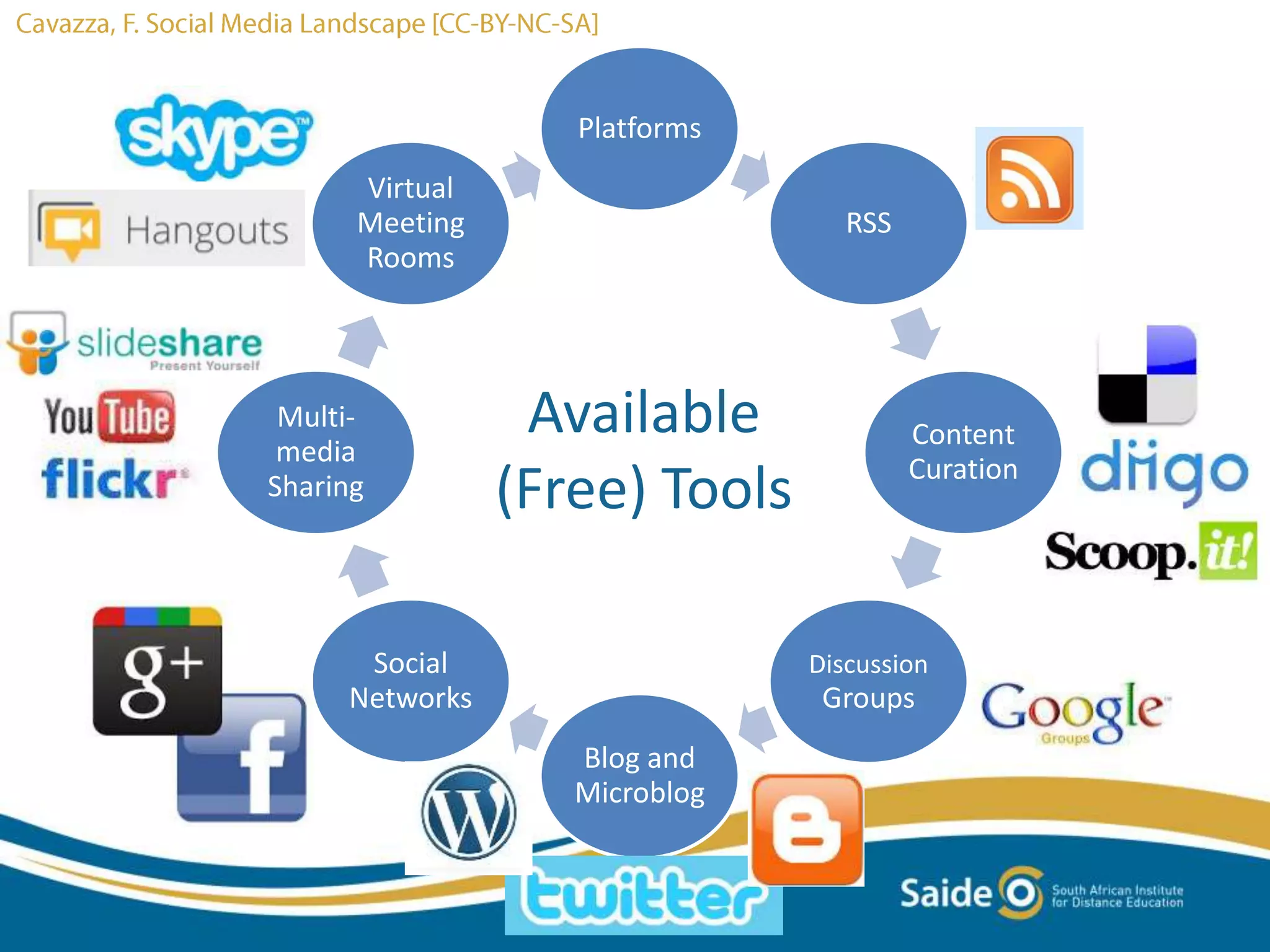
• Cavazza, F. Social Media Landscape [CC-BY-NC-SA]
http://www.flickr.com/photos/fredcavazza/2564571564/
• Clark, D (2013) MOOCs: taxonomy of 8 types of MOOCs
http://donaldclarkplanb.blogspot.com/2013/04/moocs-taxonomy-of-8-types-of-mooc.html
• Cormier, D (2010) Success in a MOOC [CC-BY]
http://www.youtube.com/watch?v=r8avYQ5ZqM0
• Cormier, D (2010) What is a MOOC? [CC-BY] http://youtube.com/watch?v=eW3gMGqcZQc
• Daniel, J (2012). Making Sense of MOOCs: Musings in a Maze of Myth, Paradox and
Possibility. Journal of Interactive Media in Education. [CC-BY]
• De Waard, I (2013) MOOC YourSelf : Set up your own MOOC ebook. [CC-BY-SA]
• Popenici, S (2013). MOOCs and The Change of Higher Education.
http://popenici.com/2013/08/21/shmoocs/#!
• Saide (2012). Empowering Learners through Open Learning. [CC-BY]
http://www.saide.org.za/design-guide/11-open-learning](https://image.slidesharecdn.com/moocsv1-140313064001-phpapp01/75/The-Rise-of-the-MOOCs-27-2048.jpg)

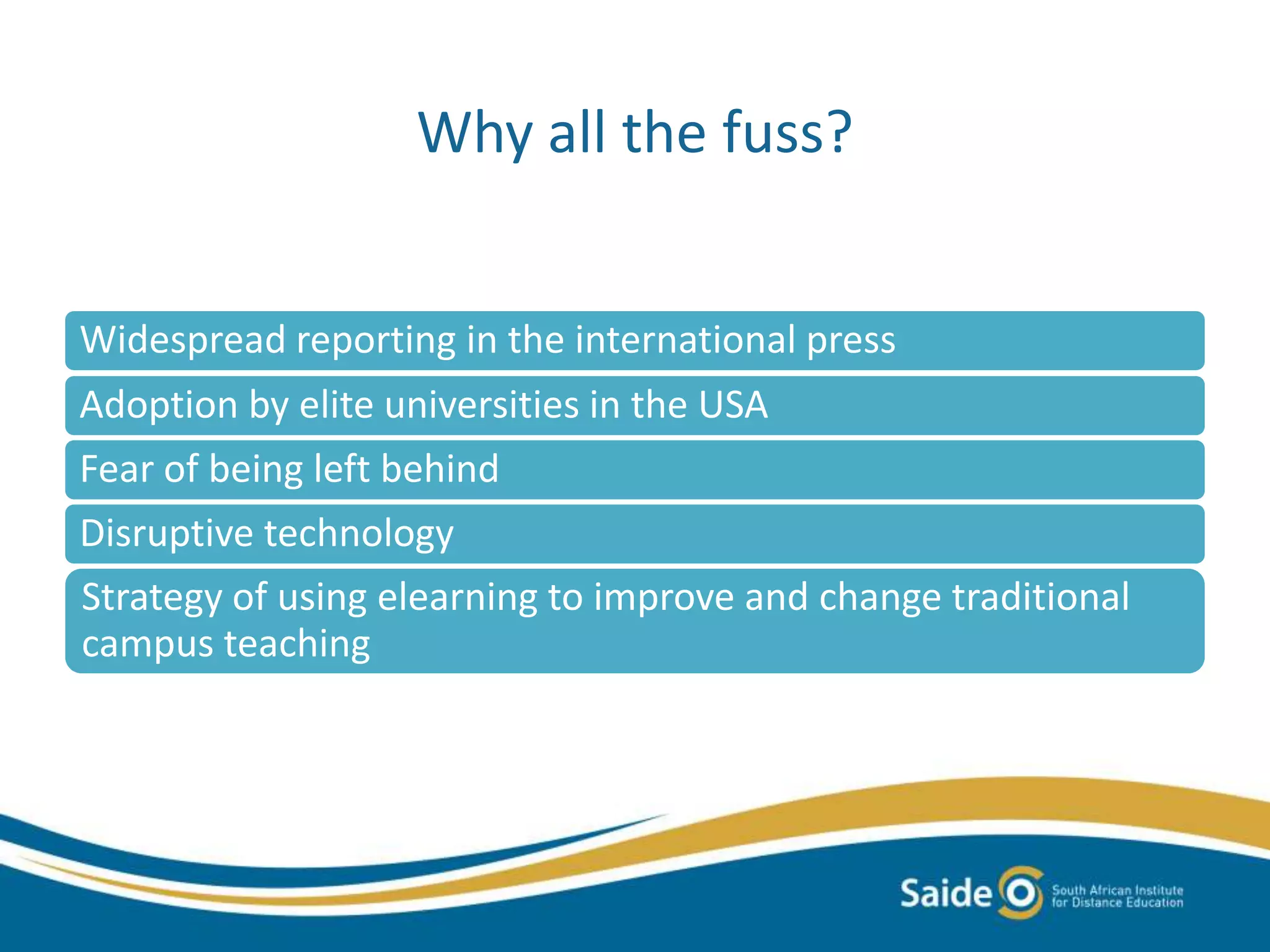
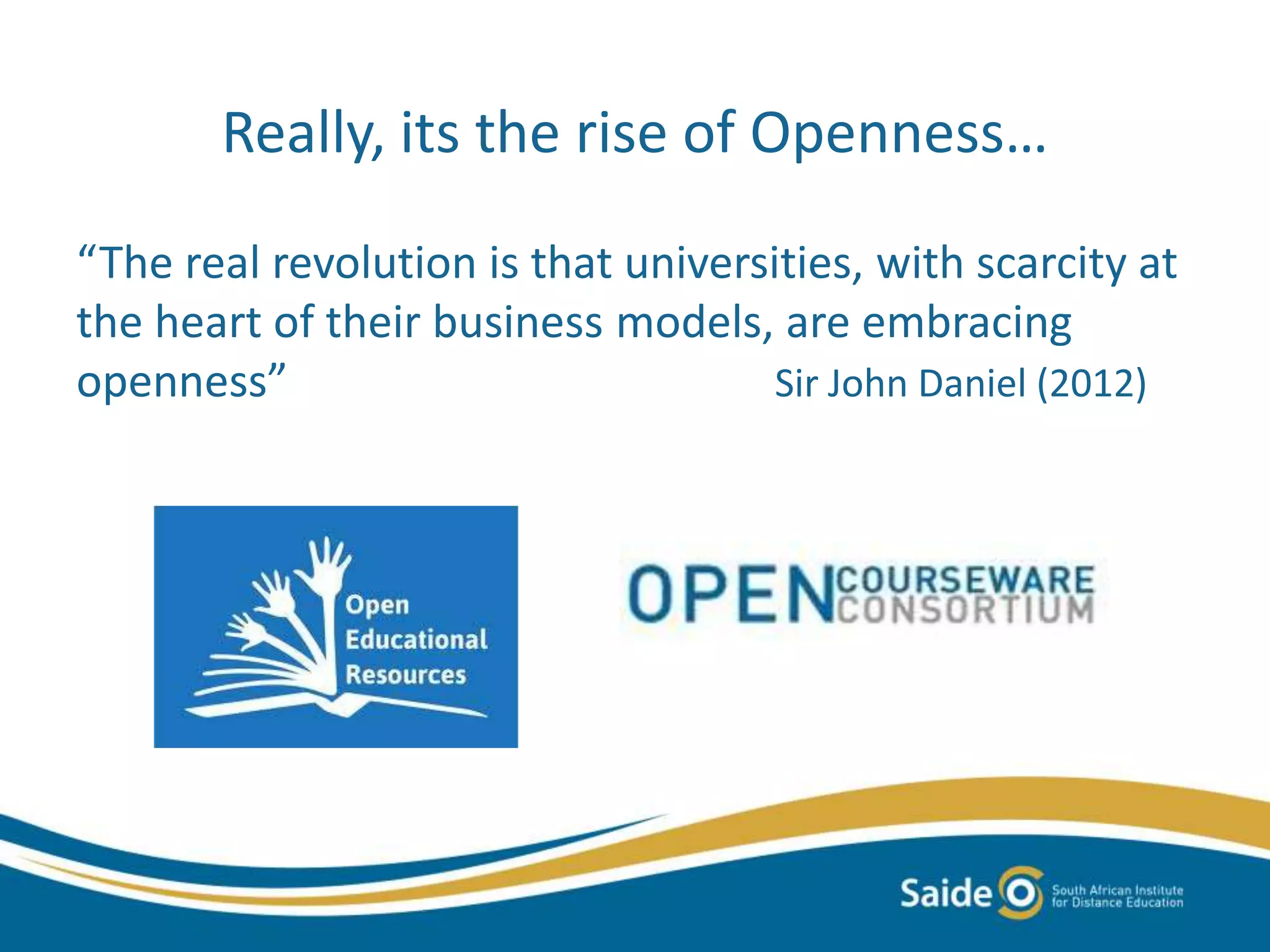
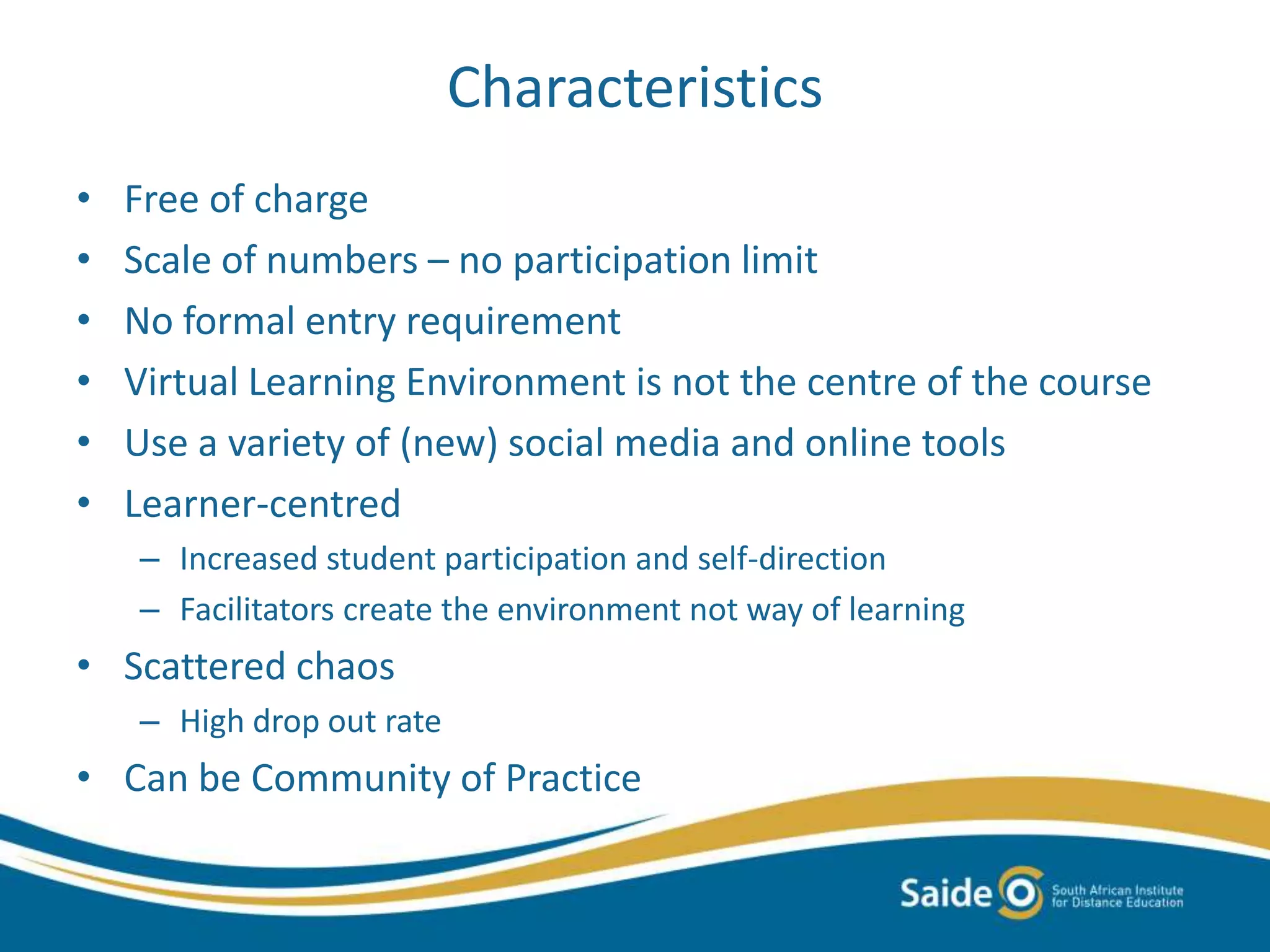
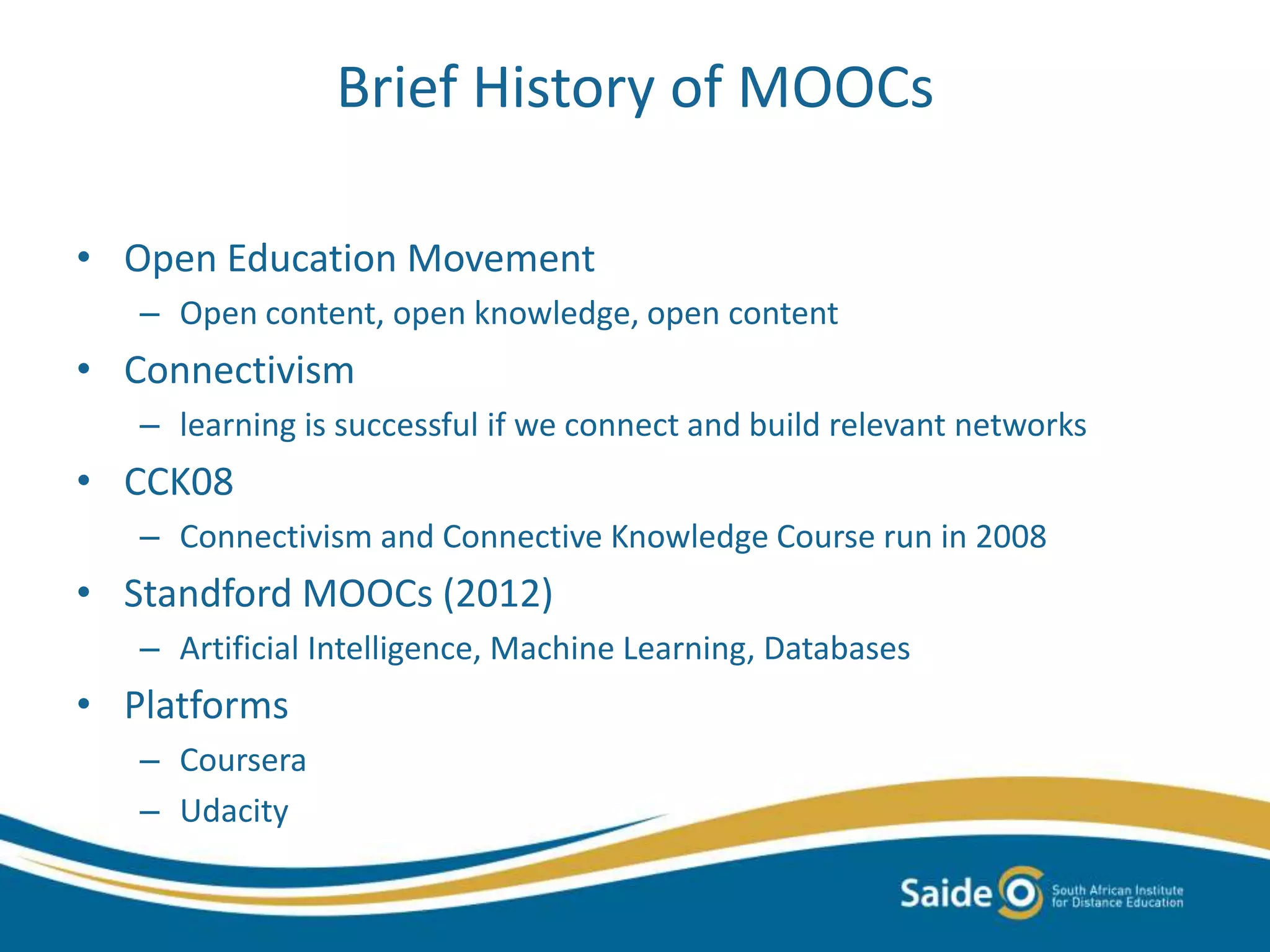
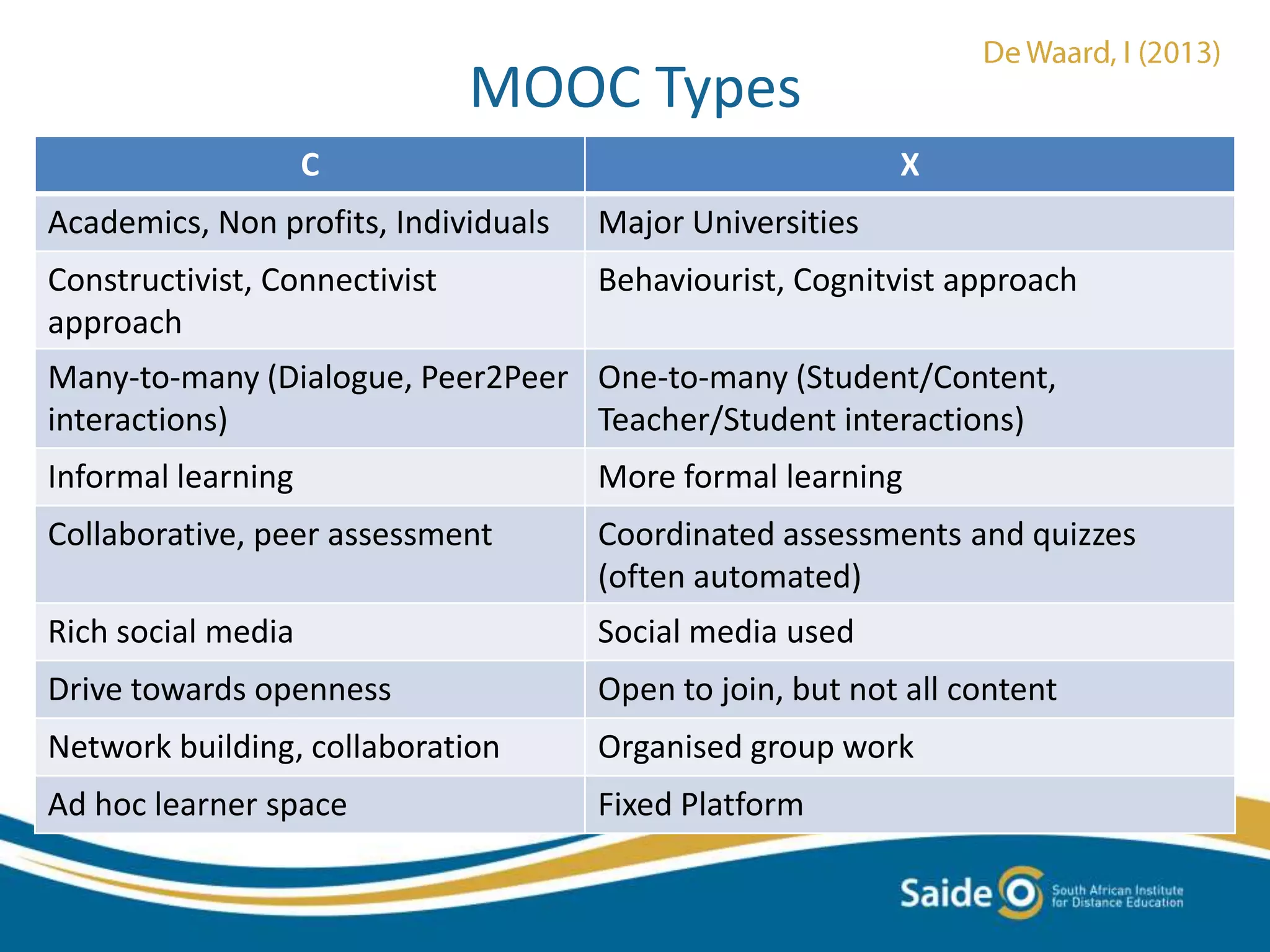
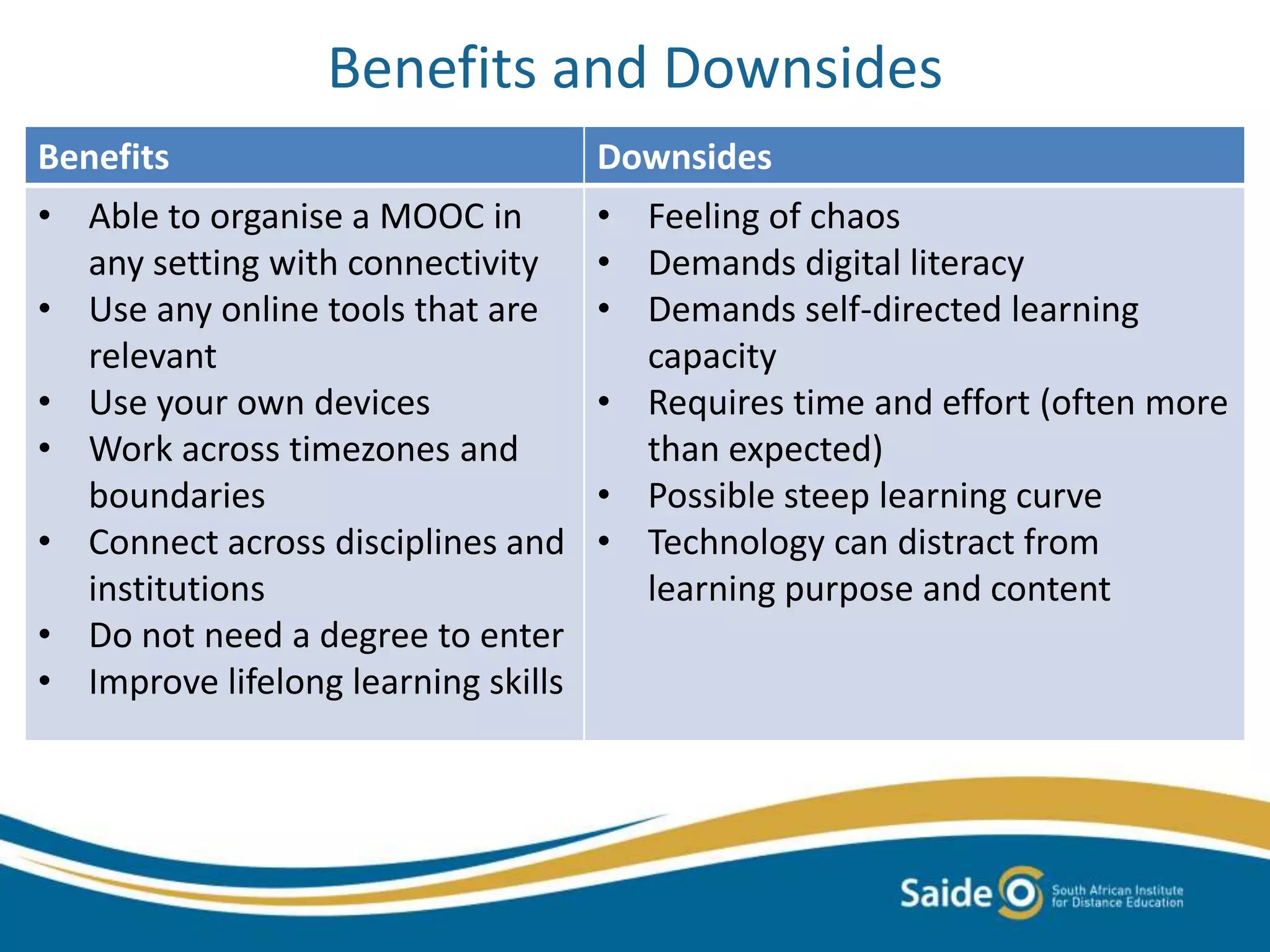
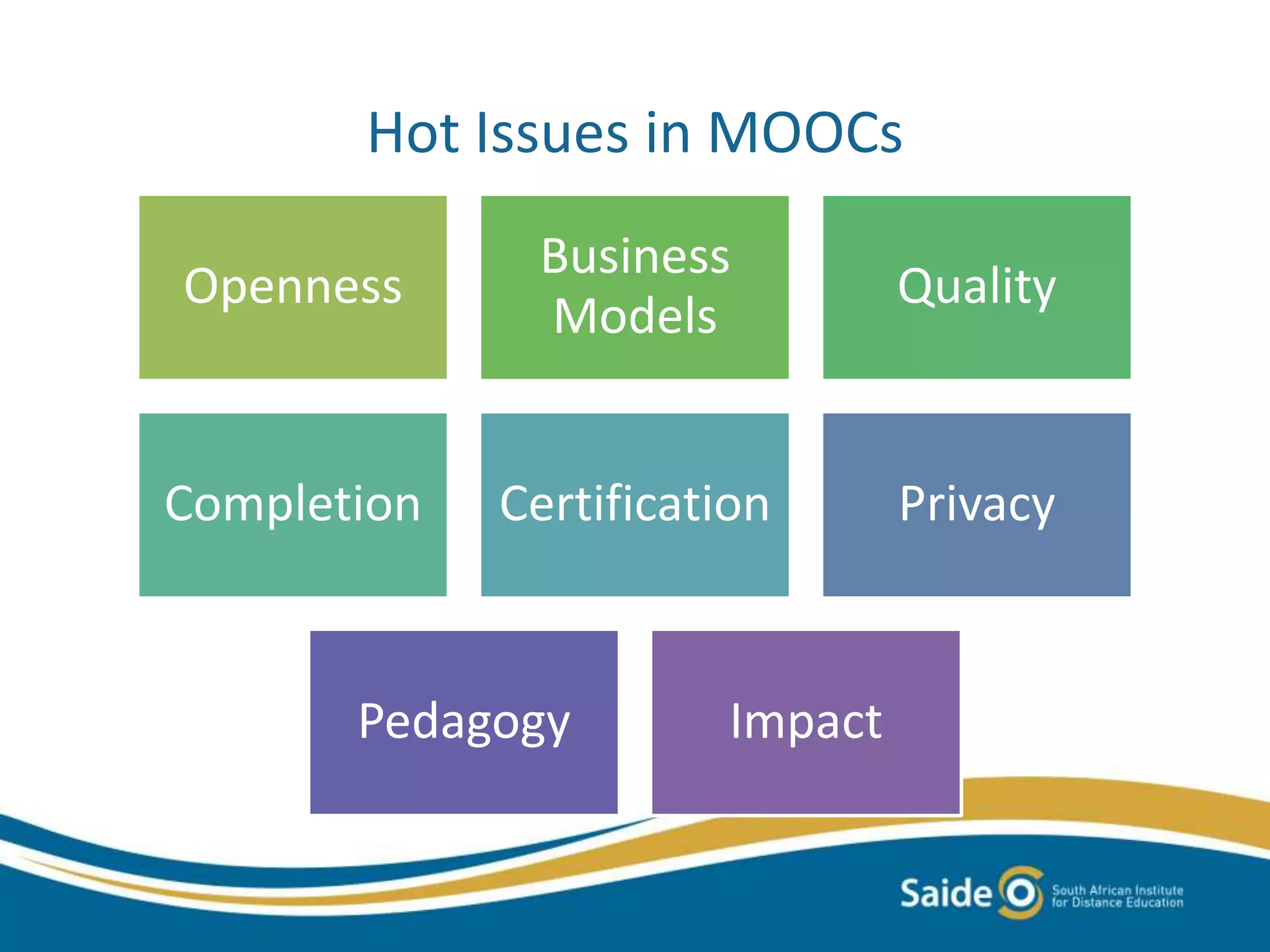
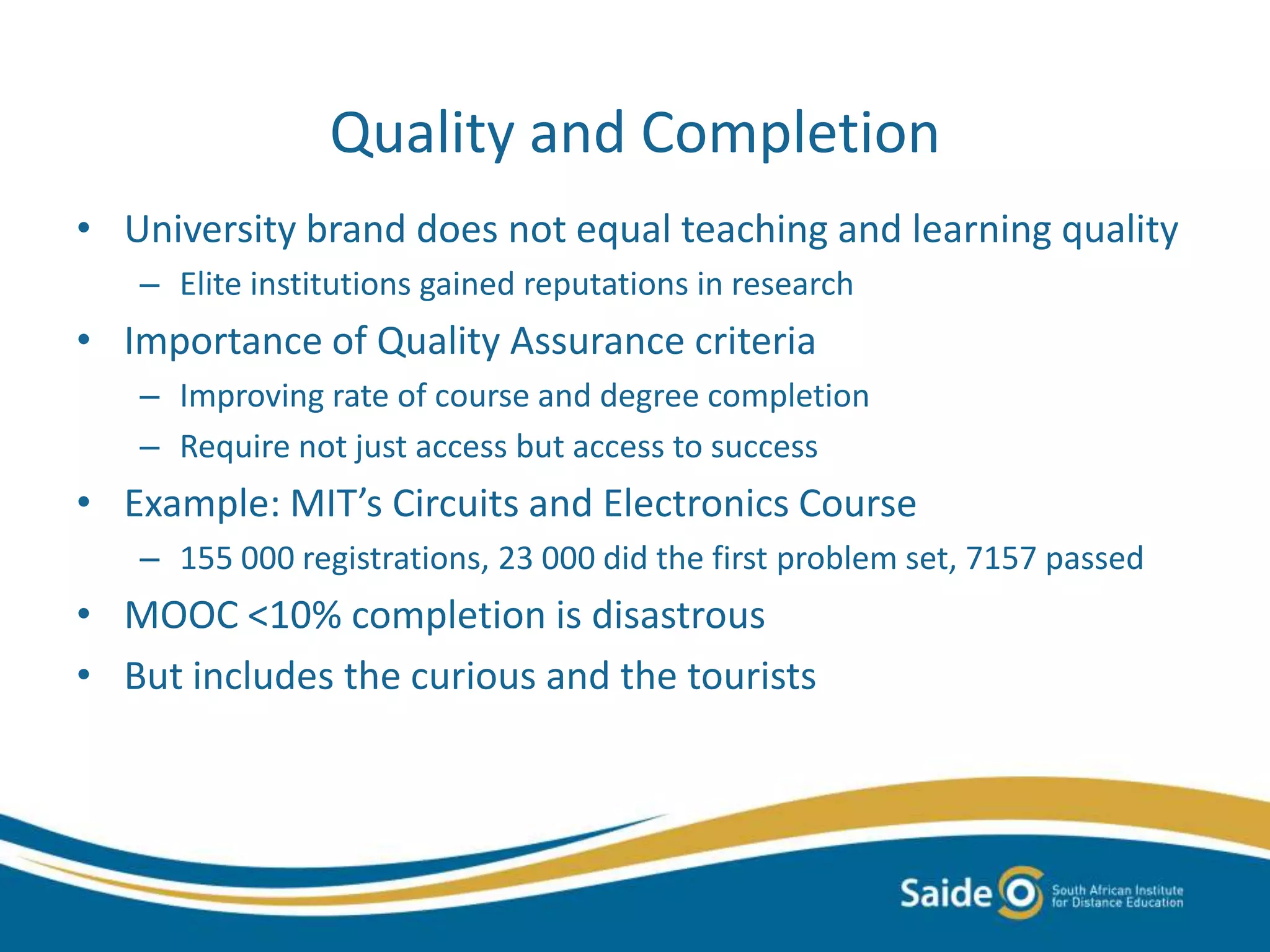
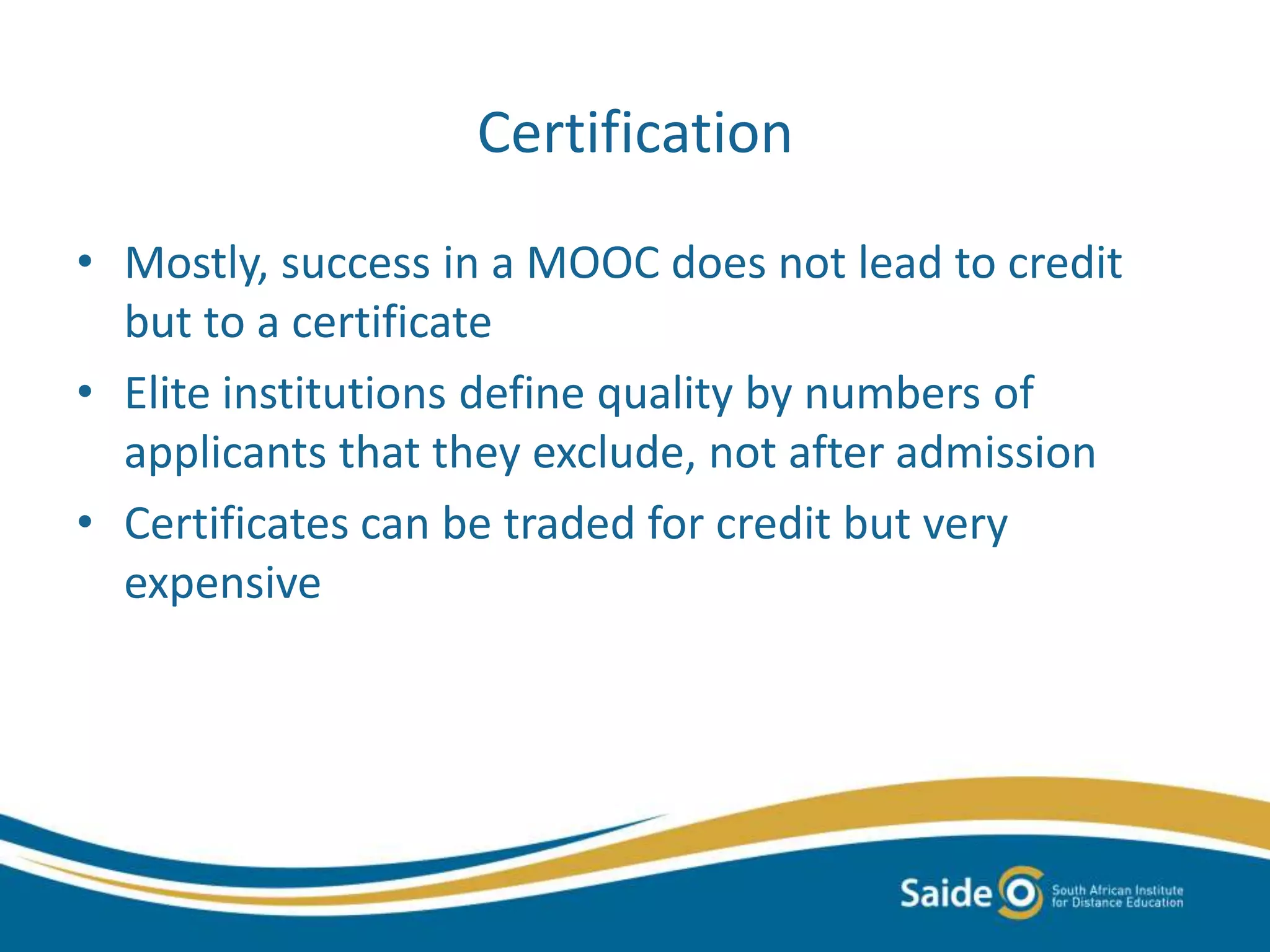
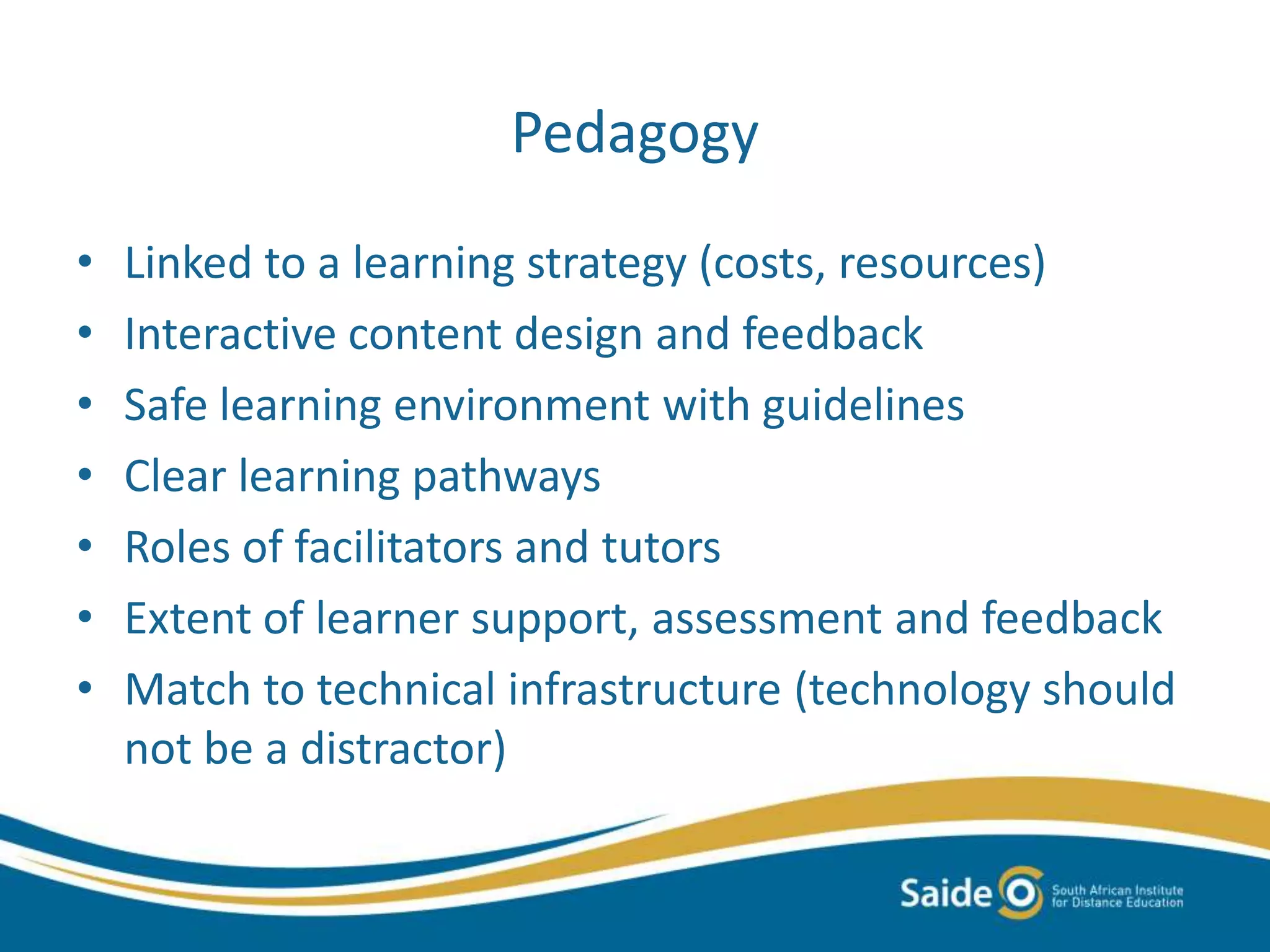
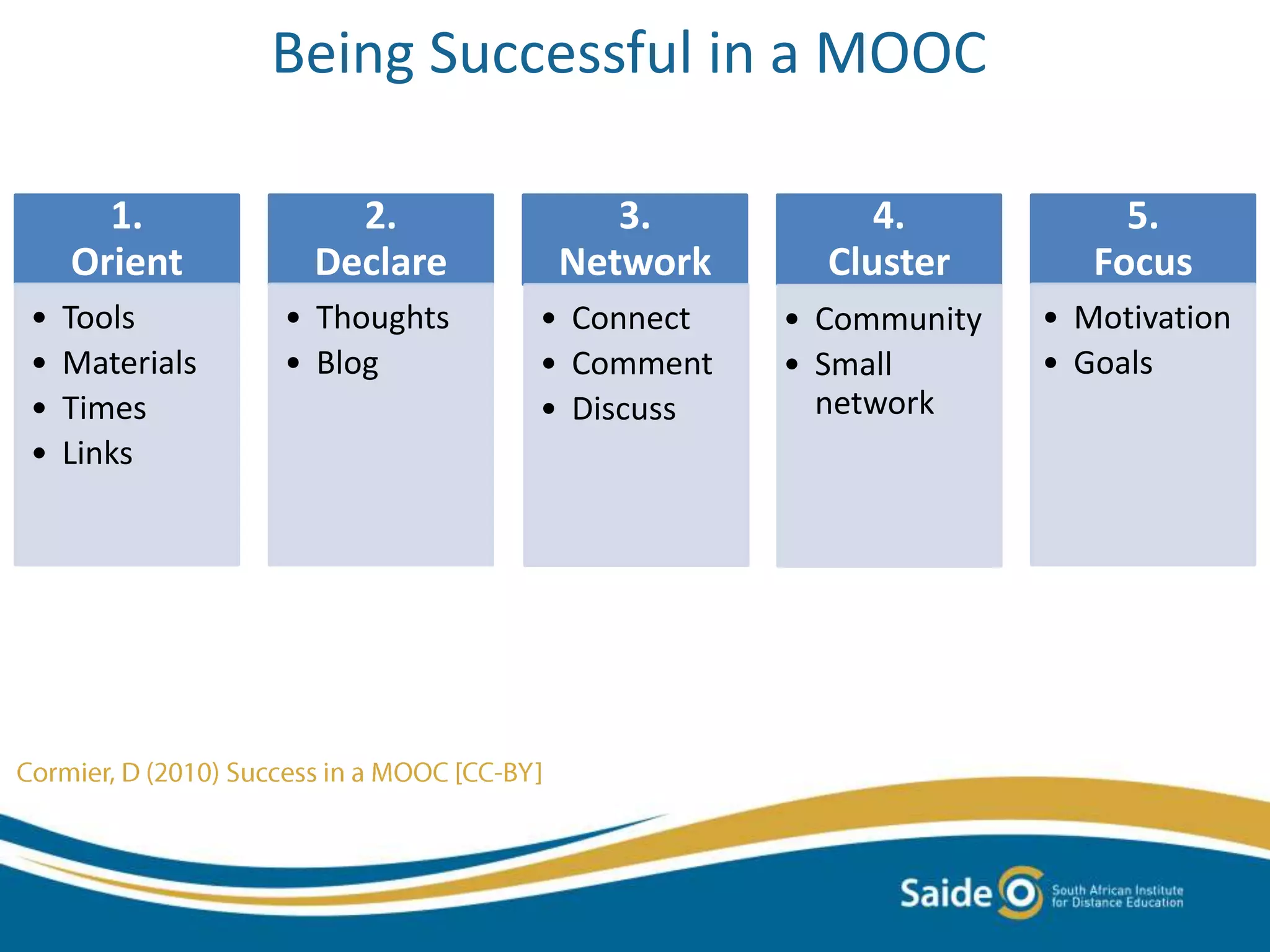
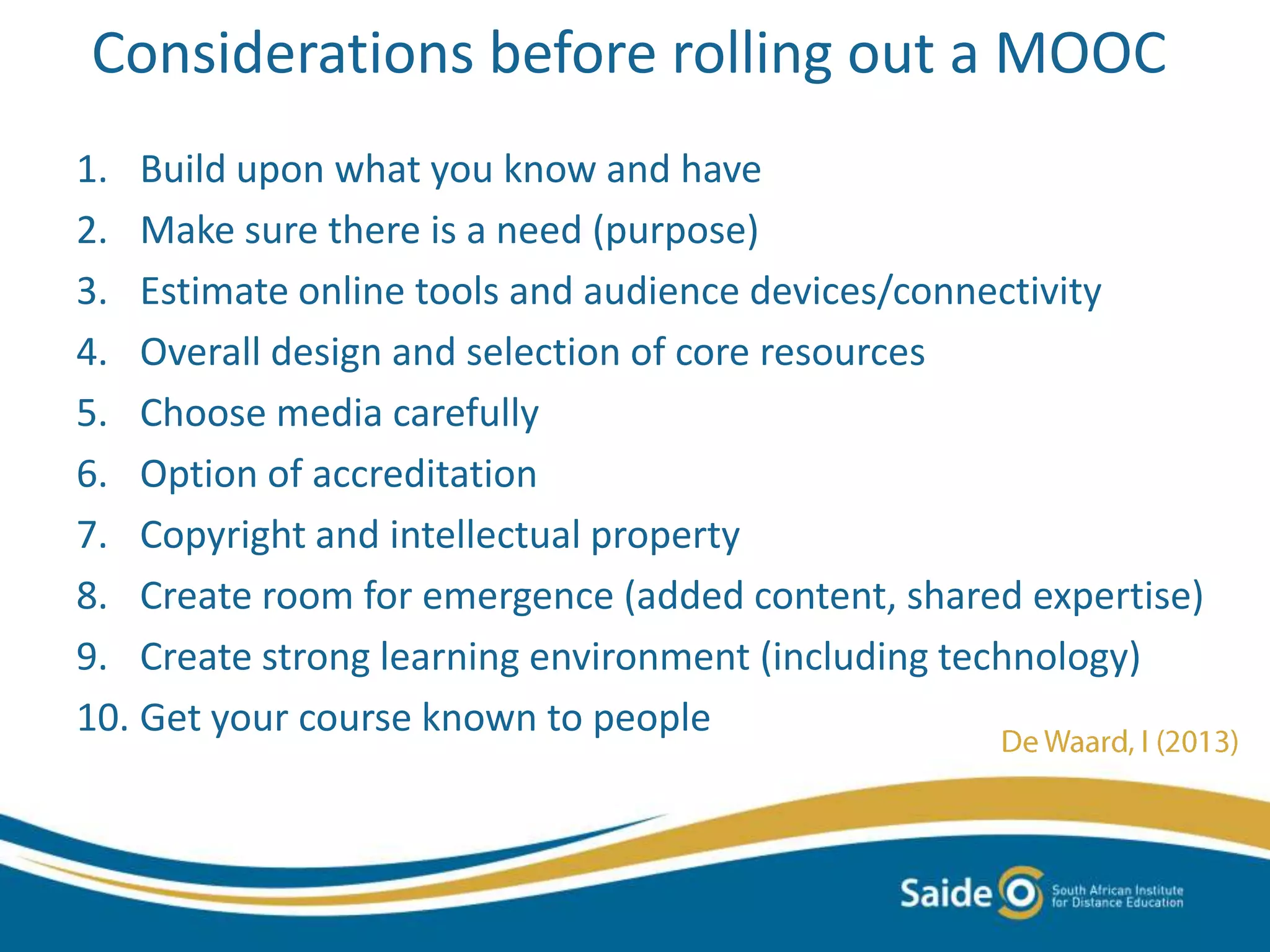
1. MOOCs (Massive Open Online Courses) have risen rapidly in popularity in recent years, enabled by new online platforms and technologies. MOOCs allow unlimited participation and are typically offered free of charge online. 2. There are different types of MOOCs, with variations in pedagogical approach, level of interaction, and connection to formal learning pathways. Issues around business models, quality, completion rates, certification, and impact on traditional higher education models remain open questions. 3. Participating in a MOOC requires self-direction, digital literacy skills, and a commitment of time that is often underestimated. Institutions developing MOOCs must consider pedagogical design, technical


