The digital learning journey:
going in expected
and unexpected directions
Terese Bird, Educational Designer
University of Leicester
Panopto Users Conference, London, 21 November 2017
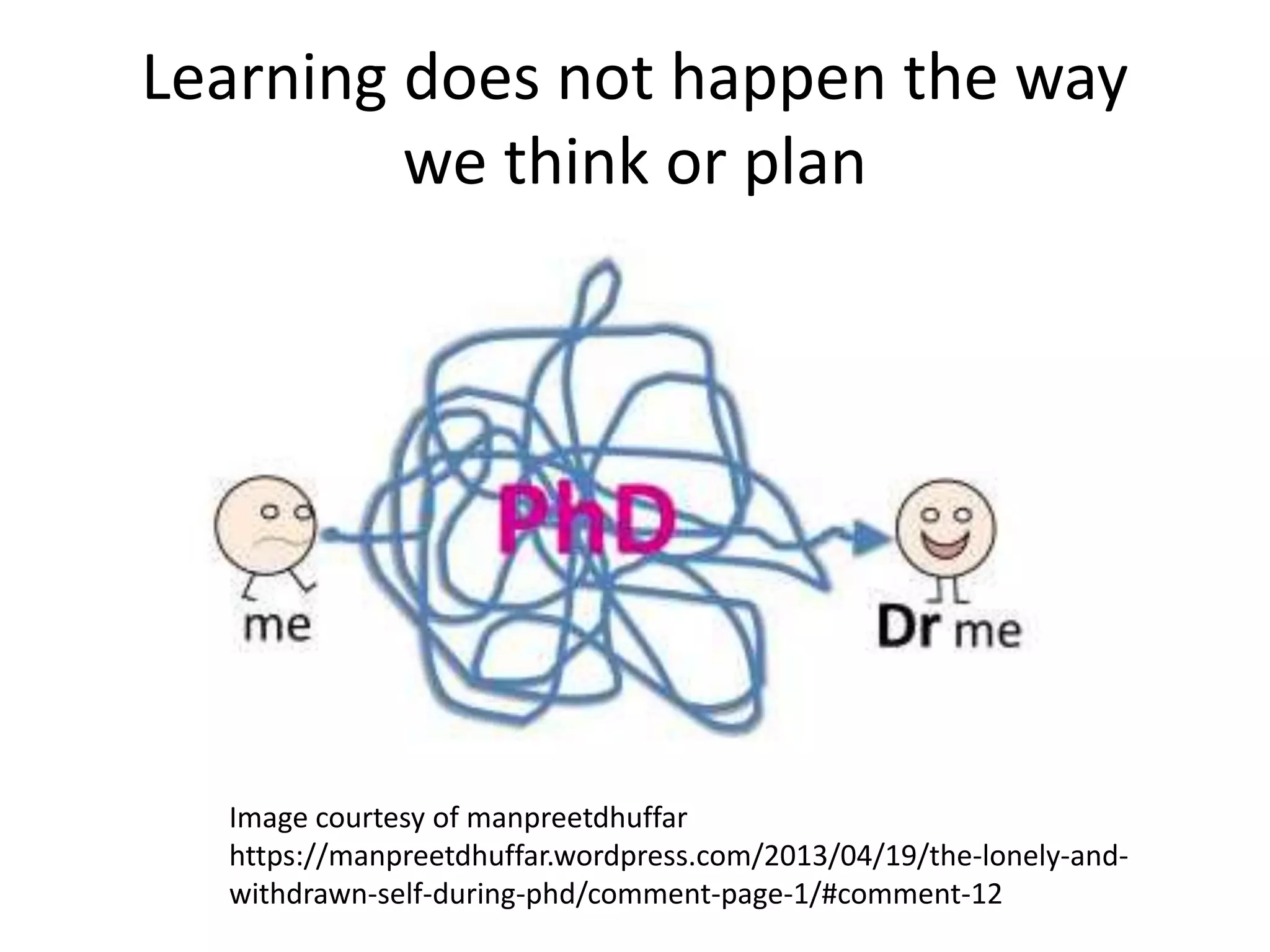
Learning does not happen the way
we think or plan
Image courtesy of manpreetdhuffar
https://manpreetdhuffar.wordpress.com/2013/04/19/the-lonely-and-
withdrawn-self-during-phd/comment-page-1/#comment-12
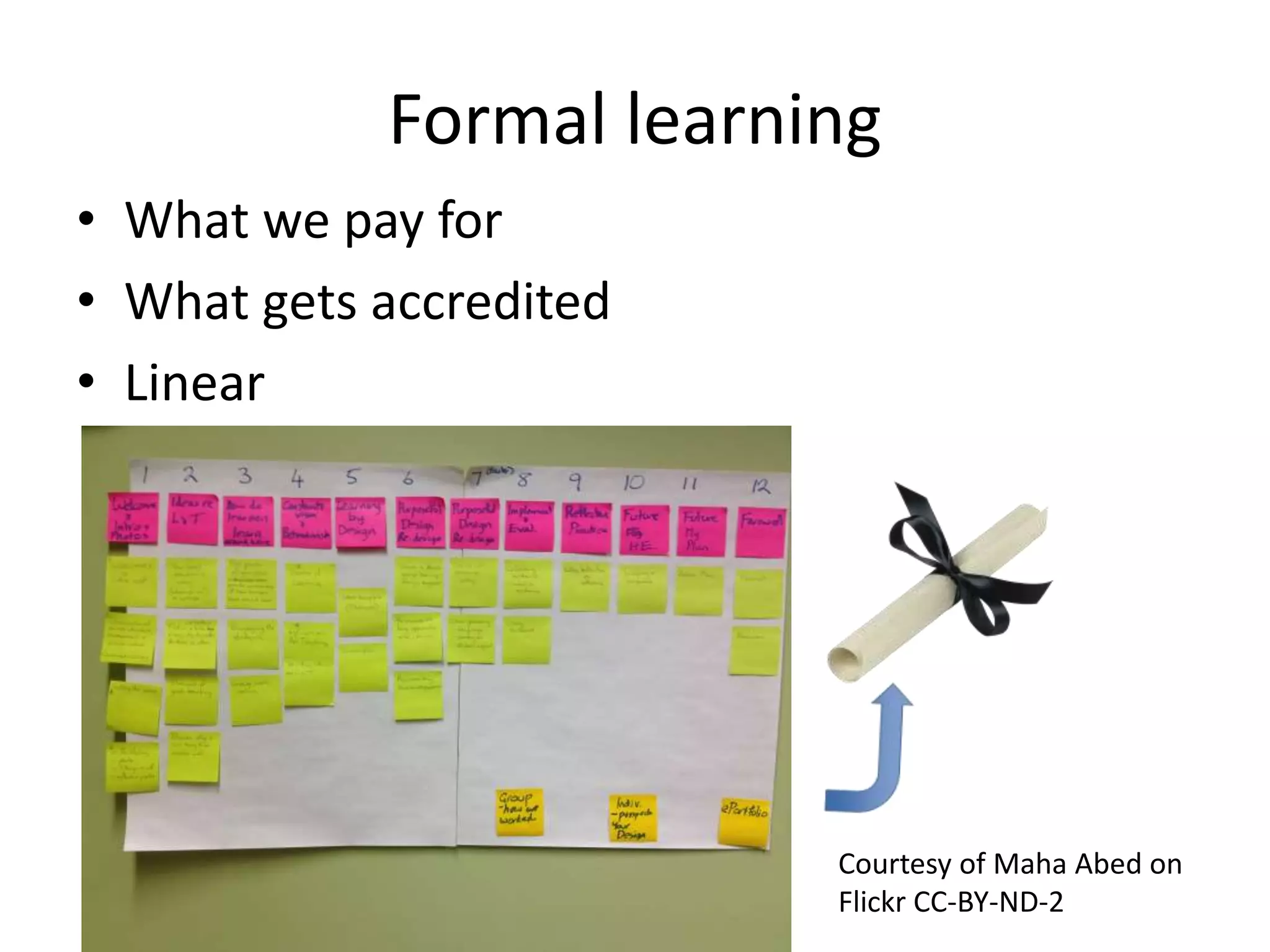
Formal learning
• What we pay for
• What gets accredited
• Linear
Courtesy of Maha Abed on
Flickr CC-BY-ND-2
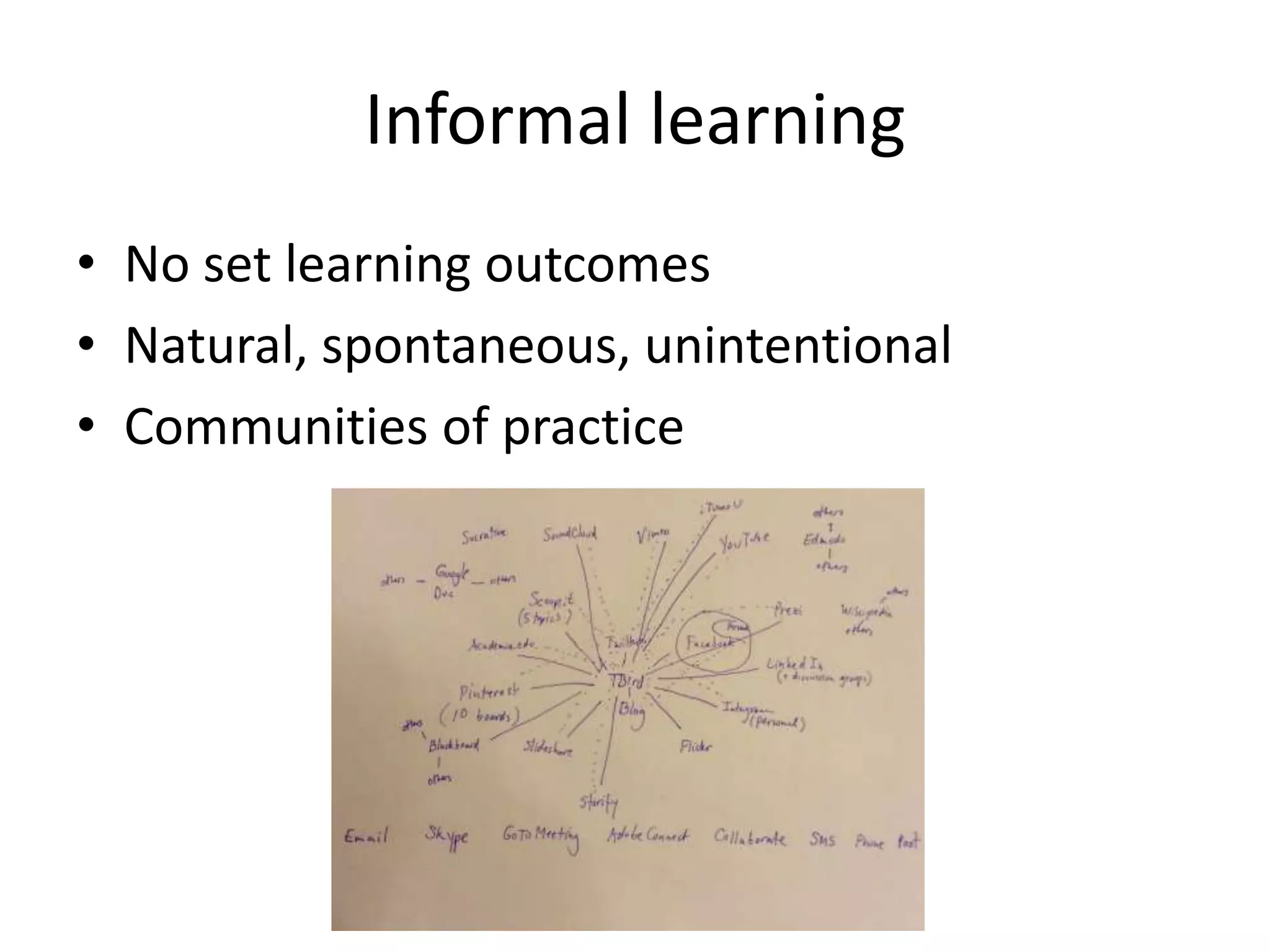
Informal learning
• No set learning outcomes
• Natural, spontaneous, unintentional
• Communities of practice
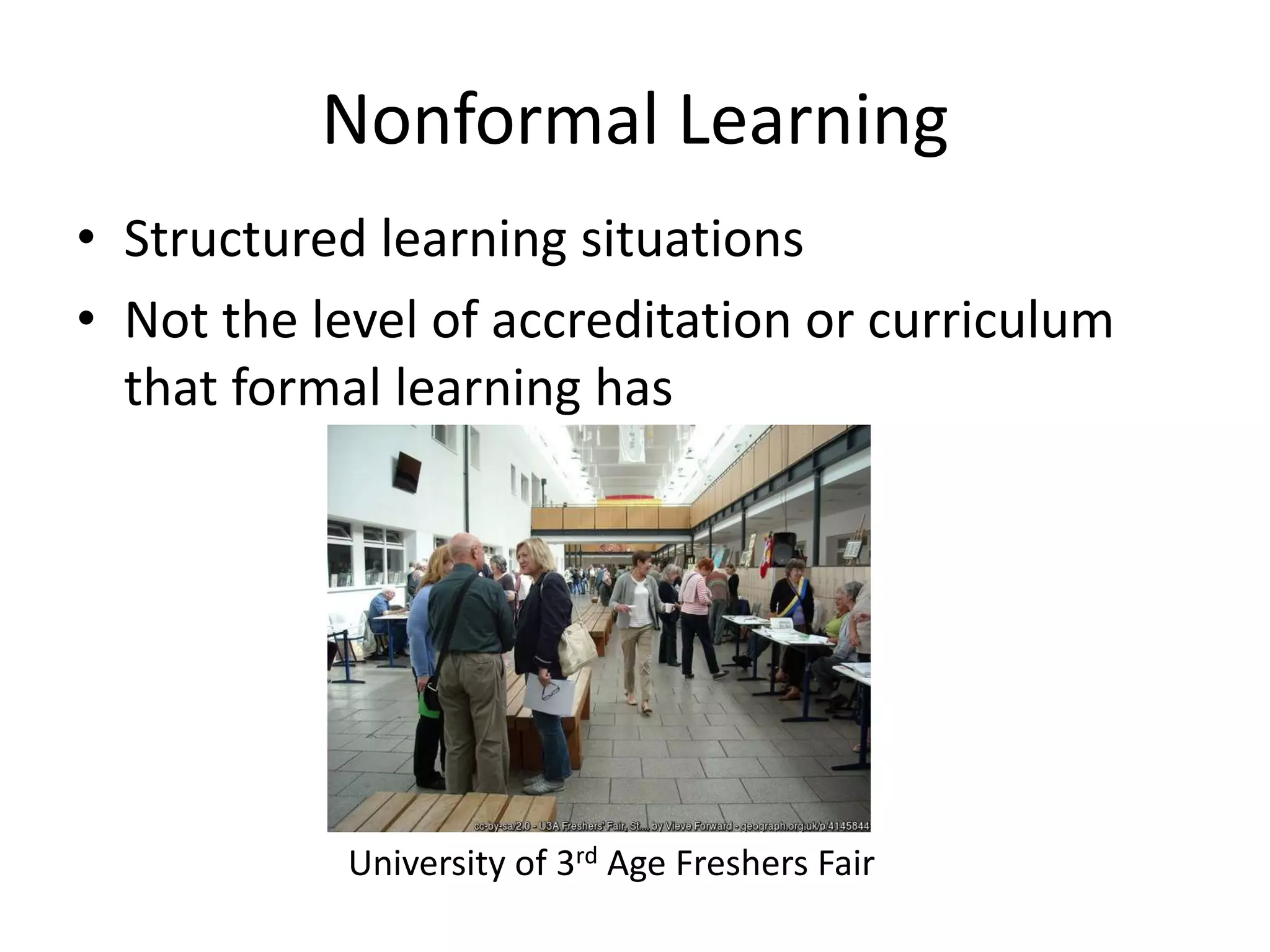
Nonformal Learning
• Structured learning situations
• Not the level of accreditation or curriculum
that formal learning has
University of 3rd Age Freshers Fair
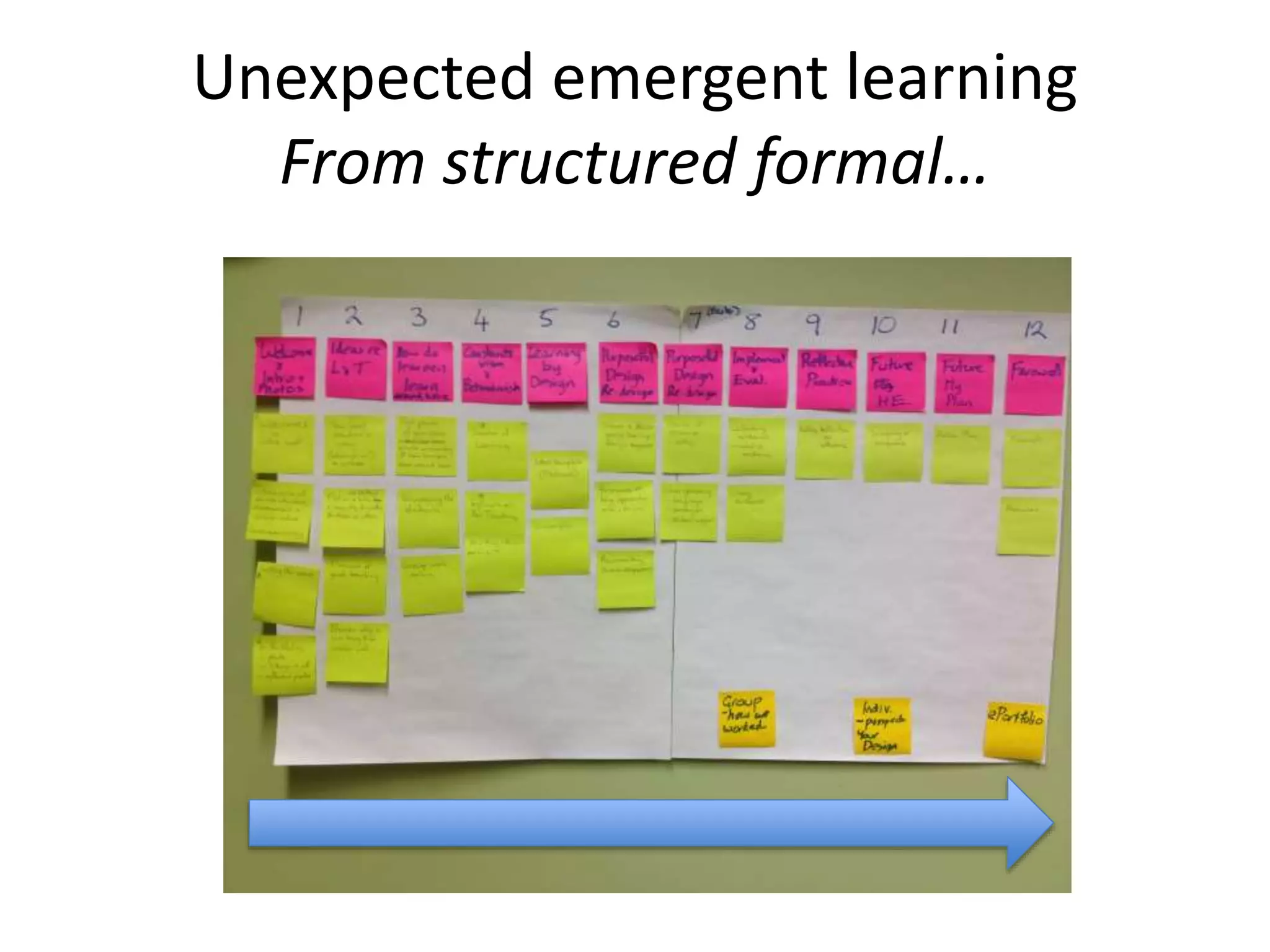
Unexpected emergent learning
From structured formal…
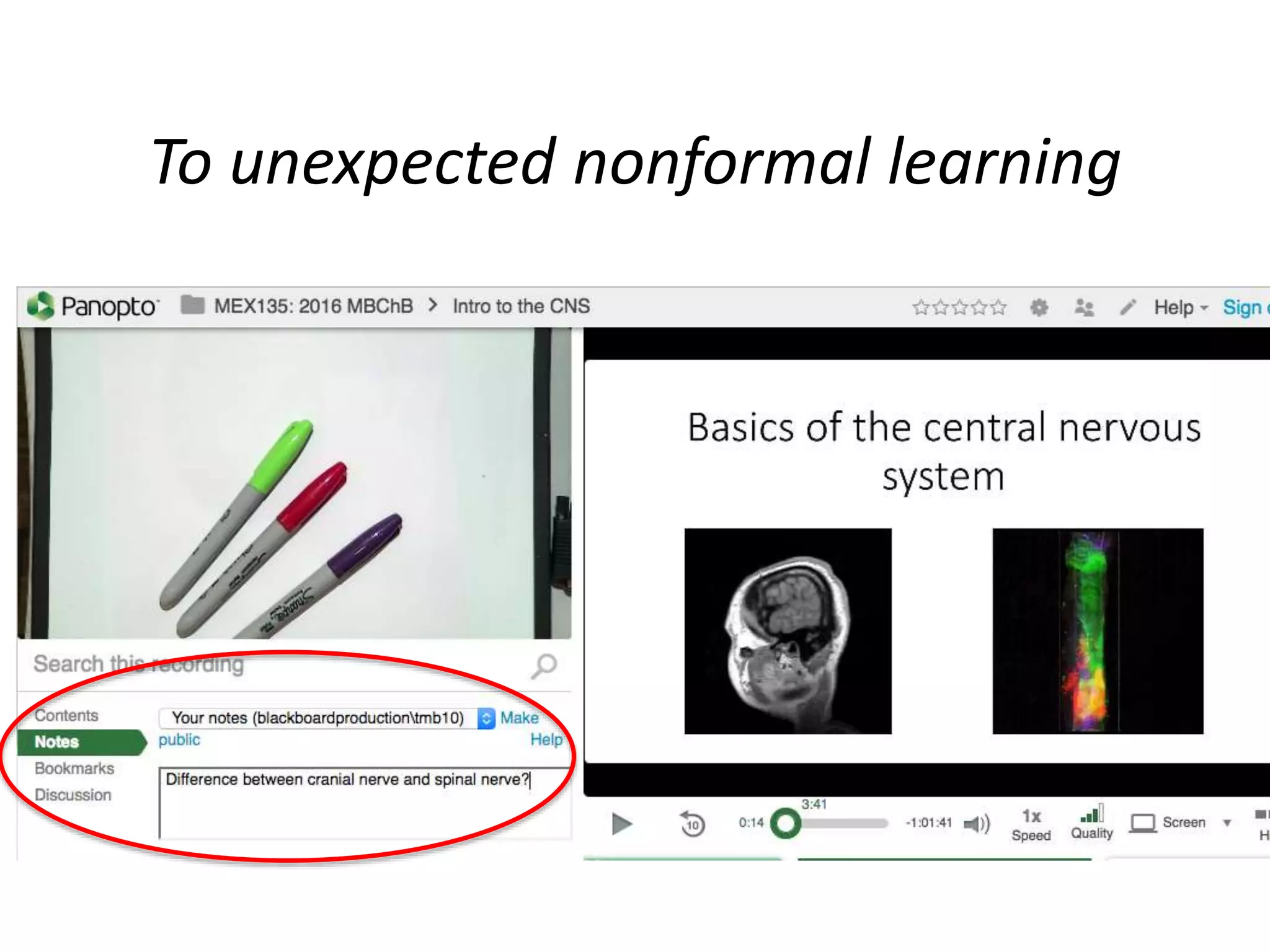
To unexpected nonformal learning
Rhizomatic learning (Cormier, 2008)
• A rhizome is a plant with no traditional stem
• By Kenraiz (Own work) [GFDL (http://www.gnu.org/copyleft/fdl.html) or CC BY-SA
4.0-3.0-2.5-2.0-1.0 (https://creativecommons.org/licenses/by-sa/4.0-3.0-2.5-2.0-
1.0)], via Wikimedia Commons
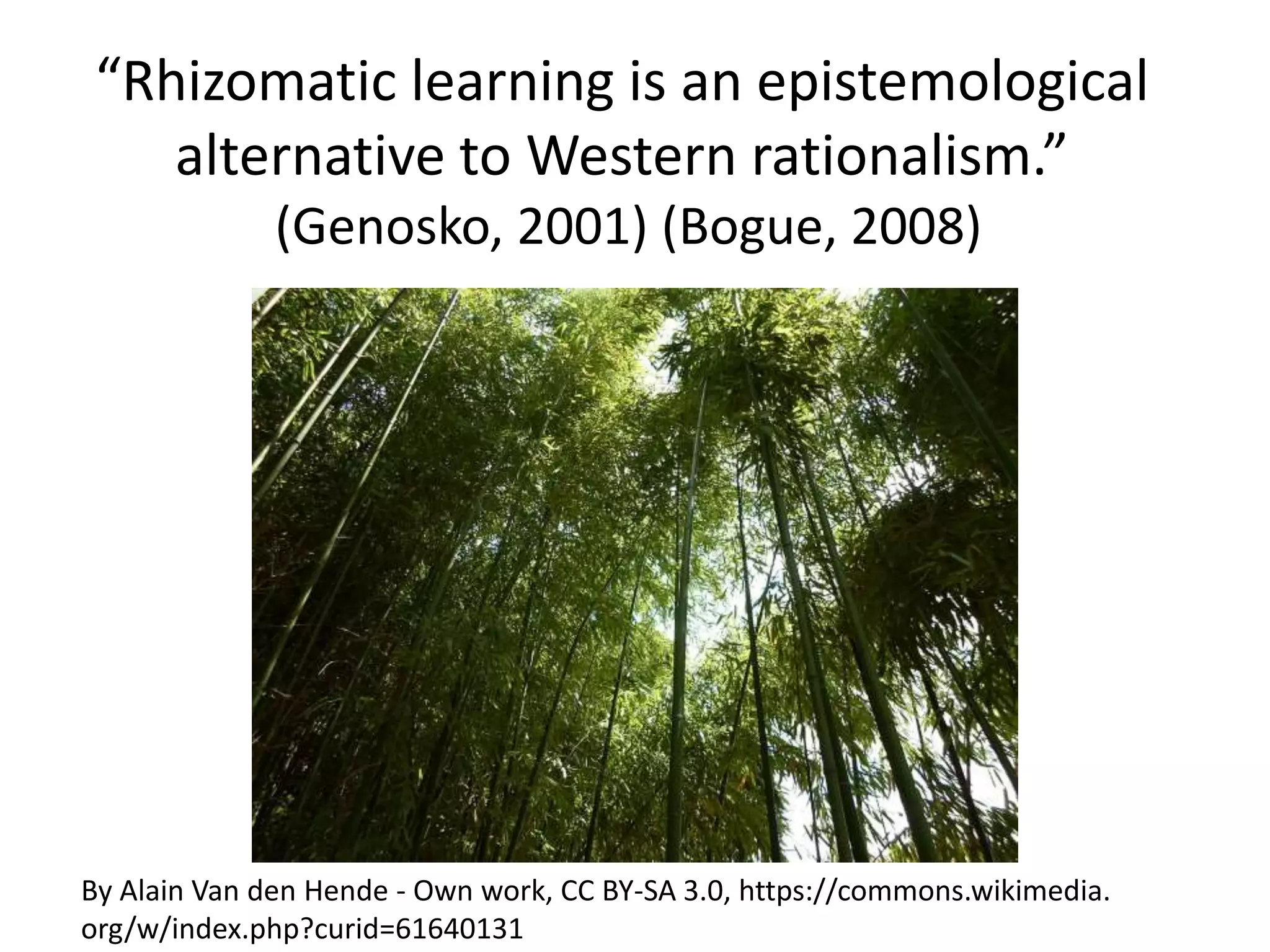
“Rhizomatic learning is an epistemological
alternative to Western rationalism.”
(Genosko, 2001) (Bogue, 2008)
By Alain Van den Hende - Own work, CC BY-SA 3.0, https://commons.wikimedia.
org/w/index.php?curid=61640131
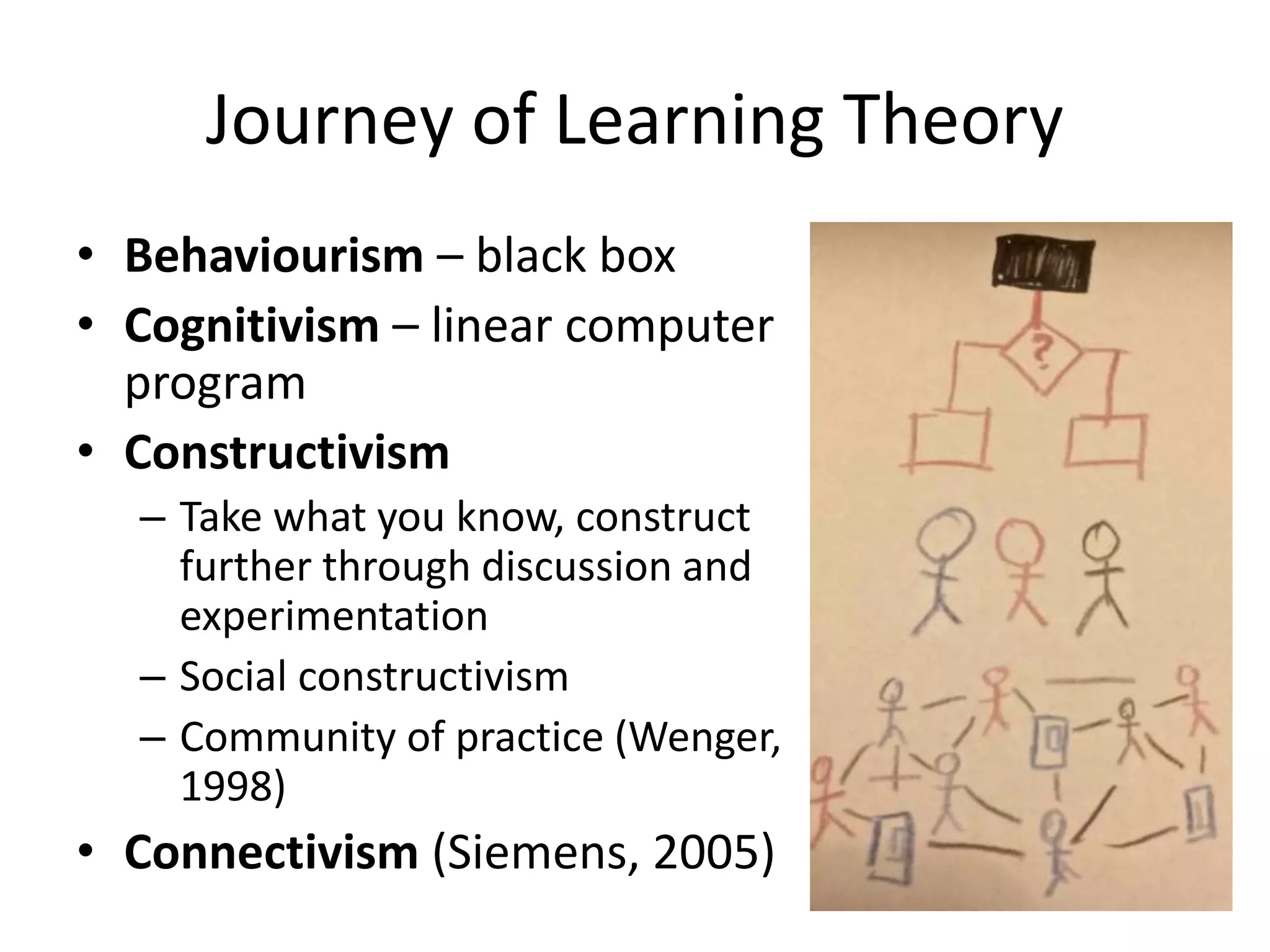
Journey of Learning Theory
• Behaviourism – black box
• Cognitivism – linear computer
program
• Constructivism
– Take what you know, construct
further through discussion and
experimentation
– Social constructivism
– Community of practice (Wenger,
1998)
• Connectivism (Siemens, 2005)
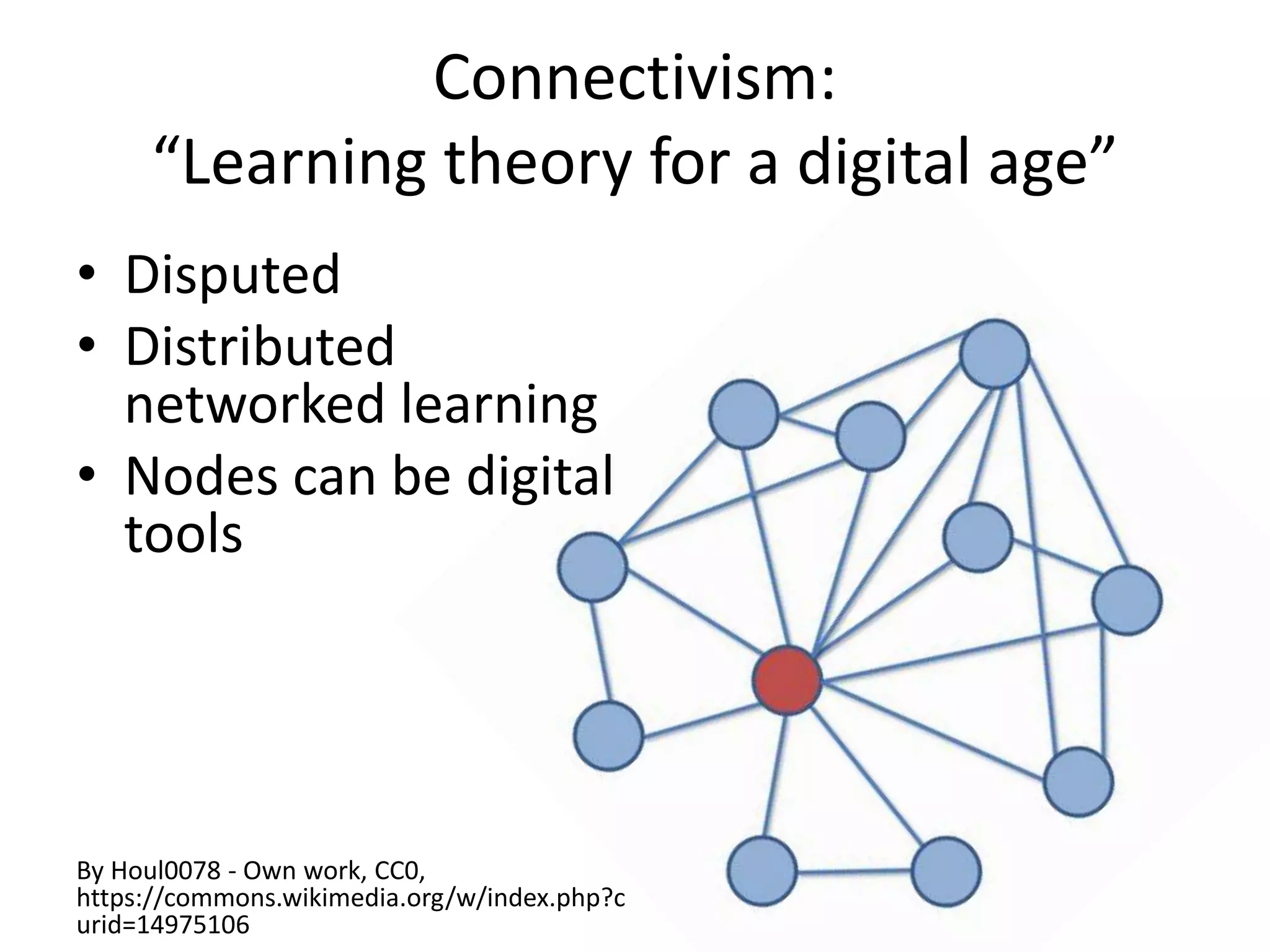
Connectivism:
“Learning theory for a digital age”
• Disputed
• Distributed
networked learning
• Nodes can be digital
tools
By Houl0078 - Own work, CC0,
https://commons.wikimedia.org/w/index.php?c
urid=14975106
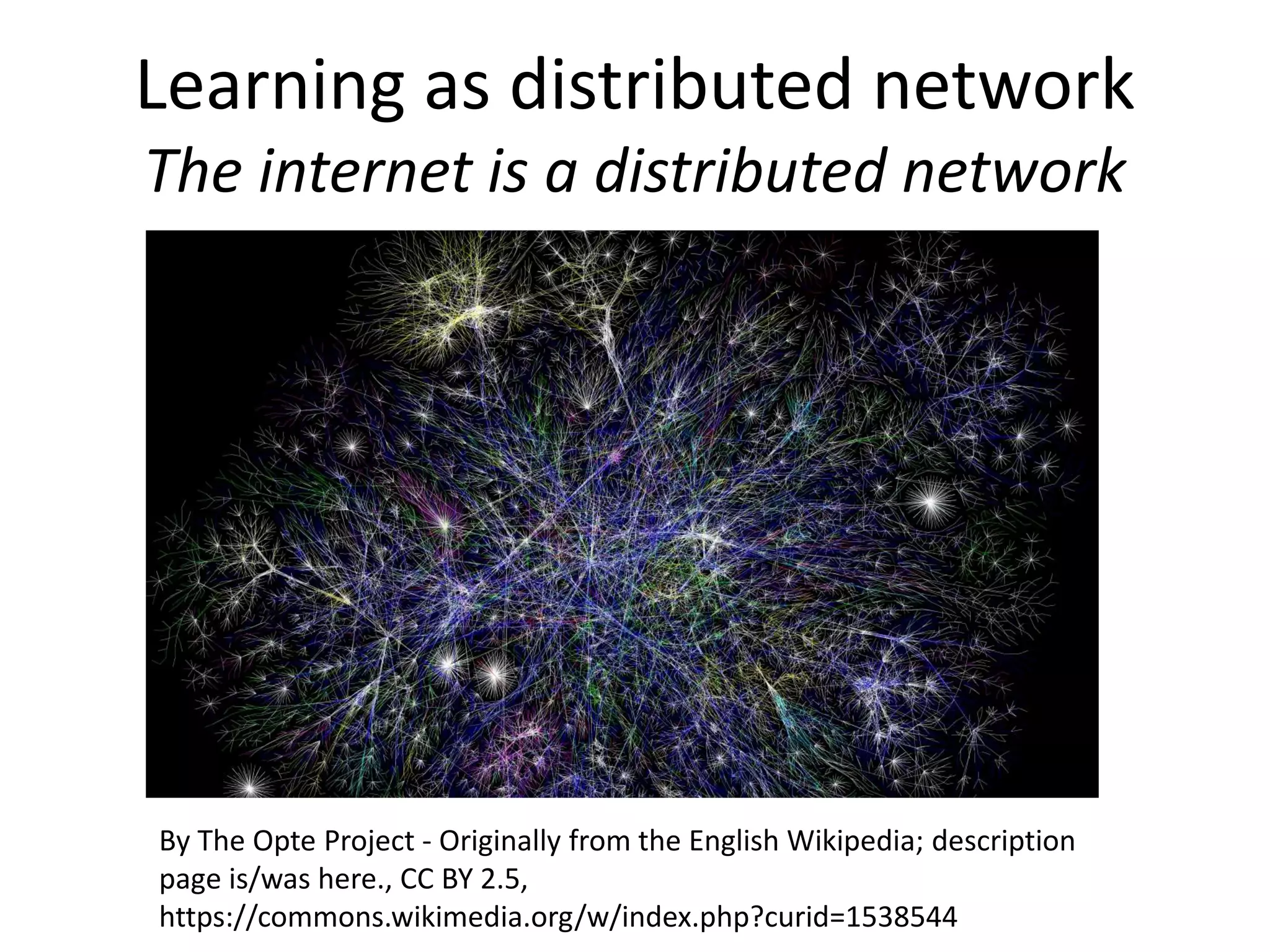
Learning as distributed network
The internet is a distributed network
By The Opte Project - Originally from the English Wikipedia; description
page is/was here., CC BY 2.5,
https://commons.wikimedia.org/w/index.php?curid=1538544
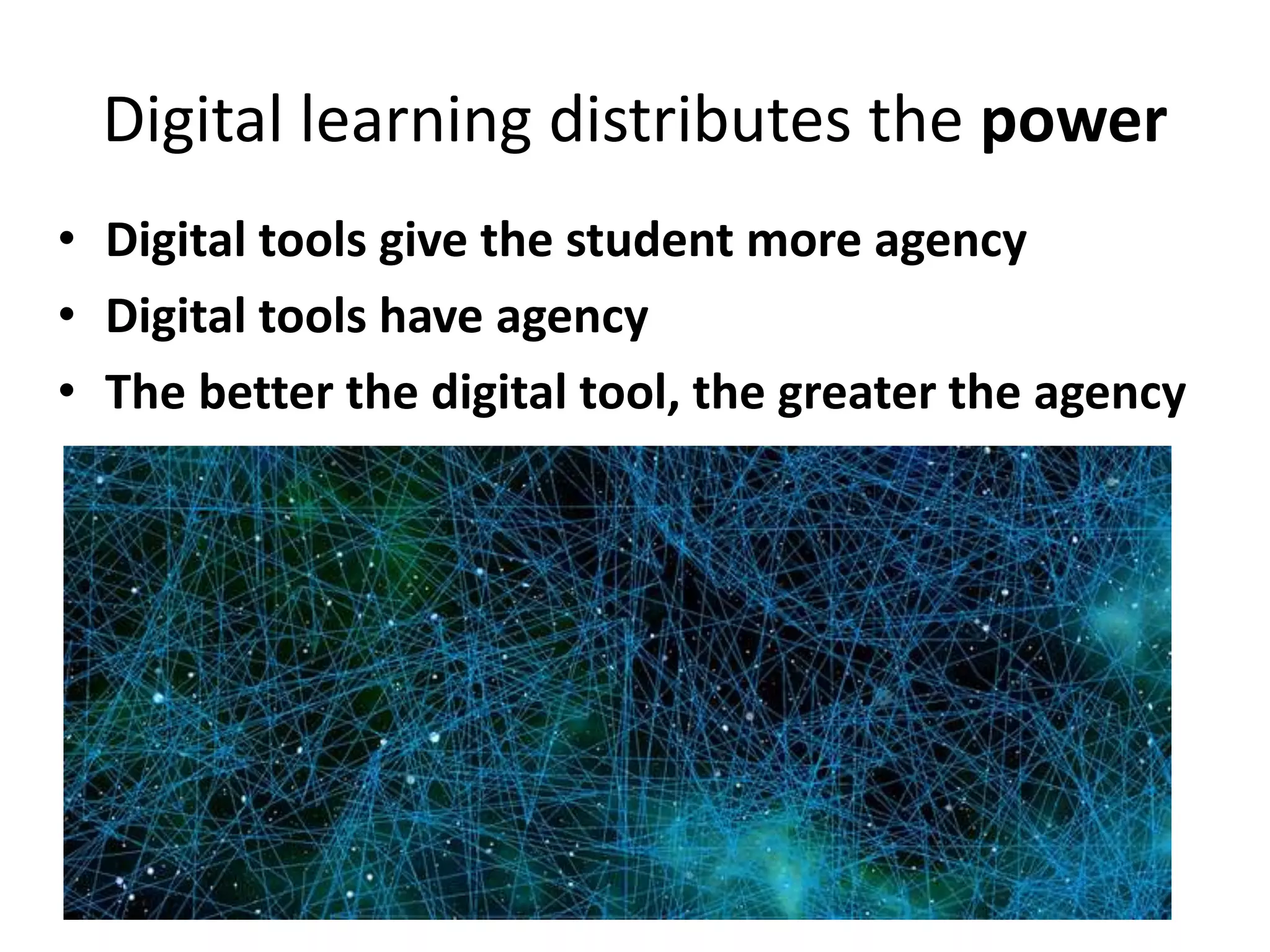
Digital learning distributes the power
• Digital tools give the student more agency
• Digital tools have agency
• The better the digital tool, the greater the agency
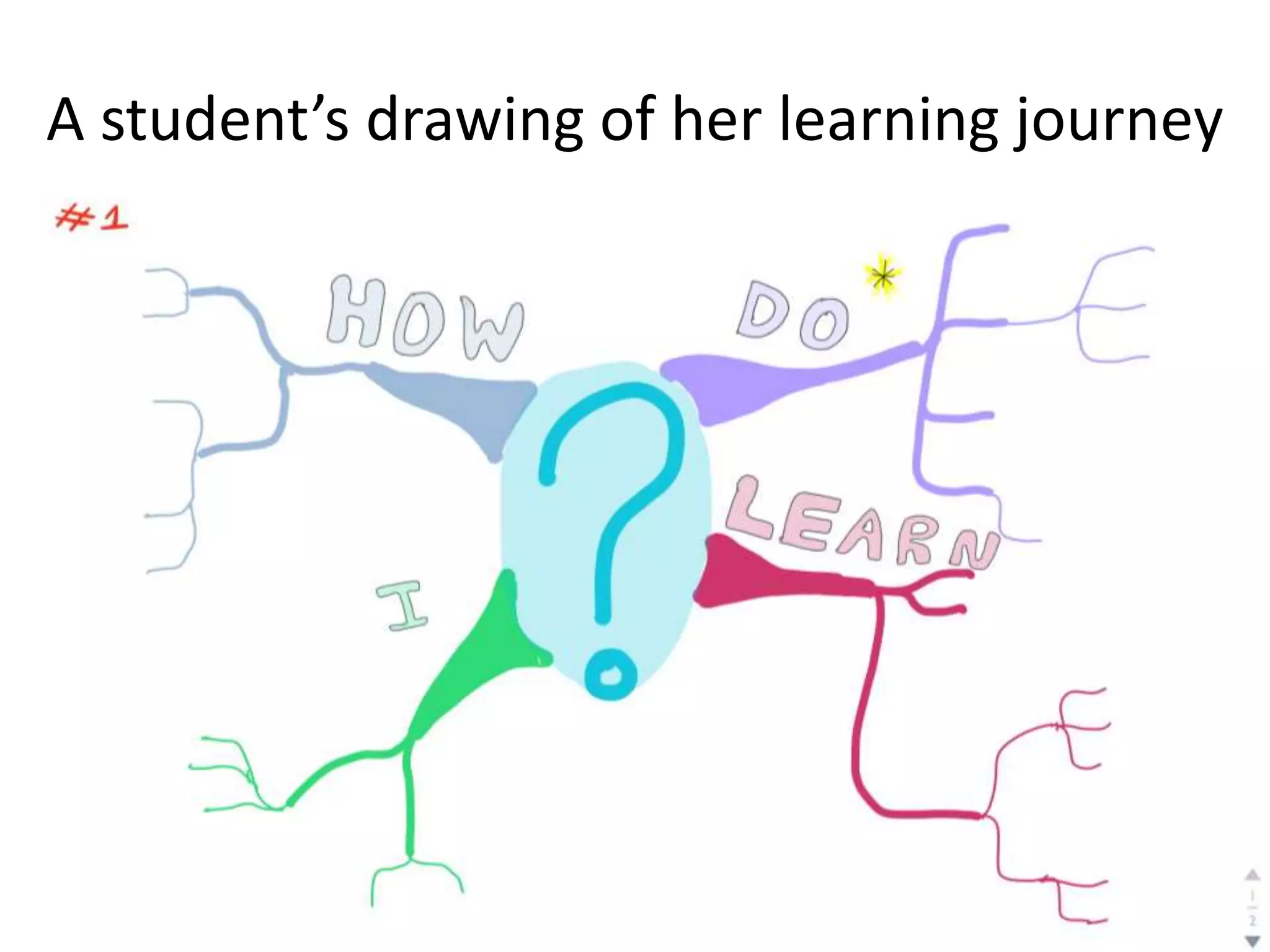
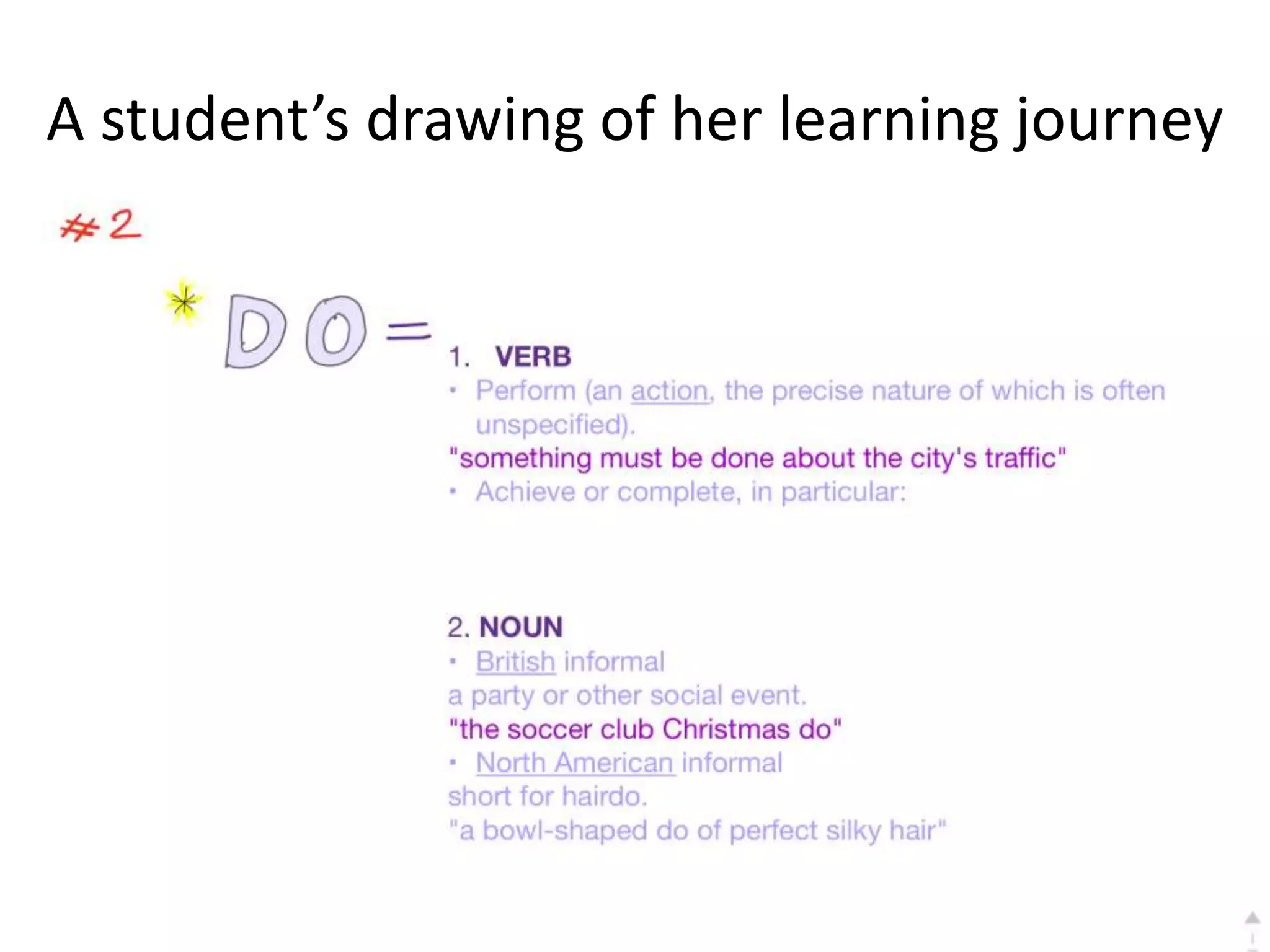
A student’s drawing of her learning journey
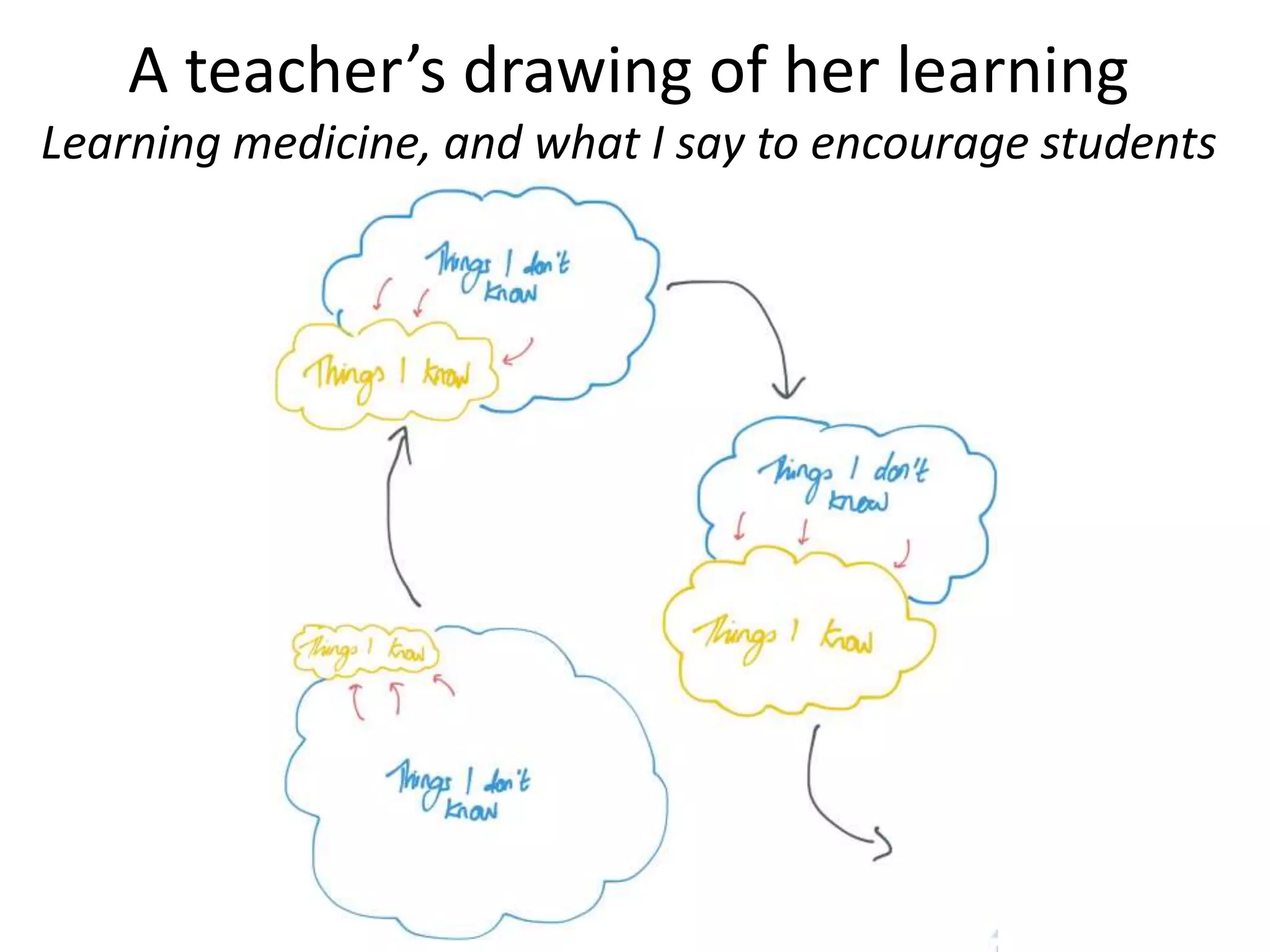
A teacher’s drawing of her learning
Learning medicine, and what I say to encourage students
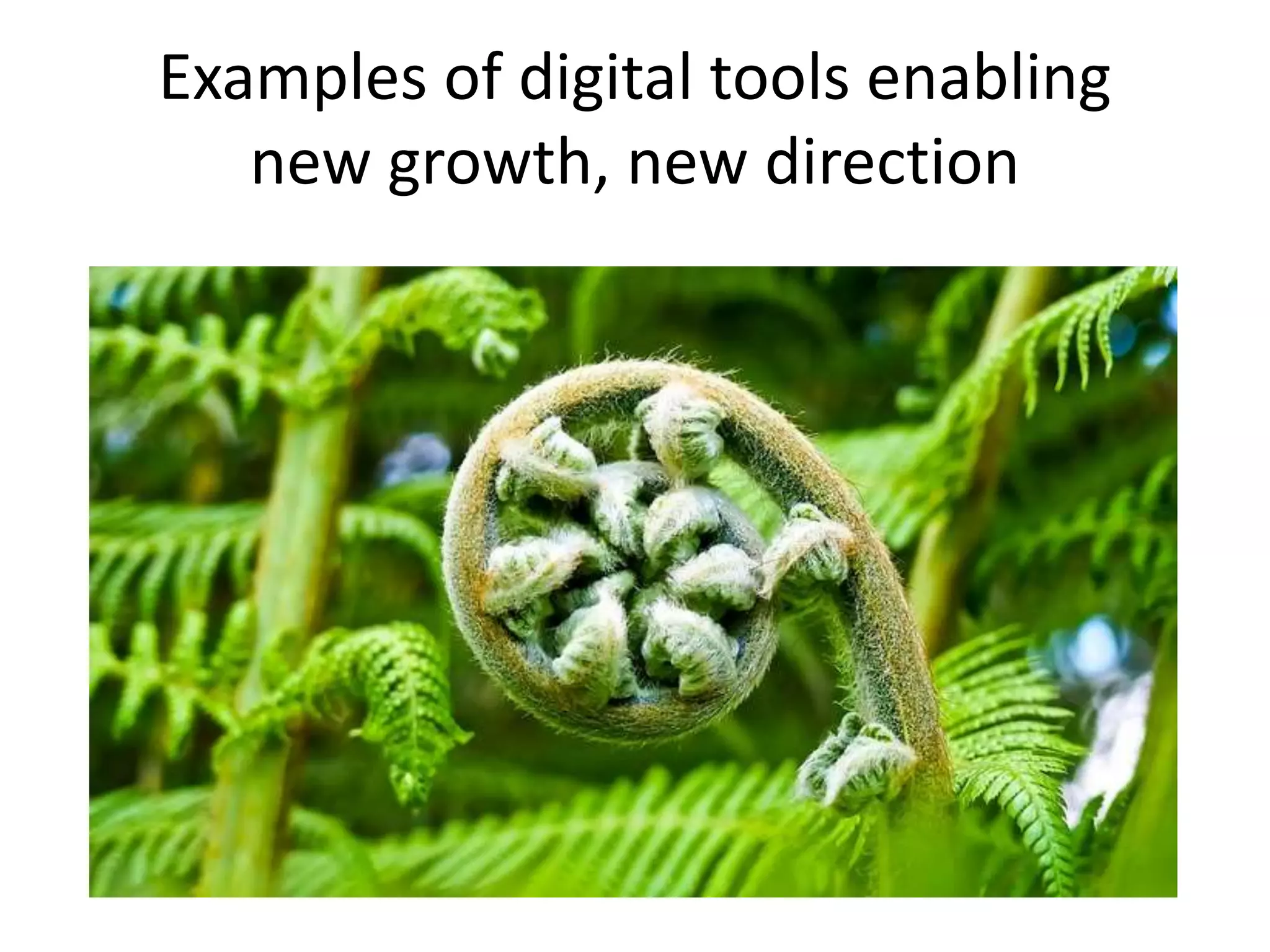
Examples of digital tools enabling
new growth, new direction
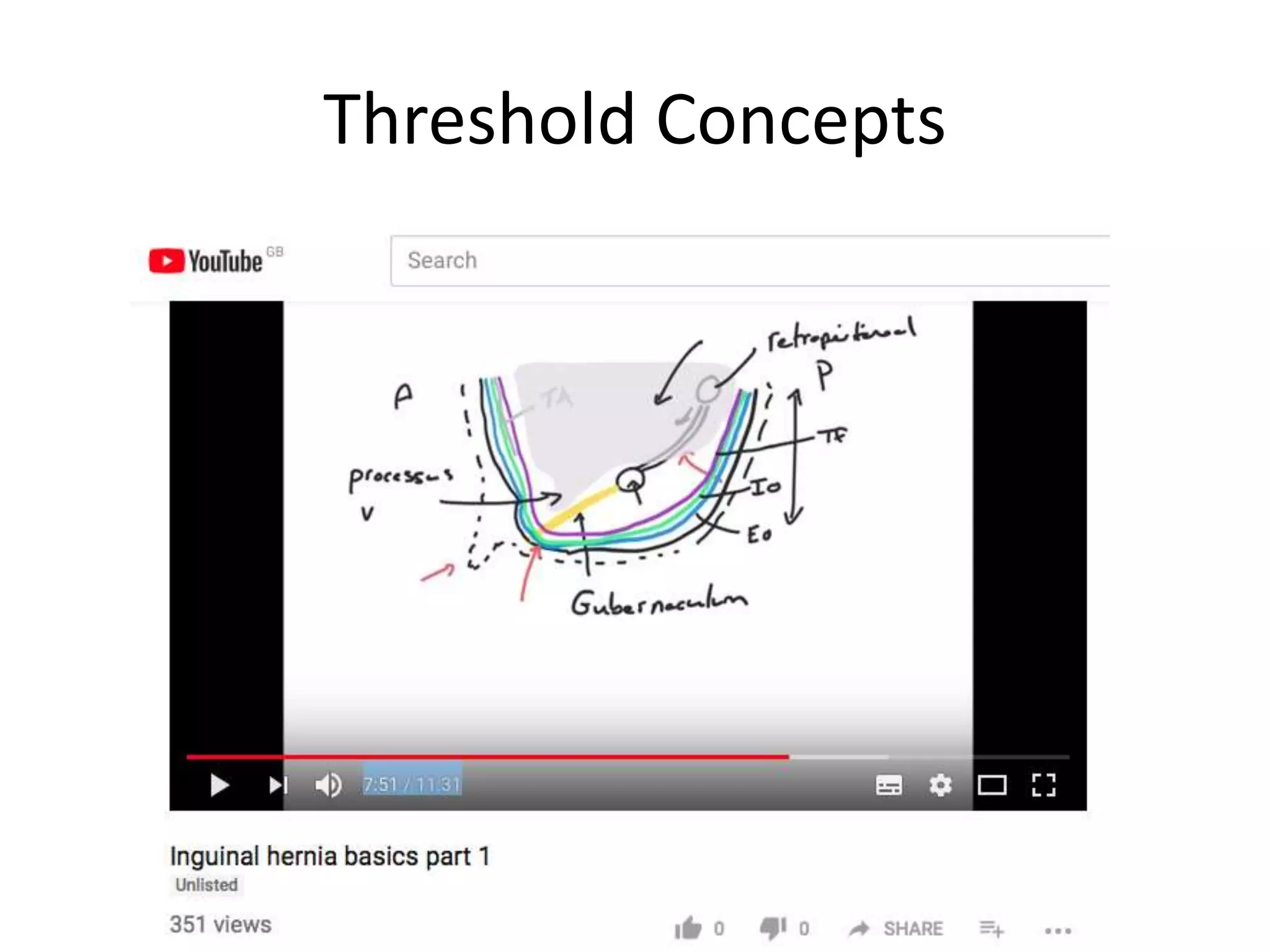
Threshold Concepts
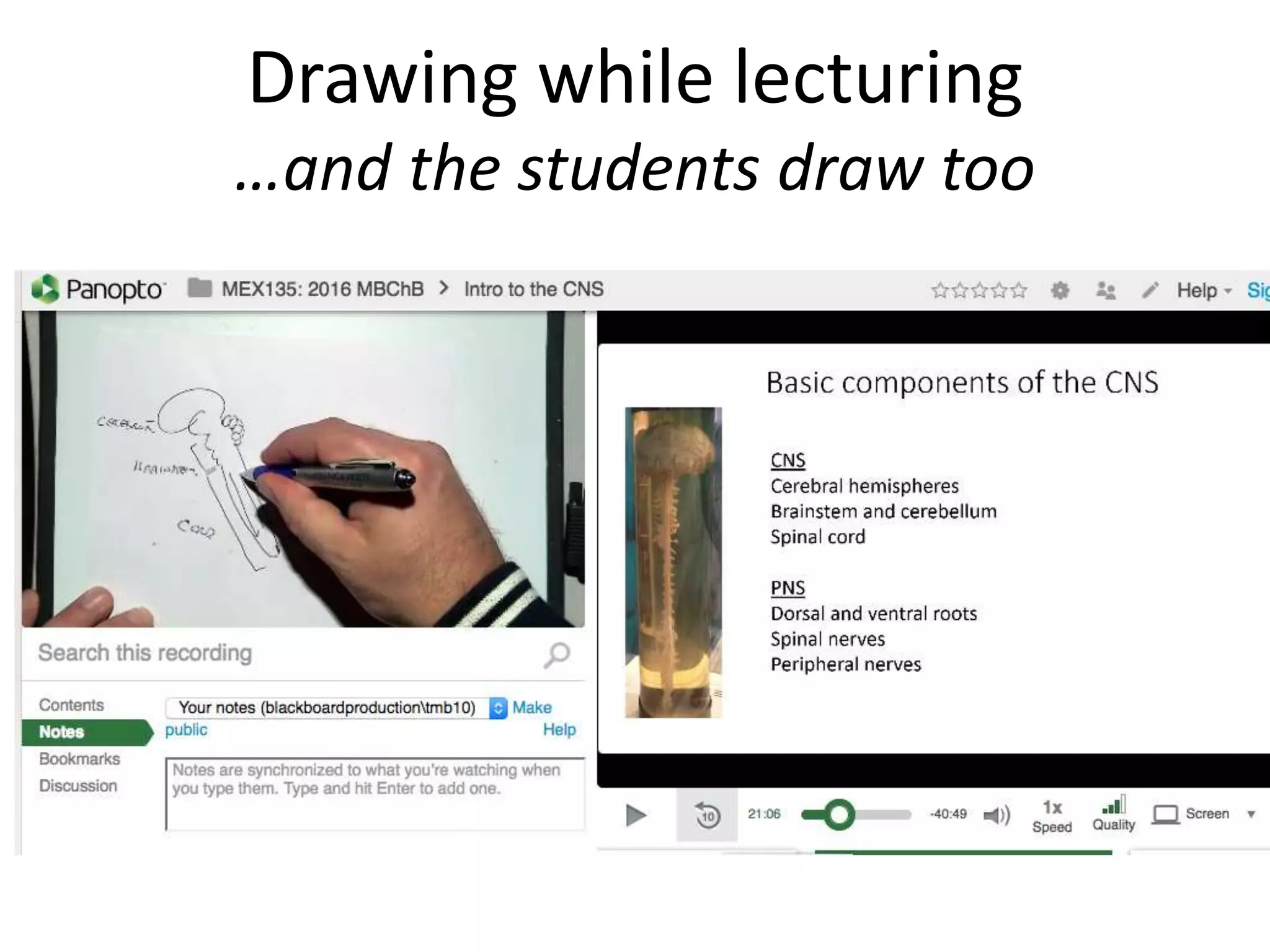
Drawing while lecturing
…and the students draw too
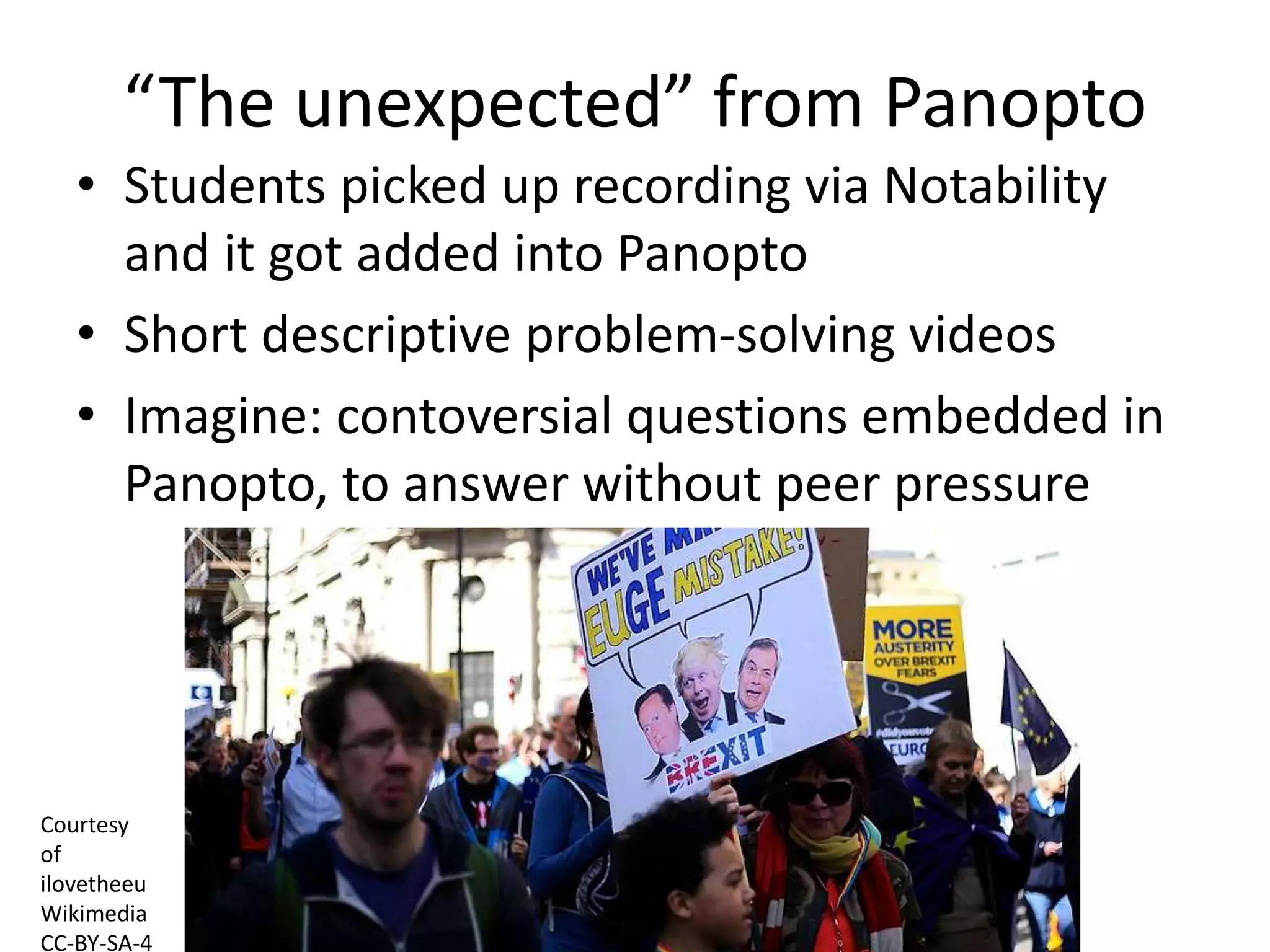
“The unexpected” from Panopto
• Students picked up recording via Notability
and it got added into Panopto
• Short descriptive problem-solving videos
• Imagine: contoversial questions embedded in
Panopto, to answer without peer pressure
Courtesy
of
ilovetheeu
Wikimedia
CC-BY-SA-4
Subversive Learning
• Learning material not originating from the
course author
• Students do what they think they must do
• Cautionary tales
By Hariadhi, myself (Own work) CC BY 2.5
(http://creativecommons.org/licenses/by/2.5)], via
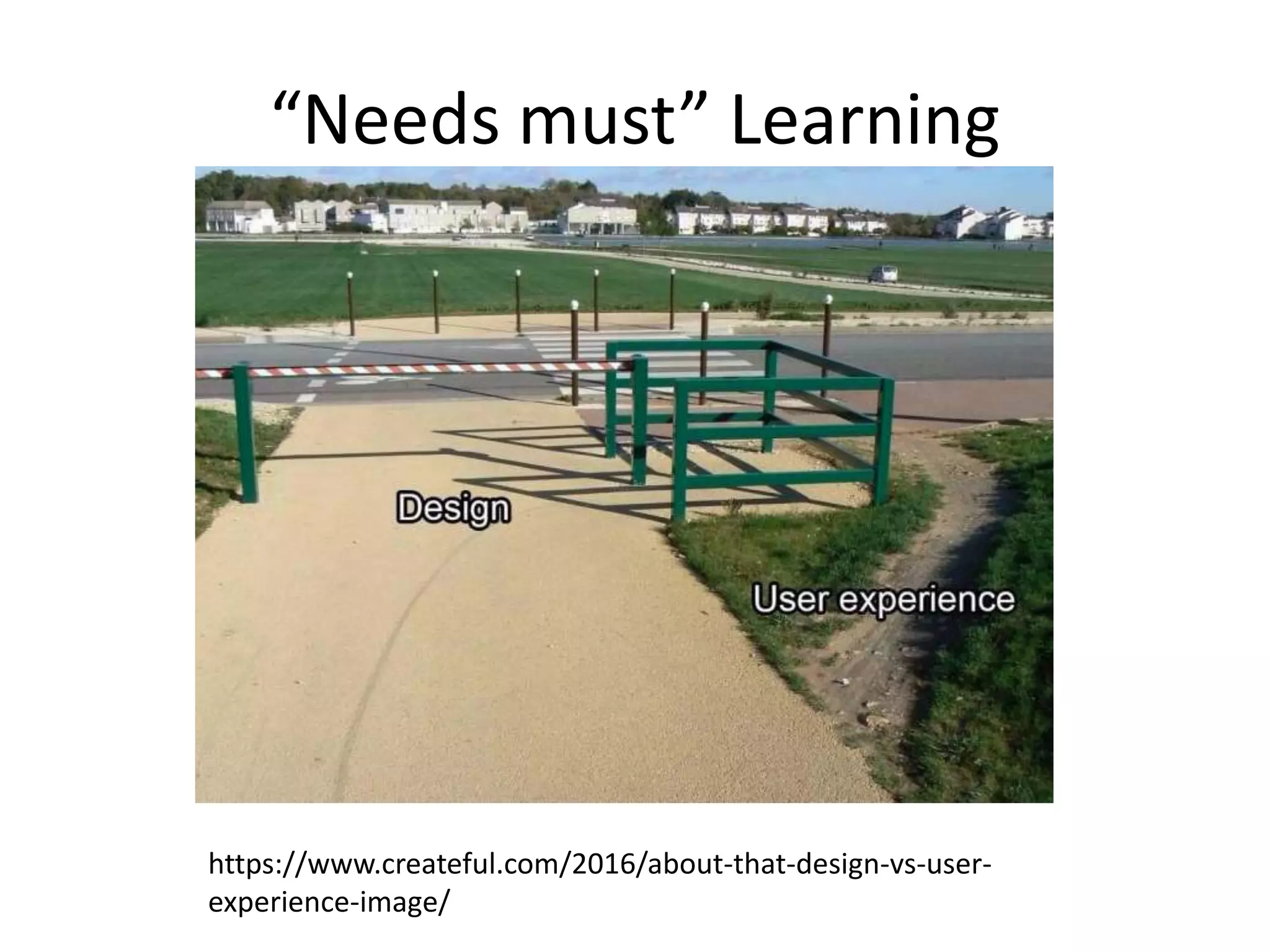
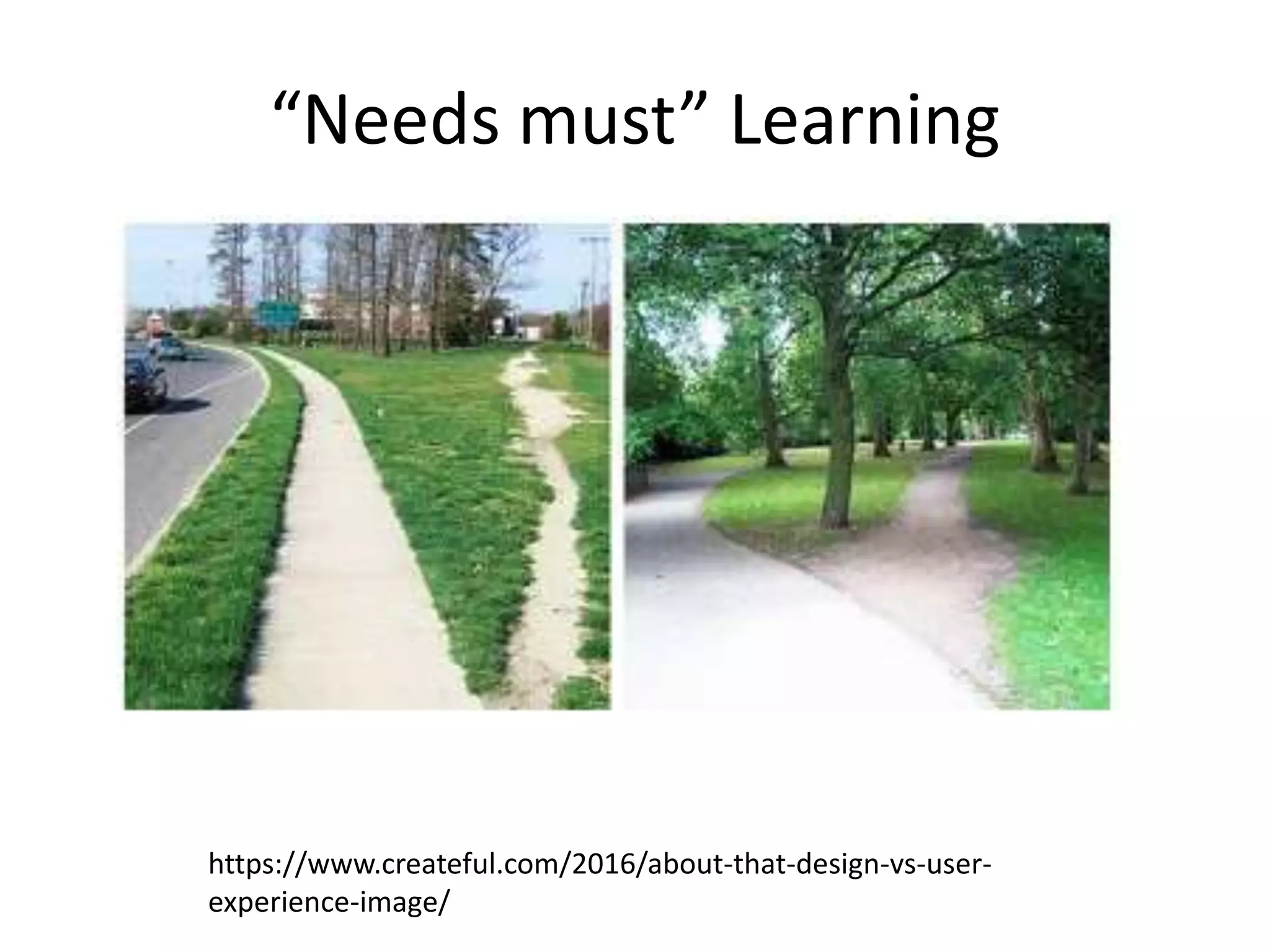
“Needs must” Learning
https://www.createful.com/2016/about-that-design-vs-user-
experience-image/
“Needs must” Learning
https://www.createful.com/2016/about-that-design-vs-user-
experience-image/
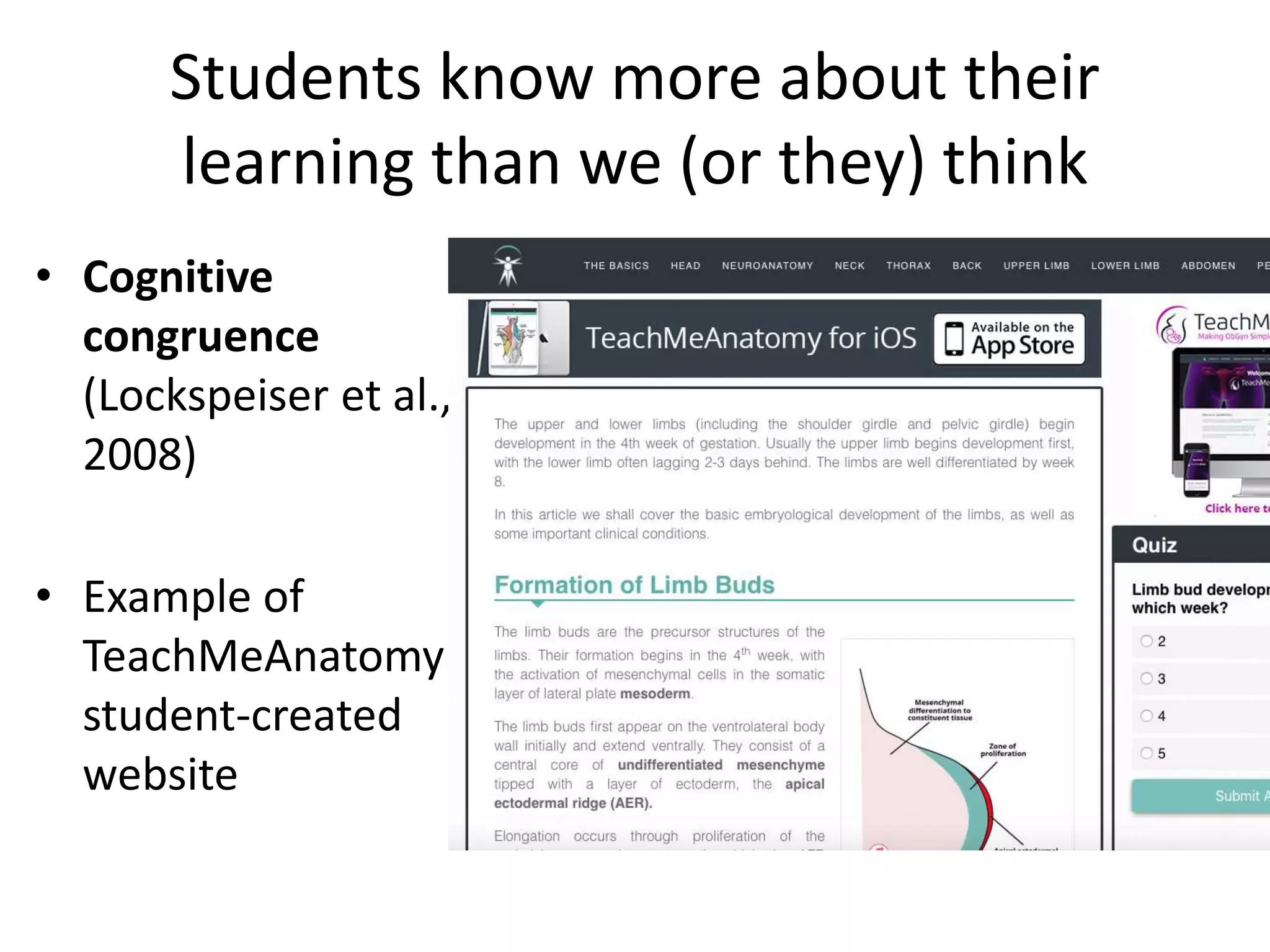
Students know more about their
learning than we (or they) think
• Cognitive
congruence
(Lockspeiser et al.,
2008)
• Example of
TeachMeAnatomy
student-created
website
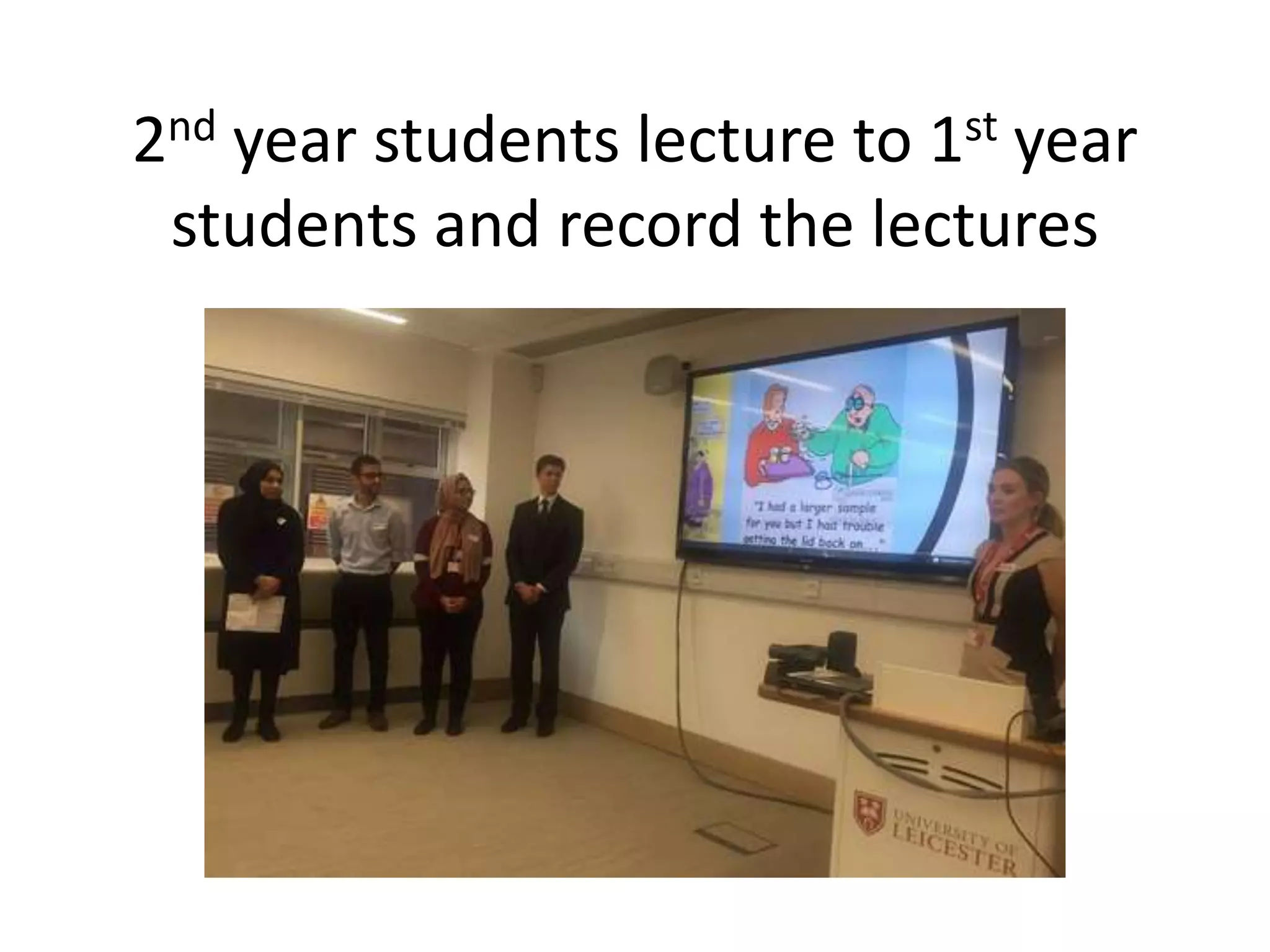
2nd year students lecture to 1st year
students and record the lectures
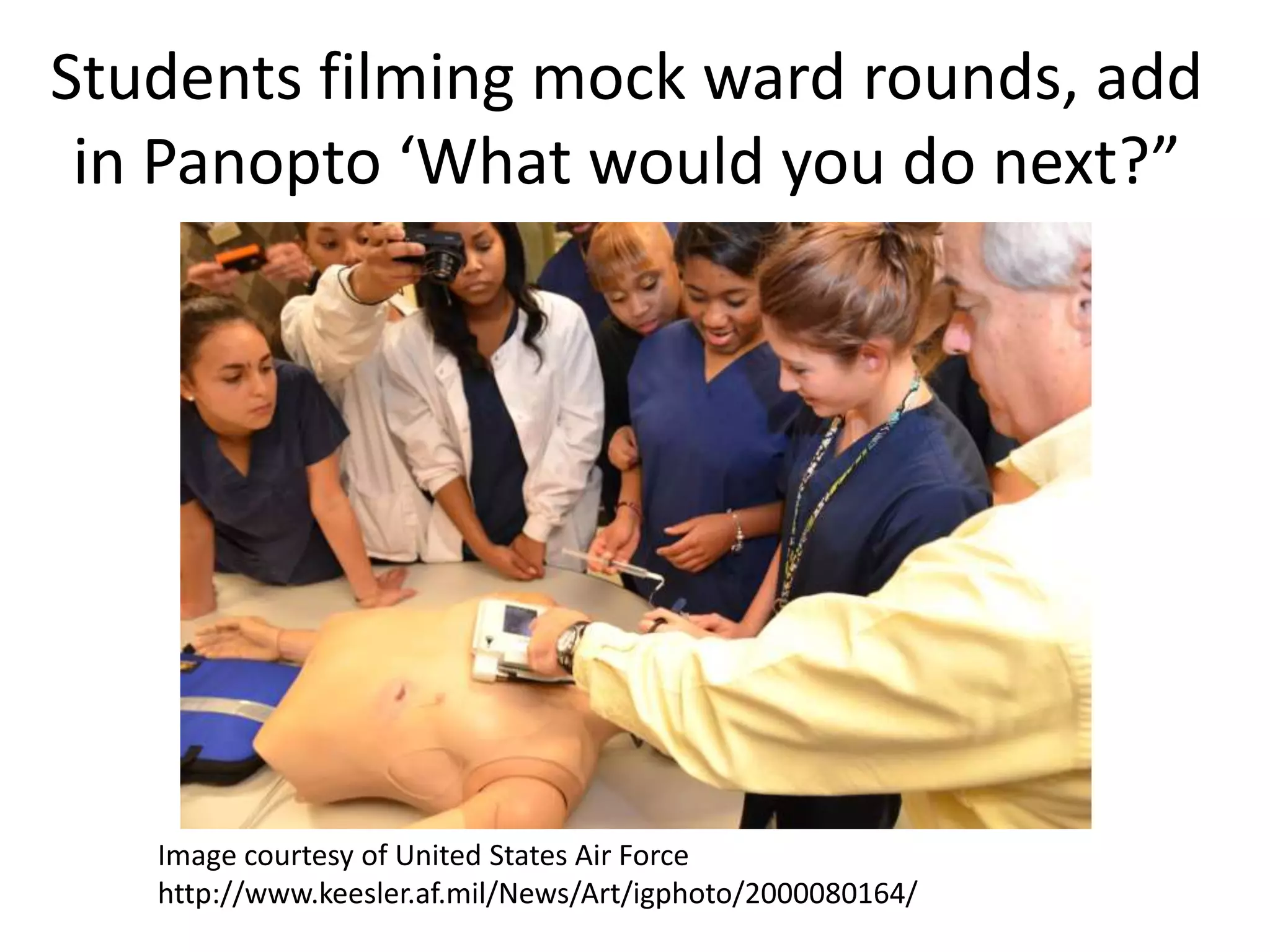
Students filming mock ward rounds, add
in Panopto ‘What would you do next?”
Image courtesy of United States Air Force
http://www.keesler.af.mil/News/Art/igphoto/2000080164/
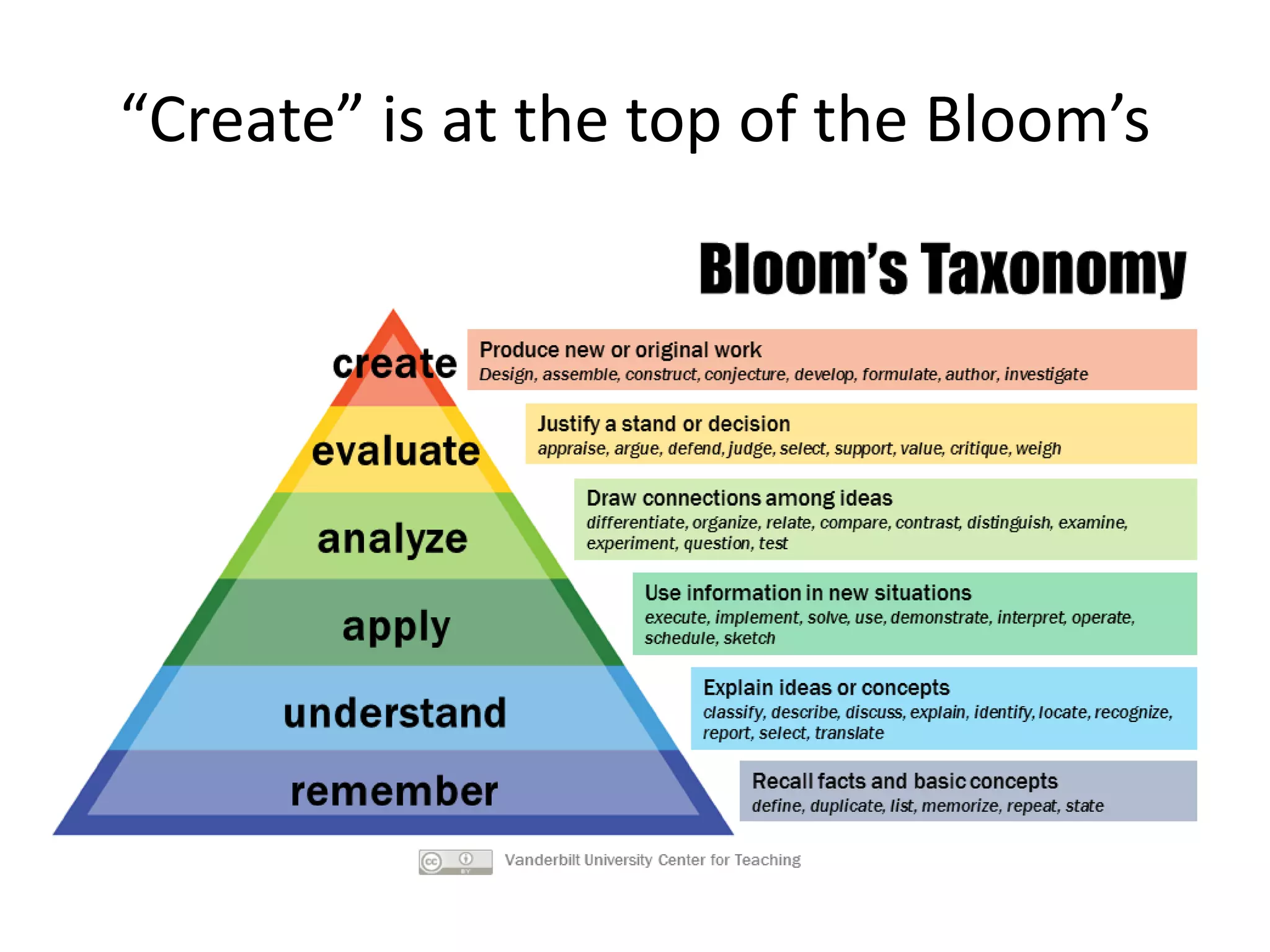
“Create” is at the top of the Bloom’s
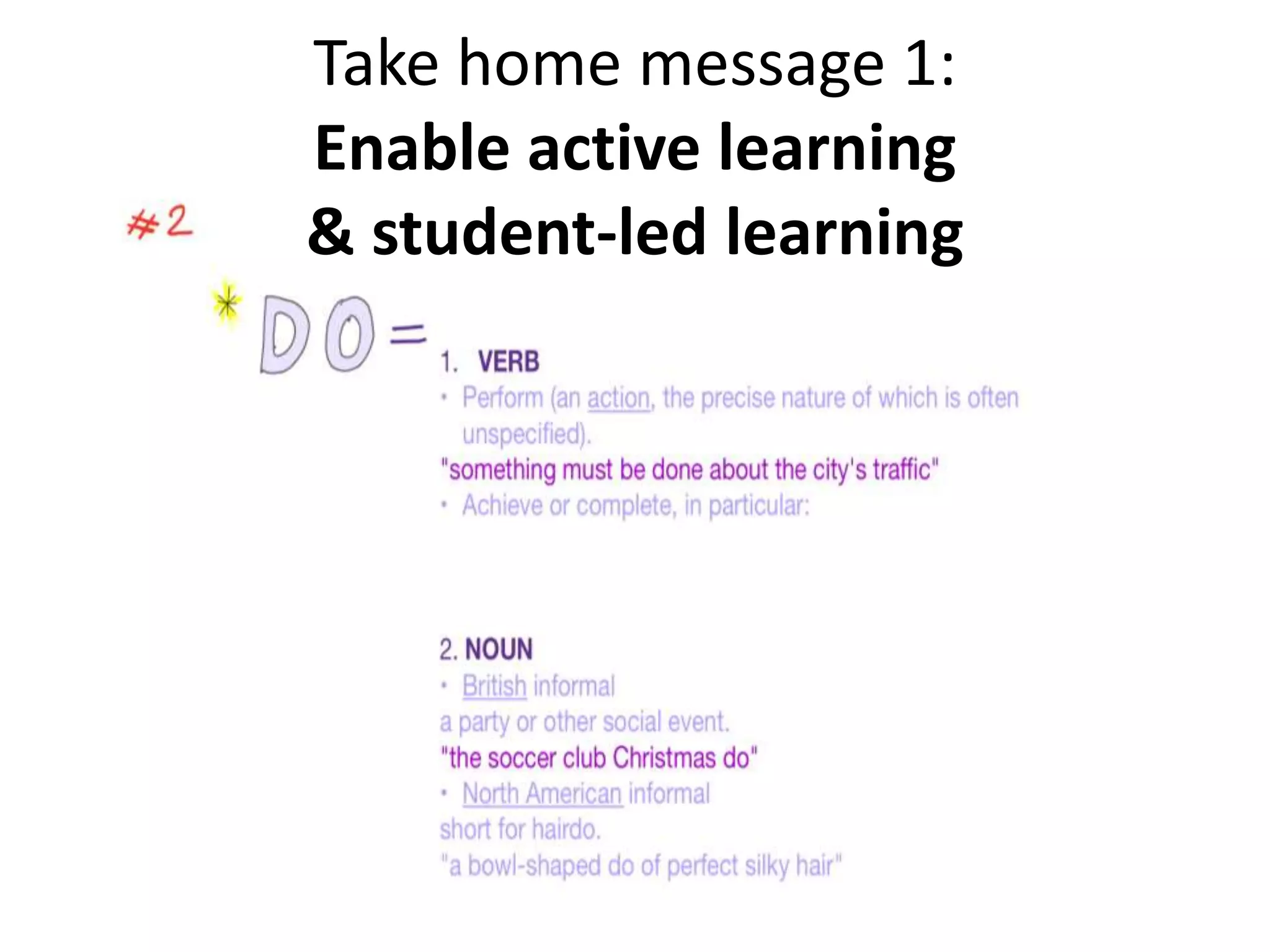
Take home message 1:
Enable active learning
& student-led learning
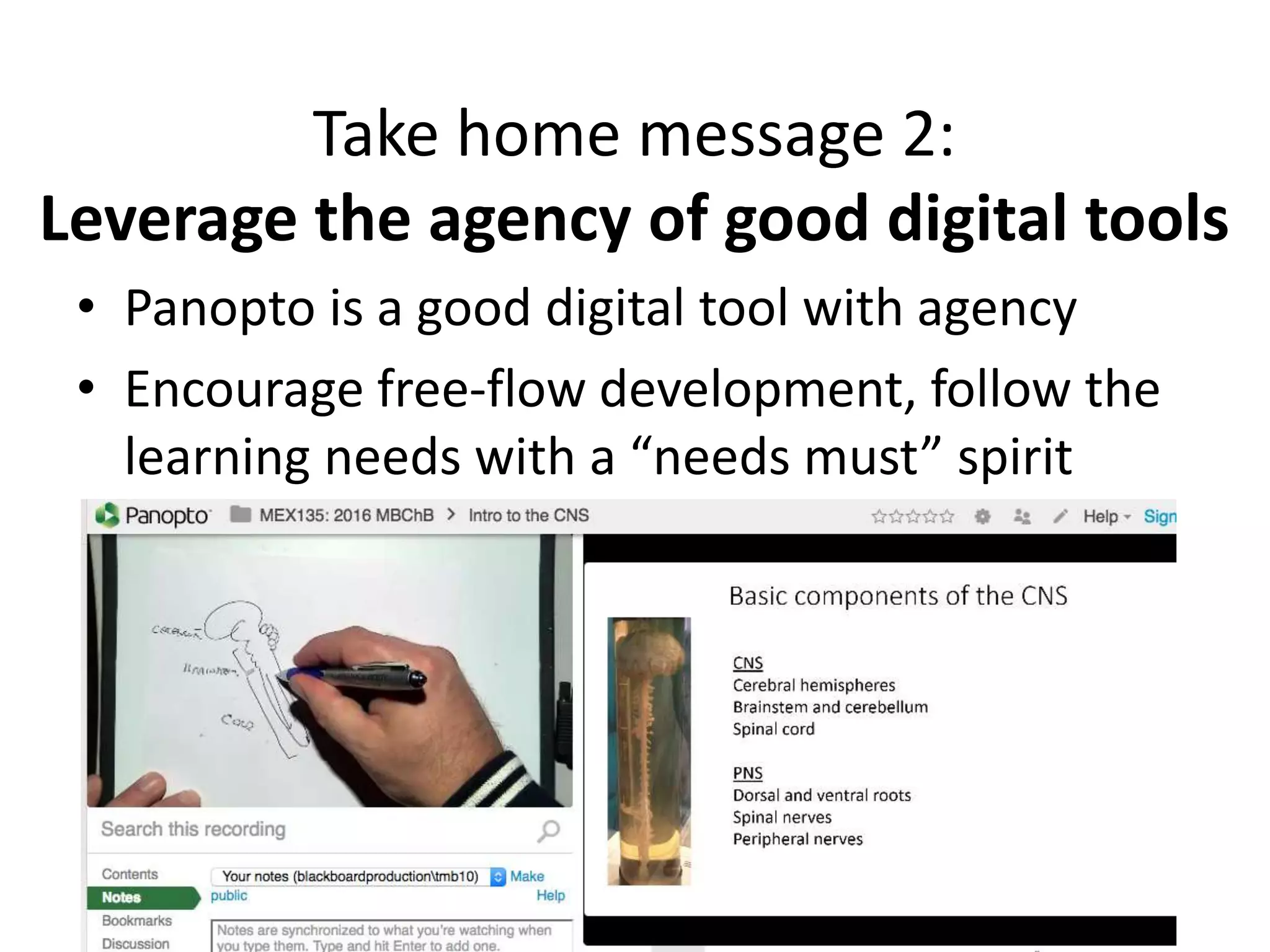
Take home message 2:
Leverage the agency of good digital tools
• Panopto is a good digital tool with agency
• Encourage free-flow development, follow the
learning needs with a “needs must” spirit
Take home message 3:
The case for Learning Technology
• Learning Technology is an academic field, not
a pay grade
• We need to hire and position people who get
how technology advances learning
• Let those who understand learning guide the
use of digital tools
• Association for Learning Technology
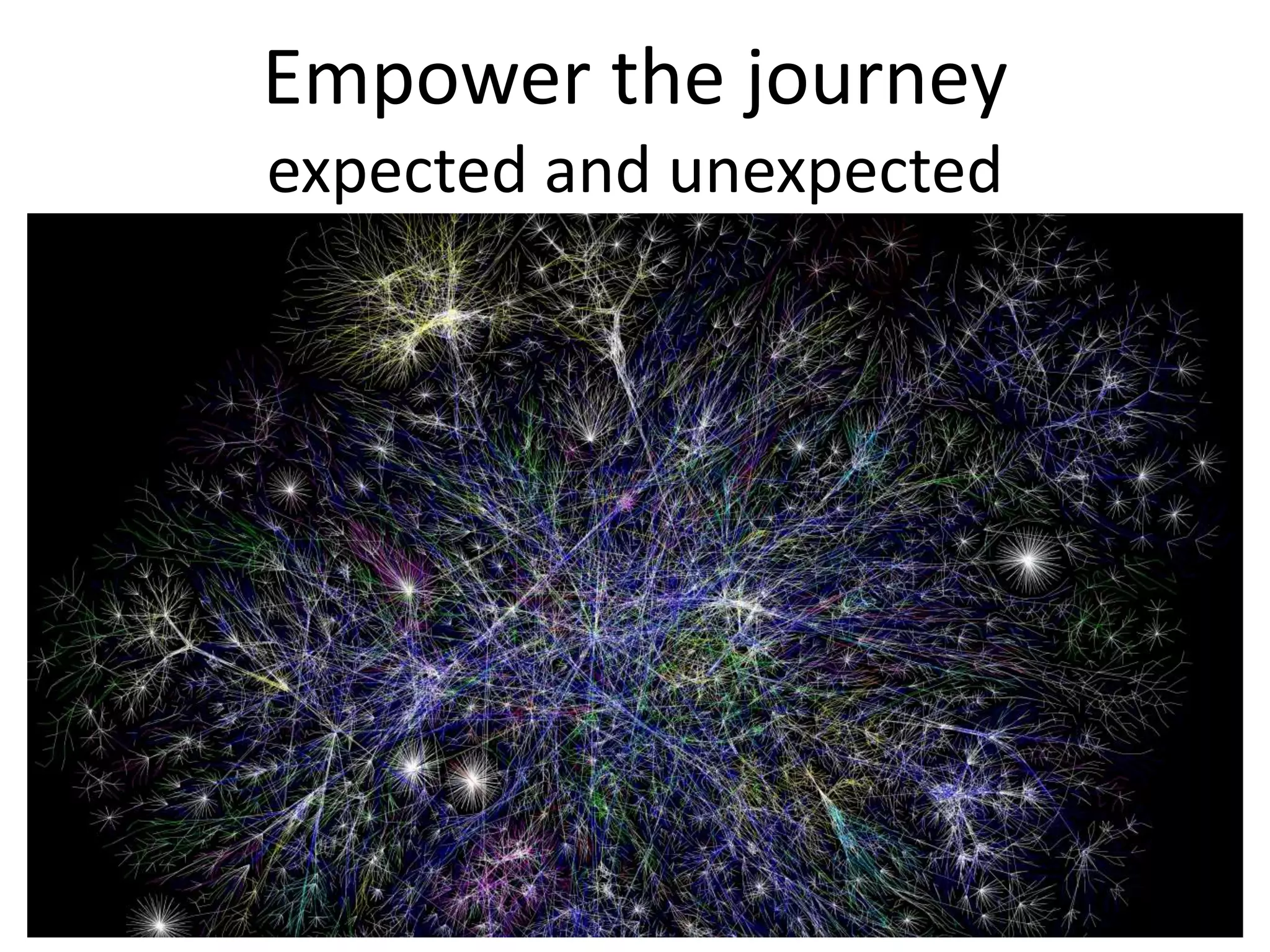
Empower the journey
expected and unexpected
References
• Bogue, R. (2008) Deleuze and Guattari, Routledge.
• Cormier, D. (2008) ‘Rhizomatic Education: Community as Curriculum’,
Innovate: Journal of Online Education, 4(5), p. 6, [online] Available from:
http://nsuworks.nova.edu/innovate%5Cnhttp://nsuworks.nova.edu/innov
ate/vol4/iss5/2.
• Genosko, G. (2001) Deleuze and Guattari, Taylor & Francis (ed.).
• Lockspeiser, T. M., O’Sullivan, P., Teherani, A. and Muller, J. (2008)
‘Understanding the experience of being taught by peers: the value of
social and cognitive congruence’, Advances in Health Sciences Education,
13(3), pp. 361–372, [online] Available from:
http://www.ncbi.nlm.nih.gov/pubmed/17124627 (Accessed 31 December
2016).
• Siemens, G. (2005) ‘Connectivism: A learning theory for the Digital Age’,
International Journal of Instructional Technology and Distance Learning, 2,
pp. 1–8, [online] Available from:
http://www.itdl.org/Journal/Jan_05/article01.htm.
• Wenger, E. (1998) ‘Communities of Practice: Learning, Meaning, and
Identity’, Systems thinker, 9, pp. 2–3.

The-Digital-Learning-Journey-Going-in-Expected-and-Unexpected-Directions

  • 1.
    The digital learningjourney: going in expected and unexpected directions Terese Bird, Educational Designer University of Leicester Panopto Users Conference, London, 21 November 2017
  • 2.
    Learning does nothappen the way we think or plan Image courtesy of manpreetdhuffar https://manpreetdhuffar.wordpress.com/2013/04/19/the-lonely-and- withdrawn-self-during-phd/comment-page-1/#comment-12
  • 3.
    Formal learning • Whatwe pay for • What gets accredited • Linear Courtesy of Maha Abed on Flickr CC-BY-ND-2
  • 4.
    Informal learning • Noset learning outcomes • Natural, spontaneous, unintentional • Communities of practice
  • 5.
    Nonformal Learning • Structuredlearning situations • Not the level of accreditation or curriculum that formal learning has University of 3rd Age Freshers Fair
  • 6.
  • 7.
  • 8.
    Rhizomatic learning (Cormier,2008) • A rhizome is a plant with no traditional stem • By Kenraiz (Own work) [GFDL (http://www.gnu.org/copyleft/fdl.html) or CC BY-SA 4.0-3.0-2.5-2.0-1.0 (https://creativecommons.org/licenses/by-sa/4.0-3.0-2.5-2.0- 1.0)], via Wikimedia Commons
  • 9.
    “Rhizomatic learning isan epistemological alternative to Western rationalism.” (Genosko, 2001) (Bogue, 2008) By Alain Van den Hende - Own work, CC BY-SA 3.0, https://commons.wikimedia. org/w/index.php?curid=61640131
  • 10.
    Journey of LearningTheory • Behaviourism – black box • Cognitivism – linear computer program • Constructivism – Take what you know, construct further through discussion and experimentation – Social constructivism – Community of practice (Wenger, 1998) • Connectivism (Siemens, 2005)
  • 11.
    Connectivism: “Learning theory fora digital age” • Disputed • Distributed networked learning • Nodes can be digital tools By Houl0078 - Own work, CC0, https://commons.wikimedia.org/w/index.php?c urid=14975106
  • 12.
    Learning as distributednetwork The internet is a distributed network By The Opte Project - Originally from the English Wikipedia; description page is/was here., CC BY 2.5, https://commons.wikimedia.org/w/index.php?curid=1538544
  • 13.
    Digital learning distributesthe power • Digital tools give the student more agency • Digital tools have agency • The better the digital tool, the greater the agency
  • 14.
    A student’s drawingof her learning journey
  • 15.
    A student’s drawingof her learning journey
  • 16.
    A teacher’s drawingof her learning Learning medicine, and what I say to encourage students
  • 17.
    Examples of digitaltools enabling new growth, new direction
  • 18.
  • 19.
    Drawing while lecturing …andthe students draw too
  • 20.
    “The unexpected” fromPanopto • Students picked up recording via Notability and it got added into Panopto • Short descriptive problem-solving videos • Imagine: contoversial questions embedded in Panopto, to answer without peer pressure Courtesy of ilovetheeu Wikimedia CC-BY-SA-4
  • 21.
    Subversive Learning • Learningmaterial not originating from the course author • Students do what they think they must do • Cautionary tales By Hariadhi, myself (Own work) CC BY 2.5 (http://creativecommons.org/licenses/by/2.5)], via
  • 22.
  • 23.
  • 24.
    Students know moreabout their learning than we (or they) think • Cognitive congruence (Lockspeiser et al., 2008) • Example of TeachMeAnatomy student-created website
  • 25.
    2nd year studentslecture to 1st year students and record the lectures
  • 26.
    Students filming mockward rounds, add in Panopto ‘What would you do next?” Image courtesy of United States Air Force http://www.keesler.af.mil/News/Art/igphoto/2000080164/
  • 27.
    “Create” is atthe top of the Bloom’s
  • 28.
    Take home message1: Enable active learning & student-led learning
  • 29.
    Take home message2: Leverage the agency of good digital tools • Panopto is a good digital tool with agency • Encourage free-flow development, follow the learning needs with a “needs must” spirit
  • 30.
    Take home message3: The case for Learning Technology • Learning Technology is an academic field, not a pay grade • We need to hire and position people who get how technology advances learning • Let those who understand learning guide the use of digital tools • Association for Learning Technology
  • 31.
  • 32.
    References • Bogue, R.(2008) Deleuze and Guattari, Routledge. • Cormier, D. (2008) ‘Rhizomatic Education: Community as Curriculum’, Innovate: Journal of Online Education, 4(5), p. 6, [online] Available from: http://nsuworks.nova.edu/innovate%5Cnhttp://nsuworks.nova.edu/innov ate/vol4/iss5/2. • Genosko, G. (2001) Deleuze and Guattari, Taylor & Francis (ed.). • Lockspeiser, T. M., O’Sullivan, P., Teherani, A. and Muller, J. (2008) ‘Understanding the experience of being taught by peers: the value of social and cognitive congruence’, Advances in Health Sciences Education, 13(3), pp. 361–372, [online] Available from: http://www.ncbi.nlm.nih.gov/pubmed/17124627 (Accessed 31 December 2016). • Siemens, G. (2005) ‘Connectivism: A learning theory for the Digital Age’, International Journal of Instructional Technology and Distance Learning, 2, pp. 1–8, [online] Available from: http://www.itdl.org/Journal/Jan_05/article01.htm. • Wenger, E. (1998) ‘Communities of Practice: Learning, Meaning, and Identity’, Systems thinker, 9, pp. 2–3.

Editor's Notes

  • #9 The oldest part of the plant dies off just as it is sprouting newly at the tip
  • #10 Control – the teacher is not in control
  • #14 The teacher cannot control it
  • #17 Tension between control and encouragement and she now must teach
  • #19 Students love videos explaining a threshold concept Video showing the difficult to picture Video showing the unseen
  • #27 With “What would you do next?”