Download to read offline
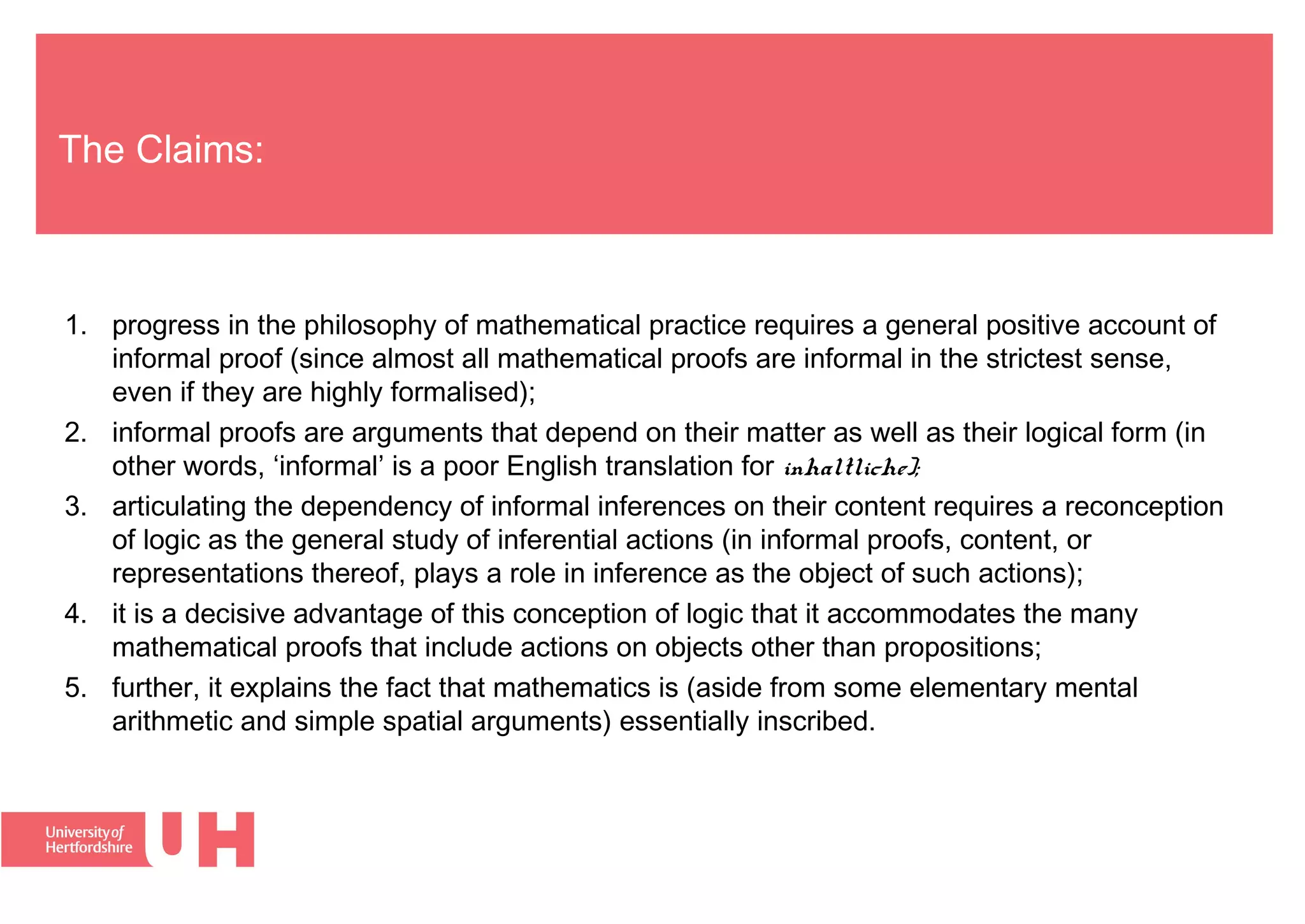
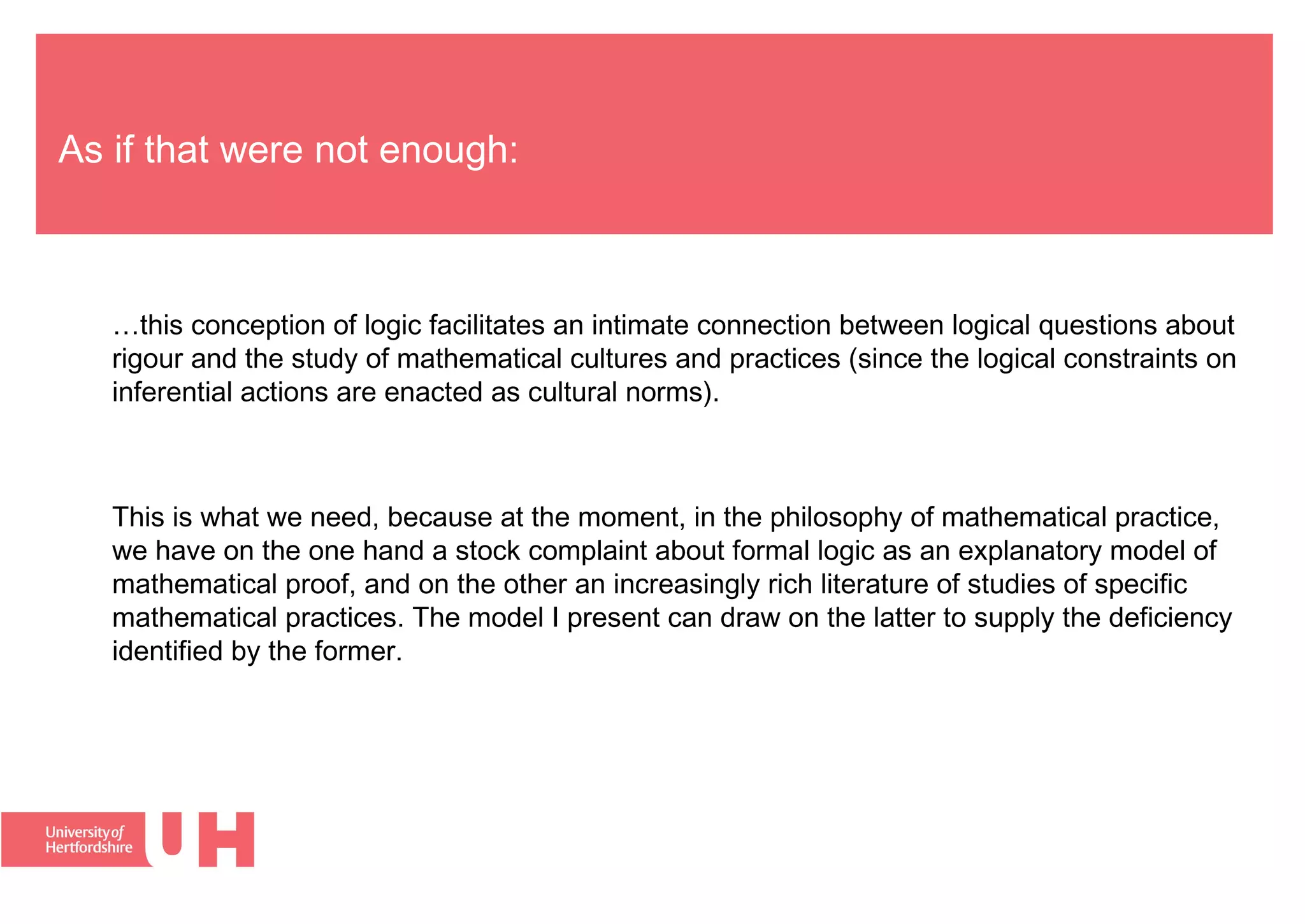
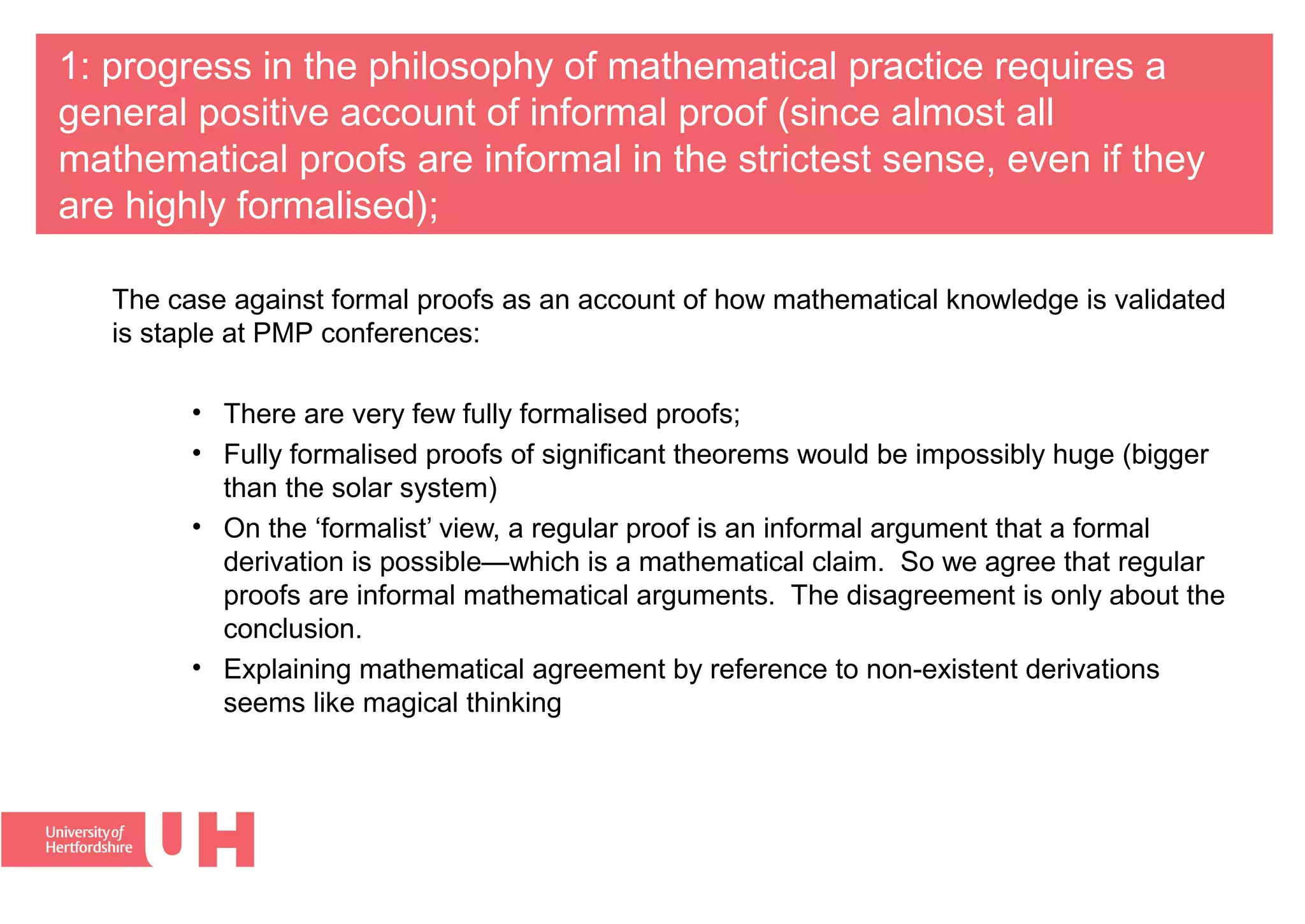
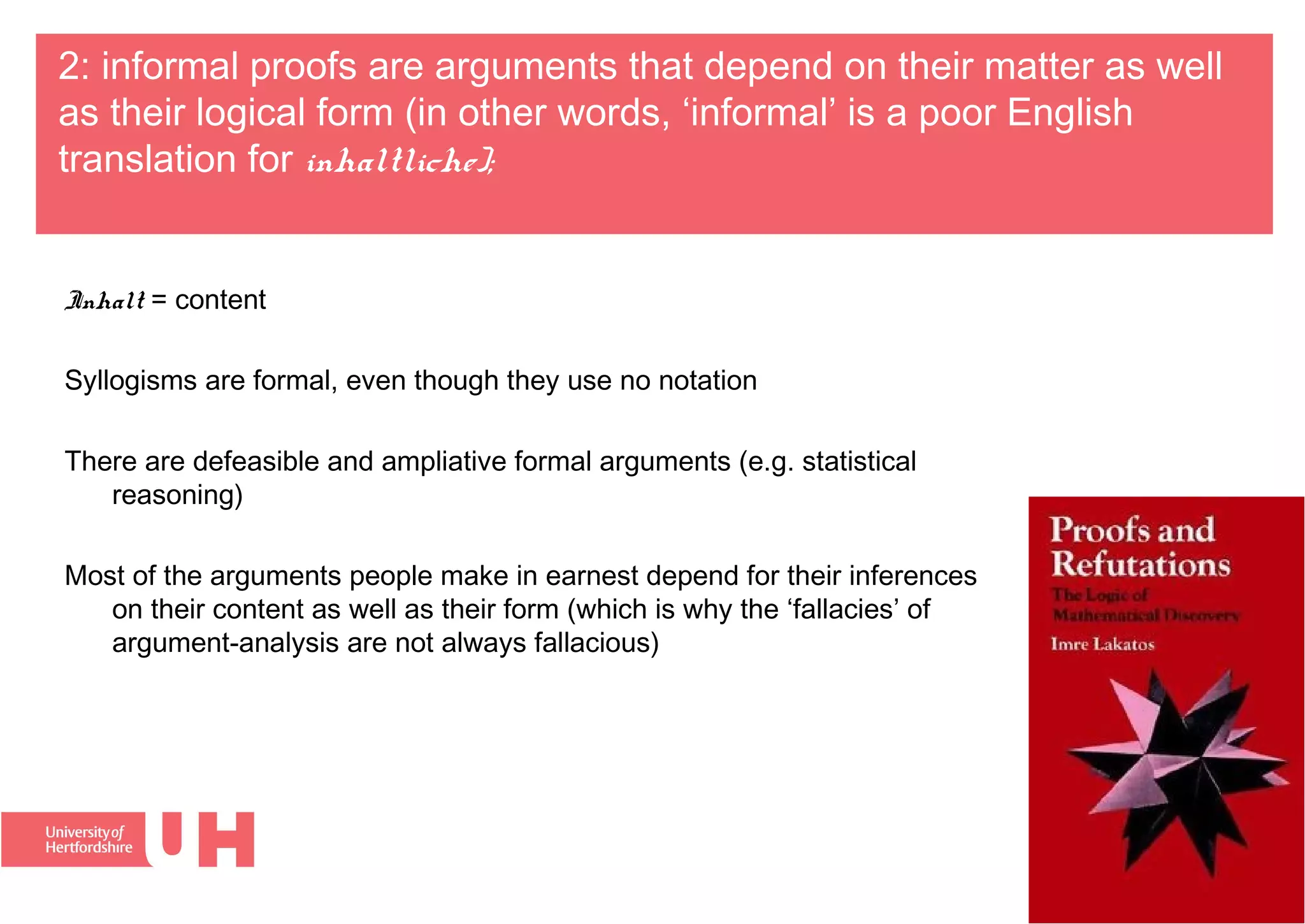
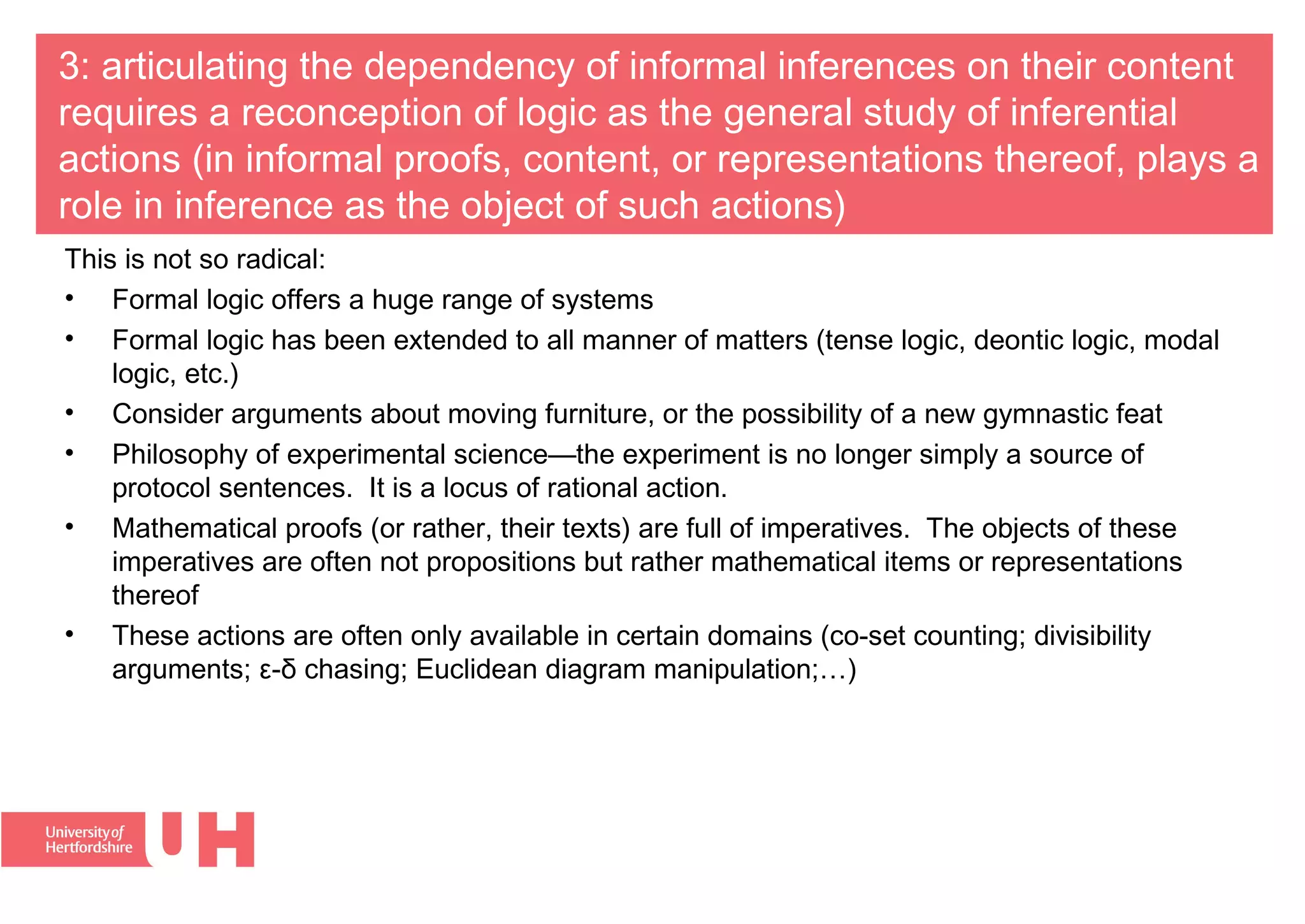
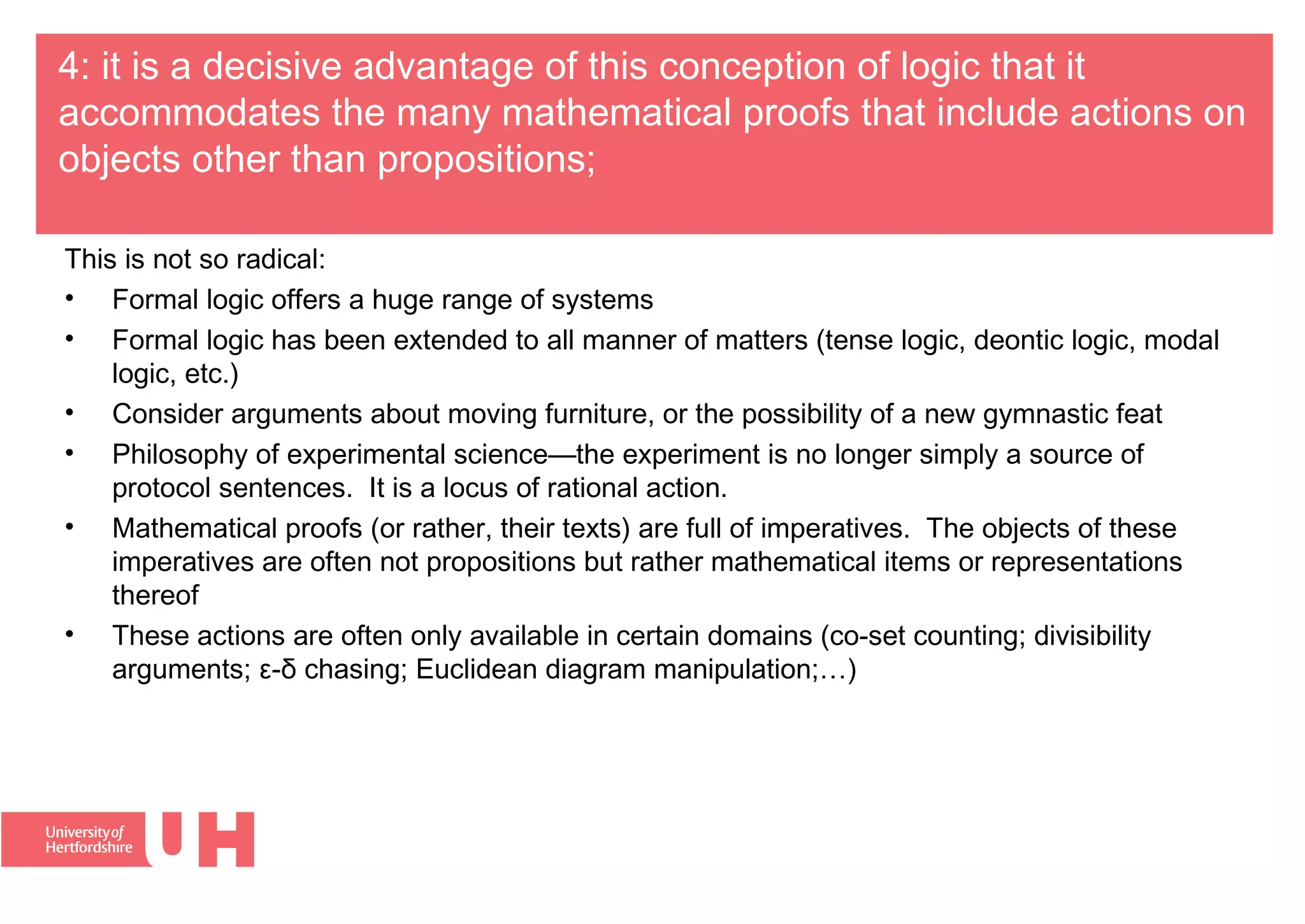
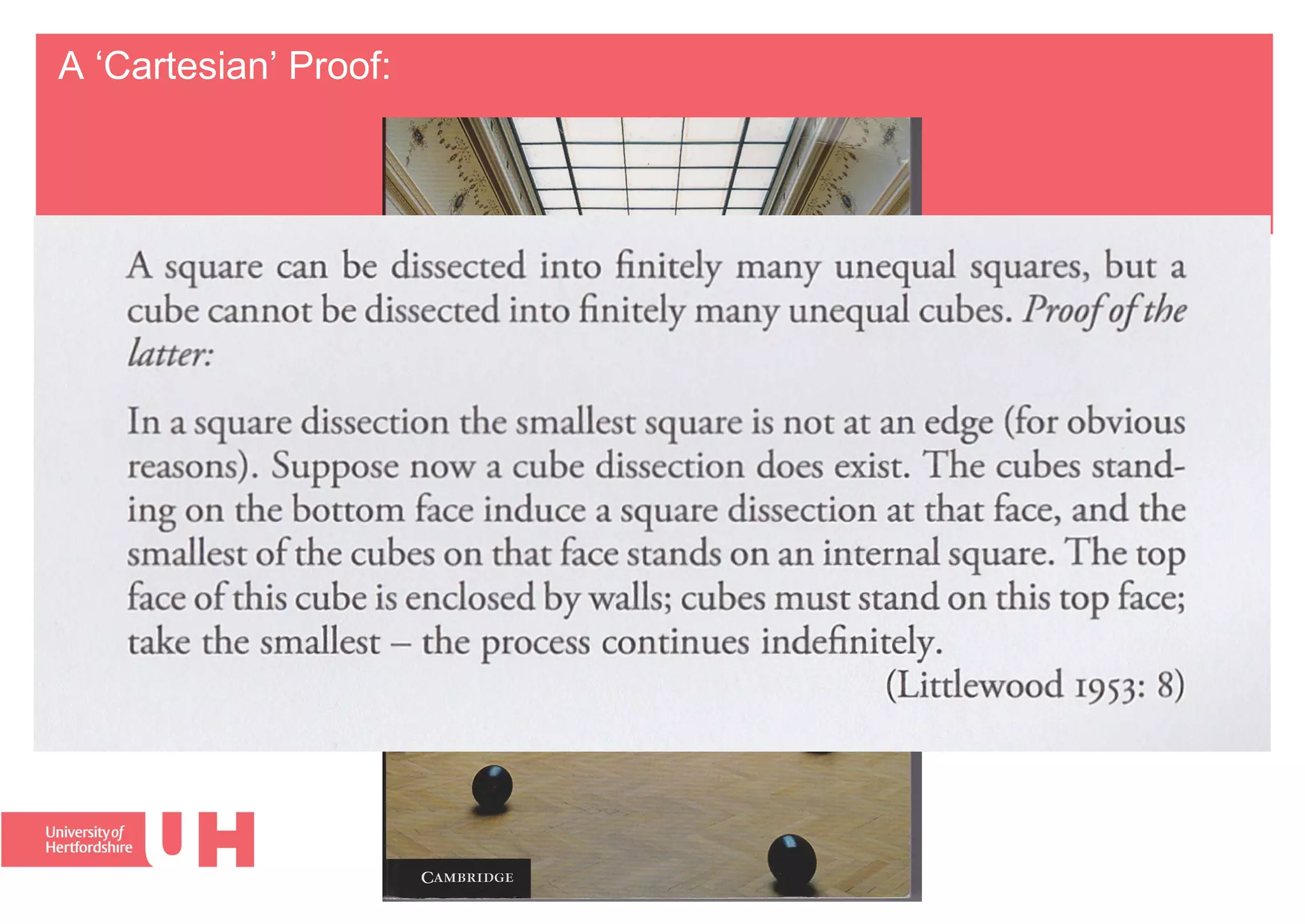
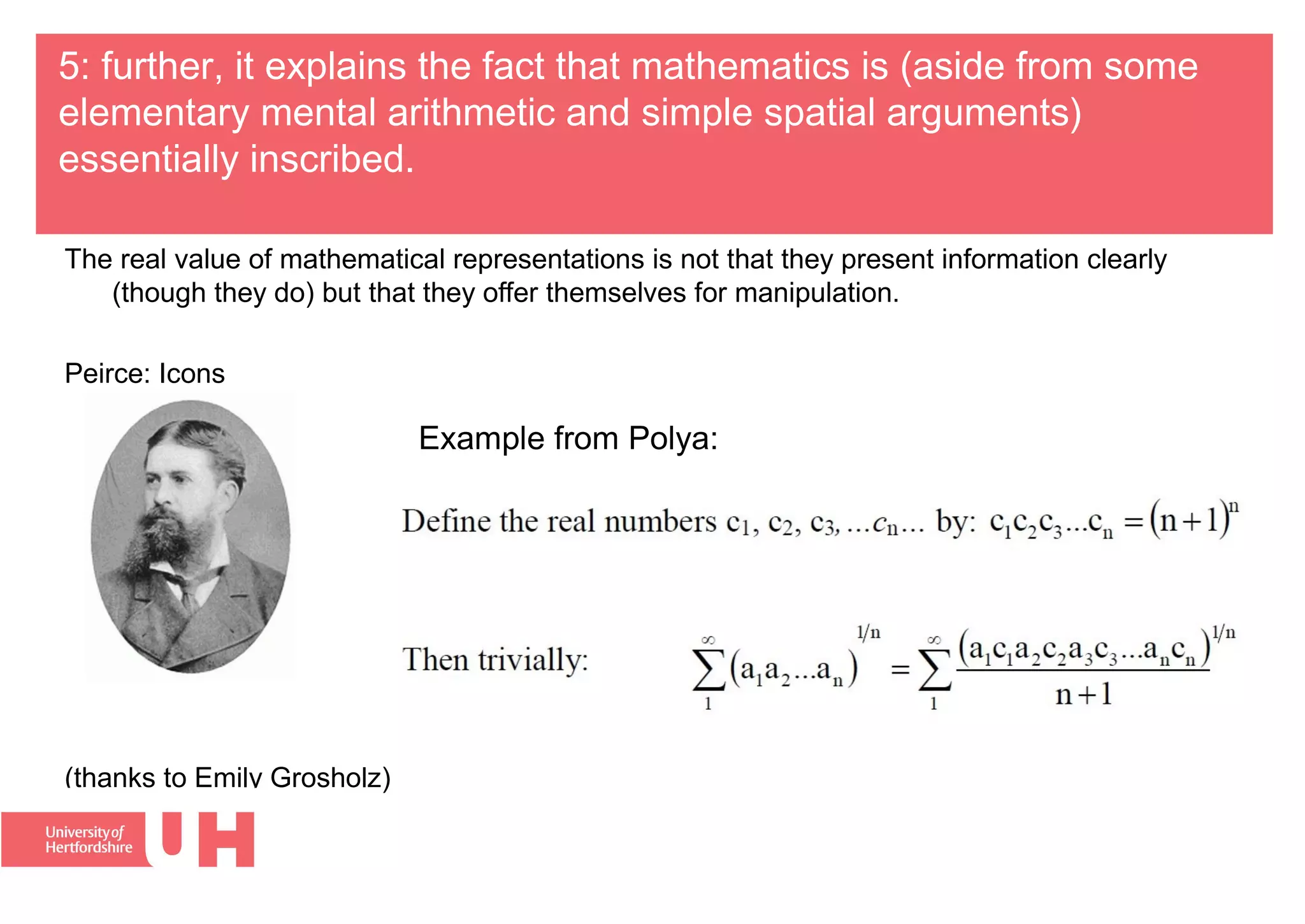
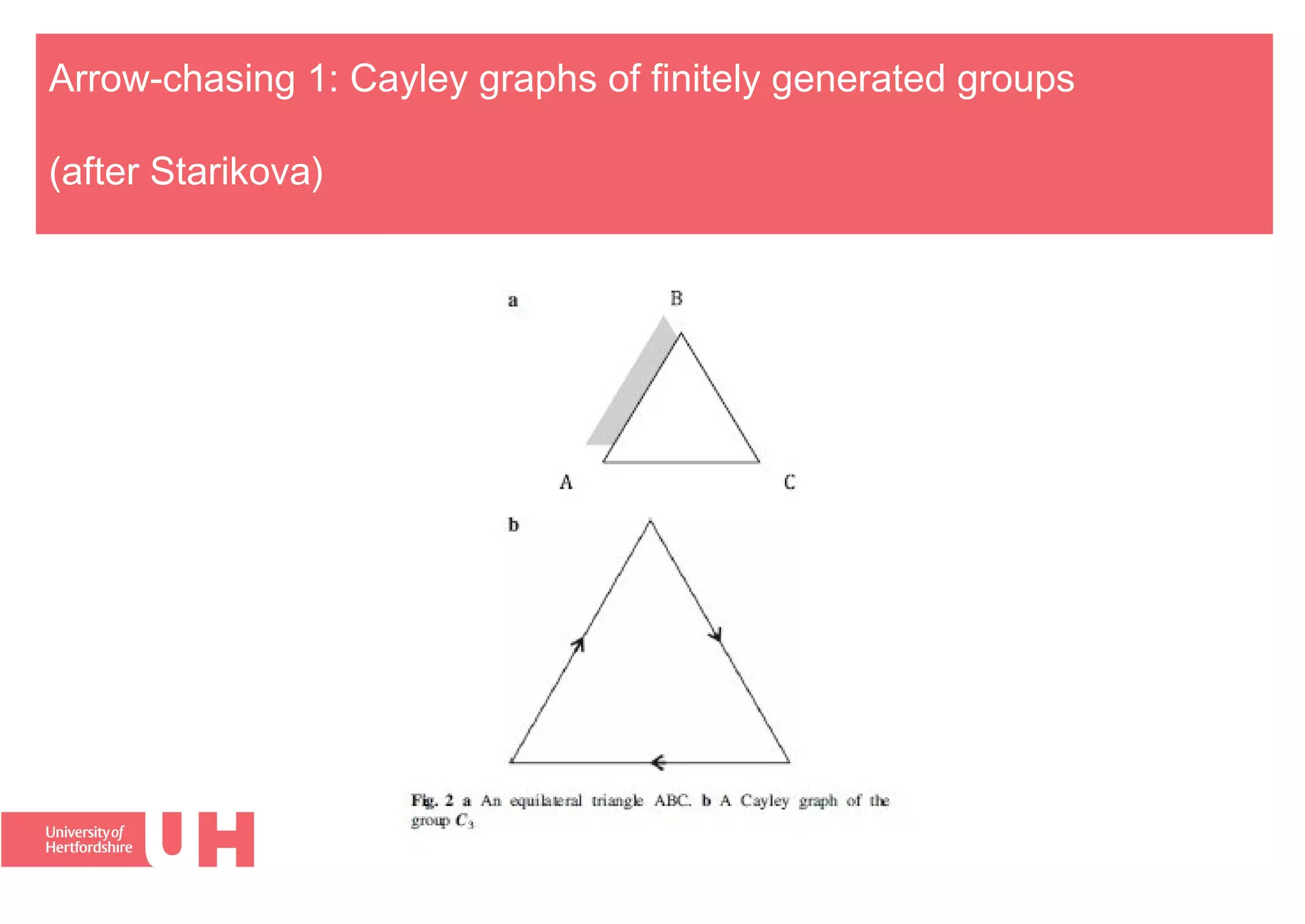
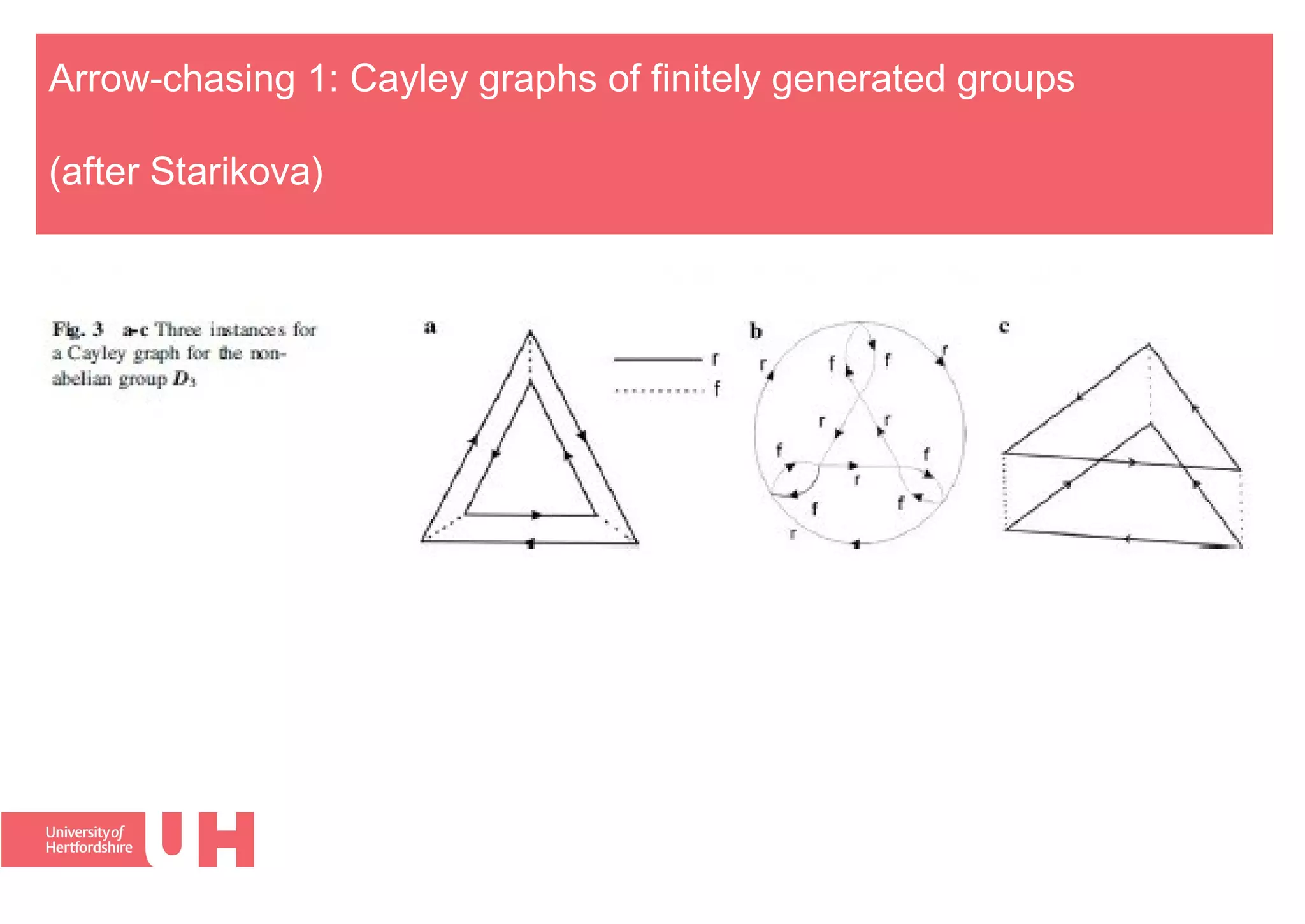
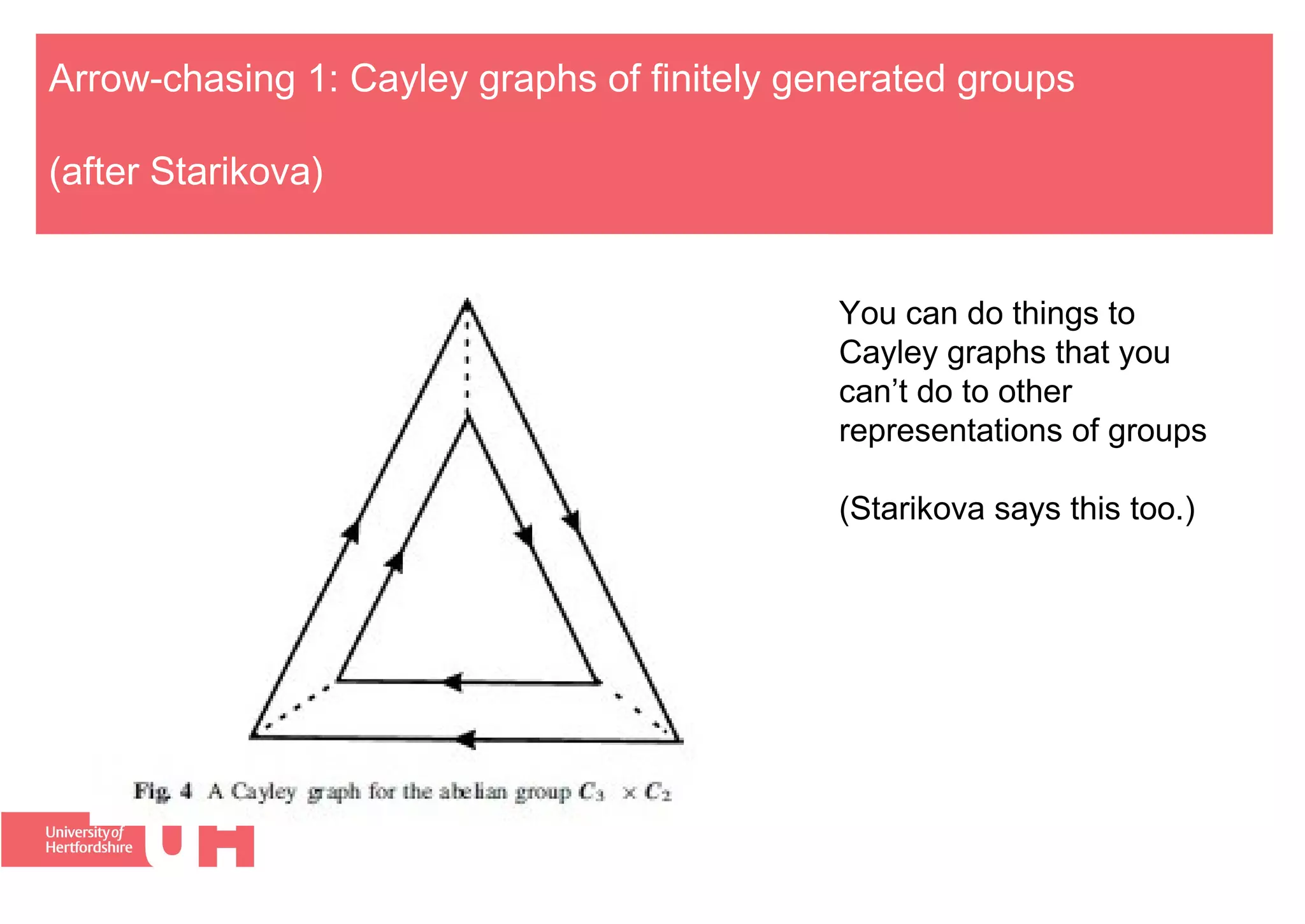
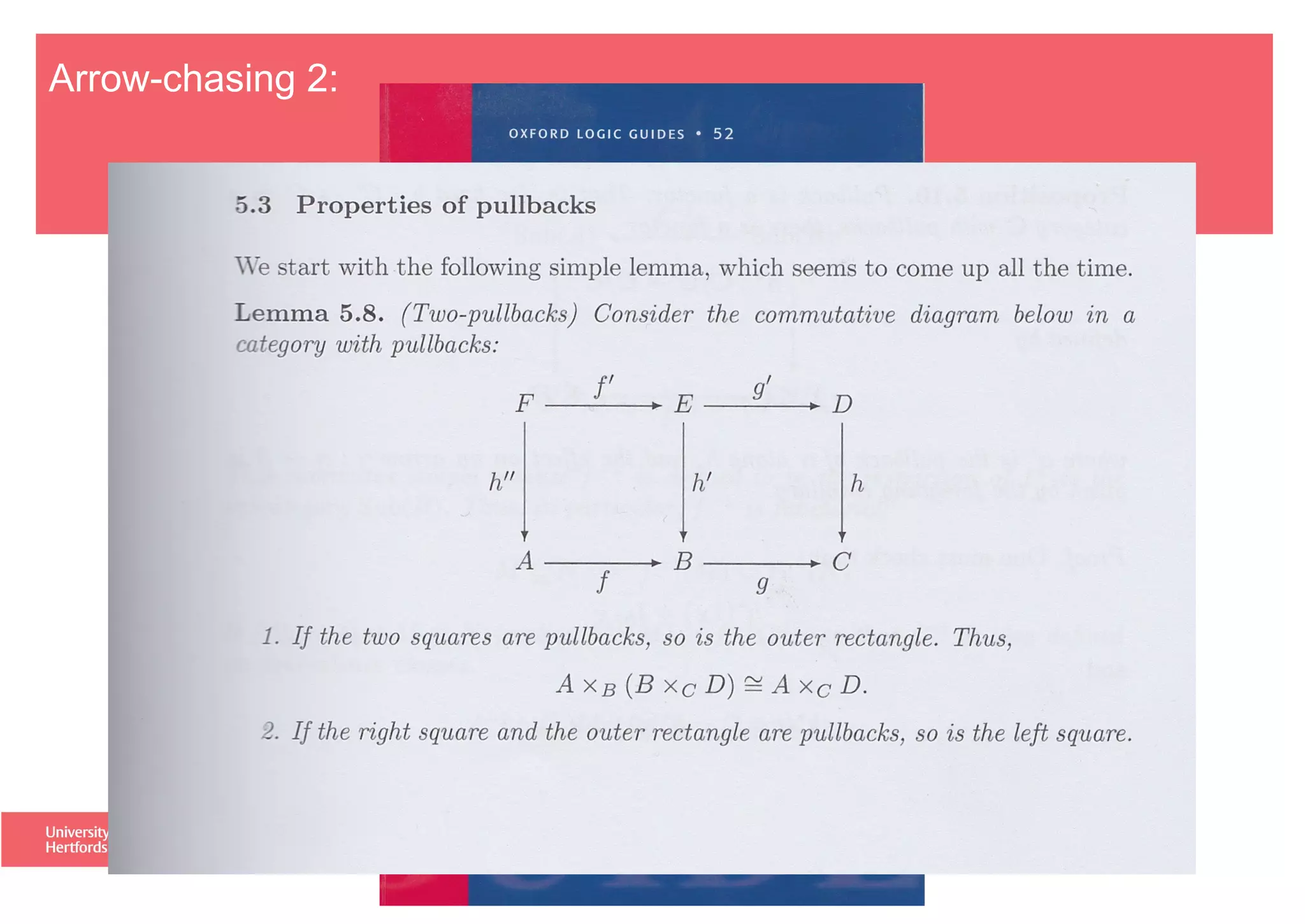
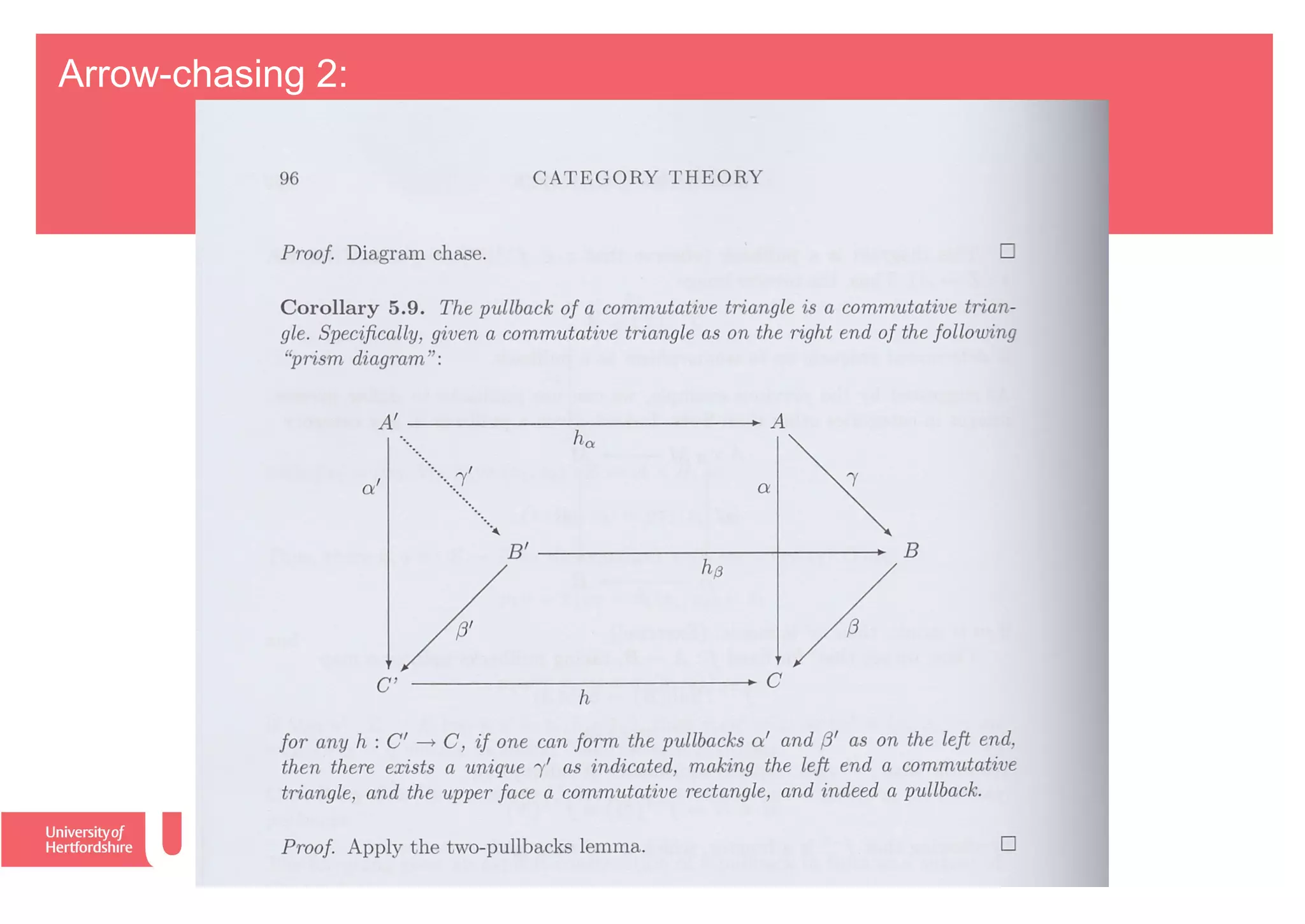
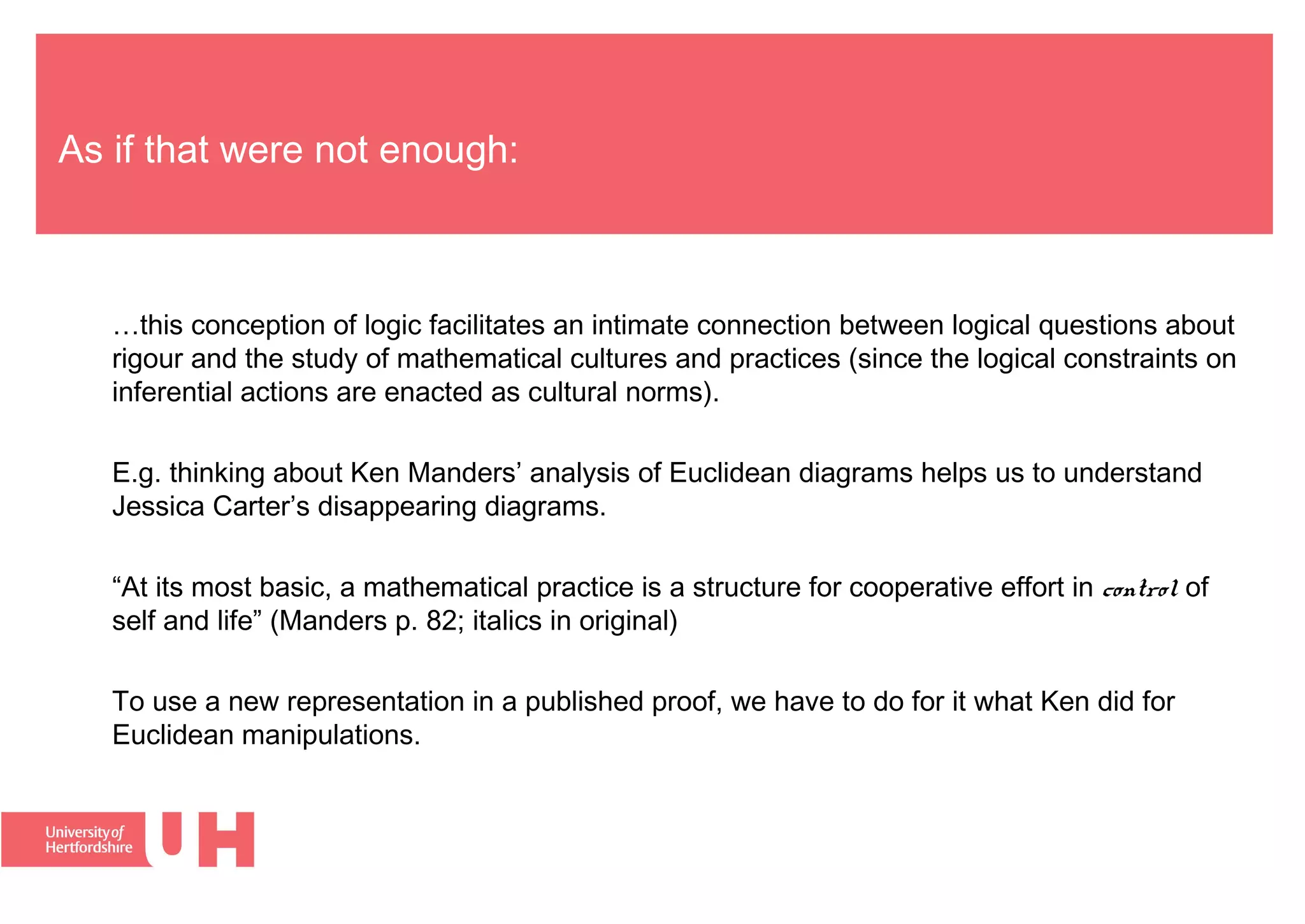

The document discusses the logic of informal proofs in mathematics. It makes 5 key claims: 1) Understanding informal proofs is important because most mathematical proofs are informal. 2) Informal proofs rely on both logical form and content. 3) Properly understanding informal proofs requires seeing logic as the study of inferential actions, where content plays a role. 4) This conception accommodates proofs involving actions on objects other than propositions. 5) It explains why mathematics relies on external representations, since representations can be manipulated. The document argues this view connects logical questions about rigor to the cultural study of mathematical practices.


![[Slfm 118] theory of relations roland fraisse (nh 1986)(t)](https://cdn.slidesharecdn.com/ss_thumbnails/slfm118theoryofrelations-rolandfraissenh1986t-140808170208-phpapp01-thumbnail.jpg?width=640&height=640&fit=bounds)


