Downloaded 77 times
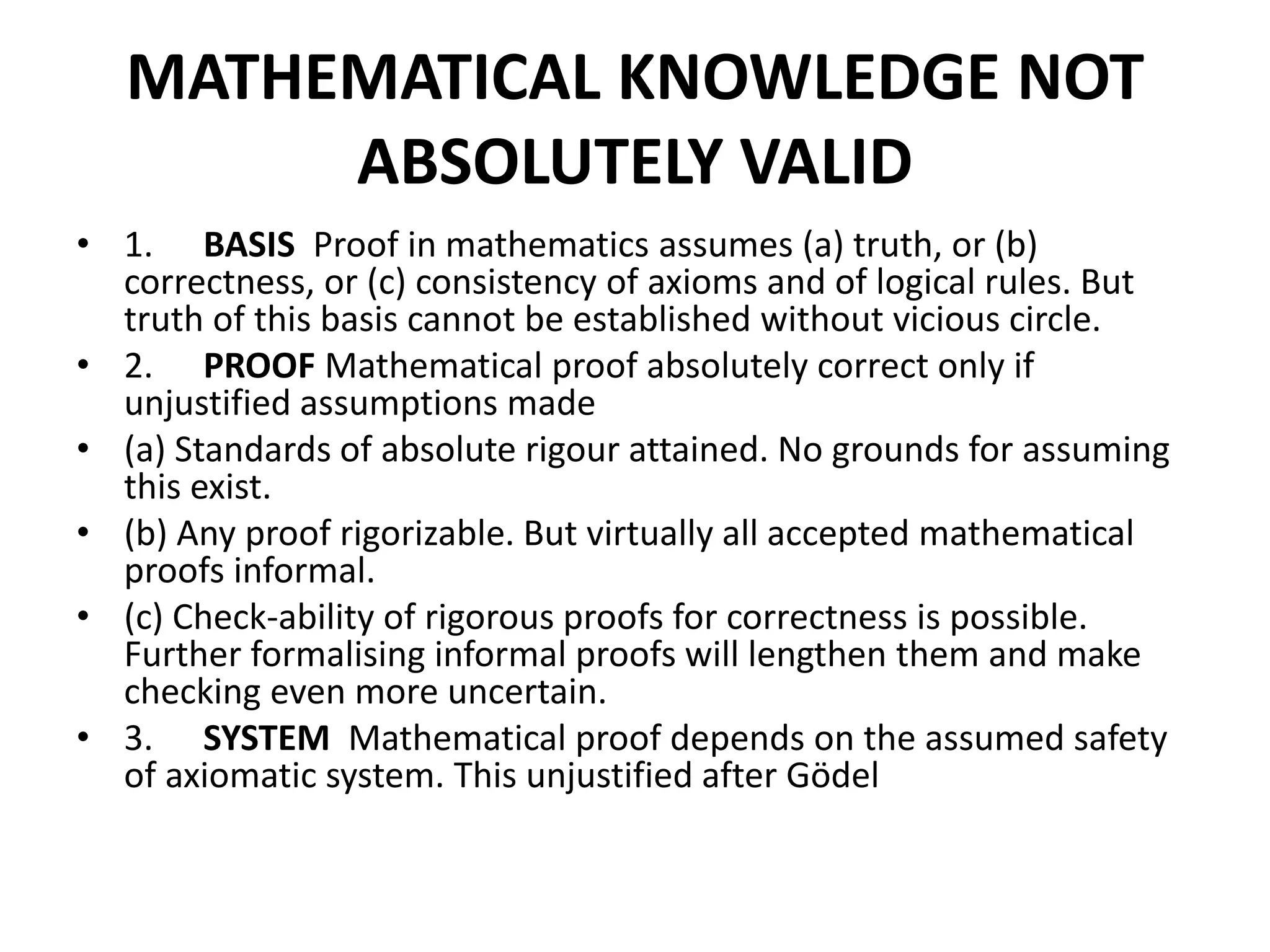
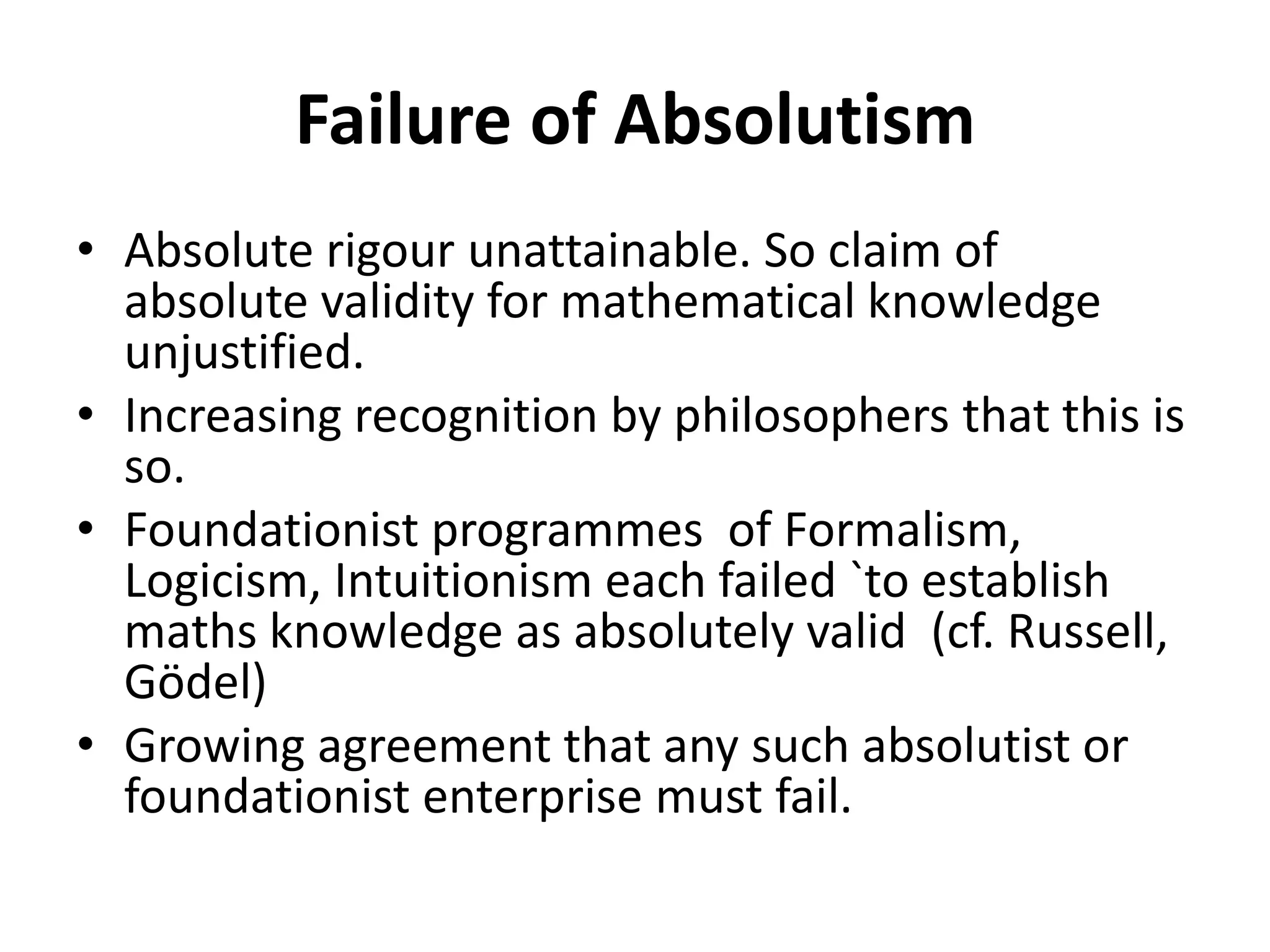
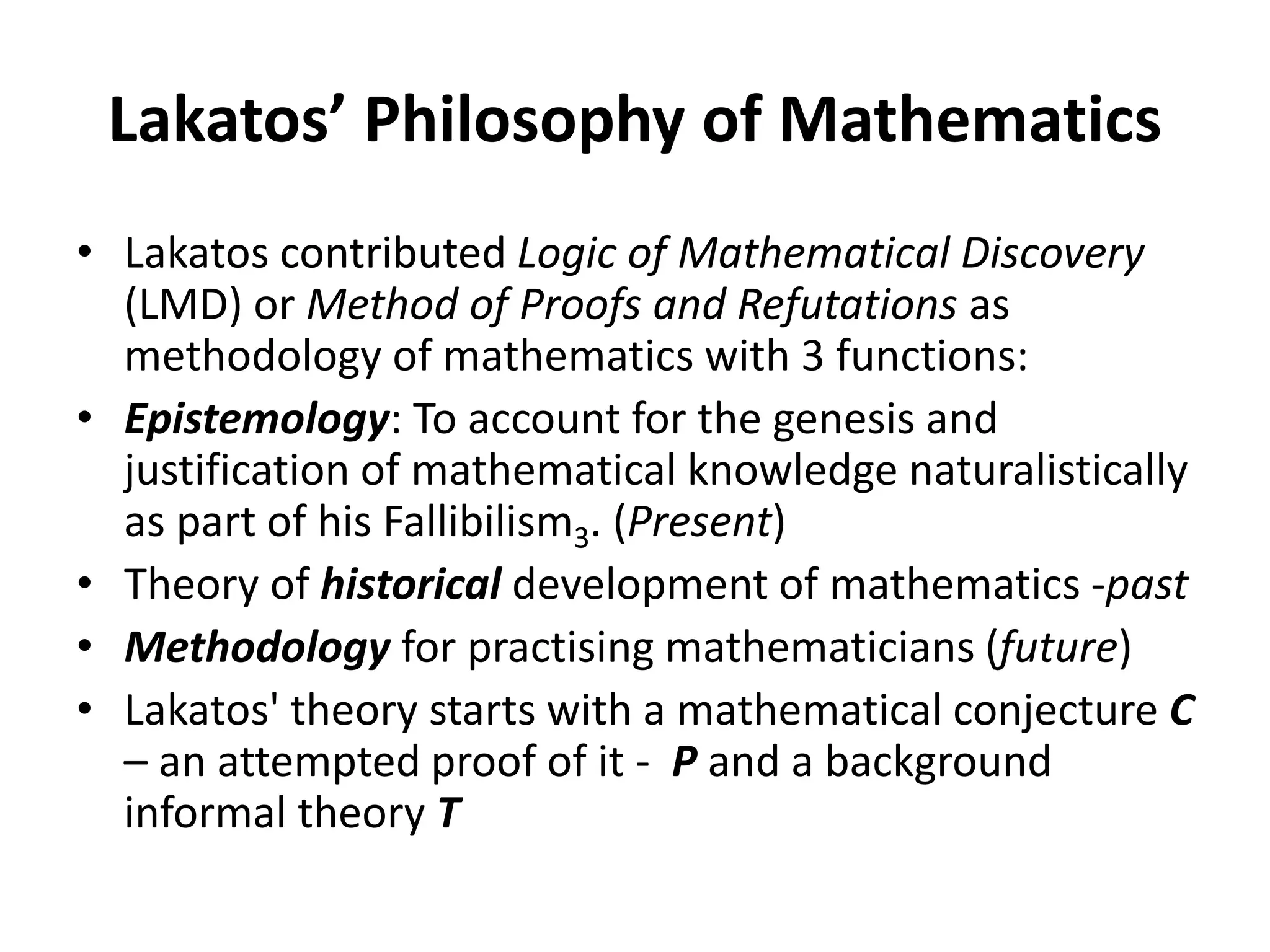
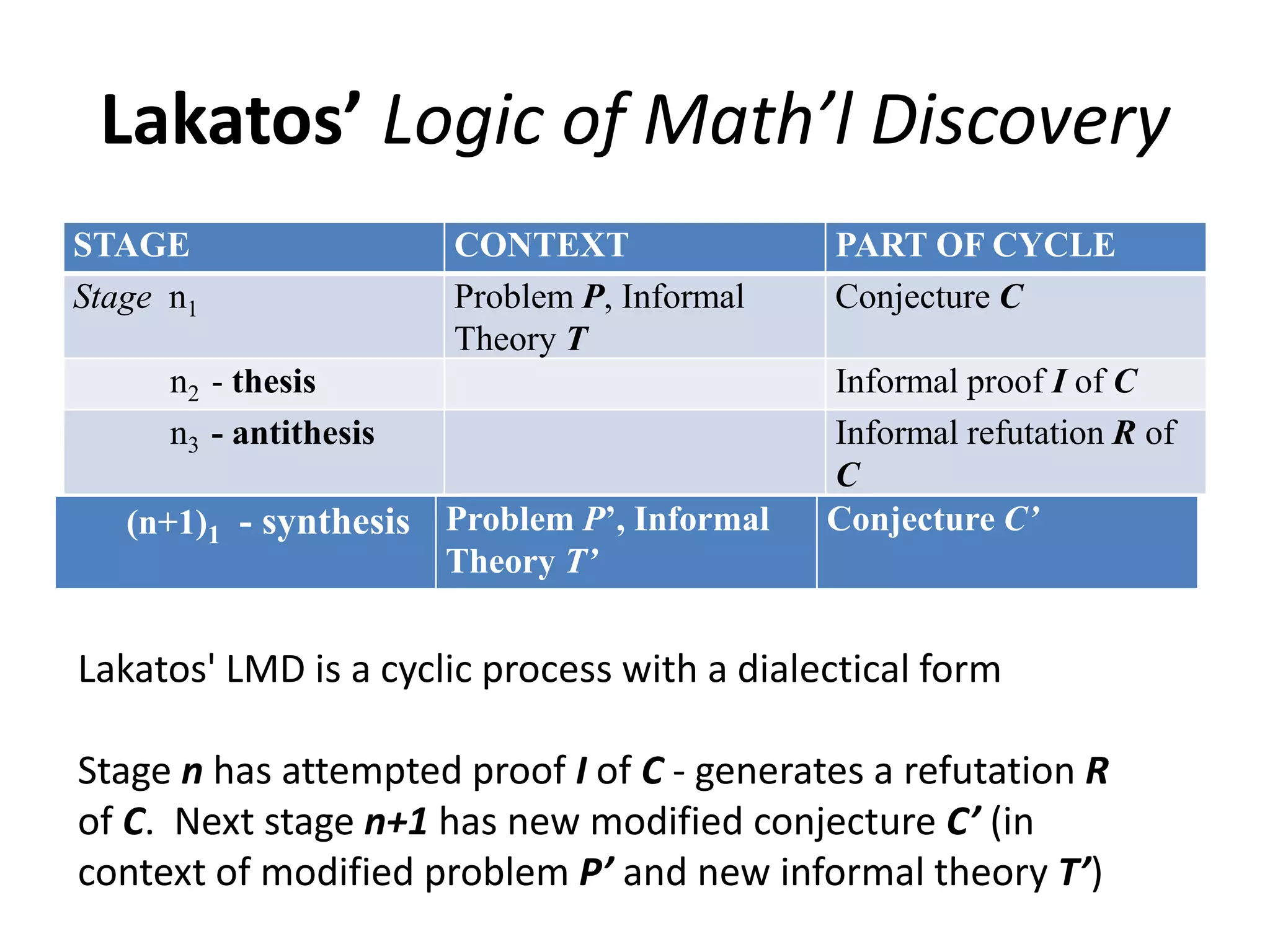
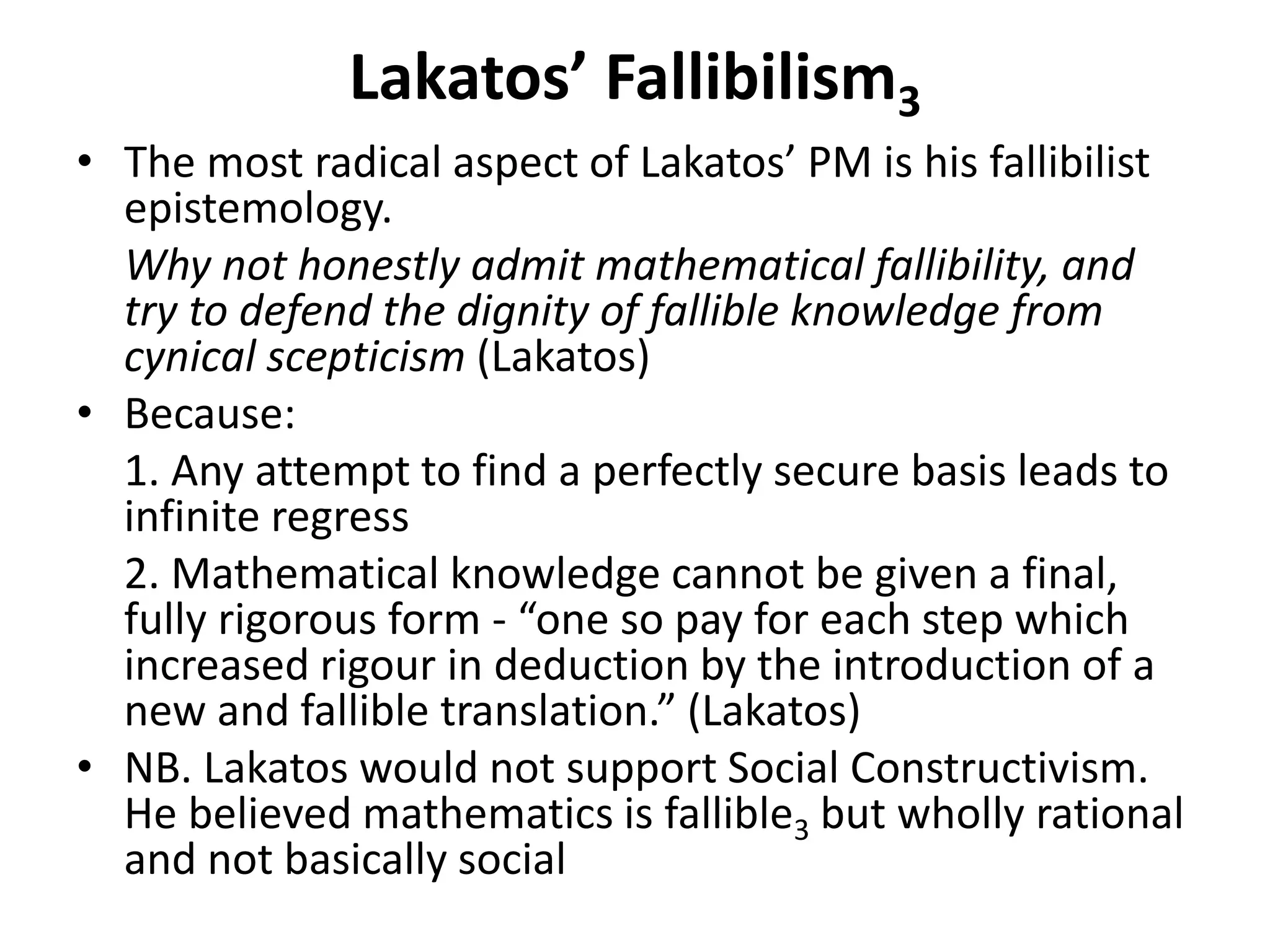
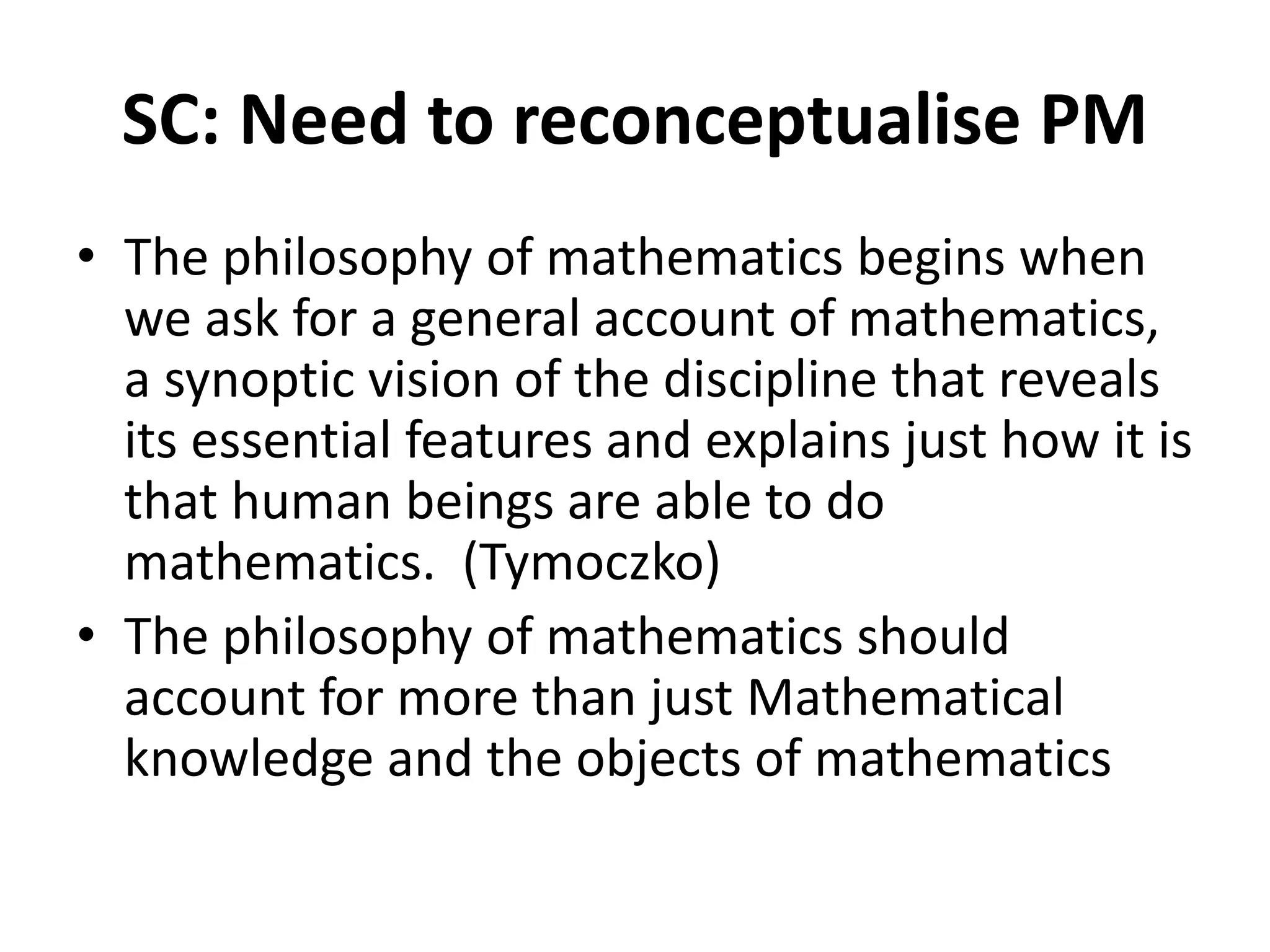
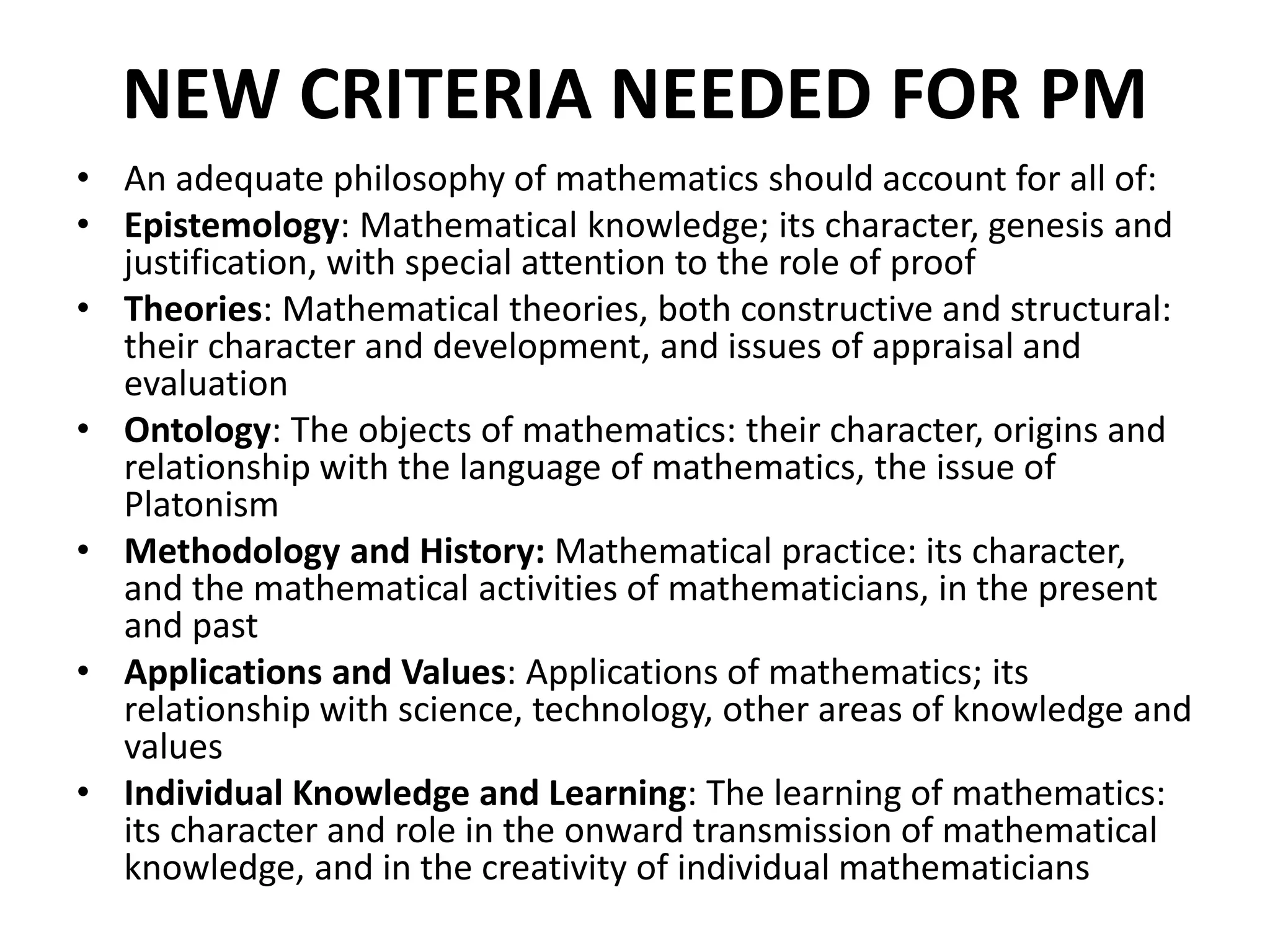
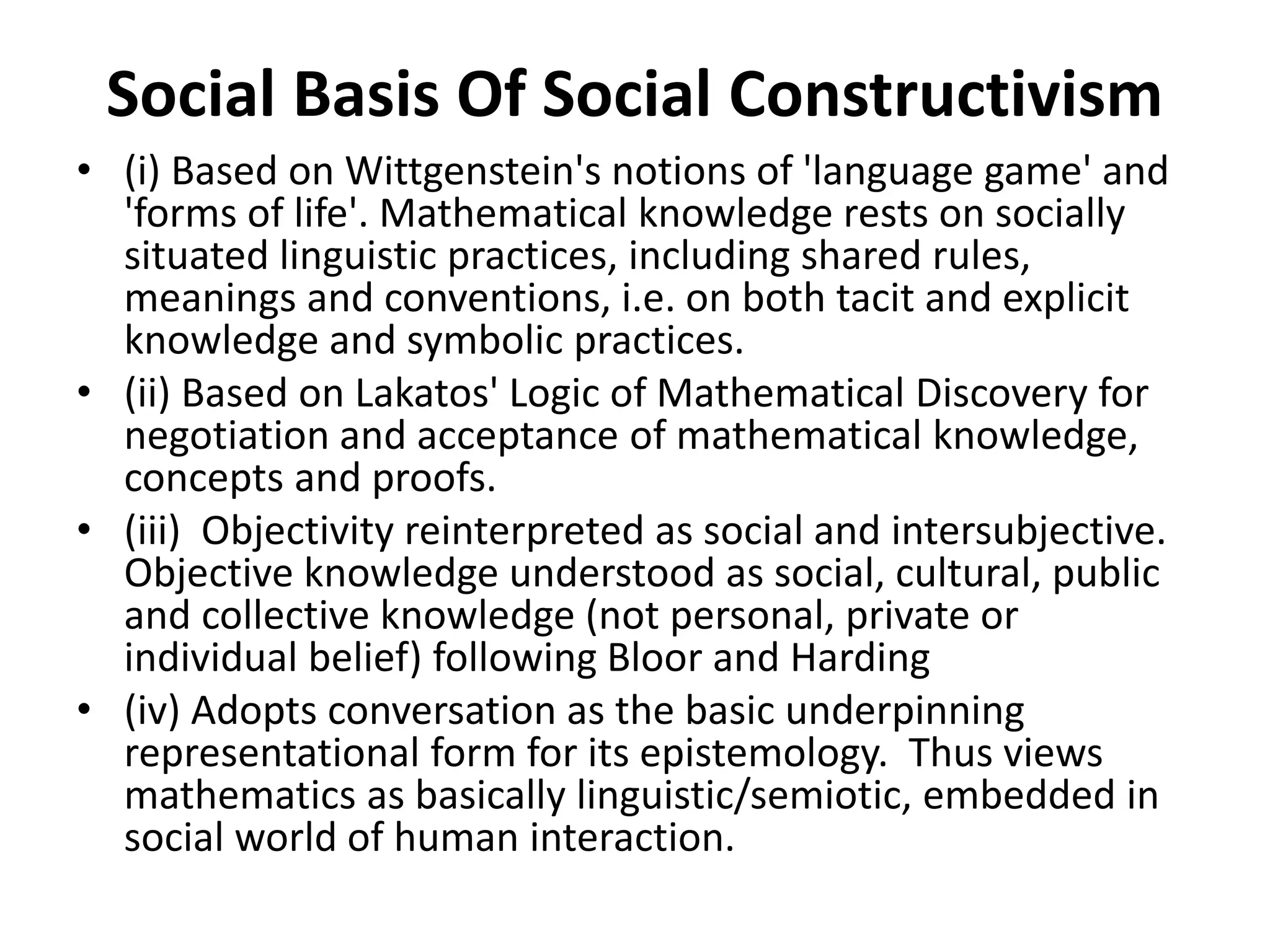
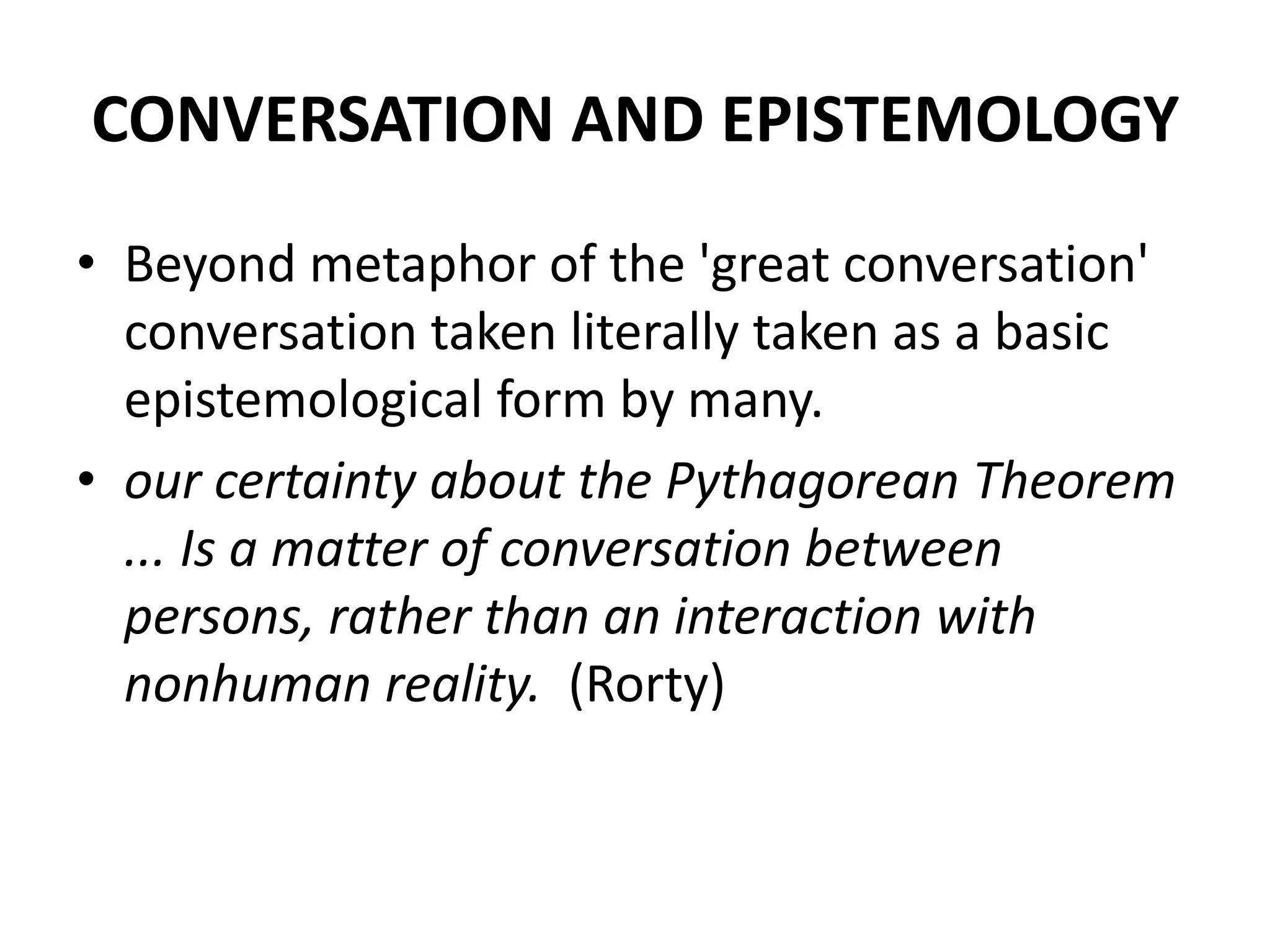
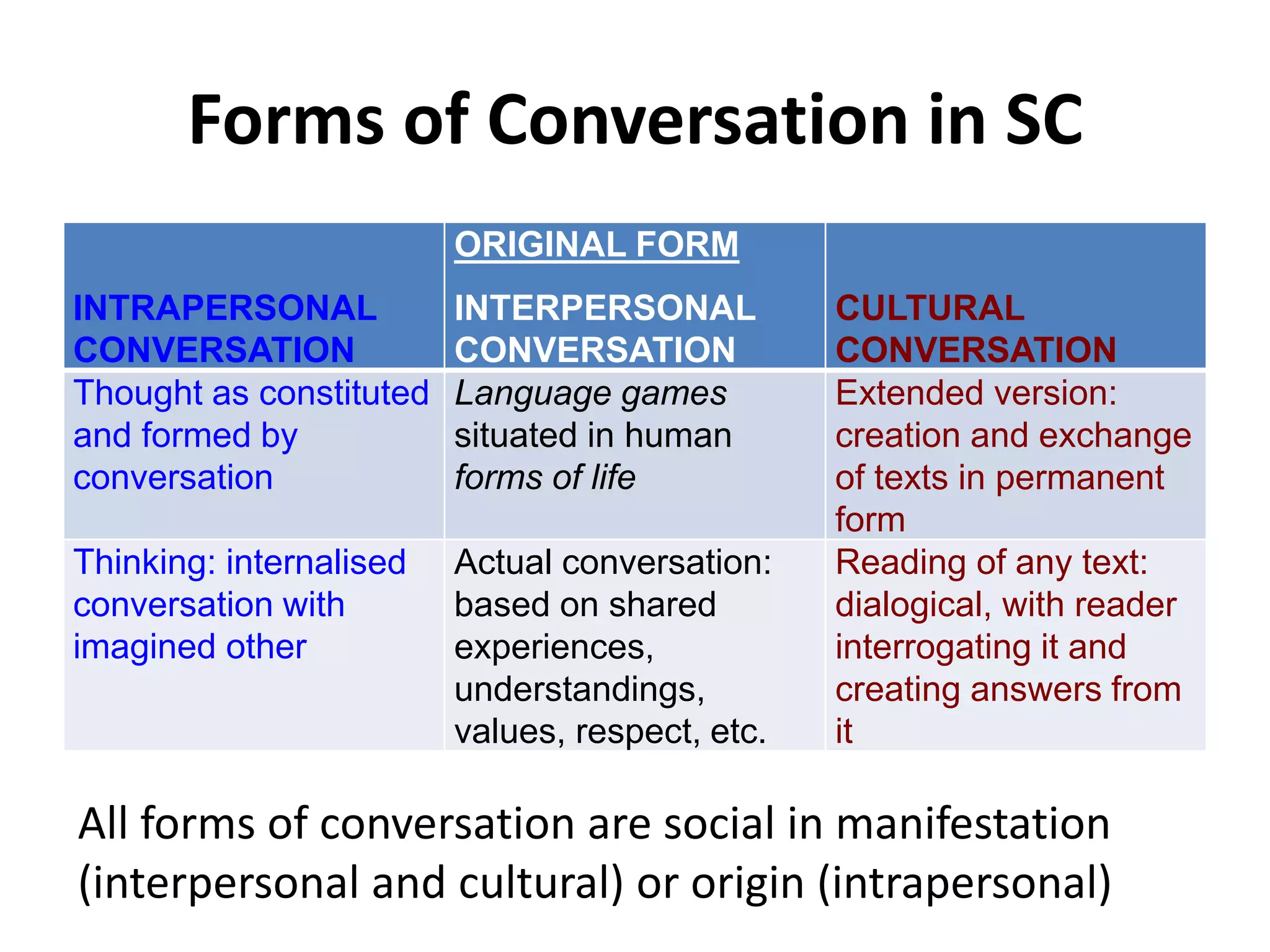
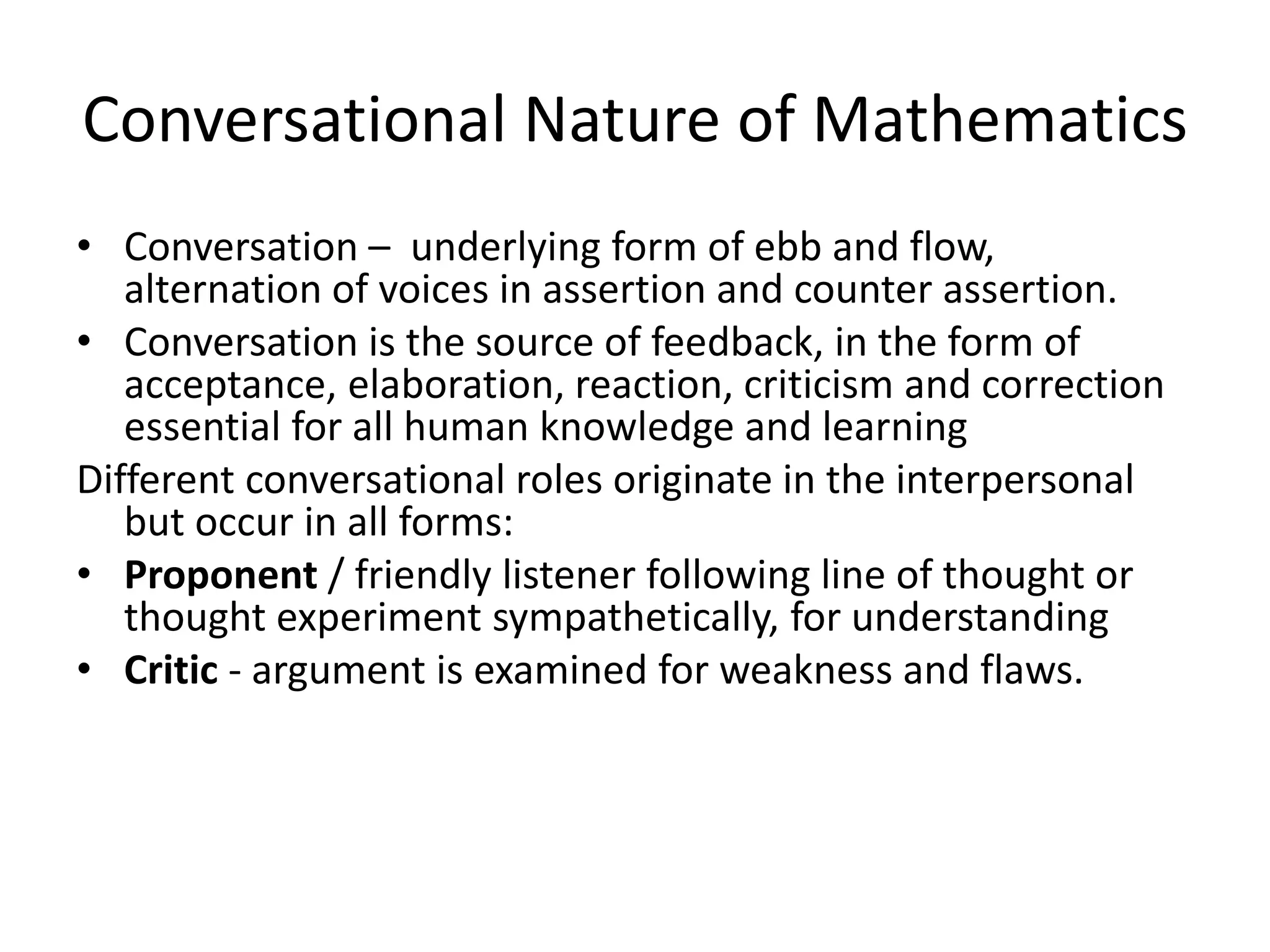
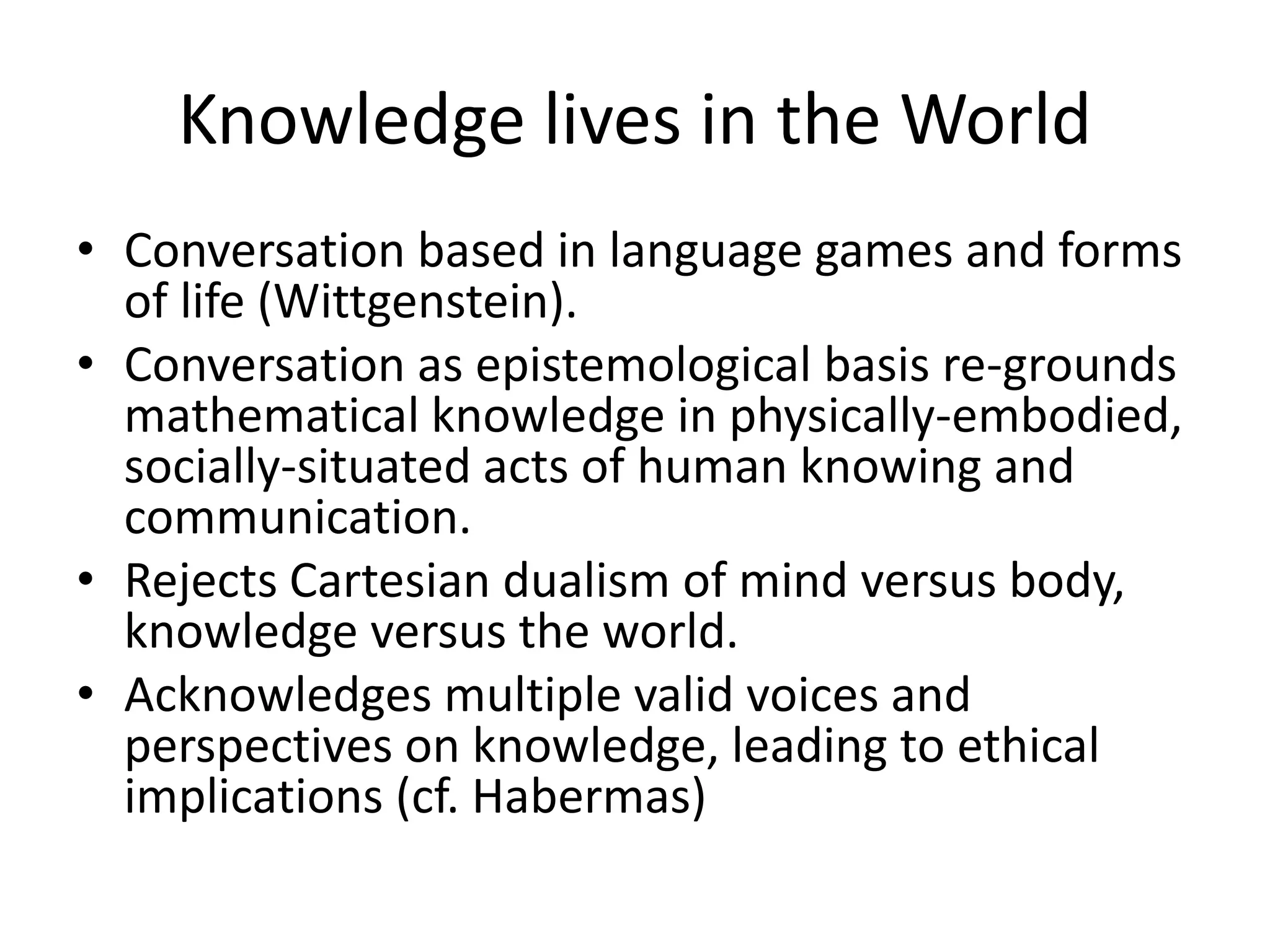
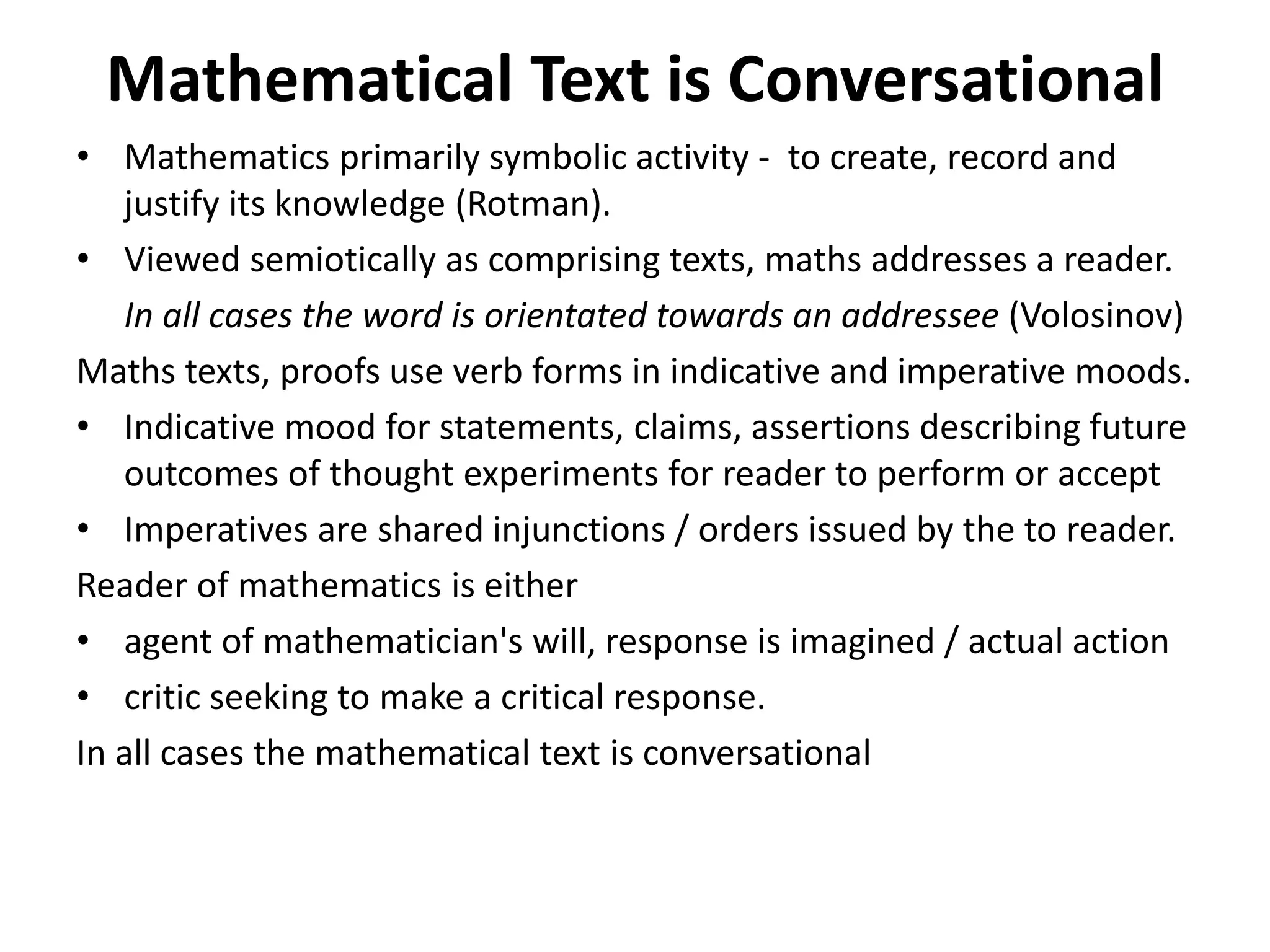
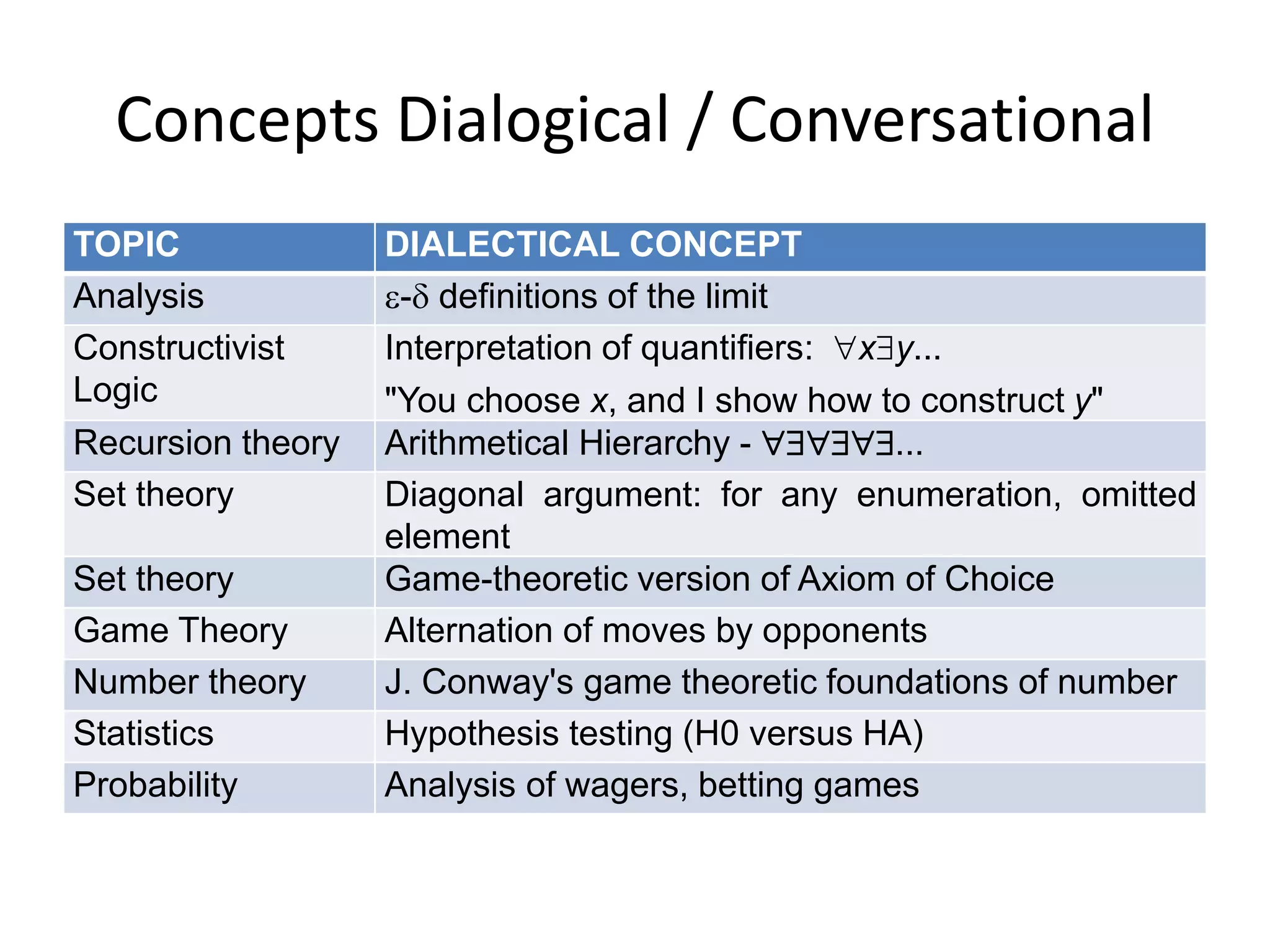
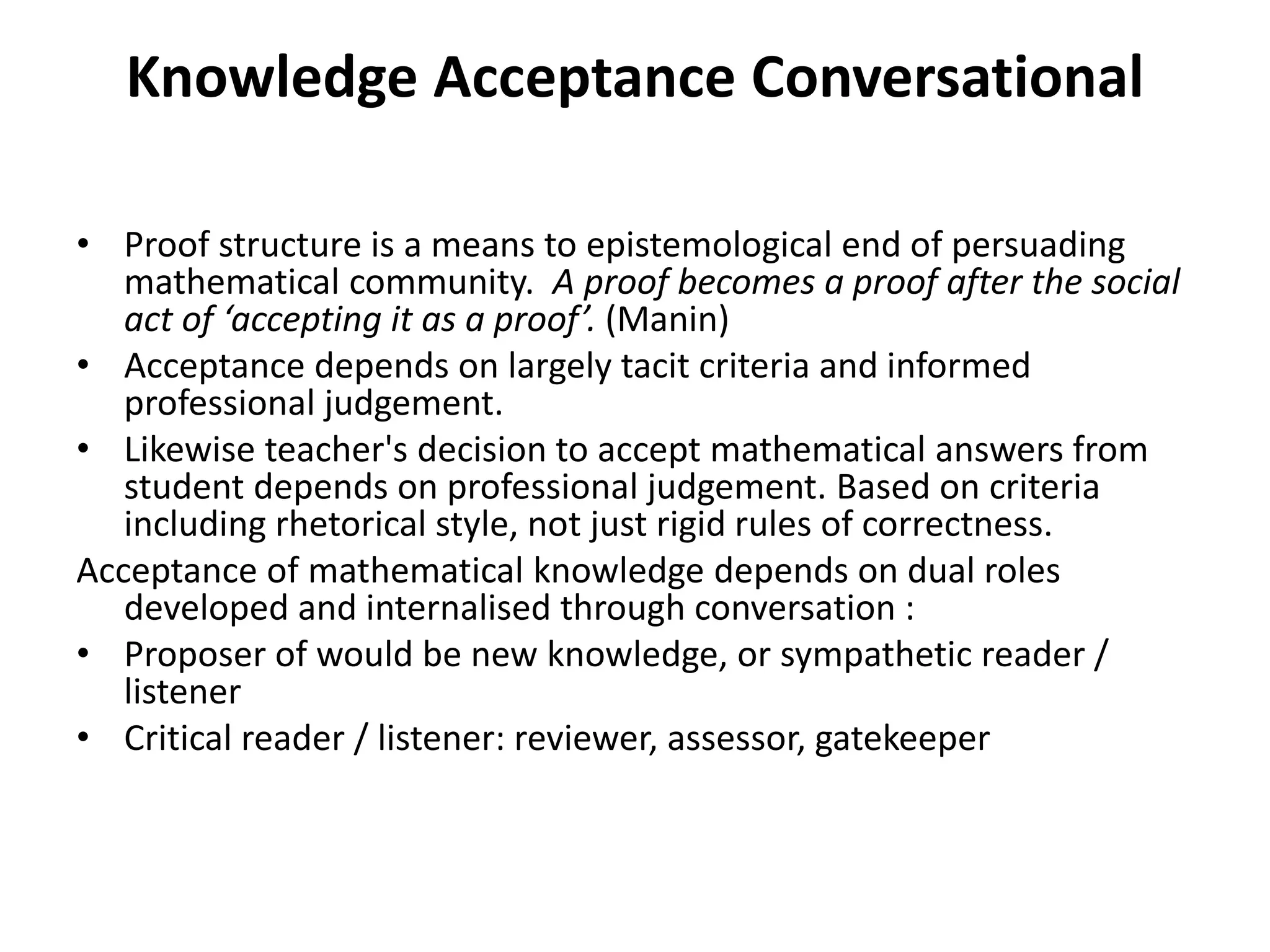
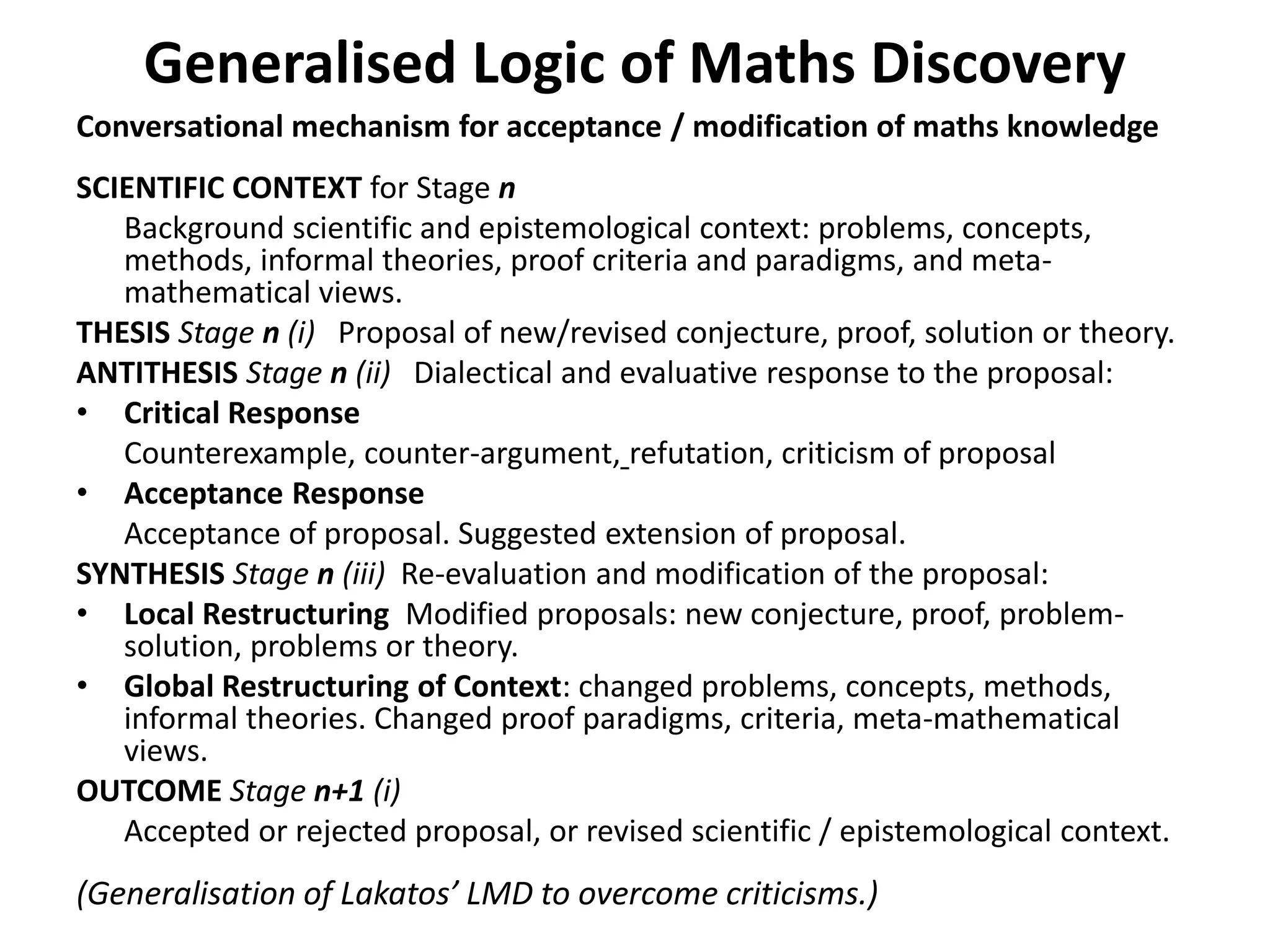
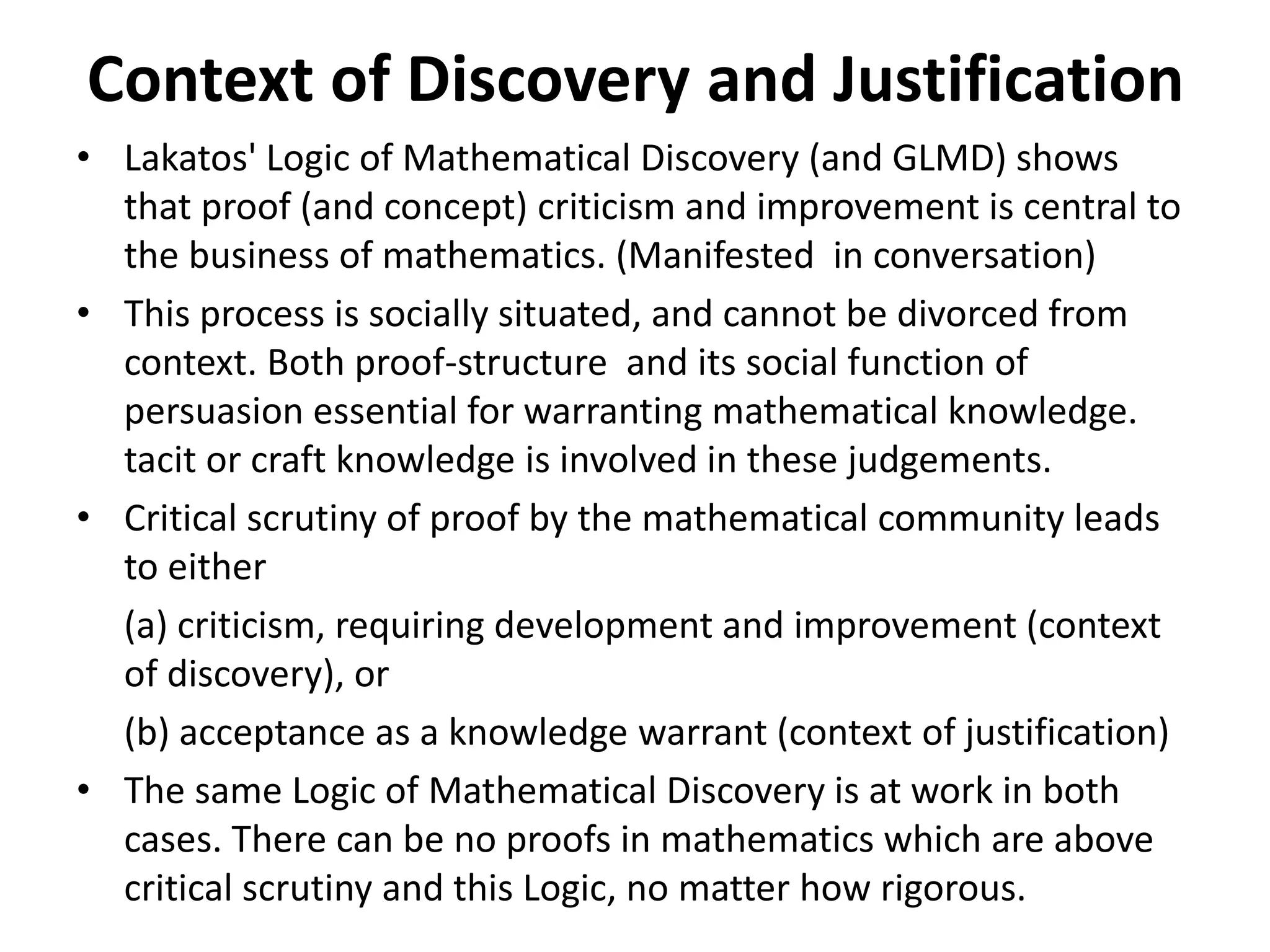
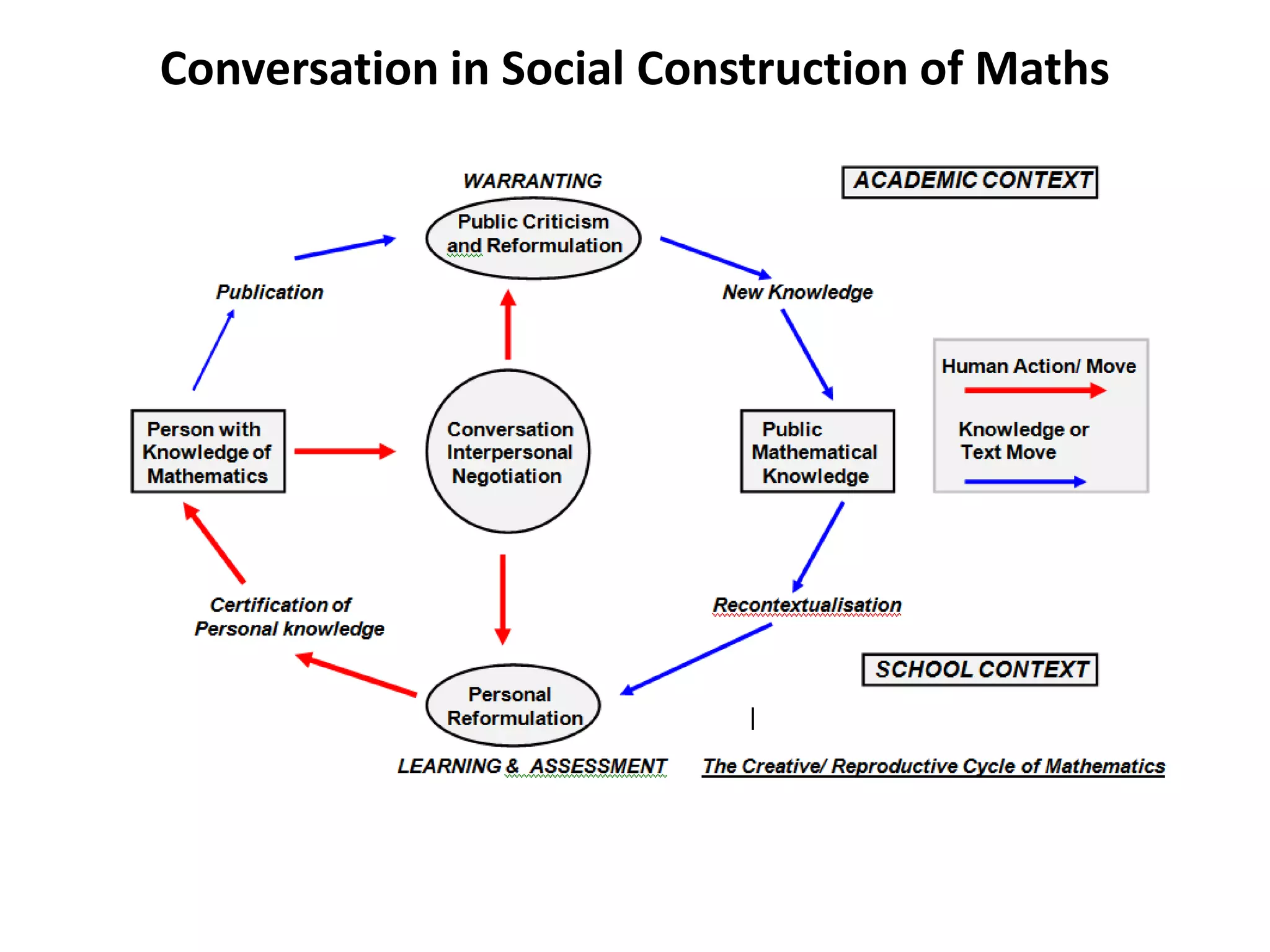
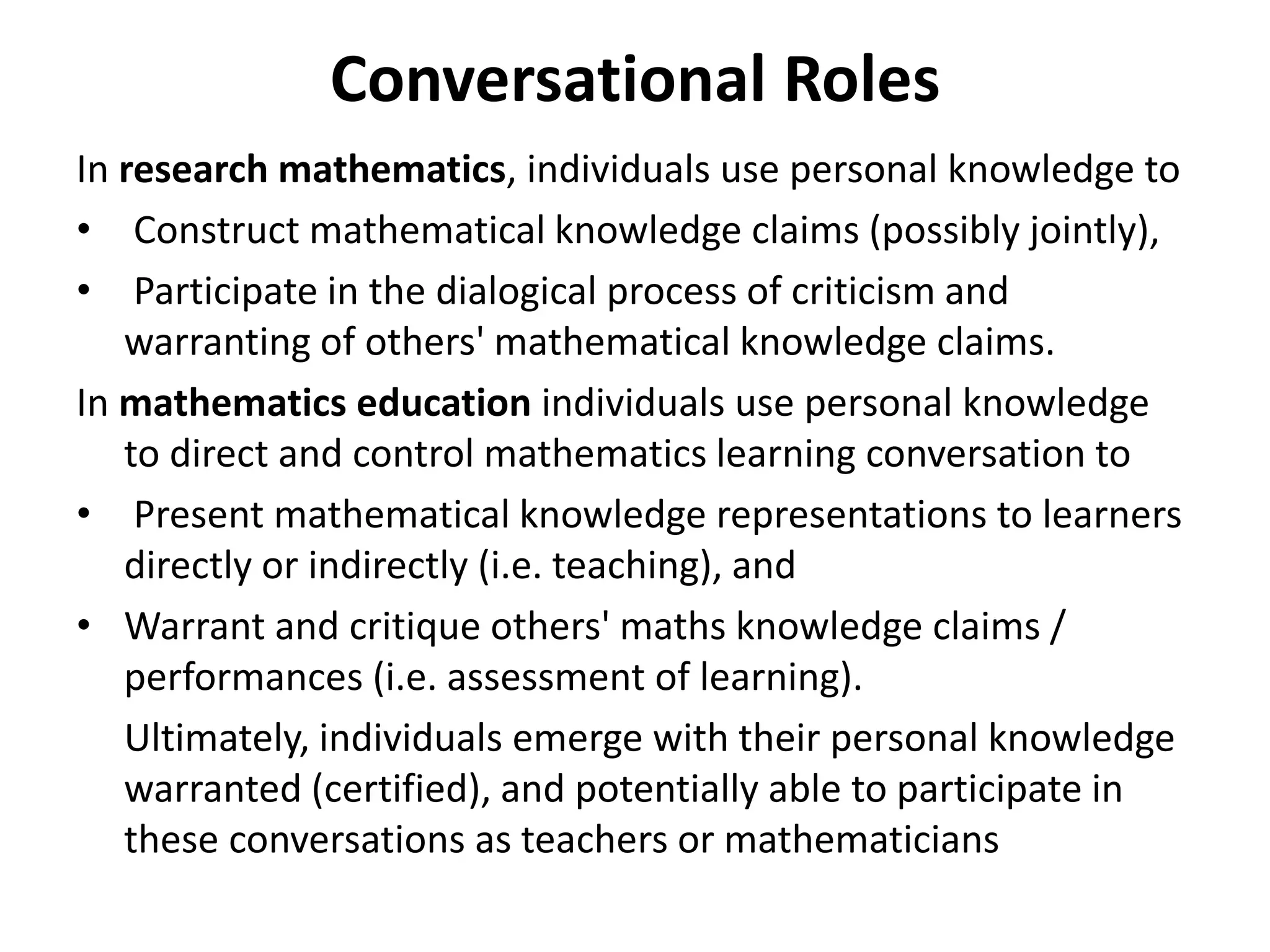
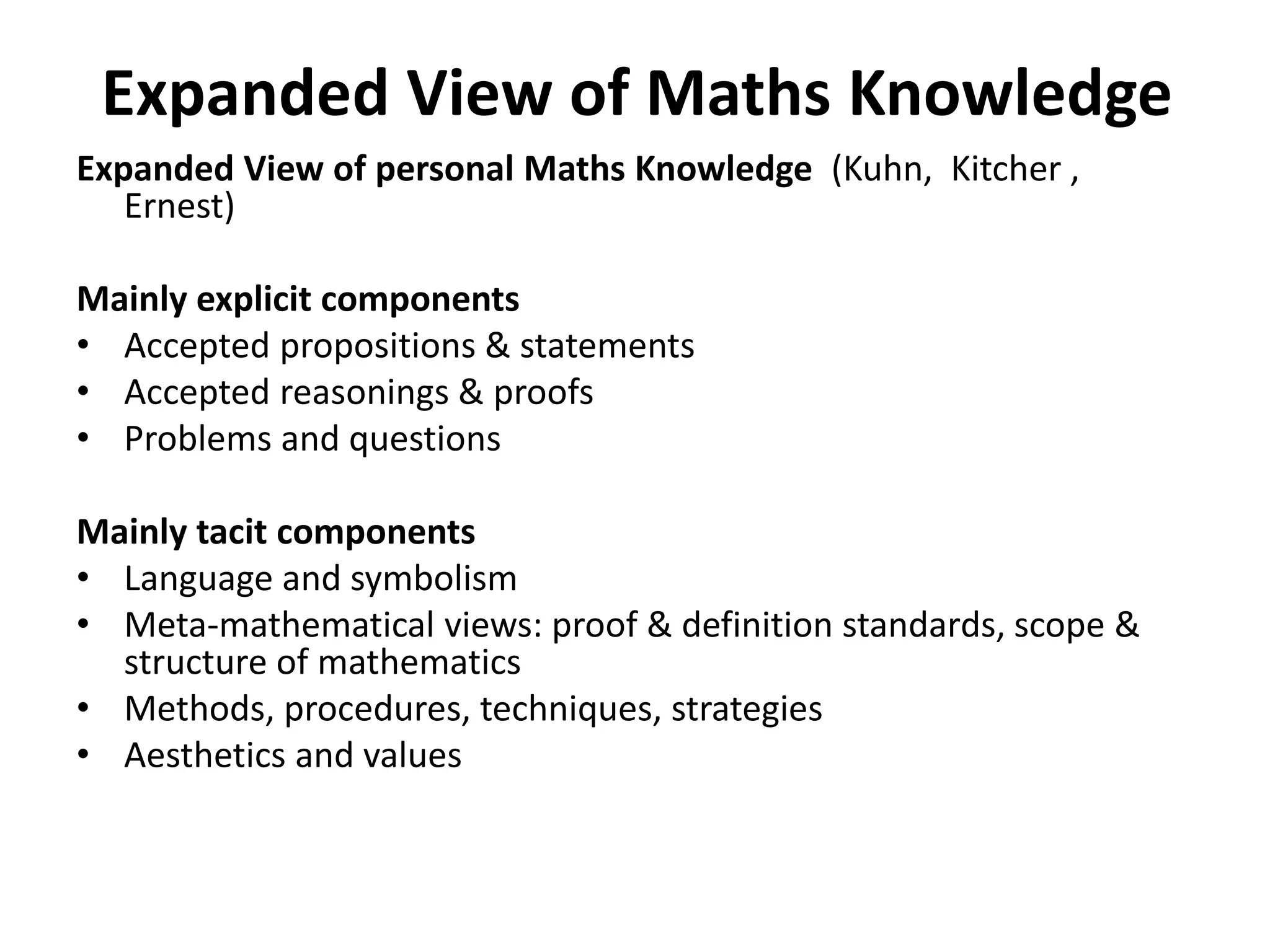
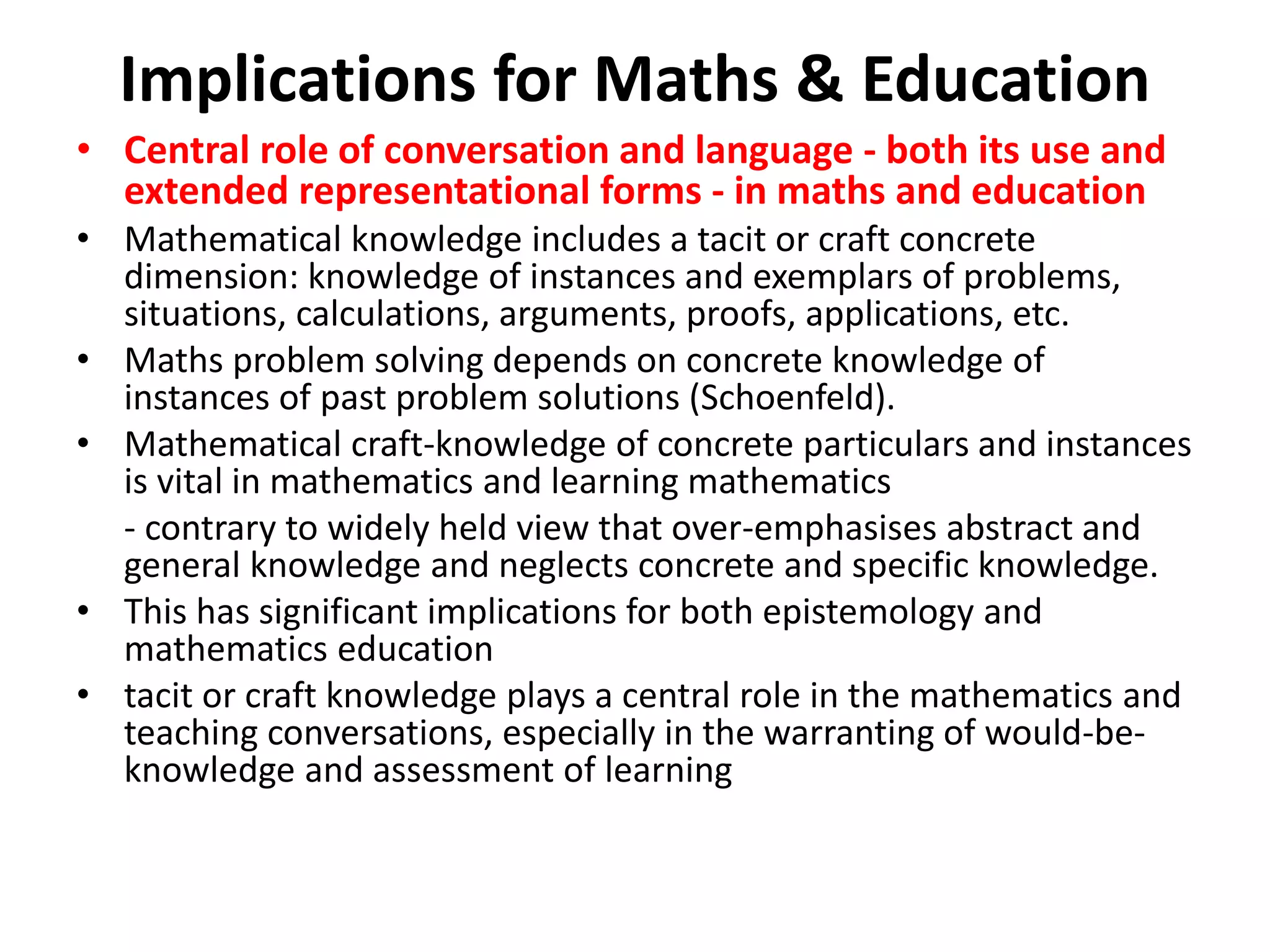
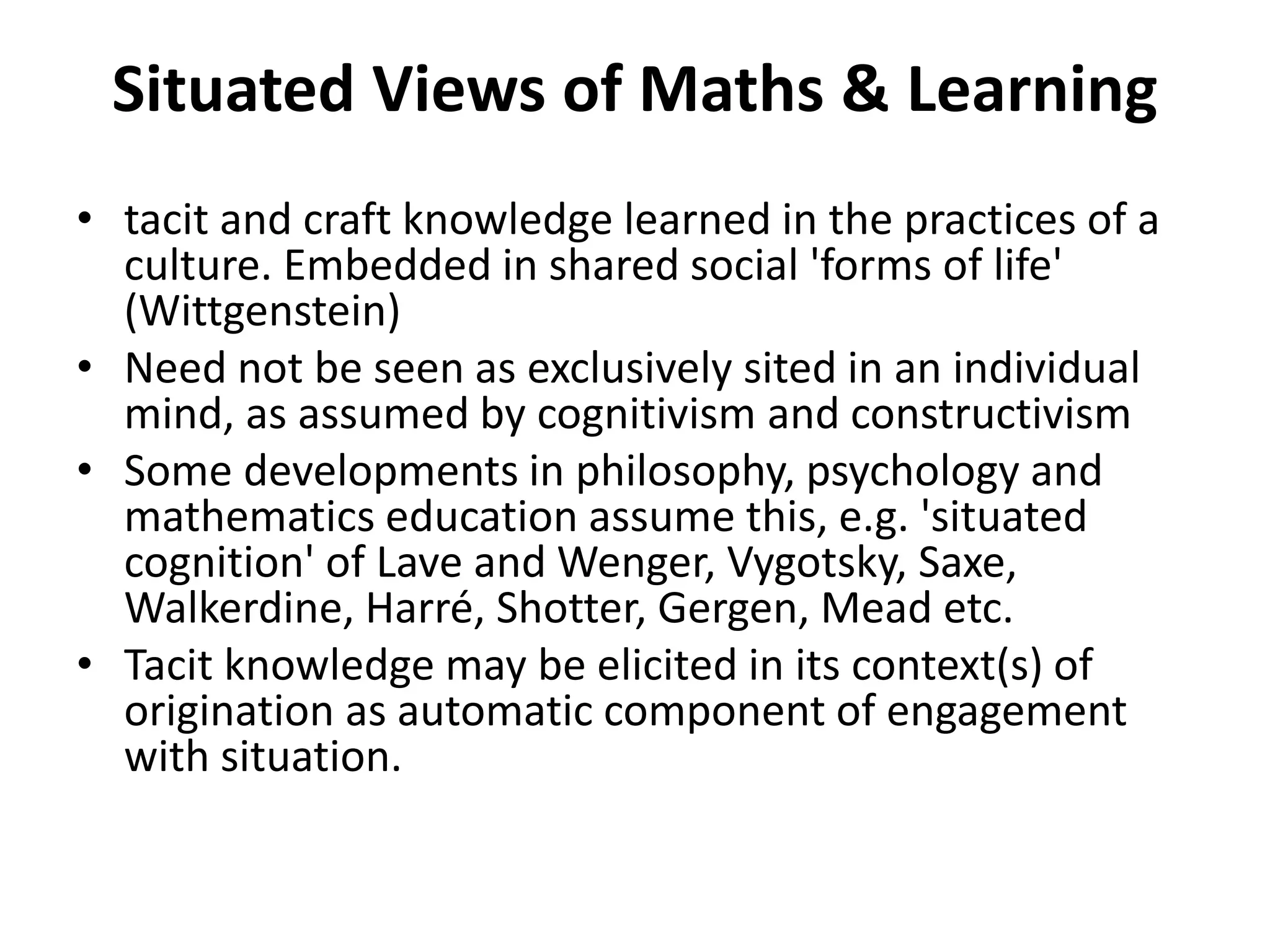
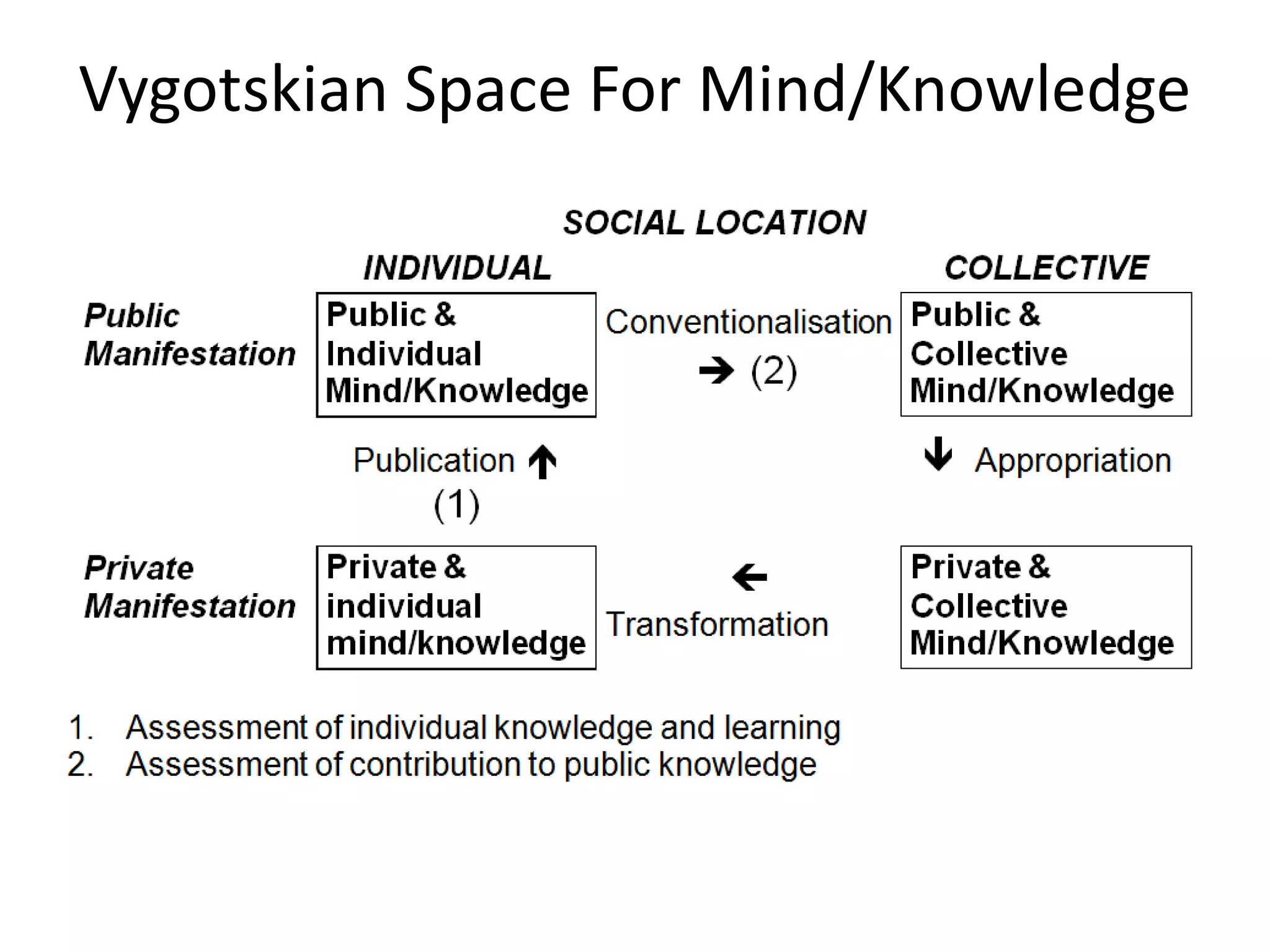
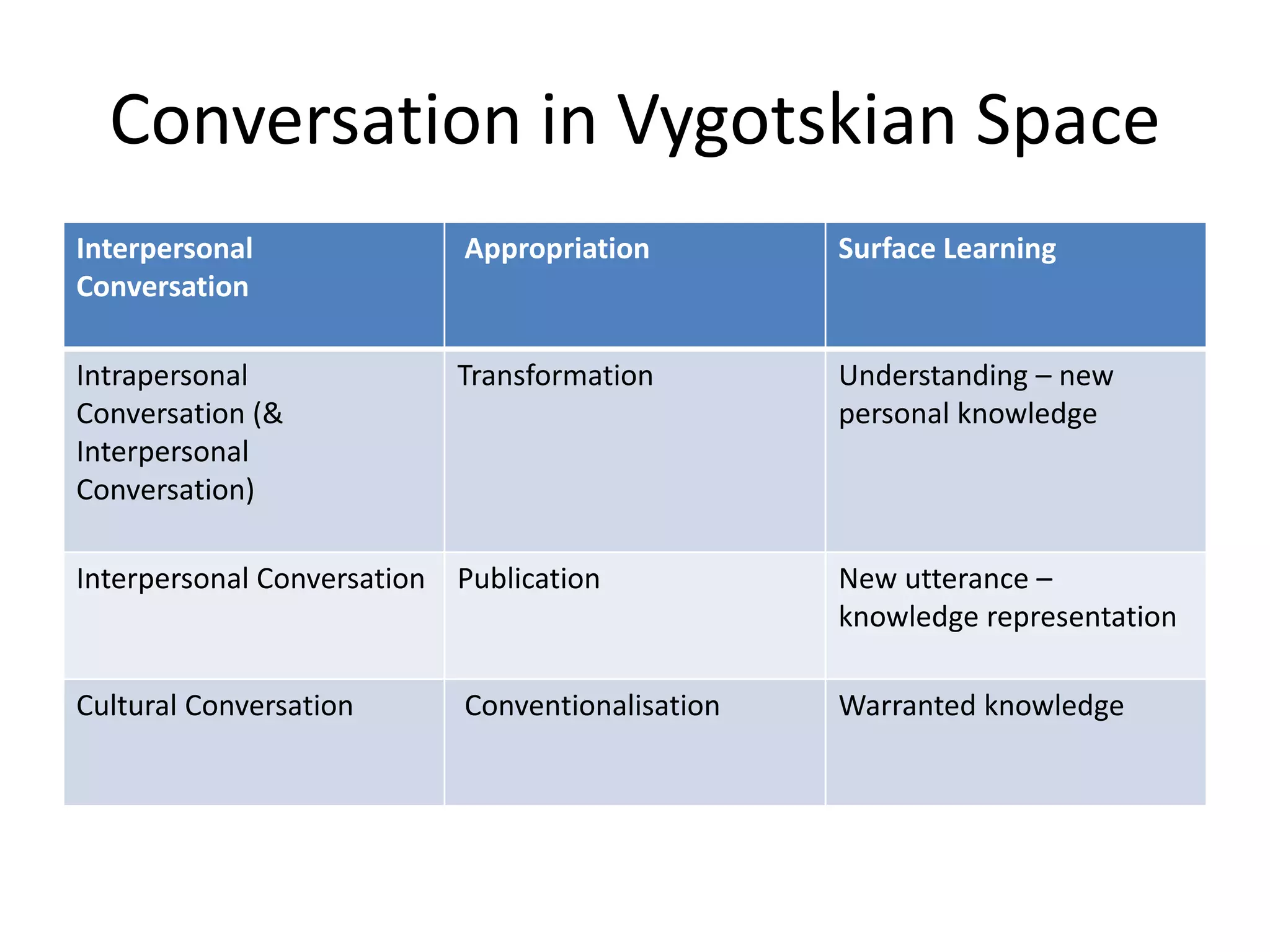
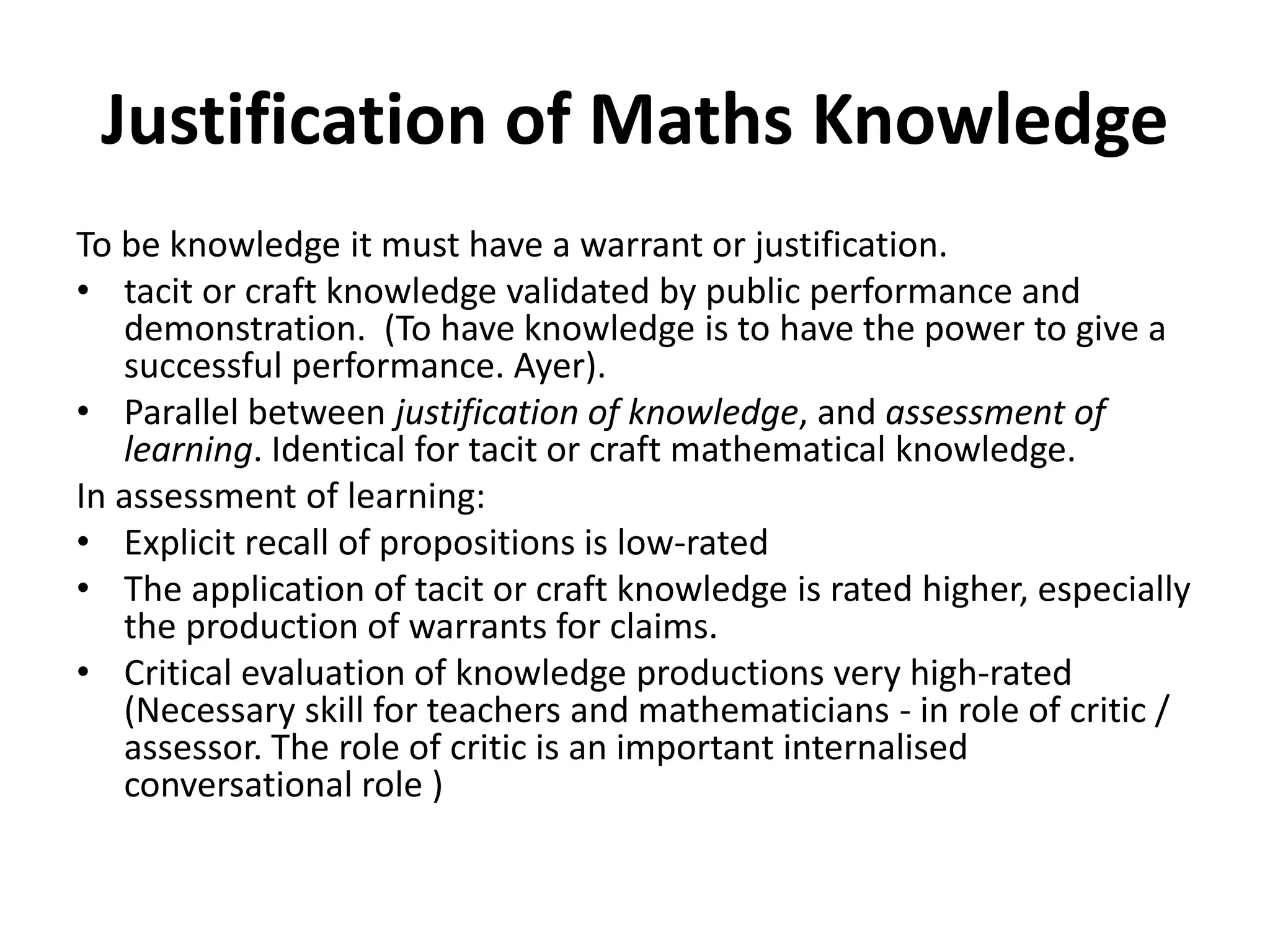
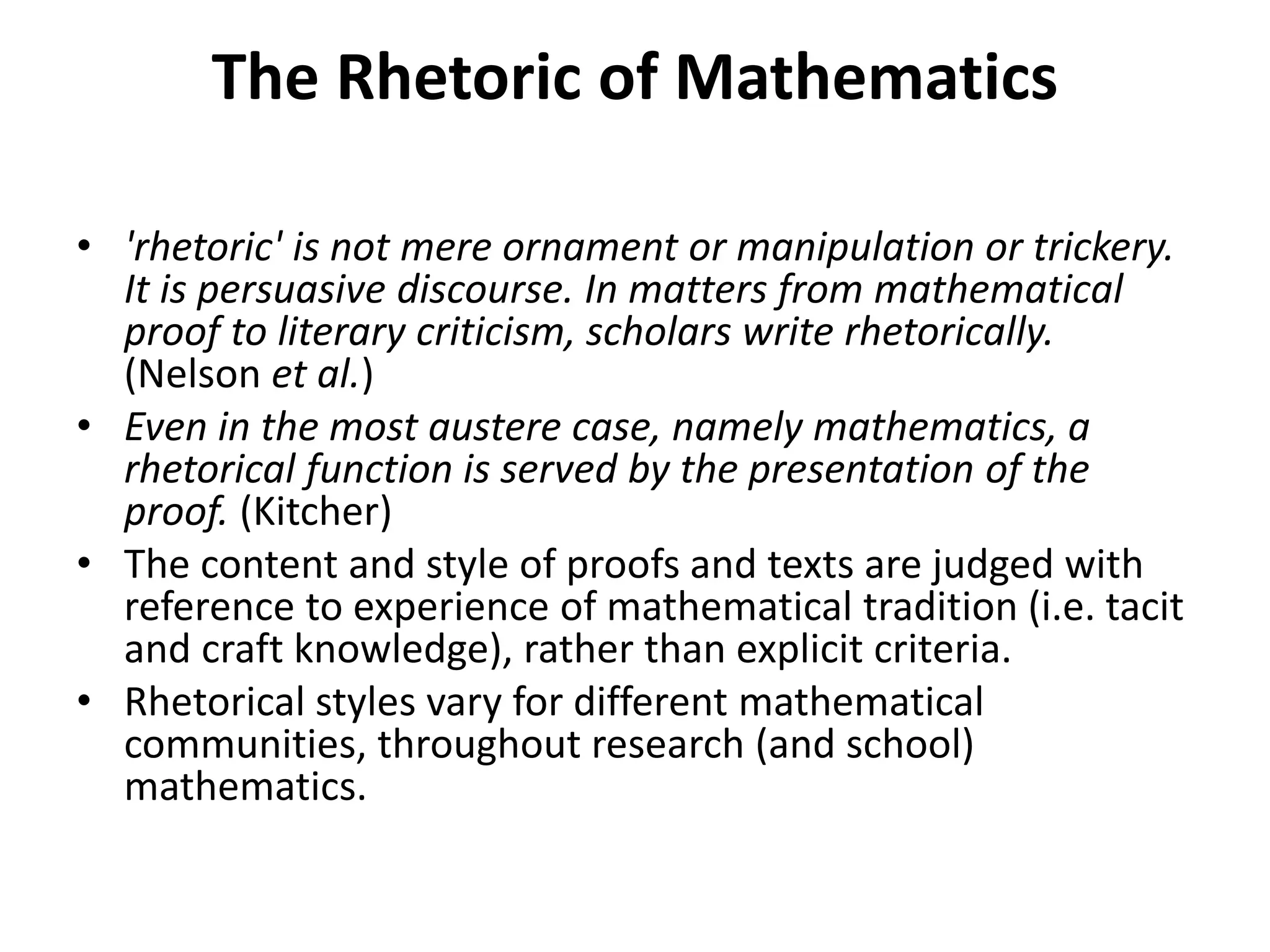
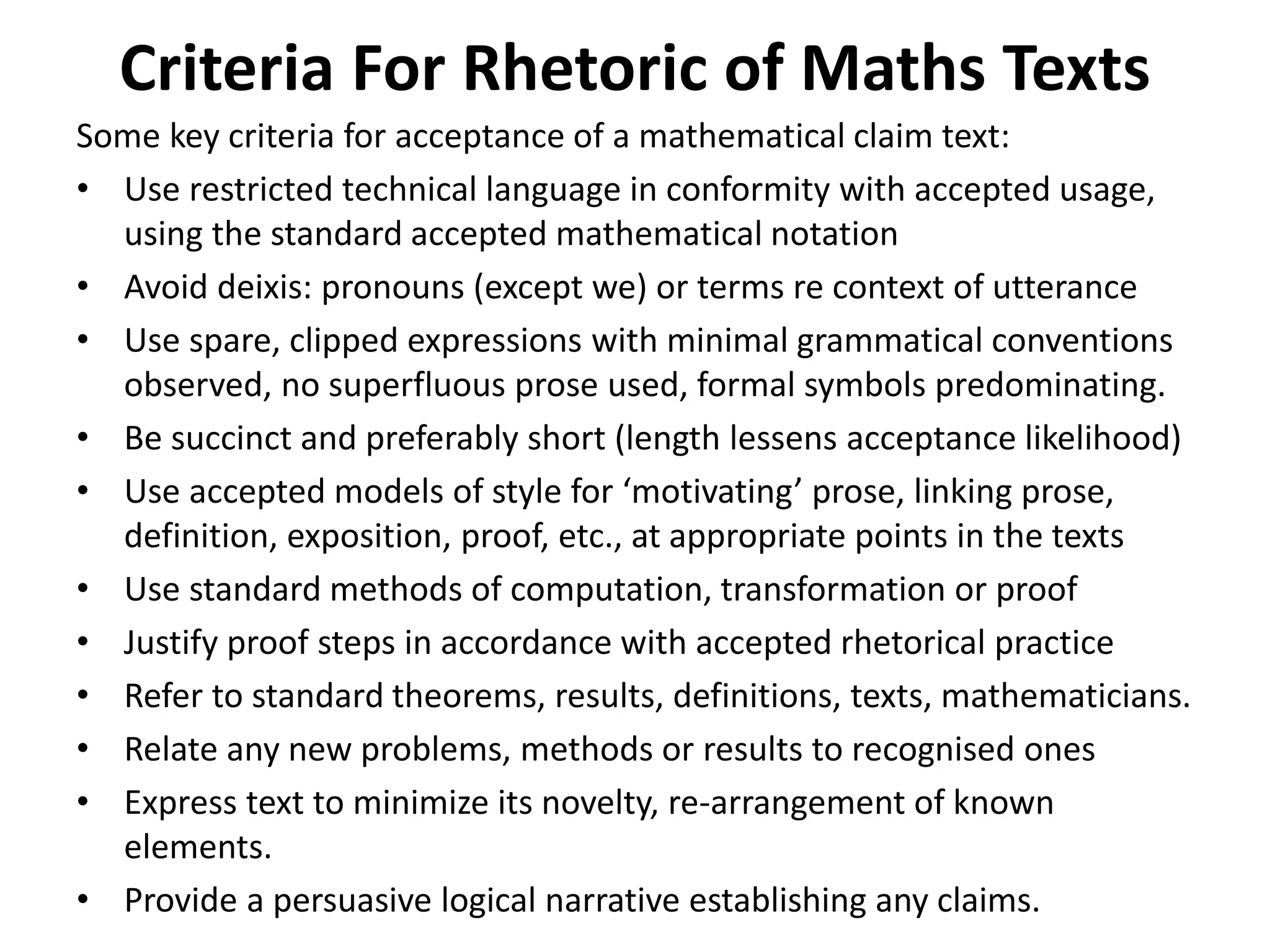
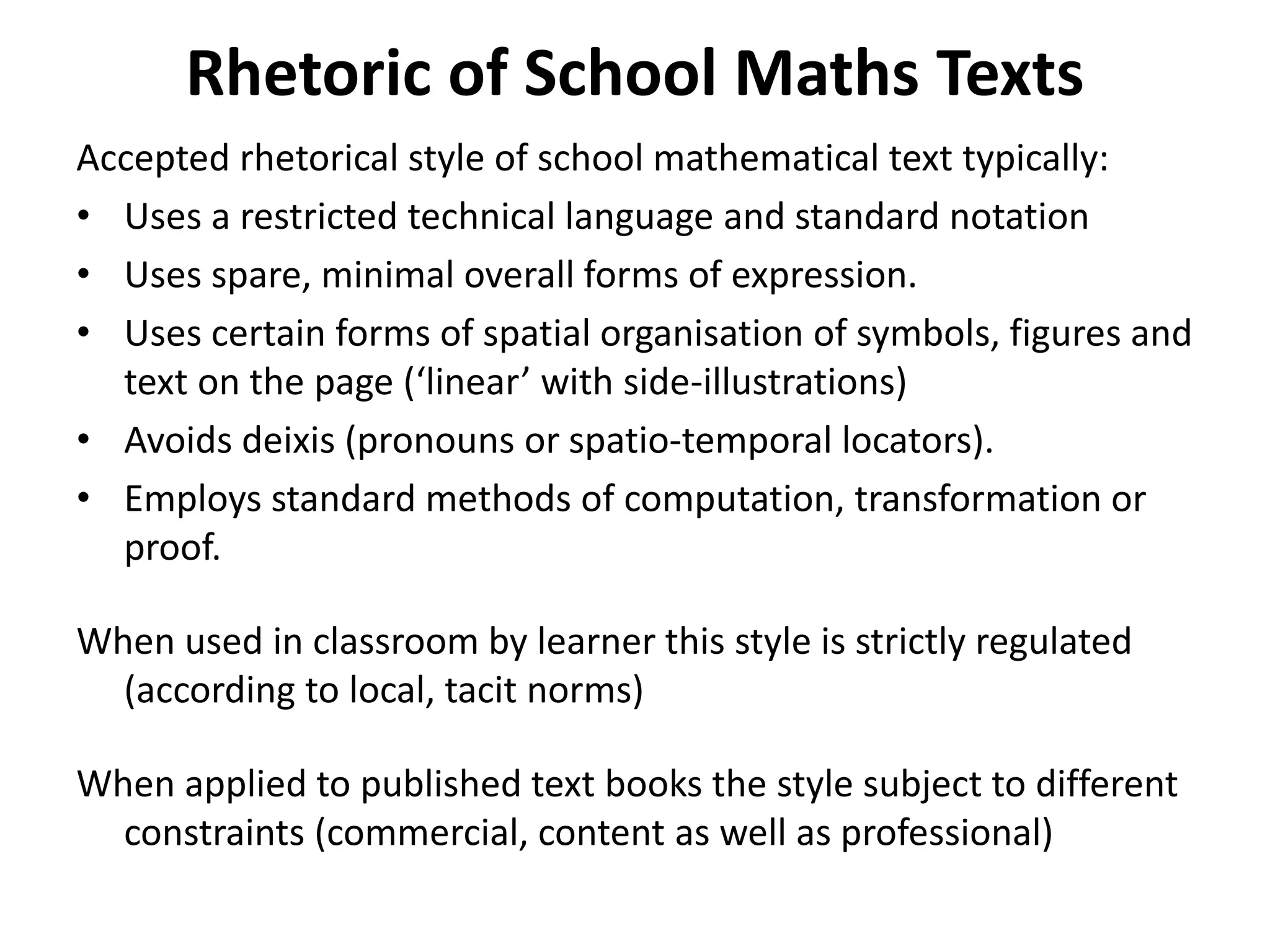
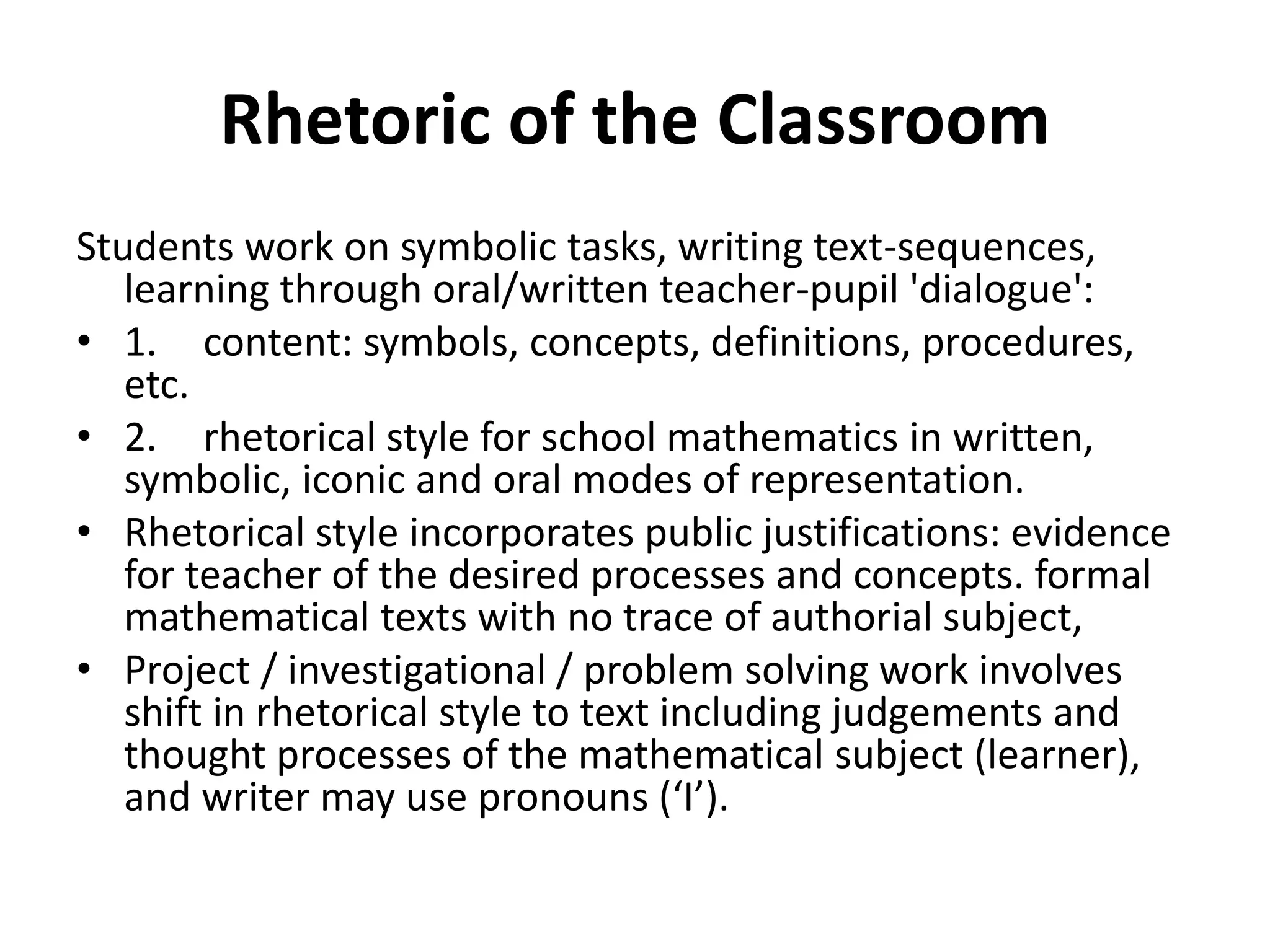
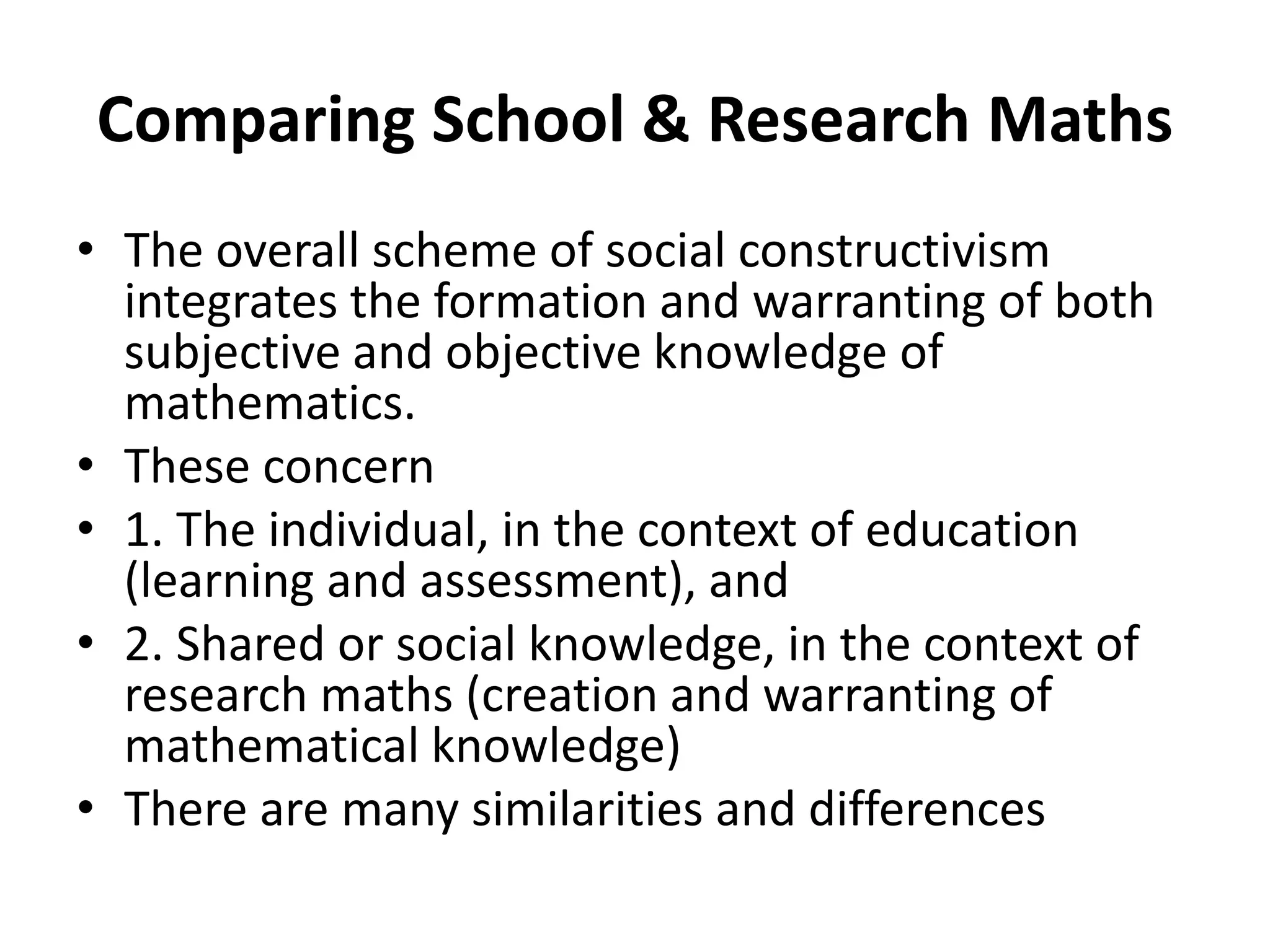
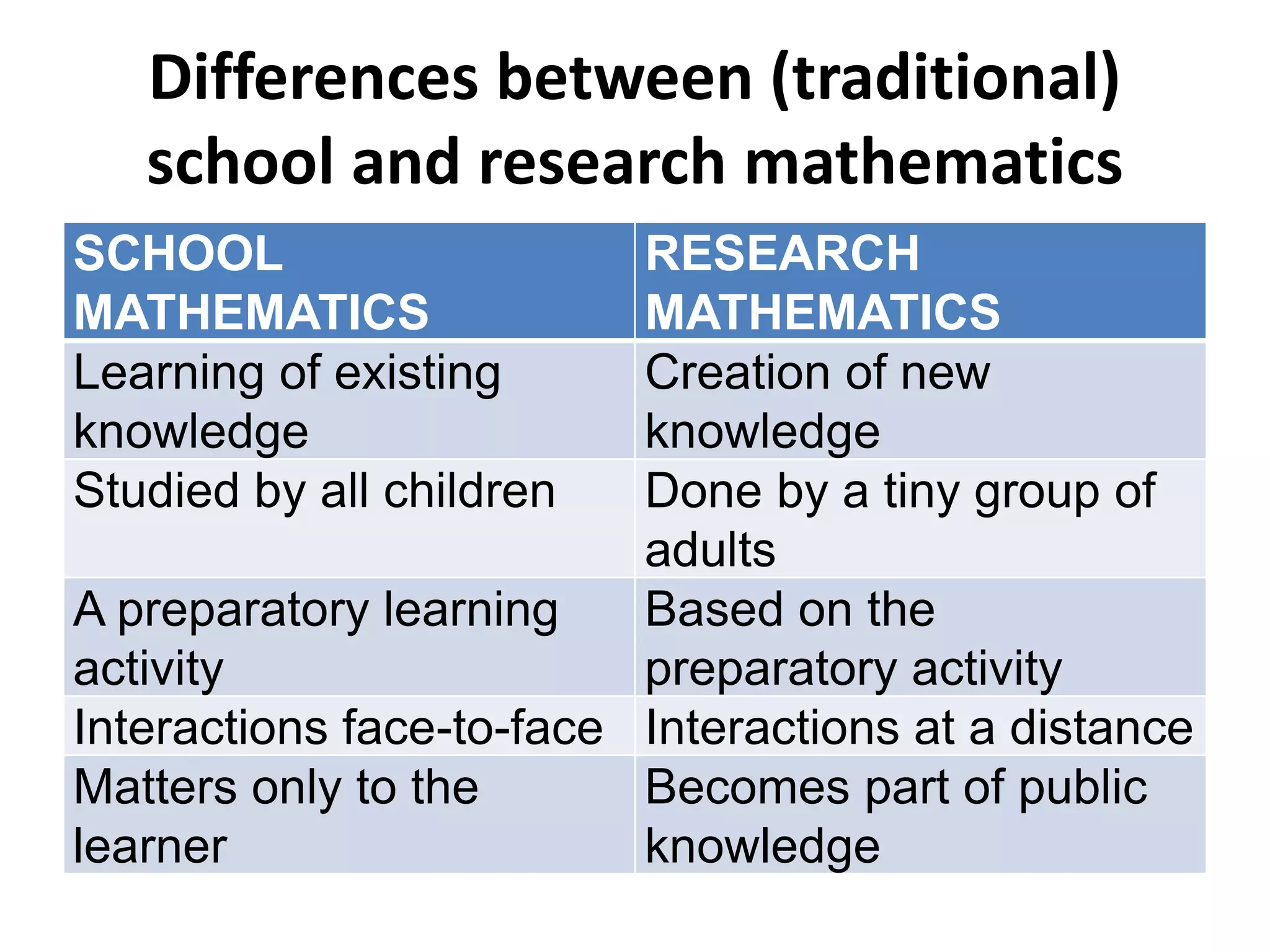
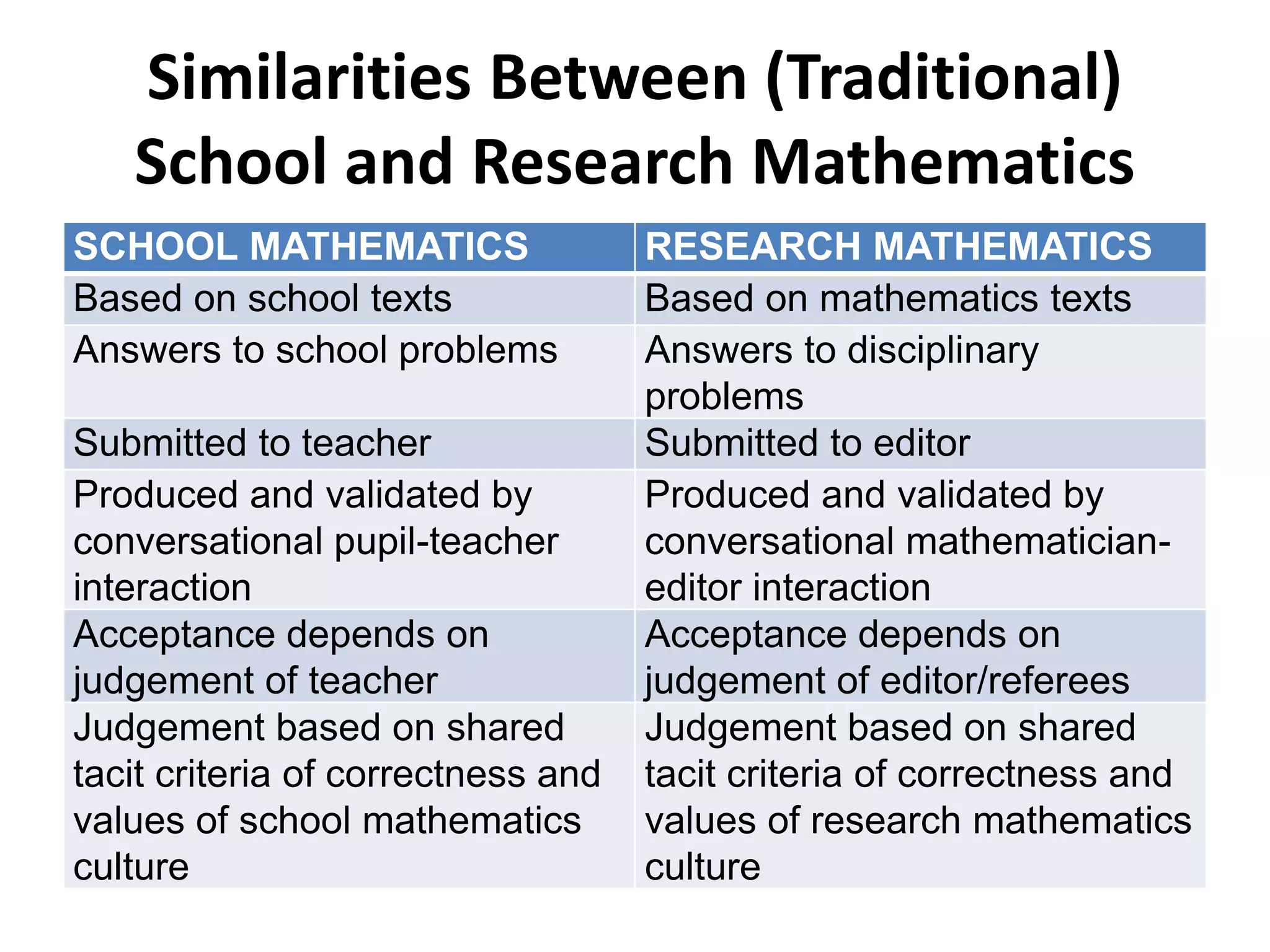
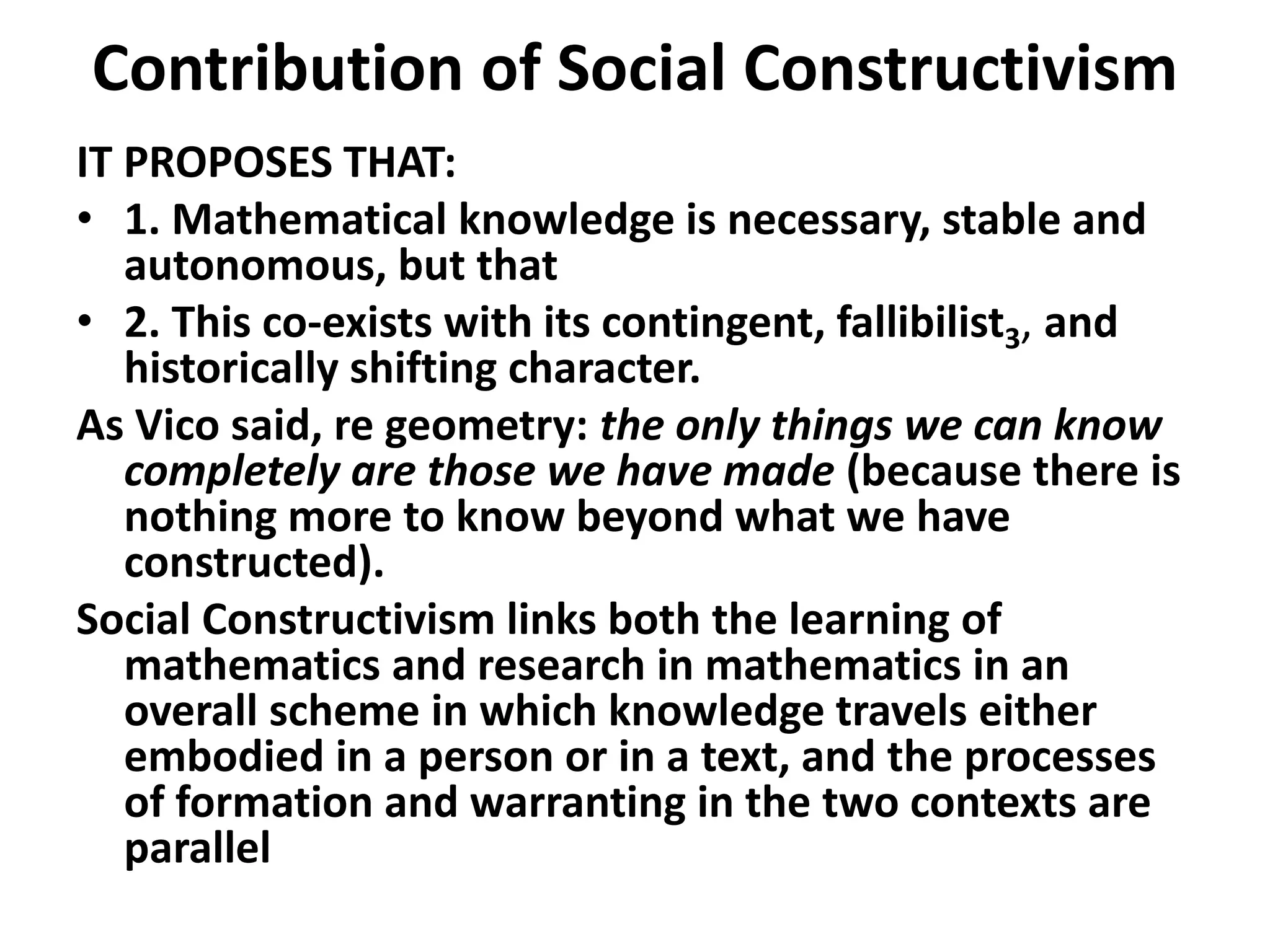
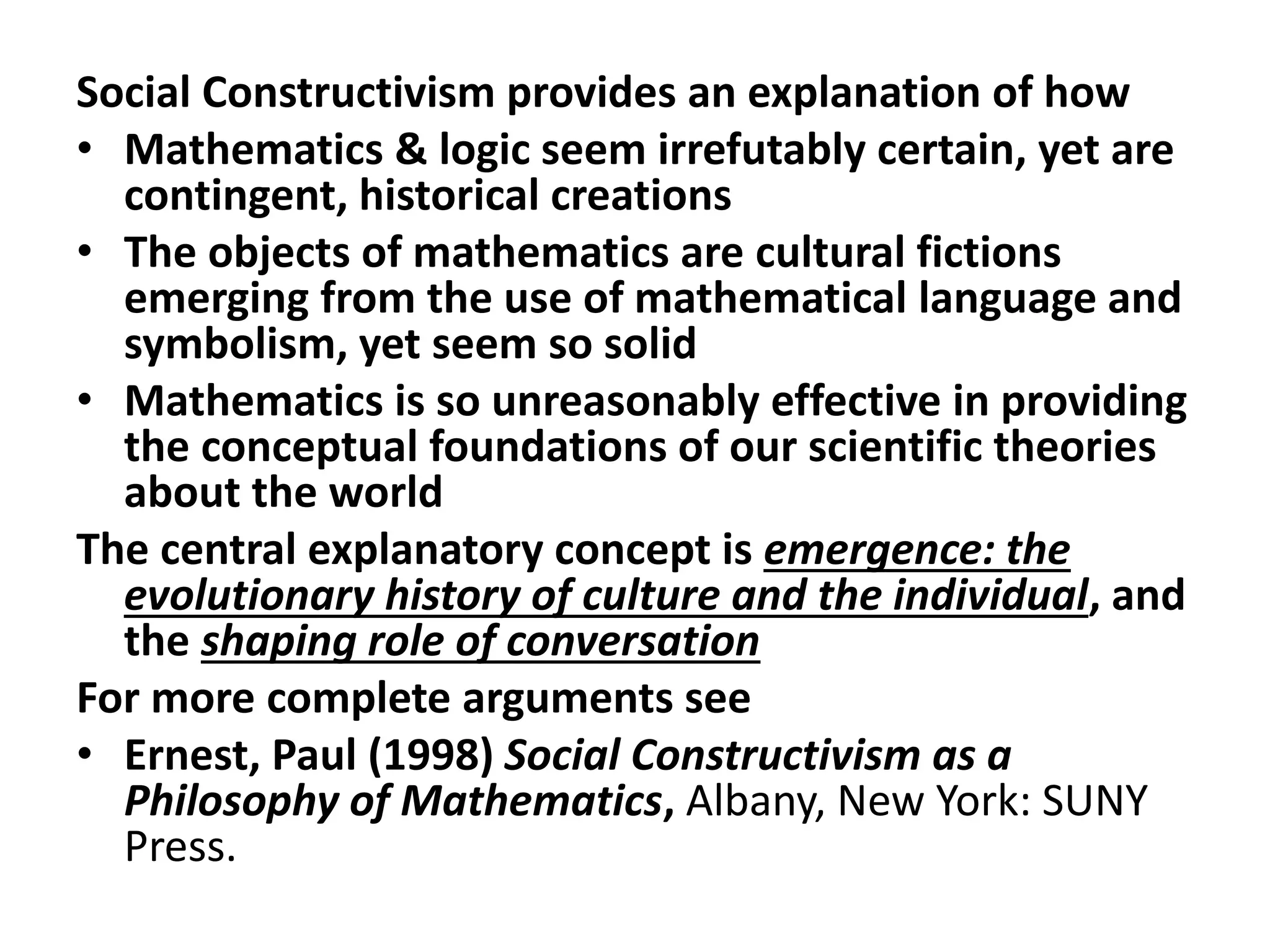

- Social constructivism views mathematical knowledge as a social and historical construct. It rejects the notion that mathematical knowledge is absolutely valid or certain. - Key aspects of social constructivism include viewing mathematical concepts and proofs as evolving through a conversational process of proposing ideas and subjecting them to criticism and refinement. Mathematical knowledge is seen as intersubjective rather than purely objective. - On this view, mathematical texts and concepts can be understood as participating in an ongoing conversation, with proponents putting forth ideas and critics examining them for weaknesses. The acceptance of mathematical ideas and proofs occurs through this social and dialogical process rather than being intrinsically certain.


