DeductiveLogicwww.wordpandit.com
DeductiveLogicEnter the worldOf Verbal Logic!www.wordpandit.com
What is Deductive Logic?www.wordpandit.com
What is Deductive Logic?A simple combination of two words  www.wordpandit.com
What is Deductive Logic?A simple combination of two words  Deductive        +               LogicDeductive Logicwww.wordpandit.com
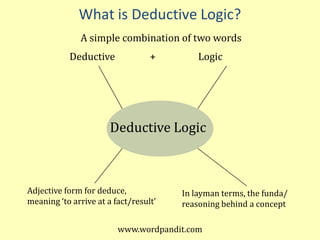
What is Deductive Logic?A simple combination of two words  Deductive        +               LogicDeductive LogicAdjective form for deduce, meaning ‘to arrive at a fact/result’In layman terms, the funda/reasoning behind a conceptwww.wordpandit.com
Thus, Deductive Logic is nothing else but a method of arriving at a conclusion!www.wordpandit.com
Terms in Deductive Logicwww.wordpandit.com
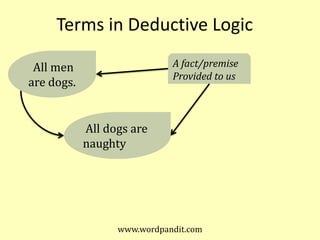
Terms in Deductive LogicAll men are dogs.A fact/premiseProvided to usAll dogs are naughtywww.wordpandit.com
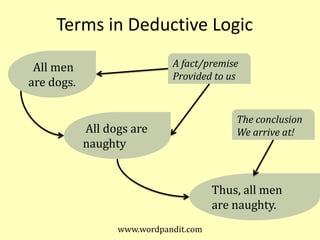
Terms in Deductive LogicAll men are dogs.A fact/premiseProvided to usThe conclusionWe arrive at!All dogs are naughtyThus, all men are naughty.www.wordpandit.com
Guru Mantras for Deductive Logicwww.wordpandit.com
Guru Mantras for Deductive LogicIn logic, we assume FACTS Given to us as True!www.wordpandit.com
Guru Mantras for Deductive LogicIn logic, we assume FACTS Given to us as True!The result obtainedShould be true and….www.wordpandit.com
Guru Mantras for Deductive LogicIn logic, we assume FACTS Given to us as True!The result obtainedShould be true and….And should be Always true,That is consistent!www.wordpandit.com
Syllogisms-part 1Observing how wordsSuch as some, all and noFunction in a statementwww.wordpandit.com
Forms Of PremiseCASE 1: All A are Bwww.wordpandit.com
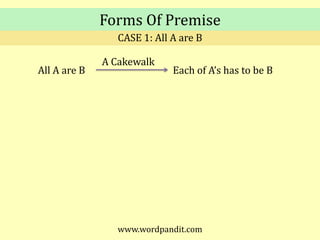
Forms Of PremiseCASE 1: All A are BA CakewalkAll A are BEach of A’s has to be Bwww.wordpandit.com
Forms Of PremiseCASE 1: All A are BA CakewalkAll A are BEach of A’s has to be BSet representation of All A are BBA=BAwww.wordpandit.com
Forms Of PremiseCASE 2: No A is Bwww.wordpandit.com
Forms Of PremiseCASE 2: No A is BAnother CakewalkNO A is BNot even a single can be Bwww.wordpandit.com
Forms Of PremiseCASE 2: No A is BAnother CakewalkNO A is BNot even a single can be BSet representation of No A is BABwww.wordpandit.com
Forms Of PremiseCASE 3: Some A are Bwww.wordpandit.com
Forms Of PremiseCASE 3: Some A are B‘Some’ would mean what?Atleast 1 A is not B?Few A are B?At least 1 A is B?www.wordpandit.com
Forms Of PremiseCASE 3: Some A are B‘Some’ would mean what?Atleast 1 A is not B?Few A are B?At least 1 A is B?Means the same asSome A are BThis would actually mean‘Some A are NOT B’If this is not true, thenNo A is Bwww.wordpandit.com
Forms Of PremiseCASE 3: Some A are BSome A are B: Venn diagram approachSet representation of Some A are BSet ASet Bwww.wordpandit.com
Forms Of PremiseCASE 3: Some A are BSome A are B: Venn diagram approachSet representation of Some A are BSet ASet BBut is this ALL we can do with Some A are B???www.wordpandit.com
Forms Of PremiseCASE 3: Some A are BSome A are B can be represented in the following ways:Set ASet Bwww.wordpandit.com
Forms Of PremiseCASE 3: Some A are BSome A are B can be represented in the following ways:Set A=Set BSet ASet Bwww.wordpandit.com
Forms Of PremiseCASE 3: Some A are BSome A are B can be represented in the following ways:Set A=Set BSet ASet BSet BSet Awww.wordpandit.com
Forms Of PremiseCASE 3: Some A are BSome A are B can be represented in the following ways:Set A=Set BSet ASet BSet ASet BSet ASet Bwww.wordpandit.com
Forms Of PremiseCASE 4: Some A are not Bwww.wordpandit.com
Forms Of PremiseCASE 4: Some A are not BIf ‘Some A are B’= ‘Atleast 1A is B’then ‘Some A are not B’  simply equals to?www.wordpandit.com
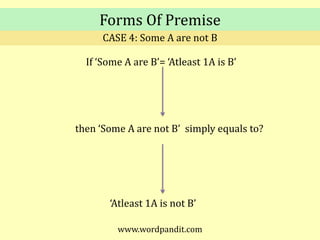
Forms Of PremiseCASE 4: Some A are not BIf ‘Some A are B’= ‘Atleast 1A is B’then ‘Some A are not B’  simply equals to?‘Atleast 1A is not B’www.wordpandit.com
Forms Of PremiseCASE 4: Some A are not BSome A are not B can be represented in the following ways:Set ASet Bwww.wordpandit.com
Forms Of PremiseCASE 4: Some A are not BSome A are not B can be represented in the following ways:Set ASet BSet BSet Awww.wordpandit.com
Forms Of PremiseCASE 4: Some A are not BSome A are not B can be represented in the following ways:Set ASet BSet BSet ASet BSet Awww.wordpandit.com
Forms Of PremiseCASE 4: Some A are not BSome A are not B can be represented in the following ways:Set A=Set BSet ASet BSet BSet ASet BSet Awww.wordpandit.com
Forms Of PremiseCASE 4: Some A are not BSome A are not B can be represented in the following ways:Set A=Set BSet ASet BSet BSet ASet ASet BSet ASet Bwww.wordpandit.com
Logical Consistency-part 2Introducing logic intoStatements with the Help of conditionals suchAs if, only and either/or!www.wordpandit.com
Case 1: If, When , WheneverWhat happens when we use conditionals such as if, when or whenever?Have a look:www.wordpandit.com
Case 1: If, When , WheneverWhat happens when we use conditionals such as if, when or whenever?Have a look:India wins if Sachin scores a 100.Now if the conditions on the left are true, what is the outcome: www.wordpandit.com
Case 1: If, When , WheneverWhat happens when we use conditionals such as if, when or whenever?Have a look:India wins if Sachin scores a 100.Now if the conditions on the left are true, what is the outcome: 1. Sachin scores a 100.www.wordpandit.com
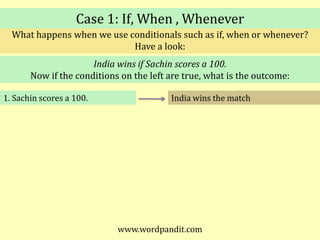
Case 1: If, When , WheneverWhat happens when we use conditionals such as if, when or whenever?Have a look:India wins if Sachin scores a 100.Now if the conditions on the left are true, what is the outcome: India wins the match1. Sachin scores a 100.www.wordpandit.com
Case 1: If, When , WheneverWhat happens when we use conditionals such as if, when or whenever?Have a look:India wins if Sachin scores a 100.Now if the conditions on the left are true, what is the outcome: India wins the match1. Sachin scores a 100.2. India wins the matchwww.wordpandit.com
Case 1: If, When , WheneverWhat happens when we use conditionals such as if, when or whenever?Have a look:India wins if Sachin scores a 100.Now if the conditions on the left are true, what is the outcome: India wins the match1. Sachin scores a 100.Sachin may or may not score a 100.2. India wins the matchwww.wordpandit.com
Case 1: If, When , WheneverWhat happens when we use conditionals such as if, when or whenever?Have a look:India wins if Sachin scores a 100.Now if the conditions on the left are true, what is the outcome: India wins the match1. Sachin scores a 100.Sachin may or may not score a 100.2. India wins the match3. Sachin does not score a 100.www.wordpandit.com
Case 1: If, When , WheneverWhat happens when we use conditionals such as if, when or whenever?Have a look:India wins if Sachin scores a 100.Now if the conditions on the left are true, what is the outcome: India wins the match1. Sachin scores a 100.Sachin may or may not score a 100.2. India wins the matchIndia may or may not win the match.3. Sachin does not score a 100.www.wordpandit.com
Case 1: If, When , WheneverWhat happens when we use conditionals such as if, when or whenever?Have a look:India wins if Sachin scores a 100.Now if the conditions on the left are true, what is the outcome: India wins the match1. Sachin scores a 100.Sachin may or may not score a 100.2. India wins the matchIndia may or may not win the match.3. Sachin does not score a 100.4. India does not win the match.www.wordpandit.com
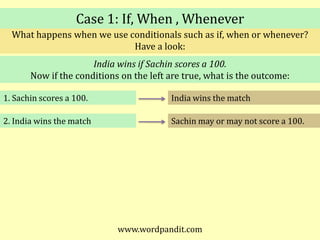
Case 1: If, When , WheneverWhat happens when we use conditionals such as if, when or whenever?Have a look:India wins if Sachin scores a 100.Now if the conditions on the left are true, what is the outcome: India wins the match1. Sachin scores a 100.Sachin may or may not score a 100.2. India wins the matchIndia may or may not win the match.3. Sachin does not score a 100.Sachin did not score a 100.4. India does not win the match.The ‘If condition’ ,in other words, is a sufficient condition for the effect to happen. www.wordpandit.com
Case 2: Only If, Only WhenWhat happens when we use conditionals such as only if or only when?Have a look:www.wordpandit.com
Case 2: Only If, Only WhenWhat happens when we use conditionals such as only if or only when?Have a look:India wins only if Sachin scores a 100.Now if the conditions on the left are true, what is the outcome: www.wordpandit.com
Case 2: Only If, Only WhenWhat happens when we use conditionals such as only if or only when?Have a look:India wins only if Sachin scores a 100.Now if the conditions on the left are true, what is the outcome: 1. Sachin scores a 100.www.wordpandit.com
Case 2: Only If, Only WhenWhat happens when we use conditionals such as only if or only when?Have a look:India wins only if Sachin scores a 100.Now if the conditions on the left are true, what is the outcome: India may or may not win the match1. Sachin scores a 100.www.wordpandit.com
Case 2: Only If, Only WhenWhat happens when we use conditionals such as only if or only when?Have a look:India wins only if Sachin scores a 100.Now if the conditions on the left are true, what is the outcome: India may or may not win the match1. Sachin scores a 100.2. India wins the matchwww.wordpandit.com
Case 2: Only If, Only WhenWhat happens when we use conditionals such as only if or only when?Have a look:India wins only if Sachin scores a 100.Now if the conditions on the left are true, what is the outcome: India may or may not win the match1. Sachin scores a 100.Sachin scores a 100.2. India wins the matchwww.wordpandit.com
Case 2: Only If, Only WhenWhat happens when we use conditionals such as only if or only when?Have a look:India wins only if Sachin scores a 100.Now if the conditions on the left are true, what is the outcome: India may or may not win the match1. Sachin scores a 100.Sachin scores a 100.2. India wins the match3. Sachin does not score a 100.www.wordpandit.com
Case 2: Only If, Only WhenWhat happens when we use conditionals such as only if or only when?Have a look:India wins only if Sachin scores a 100.Now if the conditions on the left are true, what is the outcome: India may or may not win the match1. Sachin scores a 100.Sachin scores a 100.2. India wins the matchIndia did not win the match.3. Sachin does not score a 100.www.wordpandit.com
Case 2: Only If, Only WhenWhat happens when we use conditionals such as only if or only when?Have a look:India wins only if Sachin scores a 100.Now if the conditions on the left are true, what is the outcome: India may or may not win the match1. Sachin scores a 100.Sachin scores a 100.2. India wins the matchIndia did not win the match.3. Sachin does not score a 100.4. India does not win the match.www.wordpandit.com
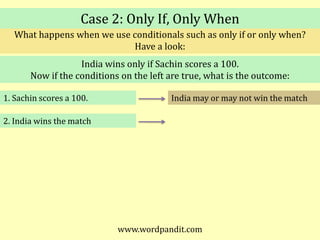
Case 2: Only If, Only WhenWhat happens when we use conditionals such as only if or only when?Have a look:India wins only if Sachin scores a 100.Now if the conditions on the left are true, what is the outcome: India may or may not win the match1. Sachin scores a 100.Sachin scores a 100.2. India wins the matchIndia did not win the match.3. Sachin does not score a 100.Sachin may or may not score a 100.4. India does not win the match.The ‘Only If condition’ ,in other words, is a necessary condition for the effect to happen. www.wordpandit.com
Case 3: If & Only If, When & Only WhenWhat happens when we use conditionals such as ‘if & only if’?Have a look:www.wordpandit.com
Case 3: If & Only If, When & Only WhenWhat happens when we use conditionals such as ‘if & only if’?Have a look:India wins if & only if Sachin scores a 100.Now if the conditions on the left are true, what is the outcome: 1. Sachin scores a 100.2. India wins the match3. Sachin does not score a 100.4. India does not win the match.www.wordpandit.com
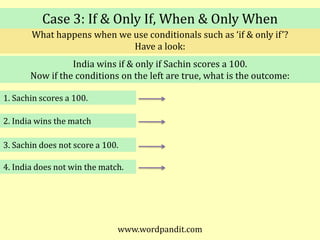
Case 3: If & Only If, When & Only WhenWhat happens when we use conditionals such as ‘if & only if’?Have a look:India wins if & only if Sachin scores a 100.Now if the conditions on the left are true, what is the outcome: India wins the match1. Sachin scores a 100.Sachin scores a 100.2. India wins the matchIndia did not win the match.3. Sachin does not score a 100.Sachin did not score a 100.4. India does not win the match.The ‘If & Only If condition’ ,in other words, is a mixture of the first two cases. www.wordpandit.com
Case 4: Either A or BWhat happens when we use conditionals such as ‘Either A or B’?Have a look:www.wordpandit.com
Case 4: Either A or BWhat happens when we use conditionals such as ‘Either A or B’?Have a look:Either I am in eating food or watching TV.Now if the conditions on the left are true, what is the outcome: www.wordpandit.com
Case 4: Either A or BWhat happens when we use conditionals such as ‘Either A or B’?Have a look:Either I am in eating food or watching TV.Now if the conditions on the left are true, what is the outcome: I am watching TV.1. I am not eating food.I am eating food.2. I am not watching TV.www.wordpandit.com
Case 4: Either A or BWhat happens when we use conditionals such as ‘Either A or B’?Have a look:Either I am in eating food or watching TV.Now if the conditions on the left are true, what is the outcome: I am watching TV.1. I am not eating food.I am eating food.2. I am not watching TV.I may or may not  be eating food.3. I am watching TV.I may or may not be watching TV.4. I am eating food.This is a tricky one. Read the notes carefully.www.wordpandit.com
Thank You!Hope you had a pleasantlearning experience.Feel free to contact us:admin@wordpandit.comwww.wordpandit.com

Deductive logic

  • 1.
  • 2.
    DeductiveLogicEnter the worldOfVerbal Logic!www.wordpandit.com
  • 3.
    What is DeductiveLogic?www.wordpandit.com
  • 4.
    What is DeductiveLogic?A simple combination of two words www.wordpandit.com
  • 5.
    What is DeductiveLogic?A simple combination of two words Deductive + LogicDeductive Logicwww.wordpandit.com
  • 6.
    What is DeductiveLogic?A simple combination of two words Deductive + LogicDeductive LogicAdjective form for deduce, meaning ‘to arrive at a fact/result’In layman terms, the funda/reasoning behind a conceptwww.wordpandit.com
  • 7.
    Thus, Deductive Logicis nothing else but a method of arriving at a conclusion!www.wordpandit.com
  • 8.
    Terms in DeductiveLogicwww.wordpandit.com
  • 9.
    Terms in DeductiveLogicAll men are dogs.A fact/premiseProvided to usAll dogs are naughtywww.wordpandit.com
  • 10.
    Terms in DeductiveLogicAll men are dogs.A fact/premiseProvided to usThe conclusionWe arrive at!All dogs are naughtyThus, all men are naughty.www.wordpandit.com
  • 11.
    Guru Mantras forDeductive Logicwww.wordpandit.com
  • 12.
    Guru Mantras forDeductive LogicIn logic, we assume FACTS Given to us as True!www.wordpandit.com
  • 13.
    Guru Mantras forDeductive LogicIn logic, we assume FACTS Given to us as True!The result obtainedShould be true and….www.wordpandit.com
  • 14.
    Guru Mantras forDeductive LogicIn logic, we assume FACTS Given to us as True!The result obtainedShould be true and….And should be Always true,That is consistent!www.wordpandit.com
  • 15.
    Syllogisms-part 1Observing howwordsSuch as some, all and noFunction in a statementwww.wordpandit.com
  • 16.
    Forms Of PremiseCASE1: All A are Bwww.wordpandit.com
  • 17.
    Forms Of PremiseCASE1: All A are BA CakewalkAll A are BEach of A’s has to be Bwww.wordpandit.com
  • 18.
    Forms Of PremiseCASE1: All A are BA CakewalkAll A are BEach of A’s has to be BSet representation of All A are BBA=BAwww.wordpandit.com
  • 19.
    Forms Of PremiseCASE2: No A is Bwww.wordpandit.com
  • 20.
    Forms Of PremiseCASE2: No A is BAnother CakewalkNO A is BNot even a single can be Bwww.wordpandit.com
  • 21.
    Forms Of PremiseCASE2: No A is BAnother CakewalkNO A is BNot even a single can be BSet representation of No A is BABwww.wordpandit.com
  • 22.
    Forms Of PremiseCASE3: Some A are Bwww.wordpandit.com
  • 23.
    Forms Of PremiseCASE3: Some A are B‘Some’ would mean what?Atleast 1 A is not B?Few A are B?At least 1 A is B?www.wordpandit.com
  • 24.
    Forms Of PremiseCASE3: Some A are B‘Some’ would mean what?Atleast 1 A is not B?Few A are B?At least 1 A is B?Means the same asSome A are BThis would actually mean‘Some A are NOT B’If this is not true, thenNo A is Bwww.wordpandit.com
  • 25.
    Forms Of PremiseCASE3: Some A are BSome A are B: Venn diagram approachSet representation of Some A are BSet ASet Bwww.wordpandit.com
  • 26.
    Forms Of PremiseCASE3: Some A are BSome A are B: Venn diagram approachSet representation of Some A are BSet ASet BBut is this ALL we can do with Some A are B???www.wordpandit.com
  • 27.
    Forms Of PremiseCASE3: Some A are BSome A are B can be represented in the following ways:Set ASet Bwww.wordpandit.com
  • 28.
    Forms Of PremiseCASE3: Some A are BSome A are B can be represented in the following ways:Set A=Set BSet ASet Bwww.wordpandit.com
  • 29.
    Forms Of PremiseCASE3: Some A are BSome A are B can be represented in the following ways:Set A=Set BSet ASet BSet BSet Awww.wordpandit.com
  • 30.
    Forms Of PremiseCASE3: Some A are BSome A are B can be represented in the following ways:Set A=Set BSet ASet BSet ASet BSet ASet Bwww.wordpandit.com
  • 31.
    Forms Of PremiseCASE4: Some A are not Bwww.wordpandit.com
  • 32.
    Forms Of PremiseCASE4: Some A are not BIf ‘Some A are B’= ‘Atleast 1A is B’then ‘Some A are not B’ simply equals to?www.wordpandit.com
  • 33.
    Forms Of PremiseCASE4: Some A are not BIf ‘Some A are B’= ‘Atleast 1A is B’then ‘Some A are not B’ simply equals to?‘Atleast 1A is not B’www.wordpandit.com
  • 34.
    Forms Of PremiseCASE4: Some A are not BSome A are not B can be represented in the following ways:Set ASet Bwww.wordpandit.com
  • 35.
    Forms Of PremiseCASE4: Some A are not BSome A are not B can be represented in the following ways:Set ASet BSet BSet Awww.wordpandit.com
  • 36.
    Forms Of PremiseCASE4: Some A are not BSome A are not B can be represented in the following ways:Set ASet BSet BSet ASet BSet Awww.wordpandit.com
  • 37.
    Forms Of PremiseCASE4: Some A are not BSome A are not B can be represented in the following ways:Set A=Set BSet ASet BSet BSet ASet BSet Awww.wordpandit.com
  • 38.
    Forms Of PremiseCASE4: Some A are not BSome A are not B can be represented in the following ways:Set A=Set BSet ASet BSet BSet ASet ASet BSet ASet Bwww.wordpandit.com
  • 39.
    Logical Consistency-part 2Introducinglogic intoStatements with the Help of conditionals suchAs if, only and either/or!www.wordpandit.com
  • 40.
    Case 1: If,When , WheneverWhat happens when we use conditionals such as if, when or whenever?Have a look:www.wordpandit.com
  • 41.
    Case 1: If,When , WheneverWhat happens when we use conditionals such as if, when or whenever?Have a look:India wins if Sachin scores a 100.Now if the conditions on the left are true, what is the outcome: www.wordpandit.com
  • 42.
    Case 1: If,When , WheneverWhat happens when we use conditionals such as if, when or whenever?Have a look:India wins if Sachin scores a 100.Now if the conditions on the left are true, what is the outcome: 1. Sachin scores a 100.www.wordpandit.com
  • 43.
    Case 1: If,When , WheneverWhat happens when we use conditionals such as if, when or whenever?Have a look:India wins if Sachin scores a 100.Now if the conditions on the left are true, what is the outcome: India wins the match1. Sachin scores a 100.www.wordpandit.com
  • 44.
    Case 1: If,When , WheneverWhat happens when we use conditionals such as if, when or whenever?Have a look:India wins if Sachin scores a 100.Now if the conditions on the left are true, what is the outcome: India wins the match1. Sachin scores a 100.2. India wins the matchwww.wordpandit.com
  • 45.
    Case 1: If,When , WheneverWhat happens when we use conditionals such as if, when or whenever?Have a look:India wins if Sachin scores a 100.Now if the conditions on the left are true, what is the outcome: India wins the match1. Sachin scores a 100.Sachin may or may not score a 100.2. India wins the matchwww.wordpandit.com
  • 46.
    Case 1: If,When , WheneverWhat happens when we use conditionals such as if, when or whenever?Have a look:India wins if Sachin scores a 100.Now if the conditions on the left are true, what is the outcome: India wins the match1. Sachin scores a 100.Sachin may or may not score a 100.2. India wins the match3. Sachin does not score a 100.www.wordpandit.com
  • 47.
    Case 1: If,When , WheneverWhat happens when we use conditionals such as if, when or whenever?Have a look:India wins if Sachin scores a 100.Now if the conditions on the left are true, what is the outcome: India wins the match1. Sachin scores a 100.Sachin may or may not score a 100.2. India wins the matchIndia may or may not win the match.3. Sachin does not score a 100.www.wordpandit.com
  • 48.
    Case 1: If,When , WheneverWhat happens when we use conditionals such as if, when or whenever?Have a look:India wins if Sachin scores a 100.Now if the conditions on the left are true, what is the outcome: India wins the match1. Sachin scores a 100.Sachin may or may not score a 100.2. India wins the matchIndia may or may not win the match.3. Sachin does not score a 100.4. India does not win the match.www.wordpandit.com
  • 49.
    Case 1: If,When , WheneverWhat happens when we use conditionals such as if, when or whenever?Have a look:India wins if Sachin scores a 100.Now if the conditions on the left are true, what is the outcome: India wins the match1. Sachin scores a 100.Sachin may or may not score a 100.2. India wins the matchIndia may or may not win the match.3. Sachin does not score a 100.Sachin did not score a 100.4. India does not win the match.The ‘If condition’ ,in other words, is a sufficient condition for the effect to happen. www.wordpandit.com
  • 50.
    Case 2: OnlyIf, Only WhenWhat happens when we use conditionals such as only if or only when?Have a look:www.wordpandit.com
  • 51.
    Case 2: OnlyIf, Only WhenWhat happens when we use conditionals such as only if or only when?Have a look:India wins only if Sachin scores a 100.Now if the conditions on the left are true, what is the outcome: www.wordpandit.com
  • 52.
    Case 2: OnlyIf, Only WhenWhat happens when we use conditionals such as only if or only when?Have a look:India wins only if Sachin scores a 100.Now if the conditions on the left are true, what is the outcome: 1. Sachin scores a 100.www.wordpandit.com
  • 53.
    Case 2: OnlyIf, Only WhenWhat happens when we use conditionals such as only if or only when?Have a look:India wins only if Sachin scores a 100.Now if the conditions on the left are true, what is the outcome: India may or may not win the match1. Sachin scores a 100.www.wordpandit.com
  • 54.
    Case 2: OnlyIf, Only WhenWhat happens when we use conditionals such as only if or only when?Have a look:India wins only if Sachin scores a 100.Now if the conditions on the left are true, what is the outcome: India may or may not win the match1. Sachin scores a 100.2. India wins the matchwww.wordpandit.com
  • 55.
    Case 2: OnlyIf, Only WhenWhat happens when we use conditionals such as only if or only when?Have a look:India wins only if Sachin scores a 100.Now if the conditions on the left are true, what is the outcome: India may or may not win the match1. Sachin scores a 100.Sachin scores a 100.2. India wins the matchwww.wordpandit.com
  • 56.
    Case 2: OnlyIf, Only WhenWhat happens when we use conditionals such as only if or only when?Have a look:India wins only if Sachin scores a 100.Now if the conditions on the left are true, what is the outcome: India may or may not win the match1. Sachin scores a 100.Sachin scores a 100.2. India wins the match3. Sachin does not score a 100.www.wordpandit.com
  • 57.
    Case 2: OnlyIf, Only WhenWhat happens when we use conditionals such as only if or only when?Have a look:India wins only if Sachin scores a 100.Now if the conditions on the left are true, what is the outcome: India may or may not win the match1. Sachin scores a 100.Sachin scores a 100.2. India wins the matchIndia did not win the match.3. Sachin does not score a 100.www.wordpandit.com
  • 58.
    Case 2: OnlyIf, Only WhenWhat happens when we use conditionals such as only if or only when?Have a look:India wins only if Sachin scores a 100.Now if the conditions on the left are true, what is the outcome: India may or may not win the match1. Sachin scores a 100.Sachin scores a 100.2. India wins the matchIndia did not win the match.3. Sachin does not score a 100.4. India does not win the match.www.wordpandit.com
  • 59.
    Case 2: OnlyIf, Only WhenWhat happens when we use conditionals such as only if or only when?Have a look:India wins only if Sachin scores a 100.Now if the conditions on the left are true, what is the outcome: India may or may not win the match1. Sachin scores a 100.Sachin scores a 100.2. India wins the matchIndia did not win the match.3. Sachin does not score a 100.Sachin may or may not score a 100.4. India does not win the match.The ‘Only If condition’ ,in other words, is a necessary condition for the effect to happen. www.wordpandit.com
  • 60.
    Case 3: If& Only If, When & Only WhenWhat happens when we use conditionals such as ‘if & only if’?Have a look:www.wordpandit.com
  • 61.
    Case 3: If& Only If, When & Only WhenWhat happens when we use conditionals such as ‘if & only if’?Have a look:India wins if & only if Sachin scores a 100.Now if the conditions on the left are true, what is the outcome: 1. Sachin scores a 100.2. India wins the match3. Sachin does not score a 100.4. India does not win the match.www.wordpandit.com
  • 62.
    Case 3: If& Only If, When & Only WhenWhat happens when we use conditionals such as ‘if & only if’?Have a look:India wins if & only if Sachin scores a 100.Now if the conditions on the left are true, what is the outcome: India wins the match1. Sachin scores a 100.Sachin scores a 100.2. India wins the matchIndia did not win the match.3. Sachin does not score a 100.Sachin did not score a 100.4. India does not win the match.The ‘If & Only If condition’ ,in other words, is a mixture of the first two cases. www.wordpandit.com
  • 63.
    Case 4: EitherA or BWhat happens when we use conditionals such as ‘Either A or B’?Have a look:www.wordpandit.com
  • 64.
    Case 4: EitherA or BWhat happens when we use conditionals such as ‘Either A or B’?Have a look:Either I am in eating food or watching TV.Now if the conditions on the left are true, what is the outcome: www.wordpandit.com
  • 65.
    Case 4: EitherA or BWhat happens when we use conditionals such as ‘Either A or B’?Have a look:Either I am in eating food or watching TV.Now if the conditions on the left are true, what is the outcome: I am watching TV.1. I am not eating food.I am eating food.2. I am not watching TV.www.wordpandit.com
  • 66.
    Case 4: EitherA or BWhat happens when we use conditionals such as ‘Either A or B’?Have a look:Either I am in eating food or watching TV.Now if the conditions on the left are true, what is the outcome: I am watching TV.1. I am not eating food.I am eating food.2. I am not watching TV.I may or may not be eating food.3. I am watching TV.I may or may not be watching TV.4. I am eating food.This is a tricky one. Read the notes carefully.www.wordpandit.com
  • 67.
    Thank You!Hope youhad a pleasantlearning experience.Feel free to contact us:admin@wordpandit.comwww.wordpandit.com

Editor's Notes

  • #11 Try out another: If it is raining, it is cloudy
  • #12 Try out another: If it is raining, it is cloudy
  • #13 Try out another: If it is raining, it is cloudy
  • #14 Try out another: If it is raining, it is cloudy
  • #15 Try out another: If it is raining, it is cloudy
  • #16 Try out another: If it is raining, it is cloudy
  • #17 Try out another: If it is raining, it is cloudy
  • #18 Try out another: If it is raining, it is cloudy
  • #19 Try out another: If it is raining, it is cloudy
  • #20 Try out another: If it is raining, it is cloudy
  • #21 Try out another: If it is raining, it is cloudy
  • #22 Try out another: If it is raining, it is cloudy
  • #23 Try out another: If it is raining, it is cloudy
  • #24 Try out another: If it is raining, it is cloudy
  • #25 Try out another: If it is raining, it is cloudy
  • #26 Try out another: If it is raining, it is cloudy
  • #27 Try out another: If it is raining, it is cloudy
  • #28 Try out another: If it is raining, it is cloudy
  • #29 Try out another: If it is raining, it is cloudy
  • #30 Try out another: If it is raining, it is cloudy
  • #31 Try out another: If it is raining, it is cloudy
  • #32 Try out another: If it is raining, it is cloudy
  • #33 Try out another: If it is raining, it is cloudy
  • #34 Try out another: If it is raining, it is cloudy
  • #35 Try out another: If it is raining, it is cloudy
  • #36 Try out another: If it is raining, it is cloudy
  • #37 Try out another: If it is raining, it is cloudy