THE HUMAN DIGESTIVE
SYSTEM
Breaks food down into
absorbable units that
enters the blood for
distribution to body cells;
indigestible foodstuffs are
eliminated as feces
The digestive system
THE PARTS OF THE HUMAN DIGESTIVE
SYSTEM
• Mouth
• Pharynx
• Esophagus
• stomach
• Small intestine
• Large intestine
• Rectum
• Anus
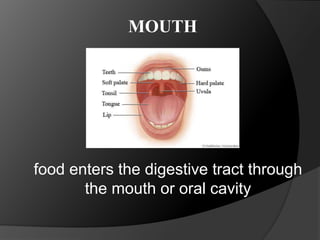
MOUTH
food enters the digestive tract through
the mouth or oral cavity
PHARYNX from the mouth, food passes
posteriorly into the
oropharynx and
laryngopharynx, both of
which are common
passageways for food, fluids
and air. The pharynx is
subdivided into the
nasopharynx, part of the
respiratory passageway; the
oropharynx, posterior to the
oral cavity; and the
laryngopharynx, which is
continuous with the
esophagus below.
ESOPHAGUS
the esophagus or gullet
runs from the pharynx
through the diaphragm
to the stomach. About
25cm (10 inches) long, it
is essentially a
passageway that
conducts food to the
stomach.
STOMACH
The stomach is a
muscular organ located
on the left side of the
upper abdomen. The
stomach receives food
from the esophagus. As
food reaches the end of
the esophagus, it
enters the stomach
through a muscular
valve called the lower
esophageal sphincter.
SMALL INTESTINE
the small intestine is the
body’s major digestive
organ. Within its twisted
passageways, usable
food is finally prepared
for its journey into the
cells of the body. The
small intestine is a
muscular tube extending
from the pyloric
sphincter to the ileocecal
valve.
LARGE INTESTINE
the large intestine is much
larger in diameter than the
small intestine (thus its
name, the large intestine) but
shorter in length. About 1.5
meters (5 feet) long, it
extends from the ileocecal
valve to the anus. Its major
function is to dry out the
indigestible food residue by
absorbing water and to
eliminate these residues from
the body as feces.
RECTUM
The rectum (Latin for
"straight") is an 8-inch
chamber that connects
the colon to the anus. It
is the rectum's job to
receive stool from the
colon, to let you know
there is stool to be
evacuated, and to hold
the stool until
evacuation happens.
ANUS
The anus is the
last part of the
digestive tract. It
consists of the
pelvic floor
muscles and the
two anal
sphincters (internal
and external
muscles).

The human Digestive System

  • 1.
  • 2.
    Breaks food downinto absorbable units that enters the blood for distribution to body cells; indigestible foodstuffs are eliminated as feces The digestive system
  • 3.
    THE PARTS OFTHE HUMAN DIGESTIVE SYSTEM • Mouth • Pharynx • Esophagus • stomach • Small intestine • Large intestine • Rectum • Anus
  • 4.
    MOUTH food enters thedigestive tract through the mouth or oral cavity
  • 5.
    PHARYNX from themouth, food passes posteriorly into the oropharynx and laryngopharynx, both of which are common passageways for food, fluids and air. The pharynx is subdivided into the nasopharynx, part of the respiratory passageway; the oropharynx, posterior to the oral cavity; and the laryngopharynx, which is continuous with the esophagus below.
  • 6.
    ESOPHAGUS the esophagus orgullet runs from the pharynx through the diaphragm to the stomach. About 25cm (10 inches) long, it is essentially a passageway that conducts food to the stomach.
  • 7.
    STOMACH The stomach isa muscular organ located on the left side of the upper abdomen. The stomach receives food from the esophagus. As food reaches the end of the esophagus, it enters the stomach through a muscular valve called the lower esophageal sphincter.
  • 8.
    SMALL INTESTINE the smallintestine is the body’s major digestive organ. Within its twisted passageways, usable food is finally prepared for its journey into the cells of the body. The small intestine is a muscular tube extending from the pyloric sphincter to the ileocecal valve.
  • 9.
    LARGE INTESTINE the largeintestine is much larger in diameter than the small intestine (thus its name, the large intestine) but shorter in length. About 1.5 meters (5 feet) long, it extends from the ileocecal valve to the anus. Its major function is to dry out the indigestible food residue by absorbing water and to eliminate these residues from the body as feces.
  • 10.
    RECTUM The rectum (Latinfor "straight") is an 8-inch chamber that connects the colon to the anus. It is the rectum's job to receive stool from the colon, to let you know there is stool to be evacuated, and to hold the stool until evacuation happens.
  • 11.
    ANUS The anus isthe last part of the digestive tract. It consists of the pelvic floor muscles and the two anal sphincters (internal and external muscles).