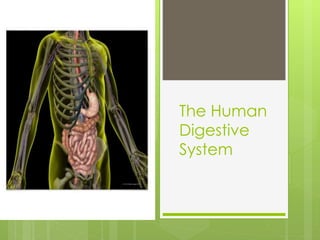
The Human
Digestive
System
The Digestive System
 The Digestive system is a series of tube-like organs that
converts our meal into body fuel. In a normal adult, the size is
about 30 feet or 9 meters long.
 The parts of Digestive System are :
Mouth, Pharynx, Esophagus, Stomach,
Small Intestines, Large Intestine, Rectum,
Anus.
 Key organs that has valuable participation in digestion
process includes, Liver, Gall Bladder, and Pancreas.
1. MOUTH
 The mouth is the beginning of the
digestive tract. Digestion Start in your
mouth as soon as you take the first bite
of your food. The Process is called
Ingestion
 Chewing mechanically break foods
into pieces that helps for easy
digestion. During chewing food is
mixed with saliva. Saliva is excreted
from salivary gland located on the
lower jaw between the tongue and
teeth.
 Saliva converts starch in the food into
sugar and also soften the food.
Tongue
 Is a fleshy muscular organ that is attached to the floor of
buccal cavity. The taste of food is determined by the taste
bud receptors present in the tongue.
 It moves the food freely inside the oral cavity.
 It pushes the bolus toward the Pharynx and
into the esophagus when swallowing.
2. PHARYNX
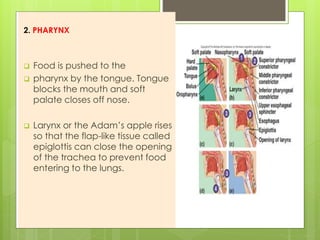
 Food is pushed to the
 pharynx by the tongue. Tongue
blocks the mouth and soft
palate closes off nose.
 Larynx or the Adam’s apple rises
so that the flap-like tissue called
epiglottis can close the opening
of the trachea to prevent food
entering to the lungs.
3. ESOPHAGUS
 Esophagus is a muscular tube extending from the pharynx to
the stomach. It is about 10 inches long in a normal adult.
 The esophagus delivers food to the stomach by the process
of peristalsis it is the series of smooth muscle contraction
 Peristalsis propels food and liquid slowly down the
esophagus and the stomach.
 The food travels 4-8 second from the mouth to the stomach.
4. STOMACH
STOMACH
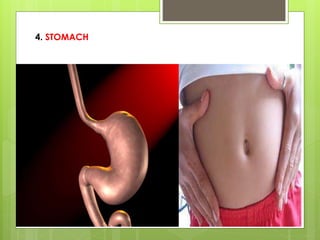
 The stomach is a J shaped sac-like organ with strong muscular
walls.
 In addition to holding the food, it's also a mixer and grinder.
 The stomach secretes acid and powerful enzymes that
continue the process of breaking down the food.
 The acid also kills bacteria that is present in the food.
 When it leaves the stomach, food is the consistency of a liquid
or paste. From there the food moves to the small intestine.
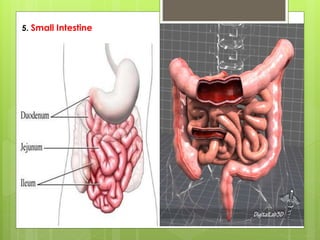
5. Small Intestine
SMALL INTESTINE
 Small Intestine are made up of duodenum, jejunum, and ileum
 It is a long tube loosely coiled that is about 20 inches long.
 The small intestine continues the process of breaking down
food by using enzymes released by the pancreas and bile
from the liver. Bile is a compound that aids in the digestion of
fat and eliminates waste products from the blood.
 Peristalsis is also at work in this organ.
 The duodenum is largely responsible for continuing the process
of breaking down food.
 The Jejunum and ileum being mainly responsible for the
absorption of nutrients into the bloodstream
Small Intestine
 It takes 4 to 8 hrs. to complete its journey in the small Intestine.
3 organs that play pivotal role in helping the stomach and small
Intestine I digesting foods.
 Pancreas – secretes enzymes in the small intestines, the
enzymes breakdown protein, carbohydrates and fats from the
food we eat.
 Liver – 2 main function is to make and secret bile and to
cleanse and purify blood coming from small intestine
containing nutrients.
 Gall Bladder – pear- shapes located under the liver and stores
bile. Bile is made in the liver travels to the gall bladder via
cystic duct.
 During meal, the gall bladder contracts sending bile to the
small Intestine. Once the nutrient have been absorbed and
the left over liquid has passed through the small intestine, what
is left is handed by the Large Intestine other known as Colon.
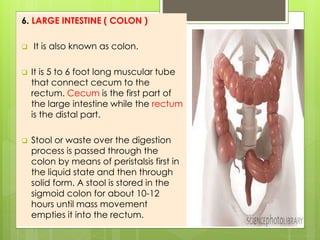
6. LARGE INTESTINE ( COLON )
 It is also known as colon.
 It is 5 to 6 foot long muscular tube
that connect cecum to the
rectum. Cecum is the first part of
the large intestine while the rectum
is the distal part.
 Stool or waste over the digestion
process is passed through the
colon by means of peristalsis first in
the liquid state and then through
solid form. A stool is stored in the
sigmoid colon for about 10-12
hours until mass movement
empties it into the rectum.
Large Intestine
 The stool is mostly debris and bacteria.
 These bacteria serves several important function
such as synthesizing various vitamins, processing
waste product and food particles and protecting
against harmful bacteria.
 When the descending colon becomes full of stool
or feces it empties itself in the rectum to begin the
process of elimination.
7. RECTUM
 It is an 8 inches chamber
that connect colon to
the anus.
 The job of the rectum is
to receive stools from
the colon to be
evacuated.
 When gas or stool
comes to the rectum,
sensory receptors will
send message to the
brain, the brain then
decides if the contents
can be release or not. If
the contents cannot be
expelled, the sphincters
contract and the
rectum accommodates,
so that the sensation
temporarily goes away.
8. ANUS
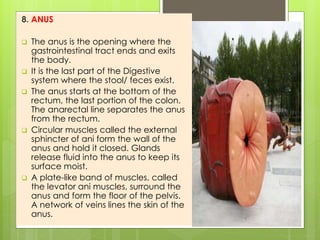
 The anus is the opening where the
gastrointestinal tract ends and exits
the body.
 It is the last part of the Digestive
system where the stool/ feces exist.
 The anus starts at the bottom of the
rectum, the last portion of the colon.
The anarectal line separates the anus
from the rectum.
 Circular muscles called the external
sphincter of ani form the wall of the
anus and hold it closed. Glands
release fluid into the anus to keep its
surface moist.
 A plate-like band of muscles, called
the levator ani muscles, surround the
anus and form the floor of the pelvis.
A network of veins lines the skin of the
anus.
Thank you!!!
Prepared to : Dr. Romell Ramos
Prepared by : Randy R. Cuasay

The human digestive system

  • 1.
  • 2.
    The Digestive System The Digestive system is a series of tube-like organs that converts our meal into body fuel. In a normal adult, the size is about 30 feet or 9 meters long.  The parts of Digestive System are : Mouth, Pharynx, Esophagus, Stomach, Small Intestines, Large Intestine, Rectum, Anus.  Key organs that has valuable participation in digestion process includes, Liver, Gall Bladder, and Pancreas.
  • 3.
    1. MOUTH  Themouth is the beginning of the digestive tract. Digestion Start in your mouth as soon as you take the first bite of your food. The Process is called Ingestion  Chewing mechanically break foods into pieces that helps for easy digestion. During chewing food is mixed with saliva. Saliva is excreted from salivary gland located on the lower jaw between the tongue and teeth.  Saliva converts starch in the food into sugar and also soften the food.
  • 4.
    Tongue  Is afleshy muscular organ that is attached to the floor of buccal cavity. The taste of food is determined by the taste bud receptors present in the tongue.  It moves the food freely inside the oral cavity.  It pushes the bolus toward the Pharynx and into the esophagus when swallowing.
  • 5.
    2. PHARYNX  Foodis pushed to the  pharynx by the tongue. Tongue blocks the mouth and soft palate closes off nose.  Larynx or the Adam’s apple rises so that the flap-like tissue called epiglottis can close the opening of the trachea to prevent food entering to the lungs.
  • 6.
    3. ESOPHAGUS  Esophagusis a muscular tube extending from the pharynx to the stomach. It is about 10 inches long in a normal adult.  The esophagus delivers food to the stomach by the process of peristalsis it is the series of smooth muscle contraction  Peristalsis propels food and liquid slowly down the esophagus and the stomach.  The food travels 4-8 second from the mouth to the stomach.
  • 7.
  • 8.
    STOMACH  The stomachis a J shaped sac-like organ with strong muscular walls.  In addition to holding the food, it's also a mixer and grinder.  The stomach secretes acid and powerful enzymes that continue the process of breaking down the food.  The acid also kills bacteria that is present in the food.  When it leaves the stomach, food is the consistency of a liquid or paste. From there the food moves to the small intestine.
  • 9.
  • 10.
    SMALL INTESTINE  SmallIntestine are made up of duodenum, jejunum, and ileum  It is a long tube loosely coiled that is about 20 inches long.  The small intestine continues the process of breaking down food by using enzymes released by the pancreas and bile from the liver. Bile is a compound that aids in the digestion of fat and eliminates waste products from the blood.  Peristalsis is also at work in this organ.  The duodenum is largely responsible for continuing the process of breaking down food.  The Jejunum and ileum being mainly responsible for the absorption of nutrients into the bloodstream
  • 11.
    Small Intestine  Ittakes 4 to 8 hrs. to complete its journey in the small Intestine. 3 organs that play pivotal role in helping the stomach and small Intestine I digesting foods.  Pancreas – secretes enzymes in the small intestines, the enzymes breakdown protein, carbohydrates and fats from the food we eat.  Liver – 2 main function is to make and secret bile and to cleanse and purify blood coming from small intestine containing nutrients.  Gall Bladder – pear- shapes located under the liver and stores bile. Bile is made in the liver travels to the gall bladder via cystic duct.  During meal, the gall bladder contracts sending bile to the small Intestine. Once the nutrient have been absorbed and the left over liquid has passed through the small intestine, what is left is handed by the Large Intestine other known as Colon.
  • 12.
    6. LARGE INTESTINE( COLON )  It is also known as colon.  It is 5 to 6 foot long muscular tube that connect cecum to the rectum. Cecum is the first part of the large intestine while the rectum is the distal part.  Stool or waste over the digestion process is passed through the colon by means of peristalsis first in the liquid state and then through solid form. A stool is stored in the sigmoid colon for about 10-12 hours until mass movement empties it into the rectum.
  • 13.
    Large Intestine  Thestool is mostly debris and bacteria.  These bacteria serves several important function such as synthesizing various vitamins, processing waste product and food particles and protecting against harmful bacteria.  When the descending colon becomes full of stool or feces it empties itself in the rectum to begin the process of elimination.
  • 14.
    7. RECTUM  Itis an 8 inches chamber that connect colon to the anus.  The job of the rectum is to receive stools from the colon to be evacuated.  When gas or stool comes to the rectum, sensory receptors will send message to the brain, the brain then decides if the contents can be release or not. If the contents cannot be expelled, the sphincters contract and the rectum accommodates, so that the sensation temporarily goes away.
  • 15.
    8. ANUS  Theanus is the opening where the gastrointestinal tract ends and exits the body.  It is the last part of the Digestive system where the stool/ feces exist.  The anus starts at the bottom of the rectum, the last portion of the colon. The anarectal line separates the anus from the rectum.  Circular muscles called the external sphincter of ani form the wall of the anus and hold it closed. Glands release fluid into the anus to keep its surface moist.  A plate-like band of muscles, called the levator ani muscles, surround the anus and form the floor of the pelvis. A network of veins lines the skin of the anus.
  • 16.
    Thank you!!! Prepared to: Dr. Romell Ramos Prepared by : Randy R. Cuasay