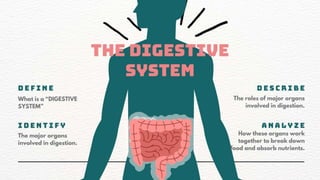
DIGESTIVE SYSTEM
The organs that take in food
and liquids and break them
down into substances that the
body can use for energy,
growth, and tissue repair.
DIGESTIVE SYSTEM
The digestive system breaks
down food into simple
nutrients such as
carbohydrates, fats, and
proteins.
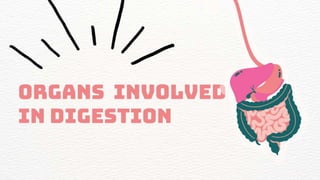
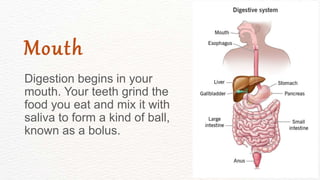
The main organs that make up your digestive system are
the organs known as your gastrointestinal tract. They are:
your mouth, esophagus, stomach, small intestine,
large intestine and anus. Assisting your GI organs
along the way are your pancreas, gallbladder and liver.
what organs make up the digestive system?
Digestion begins in your
mouth. Your teeth grind the
food you eat and mix it with
saliva to form a kind of ball,
known as a bolus.
Mouth
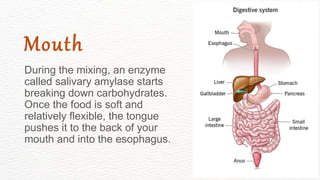
During the mixing, an enzyme
called salivary amylase starts
breaking down carbohydrates.
Once the food is soft and
relatively flexible, the tongue
pushes it to the back of your
mouth and into the esophagus.
Mouth
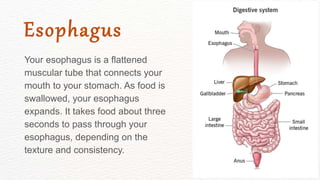
Your esophagus is a flattened
muscular tube that connects your
mouth to your stomach. As food is
swallowed, your esophagus
expands. It takes food about three
seconds to pass through your
esophagus, depending on the
texture and consistency.
Esophagus
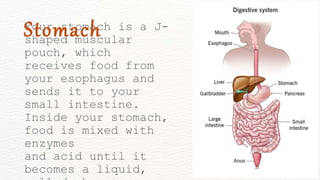
Your stomach is a J-
shaped muscular
pouch, which
receives food from
your esophagus and
sends it to your
small intestine.
Inside your stomach,
food is mixed with
enzymes
and acid until it
becomes a liquid,
Stomach
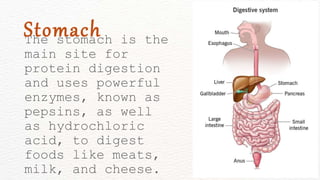
The stomach is the
main site for
protein digestion
and uses powerful
enzymes, known as
pepsins, as well
as hydrochloric
acid, to digest
foods like meats,
milk, and cheese.
Stomach
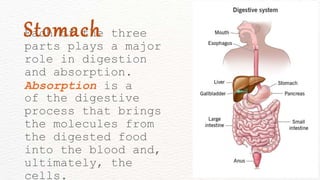
Each of the three
parts plays a major
role in digestion
and absorption.
Absorption is a
of the digestive
process that brings
the molecules from
the digested food
into the blood and,
ultimately, the
cells.
Stomach
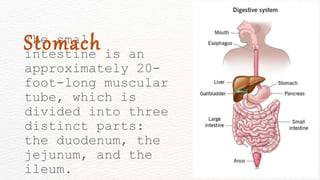
The small
intestine is an
approximately 20-
foot-long muscular
tube, which is
divided into three
distinct parts:
the duodenum, the
jejunum, and the
ileum.
Stomach
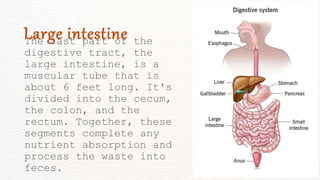
The last part of the
digestive tract, the
large intestine, is a
muscular tube that is
about 6 feet long. It's
divided into the cecum,
the colon, and the
rectum. Together, these
segments complete any
nutrient absorption and
process the waste into
feces.
Large intestine
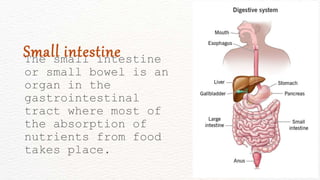
The small intestine
or small bowel is an
organ in the
gastrointestinal
tract where most of
the absorption of
nutrients from food
takes place.
Small intestine
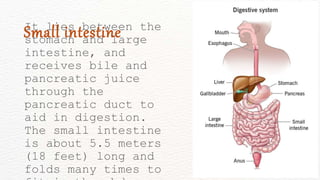
It lies between the
stomach and large
intestine, and
receives bile and
pancreatic juice
through the
pancreatic duct to
aid in digestion.
The small intestine
is about 5.5 meters
(18 feet) long and
folds many times to
Small intestine
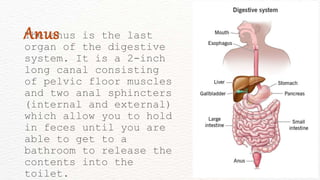
The anus is the last
organ of the digestive
system. It is a 2-inch
long canal consisting
of pelvic floor muscles
and two anal sphincters
(internal and external)
which allow you to hold
in feces until you are
able to get to a
bathroom to release the
contents into the
toilet.
Anus
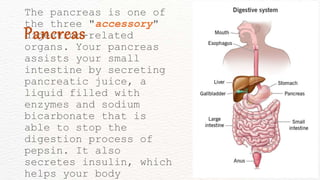
The pancreas is one of
the three "accessory"
digestion-related
organs. Your pancreas
assists your small
intestine by secreting
pancreatic juice, a
liquid filled with
enzymes and sodium
bicarbonate that is
able to stop the
digestion process of
pepsin. It also
secretes insulin, which
helps your body
Pancreas
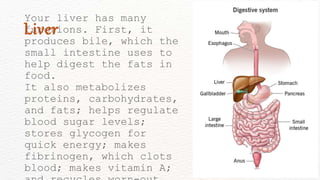
Your liver has many
functions. First, it
produces bile, which the
small intestine uses to
help digest the fats in
food.
It also metabolizes
proteins, carbohydrates,
and fats; helps regulate
blood sugar levels;
stores glycogen for
quick energy; makes
fibrinogen, which clots
blood; makes vitamin A;
Liver
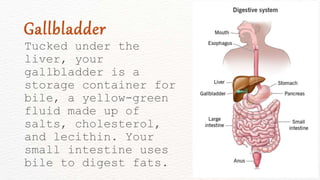
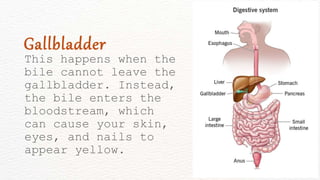
Tucked under the
liver, your
gallbladder is a
storage container for
bile, a yellow-green
fluid made up of
salts, cholesterol,
and lecithin. Your
small intestine uses
bile to digest fats.
Gallbladder
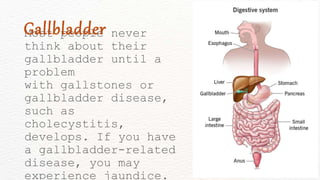
Most people never
think about their
gallbladder until a
problem
with gallstones or
gallbladder disease,
such as
cholecystitis,
develops. If you have
a gallbladder-related
disease, you may
experience jaundice.
Gallbladder
This happens when the
bile cannot leave the
gallbladder. Instead,
the bile enters the
bloodstream, which
can cause your skin,
eyes, and nails to
appear yellow.
Gallbladder
the human digestive system: Description, Parts and Function

the human digestive system: Description, Parts and Function

  • 3.
    DIGESTIVE SYSTEM The organsthat take in food and liquids and break them down into substances that the body can use for energy, growth, and tissue repair.
  • 4.
    DIGESTIVE SYSTEM The digestivesystem breaks down food into simple nutrients such as carbohydrates, fats, and proteins.
  • 6.
    The main organsthat make up your digestive system are the organs known as your gastrointestinal tract. They are: your mouth, esophagus, stomach, small intestine, large intestine and anus. Assisting your GI organs along the way are your pancreas, gallbladder and liver. what organs make up the digestive system?
  • 7.
    Digestion begins inyour mouth. Your teeth grind the food you eat and mix it with saliva to form a kind of ball, known as a bolus. Mouth
  • 8.
    During the mixing,an enzyme called salivary amylase starts breaking down carbohydrates. Once the food is soft and relatively flexible, the tongue pushes it to the back of your mouth and into the esophagus. Mouth
  • 9.
    Your esophagus isa flattened muscular tube that connects your mouth to your stomach. As food is swallowed, your esophagus expands. It takes food about three seconds to pass through your esophagus, depending on the texture and consistency. Esophagus
  • 10.
    Your stomach isa J- shaped muscular pouch, which receives food from your esophagus and sends it to your small intestine. Inside your stomach, food is mixed with enzymes and acid until it becomes a liquid, Stomach
  • 11.
    The stomach isthe main site for protein digestion and uses powerful enzymes, known as pepsins, as well as hydrochloric acid, to digest foods like meats, milk, and cheese. Stomach
  • 12.
    Each of thethree parts plays a major role in digestion and absorption. Absorption is a of the digestive process that brings the molecules from the digested food into the blood and, ultimately, the cells. Stomach
  • 13.
    The small intestine isan approximately 20- foot-long muscular tube, which is divided into three distinct parts: the duodenum, the jejunum, and the ileum. Stomach
  • 14.
    The last partof the digestive tract, the large intestine, is a muscular tube that is about 6 feet long. It's divided into the cecum, the colon, and the rectum. Together, these segments complete any nutrient absorption and process the waste into feces. Large intestine
  • 15.
    The small intestine orsmall bowel is an organ in the gastrointestinal tract where most of the absorption of nutrients from food takes place. Small intestine
  • 16.
    It lies betweenthe stomach and large intestine, and receives bile and pancreatic juice through the pancreatic duct to aid in digestion. The small intestine is about 5.5 meters (18 feet) long and folds many times to Small intestine
  • 17.
    The anus isthe last organ of the digestive system. It is a 2-inch long canal consisting of pelvic floor muscles and two anal sphincters (internal and external) which allow you to hold in feces until you are able to get to a bathroom to release the contents into the toilet. Anus
  • 18.
    The pancreas isone of the three "accessory" digestion-related organs. Your pancreas assists your small intestine by secreting pancreatic juice, a liquid filled with enzymes and sodium bicarbonate that is able to stop the digestion process of pepsin. It also secretes insulin, which helps your body Pancreas
  • 19.
    Your liver hasmany functions. First, it produces bile, which the small intestine uses to help digest the fats in food. It also metabolizes proteins, carbohydrates, and fats; helps regulate blood sugar levels; stores glycogen for quick energy; makes fibrinogen, which clots blood; makes vitamin A; Liver
  • 20.
    Tucked under the liver,your gallbladder is a storage container for bile, a yellow-green fluid made up of salts, cholesterol, and lecithin. Your small intestine uses bile to digest fats. Gallbladder
  • 21.
    Most people never thinkabout their gallbladder until a problem with gallstones or gallbladder disease, such as cholecystitis, develops. If you have a gallbladder-related disease, you may experience jaundice. Gallbladder
  • 22.
    This happens whenthe bile cannot leave the gallbladder. Instead, the bile enters the bloodstream, which can cause your skin, eyes, and nails to appear yellow. Gallbladder

Editor's Notes

  • #15 The small intestine or small bowel is an organ in the gastrointestinal tract where most of the absorption of nutrients from food takes place. It lies between the stomach and large intestine, and receives bile and pancreatic juice through the pancreatic duct to aid in digestion. The small intestine is about 5.5 metres (18 feet) long and folds many times to fit in the abdomen.