Blood
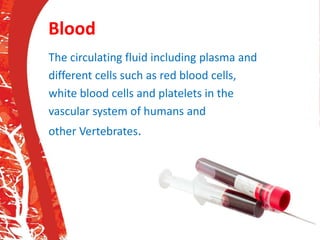
The circulating fluid including plasma and
different cells such as red blood cells,
white blood cells and platelets in the
vascular system of humans and
other Vertebrates.
Functions of blood
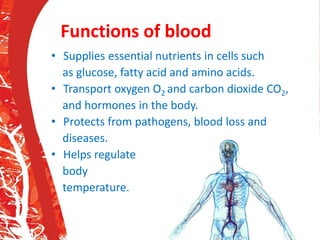
• Supplies essential nutrients in cells such
as glucose, fatty acid and amino acids.
• Transport oxygen O2 and carbon dioxide CO2,
and hormones in the body.
• Protects from pathogens, blood loss and
diseases.
• Helps regulate
body
temperature.
Physical characteristics
• More viscous(thick) than water.
• 100.4 degree F temperature.
• 8% of total body weight.
• Average blood volume in males is
5-6 liters.
• And 4-5 liters in average female.
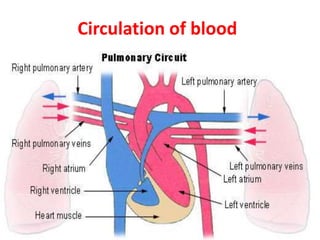
Circulation of blood
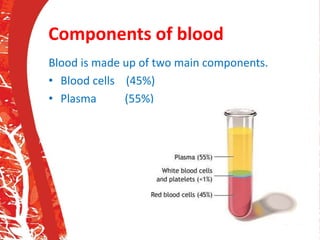
Components of blood
Blood is made up of two main components.
• Blood cells (45%)
• Plasma (55%)
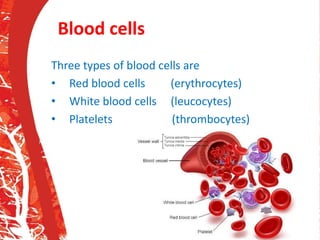
Blood cells
Three types of blood cells are
• Red blood cells (erythrocytes)
• White blood cells (leucocytes)
• Platelets (thrombocytes)
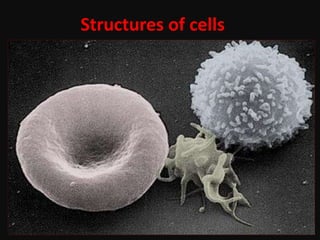
Structures of cells
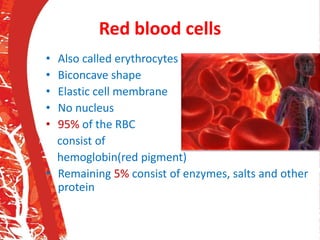
Red blood cells
• Also called erythrocytes
• Biconcave shape
• Elastic cell membrane
• No nucleus
• 95% of the RBC
consist of
hemoglobin(red pigment)
• Remaining 5% consist of enzymes, salts and other
protein
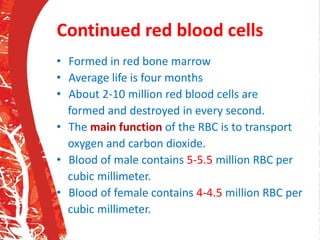
Continued red blood cells
• Formed in red bone marrow
• Average life is four months
• About 2-10 million red blood cells are
formed and destroyed in every second.
• The main function of the RBC is to transport
oxygen and carbon dioxide.
• Blood of male contains 5-5.5 million RBC per
cubic millimeter.
• Blood of female contains 4-4.5 million RBC per
cubic millimeter.
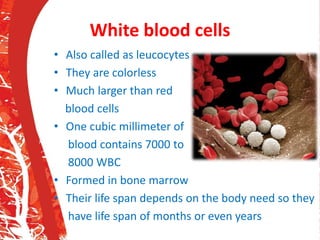
White blood cells
• Also called as leucocytes
• They are colorless
• Much larger than red
blood cells
• One cubic millimeter of
blood contains 7000 to
8000 WBC
• Formed in bone marrow
• Their life span depends on the body need so they
have life span of months or even years
Continued white blood cells
• white blood cells are about 1% in healthy people.
• Only 2% of total WBC population circulating in
blood at a time
- Rest is in the skin, lungs and spleen.
Main function
These are the cells of the immune system
that are involved in protecting the body against
both infectious disease and foreign invaders.
Types of WBC
• Granulocytes
These WBC have granules in their cytoplasm.
-Granulocytes include neutrophils, eosinophils
and basophils.
• Agranulocytes
These are without granules in their cytoplasm
-These include monocytes and lymphocytes.
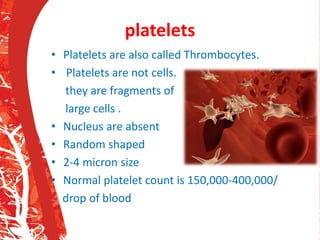
platelets
• Platelets are also called Thrombocytes.
• Platelets are not cells.
they are fragments of
large cells .
• Nucleus are absent
• Random shaped
• 2-4 micron size
• Normal platelet count is 150,000-400,000/
drop of blood
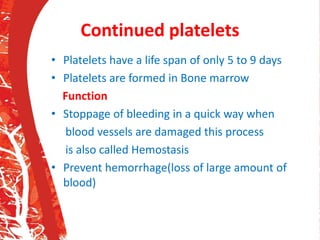
Continued platelets
• Platelets have a life span of only 5 to 9 days
• Platelets are formed in Bone marrow
Function
• Stoppage of bleeding in a quick way when
blood vessels are damaged this process
is also called Hemostasis
• Prevent hemorrhage(loss of large amount of
blood)
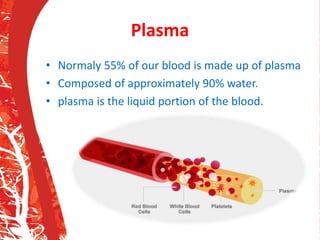
Plasma
• Normaly 55% of our blood is made up of plasma
• Composed of approximately 90% water.
• plasma is the liquid portion of the blood.
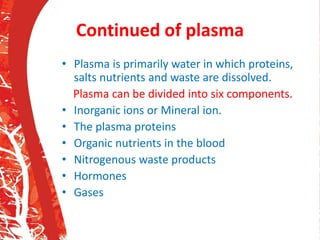
Continued of plasma
• Plasma is primarily water in which proteins,
salts nutrients and waste are dissolved.
Plasma can be divided into six components.
• Inorganic ions or Mineral ion.
• The plasma proteins
• Organic nutrients in the blood
• Nitrogenous waste products
• Hormones
• Gases
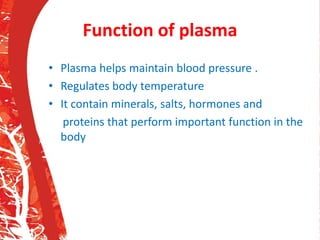
Function of plasma
• Plasma helps maintain blood pressure .
• Regulates body temperature
• It contain minerals, salts, hormones and
proteins that perform important function in the
body
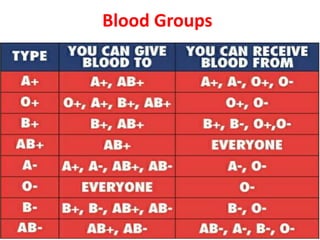
Blood Groups
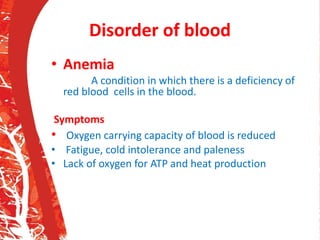
Disorder of blood
• Anemia
A condition in which there is a deficiency of
red blood cells in the blood.
Symptoms
• Oxygen carrying capacity of blood is reduced
• Fatigue, cold intolerance and paleness
• Lack of oxygen for ATP and heat production
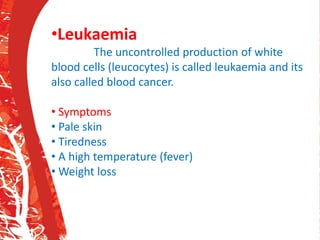
•Leukaemia
The uncontrolled production of white
blood cells (leucocytes) is called leukaemia and its
also called blood cancer.
• Symptoms
• Pale skin
• Tiredness
• A high temperature (fever)
• Weight loss
•
Treatment
• The blood of the patient should be changed
regularly
• It can be cured by Bone marrow transplant.
• it is an effective but expensive treatment.
Thalassemia
• It is genetically transmitted disease.
• The patient of thalassemia has abnormal
haemoglobin.
• This diseases is more common in children,
especially in children of Mediterranean
parents
Treatment
• The blood of these patients should be
replaced regularly with normal blood.
• It can be cured by bone marrow transplant.
The bone marrow transplant is very
expensive. Its cure rate is not 100%
Have a nice day
iwaleedkhan55@gmail.com
muzafarsharif50@gmail.com

Blood anatomy

  • 2.
    Blood The circulating fluidincluding plasma and different cells such as red blood cells, white blood cells and platelets in the vascular system of humans and other Vertebrates.
  • 3.
    Functions of blood •Supplies essential nutrients in cells such as glucose, fatty acid and amino acids. • Transport oxygen O2 and carbon dioxide CO2, and hormones in the body. • Protects from pathogens, blood loss and diseases. • Helps regulate body temperature.
  • 4.
    Physical characteristics • Moreviscous(thick) than water. • 100.4 degree F temperature. • 8% of total body weight. • Average blood volume in males is 5-6 liters. • And 4-5 liters in average female.
  • 5.
  • 6.
    Components of blood Bloodis made up of two main components. • Blood cells (45%) • Plasma (55%)
  • 7.
    Blood cells Three typesof blood cells are • Red blood cells (erythrocytes) • White blood cells (leucocytes) • Platelets (thrombocytes)
  • 8.
  • 9.
    Red blood cells •Also called erythrocytes • Biconcave shape • Elastic cell membrane • No nucleus • 95% of the RBC consist of hemoglobin(red pigment) • Remaining 5% consist of enzymes, salts and other protein
  • 10.
    Continued red bloodcells • Formed in red bone marrow • Average life is four months • About 2-10 million red blood cells are formed and destroyed in every second. • The main function of the RBC is to transport oxygen and carbon dioxide. • Blood of male contains 5-5.5 million RBC per cubic millimeter. • Blood of female contains 4-4.5 million RBC per cubic millimeter.
  • 11.
    White blood cells •Also called as leucocytes • They are colorless • Much larger than red blood cells • One cubic millimeter of blood contains 7000 to 8000 WBC • Formed in bone marrow • Their life span depends on the body need so they have life span of months or even years
  • 12.
    Continued white bloodcells • white blood cells are about 1% in healthy people. • Only 2% of total WBC population circulating in blood at a time - Rest is in the skin, lungs and spleen. Main function These are the cells of the immune system that are involved in protecting the body against both infectious disease and foreign invaders.
  • 13.
    Types of WBC •Granulocytes These WBC have granules in their cytoplasm. -Granulocytes include neutrophils, eosinophils and basophils. • Agranulocytes These are without granules in their cytoplasm -These include monocytes and lymphocytes.
  • 14.
    platelets • Platelets arealso called Thrombocytes. • Platelets are not cells. they are fragments of large cells . • Nucleus are absent • Random shaped • 2-4 micron size • Normal platelet count is 150,000-400,000/ drop of blood
  • 15.
    Continued platelets • Plateletshave a life span of only 5 to 9 days • Platelets are formed in Bone marrow Function • Stoppage of bleeding in a quick way when blood vessels are damaged this process is also called Hemostasis • Prevent hemorrhage(loss of large amount of blood)
  • 16.
    Plasma • Normaly 55%of our blood is made up of plasma • Composed of approximately 90% water. • plasma is the liquid portion of the blood.
  • 17.
    Continued of plasma •Plasma is primarily water in which proteins, salts nutrients and waste are dissolved. Plasma can be divided into six components. • Inorganic ions or Mineral ion. • The plasma proteins • Organic nutrients in the blood • Nitrogenous waste products • Hormones • Gases
  • 18.
    Function of plasma •Plasma helps maintain blood pressure . • Regulates body temperature • It contain minerals, salts, hormones and proteins that perform important function in the body
  • 19.
  • 20.
    Disorder of blood •Anemia A condition in which there is a deficiency of red blood cells in the blood. Symptoms • Oxygen carrying capacity of blood is reduced • Fatigue, cold intolerance and paleness • Lack of oxygen for ATP and heat production
  • 21.
    •Leukaemia The uncontrolled productionof white blood cells (leucocytes) is called leukaemia and its also called blood cancer. • Symptoms • Pale skin • Tiredness • A high temperature (fever) • Weight loss •
  • 22.
    Treatment • The bloodof the patient should be changed regularly • It can be cured by Bone marrow transplant. • it is an effective but expensive treatment.
  • 23.
    Thalassemia • It isgenetically transmitted disease. • The patient of thalassemia has abnormal haemoglobin. • This diseases is more common in children, especially in children of Mediterranean parents
  • 24.
    Treatment • The bloodof these patients should be replaced regularly with normal blood. • It can be cured by bone marrow transplant. The bone marrow transplant is very expensive. Its cure rate is not 100%
  • 25.
    Have a niceday iwaleedkhan55@gmail.com muzafarsharif50@gmail.com