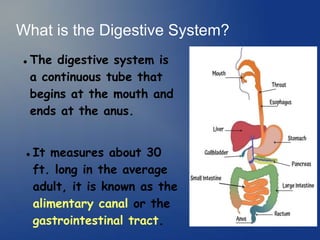
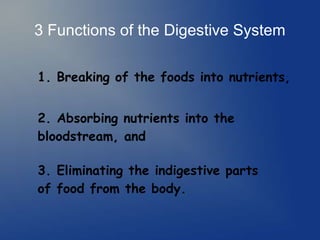
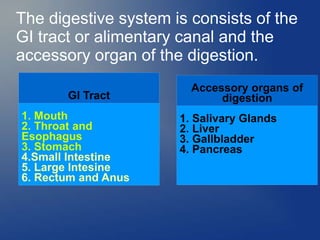
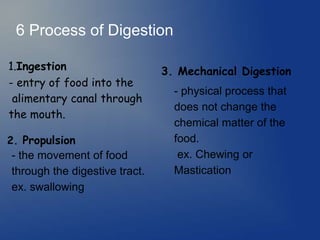
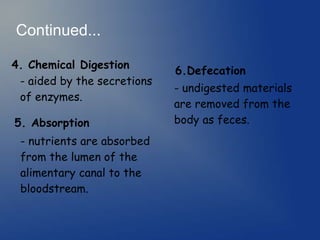
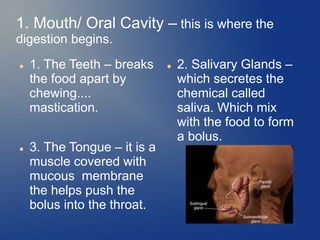
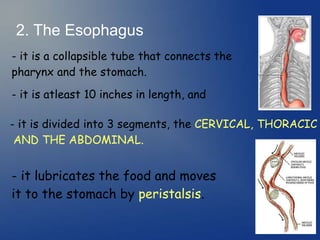
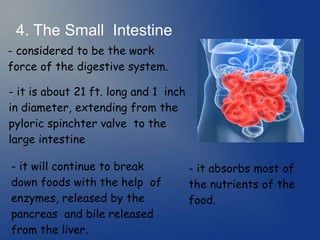
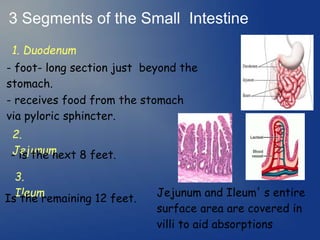
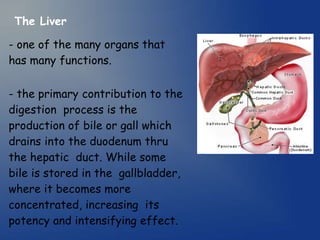
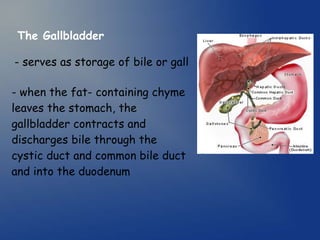
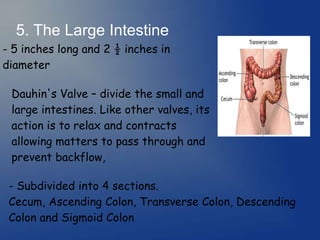
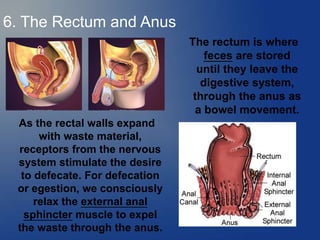
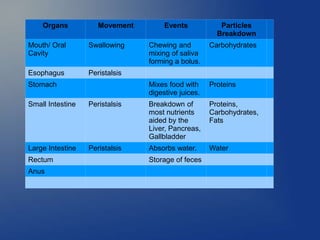
The digestive system begins at the mouth and is approximately 30 feet long. It breaks down food, absorbs nutrients into the bloodstream, and eliminates waste. The main organs are the mouth, esophagus, stomach, small intestine, large intestine, rectum, and anus. Food is ingested, moved through peristalsis, broken down mechanically and chemically, absorbed, and waste is eliminated as feces through the anus. Accessory organs like the liver, gallbladder and pancreas produce enzymes and bile to aid chemical digestion in the small intestine.