All Types of
Conditionals and Wish
The conditional
 sentences are clauses
 introduced with IF, IN
CASE, UNLESS, WHEN, e
          tc.
There are four types of conditional
                sentences:
   Zero-conditional      1-st conditional


   2-nd conditional      3-rd conditional
Zero-conditional
   Denotes general truths and laws of nature.
             If-clause          Main clause
          If+ present simple present simple
Zero-conditional sentences are used to express
  something which is always true.
We can use when or whenever instead of IF:
   e.g. If/When it rains, the roads get slippery and
    dangerous.
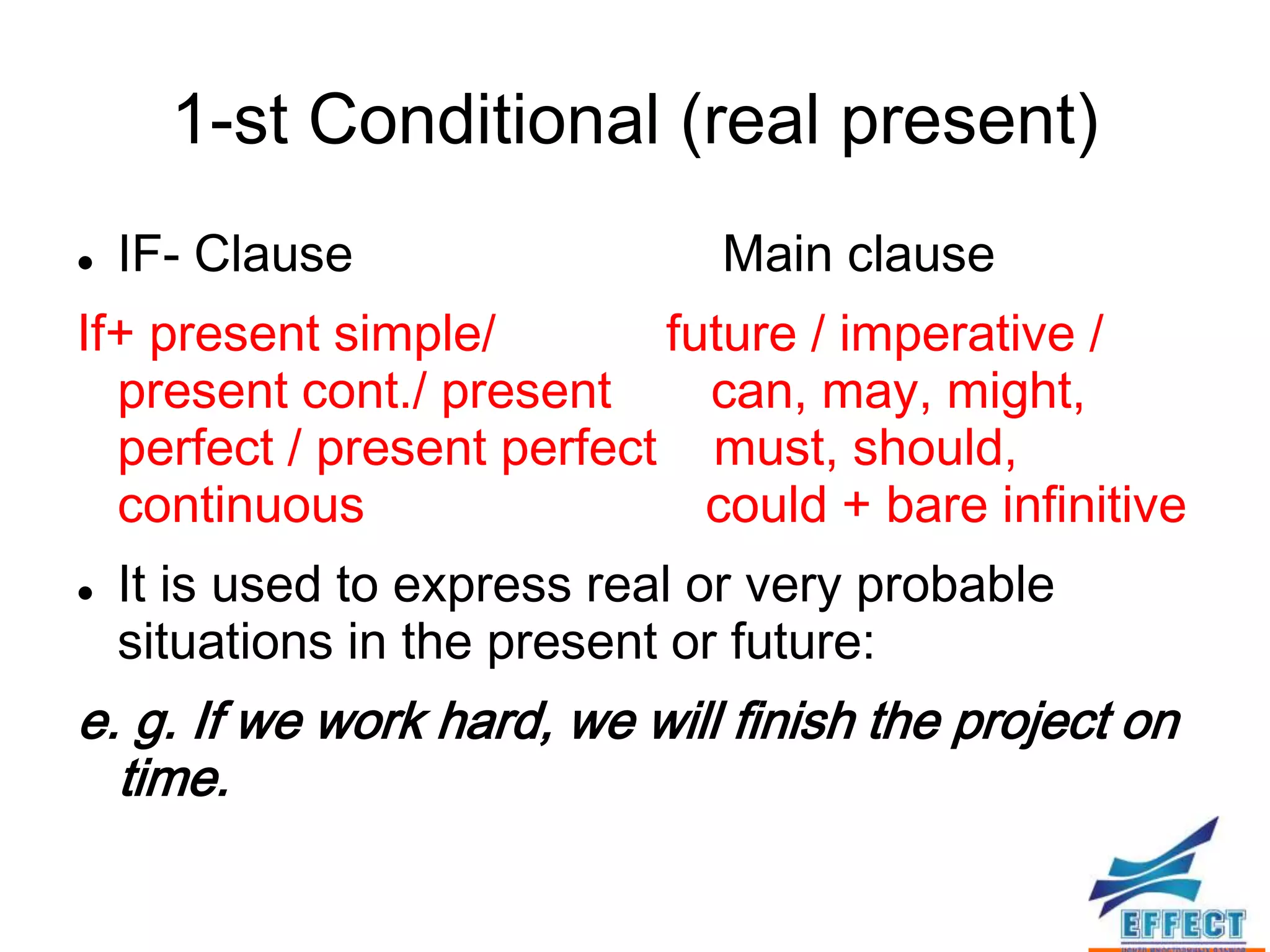
1-st Conditional (real present)
   IF- Clause                 Main clause
If+ present simple/        future / imperative /
  present cont./ present     can, may, might,
  perfect / present perfect must, should,
  continuous                 could + bare infinitive
   It is used to express real or very probable
    situations in the present or future:
e. g. If we work hard, we will finish the project on
  time.
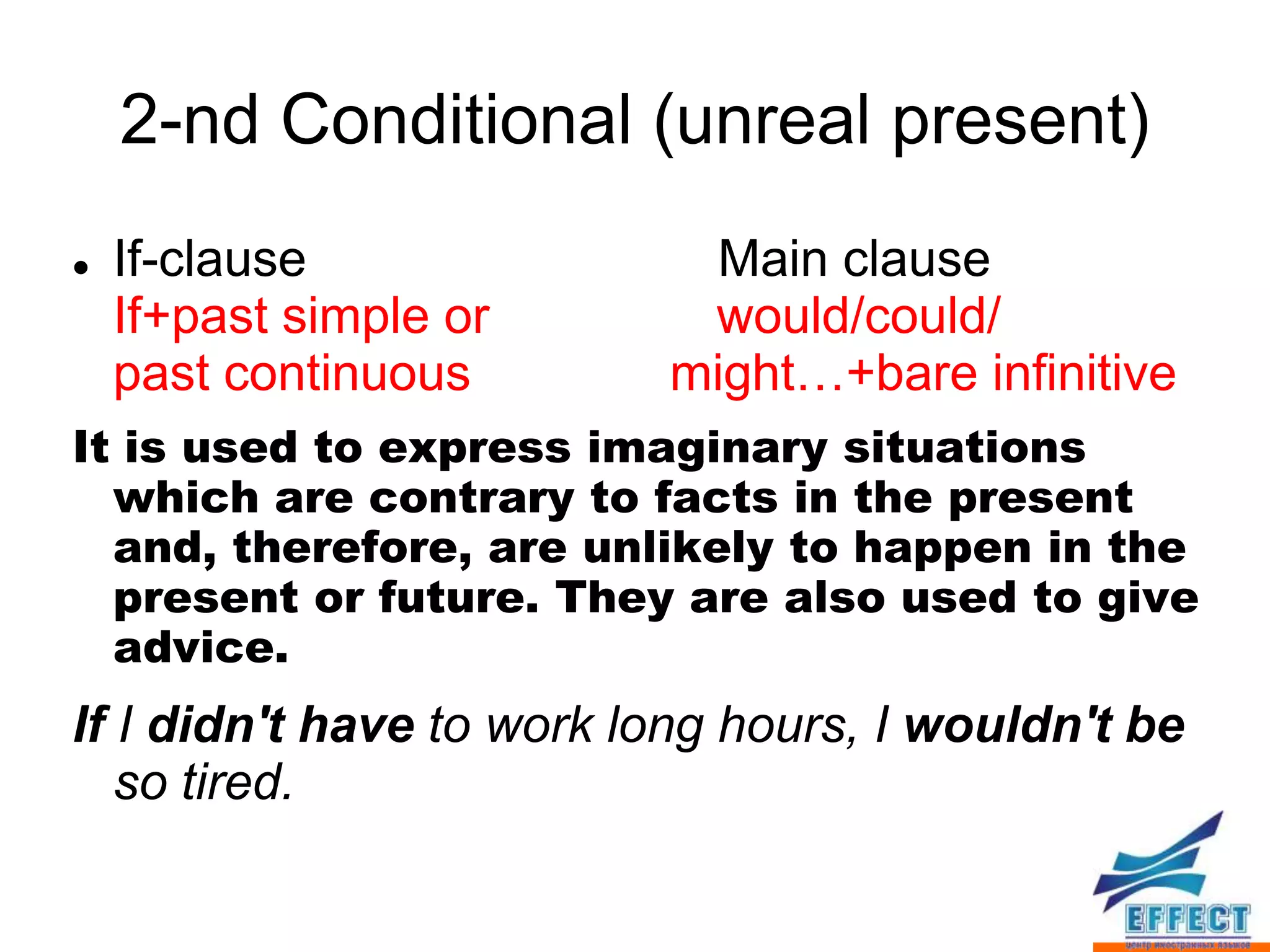
2-nd Conditional (unreal present)
   If-clause              Main clause
    If+past simple or      would/could/
    past continuous       might…+bare infinitive
It is used to express imaginary situations
  which are contrary to facts in the present
  and, therefore, are unlikely to happen in the
  present or future. They are also used to give
  advice.
If I didn't have to work long hours, I wouldn't be
   so tired.
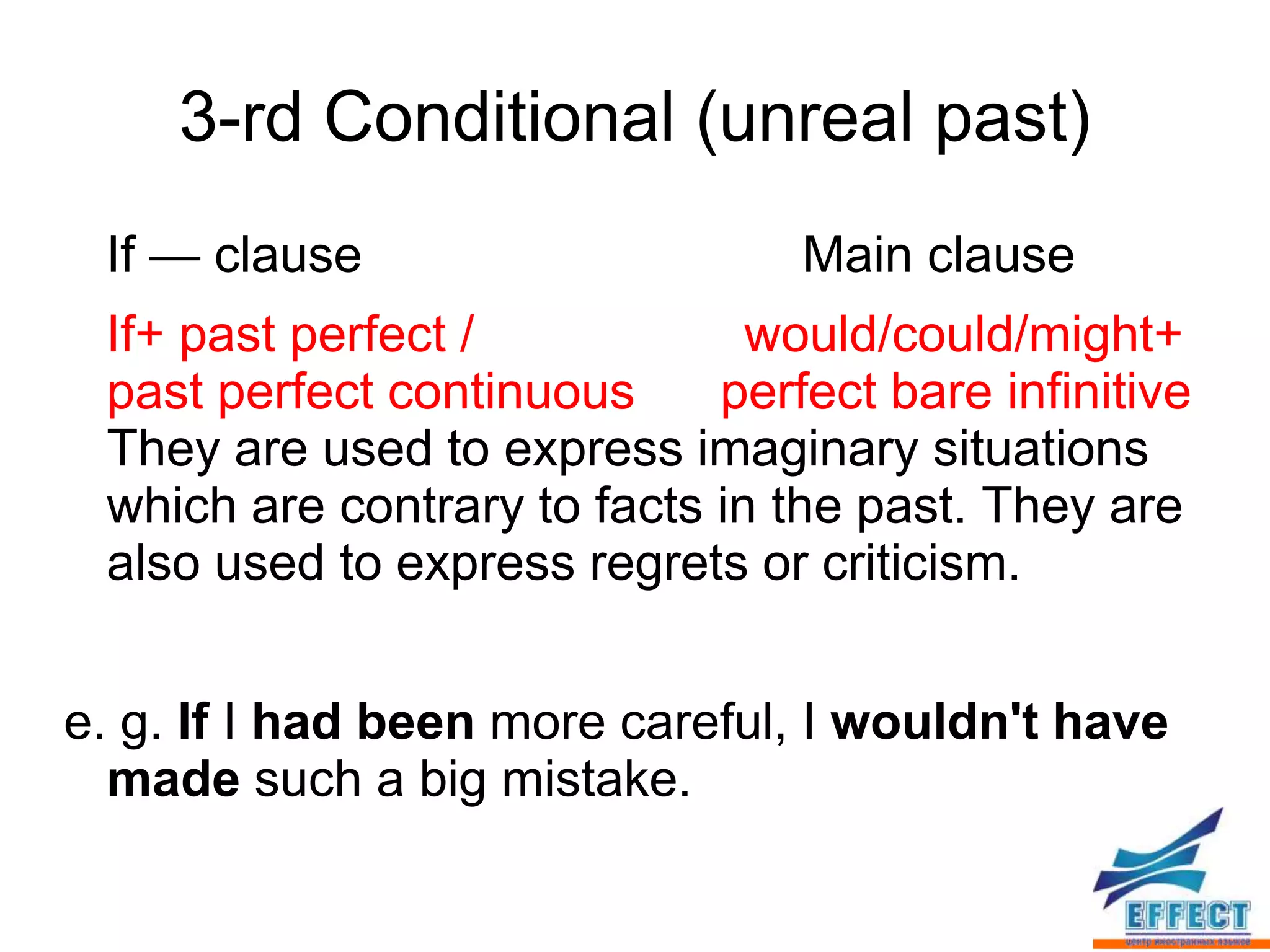
3-rd Conditional (unreal past)
 If — clause                     Main clause
 If+ past perfect /            would/could/might+
 past perfect continuous     perfect bare infinitive
 They are used to express imaginary situations
 which are contrary to facts in the past. They are
 also used to express regrets or criticism.


e. g. If I had been more careful, I wouldn't have
  made such a big mistake.
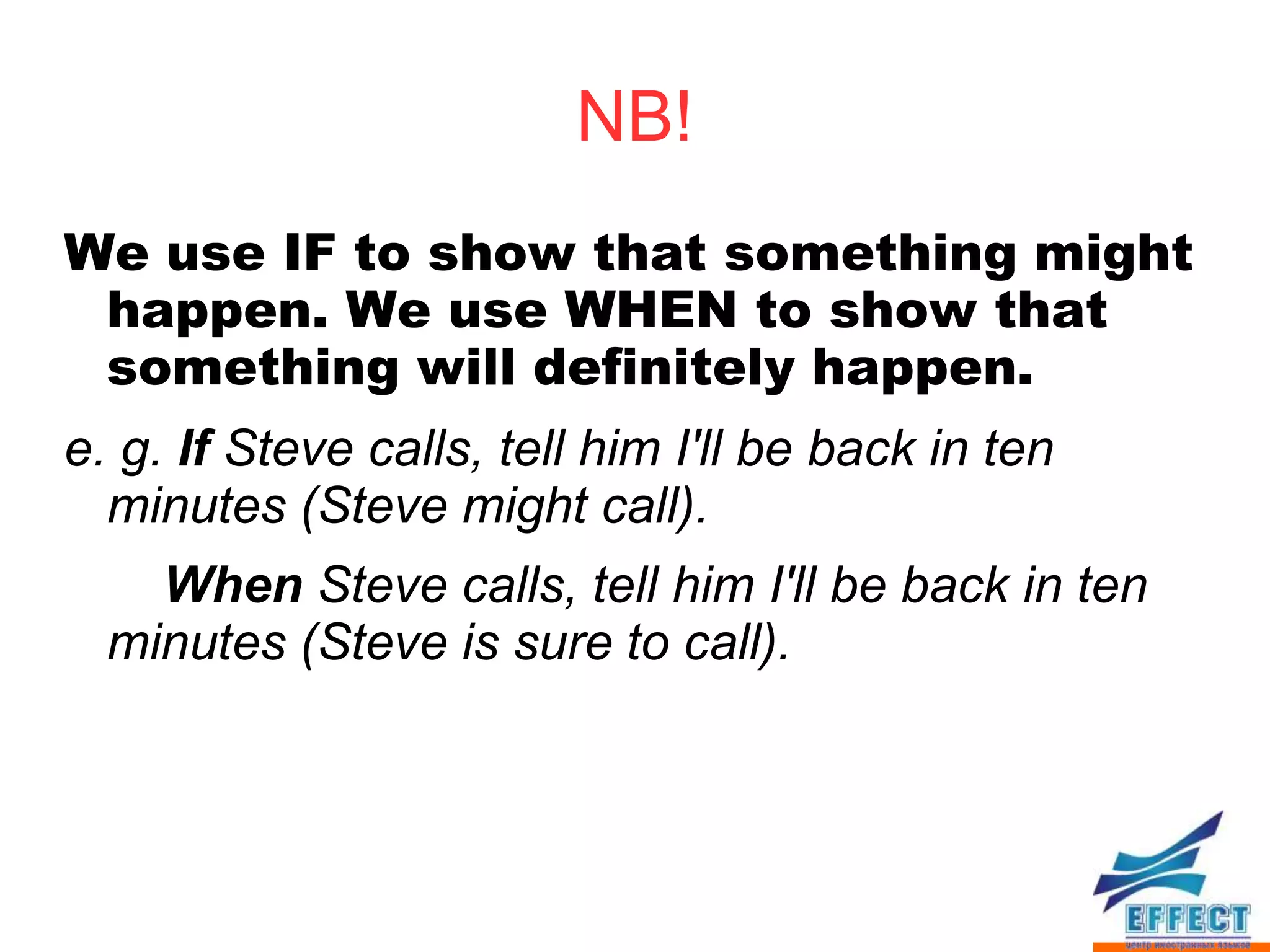
NB!
We use IF to show that something might
 happen. We use WHEN to show that
 something will definitely happen.
e. g. If Steve calls, tell him I'll be back in ten
  minutes (Steve might call).
    When Steve calls, tell him I'll be back in ten
  minutes (Steve is sure to call).
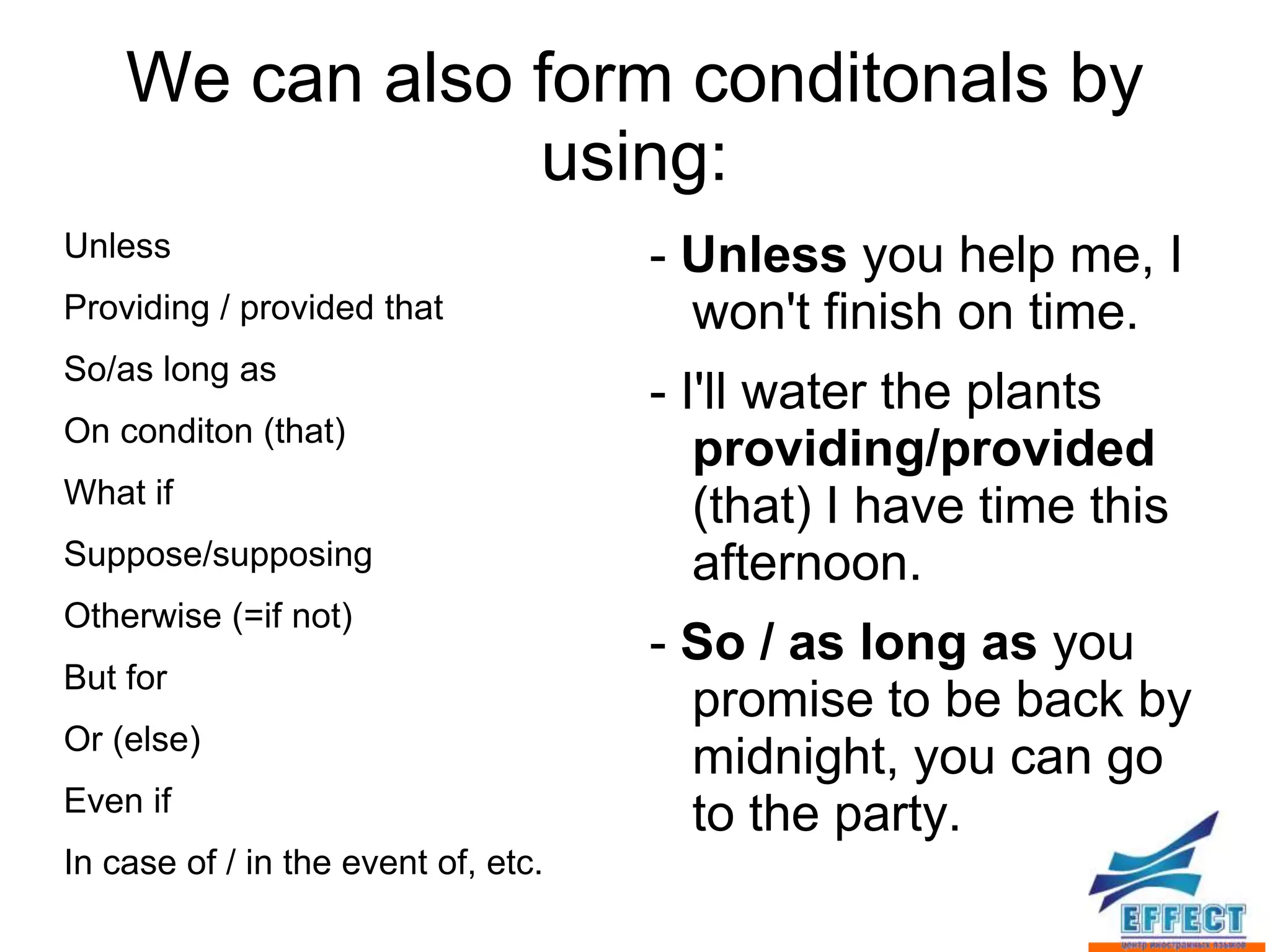
We can also form conditonals by
                using:
Unless                               - Unless you help me, I
Providing / provided that              won't finish on time.
So/as long as
                                     - I'll water the plants
On conditon (that)
                                        providing/provided
What if
                                        (that) I have time this
Suppose/supposing                       afternoon.
Otherwise (=if not)
                                     - So / as long as you
But for
                                       promise to be back by
Or (else)
                                       midnight, you can go
Even if
                                       to the party.
In case of / in the event of, etc.
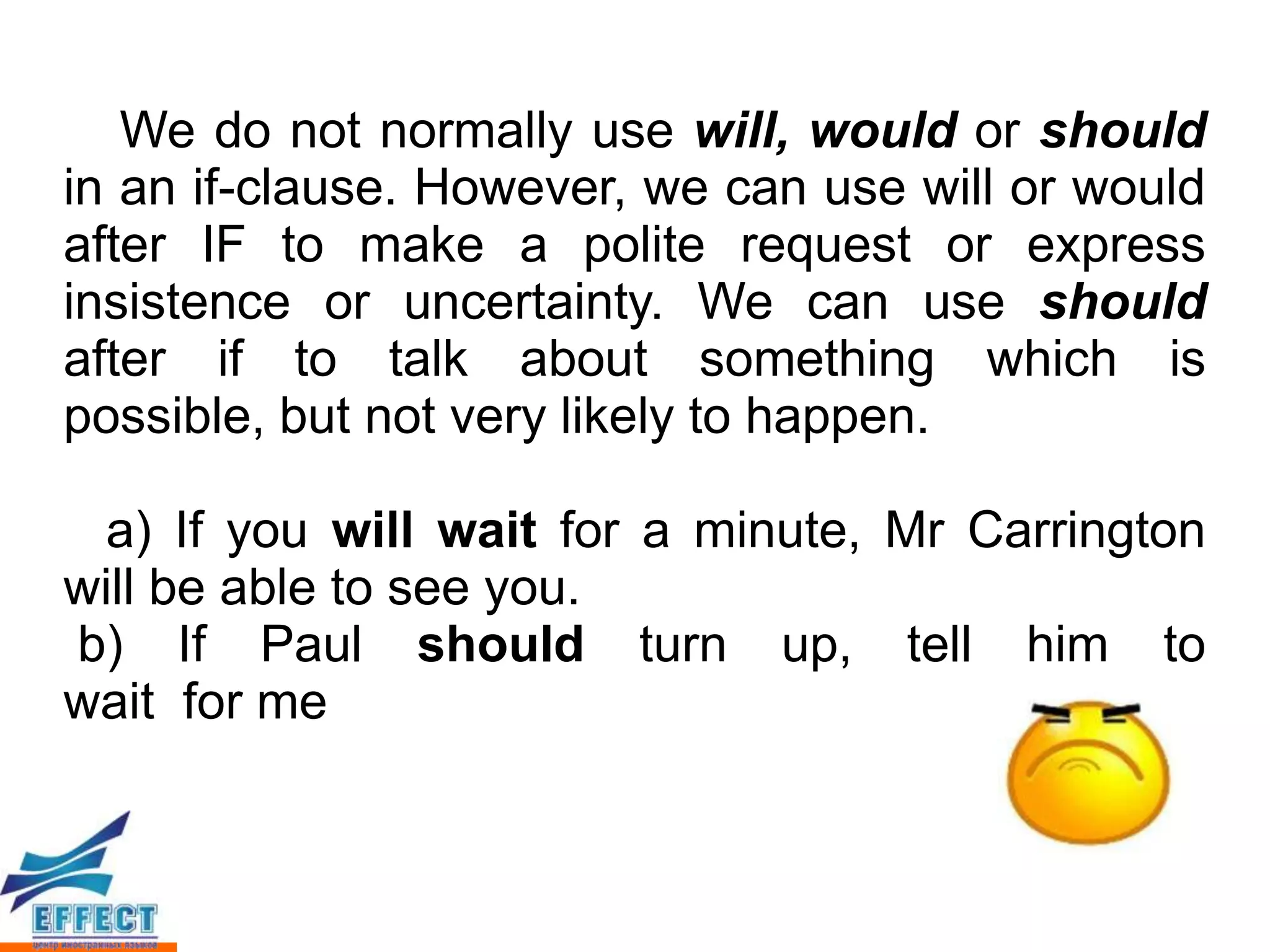
We do not normally use will, would or should
in an if-clause. However, we can use will or would
after IF to make a polite request or express
insistence or uncertainty. We can use should
after if to talk about something which is
possible, but not very likely to happen.

 a) If you will wait for a minute, Mr Carrington
will be able to see you.
b) If Paul should turn up, tell him to
wait for me
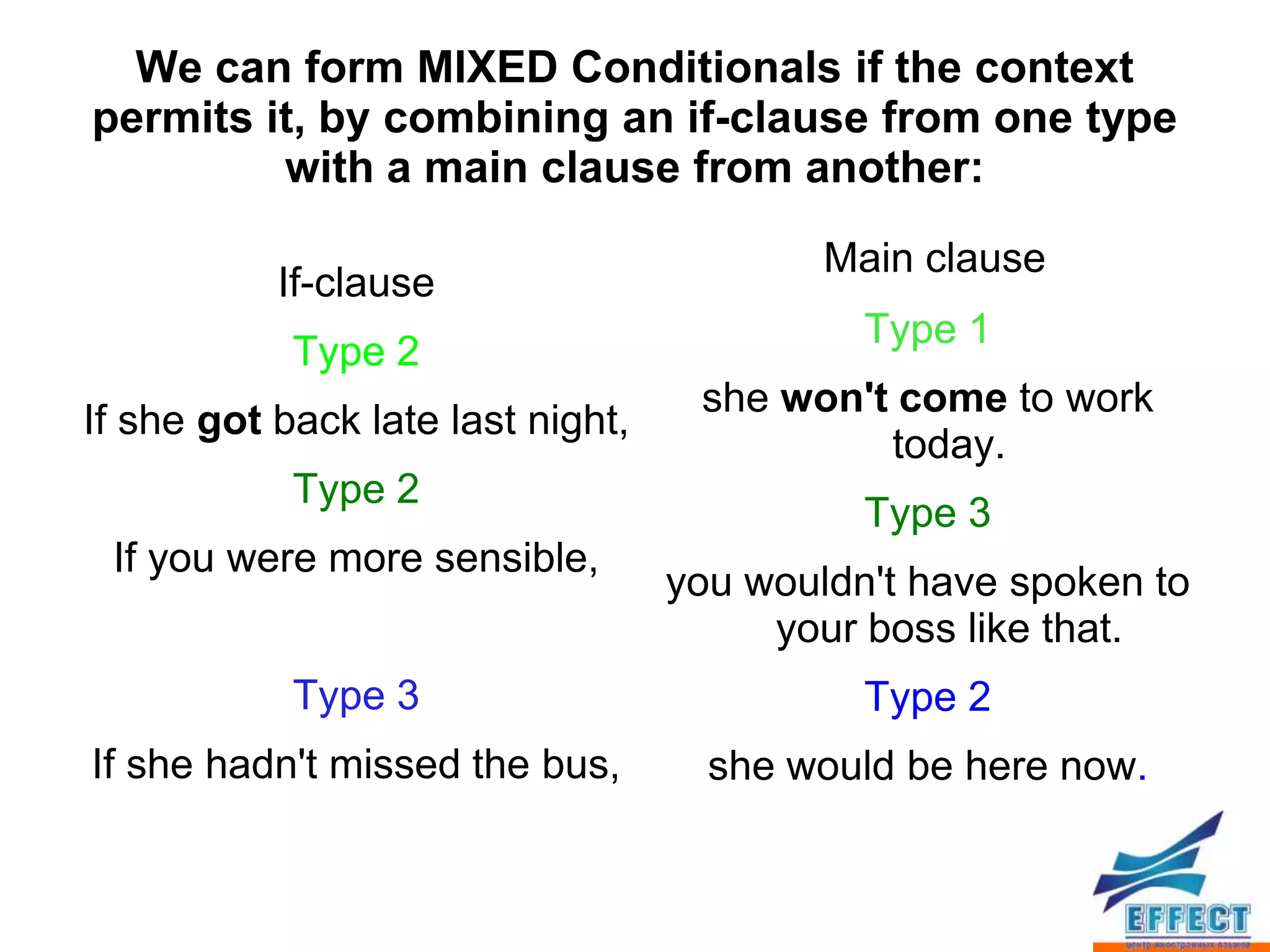
We can form MIXED Conditionals if the context
permits it, by combining an if-clause from one type
         with a main clause from another:

                                           Main clause
           If-clause
                                             Type 1
            Type 2
                                    she won't come to work
If she got back late last night,
                                             today.
            Type 2
                                             Type 3
 If you were more sensible,
                                   you wouldn't have spoken to
                                        your boss like that.
            Type 3                           Type 2
If she hadn't missed the bus,        she would be here now.
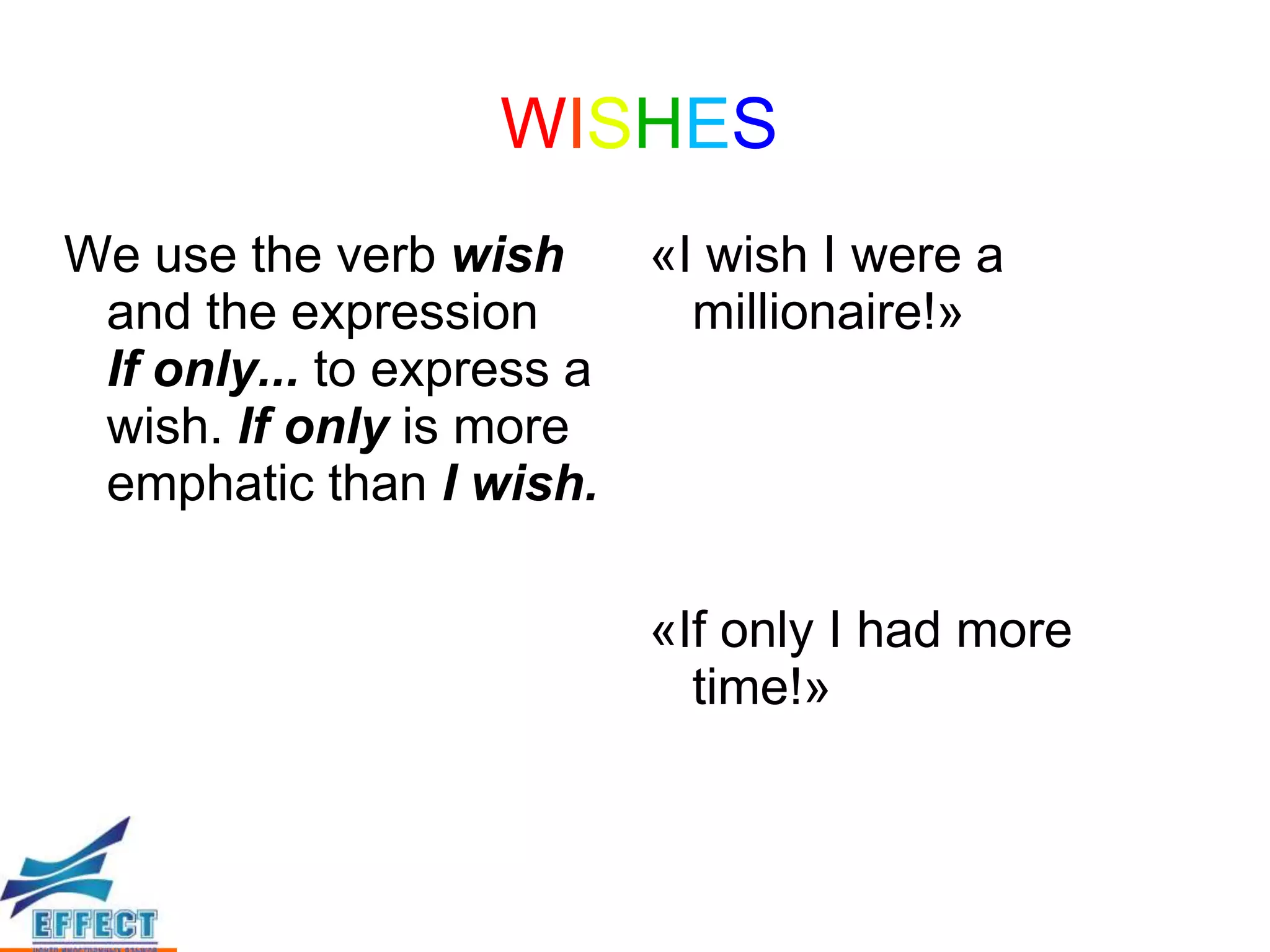
WISHES
We use the verb wish     «I wish I were a
 and the expression        millionaire!»
 If only... to express a
 wish. If only is more
 emphatic than I wish.

                         «If only I had more
                           time!»
Wish / If only... + past simple / past
              continuous
This structure is used when we want to say that
 we would like something to be different in the
 present.


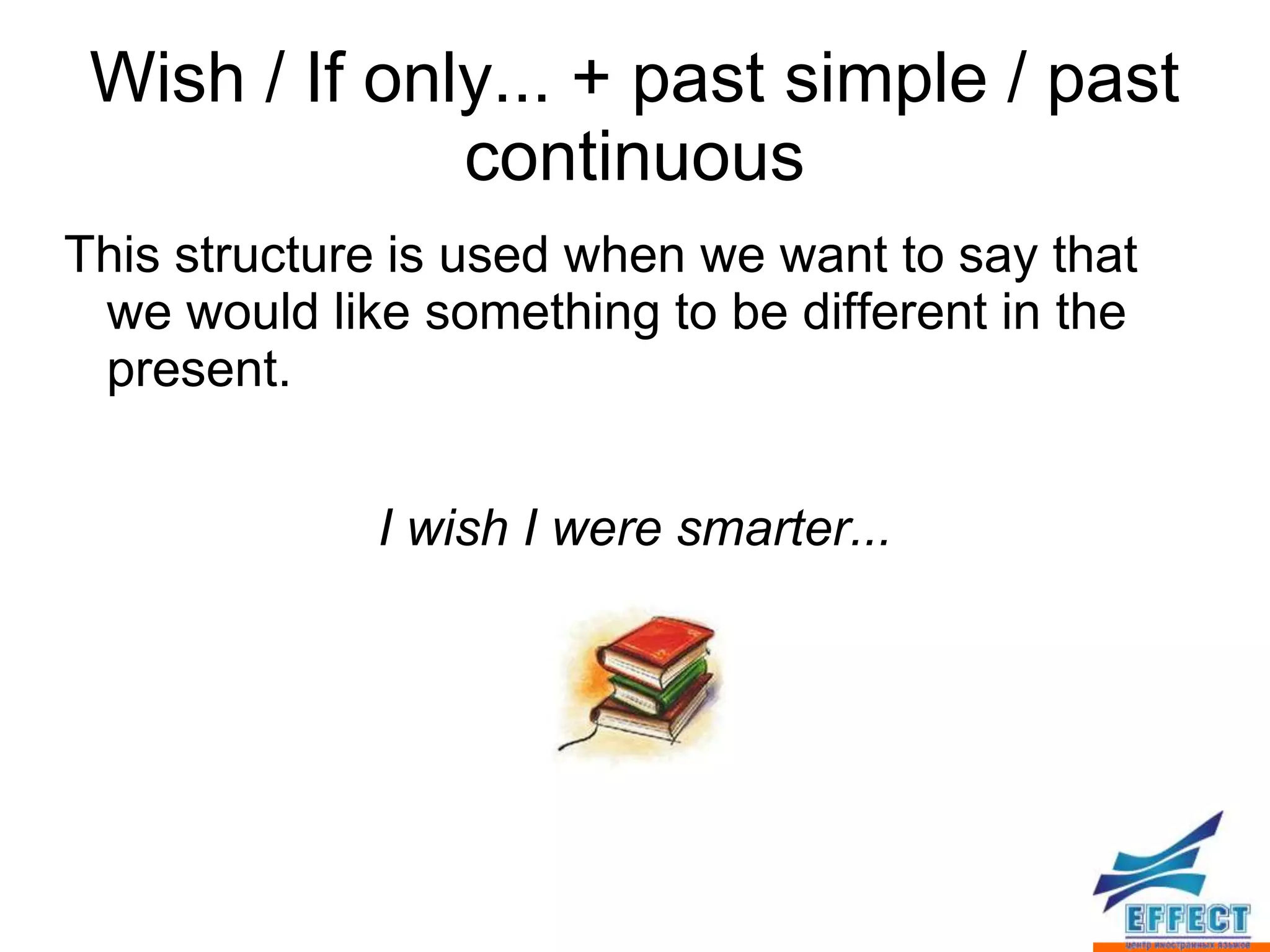
             I wish I were smarter...
Wish / if only + past perfect
This structure is used to express regret that
 something happened or did not happen in the
 past.
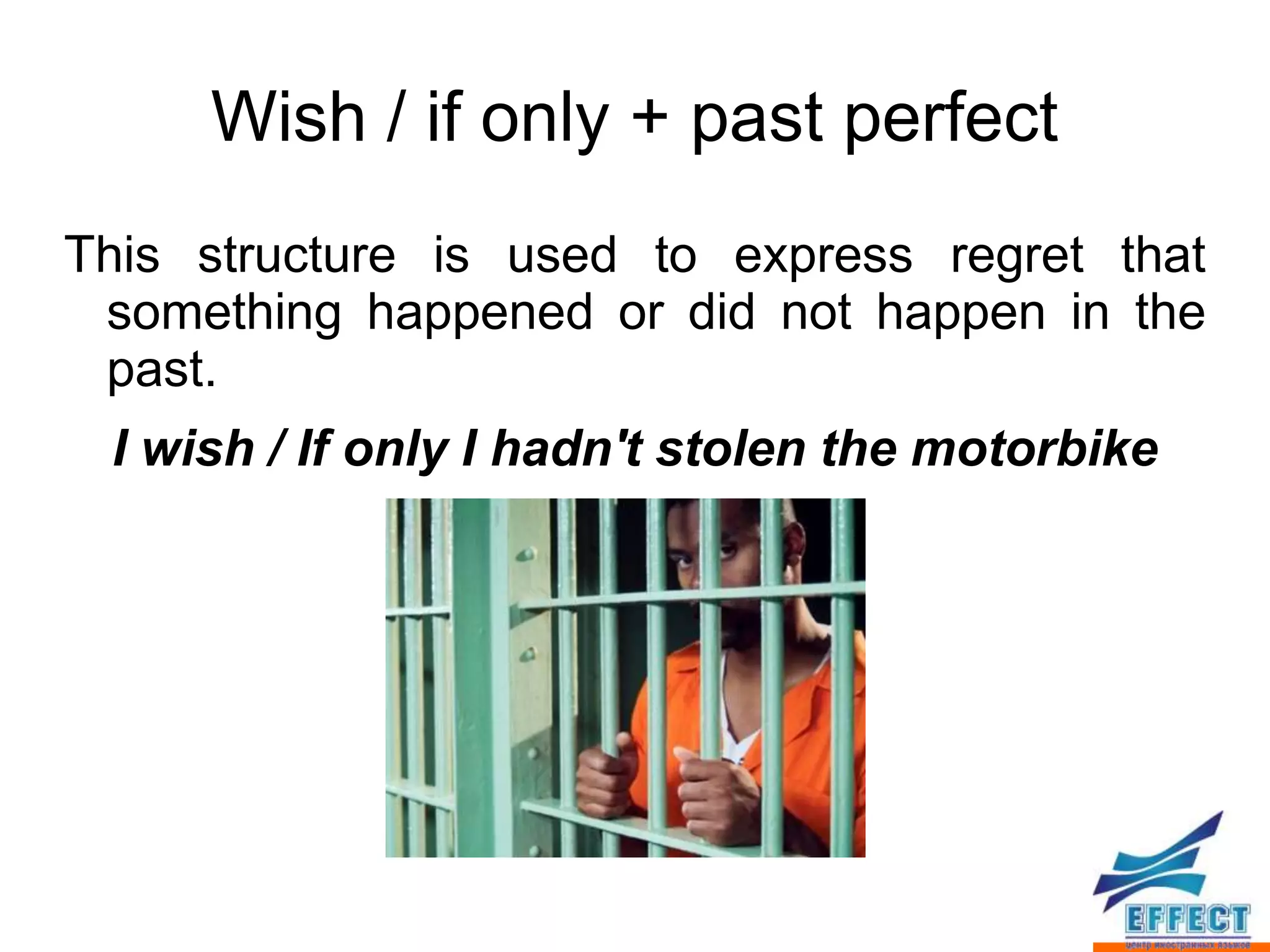
 I wish / If only I hadn't stolen the motorbike
Wish / if only + would
This structure is used:


a) for a polite imperative


b) to express our desire for a change in a situation
  or someone's behaviour.


   I wish you would be more attentive!

All types of conditionals and wish

  • 1.
  • 2.
    The conditional sentencesare clauses introduced with IF, IN CASE, UNLESS, WHEN, e tc.
  • 3.
    There are fourtypes of conditional sentences:  Zero-conditional  1-st conditional  2-nd conditional  3-rd conditional
  • 4.
    Zero-conditional  Denotes general truths and laws of nature. If-clause Main clause If+ present simple present simple Zero-conditional sentences are used to express something which is always true. We can use when or whenever instead of IF:  e.g. If/When it rains, the roads get slippery and dangerous.
  • 5.
    1-st Conditional (realpresent)  IF- Clause Main clause If+ present simple/ future / imperative / present cont./ present can, may, might, perfect / present perfect must, should, continuous could + bare infinitive  It is used to express real or very probable situations in the present or future: e. g. If we work hard, we will finish the project on time.
  • 6.
    2-nd Conditional (unrealpresent)  If-clause Main clause If+past simple or would/could/ past continuous might…+bare infinitive It is used to express imaginary situations which are contrary to facts in the present and, therefore, are unlikely to happen in the present or future. They are also used to give advice. If I didn't have to work long hours, I wouldn't be so tired.
  • 7.
    3-rd Conditional (unrealpast) If — clause Main clause If+ past perfect / would/could/might+ past perfect continuous perfect bare infinitive They are used to express imaginary situations which are contrary to facts in the past. They are also used to express regrets or criticism. e. g. If I had been more careful, I wouldn't have made such a big mistake.
  • 8.
    NB! We use IFto show that something might happen. We use WHEN to show that something will definitely happen. e. g. If Steve calls, tell him I'll be back in ten minutes (Steve might call). When Steve calls, tell him I'll be back in ten minutes (Steve is sure to call).
  • 9.
    We can alsoform conditonals by using: Unless - Unless you help me, I Providing / provided that won't finish on time. So/as long as - I'll water the plants On conditon (that) providing/provided What if (that) I have time this Suppose/supposing afternoon. Otherwise (=if not) - So / as long as you But for promise to be back by Or (else) midnight, you can go Even if to the party. In case of / in the event of, etc.
  • 10.
    We do notnormally use will, would or should in an if-clause. However, we can use will or would after IF to make a polite request or express insistence or uncertainty. We can use should after if to talk about something which is possible, but not very likely to happen. a) If you will wait for a minute, Mr Carrington will be able to see you. b) If Paul should turn up, tell him to wait for me
  • 11.
    We can formMIXED Conditionals if the context permits it, by combining an if-clause from one type with a main clause from another: Main clause If-clause Type 1 Type 2 she won't come to work If she got back late last night, today. Type 2 Type 3 If you were more sensible, you wouldn't have spoken to your boss like that. Type 3 Type 2 If she hadn't missed the bus, she would be here now.
  • 12.
    WISHES We use theverb wish «I wish I were a and the expression millionaire!» If only... to express a wish. If only is more emphatic than I wish. «If only I had more time!»
  • 13.
    Wish / Ifonly... + past simple / past continuous This structure is used when we want to say that we would like something to be different in the present. I wish I were smarter...
  • 14.
    Wish / ifonly + past perfect This structure is used to express regret that something happened or did not happen in the past. I wish / If only I hadn't stolen the motorbike
  • 15.
    Wish / ifonly + would This structure is used: a) for a polite imperative b) to express our desire for a change in a situation or someone's behaviour. I wish you would be more attentive!