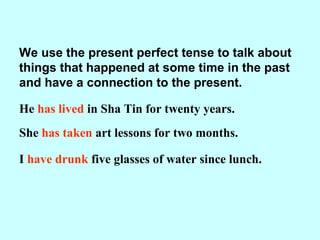
We use the present perfect tense to talk about
things that happened at some time in the past
and have a connection to the present.
He has lived in Sha Tin for twenty years.
She has taken art lessons for two months.
I have drunk five glasses of water since lunch.
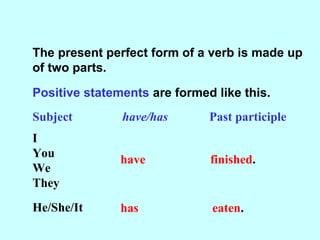
The present perfect form of a verb is made up
of two parts.
Positive statements are formed like this.
Subject have/has Past participle
I
You
We
They
have finished.
He/She/It has eaten.
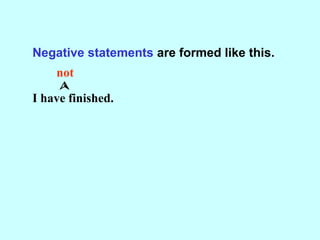
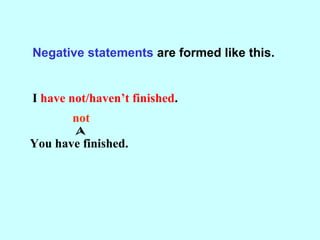
Negative statements are formed like this.
not

I have finished.
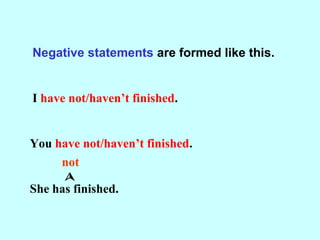
Negative statements are formed like this.
I have not/haven’t finished.
You have finished.
not

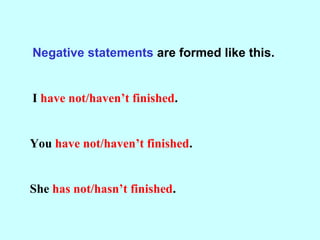
Negative statements are formed like this.
I have not/haven’t finished.
You have not/haven’t finished.
She has finished.
not

Negative statements are formed like this.
I have not/haven’t finished.
You have not/haven’t finished.
She has not/hasn’t finished.
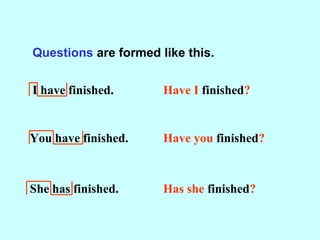
Questions are formed like this.
I have finished.
You have finished.
She has finished.
Have I finished?
Have you finished?
Has she finished?
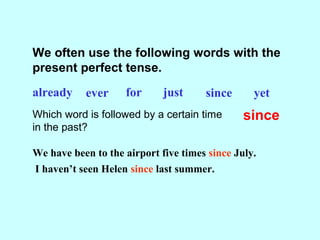
We often use the following words with the
present perfect tense.
already ever for just since yet
Which word is followed by a certain time
in the past?
since
We have been to the airport five times since July.
I haven’t seen Helen since last summer.
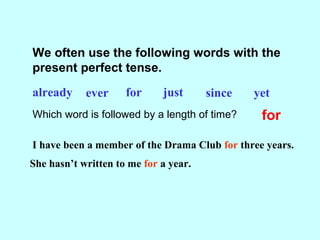
We often use the following words with the
present perfect tense.
already ever for just since yet
Which word is followed by a length of time? for
I have been a member of the Drama Club for three years.
She hasn’t written to me for a year.
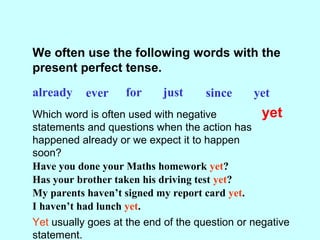
We often use the following words with the
present perfect tense.
already ever for just since yet
Which word is often used with negative
statements and questions when the action has
happened already or we expect it to happen
soon?
yet
Have you done your Maths homework yet?
Has your brother taken his driving test yet?
My parents haven’t signed my report card yet.
I haven’t had lunch yet.
Yet usually goes at the end of the question or negative
statement.
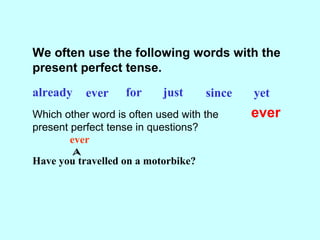
We often use the following words with the
present perfect tense.
already ever for just since yet
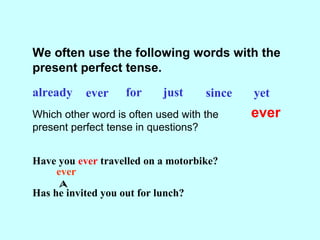
Which other word is often used with the
present perfect tense in questions?
ever
Have you travelled on a motorbike?
ever

We often use the following words with the
present perfect tense.
already ever for just since yet
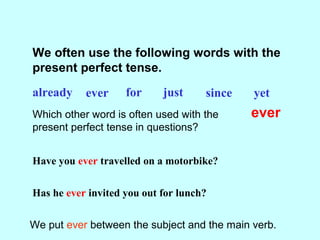
Which other word is often used with the
present perfect tense in questions?
ever
Have you ever travelled on a motorbike?
Has he invited you out for lunch?
ever

We often use the following words with the
present perfect tense.
already ever for just since yet
Which other word is often used with the
present perfect tense in questions?
ever
Have you ever travelled on a motorbike?
Has he ever invited you out for lunch?
We put ever between the subject and the main verb.
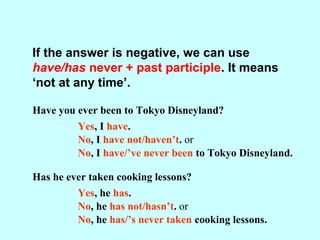
If the answer is negative, we can use
have/has never + past participle. It means
‘not at any time’.
Have you ever been to Tokyo Disneyland?
Yes, I have.
No, I have not/haven’t.
No, I have/’ve never been to Tokyo Disneyland.
Has he ever taken cooking lessons?
Yes, he has.
No, he has not/hasn’t.
No, he has/’s never taken cooking lessons.
or
or
We often use the following words with the
present perfect tense.
already ever for just since yet
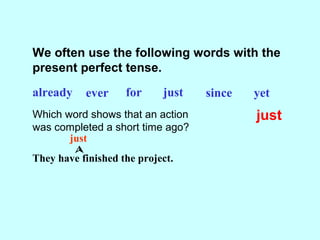
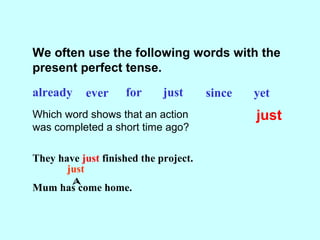
Which word shows that an action
was completed a short time ago?
just
They have finished the project.
just

We often use the following words with the
present perfect tense.
already ever for just since yet
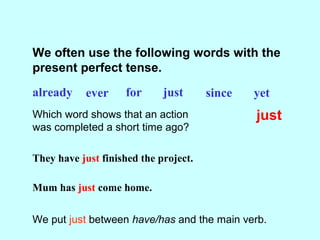
Which word shows that an action
was completed a short time ago?
just
They have just finished the project.
Mum has come home.
just

We often use the following words with the
present perfect tense.
already ever for just since yet
Which word shows that an action
was completed a short time ago?
just
They have just finished the project.
Mum has just come home.
We put just between have/has and the main verb.
We often use the following words with the
present perfect tense.
already ever for just since yet
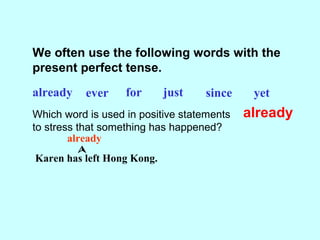
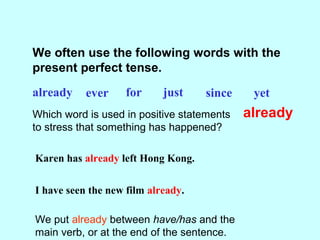
Which word is used in positive statements
to stress that something has happened?
already
Karen has left Hong Kong.
already

We often use the following words with the
present perfect tense.
already ever for just since yet
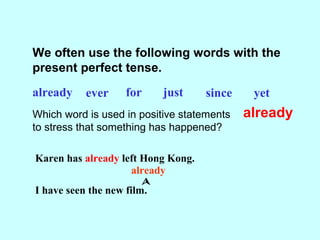
Which word is used in positive statements
to stress that something has happened?
already
Karen has already left Hong Kong.
already

I have seen the new film.
We often use the following words with the
present perfect tense.
already ever for just since yet
Which word is used in positive statements
to stress that something has happened?
already
Karen has already left Hong Kong.
I have seen the new film already.
We put already between have/has and the
main verb, or at the end of the sentence.
Practice
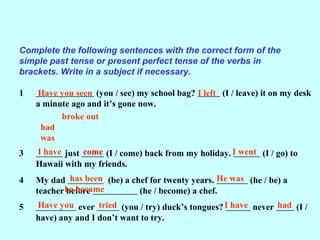
Complete the following sentences with the correct form of the
simple past tense or present perfect tense of the verbs in
brackets. Write in a subject if necessary.
1 (you / see) my school bag? (I / leave) it on my desk
a minute ago and it’s gone now.
3 just (I / come) back from my holiday. (I / go) to
Hawaii with my friends.
4 My dad (be) a chef for twenty years. (he / be) a
teacher before (he / become) a chef.
5 ever (you / try) duck’s tongues? never (I /
have) any and I don’t want to try.
Have you seen I left
broke out
had
was
I have I went
has been He was
he became
Have you I have
come
tried had

Present Perfect Simple

  • 2.
    We use thepresent perfect tense to talk about things that happened at some time in the past and have a connection to the present. He has lived in Sha Tin for twenty years. She has taken art lessons for two months. I have drunk five glasses of water since lunch.
  • 3.
    The present perfectform of a verb is made up of two parts. Positive statements are formed like this. Subject have/has Past participle I You We They have finished. He/She/It has eaten.
  • 4.
    Negative statements areformed like this. not  I have finished.
  • 5.
    Negative statements areformed like this. I have not/haven’t finished. You have finished. not 
  • 6.
    Negative statements areformed like this. I have not/haven’t finished. You have not/haven’t finished. She has finished. not 
  • 7.
    Negative statements areformed like this. I have not/haven’t finished. You have not/haven’t finished. She has not/hasn’t finished.
  • 8.
    Questions are formedlike this. I have finished. You have finished. She has finished. Have I finished? Have you finished? Has she finished?
  • 9.
    We often usethe following words with the present perfect tense. already ever for just since yet Which word is followed by a certain time in the past? since We have been to the airport five times since July. I haven’t seen Helen since last summer.
  • 10.
    We often usethe following words with the present perfect tense. already ever for just since yet Which word is followed by a length of time? for I have been a member of the Drama Club for three years. She hasn’t written to me for a year.
  • 11.
    We often usethe following words with the present perfect tense. already ever for just since yet Which word is often used with negative statements and questions when the action has happened already or we expect it to happen soon? yet Have you done your Maths homework yet? Has your brother taken his driving test yet? My parents haven’t signed my report card yet. I haven’t had lunch yet. Yet usually goes at the end of the question or negative statement.
  • 12.
    We often usethe following words with the present perfect tense. already ever for just since yet Which other word is often used with the present perfect tense in questions? ever Have you travelled on a motorbike? ever 
  • 13.
    We often usethe following words with the present perfect tense. already ever for just since yet Which other word is often used with the present perfect tense in questions? ever Have you ever travelled on a motorbike? Has he invited you out for lunch? ever 
  • 14.
    We often usethe following words with the present perfect tense. already ever for just since yet Which other word is often used with the present perfect tense in questions? ever Have you ever travelled on a motorbike? Has he ever invited you out for lunch? We put ever between the subject and the main verb.
  • 15.
    If the answeris negative, we can use have/has never + past participle. It means ‘not at any time’. Have you ever been to Tokyo Disneyland? Yes, I have. No, I have not/haven’t. No, I have/’ve never been to Tokyo Disneyland. Has he ever taken cooking lessons? Yes, he has. No, he has not/hasn’t. No, he has/’s never taken cooking lessons. or or
  • 16.
    We often usethe following words with the present perfect tense. already ever for just since yet Which word shows that an action was completed a short time ago? just They have finished the project. just 
  • 17.
    We often usethe following words with the present perfect tense. already ever for just since yet Which word shows that an action was completed a short time ago? just They have just finished the project. Mum has come home. just 
  • 18.
    We often usethe following words with the present perfect tense. already ever for just since yet Which word shows that an action was completed a short time ago? just They have just finished the project. Mum has just come home. We put just between have/has and the main verb.
  • 19.
    We often usethe following words with the present perfect tense. already ever for just since yet Which word is used in positive statements to stress that something has happened? already Karen has left Hong Kong. already 
  • 20.
    We often usethe following words with the present perfect tense. already ever for just since yet Which word is used in positive statements to stress that something has happened? already Karen has already left Hong Kong. already  I have seen the new film.
  • 21.
    We often usethe following words with the present perfect tense. already ever for just since yet Which word is used in positive statements to stress that something has happened? already Karen has already left Hong Kong. I have seen the new film already. We put already between have/has and the main verb, or at the end of the sentence.
  • 22.
  • 23.
    Complete the followingsentences with the correct form of the simple past tense or present perfect tense of the verbs in brackets. Write in a subject if necessary. 1 (you / see) my school bag? (I / leave) it on my desk a minute ago and it’s gone now. 3 just (I / come) back from my holiday. (I / go) to Hawaii with my friends. 4 My dad (be) a chef for twenty years. (he / be) a teacher before (he / become) a chef. 5 ever (you / try) duck’s tongues? never (I / have) any and I don’t want to try. Have you seen I left broke out had was I have I went has been He was he became Have you I have come tried had