A) to denote an action which will be in
  progress at a stated future time. The stated
  future time can be indicated by another
  future action expressed by a verb in the
  Present Simple or by an adverbial phrase:

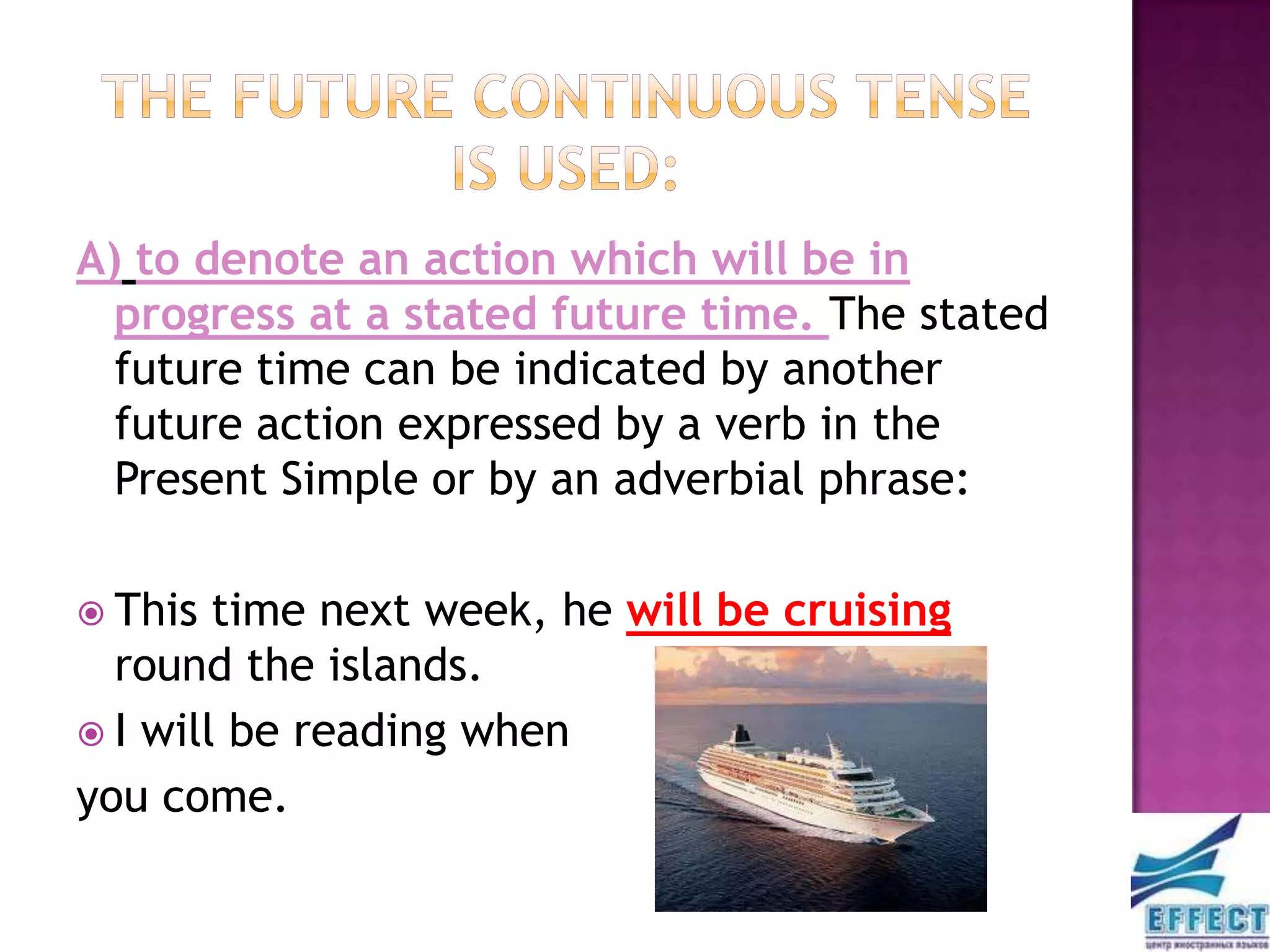
 This  time next week, he will be cruising
  round the islands.
 I will be reading when
you come.
B) for an action which will definitely happen
  in the future as a result of a routine or
  arrangement:

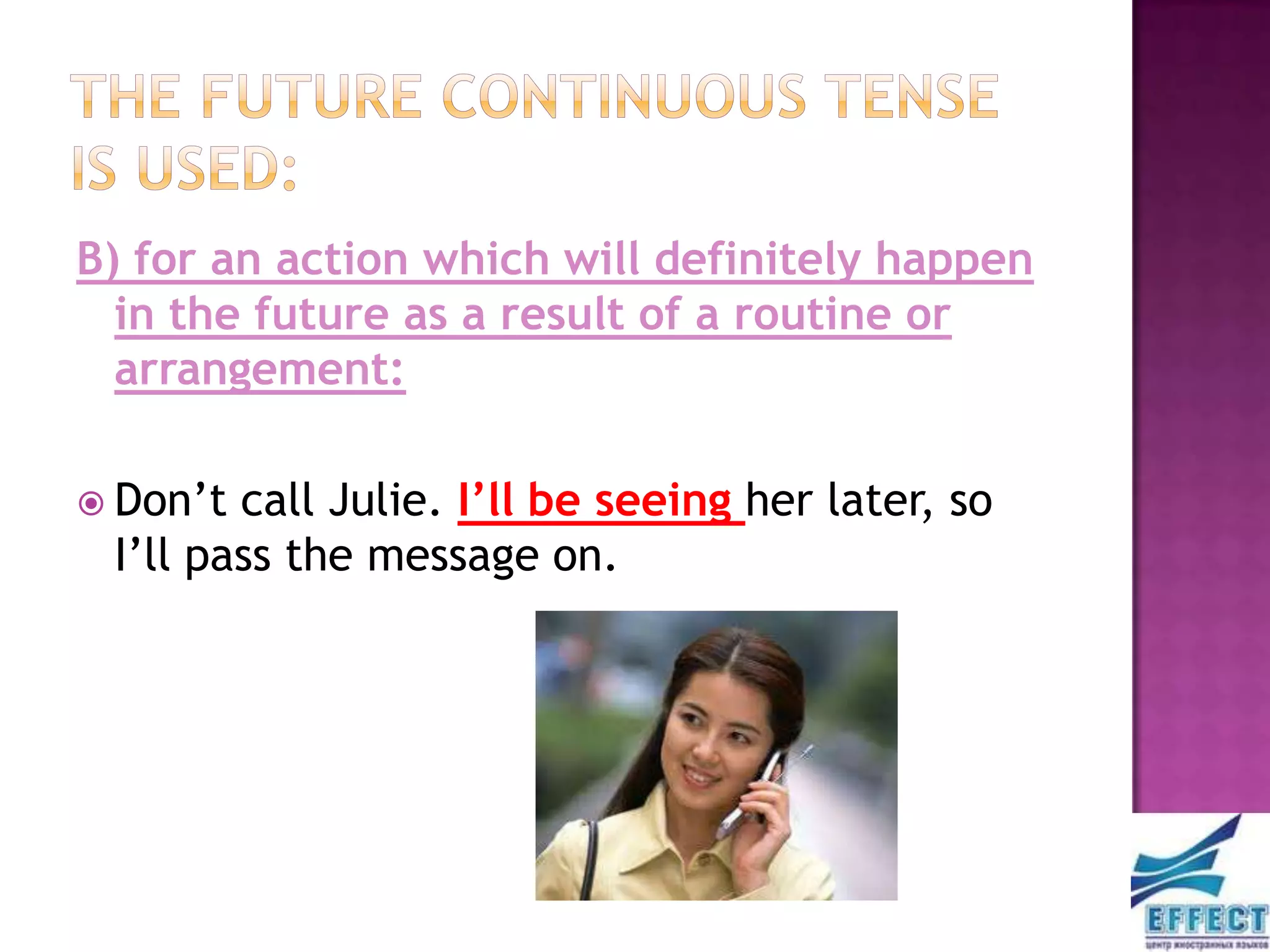
 Don’t call Julie. I’ll be seeing her later, so
 I’ll pass the message on.
C) when we ask politely about someone’s
  plans for the nearest future:

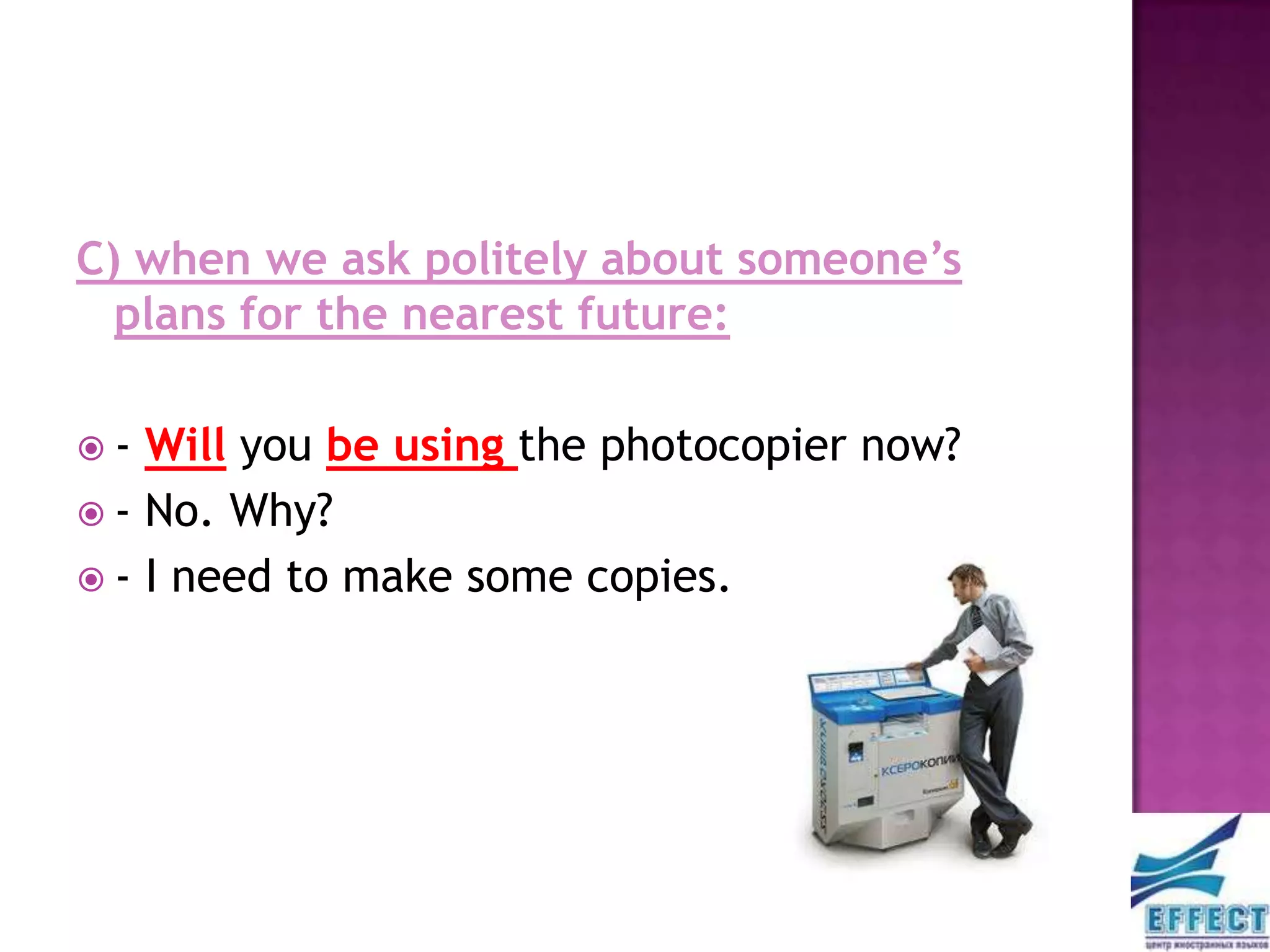
-  Will you be using the photocopier now?
 - No. Why?
 - I need to make some copies.
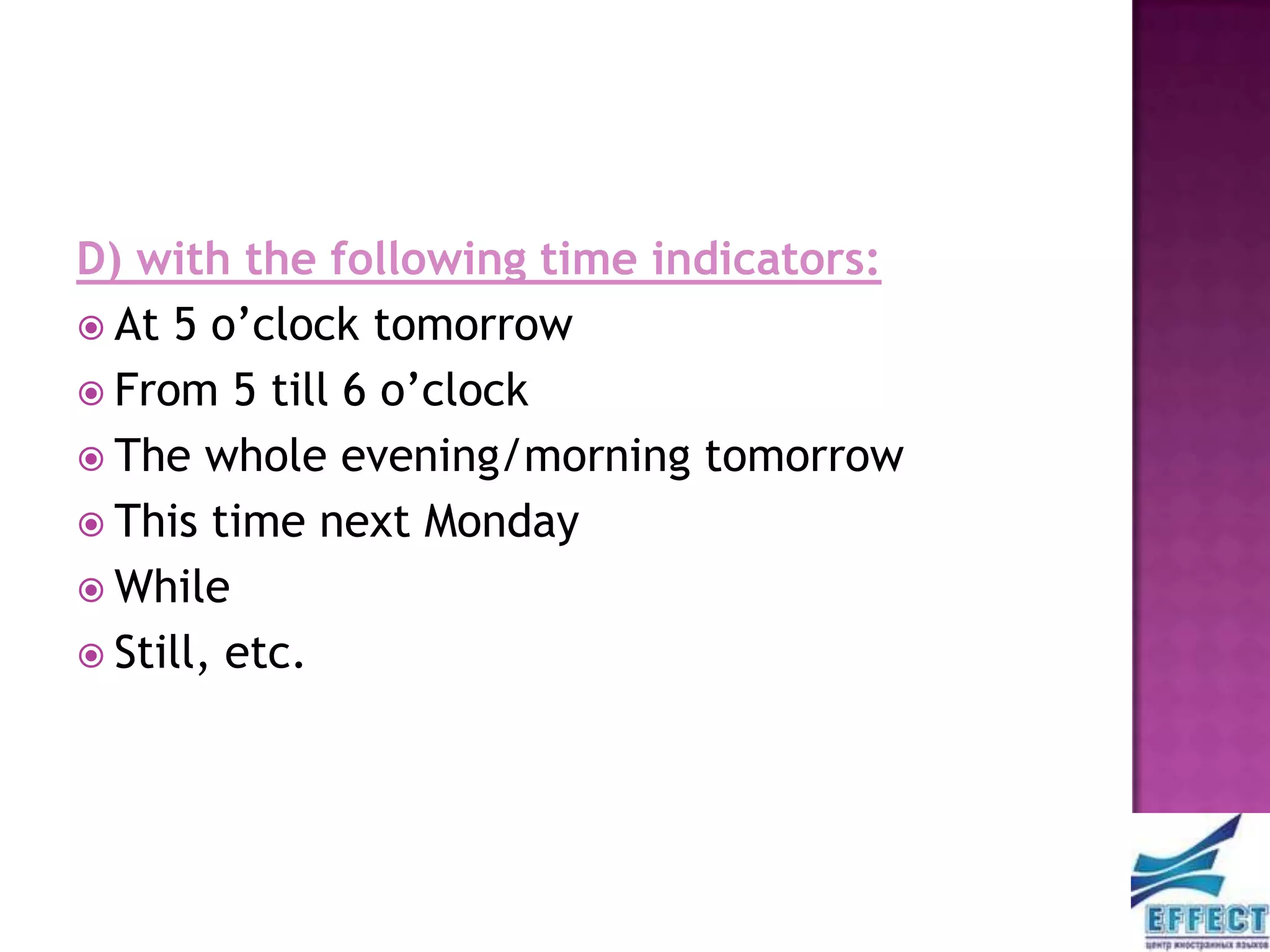
D) with the following time indicators:
 At 5 o’clock tomorrow
 From 5 till 6 o’clock
 The whole evening/morning tomorrow
 This time next Monday
 While
 Still, etc.
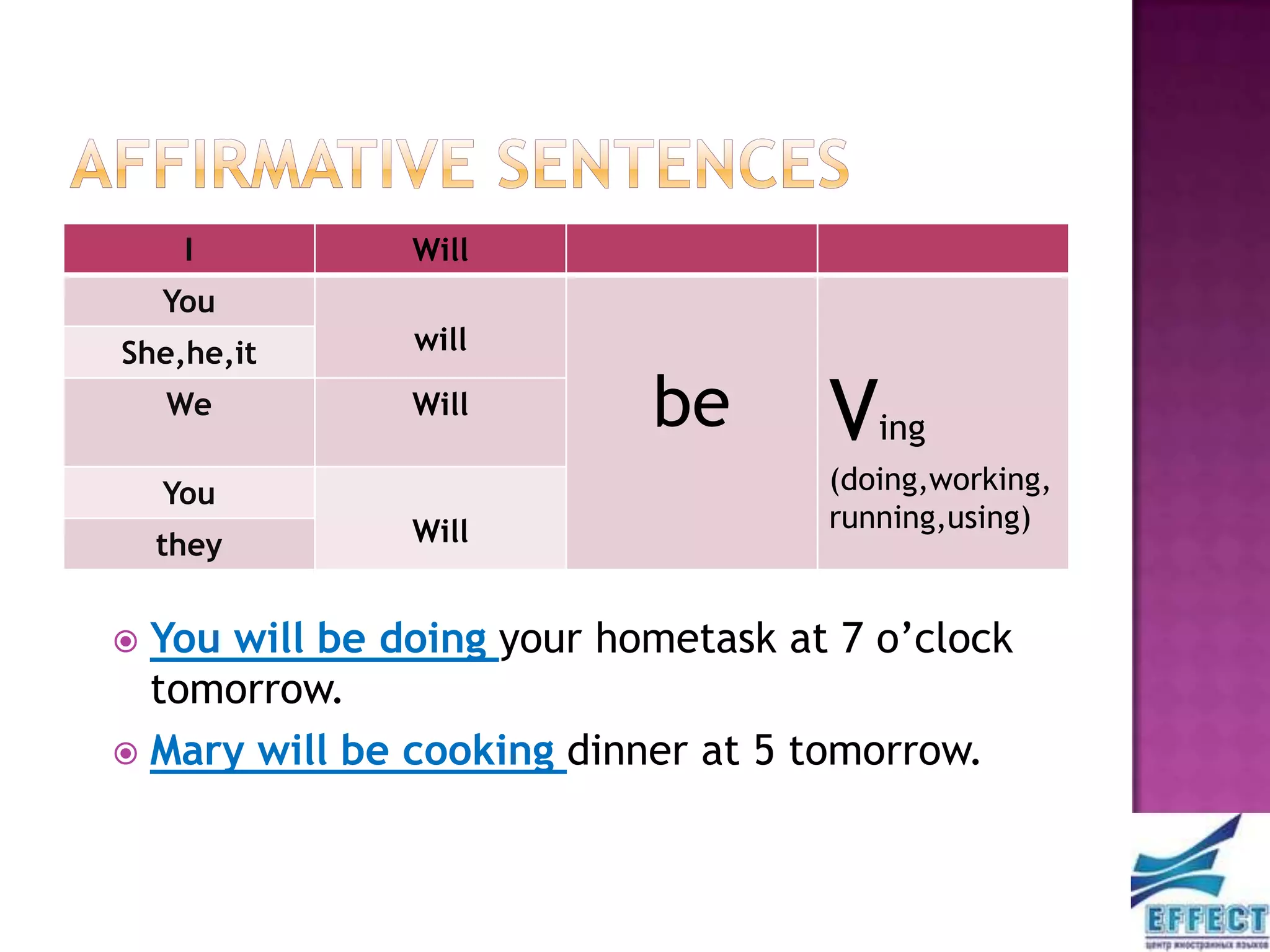
I         Will
    You
She,he,it      will

    We         Will        be       Ving
    You                             (doing,working,
               Will                 running,using)
    they


 You will be doing your hometask at 7 o’clock
  tomorrow.
 Mary will be cooking dinner at 5 tomorrow.
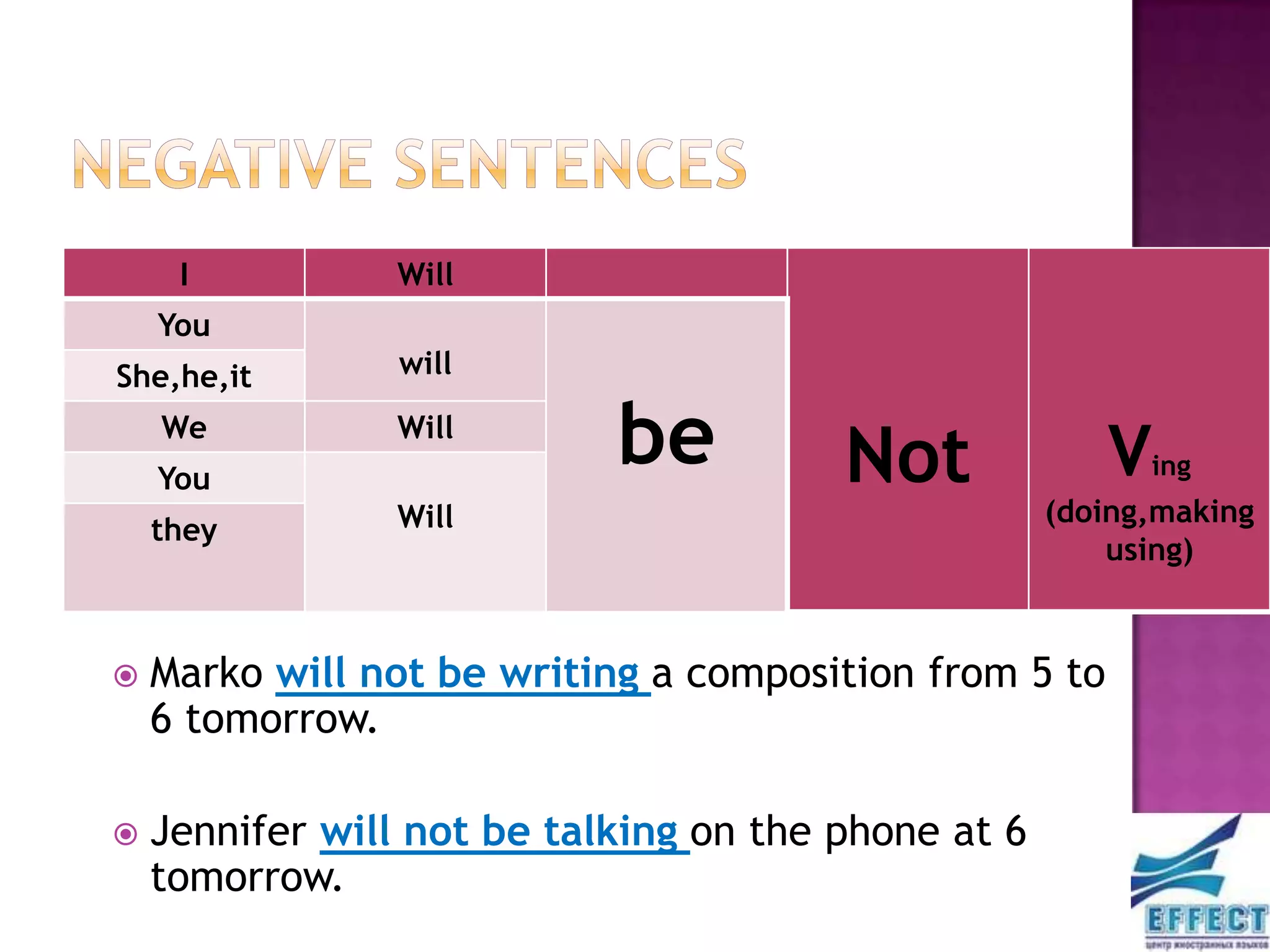
I          Will
    You
She,he,it        will

    We
    You
                Will
                            be          Not             V  ing
                Will                                 (doing,making
    they
                                                         using)


   Marko will not be writing a composition from 5 to
    6 tomorrow.

   Jennifer will not be talking on the phone at 6
    tomorrow.
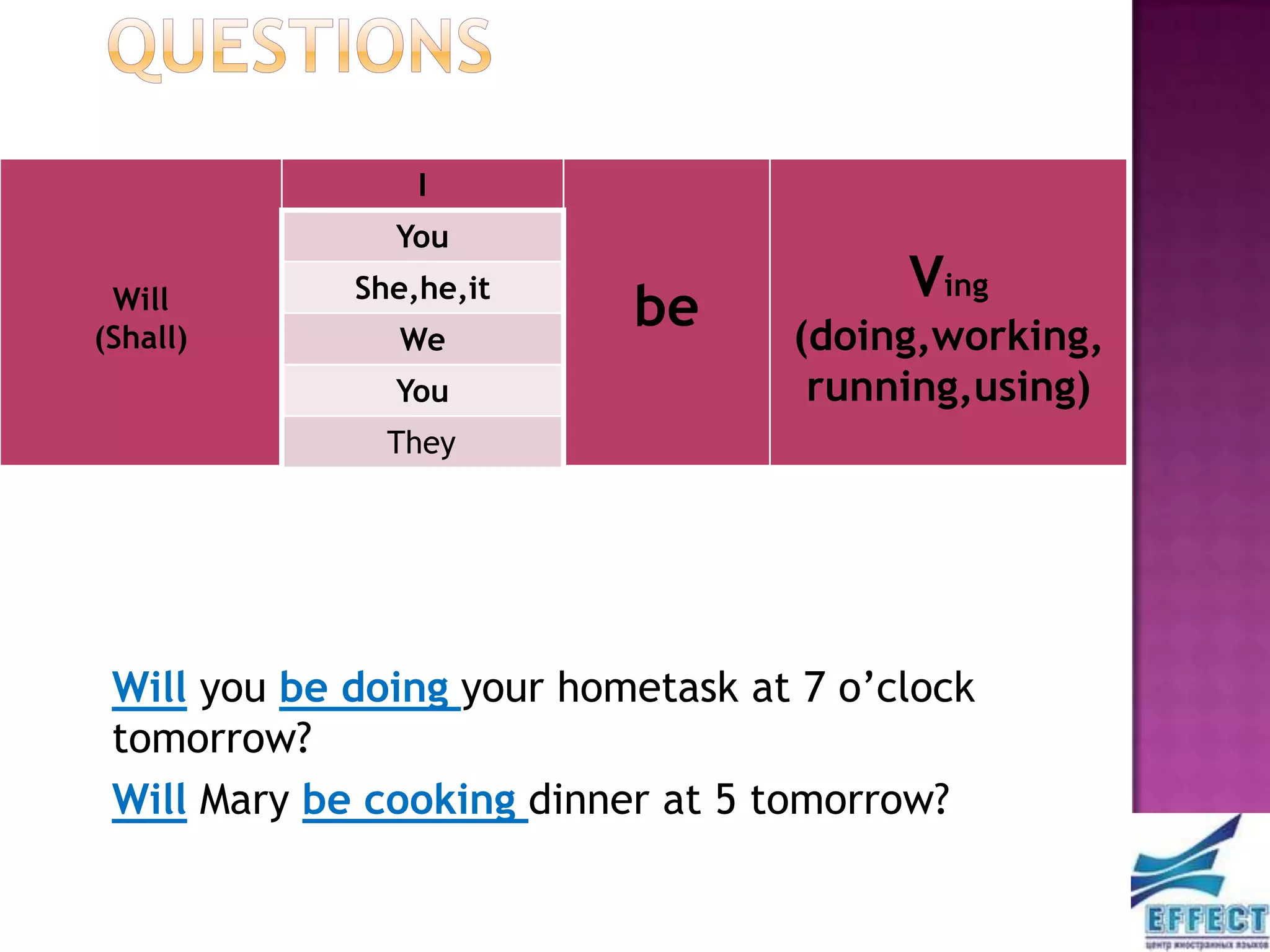
I
               You
             She,he,it                   Ving
 Will
(Shall)        We
                           be      (doing,working,
               You                  running,using)
               They


 Will you be doing your hometask at 7 o’clock
 tomorrow?
 Will Mary be cooking dinner at 5 tomorrow?
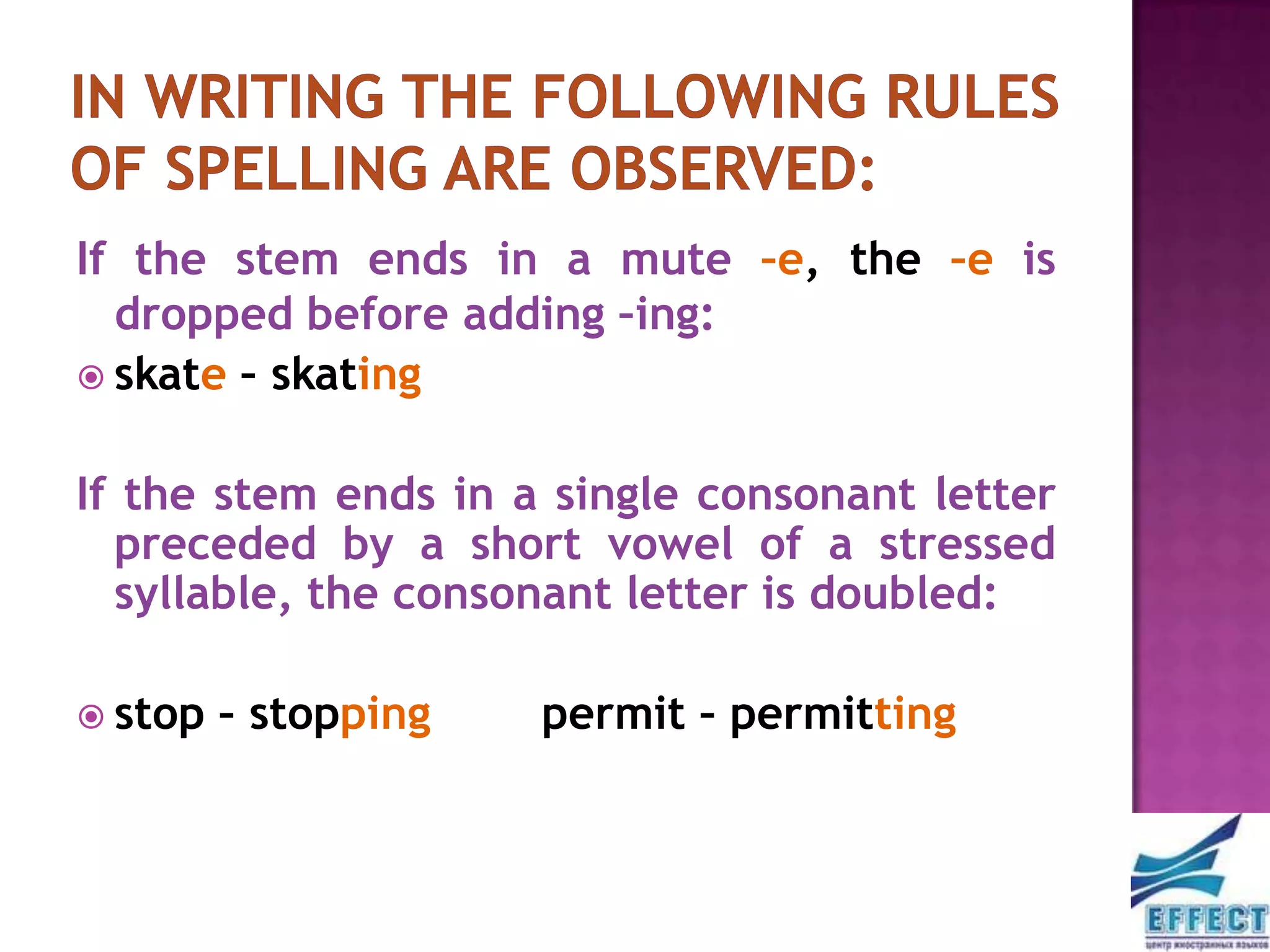
If the stem ends in a mute –e, the –e is
  dropped before adding –ing:
 skate – skating


If the stem ends in a single consonant letter
  preceded by a short vowel of a stressed
  syllable, the consonant letter is doubled:

 stop   – stopping   permit – permitting
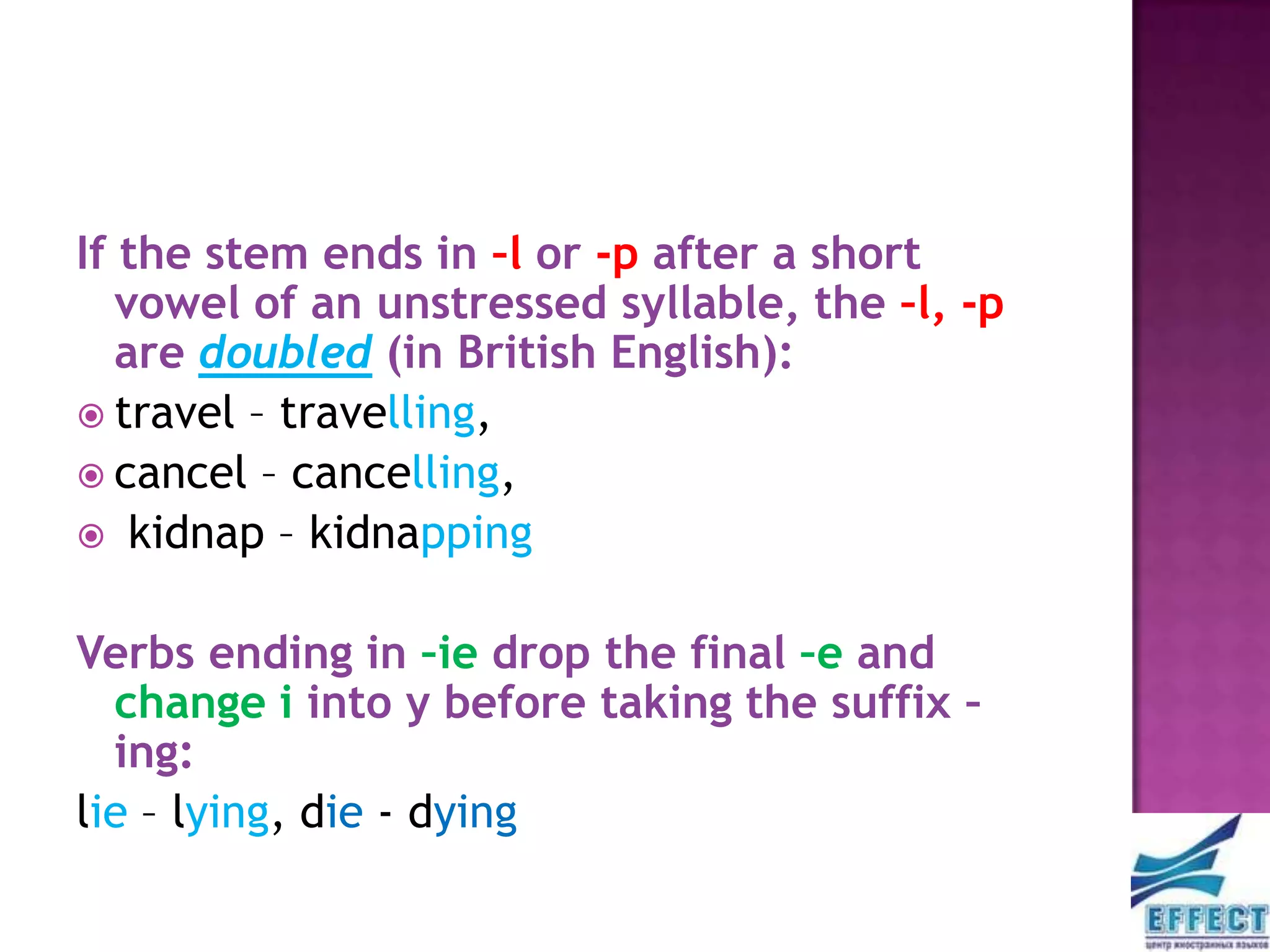
If the stem ends in –l or -p after a short
   vowel of an unstressed syllable, the –l, -p
   are doubled (in British English):
 travel – travelling,
 cancel – cancelling,
 kidnap – kidnapping


Verbs ending in –ie drop the final –e and
  change i into y before taking the suffix –
  ing:
lie – lying, die - dying
The Future Continuous Tense

The Future Continuous Tense

  • 2.
    A) to denotean action which will be in progress at a stated future time. The stated future time can be indicated by another future action expressed by a verb in the Present Simple or by an adverbial phrase:  This time next week, he will be cruising round the islands.  I will be reading when you come.
  • 3.
    B) for anaction which will definitely happen in the future as a result of a routine or arrangement:  Don’t call Julie. I’ll be seeing her later, so I’ll pass the message on.
  • 4.
    C) when weask politely about someone’s plans for the nearest future: - Will you be using the photocopier now?  - No. Why?  - I need to make some copies.
  • 5.
    D) with thefollowing time indicators:  At 5 o’clock tomorrow  From 5 till 6 o’clock  The whole evening/morning tomorrow  This time next Monday  While  Still, etc.
  • 6.
    I Will You She,he,it will We Will be Ving You (doing,working, Will running,using) they  You will be doing your hometask at 7 o’clock tomorrow.  Mary will be cooking dinner at 5 tomorrow.
  • 7.
    I Will You She,he,it will We You Will be Not V ing Will (doing,making they using)  Marko will not be writing a composition from 5 to 6 tomorrow.  Jennifer will not be talking on the phone at 6 tomorrow.
  • 8.
    I You She,he,it Ving Will (Shall) We be (doing,working, You running,using) They Will you be doing your hometask at 7 o’clock tomorrow? Will Mary be cooking dinner at 5 tomorrow?
  • 9.
    If the stemends in a mute –e, the –e is dropped before adding –ing:  skate – skating If the stem ends in a single consonant letter preceded by a short vowel of a stressed syllable, the consonant letter is doubled:  stop – stopping permit – permitting
  • 10.
    If the stemends in –l or -p after a short vowel of an unstressed syllable, the –l, -p are doubled (in British English):  travel – travelling,  cancel – cancelling,  kidnap – kidnapping Verbs ending in –ie drop the final –e and change i into y before taking the suffix – ing: lie – lying, die - dying