FUTURE PERFECT
tense
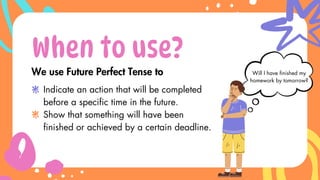
We use Future Perfect Tense to
Indicate an action that will be completed
before a specific time in the future.
Show that something will have been
finished or achieved by a certain deadline.
When to use?
Will I have finished my
homework by tomorrow?
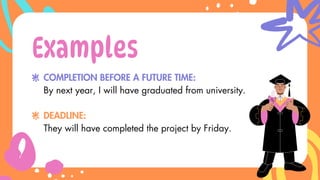
COMPLETION BEFORE A FUTURE TIME:
By next year, I will have graduated from university.
DEADLINE:
They will have completed the project by Friday.
Examples
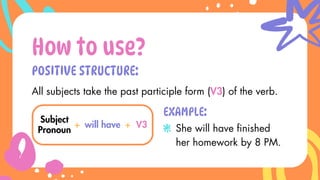
POSITIVE STRUCTURE:
How to use?
Subject
Pronoun
+ will have
All subjects take the past participle form (V3) of the verb.
+ V3
EXAMPLE:
She will have finished
her homework by 8 PM.
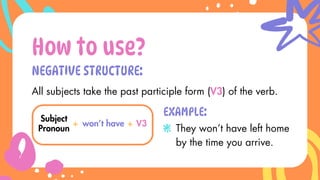
NEGATIVE STRUCTURE:
How to use?
Subject
Pronoun
+ won’t have
All subjects take the past participle form (V3) of the verb.
+ V3
EXAMPLE:
They won’t have left home
by the time you arrive.
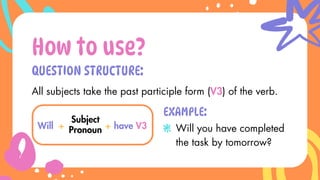
QUESTION STRUCTURE:
How to use?
All subjects take the past participle form (V3) of the verb.
EXAMPLE:
Will you have completed
the task by tomorrow?
Subject
Pronoun
+
Will + have V3
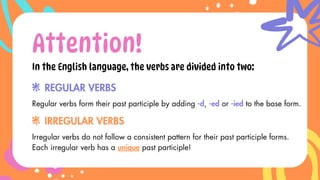
Attention!
In the English language, the verbs are divided into two:
REGULAR VERBS
Regular verbs form their past participle by adding -d, -ed or -ied to the base form.
IRREGULAR VERBS
Irregular verbs do not follow a consistent pattern for their past participle forms.
Each irregular verb has a unique past participle!
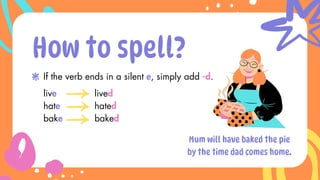
REGULAR VERBS
live
hate
bake
How to spell?
If the verb ends in a silent e, simply add -d.
lived
hated
baked
Mum will have baked the pie
by the time dad comes home.
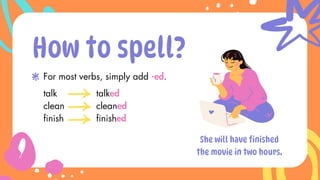
talk
clean
finish
How to spell?
For most verbs, simply add -ed.
talked
cleaned
finished
She will have finished
the movie in two hours.
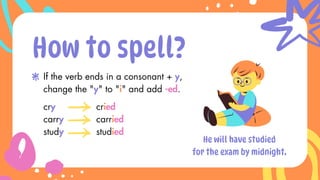
cry
carry
study
How to spell?
If the verb ends in a consonant + y,
change the "y" to "i" and add -ed.
cried
carried
studied
He will have studied
for the exam by midnight.
IRREGULAR VERBS
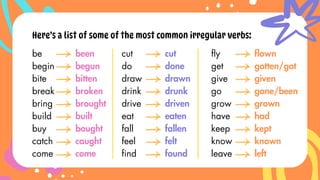
Here’s a list of some of the most common irregular verbs:
be
begin
bite
break
bring
build
buy
catch
come
been
begun
bitten
broken
brought
built
bought
caught
come
cut
do
draw
drink
drive
eat
fall
feel
find
cut
done
drawn
drunk
driven
eaten
fallen
felt
found
fly
get
give
go
grow
have
keep
know
leave
flown
gotten/got
given
gone/been
grown
had
kept
known
left
TIME EXPRESSIONS
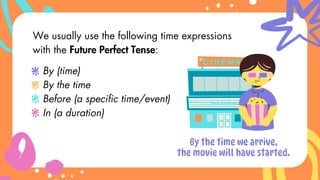
We usually use the following time expressions
with the Future Perfect Tense:
By (time)
By the time
Before (a specific time/event)
In (a duration)
By the time we arrive,
the movie will have started.
THANK YOU
for listening!

Future Perfect TenseFuture Perfect Tense

  • 1.
  • 2.
    We use FuturePerfect Tense to Indicate an action that will be completed before a specific time in the future. Show that something will have been finished or achieved by a certain deadline. When to use? Will I have finished my homework by tomorrow?
  • 3.
    COMPLETION BEFORE AFUTURE TIME: By next year, I will have graduated from university. DEADLINE: They will have completed the project by Friday. Examples
  • 4.
    POSITIVE STRUCTURE: How touse? Subject Pronoun + will have All subjects take the past participle form (V3) of the verb. + V3 EXAMPLE: She will have finished her homework by 8 PM.
  • 5.
    NEGATIVE STRUCTURE: How touse? Subject Pronoun + won’t have All subjects take the past participle form (V3) of the verb. + V3 EXAMPLE: They won’t have left home by the time you arrive.
  • 6.
    QUESTION STRUCTURE: How touse? All subjects take the past participle form (V3) of the verb. EXAMPLE: Will you have completed the task by tomorrow? Subject Pronoun + Will + have V3
  • 7.
    Attention! In the Englishlanguage, the verbs are divided into two: REGULAR VERBS Regular verbs form their past participle by adding -d, -ed or -ied to the base form. IRREGULAR VERBS Irregular verbs do not follow a consistent pattern for their past participle forms. Each irregular verb has a unique past participle!
  • 8.
  • 9.
    live hate bake How to spell? Ifthe verb ends in a silent e, simply add -d. lived hated baked Mum will have baked the pie by the time dad comes home.
  • 10.
    talk clean finish How to spell? Formost verbs, simply add -ed. talked cleaned finished She will have finished the movie in two hours.
  • 11.
    cry carry study How to spell? Ifthe verb ends in a consonant + y, change the "y" to "i" and add -ed. cried carried studied He will have studied for the exam by midnight.
  • 12.
  • 13.
    Here’s a listof some of the most common irregular verbs: be begin bite break bring build buy catch come been begun bitten broken brought built bought caught come cut do draw drink drive eat fall feel find cut done drawn drunk driven eaten fallen felt found fly get give go grow have keep know leave flown gotten/got given gone/been grown had kept known left
  • 14.
  • 15.
    We usually usethe following time expressions with the Future Perfect Tense: By (time) By the time Before (a specific time/event) In (a duration) By the time we arrive, the movie will have started.
  • 16.